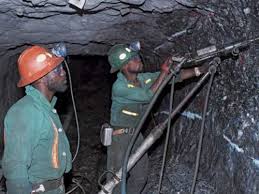
The Ministry of Mines and Steel Development (MMSD) said it had reclaimed 37 abandoned mine sites from 2008 to date.
Mrs. Vivian Okono, the Director, Mines and Environmental Compliance Department, MMSD, disclosed this on Thursday in Abuja.
Okuno said that the abandoned mine sites were reclaimed due to the hazard they posed to the communities, adding that six more sites would be reclaimed in 2022.
She said that five sites were reclaimed in 2020 and six in 2021.
“Six sites will be reclaimed this year, the beneficiary states are, Osun, Ebonyi, Bauchi, Plateau, and Nasarawa states,” she said.
She said that before the 2007 Mineral and Mining Act was enacted, mining activities were being conducted indiscriminately, mine pits were abandoned and they posed high risks to the communities.
She said that the enactment of the 2007 mineral and mining act stipulated that abandoned mine sites in the country should be reclaimed.
Recalls that the abandoned mine sites were generated during the colonial era when there were no laws backing mining operations in Nigeria.
“Before the mineral and mining act was enacted, mining was conducted indiscriminately without any regard for the environment, they mined and left the pits without covering them.
“Section 121 of the act stipulated that abandoned mine sites should be reclaimed.
“It emphasized that every mining titleholder must set aside five percent of the total cost of its investment for reclamation in case he failed to reclaim the site after mining.
“The five percent is domiciled with the CBN, the ministry collects the money to reclaim the site but in case the mining investor reclaims the site after its mining activity is completed, then he gets the money back,” Okuno said.
She said that the department would commence sensitization on water pollution, as some villagers collected water from the abandoned mine pit for cooking, drinking, and irrigating their fruits and vegetables.
“Water from the abandoned mine pits has heavy metals such as iron, lead, mercury, and using the water for consumption and irrigation can pose dangers to their health.
“We take samples of the water and even the sand around the abandoned mine sites to the laboratory for analysis.
“In case we discover heavy metals and the soil is also contaminated from the analysis result, we sensitize the villagers on the hazard.
“We have done many sensitizations in the affected states and we will continue to sensitize them,” she said.