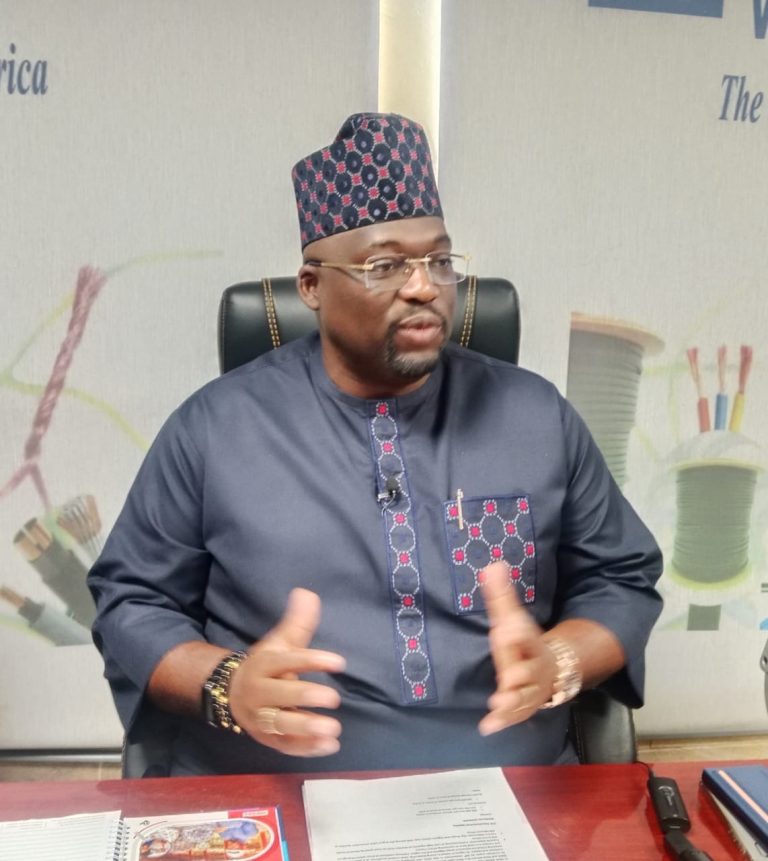
Nigeria’s manufacturing sector is showing cautious signs of recovery in the second half of 2026 despite lingering challenges, according to the Managing Director and Chief Executive Officer of Coleman Technical Industries Limited, Mr. George Onafowokan.
Speaking during an interview on the State of the manufacturing sector, Onafowokan said manufacturers entered 2026 with high expectations following improvements in macroeconomic stability, moderation in exchange rate volatility and easing inflation. However, he noted that unexpected global developments disrupted those expectations.
According to him, the geopolitical tensions involving the United States, Israel and Iran triggered fresh inflationary pressures across the world, driving up crude oil prices and international shipping costs.
He explained that the cost of shipping a 40-foot container from Asia to Africa rose from about $3,000 to between $6,000 and $7,000, significantly increasing the cost of importing raw materials and other production inputs.
“The global crisis came as a shock to manufacturers. We had no choice but to adjust our business strategies to cope with the new realities,” he said.
Onafowokan, who is also Chairman of the Manufacturers Association of Nigeria (MAN), Ogun State Chapter, commended the Federal Government’s macroeconomic reforms, saying policies such as fuel subsidy removal, foreign exchange harmonisation and the operationalisation of the Dangote Refinery helped cushion the impact of the global shocks.
He noted that Nigeria avoided severe fuel shortages experienced in some countries, while the country’s foreign reserves, now above $50 billion, strengthened economic stability by reducing the impact of capital flight.
According to him, the reforms have restored investor confidence, particularly in the manufacturing sector.
He revealed that Ogun State continues to witness significant growth in manufacturing activities, with the state chapter of MAN admitting an average of 10 to 15 new functional manufacturing companies every one to two months.
Onafowokan, however, observed that nearly 70 per cent of the new investors are foreign-owned companies, a trend he described as both encouraging and concerning.
“It shows that foreign investors have confidence in Nigeria’s economy, but indigenous manufacturers need greater support to compete,” he said.
He attributed the disparity to the high cost of borrowing in Nigeria, noting that while foreign companies can access funding at interest rates of between two and six per cent, Nigerian manufacturers often contend with lending rates of about 26.5 per cent.
He praised the Bank of Industry for providing relatively affordable financing but stressed the need for more patient and low-cost capital to support local manufacturers.
The industrialist also called for greater policy consistency, urging the government to sustain fiscal and monetary reforms to ensure long-term stability.
Despite concerns over the 2027 election cycle, Onafowokan expressed optimism that Nigeria’s economic direction would remain stable, citing the country’s resilience in navigating global economic shocks while keeping inflation relatively contained.
He urged Nigerians to view manufacturing as a long-term investment opportunity rather than focusing solely on trading activities.
According to him, experienced manufacturers should mentor younger entrepreneurs to build a stronger industrial base capable of driving economic transformation.
While acknowledging that the benefits of ongoing reforms have yet to fully reach ordinary Nigerians, Onafowokan maintained that economic transformation requires patience.
He compared Nigeria’s journey to that of China, noting that the Asian giant took decades to become a global manufacturing powerhouse.
“We are not there yet, but we have made significant progress. The economy is becoming more stable, investor confidence is improving, and manufacturing remains Nigeria’s long-term path to sustainable economic growth,” he said.
He urged Nigerians to focus on emerging opportunities in the sector rather than dwelling solely on existing challenges, stressing that local participation is essential if the country is to realise its ambition of becoming Africa’s industrial hub.