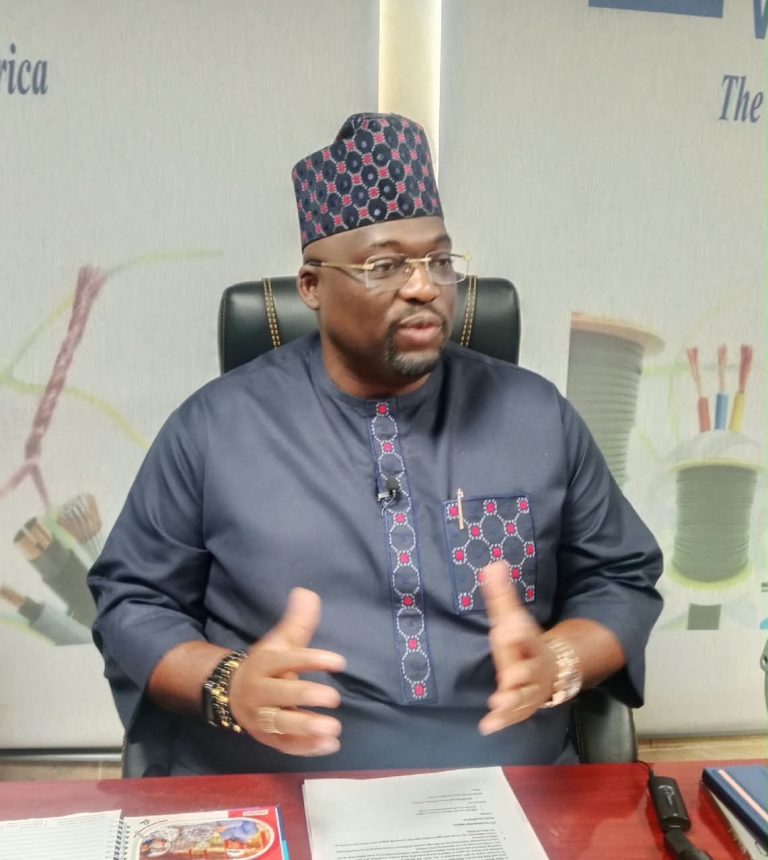
The Managing Director of Coleman Technical Industries Limited, George Onafowokan, has called for a significant reduction in the cost of gas supplied to manufacturers, saying high energy costs are forcing businesses to divert funds that could otherwise be used for expansion and job creation.
Onafowokan said Coleman had invested more than $20 million in gas-powered electricity generation, adding that manufacturers are being forced to spend heavily on self-generation while paying about $8.70 per unit for gas.
He made the remarks while assessing Nigeria’s monetary policy direction, manufacturing sector and prospects for economic growth.
On the Monetary Policy Committee’s decision to retain the Monetary Policy Rate at 26.5 per cent, Onafowokan said the current rate was still striking the right balance between controlling inflation and supporting economic growth.
However, he expressed optimism that the Central Bank of Nigeria could begin gradually reducing the rate soon.
“In my opinion, we are still striking the right balance, but I don’t think the current rate will remain for long. I believe we are approaching the point where the Central Bank of Nigeria can begin easing rates,” he said.
He projected a gradual reduction of between 0.25 and 0.5 percentage points over the next two meetings of the MPC.
Onafowokan commended the CBN for maintaining macroeconomic stability, particularly in the areas of inflation, foreign exchange and liquidity, but stressed that monetary policy alone could not drive economic transformation.
He said fiscal policy must complement the efforts of the apex bank, noting that several reforms initiated by the new Minister of Finance and Coordinating Minister of the Economy had already begun to take effect.
“We need to give these policies time to deliver results. I believe Nigeria now has a pragmatic economic team that can balance monetary and fiscal policies to deliver greater benefits to businesses and ordinary Nigerians,” he said.
According to him, while Nigeria’s macroeconomic reforms have largely recorded progress, fiscal reforms are beginning to catch up.
He said the government appeared to be putting the right people in key economic ministries, adding that economic transformation could not happen overnight.
Manufacturing, agriculture, trade need priority.
Onafowokan identified manufacturing, agriculture and trade as the sectors that should receive priority if Nigeria is to achieve sustained economic growth and create jobs on a large scale.
He explained that agriculture and manufacturing were closely interconnected because agricultural products must be processed into finished or semi-finished products to maximise their economic value.
“Producing cassava is one thing, but converting it into starch or ethanol is manufacturing. The same applies to palm produce, eggs and several other agricultural products. Manufacturing adds value and creates employment,” he said.
He urged the government to provide deliberate incentives for the sectors, particularly through development finance institutions.
Onafowokan called for stronger funding for the Bank of Industry, saying it should provide patient capital through long-term, low-interest financing rather than operate like commercial banks.
He expressed concern that the BOI had recently increased its lending rates significantly, bringing them closer to commercial banking rates.
“Development banking should not operate like commercial banking. It exists to stimulate industrial growth, create jobs and support SMEs,” he said.
He urged the government to strengthen the bank’s funding base to enable it to continue providing affordable financing to businesses.
CBN should support industrialisation
Onafowokan also urged the CBN to play a stronger role in supporting industrialisation by working with the Ministry of Finance to recapitalise development finance institutions, particularly the BOI.
“The CBN has done a commendable job, but it must also become a catalyst for industrialisation,” he said.
He clarified that his recommendation was not for the apex bank to return to directly funding every sector, but to support institutions capable of providing long-term, affordable financing to manufacturers, SMEs and agricultural businesses.
According to him, such financing is essential for sectors capable of generating sustainable employment.
High energy costs threaten manufacturers
Onafowokan identified the high cost of electricity as one of the biggest challenges facing manufacturers, despite the Federal Government’s efforts to decentralise electricity generation and encourage private investment.
He said manufacturers that had invested millions of dollars in gas-powered electricity generation were being penalised by the high cost of gas.
“Coleman alone has invested more than $20 million in gas-powered electricity generation. Instead of investing that amount solely in machinery that could create thousands of additional jobs, manufacturers are forced to spend heavily on self-generation and then pay about $8.70 per unit for gas,” he said.
He described the pricing as economically unsustainable for Nigeria, which is one of Africa’s largest gas producers.
Onafowokan called on the government to reduce the price of gas supplied to manufacturers to about $3.50 per unit, arguing that the measure should be viewed as an investment in industrial growth rather than a subsidy.
He said lower energy costs would enable manufacturers to expand operations, increase production, create more jobs and improve Nigeria’s competitiveness in international markets.
Political stability, policy consistency key to investment
Looking ahead, Onafowokan said political stability and policy consistency would be critical factors for investors over the next 12 months, particularly as Nigeria approaches another election cycle.
He said consistent government policies would help sustain the country’s economic growth trajectory and attract more investment.
“If government policies remain consistent over the next 12 months, I believe Nigeria’s economy will continue on its current growth trajectory. A steady rise in GDP will naturally attract more investors,” he said.
While noting that portfolio investments had increased significantly, indicating growing confidence in the economy, he said Nigeria still needed substantially higher levels of Foreign Direct Investment.
He, however, placed greater emphasis on Domestic Direct Investment, saying the expansion of local businesses was a stronger demonstration of confidence in the Nigerian economy and a major source of sustainable employment.
Onafowokan urged the government to continue supporting domestic investors through consistent policies and stronger incentives, particularly in manufacturing, agriculture and trade.
He said Nigeria had the potential to achieve sustained economic growth and industrial development if these measures were implemented effectively.