BY TAIWO OGUNMOLA -OMILANI
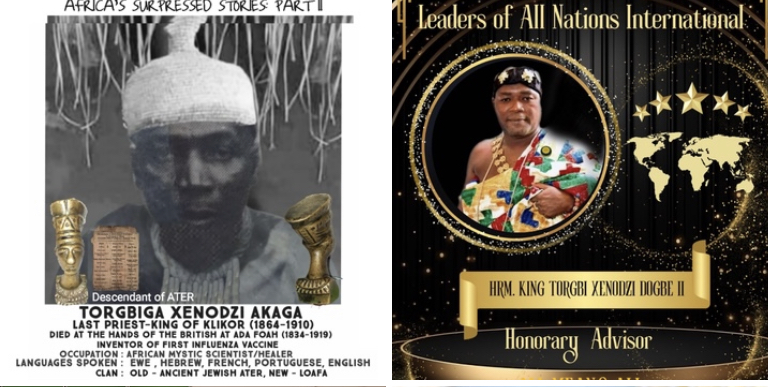
Torgbiga Xenodzi Akaga, the final priest-king of Klikor, valiantly endeavored to preserve the African Ewe Loafa heritage while resisting British colonial efforts. His reign over the Kingdom of Klikor in present-day Ghana spanned from 1864 to 1910. His Royal Majesty King Torgbi Xenodzi Dogbe II succeeded him.
King Torgbi Xenodzi Dogbe II often spoke passionately about Torgbiga Xenodzi Akaga’s profound impact on Africa and his unique leadership style.
Despite his efforts to protect his people’s traditions, Akaga was ultimately plotted against and killed by the British at Ada Foah. This assassination led to the suppression of the Amega Wenya Ewe heritage and delayed the installment of Ewe Anlo King Wenya II until 1956.
During the influenza outbreak preceding the end of World War I, Akaga played a crucial role as an African mystic scientist and healer. He introduced the first inactivated flu vaccine, which saved many lives. The British, upon discovering this breakthrough, unlawfully arrested and eventually eliminated him.
The concept of the inactivated flu vaccine that Akaga revealed to the British was later sold to an American, Thomas Francis. With support from the US Army in 1938, Francis further developed the vaccine. This significant medical advancement came after the death of the priest-king of Klikor, Torgbi Xenodzi Akaga, in what was then Juda-Togoland, now part of Ghana.