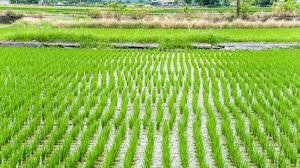
The Lagos State Government, through the Ministry of Agriculture and the Lagos State Agricultural Development Authority, has called on residents to embrace the practice of urban farming as one of the ways to attain food sufficiency.
The Commissioner for Agriculture, Ms Abisola Olusanya, made the call at the official launch of Urban Agriculture in Lagos State, on Thursday, according to a statement by the Head of Public Affairs, LSADA, Abimbola Adeola.
She said that the launch was to rekindle the minds of Lagos residents that they could practise urban farming despite the challenge of limited landmass being faced in different quarters across the state.
According to her, urban farming aligns perfectly with one of the developmental agenda of the current administration under THEMES agenda, which is making Lagos a 21st-century economy through food security.
×
Represented by the Permanent Secretary in the ministry, Mr Hakeem Adeniji, at the launch, the commissioner said, “Today’s event is a way of raising the consciousness of Lagosians to practise urban farming in their communities and compounds, using any available space in their building.
“In situations where there are no space at all, waste buckets, waste tires or waste bags filled with soil could be used to plant some edible vegetables. That little vegetables planted for household use has added to the agricultural production availability in the state.”
She said urban farming would add to food production, increase access to fresh agricultural products, reduce pressure on food produce within the market and thereby stabilise the price of food in the market.
Adeola said, “Urban farming is an agricultural revolution, which has taken off in some developed countries to solve food insecurity, local food promotion and urban sustainability efforts.
“Among the most pressing needs of any urban agglomeration is to achieve food security, and one of the ways to achieve this is by supporting and recognising the economic, environmental and social benefits which urban farming offers.”
According to her, urban farming also has the potential to nourish farming household, communities and create economic opportunities.
“Urban farming helps stimulate the local economy through job creation, income generation, and the growth of small businesses. More importantly, urban farming makes fresh food more affordable. It is fast becoming an important component of a city’s food system,” she said.
Pls use World Bank Logo – Business
BoI, World Bank to partner on $158m fund for MSMEs
The World Bank has partnered with the Bank of Industry to provide a $158m lifeline to 650,000 Micro, Small and Medium Enterprises in Nigeria.
According to the BoI Growth Platform’s Aid for Productivity Report, the fund will be dedicated to loan subsidies, operations grants, and tech-support grants for vulnerable MSMEs in 30 participating states.
The report, which was co-authored by the BoI Executive Director, Toyin Adedeji, and Chief Operating Officer of the Growth Platform, Uzoma Nwagba, chronicles the development, impact, and future of BoI’s growth platform.
The report noted that in December 2020, the World Bank approved the Nigeria Covid-19 Recovery and Economic Stimulus programme, committing $750m to address core socioeconomic challenges imposed on poorer Nigerians by the pandemic.
×
The aim of NG-CARES is to increase access to livelihood and food security services, and to disburse targeted grants to eligible households and businesses, the report stated.
The report said, “Owing to the dynamic potential and proven track record of the Growth Platform, as well as the team’s existing participation in COVID-19 relief schemes, the World Bank has partnered with the platform to manage and deliver ‘Result Area 3’: a $158m fund dedicated to loan subsidies, operations grants, and tech-support grants for 650,000 vulnerable MSMEs in 30 participating states.
“The programme will harness the Growth Platform’s well-established infrastructure and expertise, from the initial profiling of businesses to the disbursement of grants.
“These grants aim to cushion the economic impact of COVID-19 on struggling businesses, as well as build their resilience by expanding their access to digital technology and operational support.”
According to the BoI, the plan is currently being finalised, with each programme customised to fit the context.
The bank described the Growth Platform as tech-driven, providing flexible systems and operations that have the capacity to transform communities across Africa and beyond.