*Calls It an ‘Insult to Democracy’
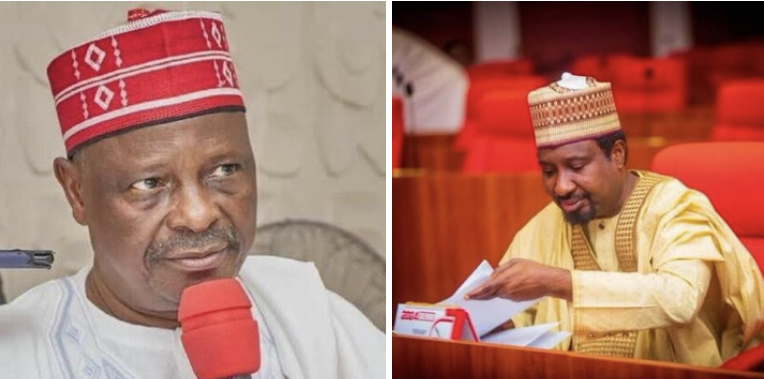
Former Kano State Governor, Rabiu Kwankwaso, has strongly criticized the federal government for assigning the distribution of rice palliatives in Kano State to Deputy Senate President, Senator Barau Jibrin, rather than the state’s governor.
Kwankwaso described the move as a “gross insult to our constitutional democracy” and accused the government of taking partisanship too far.
Speaking during his visit to Kano, Kwankwaso expressed his disappointment with the federal government’s approach to distributing rice palliatives across the country. “For the last one week, I have been in Kano, and sadly I noted with great disappointment the Federal Government’s distribution of rice palliative to 35 states all through their Governors, except Kano State in the whole federation,” he stated.
Kwankwaso noted that while other states received their shares through their governors, Kano’s allocation was handed over to APC stalwarts to manage. He condemned this decision as a serious affront to democratic principles, stating, “This is a gross insult to our constitutional democracy and driving partisanship too far.”
The former governor called on President Bola Tinubu to intervene and stop what he described as a blatant subversion of democracy. “I call on Mr. President to immediately halt this naked derailment of democracy,” he urged.
Kwankwaso also raised concerns about the security situation in Kano, pointing out that in just two weeks, three different State Directors of the Department of State Services (DSS) have been posted and reposted out of the state. “Without doubt, this is negatively affecting the security of Kano State,” he warned.
His comments highlight the growing tensions between the federal government and Kano State, as well as concerns over the implications of political interference in governance and security matters.