
BY TAIWO OGUNMOLA -OMILANI
The incident in Kenya that caused international communities sleepless nights due to the loss of lives and destruction of properties could have been averted if the government had been sensitive to the plights and feelings of its people. This should also serve as a wake-up call to all African countries: the people they represent cannot be taken for granted because those in government offered themselves to serve the people and not the President and themselves.
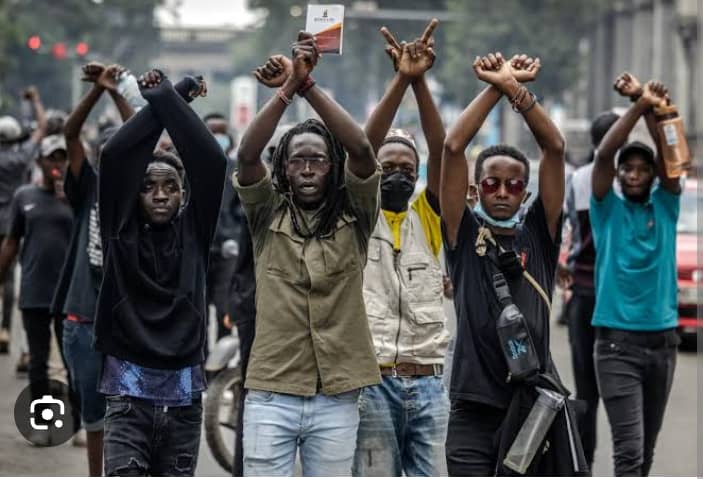
In Kenya, the turmoil unfolded as young activists successfully forced the government to shelve approximately $2.7bn in tax hikes this week, shifting focus to ending years of endemic corruption, high cost of running the government and shoddy governance.
Protesters claimed the finance bill that President William Ruto abandoned was only a symptom of the larger problems plaguing a country where many young people have few or no job prospects despite the country’s projected strong economic growth.
Therefore the struggle to force the government to reverse its decision claimed many lives.
One of the most painful aspects of the crisis was a number of teenage demonstrators killed during Kenya’s anti-government protests. More protesters died as police cracked down, with the Kenyan High Court ordering security forces to halt the firing of live rounds, rubber-coated metal bullets, tear gas, and water cannon into crowds.
The apparent insensitivity of African governments is not a new issue. During Gambia’s 2022-2023 budget presentation, a honorable female member, Madam Touma Njie, spoke truth to power on the need for Members of Parliament to reduce their salaries in order to better serve the people who elected them.
“Our government does not love this country. They do not have the feeling to nurture our children,” she said, highlighting the imbalance of spending $6 billion on salaries alone in a supposedly poor country. Madam Njie emphasized the importance of investing in education and health over feeding and paying officials at the expense of the poor.
A Kenyan lawmaker, also spoke out during the plenary, opposing a motion for the Assembly to go on recess after resuming from a break. She condemned the police violence, noting that the youth were trying to make their voices heard. She expressed disappointment with the president’s speech, stating that he seemed disconnected from the pain of the Kenyan people during such a time of civic unrest.
Similarly, South Africa’s Economic Freedom Fighters (EFF) party, led by opposition leader Julius Malema, lauded Kenyans for protesting against the unsavory Finance Bill 2024. The EFF noted their solidarity with the Kenyan youth who took to the streets to protest the bill, which imposed ‘unbearable’ taxes on Kenyans.
Various organizations, embassies, international communities and Kenyans in diaspora have also condemned the actions of Kenyan police towards the protesters.
Leaders of All Nations International (LOANI), in support of the UN Secretary General, the African Union, embassies, humanitarian organizations, and NGOs, and Kenyans in diaspora joined the global communities in expressing their sentiments regarding the civic-political situation in Kenya.
LOANI Africa Chairperson, Amb. Dr. Winfred Wanjiku Gitonga, stated, “We acknowledge the complexities that arise during such times of civil unrest, especially when met with armed violence by law enforcement, leading to loss of lives and destruction of property. As global leaders dedicated to advocating for peace, security, and respect for humanity, we are committed to addressing any such challenges with tact and consideration.”
Nicholas Ford recently reported that International Monetary Fund diktats pushed Kenya into a spiral of rising debt and unaffordable prices for food and fuel. The report indicated that new loans came with strings attached that exacerbated the crisis, benefiting lenders in the West. It is clear that under immense pressure from citizens and international communities, President William Ruto eventually stopped signing the tax bill into law.
In conclusion, the crisis in Kenya is a stark reminder of the urgent need for African governments to prioritize the welfare of their people and minimize exorbitant spend. The tragic loss of lives, particularly young protesters, underscores the consequences of neglecting public sentiment and governance issues.
African leaders must heed this wake-up call and foster an environment where the voices of the youth are heard, and their grievances addressed through meaningful dialogue and reform. The global community must also play a supportive role in advocating for fair economic policies that do not exacerbate the struggles of the most vulnerable populations. Only through collective action and genuine commitment to change can Africa move towards a more just and equitable future.