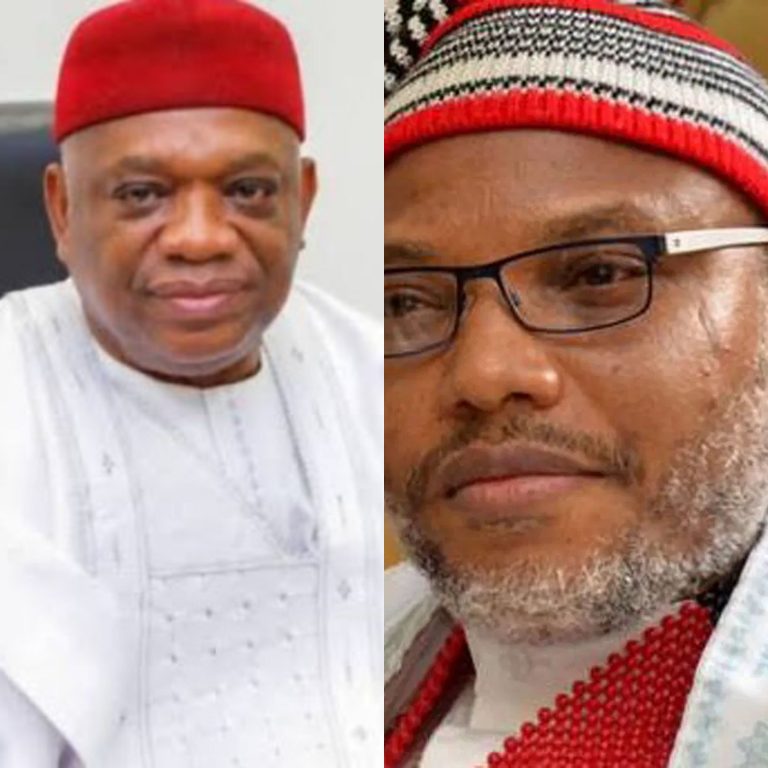
By Rubby Obinna
As nationwide protests loom over the continued detention of IPOB leader Nnamdi Kanu, Senator Orji Uzor Kalu has found himself at the center of controversy for refusing to take a public stance on the matter.
Kalu’s neutrality has split opinion across Nigeria’s political and regional lines. Some view his silence as a missed chance to promote peace and reconciliation in the Southeast, while others praise it as an act of integrity and respect for due process.
In a recent interview with TVC, the former Abia State governor said, “I do not hate Kanu, but I can not pass judgment on his case while it is still in court. Justice must prevail, wherever it leads.”
His careful choice of words underscored a deep belief in judicial independence, but it also left many Nigerians puzzled.
Critics argue that Kalu’s influence could have been used to ease tensions in the region and push for dialogue. Supporters, however, see his restraint as proof of his loyalty to the rule of law in a political climate often shaped by emotion and pressure.
Kalu’s position appears anchored in his long-held conviction that justice must follow due process, not public sentiment. Despite mounting criticism, he has remained unmoved, insisting that the courts must be allowed to decide Kanu’s fate without interference.
As protests unfold in Abuja on October 20, Kalu has maintains his silence—neither condemning nor endorsing the calls for Kanu’s release. To some, that silence reflects caution; to others, conviction.
Whether seen as prudence or passivity, Kalu’s refusal to bow to political or public pressure underscores a rare steadiness in Nigeria’s charged political landscape.