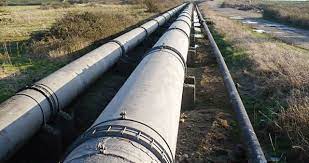
The low supply of Premium Motor Spirit, popularly called petrol, being experienced in parts of Lagos and South-Western states may drag till the end of September, and might spread to other locations if not addressed in earnest.
It was gathered on Thursday that the situation may linger till month end because the System 2B pipeline in front of Good Luck Estate at Idimu, Alimosho Local Council Development Area of Lagos, is going to be ready for use by September ending.
Oil marketers had attributed the cause of the recent fuel queues experienced in many parts of Lagos and some states in the South-West to the disruptive activities of vandals.
They explained that the shutdown of the System 2B pipeline, which supplies large volumes of products to the region, had impacted negatively in the flow of PMS in Lagos and neighbouring states.
“From our end, the issue has been with the pipeline vandalism which we raised an alarm over since July. Satellite depot has not loaded any product in the last three weeks, and whenever there is a problem here, it is going to affect Lagos and the whole of South-West,” the Chairman, Independent Petroleum Marketers Association of Nigeria, Satellite Depot, Akin Akinrinade, had told The PUNCH on Tuesday.
Akinrinade had further explained, “Although I don’t know what has been happening in other depots, from what we gathered yesterday, even NNPC Retail has been operating skeletal product dispatching. The NNPC Retail loaded just three to four trucks to Ikoyi on Monday. No product was dispatched to other places. I don’t know about other depots.”
But on Thursday, the Chief Corporate Communications Officer, Nigerian National Petroleum Company Limited, Garba-Deen Muhammad, said the vandalised pipeline was being worked on by the NNPCL.
The PUNCH had also reported on Thursday that a source at the Nigerian Midstream and Downstream Petroleum Regulatory Agency who pleaded to speak on condition of anonymity, said there was more than enough stock in-country.
According to the official, a total of 200,000 metric tonnes, equivalent to about 540 million litres of fuel, is currently at various depots in Lagos.
“We are taking concrete steps to close the gaps in product distribution, and I can tell you that there is no significant difference in what was trucked out last week and this week,” he said while declining to state what quantity was distributed last week.
“The depots are not dry. Everywhere is wet. There are two vessels discharging PMS at Apapa jetty, one at Ijegun, one at Coconut, Ibafo, and one at MRS, Tincan. Cumulatively, we are talking about 200,000 metric tonnes of PMS, equivalent to about 540 million litres in various shore tanks in Lagos. So, we are taking time to close the supply gaps, and I can assure you that the queues would disappear just as they came,” the source stated.
Meanwhile, when told on Thursday that other states outside the South-West had no queues and whether they would experience such in due course, the PETROAN president explained why this was so.
He said, “First of all, don’t forget that buyers are also having issues with their pockets. So vehicles are not buying are not buying as much petroleum products as they used to buy.
“Right now there are different modalities that Nigerians are managing to get through. You have families that are dropping several cars in their fleets, you have neighbours that are joining resources, trying to pass through the same area where they can get closer enough to their offices and business places.
“So with that kind of situation in several parts of Nigeria there will be not so much pressure on PMS. That is why it has not being pronounced as such outside Lagos.
“But it is pronounced this much in Lagos because the state is an entire city that has over 15 million residents and every day, whether subsidy or no subsidy, people must move in Lagos. So that is the reason.”
Gillis-Harry, however, stated that if the low supply situation should persist for long, the queues would spread to other regions of the country.