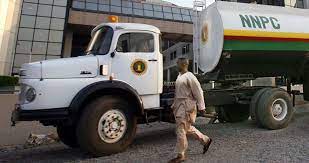
The Nigerian National Petroleum Company Limited may be spending about N843bn monthly on the importation of Premium Motor Spirit, popularly called petrol, following the halt in oil swaps by the firm, findings showed on Sunday.
NNPCL, the sole importer of petrol into Nigeria, has started buying petrol using cash tenders, rather than oil swaps, Reuters reported on Saturday.
In the swap arrangement, known as Direct Sale, Direct Purchase, which had been in place for nearly a decade, the national oil firm sells crude to refiners, who will in turn supply NNPCL with an equivalent worth of refined petroleum products.
In July, data from the Nigerian Midstream and Downstream Petroleum Regulatory Authority showed that between June 1 and June 28, 2023, which was described as the post-deregulation period, the total petrol consumption across the country was 1.36 billion litres, while the average daily consumption was put at 48.43 million litres.
Oil marketers said the average ex-depot price of petrol from the only importer of the commodity was N580/litre. NNPCL is the sole PMS importer currently. Other marketers stopped importing the product due to their inability to access foreign exchange, among others.
With the average daily consumption of petrol at 48.43 million litres and an average ex-depot price of N580/litre, the national oil company would spend N28.1bn daily on PMS imports.
In 30 days, the cost of importing the commodity is going to be about N843bn, going by the fact that NNPCL now pays cash for PMS imports.
“The gains are enormous. So if they want to reduce the level at which they borrow billions of dollars, one sure way to help is by ensuring that our refineries are brought back on stream fast,” Shuaibu stated.
Also, speaking on refineries, the Chief Executive Officer, Centre for the Promotion of Private Enterprise, Dr Muda Yusuf, explained that the government should make the refineries work by selling part of its shares in the facilities.
He said, “Let’s get it clear that it is not in the interest of this country for the government to be managing those refineries. Look at how much we have spent on these refineries for their Turn Around Maintenance.
“So from that point of view, I think that since the government has started the rehabilitation of the refineries, once it finishes rehabilitating them, it should work out a model where it can sell some of the shares in them. It may not be everything.
“It should be sold to the private sector to manage the refineries. We can develop the NLNG (Nigeria Liquefied Natural Gas Company) model, where the government has a minority share, say 49 percent, for instance.
“But the majority share will be owned by those with the technical capacity and financial muscle to manage them so that we can have refineries that work. The government cannot manage them. We may not go for outright sale, but implement something to make the refineries work,” Yusuf stated.
Black market
This came as it was observed on Sunday that many filling stations in the Federal Capital Territory remained shut, resulting in long queues at the few outlets that were open for operations.
Checks by one of our correspondents revealed that the few filling stations that sold fuel on Sunday had jacked up their various pump prices to as much as N630/litre, as black marketers that hawked the commodity in jerrycans sold theirs at about N850/litre.
Along the Kubwa Expressway, at the NNPC Junction, Eterna Filling Station, though having a few attendants around, declined to sell fuel to customers who drove into the premises.
Similarly, Gegu Oil, close to the Dutse Bridge on the same expressway, had its gates shut.
At the Aso Energy Resources Station in Kubwa Phase 2, our correspondent observed a lengthy queue with only one functional pump while fuel was dispensed at N630/litre.
A.A Rano Filling Station at the Jabi Garage also had a bit of traffic, with fuel dispensed at N625/litre. Meanwhile, NNPCL filling stations at Wuse Zone 6 and Garki Area 10 dispensed the product at the regular pump prices of N617/litre.
Some FCT residents lamented the situation, alleging that many filling stations used the opportunity to defraud unsuspecting customers.
“If you go to Total in Kubwa, you could buy N10,000 fuel, but what was actually sold was N5,000; the rest is just air. Sometimes, if you’re not observant, the meter starts reading from about N300 or even N600. And it’s not even just Total in Kubwa; check Total anywhere,” Mark Aloysius, stated.
On his part, Festus Isaiah said he had no choice but to continue to buy the fuel no matter the cost, as he needed it to run his business.
“I’m an electronics salesman. If I don’t buy fuel to move around, I must buy in my generator. Because what kind of electronics store will not have light to display what they are selling? Even if it goes up to N1,000/litre now, I have to buy.
“And it’s not fair. We know the marketers control the price now, but can’t the government regulate them? Are they more than the government?”
In contrast, some stations, like Shema in Jahi, Mobil in Utako, recorded very little traffic despite being open to attend to the needs of motorists and customers.
Meanwhile, black marketers quickly took advantage of the situation, selling fuel from jerry cans for as much as N850/litre.
“I buy at N620/litre, then I resell at N800 or N850/litre, depending on my assessment of who I am selling to,” Sule, a black marketer, told our correspondent.