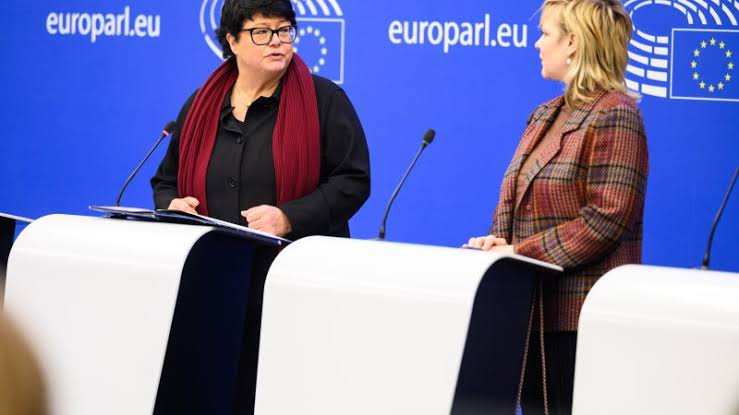
The European Parliament on Wednesday approved a draft law intended to protect media freedom in the European Union.
The European Media Freedom Act established EU-wide legal safeguards for editorial independence and the protection of journalistic sources.
It also required regulators to keep an eye on media market concentration.
Large online platforms such as Google, X – formerly known as Twitter and Facebook would also have to give bona-fide media organisations up to 24 hours notice.
This has a right of reply before censoring their contents.
Media organisations would have to register in advance to benefit from the provision.
The law was drafted in response to concerns about media freedom in countries such as Hungary and Poland.
However, enforcement is largely a matter for individual member states.
An EU-level assembly of national media regulators would be able to issue opinions on the state of media freedom in any given country.
But if member states fail to apply the law properly, it would be up to the European Commission to pursue legal action in EU courts.
The law sparked some controversy in Germany because under the country’s federal constitution, media regulation is generally a matter for its 16 federal states and not the Federal Government, much less the EU.
There were also concerns in Germany and elsewhere that the legislation would open the door to more EU involvement in a matter traditionally left to member states.
Nevertheless, EU member states were expected to give their final approval to the European Media Freedom Act later in the spring.