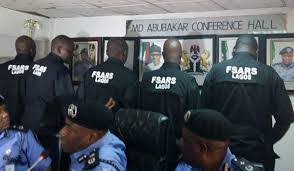
Despite the Nigeria Police Force budgeting over N2.8bn between 2015 and 2020 for local and international training for its personnel, including the recently dissolved Special Anti-Robbery Squad, there is a growing concern among many Nigerians that policemen in the country are poorly trained.
This concern has been part of the issues raised by the #EndSARS protesters, who have for days been staging demonstrations across the country.
The protesters, whose actions compelled the Inspector-General of Police, Mohammed Adamu, to dissolve SARS on October 11, alleged that the manner SARS personnel violated people’s rights and subjected people, especially the youth, to harassment and brutality showed that the training of policemen in the country was faulty.
Meanwhile, documents on the website of the Budget Office of the Federation revealed that the amount budgeted by the police for local and international training of personnel in 2015, 2018, 2019 and 2020 totalled N2,833,674,510.
A sum of N1,444,348,560 comprising local training – N1,025,877,847; local travel and transport training – N268,352,974; international travel and transport training – N150,117,739, has however been similarly budgeted for in the 2021 Appropriation Bill, currently before the National Assembly for approval.
The training expenditure for 2016 and 2017 were not reflected in the documents on the website, but in 2015, the police budgeted N489,210,100 for local and international training of personnel, including the cost of transportation.
In 2018, N788,667,088 was budgeted for the training while in 2019 and 2020, the cost was N777,898,661 respectively. The total for the four years amounted to N2,833,674,510.
Reacting to some of the atrocities committed by the disbanded SARS officials, a retired Assistant Inspector-General of Police, Austin Iwar, told Sunday PUNCH in an interview that “very few officers in the Nigeria Police are properly trained. If you don’t train an officer well, you can’t expect the best from him. What you give is what you get,” he said.
Iwar added, “Successive Nigerian governments have given the police what you are seeing today and it is not just the police but also other government institutions. But because of the prominence of the police and the fact that they are closer to the people, they impact more on daily life; they are the most visible organ of government. That is why you are seeing what is happening.”
Despite the budgeted sum, some divisional police officers and heads of units in the Force told Sunday PUNCH on condition of anonymity that despite of the huge sums budgeted, inadequate training capacity, poor welfare and equipment were some of the factors responsible for the gross professional misconduct by SARS men and some other cops.
They lamented that the training received by their personnel was defective and often not available to all the personnel.
A Divisional Police Officer in Ogun State told Sunday PUNCH that as a result of poor funding, two policemen were usually selected in each police division across the country for in-service training, noting that upon return, the trainees were expected to impart the knowledge to their colleagues.
He said, “They go for training every three or six months. They go for weapon handling among others. The Force headquarters may choose two policemen from each division for the training. Those two would impart the knowledge to others when they return to their stations. You can guess the effectiveness of that.
“The reason usually given for this is inadequate funding and it’s no longer strange.”
Also, a DPO in the Kano State Command stressed that apart from the fact that the training was not regular, the beneficiaries could sometimes view it as punishment.
He said, “We know what other public servants enjoy when they go for training, but in our case, the accommodation at the training centre is poor and there is no allowance. You take care of your own feeding and other things.
“If it is promotion training for rank and file, it is done at police colleges and it’s not under the best of conditions.
“But for other training, the number of policemen selected from each division depends on the signal from the command. They often tie the lapses to funding. So, we often see the yearly budget you mentioned, but that is not our reality.
Other DPOs and heads of units who spoke to our correspondents said there was supposed to be training at intervals for personnel but the situation on ground contrasted that.