The Federal Government has abolished the long-standing practice that allowed revenue-generating agencies to retain portions of the funds they collect as cost of collection. Henceforth, all revenues are to be remitted in full to the Federation Account for distribution to the federal, state, and local governments.
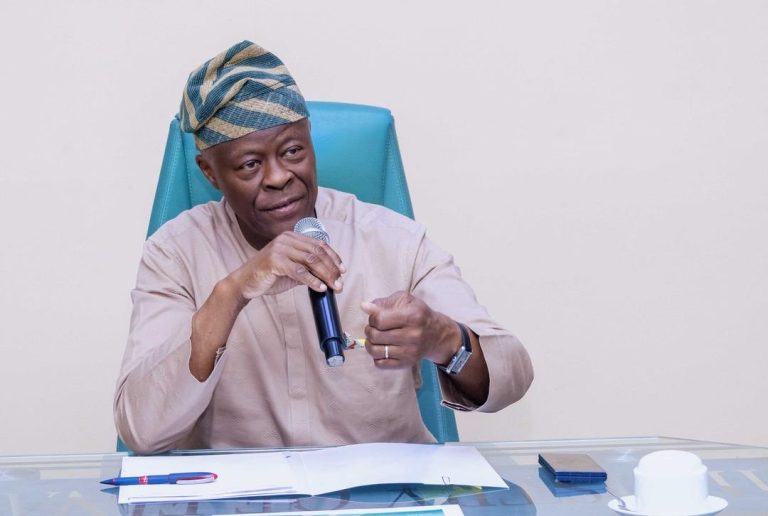
Minister of Finance and Coordinating Minister of the Economy, Mr. Wale Edun, made this announcement on Thursday in Abuja during the unveiling of the National Development Update. He said the directive aligns with President Bola Tinubu’s fiscal reform agenda aimed at promoting transparency and ensuring efficient use of public funds.
According to Edun, although Nigeria’s revenue performance has improved, significant portions of collections have been withheld by agencies such as the Federal Inland Revenue Service (FIRS), the Nigeria Customs Service (NCS), and the Nigerian Upstream Petroleum Regulatory Commission (NUPRC) as cost of collection — without corresponding improvements in national development outcomes.
He stated:
> “Funds have flowed to the Federation Account, but the efficiency of that spending is critical. We have been mandated by His Excellency, Mr. President, to take a look at deductions — not just those for cost of collection, but deductions generally.
> “When you look at the gross figure, you see all kinds of deductions before you get to the net distributable figure, which goes to the federal, state, and local governments. I must inform you that even during the last FAAC allocation, most of those deductions have been removed once and for all.”
Edun emphasized that the Constitution mandates all revenues to flow into the Federation Account before distribution according to the established sharing formula, stressing that the new policy now fully enforces this provision.
On social protection, the minister reiterated the government’s commitment to cushioning the impact of ongoing economic reforms under President Tinubu’s Renewed Hope Agenda.
He noted that while reforms have led to short-term hardships, programmes are in place to support the most vulnerable Nigerians.
> “The promise was that they would not be left behind. We made sure that each person who benefits is biometrically and uniquely identified. By the end of October, we will have covered about 10 million households, reaching 50 million Nigerians. Before the end of the year, the commitment is to have completed 50 million households,” he added.
Until now, key revenue agencies had relied on retention arrangements for their operational funding. The NUPRC, for instance, keeps about four percent of royalties, rents, and other income it collects for the Federation Account.
Similarly, the FIRS retained ₦254.82 billion in 2024 and is projected to receive ₦43.83 billion for the first half of 2025 as cost of collection. The Nigeria Customs Service, which previously received seven percent from the Federation Account, now operates on a four percent Free on Board (FOB) levy on imports, following a directive by the House of Representatives in August 2025.
Edun maintained that the new remittance framework would ensure more funds are available for development across all tiers of government while eliminating inefficiencies in public revenue management.