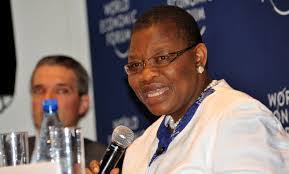
A former Minister of Education, Dr Oby Ezekwesili, noted that Nigeria needed fixing and that the electorate must be determined to bring an efficient political leadership to power.
Ezekwesili, a former Vice-President of the World Bank, Africa Division, said, “The dominant political culture is the monopolistic service that has retarded and stagnated the country. So, we want to produce a value-based political class that understands ethical policies, competence and how to build systems and procedures that enable the growth of the society.
“We cannot afford to be spectators. We all should therefore arise and fix our nation; we are the Nehemiahs. Politics undermines everything; individuals, family, community and governance. If we don’t fix politics we will be wasting a lot of time. There’s nothing about a bad situation that cannot change, but the people must be ready. Only the electorate have the capacity to fix politics.”
Also, Archbishop Emeritus and former Catholic Archbishop of Abuja Diocese, John Cardinal Onaiyekan, said though Adeboye was entitled to his own opinion, Nigerians were also calling for the same thing.
He added, “I still repeat what I said the last time in my interview with Sunday PUNCH that we need to restructure, whatever you mean by restructuring means that things cannot continue like before. We must find a way of improving the way Nigeria is run so that everybody may feel at home with it because there is a lot of frustration and I think I am not the only one saying it. I do hope the people in government also know this. The question probably is how do we go about it?
“The important thing for us is that we need to agree that we need to change things and if we all agree we need to change this, then we all sit down and find out how we need to change things and this is where the whole issue about coming together to talk in all sincerity is all about. Let us be sincere with ourselves and stop playing games.”
Also speaking, the Catholic Archbishop of Abuja, Ignatius Kaigama, said, “I want to see restructuring before a restructuring. And what do I mean? There has to be an attitudinal restructuring, otherwise even if we engage in political restructuring, it will only be a political mirage.
“After 60 years, we have matured and perfected the act of greed and corruption and all that the local government chairman or the state governor or the President or the National Assembly members are concerned with is to extract from what belongs to all their constituencies.”
On his part, the Chairman of the Christian Association of Nigeria in Kaduna State and National Vice Chairman of CAN (19 Northern States and Abuja), Rev Joseph Hayab, said the call restructuring reflected the desire of many Nigerians.
He stated, “If you share this country into six groups, you will know over four and a half groups are yearning for restructuring. Even the one and a half that are acting as if they do not want it are only doing that for selfish reasons because they do not care about the progress of this country as they are worried about what they will get.
“We really need to come up with a system that will work for us. The system we have now has caused us more pain than progress. People are tired, frustrated and angry because the country is not moving forward.”
Retired generals lament nation’s woes at 60
Retired Major General David Jemibewon; a former General Officer Commanding, 1st Division, Nigerian Army, Major General Abiodun Role (retd), and others have lamented the poor state of the country 60 years after it got independence from British colonials.
In an interview with newsmen, Jemibewon, who is a former military governor of Oyo State and ex-Minister of Police Affairs, said it was disappointing for Nigeria to be facing so many problems at 60, and called for a national dialogue to device the means of fixing the problems.
He said, “At no given time should we have problems as we have presently. Really, it is unfortunate. This country does not deserve what is happening to it now with the experience we had with the problems of Agbekoya, coups, and counter-coups, as well as the civil war. We thought that with the end of those incidents, we would have reached a period of stabilisation and progress.
“So to experience the problems of insecurity now is very disappointing; it draws us back from the development that we are working and hoping for. What is happening now is not good enough for us. The best thing is to look at what can be done to remedy the situation.”
Jemibewon said while he would not blame the current government for the security woes of the country, he called on government to install frameworks that would stem the tide of insecurity.
Also speaking with Sunday PUNCH, Role said “political management” was responsible for problems like insecurity, corruption, and strife, saying he believed Nigeria had reached the peak of its challenges.
“Political management has a multiplier effect on all other sects of any nation. If a nation is not well managed politically, it will experience what we are experiencing like insecurity, strife, corruption, and so on,” he said.
On his part, Major General Obi Umahi (retd) described Nigeria at 60 as a “giant in the sands. A big adult wearing a diaper.”
Umahi noted that the country had yet to attain its expected height, especially in terms of security, saying, “We are just far from where we were supposed to be because Bill Clinton says, ‘If you are wobbling, you should be wobbling to the right direction.
“All of us know that we are at the lowest ebb of security. Insecurity is overwhelming us in every part of the country and the required action now is state police. You can’t be doing one thing the same way and expect different results.”
Also commenting on the country’s state at 60, General Idada Ikpowonsa (retd) said the division in the country was so visible that only drastic measures could keep everyone together.
He said, “The problems are too many. The way things are going is not the way our founding fathers conceptualised the country. They wanted a country that would be united even though we are divergent in culture, tradition, religion, and background. They wanted to mould a union that would be in the best interest of the country.
“They wanted a nation where our diversity would be an asset, where the various components will appreciate, compliment and love one another, have their various governments and a central government that will be common to all to take care of federal issues.”
Ikpowonsa said with the way things were, most citizens had lost confidence in government and the rulers, adding that only drastic measures could sustain the union.