BY TAIWO OGUNMOLA -OMILANI
Dangote Cement Plc has announced that it has co-processed more than 1.5 million tonnes of alternative fuels over the last four years, in a move aimed at reducing greenhouse gas emissions and strengthening energy security across its operations in Africa.
The initiative underscores the company’s commitment to cutting its carbon footprint while promoting sustainable industrial practices.
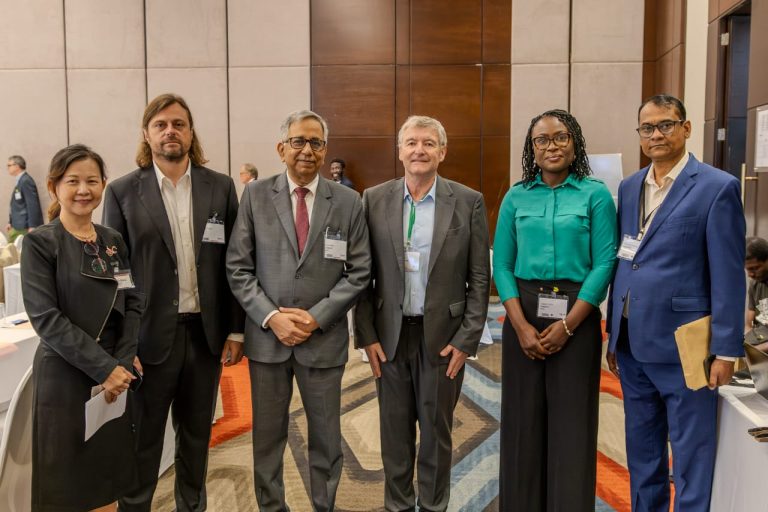
Speaking at the Africa CemTrade Summit held in Accra, Ghana, Group Managing Director of Dangote Cement, Mr. Arvind Pathak, noted that since 2021 the company has deployed 15 alternative fuel systems across its plants. This shift has enabled Dangote Cement to achieve up to 40 per cent thermal energy substitution in several of its operations, particularly in Senegal, Zambia and South Africa.
Pathak, who spoke on the theme “Sustainable Innovation in the Sub-Saharan Africa Cement Distribution Value Chain,” said the alternative fuel strategy involves converting industrial, agricultural and municipal waste into energy. According to him, the initiative forms part of Dangote Cement’s broader decarbonisation plan, which targets a 20 per cent reduction in carbon emissions by 2030.
He explained that the company, which has operations in 11 countries and a total production capacity of 55 million tonnes annually, is driving sustainability from production to logistics. “Sustainability sits at the core of our business model. We are combining environmental responsibility with profitability,” he said.
A key element of the company’s green transition is its investment in compressed natural gas (CNG)-powered logistics. So far, the company has acquired more than 3,000 CNG trucks and 1,000 dual-fuel vehicles, with plans to run an entirely CNG-powered fleet in Nigeria by 2026. This is expected to reduce the company’s carbon emissions per energy unit consumed by up to 29 per cent.
Additionally, Dangote Cement has advanced its digital transformation to boost supply chain efficiency through tools such as the Distributor Management System (DMS), Transport Management System (TMS), and Electronic Proof of Delivery (e-POD).
The company has also mapped over 65,000 retail outlets across Nigeria and expanded transportation partnerships through its Customer Truck Empowerment Scheme, distributing over 4,000 trucks to logistics partners and creating employment opportunities.
In 2024, Dangote Cement invested over N12.4 billion in community development projects, including education, healthcare, infrastructure and youth empowerment — a fourfold increase from the previous year.
Pathak emphasized that the company’s sustainability efforts go beyond compliance. “Our strategy ensures profitability while protecting the planet,” he said. “We recognised early that sustainability would shape the future of manufacturing. We are proving that economic performance and climate responsibility can move together.”
Dangote Cement is also collaborating globally to advance sustainable building standards as a founding member of the Global Cement and Concrete Association (GCCA) and a partner of the United Cities and Local Governments of Africa (UCLG Africa) in promoting low-carbon cement innovations such as LC3.
Also speaking at the summit, Deputy Head of Sustainability, Oyekemi Oyelola, said Dangote Cement is committed to ensuring that industrial growth and environmental protection progress together.
“We see a future where Africa’s cement sector becomes a global benchmark for sustainable industrialization. Our mission is to help build a stronger, greener future for the continent,” she stated.