The danger of terrorism in the European Union remains high in spite the reduced number of attacks, according to a report by Europol.
The EU Terrorism Situation & Trend Report 2022 (TE-SAT 2022), which Europol presented in The Hague on Wednesday, states that the danger comes primarily from individual perpetrators with a jihadist background and from far-right extremists.
Experts said that, Europe is also threatened by the effects of the war in Ukraine and by opponents of the measures to contain the Coronavirus pandemic.
“The findings of the TE-SAT 2022 confirm that terrorism still poses a real and present danger to the EU,’’ Europol’s executive director, Catherine De Bolle said.
“In a time of geopolitical shifts, the EU needs to continue more than ever its counter-terrorist measures. Europol will continue to work closely with its partners to meet the challenges ahead,’’ she added.
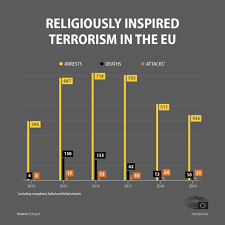
In 2021, investigators in the EU states registered 15 terrorist attacks, including failed and foiled attempts.
According to the report, this was significantly fewer than the 57 attacks in the previous year.
However, four completed attacks include three jihadist terrorist attacks and one left-wing terrorist attack, the report said.
Some 388 suspects were arrested; two-thirds for suspected jihadist terrorism offences in Austria, France and Spain, in 2020, there were 449 arrests, in 2019, 723
The report says that terrorist propaganda disseminated online in 2021 continued to reflect themes related to COVID-19.
“The increased amount of time spent online due to COVID-19 restrictions, amongst other reasons, constitutes a risk factor in vulnerable individuals’ potential pathway to extremism,’’ it said.
The report added that violent anti-COVID-19 and anti-government extremism, which is not affiliated with “traditional violent extremist and terrorist activities,’’’ emerged in some EU nations and non-EU countries.
“Such forms of violent extremism materialised in open threats, hateful messages spread online and, in some cases, the use of violence,’’ it said.
The war in Ukraine also poses a security threat.
Extremists from EU member states who have joined the fighting could become an issue upon their return, the experts said.
Meanwhile, the Taliban’s takeover of power in Afghanistan did not appear to directly affect the current terrorist threat in Europe.
However, the increased global attention on religiously motivated insurgencies provided jihadists affiliated with al-Qaeda or Islamic State “opportunities to promote their own narratives,’’ according to the report.