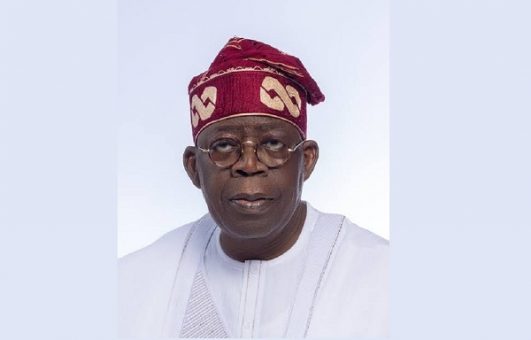
The Chairman, Board of Trustees of the Full Gospel Business Men’s Fellowship International (FGBMFI) Nigeria, Pa Olusola Ajolore, has called on the Federal Government and political leaders to urgently renew their commitment to nation-building.
He said the country’s enormous potential would remain unrealised unless leaders and citizens accepted responsibility for its future.
Ajolore, spoke yesterday at a media engagement to mark his 100th birthday, saying Nigeria was “worth saving, worth serving and worth believing in”. He urged President Tinubu and other leaders to strengthen security, agriculture, education and economic opportunities for Nigerians.
The centenarian, who described his long life as a privilege from God, said his experiences spanning colonial rule, independence, the Civil War, military regimes and democratic governments had convinced him the country could overcome its challenges if its people recovered a strong sense of collective national purpose.
He said the responsibility for rebuilding Nigeria should not be placed solely on government. “Government has a responsibility. Leaders have a responsibility. Businesses, communities and citizens also have responsibilities,” he said, challenging Nigerians to move beyond asking what the country could provide for them and begin asking what they could do to make Nigeria better.
He identified insecurity as one of the greatest obstacles to national development, stressing that the problem should not be viewed only as a military or policing challenge, but as one with direct consequences for agriculture, food production, businesses, employment and youth development.
“A farmer who cannot safely reach his farm cannot produce effectively. A business that cannot operate securely cannot create employment. A community that lives in fear cannot develop normally,” he said.
The elder statesman called for stronger intelligence gathering, effective security institutions, justice, community cooperation and accountability, urging authorities to identify and prosecute those who finance, facilitate or profit from violence. He also linked insecurity to the absence of economic opportunities for young Nigerians, arguing that education, skills acquisition and productive employment must form part of the nation’s security strategy.
On agriculture, Ajolore, who has personal farming experience, urged the government to reposition the sector as a modern economic enterprise capable of creating jobs and guaranteeing food security. He said farmers needed security, financing, technology, infrastructure, storage facilities, processing capacity and access to markets. “Agricultural security is part of national security,” he said.
The centenarian urged political leaders to make education a central component of national development, saying the sector must produce young Nigerians with competence, character, integrity and a strong sense of responsibility. He advocated greater investment in technology, entrepreneurship, technical and vocational education, agriculture and manufacturing to connect young Nigerians directly to the productive economy.
Ajolore, a former university don, said education was one of Nigeria’s strongest long-term strategies for tackling insecurity. “When we educate and equip young people, we give them alternatives to crime, hopelessness and dependency,” he said.
He stressed that leadership must be understood as service not an avenue for personal enrichment, adding that laws and policies alone cannot transform Nigeria where those entrusted with implementing them lack integrity. “Leadership is service. It requires responsibility, integrity, discipline and a willingness to put the common good above personal interest,” he said.
Reflecting on his Christian faith and a century of experience, Ajolore said values such as integrity, justice, hard work, respect for human life and service to humanity should unite Nigerians irrespective of religious or ethnic differences. He also challenged older Nigerians to take responsibility for the condition of the country being handed to younger generations, asking: “Have we created enough opportunities? Have we given them quality education? Have we provided a secure environment? Have we demonstrated the integrity we expect from them?”
Addressing young Nigerians, he urged them not to surrender their future to frustration, but to acquire knowledge and useful skills, work hard, maintain integrity and deploy technology positively. He said the older generation must complement such efforts by creating an environment where young people’s skills and energy could produce results.
Ajolore said attaining 100 years was not merely about longevity but about the quality of service rendered to humanity. “The greater question is what one has done with those years,” he said, adding that his greatest responsibility at the milestone was to leave behind values and lessons that could benefit generations yet unborn.
He called for collective national renewal, saying Nigeria could still become a country where farmers work without fear, young people have access to quality education and productive opportunities, businesses operate securely and leadership is defined by service.
“Potential will not build a nation. People must,” he said