The Canadian High Commission has reaffirmed its commitment to supporting Nigeria’s democratic and electoral processes ahead of the 2027 General Election.
The Chargé d’Affaires of Canada to Nigeria, David Sproule, stated this when he led a delegation from the Canadian High Commission on a courtesy visit to the headquarters of the Independent National Electoral Commission (INEC) in Abuja.
Sproule said Canada remained committed to supporting countries seeking to strengthen democratic institutions and ensure that elections are free, fair and credible, while enjoying the confidence and legitimacy of citizens.
He expressed particular interest in INEC’s preparations for the 2027 elections and pledged continued Canadian engagement in areas including electoral participation, women’s inclusion, public awareness, technical assistance and election observation.
According to him, Canada would continue to share relevant information and expertise that could contribute to strengthening Nigeria’s electoral processes, noting that both countries shared the objective of ensuring credible and legitimate elections.
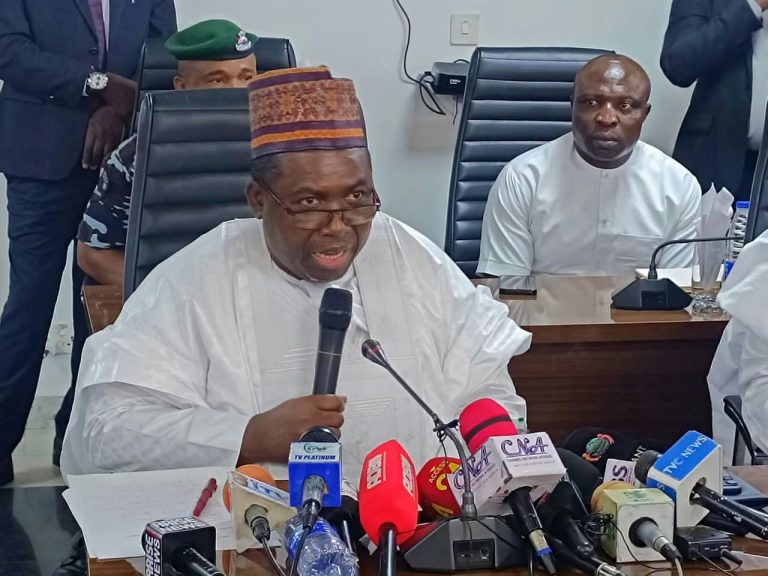
Welcoming the delegation, INEC Chairman, Prof. Joash Ojo Amupitan, SAN, described Nigeria-Canada relations as a longstanding partnership anchored on mutual respect, democratic values, the rule of law and good governance.
Amupitan appreciated Canada for its sustained support for electoral governance, civic education, institutional strengthening and gender inclusion in Nigeria.
He reaffirmed that INEC’s mandate was to deliver free, fair, credible, transparent and inclusive elections that accurately reflect the sovereign will of the Nigerian people.
The Chairman said the Commission had continued to use recent off-cycle elections as testing grounds for electoral reforms and operational improvements, citing the Anambra State Governorship Election, FCT Area Council elections and Ekiti State Governorship Election.
He also described the recently concluded Osun State Governorship Election, held on August 15, 2026, as a significant benchmark in electoral administration.
According to him, 3,556 of the 3,763 polling units, representing 94.5 per cent, opened for accreditation and voting by 8:30 a.m., while the election recorded optimal BVAS performance, seamless result uploads on the IReV portal and proactive crisis management.
“We view the success in Osun not as a final destination, but as the gold standard that will guide our preparations for 2027,” the Chairman said.
Amupitan disclosed that statutory public campaigns and rallies for the 2027 General Election commenced on August 19, 2026.
He added that INEC had participated in the signing of the First National Peace Accord on Issue-Based Campaigns by presidential candidates on August 18, 2026, under the auspices of the National Peace Committee.
The INEC Chairman identified five key areas of strategic focus ahead of the 2027 elections: consolidating technological gains; deepening electoral inclusivity; strengthening institutional capacity and technical support; countering misinformation and safeguarding electoral integrity; and conducting a nationwide mock accreditation exercise in November 2026.
He said the mock accreditation exercise would subject the Bimodal Voter Accreditation System (BVAS) and other electoral equipment to rigorous field testing to assess the Commission’s readiness and address potential operational challenges ahead of the general elections.
Amupitan further disclosed that INEC was scaling up its administrative capacity for the 2027 elections, which would require approximately 1.4 million ad-hoc personnel across more than 176,000 polling units nationwide.
He described the operation as one of the largest mobilisations of human resources for a national assignment in Nigeria’s history.
On emerging technologies, the Chairman announced that INEC had established a dedicated Artificial Intelligence (AI) Unit to explore the responsible application of AI in areas such as data management, voter registration and results transmission, while strengthening safeguards against its misuse.
He said INEC looked forward to participating in the Global Conference on Responsible AI and Elections, organised by the United Nations Development Programme (UNDP) and Elections Canada, scheduled for September 9–11, 2026, in Ottawa.
Amupitan commended Global Affairs Canada, alongside the Spanish and Swedish development agencies, for supporting the initiative.
According to him, the conference would provide an opportunity for INEC to examine responsible applications of AI in elections and develop strategies to counter emerging threats, including deepfakes and disinformation.
The Chairman also appealed to the Canadian High Commission to assist in facilitating the expedited processing of entry visas for members of the INEC delegation attending the conference.
Reaffirming the Commission’s independence and neutrality, Amupitan assured the Canadian delegation and the international community of INEC’s “absolute independence, neutrality, and unyielding commitment to democratic integrity.”
He expressed appreciation for Canada’s continued interest and constructive engagement with Nigeria’s electoral process, stressing that international partnerships remained important to strengthening democratic institutions and ensuring that Nigeria’s electoral system continued to evolve in line with global best practices.
The visit ended with both sides expressing commitment to sustained engagement and deeper cooperation in support of Nigeria’s democratic development and the successful conduct of the 2027 General Election.