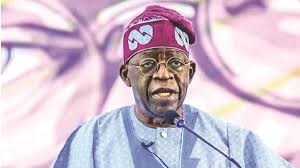
GLOBAL TRENDS: NIGERIA AND ITS PLACE IN THE WORLD DO WE LOVE OURSELVES ENOUGH?
Protocols
What is, too often, is not what ought to be. What ought to be, too often, is not what is. Dream and reality collide as much as they accord.
These statements represent the human dilemma. The distance between the imbalances of our reality and the fulfillment of our dreams measures the extent of our greatness.
The more reality reflects our best aspirations, the closer we reside to greatness. We must ask ourselves, do we surrender to the imperfect ways of today’s reality? Or do we dream a better society and strive toward it?
1
That you now graduate from this exemplar of learning and knowledge means the right answer is within you. You have been equipped with the intellectual rigor, knowledge, and an active social conscience, all compelling you to place this right answer into practice by turning your personal dreams into our collective reality.
In so doing, you will play a vital role in changing your community, your state, and this very nation for the better. Do not underestimate the importance attached to the role each of you is destined to play in Nigeria’s future.
By graduating here today, you have placed yourselves at the forefront of an enlightened march. The way may get difficult. But your progress toward our greater humanity cannot be swept aside by any mortal power.
As graduates, you feel both a sense of accomplishment and yet a sense of uncertainty. The path you walk is well lit and, yet, still feels dark at times.
2
Do not be frightened. Be of good courage. The passion, knowledge and talent in you will beat back the fog. The more you strive, the clearer your way shall grow.
The question I now ask is whether the flaws of this world so alarm you that your only thought is of your own wellbeing? Or, do you hold steadfast to an innate greatness that knows of higher purpose?
Here, we come to the question of group compassion. Do we love each other enough to construct a better political, social and economic home by building a dynamic yet firm structure of building blocks never before seen in our land.
With this in mind, I will speak of Nigeria’s place in the current world and how we might improve it.
No society can long endure in an air of mistrust and acrimony. To flourish, there must be a full understanding that every Nigerian, regardless of place or social circumstance, is equally
3
entitled to the fundamental good things all human beings deserve and desire.
Let us not befool ourselves. History is patient yet not forever lenient regarding negligent folly. There comes a time when there is no time. Either action is taken, and the urgent word said or precious chance slips away, lost forever. Our nation approaches such a moment.
We have boasted of enormous potential for decades, consoling our discomfort by saying that potential will be realized tomorrow. But something disappointing seems to happen when tomorrow becomes today. Years and decades have passed; yet greatness remains elusive.
If greatness came merely by speaking of it, we would be among the greatest nations in human history.
Instead, Nigeria remains locked in place. We remain an economy unjustly designed to export raw material and import increasingly expensive finished products. The name of the raw
4
materials might have changed from cocoa and groundnuts to oil and gas. The dire effects of this uneven economic arrangement remain the same.
We must be truthful enough to acknowledge this lapse, bold enough to correct it, and tolerant enough not to endlessly vilify each other for causing it. We are all both cause and hopefully solution. Let us join hands.
We must reform this nation.
Oil and gas provide over 90 percent of foreign exchange and 80 percent of governmental revenues. Ever dwindling revenues from natural resource exports will no longer be sufficient to fund the rising costs of manufactured imports much less also support the expansive fiscal obligations of modern democratic governance.
I am not here to allocate blame between our colonial past and our post-independence experience. We face a serious
5
challenge whether born of a foreign imperialism or of our own failings or of both.
Let us point our finger at those challenges out so that we clearly know them, and that they begin to know that we have dedicated ourselves to defeating them. This is the only type of leadership and collective effort the roadblocks to national progress can understand.
While we struggle through the economic mud, the world rapidly changes around us. We now bear witness to an expanding digital economy and virtual worlds. From the smart phone to the smart city. From houses of concrete to those fashioned of code.
You young graduates must find your place in this world of cryptocurrencies, NFTs and metaverses. But do not yield to the erroneous mindset that says the virtual world is the dominant one.
6
That a lucky few may strike it rich in this sphere does not make it the critical path to national prosperity.
Without the tangible goods of the productive economy, the virtual realm is but an elaborate game. A bitcoin has little use unless it can be exchanged for some valuable good or service. Only when numbers generated in the virtual sphere become attached to tangible products or services do those numbers have true meaning.
We welcome the innovations of the virtual world. But we also better retool the traditional economy. Notwithstanding the war-induced surge in oil prices, the future will rely less on oil and gas. We dare not predicate our economic destiny on a resource of diminishing utility.
Do not turn your energies away from making, producing, harvesting and planting the goods and products of the tangible economy.
7
Unless we build Nigeria’s that economy, the digital economy’s benefits will remain beyond the reach of most Nigerians.
Global trends underscore this warning. According to the World Bank, we were the seventh most populous nation in 2020 with over two hundred million people. But our economic ranking was not commensurate. Nigeria’s GDP per capita ranked as 17th in Africa and 131st in the world. One does not have to be a genius in math to know the difference between seven and 131.
China experienced double digit annual growth for the three decades between 1980 and 2010. China’s economy grew 12- 15 times its original size during that period. This steep growth transformed China from an economic backwater to being rushing cataract of world growth within a generation.
Sadly, Nigeria has never experienced double-digit growth for any sustained period. Nigeria and South Korea had per capita incomes of roughly $800 in 1950. By 2008, Nigeria’s per capita
8
income doubled. Meanwhile, South Korea’s ballooned by over 2000 percent.
Our lack of sustained dynamic economic growth does not lend itself to social stability. Economic slowness and destitution place great pressure on people to migrate in search of opportunities. But too much migration too fast and too unmanaged results in people competing and contending against each other on dwindling amounts of arable land and in ways that undermine social harmony.
In 1960, city dwellers constituted roughly 15 percent of the total population. By 2020, Nigeria’s urban population exceeded 52 percent. Over one hundred million Nigerians live in cities. Many are young people but where are the jobs, social services, and infrastructure for this growing mass?
In 1981, manufacturing accounted for 20 percent of Nigeria’s GDP. In 2020, sector shrank to 12% of GDP, a forty percent drop in that sector at a time the urban population was growing.
9
A large urban population needs a strong manufacturing and industrial base. If not, we invite unemployment, crime, hunger, and poverty to become both chronic and severe.
According to the NBS, youth unemployment hovers around 42.5 percent. Youth under-employment plus unemployment may reach 60%.
We have grown numb, accepting these numbers as the norm. In developed economies, such high figures are unimaginable. Those nations would be talking about economic depression and the need for drastic reform to crush that depression. We have begun this conversation; but, we must move faster. Time is short.
There is danger in delay. Valuable land that defines much of the economy no longer is available. Climate change and the resultant expansion of the desert claim arable land that once provided livelihoods to millions. In a map compiled by FAO, World Meteorological Organization, and UNESCO, over 15
10
percent of Nigeria’s total land is vulnerable to desertification. For many northern states, the percentage of land under attack exceeds 30 percent.
We face a harmful dynamic. More people are forced off the land due to deforestation, desertification, and low rural incomes. Some of them crowd into other rural areas, competing for limited resources with existing inhabitants. Violence and social upheaval result.
Alternatively, this cruel dynamic forces many to seek economic refuge in already crowded cities. Poverty grows. and a large urban underclass develops as does despair and social friction.
Meanwhile, a decreasing minority receives the requisite education and opportunity to create prosperous lives but only for themselves. Segregating this country into two spheres is the danger.
One, populated by a select few who flourish in the financial, corporate and virtual worlds. This group will be able to buy 11
and do anything they want. The other will be the crowded house of the majority who work hard but earn very little given their strenuous effort. They will struggle but not gain. Toil not to triumph but merely survive. This unfairness has gone on too long. We must end it.
We need a new, more convivial way. A way that gives you the right start at a fair chance for durable prosperity. This is the moral duty of progressive government — to resurrect a flagging economy; to do what the private sector cannot do by itself.
No longer can our national compass remain pointed towards poverty instead of prosperity, towards lack instead of abundance, towards compromise with social wrongs rater than victory over them.
You graduate today not to live half-lives or to subject your tremendous talents and aspirations to an economic condition that does allow their full vent.
12
Today I will not put forward a comprehensive reform program. I have already taken much of your time. Instead, I leave you with a few thoughts about reforming our society to improve the economic prospects of young people in it.
- Youth Urban Employment: Government must support strategically important industries that will employ large numbers of young people and unleash the productive capacity and boundless energy within that population. Government backing of manufacturing and industry will open the door wider to youth-owned startup businesses
that will serve to support extant firms and industries.
National industrial and employment policies must jump from the pages of documents and come to real life. - Agriculture: We must increase food production while lowering consumer prices. Commodity exchange boards need to be reinstated to assure minimum farm incomes. Reforms are needed to give farmers more access to credit by loosening mortgage requirements and allowing greater leeway to execute forward contracts on what they grow. To combat food
13
spoilage, we need to improve the rural road network and also fund refrigeration systems for use by farmers and merchants in major local markets in each state.
In the areas affected by extreme weather, water catchment systems and small-scale irrigation projects must take hold to mitigate the consequences of droughts and floods while also assuring water for year-round agriculture.
- Real Estate Reform: We can further unlock economic potential in urban areas by making it easier to convey and mortgage real estate to lower the costs and time associated with the acquisition and sale of land, thus better allocating land to the most productive uses.
Our mortgage institutions need to be revised and better financed so they can provide affordable residential mortgages to young people just entering the workforce.
14
4 Education and the Economy: We must better link formal education with the skills and expertise our business community seeks in the coming years.
We need to bring organized business together with our education sector so they can develop curricula that meet the needs of business while still providing the broad education required to create civic-minded citizens.
5 Infrastructure: We need a massive national infrastructure plan. No national economy can grow beyond the capacity of its infrastructure to service that economy.
Potable water should be readily available in our cities. Electrical power is the fulcrum of our development. We enact the reforms necessary to power businesses and homes at affordable prices. Firms in the sector must work as much for the public good as for private gain. Businesses contributing to power generation should receive generous tax treatment and forbearances.
15
Time awaits no nation. History may not repeat itself exactly, but it is a frequent visitor to a certain recurrent themes. Those nations that wisely face their challenges shall succeed. Those that ignore obstacles will stumble over what they could have avoided.
Nigeria has navigated a complex journey since independence. We have much to be proud of; just as we have much work to do.
You stand at the meeting place between the great and the mediocre, between ingenuity and indifference, between hope for a better future and surrender to the cynical belief that the future is no different than the past.
I know what this school has taught you. I also trust in the type of young people you are. You will not settle for small lives in a dwindling Nigeria. You will chart a course to the better place that Nigeria can be.
16
You will accelerate trends positive to Nigeria and reverse those holding us back. You will not surrender your right to a greater nation. Neither shall I. We do this not because we seek to dominate friend or neighbor. We do this because we love this nation and all of its people enough to right its wrongs and forge our national destiny as we deem fit.
This is what destiny has asked of us. We are not afraid to answer for wise and bold action shall be our only response.
17