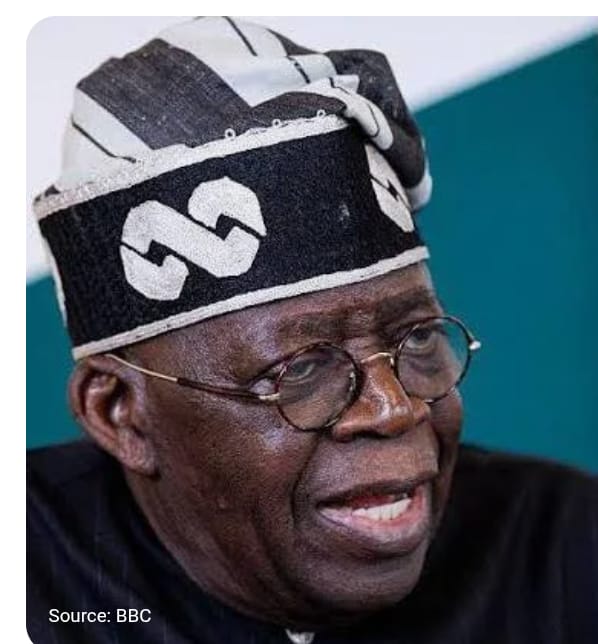
President Bola Tinubu
BY TAIWO OGUNMOLA -OMILANI
As Nigeria prepares for another political transition, labour leaders have called on the Federal Government, employers and other stakeholders to place workers’ welfare at the centre of economic reforms, warning that sustainable economic growth cannot be achieved without decent wages, secure employment and effective social protection.
They also stressed the need for a united labour movement, improved working conditions, enforceable collective bargaining agreements and policies that protect workers and pensioners from the adverse effects of economic reforms.
These were among the major resolutions reached by labour leaders, media professionals, academics and other stakeholders at the 2026 Annual Conference of the Labour Writers Association of Nigeria (LAWAN), held on October 30 in Lagos.
The conference, which examined the theme, “Workers at the Centre of Nigeria’s Political Transition: Defending Rights, Advancing Welfare and Building Economic Justice,” called on the Federal Government and organised labour to begin consultations ahead of the next national minimum wage review scheduled for April 2027.
The participants said the next wage determination must reflect prevailing inflation, the cost of living, the value of the naira and the actual costs of food, accommodation, transportation and other essential services.
They maintained that wage negotiations should be guided by credible economic data rather than arbitrary figures, while measures should be introduced to protect workers’ purchasing power against the persistent erosion of salaries by inflation.
On transportation, Comrade Joe Ajaero, Nigeria Labour Congress (NLC) expressed concern over rising fares and their impact on workers’ disposable income, urging the Federal Government to develop affordable and sustainable public transportation systems through the effective deployment of Compressed Natural Gas (CNG)-powered and electric vehicles.

Comrade Joe Ajaero, NLC President
Ajaero acknowledged that temporary transportation allowances, including the additional N70,000 relief provided to workers for six months, could offer immediate support but insisted that such interventions must not replace long-term solutions to the transportation crisis or undermine gains already secured through wage negotiations.
The conference also called on the Nigeria Labour Congress (NLC) and the Trade Union Congress of Nigeria (TUC) to resolve their differences and strengthen cooperation in defending workers’ interests.
It urged the leadership of both labour centres to consider signing a memorandum of understanding to harmonise their positions and improve collaboration on issues affecting workers’ welfare.
According to the participants, a united labour movement would be better positioned to engage the government and resist policies considered inimical to workers’ interests.
Beyond wages and transportation, the conference identified poor remuneration, unfavourable working conditions and inadequate welfare packages as major challenges confronting journalists across the country.
It called on the Nigeria Union of Journalists (NUJ) to strengthen its trade union responsibilities by engaging media employers in collective bargaining negotiations to improve salaries, conditions of service and other welfare benefits.
The participants argued that journalism, although a professional calling, was also an employment-based occupation for most practitioners, making trade union representation and collective bargaining essential.
They further called for the revival of the journalists’ housing scheme through partnerships with mortgage institutions to enable media workers to acquire homes through affordable payment arrangements.
The conference also urged media organisations to guarantee job security, pension benefits, healthcare and other conditions of service capable of sustaining a productive workforce.
On professional development, the participants advocated specialised training in labour and industrial relations reporting to improve journalists’ understanding of collective bargaining, negotiations, dispute resolution and industrial actions.
They called on LAWAN, the NLC, TUC and other stakeholders to organise regular training programmes for journalists covering labour-related issues.

Comrade Festus Osifo, TUC President
The labour leaders maintained that labour reporting should extend beyond strikes and industrial disputes to include workers’ rights, employment policies, productivity, social protection, negotiations and the economic realities confronting Nigerian workers.
They also cautioned against celebrating salary increases without examining employers’ financial capacity, productivity levels and revenue profiles, stressing that collective bargaining agreements must be realistic, sustainable, enforceable and implementable.
On economic reforms, the conference expressed concern over their social consequences, particularly for workers and pensioners struggling to access their legitimate entitlements.
It called on the Federal Government and relevant institutions to ensure the full and lawful implementation of judicial decisions concerning pensioners’ entitlements, including the longstanding dispute involving pensioners of the Central Bank of Nigeria.
The participants stressed that serving workers and pensioners represented interconnected stages of the same workforce and should be protected through comprehensive welfare policies.
They also called for expanded social security mechanisms covering occupational injuries, disabilities, unemployment, healthcare needs and other vulnerabilities affecting workers and their families.
Employers were urged to comply with their statutory obligations under the Employees’ Compensation Scheme administered by the Nigeria Social Insurance Trust Fund (NSITF), while government, organised labour and the media were encouraged to strengthen awareness and compliance.
The conference further urged governments at all levels to ensure that public sector reforms balance administrative efficiency with workers’ rights, social justice and institutional capacity.
It warned that restructuring driven solely by cost-cutting considerations could lead to job losses, casualisation, wage stagnation, declining employment security and weakened public service delivery.
It therefore called for consultations with trade unions and workers before the implementation of restructuring programmes, alongside investments in retraining, skills development, occupational safety, fair severance packages and pension guarantees.
As the country approaches another electioneering period, the labour leaders also urged workers to exercise political responsibility by rejecting vote-selling and making informed electoral choices based on policies and programmes that advance their collective interests.
They maintained that workers must not compromise their electoral rights and subsequently expect organised labour to challenge governments whose emergence they may have facilitated through uninformed or compromised choices.
On the management of national resources, the conference called for greater transparency and accountability in the management of Nigeria’s natural resources and public revenues.
It expressed concern over the country’s continued dependence on borrowing despite its substantial natural resource endowments, urging the Federal Government to prioritise domestic crude oil refining, strengthen local production and explain how additional revenues generated from crude oil sales are managed.
The conference also recognised the Managing Director and Chief Executive of the NSITF, Mr Oluwaseun Faleye, for his contributions to workers’ social security and safety.
Faleye received the Champion of Workers’ Social Security and Safety Award in recognition of his leadership and commitment to advancing workers’ protection, particularly through the Employees’ Compensation Scheme.
The participants also called for stronger collaboration among journalists, labour organisations, professional associations and civil society groups to defend workers’ rights, protect the civic space and sustain advocacy for social justice.
They urged journalists to investigate the actual effects of government policies on workers, pensioners, households and communities rather than rely exclusively on official announcements and macroeconomic statistics.
Reaffirming the importance of workers’ welfare to national development, the labour leaders maintained that improved wages and purchasing power would stimulate local businesses, increase household consumption and strengthen economic activities.
They called on the Federal Government, organised labour, employers, media organisations and civil society groups to translate the conference recommendations into concrete actions capable of improving the living and working conditions of Nigerian workers.