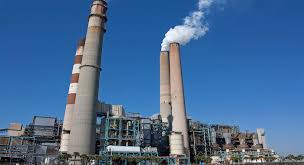
The Nigerian Electricity Regulatory Commission issued power generation licences to 21 investors in 2022, data obtained on Friday from the Federal Government agency has shown.
Findings showed the commission issued 114 registration/permits for the development of mini-grids to boost power supply across the country during the period.
The Federal Government and stakeholders in the power sector have been making efforts to increase the country’s power generation and supplies after the successor electricity generation and distribution arms of the sector were unbundled and privatised in November 2013.
Since then, Nigeria’s power generation has been hovering between 3,500 megawatts and 5,000MW, a figure which operators and experts described as too low for a population of over 200 million people.
Data sourced from the Federal Ministry of Power on Friday showed that power generation on the national grid as of 6am that day was 4,472MW, up from an off-peak of 3,989.5MW recorded on Thursday.
In its bid to boost the power supply in Nigeria, the NERC has been issuing licences to investors to generate electricity.
In its latest report on licensing and permits in the power sector, the commission stated that in the fourth quarter of 2022, it approved two power generation licences, with a combined capacity of 56.5MW, adding that 27 mini-grid registration/permits were issued in the same quarter.
It mentioned that 12 Metering Service Providers, consisting of eight meter installers, three meter manufacturers and one meter importer, were also approved by the commission in 2022/Q1.
Commenting on this, the National Secretary of Nigeria Electricity Consumer Advocacy Network, Uket Obonga, told our correspondent that the challenges in the power sector were enormous, stressing that the new administration must work hard to address them.
“I held a town hall meeting in Akure about three weeks ago, and after my lecture, I found out many things. One of them is that many people have paid for meters and still don’t have them. I am aware of the problem of power generation, but there are many others.
“These people in Akure are electricity consumers who have been disconnected for some years. They bought their transformer and have spent about N14m to put up that transformer and yet they have not been connected to electricity.
“Some of them have money to pay for meters but nobody is answering them. So, the challenge in the sector is myriad, from lack of meters to distribution issues and generation problems. The new government has a lot to handle in this sector and must work hard to deliver,” Obonga stated.