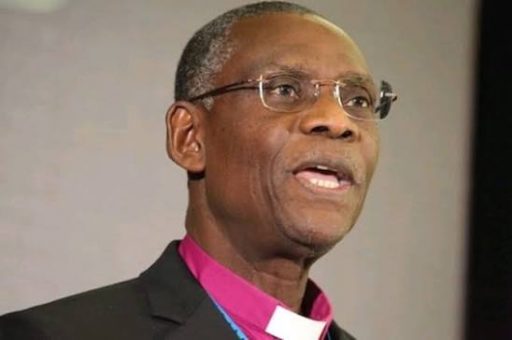
As the 2027 general elections draw closer, former Chairman of the Kaduna State Peace Commission, Bishop Josiah Idowu-Fearon, has cautioned religious leaders against endorsing political candidates or directing their followers to vote for particular individuals.
Idowu-Fearon, founder and director of the Kaduna Centre for the Study of Christian-Muslim Relations, gave the warning while speaking with journalists in Kaduna, urging religious leaders to educate their followers on how to assess candidates and hold elected officials accountable.
The Anglican bishop said political endorsements by clerics could undermine their moral authority and independence, stressing that religious leaders should encourage debates on the records, policies and character of candidates rather than dictate voting choices.
“I don’t subscribe to a traditional ruler, a Bishop, or whoever telling members what to do,” he said, insisting that Imams, Sheikhs, Emirs and Bishops should encourage Nigerians to exercise their franchise while allowing them to make independent choices at the polls.
Idowu-Fearon said Nigerians would ultimately be responsible for how they use their votes, adding: “For this 2027 election, with all we’re going through, every vote, God is going to ask you, ‘How did you use your franchise?’”
He also urged Nigerians to look beyond religious identity in choosing political leaders, saying the country needed leaders who genuinely practised the values of their faith rather than politicians who merely identified with a particular religion.
“Nigeria, honestly, this country does not need a Muslim or a Christian president. What we need is a president who is Christian or Muslim. There is a difference,” he said, adding that the principle should also apply to governors, senators, ministers and other public officials.
The bishop said neither Christianity nor Islam encouraged corruption, tribalism, dishonesty or exploitation, stressing: “We don’t need card-carrying religious leaders. We want religious leaders that will take their faith with them.”
He cautioned religious leaders against becoming excessively close to politicians, warning that financial dependence and frequent association with political actors could compromise their ability to speak truth to power. “When you begin to frequent politicians, you get corrupted,” he said.
Idowu-Fearon, however, stressed that the problem was not peculiar to any religion, saying both Christian and Muslim leaders could become compromised when they depended excessively on politicians for financial or other benefits.
On the economic situation in the country, the former peace commission chairman faulted attempts to downplay the hardship faced by Nigerians, saying rising prices and declining purchasing power had made life increasingly difficult for millions of citizens.
“To say people are not suffering as a result of what is going on in our country, I think we are being economical with the truth,” he said, adding that his interactions with ordinary Nigerians and visits to churches and communities had exposed him to the impact of poverty.
The bishop also questioned the impact of increased government revenues and allocations to states and local governments, asking: “I also heard the Minister of Finance talking about trillions coming in, trillions going to the state governors, going to the local government chairmen. And I ask, where is the money?”
Commenting on Governor Uba Sani’s decision to retain a Muslim-Muslim political arrangement in Kaduna State, Idowu-Fearon said the state’s political terrain supported the decision, urging residents to use the arrangement to strengthen cooperation among the three senatorial zones.
On insecurity, he acknowledged improvements in some parts of the state, particularly Birnin Gwari, but urged the government not to relent in its efforts against criminal elements. He also explained that his exit from the Kaduna State Peace Commission followed the expiration of its statutory tenure, describing the development as a constitutional matter rather than a disagreement with the government.
Idowu-Fearon further called on religious leaders to pay greater attention to young Nigerians and promote values that transcend material wealth, urging Christians and Muslims to deepen interfaith cooperation and see one another first as human beings. He said Nigerians should ultimately judge political leaders by their character, performance and commitment to the common good, rather than their religious identity.