Home Blog Page 85

INEC lists spark fresh 2027 election battles

0


Fresh political and legal wars erupted across the country at the weekend after the Independent National Electoral Commission (INEC) released its final lists of candidates, shutting out key Peoples Democratic Party (PDP) and Nigeria Democratic Congress (NDC) governorship hopefuls, exposing rival claims to some tickets and setting up heavyweight contests ahead of the February 6, 2027 elections.

The disputes have also spread beyond the governorship races. In Gombe, an All Progressives Congress (APC) House of Representatives candidate already published by INEC has had the primary that produced him nullified by a Federal High Court, underscoring how litigation could continue to alter the electoral field even after publication of candidates’ names.

In Kwara, the lists have formally set up a potentially bruising Central Senatorial District contest between outgoing Governor AbdulRahman AbdulRazaq of the APC and incumbent Senator Saliu Mustapha of the PDP.

While the APC and African Democratic Congress (ADC) emerged largely unscathed from the governorship exclusions reviewed, the PDP and NDC are fighting on several fronts to restore omitted candidates and defend disputed nominations.

The immediate casualties include PDP governorship candidates in Ogun and Gombe, where Ladi Adebutu and former Minister of Communications and Digital Economy, Isa Pantami, respectively failed to make the published list.

For the NDC, the crisis stretches across several states. Its Kano candidate, former deputy governor Aminu Abdulsalam Gwarzo, is missing, while the party also suffered an exclusion in Nasarawa.

Plateau presents an even more explosive scenario, with two men laying claim to the NDC governorship ticket despite INEC recognising Jonathan Akuns as the party’s candidate.

In contrast, checks on the governorship lists showed no comparable loss by the APC, whose candidates survived publication, including Kingsley Chinda in Rivers State despite earlier questions surrounding the circumstances of his defection and nomination.

The ADC similarly escaped any major governorship casualty among the states reviewed, although its Ogun candidate, Lawal Adebisi, appeared on the list pursuant to a court order.

The uneven outcome has intensified scrutiny of the implementation of the Supreme Court judgment of September 24 in INEC v Zenith Labour Party, which restored Sections 77(5) to (7) and 84(2) of the Electoral Act 2026.

Under the provisions, only party members whose names were contained in registers submitted to INEC within the prescribed period before party primaries may participate in such exercises or emerge as candidates.

Unless the affected parties secure administrative or judicial relief, they could approach the February elections without candidates in constituencies where they had expected to mount serious challenges.

INEC’s lists offered no explanations for individual governorship omissions, leaving affected parties and candidates to establish that they complied with the law.

The controversy was heightened by an October 9 letter from the APC urging INEC to fully enforce the Supreme Court judgment and verify all parties’ compliance with the membership-register requirement.

The APC said compliance was a statutory obligation, not a matter of discretion, although it did not name particular candidates it wanted removed.

The unfolding disputes have shown that the consequences of the new legal regime extend beyond candidates omitted from the lists, with courts also being asked to determine the validity of published nominations and attempted substitutions.

•Ogun: Adebutu vows to challenge exclusion, APC fires back

In Ogun, Adebutu has vowed to challenge the omission of his name and that of his running mate, insisting that he remains a duly registered PDP member and met the party membership requirements within the stipulated period.

Adebutu said he completed his digital registration within the prescribed period, had his membership card printed and verified, and ensured that the relevant documentation was submitted to INEC within time. “I have not at any point left the PDP, and my commitment to our great party remains unwavering.”

The former House of Representatives member also maintained that the governorship primary which produced him was conducted with INEC officials in attendance as observers.

“The relevant documents were presented for verification, certification and confirmation. These are important facts that must not be overlooked in the present circumstances.”

Adebutu said the omission was particularly troubling because PDP candidates for the Ogun State House of Assembly, House of Representatives and Senate were included in INEC’s lists.

“We will pursue this matter through the appropriate channels and insist that due process is respected,” he said, urging PDP members and supporters to remain calm and steadfast.

But the APC told Adebutu and the PDP to take responsibility for his non-listing rather than blame the ruling party.

Chairman of the Media and Publicity Committee of the APC Campaign Council, Kayode Odunaro, described the Ogun PDP as factional and crisis-ridden and accused it of engaging in a “childish blame game.”

He said the APC and its candidates were contestants like every other party under INEC as umpire and could not be blamed if another party failed to comply with administrative procedures or the Electoral Act.

“How can anyone now attribute the failure of PDP to follow through on simple administrative procedures and adherence to rules of the game as pressure from APC on INEC leading to the non-listing of their candidate as a contestant?”

Odunaro said candidates in other states had suffered a similar fate over alleged non-compliance and maintained that the APC and its governorship candidate, Senator Solomon Olamilekan Adeola, were prepared to face every eligible candidate certified by INEC.

The APC said it was campaigning on what it described as proven performance, capacity, equity and justice and would not sympathise with any party or candidate that ran foul of the rules.

•Gombe: Pantami battles omission

Gombe has become another major battleground for the PDP following Pantami’s exclusion.

The party and the Pantamiyya Movement described the development as a temporary setback, saying legal and liaison teams were engaging relevant authorities to enforce existing court processes and correct the omission.

Pantami urged supporters to remain calm, describing the development as part of the electoral process rather than the end of his governorship bid.

•PDP engages INEC over Adebutu, Pantami, others

The PDP has meanwhile begun engagements with INEC over the omission of some of its candidates from the final lists.

The party, in a statement by its National Publicity Secretary, Jungudo Mohammed, expressed concern but urged affected candidates, members and supporters to remain calm while discussions with the commission continued.

It said it was “already engaging with INEC to address the issues responsible for the omissions, with a view to securing an amicable resolution in accordance with the law and established electoral guidelines.”

“The PDP therefore assures all concerned that it is treating this development with the utmost seriousness it deserves and will communicate further developments as appropriate.

“The party is committed to ensuring that all legitimate concerns are properly addressed with the Commission.

“Consequently, the party calls on all affected candidates, members and supporters to remain calm, exercise patience and refrain from actions or statements capable of undermining the ongoing engagements with the Commission.”

•Gombe: Court knocks out published APC Reps primary

The electoral uncertainty in Gombe is not limited to the governorship contest.

Ali Isa JC had already been listed by INEC as the APC candidate for Billiri/Balanga Federal Constituency before a Federal High Court subsequently nullified the primary that produced him.

INEC published its final list of National Assembly candidates on September 12, 2026.

But on September 30, Justice Vera E. Ibrahim of the Federal High Court, Gombe, nullified the APC primary held on May 16 following a suit filed by another aspirant, Alfred John.

John challenged Ali JC’s eligibility to participate in the primary, arguing that he joined the APC only 16 days before the exercise and was not contained in the party membership register submitted to INEC within the statutory period.

The court held that Ali JC’s participation was invalid, unlawful and null and void for non-compliance with the Electoral Act.

It ordered the APC to conduct a fresh primary within 30 days, barred Ali JC from participating in the rerun and directed the withdrawal of the certificate issued to him.

The court, however, did not declare John winner of the ticket.

Unlike candidates complaining that their names were omitted before publication, Ali JC’s name was already on INEC’s list before the judgment.

His appearance on the list therefore predates the ruling and does not, on its own, establish that INEC disregarded the court order.

His eventual status will depend on subsequent legal and administrative developments, including whether the APC or Ali JC appeals or secures another order affecting enforcement.

The case nevertheless illustrates how candidate lists may remain fluid despite being described as final, particularly where courts intervene in unresolved pre-election disputes.

•Benue: Court strikes out challenge to APC substitutions

In another pre-election dispute, the Federal High Court in Abuja struck out a suit challenging alleged attempts by the APC to substitute some of its candidates in Benue State.

Justice Inyang Ekwo dismissed the suit filed by Sesugh Kaaba for lack of locus standi, holding that he failed to establish that he participated in the APC primary held on May 20, 2026.

Kaaba, in suit FHC/ABJ/CS/1429/2026, had sought orders restraining the APC and INEC from substituting candidates who emerged for the governorship, Senate, House of Representatives and House of Assembly elections.

The court held that the documents he relied upon did not establish participation in the primary.

His forms, dated June 18, came after the May 20 exercise and could not, in the court’s view, prove his participation.
Justice Ekwo also held that a Court of Appeal judgment of December 5, 2025, relied upon by the plaintiff did not cure the defect.

Relying on Wushishi v. Imam, the court held that only an aspirant who actually participated in a party primary had standing to challenge its conduct or outcome.

“The consequence of lack of locus standi is dire and the courts have been unwavering in making pronouncements on it,” the judge held.

The case was consequently struck out without determination of the substantive question of whether the APC could lawfully make the substitutions complained of.

The Benue decision introduces another dimension to the widening pre-election battles: a court may not reach the substance of a complaint unless the person bringing it first establishes legal standing.

•Kano: NDC blames ‘error’

The NDC is fighting a similar battle in Kano, where Gwarzo’s omission has triggered concern within the party, although officials insist it resulted from an error rather than disqualification.

Spokesman of the Kwankwasiyya Movement in the NDC, Habibu Saleh Mohammed, said the candidate’s details were submitted within time and there was no court case capable of dislodging him.

“We believe that there must have been an error somewhere. We submitted his details at the right time. We have no court case anywhere. So there is no cause for alarm. INEC will do the right thing.”

Mohammed said the party had contacted INEC and was working to resolve the matter.

•Nasarawa: NDC candidate missing

In Nasarawa, the NDC also failed to make the governorship list, with its candidate, Musa Shugaba-Abdullahi, omitted.

The party was absent from the list of 13 governorship tickets published by INEC, alongside the Action Alliance.

The omission has added Nasarawa to the states where the NDC may have to pursue administrative or judicial remedies to restore its candidate.

•Plateau: 2 men, one NDC ticket

While Kano is treating its problem as an omission capable of administrative correction, Plateau is already locked in a full-blown nomination war.

INEC recognised Jonathan Akuns as the NDC governorship candidate, but Alfred Dapal is also claiming the ticket and has gone to court to stop Akuns.

Dapal, in suit FHC/J/CS/87/2026 before the Federal High Court in Jos, obtained an order restraining Akuns from parading himself as the party’s candidate and the NDC from replacing or displacing him pending determination of the dispute.

Justice S.T. Ishaya restrained the party from substituting, replacing, withdrawing or otherwise displacing Dapal as the candidate he said emerged from the September 15 governorship primary.

Plateau NDC Chairman, Solomon Ndam, said the crisis arose after a committee sent from Abuja allegedly conducted another exercise outside the party secretariat, which he said was the designated venue.

According to him, Dapal emerged from the exercise conducted at the party secretariat, while Akuns had allegedly been suspended before the primary for anti-party activities.

Akuns rejected the claim and maintained that he was declared unopposed as the authentic candidate.

He said he and his counsel had briefed the party’s national leadership on the pending cases and that the leadership was satisfied with the circumstances of his emergence.

The result is a potentially combustible situation in which INEC’s final list recognises one candidate while another claimant relies on a court order to challenge his candidature.

•Kwara: Old political forces regroup

In Kwara, publication of the list has shifted attention from nomination disputes to a broader battle among old political forces, defectors and emerging platforms.

With Governor AbdulRahman AbdulRazaq due to complete his second term in May 2027, the governorship contest is shaping up as a test of whether the APC can retain power without him on the ballot or the PDP can stage a comeback under the political leadership of former Senate president, Bukola Saraki.

The APC is fielding Speaker of the Kwara State House of Assembly, Yakubu Salihu Danladi, while the PDP has Suleiman Bolakale Kawu, popularly known as Agaka.

The ADC and NDC are also attempting to break the dominance of the two older forces.

Danladi’s emergence has introduced a strong regional dimension because he comes from Kwara North, which has long argued that it has been marginalised in the allocation of the governorship since the return to democracy in 1999.

The APC is expected to campaign on AbdulRazaq’s record in infrastructure, education, healthcare and agriculture but must also manage grievances arising from its primaries and the defection of influential members.

The PDP is relying on Saraki’s extensive political network, reconciliation efforts and the possibility that dissatisfaction within the ruling party could work in its favour.

The ADC has attracted experienced political figures, including former Governor Abdulfatah Ahmed and others who previously operated within the APC and PDP, while the NDC hopes its growing national profile will translate into local electoral support.

The governorship battle is therefore likely to turn on party strength, candidate acceptability, regional sentiment, defections and the ability of each party to hold its coalition together.

•Kwara Central: AbdulRazaq, Mustapha in Senate showdown

Beyond the governorship contest, the final list has thrown up one of the more intriguing Senate battles of 2027, with AbdulRazaq and Mustapha cleared to slug it out for the Kwara Central seat.

AbdulRazaq, who will leave the governorship after two terms, is the APC candidate, while Mustapha, the incumbent senator, is flying the PDP flag.

The contest pits a serving governor seeking a transition to the National Assembly against an incumbent senator fighting to retain his seat.

AbdulRazaq enters the race with the visibility and political structure of a two-term governor whose party controls the state government and much of the local political machinery.

Mustapha, however, has the advantages of incumbency, an established constituency structure and the backing of a PDP seeking to rebuild its influence in a district central to Kwara politics.

The Senate contest will run alongside the battle to succeed AbdulRazaq as governor, turning Kwara Central into a major theatre where both parties will fight simultaneously for federal and state political influence.

INEC listed 13 candidates for the seat. Apart from AbdulRazaq and Mustapha, candidates of Accord, Action Alliance, Action Democratic Party, African Peoples Party, ADC, Action Peoples Movement, Labour Party, National Rescue Movement, New Nigeria Peoples Party, NDC and Social Democratic Party are also in the race.

Kwara North and Kwara South each have 11 senatorial candidates, bringing the number across the state’s three Senate districts to 35.

The AbdulRazaq-Mustapha confrontation is, however, likely to command particular attention because of the political weight of the two principal contenders and what victory or defeat could mean for the balance of power between the APC and PDP.

•Ebonyi: 250 battle for 25 seats

In Ebonyi, 250 candidates were cleared to contest the governorship and 24 House of Assembly seats.

Of the number, 12 are governorship candidates while 238 are seeking seats in the state legislature.

Among those listed for governor are Francis Nwifuru of the APC, Splendor Oko Eze of the Labour Party and Ifeanyi Odii of the PDP.

Three women are among the 12 governorship candidates, while 28 women are contesting alongside 210 men for the 24 House of Assembly seats.

INEC has also commenced distribution of Permanent Voter Cards to those who registered in 2025.

The state Resident Electoral Commissioner, Pauline Onyeka, said distribution began on October 9 and warned that proxy collection would not be allowed.

•Akwa Ibom: Eno, Udoedehe make list

In Akwa Ibom, Governor Umo Eno of the APC, John Udoedehe of the ADC and the PDP governorship candidate were among those cleared by INEC.

The publication has, however, not ended disputes surrounding party nominations and recognition of candidates, as some opposition contenders complained about exclusions, with some threatening legal action.

The complaints underline the broader national pattern in which publication of the final list has merely shifted some intra-party and nomination battles from party platforms to INEC and the courts.

•Race against law, time

For parties and candidates affected in Ogun, Gombe, Kano, Nasarawa and Plateau, the battle is now as much against statutory timelines as against political opponents.

Section 32(2) of the Electoral Act provides a limited window within which a political party may notify INEC in writing where the name of a candidate validly nominated by it is missing from the published list.

Court action also remains open in appropriate cases, but pre-election disputes are governed by strict timelines.

For the PDP and NDC, therefore, the immediate contest is no longer only against the APC, ADC or other rivals at the polls. Their first battle is to secure places on the ballot which they insist their candidates validly earned.

With rival claims, omissions, court orders and fresh challenges still unfolding, INEC’s “final lists” may prove to be only the opening chapter of the 2027 election wars.

Sun
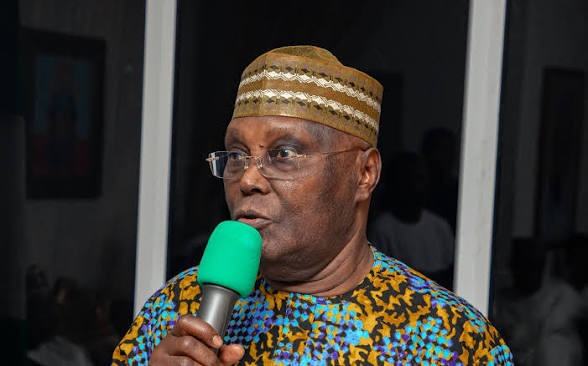
Atiku, ADC demand INEC disclosure on sensitive materials, staff postings

0


• Seek details of printers, contracts, redeployments

Former Vice President Atiku Abubakar and the African Democratic Congress (ADC) have demanded greater transparency from the Independent National Electoral Commission (INEC) over the production and custody of sensitive materials for the 2027 general election as well as recent personnel postings in some of the commission’s strategic departments.

Atiku, in a statement by the Director of Strategic Communication of the ADC Presidential Campaign Council (PCC), Phrank Shaibu, specifically asked INEC to disclose the companies engaged to print sensitive election materials, the procurement process and the security arrangements surrounding their production, storage and delivery.

Separately, the ADC, in a statement by its National Publicity Secretary, Bolaji Abdullahi, asked INEC to clarify allegations that recent redeployments in strategic departments may have favoured officials from the South-West at the expense of personnel from other parts of the country.

Atiku said reported changes in the Electoral Operations, Voter Registry and Information and Communication Technology departments raised questions that INEC needed to address openly.

According to him, “reports indicate that Director Isa Magaji Gum was moved from Electoral Operations to the Voter Registry Department, while Mrs Oluyemi Titilayo Adeyemi-Showunmi was appointed to head Electoral Operations. Dr Lawrence Bayode has also been identified as the head of Information and Communication Technology (ICT).

“These departments are at the heart of election administration. INEC must explain these decisions, publish the criteria applied and show that every appointment and redeployment followed due process, was based on merit and was free from political interference. Nigerians will not accept vague assurances on matters this serious.”

The former Vice President said no official should be presumed compromised on account of ethnicity, background or association, but maintained that where appointments or reported political connections raised public concern, INEC had a duty to provide verifiable assurances that its impartiality was protected.

He also demanded that the commission “categorically confirm or deny whether Hitech or any company associated with Hitech has been awarded a contract to print sensitive materials for the 2027 general election.”

Atiku claimed that information available to him suggested that more than half of INEC’s sensitive election materials, including presidential ballot materials, might have been allocated to a company whose identity and credentials had not been publicly disclosed and which he said was believed to be based in France.

He also expressed concern over reports that the Nigerian Security Printing and Minting Plc (NSPMC) might be handling printing for only between 15 and 17 states, while the remainder would be shared among private printers.

“These reports demand urgent and unequivocal answers. INEC must confirm or deny them and publish the names of every company engaged, the materials and states assigned to each, the procurement method, the security clearances obtained and the safeguards governing production, storage and delivery.

“Nigerians should not have to depend on unnamed sources to discover who is producing their ballots.”

Atiku further argued that any award of sensitive election-material contracts to Hitech or a company associated with it would raise questions about INEC’s neutrality because of what he described as publicly reported business ties between the Chagoury family and President Bola Tinubu’s family.

“The integrity of INEC in the forthcoming election will be seriously compromised if Hitech or a company associated with it is awarded a contract to produce sensitive election materials.

“INEC has a moral obligation to disclose the identities of the companies awarded these contracts, particularly if the printing is not being undertaken by the Nigerian Security Printing and Minting Plc.”

Atiku added that if Hitech or any associated company had been selected, INEC should disclose the contract value, scope of work, procurement method, capacity and security arrangements and allow political parties meaningful scrutiny of the process.

“If neither Hitech nor a company associated with it has been selected, INEC must say so clearly and put the matter beyond doubt,” he stated.

The former VP also urged INEC to make maximum use of qualified domestic security-printing capacity and ensure that every ballot paper, result sheet and other sensitive material was protected by a transparent chain of custody.

He warned that the 2027 election “cannot be business as usual”, insisting that Nigerians would resist any attempt to subvert their votes through lawful and democratic means.

“Let there be no mistake: Nigerians will not accept a stolen election. Any attempt to rig the 2027 polls will be met with determined resistance through the ballot, lawful civic action and every other democratic channel available to the people,” he said.

In its separate statement, the ADC said it was in possession of what it described as intelligence and “direct complaints” about recent personnel changes and redeployments in some strategic INEC departments and stations.

The party claimed that several officers from the North who had served in departments such as Electoral Operations and ICT were being moved and replaced by officials from Lagos and other South-West states.

“We have specific names of officers moved from Electoral Operations and ICT in a number of northern states and replaced with officers from Lagos and other South-West states. INEC may dismiss this as routine. But we have noticed a pattern, especially along ethnic lines, and we are concerned.”

The ADC stressed that it was not, at this stage, accusing INEC of any “nefarious” plan, but said every allegation capable of undermining public confidence in the electoral umpire deserved a clear response.

“Especially if those allegations border on sectional bias that could actively undermine the neutrality of election officials and the Commission’s own impartiality.

“Regardless of the Commission’s motives, questions about regional concentration in sensitive departments cannot be brushed aside as routine administrative matters. And concentrating strategic operational appointments in a manner that suggests ethnic or sectional bias to give an advantage to President Tinubu and the APC must not be ignored,” the party stated.

Consequently, the ADC urged INEC Chairman, Prof. Joash Amupitan, to publish details of the affected postings, the criteria used and the reasons for the changes.

It said such disclosure was necessary to reassure Nigerians across the country that the commission would administer the 2027 elections fairly and that no voter’s electoral choice would be undermined on account of language, ethnicity or region.

Sun

IGP Disu to Keynote EWAN Summit on School Safety

0


BY TAIWO OGUNMOLA -OMILANI


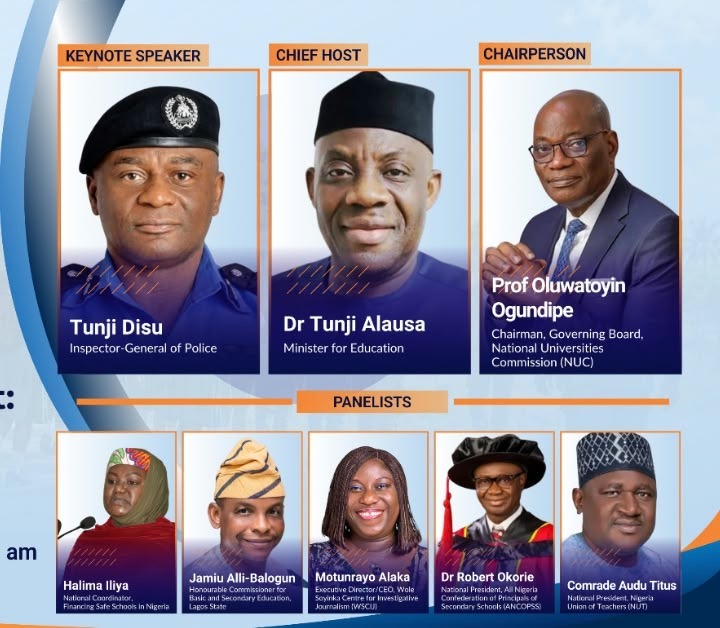
Nigeria’s Inspector-General of Police, Tunji Disu, will deliver the keynote address at the seventh annual summit of the Education Writers’ Association of Nigeria (EWAN), focusing on sustainable measures to protect schools from security threats.

The summit, themed “Schools Under Threat: From Reactive Responses to Sustainable Protection,” is scheduled to hold on Wednesday at 10:00 a.m. at The Providence Hotel, GRA, Lagos.


It will examine practical strategies for protecting learners, teachers and school facilities, strengthening preparedness and ensuring continuity of education when insecurity disrupts school activities.

The Chairman of the Governing Board of the National Universities Commission (NUC) and former Vice-Chancellor of the University of Lagos, Professor Oluwatoyin Ogundipe, will chair the summit.


Other expected speakers include the National Coordinator of Financing Safe Schools in Nigeria, Halima Iliya; Lagos State Commissioner for Basic and Secondary Education, Jamiu Alli-Balogun; Executive Director and Chief Executive Officer of the Wole Soyinka Centre for Investigative Journalism, Motunrayo Alaka; National President of the All Nigeria Confederation of Principals of Secondary Schools, Robert Okorie; and National President of the Nigeria Union of Teachers, Comrade Audu Titus.


Their contributions are expected to address the connections between government policies, funding and the daily realities of managing schools, protecting education workers and holding institutions accountable for safety commitments.

Discussions will cover preventive measures, early warning systems, emergency response, community engagement and support for education workers before, during and after security incidents.
The summit will also examine the media’s role in exposing gaps in school protection, sustaining public attention and reporting security incidents responsibly.

Speaking on the choice of the theme, EWAN Chairman, Mojeed Alabi, said school protection must go beyond emergency responses after attacks.

“Each attack on a school affects more than the people caught in it. It leaves teachers afraid, parents uncertain and learners at risk of losing access to education. We chose this theme because protecting schools must be a continuous responsibility, with clear plans, adequate funding and people who know what to do when warning signs emerge,” Alabi said.

He said the theme was particularly relevant as threats to school safety continued to put pressure on education communities to protect lives while sustaining teaching and learning.

“We cannot wait until an incident occurs before asking whether a school has an emergency plan, whether teachers are prepared or whether help can reach those at risk. These questions need answers before an emergency, and the answers must translate into practical protection,” he added.

The summit is open to policymakers, security personnel, education professionals, researchers, development practitioners and civil society representatives.
EWAN is a network of professional education correspondents from print, broadcast and digital media organisations across Nigeria.


Its annual summit provides a platform for examining pressing education issues and promoting informed public debate.
Previous editions have addressed public examination integrity, basic education, school safety, research for national development, electricity supply in the education sector, and the growing emphasis on certificates over practical skills.

Past keynote speakers have included the Registrar and Chief Executive Officer of the National Examinations Council, Professor Dantani Ibrahim Wushishi; former Permanent Delegate of Nigeria to UNESCO, Ambassador Michael Omolewa; former Minister of Education, Professor Chinwe Obaji; Commandant-General of the Nigeria Security and Civil Defence Corps, Dr Ahmed Abubakar Audi; former NUC Executive Secretary, Professor Peter Okebukola; and Professor Ogundipe, among other distinguished personalities.

Other dignitaries who have attended the annual event include Dr Yusuf Tanko Sununu, a former Minister of State for Education who is now the Minister of State for Humanitarian Affairs and Poverty Reduction.

Economic indicators improve, but Nigerians still struggle to make ends meet –Tinubu

0


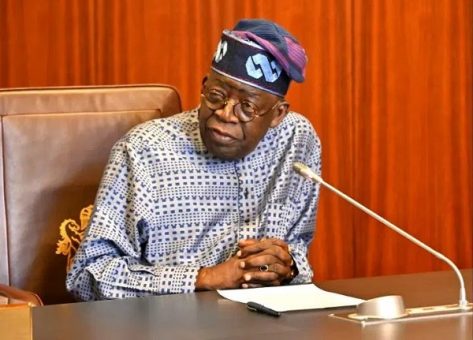
President Bola Tinubu has acknowledged that improvements in Nigeria’s economic indicators have yet to translate into meaningful relief for millions of households grappling with high food prices, unemployment and declining living standards.

Tinubu spoke in response to the World Bank’s October 2026 Nigeria Development Update, which reported gains in economic growth, government revenues, external reserves and capital spending.
He said the reforms were helping to stabilise the economy but stressed that more work was needed to lower food prices, create jobs and improve living standards.

The report, titled “Beyond the Federal Purse: How Higher Revenues Reshaped State Priorities,” highlighted improvements in economic growth, inflation, external reserves and government revenues, as well as increased capital expenditure by state governments.

In a statement issued yesterday by his Special Adviser on Information and Strategy, Bayo Onanuga, Tinubu said the findings confirmed the impact of the removal of the petrol subsidy, unification of the foreign exchange market and efforts to strengthen fiscal discipline.

“These findings confirm that the difficult but necessary decisions to remove the petrol subsidy, unify the foreign exchange market and strengthen fiscal discipline have raised revenues, stabilised the economy and created fiscal space for every tier of government to invest in its people,” Tinubu said.

According to the report, Nigeria’s economy grew by 4.2 per cent in the first half of 2026, compared with 3.9 per cent in the corresponding period of 2025, despite the impact of the conflict in the Middle East.

The World Bank projects that economic growth will average at least 4.4 per cent annually between 2026 and 2028.

The report also found that Nigeria’s poverty rate had stabilised for the first time since 2019. It projected that poverty would decline gradually as economic growth outpaces population growth.

On inflation, the report showed that the rate fell from 27.6 per cent in January 2025 to 15.2 per cent in December 2025. However, higher global fuel prices linked to the Middle East conflict have slowed the decline.

The World Bank expects inflation to ease to about 12 per cent by 2028.

Tinubu said his administration would sustain the reforms while intensifying efforts to improve living conditions, particularly through lower food prices and increased employment opportunities.

“The dividends of reform are becoming visible. But more work remains to ensure they fully translate into better living standards for every household, starting with lower food prices and decent jobs for our young people,” he said.

Nigeria’s external position also improved, with the current account surplus rising to $12 billion, representing 7.0 per cent of Gross Domestic Product, in the first half of 2026, from $8.6 billion in the corresponding period of 2025.

The report further projected that Nigeria’s public debt would decline from 40.0 per cent of GDP in 2025 to 38.1 per cent in 2026.

On government revenues, the World Bank attributed a 69 per cent increase in federation revenues in real terms between 2023 and 2025 to reforms introduced since 2023. State governments were identified as the largest beneficiaries of the additional revenue.

The report said states increased capital expenditure by 151 per cent in real terms over the same period, with most of the spending directed towards roads and other transport infrastructure, agriculture, energy and housing.

It added that 29 of 33 states shifted spending towards economic infrastructure, while real social spending per person increased in all but one state.

Internally generated revenue grew in real terms in 31 of 35 states, while 21 states reduced their debt-to-GDP ratios between 2021 and 2025, according to the report.

Tinubu urged state governments to manage their increased revenues prudently and prioritise projects that improve public welfare.

“I urge state governments to use their higher revenues more prudently and prioritise projects that improve the living standards of Nigerians, and the health and education of our people,” he said.

The President also announced plans to expand targeted cash transfers, accelerate the deployment of compressed natural gas, increase agricultural productivity and improve access to affordable healthcare and quality education.

He said the cash transfer programme had already reached more than 10 million households.

“Our administration will stay the course of reform and redouble its focus on inclusive growth under the Renewed Hope Agenda.

“We will continue to expand targeted cash transfers, which have already reached more than 10 million households. We will accelerate the deployment of CNG, raise agricultural productivity, and improve access to affordable healthcare and quality education, so that the prosperity being created is shared by all.”

Tinubu commended the Economic Management Team, state governors and other stakeholders for their cooperation in implementing the reforms.

He said the administration would continue its policies under the Renewed Hope Agenda 2.0, with a focus on delivering shared prosperity.

“I assure Nigerians that the best is yet to come under the Renewed Hope Agenda 2.0, which will accelerate the delivery of shared prosperity for all Nigerians,” he said.


APC govs move to shield Tinubu from campaign trail

0

• To meet President this week, work out modalities

Governors elected on the platform of the All Progressives Congress (APC) are seeking President Bola Tinubu’s approval for a campaign strategy that would limit his appearances on the 2027 presidential campaign trail and place governors and other party leaders at the forefront of nationwide mobilisation.

Daily Sun learnt that the governors, who are expected to meet the President this week, plan to present a template under which they would lead rallies, grassroots mobilisation and other public-facing activities, while Tinubu makes selective appearances at politically strategic events.
The proposal reflects concerns over the President’s standing in parts of the North, South-South and South-East, as well as the risks associated with repeated appearances before large crowds. The governors believe a controlled deployment would protect Tinubu from the physical demands and potential controversies of the campaign while allowing them to use their local structures to strengthen the party nationwide.

The proposal marks a significant departure from earlier arrangements under which the President was expected to appear at least once in each of the six geopolitical zones.

That plan appears to have been modified, with Saturday’s North-Central campaign gathering in Nasarawa State proceeding without the President.

Sources within the party told Daily Sun that the governors would use their meeting with Tinubu to formally present the new template and seek his endorsement for an arrangement that would substantially reduce his exposure to the day-to-day demands of the campaign trail.

Under the proposal, the governors would lead mobilisation across the country, with Imo State Governor and Chairman of the Progressive Governors’ Forum, Hope Uzodimma, expected to play a coordinating role.

The organisational structure already established by the President would, however, continue to operate alongside the National Working Committee of the APC.

Sources stressed that the plan does not envisage completely taking Tinubu out of the campaign.

“He may still be brought in on limited occasions when circumstances demand his presence. The principal expectation, however, is that he would remain largely insulated from the day-to-day campaign activities.

“The one event in which his participation is considered most likely is the grand finale of the campaign, at which he would deliver a major address and appear before the party faithful,” a high-profile source familiar with the discussions said.

Daily Sun gathered that the proposal gained traction following concerns among some of the governors over what they consider the President’s political standing in parts of the country.

According to sources, the governors are particularly concerned about what they perceive as declining support for the President in sections of the North, South-South and South-East, while believing that his political base remains comparatively stronger in the South-West.

Against this backdrop, some of the governors are said to have concluded that repeatedly putting the President before large campaign crowds may carry greater political risks than benefits. They are also said to be mindful of controversies that followed some of Tinubu’s public appearances during the 2023 presidential campaign, when verbal slips and other incidents became subjects of opposition attacks and social media commentary.

The governors, according to sources, believe a recurrence during the 2027 campaign could give the opposition ammunition and distract attention from the message the ruling party intends to take to the electorate.

Consequently, they are pushing for what a source described as a “controlled deployment” of the President, with governors, ministers, party leaders and other campaign officials carrying much of the burden of rallies and grassroots mobilisation.

By taking direct charge of the campaign trail, the governors hope to present a more tightly managed public face for the ruling party while allowing the presidential campaign machinery and the APC National Working Committee to concentrate on strategy, organisation and logistics.

The meeting with Tinubu is expected to determine the precise division of responsibilities and secure his approval for the proposed arrangement.

If endorsed, governors would assume the frontline role in mobilising support across the six geopolitical zones, while Tinubu would be deployed selectively at events considered politically strategic.

Sources said the President would almost certainly take centre stage at the grand finale of the campaign, where he is expected to make a major pitch for a second term.

The governors’ position, Daily Sun learnt, is that limiting the President’s appearances would not diminish his authority over the campaign or alter structures already approved by him.

Rather, they see it as a political risk-management strategy that would free Tinubu from the physical demands and potential pitfalls of criss-crossing the country for rallies while allowing governors to deploy their local structures and political networks in their respective zones.

Saturday’s event in Nasarawa State is being viewed within party circles as an early indication of how the arrangement could work, with governors and other senior party figures shouldering the public mobilisation without Tinubu’s direct involvement.

Attention will now turn to the planned meeting between the governors and the President and, particularly, whether Tinubu will accept a campaign formula that would sharply limit his appearances on the road.

For the governors, sources said, the calculation is straightforward: deploy the President where his presence would deliver maximum political value while shielding him from appearances they believe could expose the campaign to avoidable risks.

Sun

President Tinubu’s Reforms Have Delivered Concrete Gains Since 2023, Says Dare

0


President Bola Tinubu’s administration is enforcing the 2025 tax reform laws to dismantle illegal road levies and deploying NIPOST digital address codes to reduce freight and food distribution costs, the Special Adviser to the President on Media and Public Communications, Dr Sunday Dare, has said.

Dare, in a statement on Sunday, said the administration’s economic reforms had delivered tangible benefits across multiple sectors since 2023.

Titled “The Record Speaks: Concrete Dividends of the Tinubu Reforms Since 2023,” the statement defended the removal of the fuel subsidy and the unification of the foreign exchange market, describing them as necessary interventions to prevent the economy from collapsing.

According to him, the reforms have stopped the multi-trillion-naira drain on public finances, enabling states and local governments to receive increased allocations from the Federation Account Allocation Committee (FAAC).

He said the previous subsidy regime benefited fuel-smuggling syndicates at the expense of public services, including education, healthcare and infrastructure.

Dare also said the removal of the subsidy had ended the prolonged fuel queues that characterised previous administrations, arguing that market-driven supply had reduced artificial scarcity despite global energy challenges.

On foreign exchange, he said the unification of the market had eliminated the gap between official and parallel exchange rates, curbed currency round-tripping and helped restore international confidence in Nigeria’s financial system.

The presidential aide listed direct cash transfers to vulnerable households, subsidised credit for micro and small businesses, and wage awards for civil servants among the administration’s social support measures.

He also cited infrastructure projects, including the Lagos-Calabar Coastal Highway, Sokoto-Badagry Superhighway and nationwide rail networks, as part of efforts to strengthen economic growth and industrial development.

Dare further highlighted local refining, naira-denominated crude oil arrangements and the rollout of compressed natural gas (CNG) as measures aimed at improving energy security and reducing economic pressures.

Reacting to former Vice-President Atiku Abubakar’s criticism of the administration’s economic policies, Dare described his comparison of economic governance to an examination paper copied by a “dull student” as an insult to Nigerian voters.

He argued that the country’s longstanding economic challenges could not be resolved through populist slogans or promises made during election campaigns.

Dare also criticised Atiku’s proposed production subsidies, arguing that reviving opaque subsidy arrangements without adequate crude oil supplies could return the country to fuel scarcity, currency instability and fiscal difficulties.

He said Tinubu’s administration had chosen a difficult but necessary path by combining market deregulation with targeted interventions, strategic reserves, CNG expansion and fiscal discipline.

Dare maintained that Nigerians would prioritise long-term economic stability over what he described as Atiku’s short-term political promises.

LAWMA Seals Over 25 Buildings, Evacuates Waste Along Ago Palace Way

0

The Lagos Waste Management Authority (LAWMA) has sealed more than 25 buildings and deployed operational resources to evacuate accumulated waste along Ago Palace Way, Okota, over various environmental and regulatory infractions.

The Managing Director/Chief Executive Officer of LAWMA, Dr Muyiwa Gbadegesin, led the enforcement operation on Sunday morning, alongside management staff and operational teams, to tackle recurrent illegal dumping on road medians and around bridge abutments.

The exercise involved the deployment of compactor trucks, a payloader, tipper trucks and street sweepers to clear accumulated waste and restore environmental order along the affected corridor.


LAWMA’s advocacy team also sensitised residents and other members of the public against indiscriminate waste disposal, urging them to use approved waste management channels.

More than 25 buildings, including a Mobil filling station, were sealed for various infractions, including the construction of illegal stalls on road setbacks and harbouring street traders whose activities contributed to littering and indiscriminate waste disposal.

Gbadegesin reiterated that the authority would enforce the law against illegal street trading and those patronising traders operating in prohibited locations.
He said such activities undermined public order, obstructed movement and contributed to environmental degradation.

The operation also led to the arrest of some cart pushers allegedly involved in illegal waste disposal. One of them, Shamusi Muritala, who identified himself as a native of Katsina State, reportedly admitted to dumping waste on road medians and pleaded for leniency.

During questioning, Muritala disclosed that he charged customers as much as ₦5,000 to dispose of waste on the median, highlighting the commercial activities sustaining illegal dumping in the area.

The enforcement exercise received support from operatives of the Lagos State Environmental and Special Offences Unit, also known as the Taskforce, and the Kick Against Indiscipline (KAI) team.

LAWMA reaffirmed its commitment to sustained waste evacuation, stronger enforcement and public engagement to curb illegal dumping, protect public infrastructure and promote a cleaner Lagos.

Tinubu Congratulates Abike Dabiri-Erewa on Birthday

0


President Bola Tinubu has congratulated the Chairman and Chief Executive Officer of the Nigerians in Diaspora Commission (NIDCOM), Hon. Abike Dabiri-Erewa, on her birthday.

In a statement issued by his Special Adviser on Information and Strategy, Bayo Onanuga, the President described Dabiri-Erewa as a devoted public servant and committed party member who began her career as a broadcaster with the Nigerian Television Authority (NTA).

Dabiri-Erewa represented Ikorodu Federal Constituency in the House of Representatives from 2003 to 2015, where she chaired the House Committees on Media and Publicity and Diaspora Affairs.

Tinubu commended her contributions to social justice and the welfare of underprivileged Nigerians at home and abroad.
He also acknowledged her efforts to attract diaspora talents to contribute to Nigeria’s development in education, health and sports.

The President prayed for God’s continued blessings, wisdom and good health for the NIDCOM chief executive as she marks another year.

‘MKO’ spreads across Nigeria, shows in 48 cinemas

0


The story of the late Chief Moshood Kashimawo Olawale (MKO) Abiola and the historic June 12, 1993 presidential election is reaching audiences across Nigeria, as the documentary, MKO, continues its theatrical run in 48 cinemas nationwide.

The 108-minute film, directed by Nigerian-American filmmaker Ose Oyamendan, is currently showing in cinemas across Lagos, Abuja, Port Harcourt, Benin, Enugu, Ibadan, Ilorin, Kaduna, Jos, Abeokuta, Asaba, Awka, Owerri, Ile-Ife, Ekpoma, Ede and several other locations.

The nationwide spread marks another milestone for the documentary, which premiered at the National Theatre, Lagos, on October 1 and opened commercially in cinemas the following day.
Now in its second week of theatrical release, MKO is being screened by major cinema chains and independent theatres, including Filmhouse, Genesis, Silverbird, Nile, EbonyLife and others. Its current schedule runs from October 9 to 15.

Lagos has one of the largest concentrations of screening venues, with the documentary showing at EbonyLife, Victoria Island; Filmhouse Landmark; Genesis Maryland; Silverbird Galleria; Silverbird Ikeja; Nile x Viva Ikeja; Ozone Yaba and other cinemas.

In Abuja, the film is screening at The Jays, Silverbird Jabi and Silverbird SEC Abuja, while Edo State audiences can see it at Denco and Sandford cinemas in Ekpoma as well as Genesis and Kada cinemas in Benin City.

It is also showing in Port Harcourt, Enugu, Ibadan, Ilorin, Kaduna, Jos, Asaba, Awka and Owerri, among other cities, taking the June 12 story beyond Lagos and Abuja to audiences in different parts of the country.

Distributed by Nile Entertainment, the documentary is the culmination of a filmmaking journey spanning about 13 years for Oyamendan, who has said that more than $1 million went into bringing the project to the screen.

The film examines Abiola’s political journey, the June 12, 1993 presidential election widely regarded as having been won by him, its annulment and the long struggle that followed.

The crisis generated by the annulment became one of the defining episodes of Nigeria’s political history and eventually helped to make June 12 an enduring symbol of the country’s democratic struggle.

At the Lagos premiere, the Minister of Art, Culture, Tourism and the Creative Economy, Hannatu Musawa, drew attention to the importance of preserving that history for younger Nigerians.

“For too many young Nigerians, June 12 is simply a public holiday,” she said. “This film turns it back into our memory.”

For Oyamendan, MKO also carries a personal professional connection to its subject. The filmmaker began his journalism career at Weekend Concord, one of the publications in the Concord newspaper group founded by Abiola.

He would later pursue a career that took him through advocacy and filmmaking in the United States, but the story of Abiola and June 12 remained a project he was determined to bring to the screen.

The documentary’s appearance in 48 cinemas is particularly significant in a Nigerian cinema market where fictional feature films and comedies traditionally command the widest theatrical distribution.

Its nationwide run is also opening the June 12 story to a generation of Nigerians who were either unborn or too young to have experienced the political turmoil surrounding the annulled election.

More than three decades after the election, therefore, Abiola’s story is moving from history books, newspaper archives and political recollections to cinema screens across the country.

And for a younger generation for whom June 12 may have become primarily a date on the national calendar, MKO is seeking to restore the people, sacrifice and struggle behind the holiday.

Sun

Gov Oyebanji attributes re-election, peaceful state to God’s grace

0


…As Nathaniel Bassey, Yinka Alaseyori, BJ Sax, others join Gov at praise session
Ekiti State Governor, Mr. Biodun Oyebanji, has attributed his administration’s achievements in the last four years and the remarkable peaceful atmosphere that characterized his re-election for another term during the June 20 election to the grace of God.

The governor stated this on Friday when he led Ekiti people in an eight-hour special praise session tagged “8 Hour Sacrifice of Praise” organized as part of activities held to usher in his second term administration.

The governor spoke just as frontline gospel artistes including Nathaniel Bassey, BJ Sax Yinka Alaseyori and the National Praise Team of the Redeemed Christian Church of God stormed Ado-Ekiti for the marathon eight hours of praise.
Other artistes at the event include Biola Ojuawo, Deborah Ajayi, Bola Discovery Tolu Sax, the Gratitude Tribe and several church choirs.

The event was attended by his deputy, Chief (Mrs) Monisade Afuye, Wife of the Governor, Dr Olayemi Oyebanji, Senate Leader, Senator Opeyemi Bamide, Speaker, Ekiti State House of Assembly, Rt. Hon. Adeoye Aribasoye, members of the State House of Assembly and State Executive Council, MD/ CEO of Premium Trust Bank, Dr Emmanuel Emefienim and royal fathers, among others.

Addressing the large congregation of worshipers, government officials, political leaders, and other Ekiti people at the event, Governor Oyebanji expressed gratitude to God for his faithfulness to Ekiti State, noting that the remarkable journey of his administration over the last four years were clear evidence of divine grace.

“I actually don’t have much to say today other than to explain the reason I chose to have this eight hour of praise worship to God. When they were crafting the programme for the inauguration, I told my wife that the only thing I wanted and that is extremely important is eight hours of quality praise and worship to God. Four hours for the last four years and another four hours for the next four years.

“For those of you who know my story, you will know that it can only be God. I am not more than this, It is God that has made it like this, how I became the governor you know the story, I never wanted to be governor, I was not aspiring for it, I was the poorest among the contestants but God trusted me for it and I found myself at the seat and in the last four years God has shown Himself mighty and the least I can do is to continuously give thanks to him.

“Even when we were anxious about the primary and the main elections, God showed up, I emerged as our party’s consensus candidate and went on to win the election with a wide margin and in an unprecedented peaceful manner,”he added

While expressing optimism about the next four years, Governor Oyebanji expressed confidence that with God’s grace and support of the people, his second term would be far more impactful than the first.

The governor said he will never be tired of giving quality praise and worship to God for His awesomeness and his manifest presence in the affairs of the State.

In his goodwill message, Senate Leader, Senator Opeyemi Bamidele, applauded Governor Oyebanji for his leadership acumen and commitment to the people. He expressed confidence that his administration would record greater achievements in his second term.

Senator Bamidele described Governor Oyebanji’s decision to organise a praise programme to show gratitude to God on behalf of himself and the State is a reflection of his heart of gratitude to God.

While urging the governor to remain confident and focused as he commences his second term in office, the Senate leader expressed optimism that the governor will not only consolidate the achievements of his first term but also surpass expectations.

Also speaking at the event, the Managing Director/ CEO of Premium Trust Bank, Dr Emmanuel Emefienim, predicted a more prosperous and glorious future for Ekiti State, maintaining that the state would experience greater achievements and testimonies during the Governor’s second term in office, having started on the note of gratitude to God.

Emefienim, who described the programme as spiritually significant, said the gathering represented more than an expression of gratitude, but a declaration of faith that would have lasting implications for Ekiti State and generations yet unborn. He said the gathering would serve as a lasting memorial for the state, adding that its impact would be felt by present and future generations of Ekiti people.

According to him, the eight hours of uninterrupted praise had set the stage for a new chapter in the state’s history by securing divine grace ahead of the governor’s second term.

“You have sent grace ahead of the second term. The best way to fight in the spiritual realm is to praise God even before the fight begins. I believe that the next four years, by the grace of God, will be better than the first four”, Emefienim said.

Sun