Home Blog Page 8058

Police confirm rescue of military officer kidnapped in Ondo

0

The Commissioner of Police in Ondo State, Mr Undie Adie, on Thursday, confirmed the rescue of Capt. D. L. Gana, attached to SVP 33 Brigade, Bauchi, from his abductors.

It was reported that Gana was kidnapped on May 11, alongside three others, around Auga Akoko/Ibilo road in Akoko North West Local Government area of Ondo state.
It was also reported that the military officer was said to be travelling from Abuja to Ibadan on official assignment.

A statement issued by the command’s Public Relations Officer, ASP Tee-Lee Ikoro, in Akure, said that it took the combined efforts of police operatives and their military counterparts to rescue Gana unhurt in a forest between Imoga/Ibilo in Edo.

The police commissioner commended the efforts of his men and their military counterparts, whom he described as “strategic partners”, for the rescue operation.

According to him, nothing is more important to him than the peace, safety and security of the people of Ondo state.
Adie enjoined residents of the state to always give useful information to the command for prompt and effective services.

No conclusion yet on ‘strange’ deaths in Kano

0

The Federal Government has said there are no conclusions yet with regard to ‘strange’ deaths in Kano State.

The Minister for Health, Dr Osagie Ehanire, disclosed this on Thursday in Abuja at the daily briefing of the Presidential Task Force (PTF) on COVID-19.

He said that investigations were still ongoing in the matter.

It was reported that Kano State witnessed yet-to-be-explained deaths in the recent past.

No fewer than 150 people were feared dead in the state, prompting investigations to determine whether the deaths were related to COVID-19.

According to the minister, unexplained deaths did not only occur in Kano but in eight states of the federation.

He gave the assurance that ministry would continue to investigate them.

The minister said that Nigeria had been able to learn from ongoing interactions with Chinese personnel, based on their own experiences in dealing with the COVID-19 pandemic in China.

He encouraged those who claimed to have solutions to the COVID-19 pandemic to go ahead with researches on them.

According to him, the National Agency for Food and Drug Administration and Control (NAFDAC) is there for all researchers to approach.

“Nobody needs to give you permission to approach NAFDAC.”

Ehanire said that the ministry was ensuring continued delivery of routine services in all hospitals in the country.

“Latest statistics from the National Health Management Information System indicates that out-patient visits dropped from for million to about two million and antenatal visits from 1.3 million to 655,000.

“Others include skilled birth attendance, from 158,374 to less than 99,000, while immunisation services reduced by about half.

“All these failings have yet undetermined consequences, which the easing of the lockdown should hopefully address.

“However, the suspected downside of easing restrictions has to be balanced off by citizens, with collective determination by all of us, not only to comply with protective and prophylactic advisories, but to encourage relatives, friends neighbours and customers to do same,” he said.

The minister said that the use of facial covers such as masks in places, where social distancing may be difficult, should be emphasised and supported through distribution of masks to the population, as an act of goodwill.

“Face masks should in fact become commonplace, and I look forward to seeing that cooks, stewards and food vendors, for example, wear masks or lose their customers.

“I wish to enjoin workplaces to institute such requirements and ensure that all workers are masked and knowledgeable about COVID-19, and by extension, share it with their families and relations,” he said.

The Minister of Information and Culture, Alhaji Lai Mohammed, while responding to a question on provision of insurance for journalists, said it was the responsibility of employers to provide insurance for their frontline workers.

Mohammed said that journalists were frontline workers in curbing the coronavirus outbreak in Nigeria.

The minister said that there was the need for media owners to provide insurance for their staff.

“ I am also responsible for providing insurance for my journalists who are also frontline workers,” he said.

PDP Consoles Makinde Over Commissioner’s Death

0

BY TAIWO OGUNMOLA-OMILANI

The Peoples Democratic Party (PDP) has commiserated with the Governor of Oyo State, Governor Seyi Makinde, over the death of his close associate, trusted friend and Commissioner for Environment and National Resources, Hon. Kehinde Ayoola.

Kola Ologbondiyan, National Publicity Secretary disclosed this in a statement made available on Thursday.

The party is indeed saddened over the death of Hon. Ayoola, who was also a very loyal and dedicated party member, who had always stood behind Governor Makinde and played key roles in his governorship campaign and eventual victory at the polls on the platform of our great party.

The PDP recalled the commitment with which Hon. Ayoola carried out his duties and the outstanding managerial skills with which he executed all assignments given to him.

“Our party indeed grieves. Nevertheless, we take solace in the promise of the Almighty God regarding those who departed in good works.

The PDP condoled with Governor Makinde, the Ayoola family, the government and people of Oyo state as well as our party’s fold in the state and prays God, in his mercies, to grant all of us the fortitude to bear this irreparable loss, and to the faithful departed, eternal rest.

Lawan, Gbajabiamila meet Finance Minster over 2020 budget amendment

0

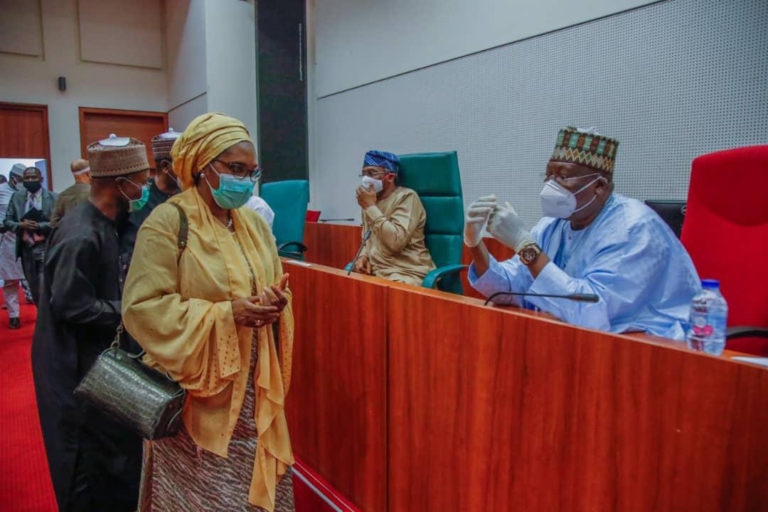
The Leadership of the National Assembly on Thursday met with the Minister of Finance, Budget and National Planning to be briefed by the latter on the plan by the Federal Government to amend the N10.59 trillion 2020 budget passed by the National Assembly in December last year.

The meeting which had in attendance principal officers from both chambers, was presided over by the President of the Senate, Ahmad Lawan, and the Speaker of the House of Representatives, Femi Gbajabiamila.

The Senate President, in his welcome address told the Executive arm of Government to ensure that the interest of Nigerians remains protected in the proposed cut to the 2020 national budget.

Lawan also expressed the willingness of the Federal lawmakers to expeditiously consider the proposed amendment to the 2020 budget which the Minister said would be presented to the National Assembly by next week.

“The budget amendment is very important, but I believe that when we are faced with this kind of challenge (COVID-19 pandemic), it is an emergency and we should do everything and anything possible to fast track the passage and implementation of the government intervention that is so critical and crucial at this stage.

“I believe that we shouldn’t delay it any longer. Next week, and I will suggest the early part of next week, we should have that document(MTEF) ready so that we can consider it alongside the budget. It is supposed to be the tonic of what Nigerians are waiting for.

“We have listened to the various adjustments you have made to avoid going into recession. However, to avoid going into a deeper recession, I think we need to do a little bit much more.

“After this meeting with the leadership, I suggest that you engage with our relevant committees in the Senate and House of Representatives to look at the nitty gritty that would be considered more in detail at the presentation level.

“On the whole, let me assure you that the National Assembly and Executive arm are on the same page, and that is to say that we will work to ensure that we have a budget 2020 amendment that will address the needs of the people of this country.

“One thing is that the net public expenditure must be targeted at net maximum performance for the benefit of the people of this country.

“In other words, we must come up with an amended budget that is operable and favorable to Nigerians,” Lawan said.

In his remarks, the Speaker of the House of Representatives, Femi Gbajabiamila, called on the Federal Government to adopt a feasible benchmark in the proposed amendment to the 2020 budget.

“The benchmark is so critical and so important, because once you passed the law, it becomes difficult to adjust that benchmark, and then what happens to the excess?

“We have always had problems with the Excess Crude Account, potentially an account which has no backing of the law. So, let’s even assume that the price remains static at $35, that means we have $10 going to the Excess Crude Account which we have no control over in terms of spending, that is why we guard that benchmark price very jealously.

“Is there a possibility of having a proviso built in in the budget…So that there can be an automatic kick in if the benchmark price goes beyond $26 or $27. We want you to explore that possibility.

“So, I think you should study the market and see what happens next week by the time you present the adjusted budget,” Gbajabiamila said.

Speaking on Nigeria’s debt profile, the Speaker said, “I would also want to address the issue of our deficit and tie it with the issue of debt relief. I’m not sure I heard any presentation on how much we owe and how much we are paying back in this budget.

“The reason I asked is that at the moment, I believe, for want of a better word, some of our creditors are very vulnerable right now. And depending on how you package your case, I believe they should be the ones coming to beg you to take debt relief, if not outright cancellation.”

Earlier, the Minister of Finance, Zainab Ahmed, while briefing the leadership of the National Assembly said, “the US$57 crude oil price benchmark approved in the 2020 budget is no longer sustainable.”

The minister said further that: “it is necessary to reallocate resources in the 2020 budget, to ensure the effective implementation of required emergency measures, and mitigate the negative socioeconomic effects of the COVID-19 pandemic.”

Ahmed stated that in line with the global economic outlook and relevant domestic considerations, the assumptions underpinning the 2020-2022 Medium Term Expenditure Framework (MTEF) and the 2020 Budget was revised to slash crude oil benchmark price from US$57 per barrel to US$25 per barrel; reduce crude oil production benchmark from 2.18 million barrels per day to 1.9 mbpd.

She added that the federal government also adjusted the budget exchange rate to N360/US$1; and reduced the upfront fiscal deductions by the Nigerian National Petroleum Corporation (NNPC) for mandated Oil and Gas sector expenditures by 65 percent from N1.223 trillion to N424 billion.

She disclosed that the amount available for funding the 2020 Budget is now estimated at N5.548 trillion, down from N8.419 trillion, a revised revenue estimate which is 34 percent (N2.87 trillion) lower than what was initially approved.

Federal Government’s aggregate expenditure budget was slashed by N88.412 billion; Statutory Transfer from N560.47 billion to N397.87 billion; and Overhead costs of Ministries, Departments and Agencies of Government from N302.43 billion to N240.91 billion.

Debt Service provision was, however, increased from N2.453 trillion to N2.678 trillion.

On Provision of N500 billion for COVID-19 Intervention Fund, the Finance Minister in her presentation explained that N263.63 billion will be sourced from Federal Government Special Accounts, N186.37 billion from Federation Special Accounts and the balance of N50 billion expected as grants and donations.

According to her, “the sum of N186.37 billion will be applied toward COVID-19 interventions across the federation, while an additional N213.60 billion was provided in the Service Wide Votes for COVID-19 Crisis Intervention recurrent expenditures.”

She disclosed that while a total of N100.03 billion was provisioned in the Intervention Fund for new capital spending, the Federal Government carried out a cut in capital expenditures for Ministries, Departments and Agencies of Government from N1.564 trillion to N1.262 trillion.

Signed:

Ezrel Tabiowo
Special Assistant (Press)
to President of the Senate

Thursday, May 14, 2020

PHOTO NEWS: Lawan, Gbajabiamila meet Finance Minister over 2020 budget amendment

0

meet Finance Minister over 2020 budget amendment 

E1.jpeg

PHOTO 1: L – R Minister of Finance, Budget and National Planning, Zainab Ahmed; and President of the Senate, Senator Ahmad Lawan, immediately after a meeting on Thursday between the Leadership of the National Assembly and some representatives of the Executive arm of Government on the amendment of the 2020 budget.

E2.jpeg

PHOTO 2: L – R Speaker of the House of Representatives, Rt. Hon. Femi Gbajabiamila; President of the Senate, Senator Ahmad Lawan; and Deputy Senate President, Senator Ovie Omo-Agege being briefed on Thursday by the Minister of Finance, Budget and National Planning, Zainab Ahmed, on the amendment of the 2020 budget.

E3.jpeg

PHOTO 3: L – R Speaker of the House of Representatives, Rt. Hon. Femi Gbajabiamila; and President of the Senate, Senator Ahmad Lawan at a meeting on Thursday between the Leadership of the National Assembly and some representatives of the Executive arm of Government on the amendment of the 2020 budget.

COVID-19: Lagos Commences Mobile Advocacy Campaign

0

 . Says government is determined to halt community spread

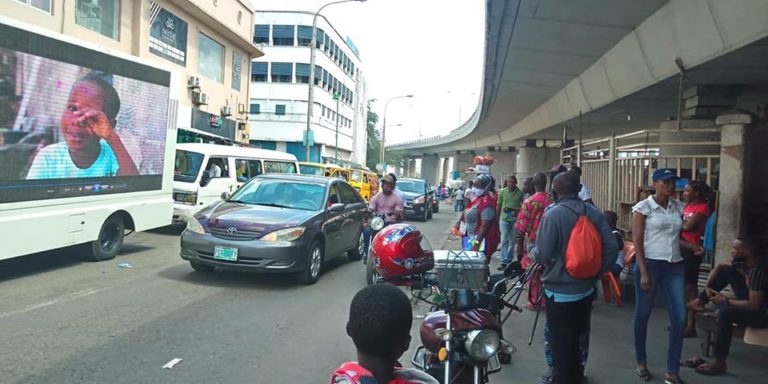
To reinforce the measures instituted to contain the community spread of COVID-19, the Lagos State Government has begun an extensive Public Enlightenment campaign, which will go across all the 20 Local Governments and 37 LCDAs.

Speaking on the commencement of the campaign, the Commissioner for Information and Strategy, Mr. Gbenga Omotoso, said the exercise was initiated after the discovery that members of the public did not comply with the directives issued by Governor Sanwo-Olu as the lockdown was eased in Lagos.

Omotoso said: “It was disappointing that residents threw caution to the winds immediately Mr. Governor announced the partial lifting of the lockdown imposed by the Federal Government. People stormed banks without exercising caution despite the ravaging effects of the pandemic. The enhanced public enlightenment campaign, which will involve LED and mobile billboards, is expected to strengthen the advocacy on physical distancing and other preventive measures.

“Information about the symptoms, prevention and sample collection centres for individuals who exhibit symptoms of COVID-19 will dominate the campaign. It has become imperative to penetrate communities with details that will attract the attention of residents to engender compliance with Health experts’ directives on COVID-19”.

“The campaign is to further increase awareness on symptoms, prevention and sample collection centres so that Lagosians are further equipped to combat the virus, especially at this critical stage of community transmission,” Omotoso said.

While reiterating the call by Governor Babajide Sanwo-Olu that every Lagosian must #take responsibility in the fight against COVID-19, he emphasised that the #maskup Lagos campaign will be taken across the entire State.

He solicited public support in ensuring that the campaign is taken to every household and expressed optimism that the fight against COVID-19 will be won, if residents adhere strictly to the directives issued by the Ministry of Health and the Nigeria Centre for Disease Control (NCDC).

Lagos had its index COVID-19 case on February 27, 2020, and presently has 1,480 patients on admission; 528 discharged and unfortunately recorded 33 deaths.  

Lagos commences mobile campaign on COVID-19 – FRCN

—

Germany bracing for €81.5bn drop in 2020 tax revenues

0

Germany expects to collect 81.5 billion euros (87.9 billion dollars) less in tax revenues in 2020 compared to 2019, the Finance Ministry said on Thursday.

This is a 10-per-cent drop and means that federal, state and district authorities will have 98.6 billion euros less to spend than forecast in November, as the coronavirus pandemic tears up the country’s previous budgets.

It is the first time that state coffers are expected to decline in Europe’s biggest economy since 2009 during the financial crash.

In calculating its estimate, the Finance Ministry put the cost of the government’s coronavirus aid measures at 453.4 billion euros in 2020 alone.

This, not including an additional 800 billion euros in loans that may have to be extended if struggling companies are unable to meet their credit obligations.

In Africa, Trump’s Fate Is Worse Than A Laughing Stock

0

Azu Ishiekwene

In a recent article in The Atlantic also widely used elsewhere, American journalist, Anne Applebaum, described the pathetic meltdown of US President Donald Trump, especially since the outbreak of the global health crisis, COVID-19.

According to the journalist, not only has Trump become the butt of jokes in video games, the US President’s serial faux pas in managing the health crisis has also made him a laughing stock in memes and cartoons.

On April 29, the US President reportedly phoned his Nigerian counterpart, Muhammadu Buhari, and promised to help with some ventilators. The next day, an irreverent mascot in a cartoon strip in LEADERSHIP, a Nigerian newspaper, asked if Trump was also going to send “Dettol vaccines,” a sarcastic reference to the President’s claim that disinfectants could mitigate the effect of Coronavirus.

Now, something worse than being a laughing stock is happening to Trump and he could be merrily unaware. That idiom – laughing stock – was reserved for President George W. Bush, who was looked upon disdainfully in some intellectual circles because of his demeanour and his penchant for off-colour jokes. Yet, for good or ill, Bush still managed to keep the world riveted on America. It was difficult to ignore him.

Trump is making the Bush White House look like the golden era of US exceptionalism. Africa is not laughing at Trump. The continent is ignoring him.

It seems so long ago when his book, The art of the deal or How to get rich, was the companion of young wannabe millionaires. Or when his reality TV show was a favourite of millennials on the continent and those in diaspora.

It seems so long ago when his entrepreneurial skill and maverick essence were hailed by non-conformists as the only way to checkmate the status quo.

It seems so long ago when Trump’s underdog status and his story as the ultimate political outsider were regarded as the new model for recruiting transformational leadership and hailed as the cookbook to overthrow gerontocrats, sit-tight leaders and vested interests on the continent.

Yet today, even Trump’s promise to make America great again sounds so alien and so hollow, that all the catastrophes in between – from his shredding of the Paris Climate Agreement to his scuppering of the Iran nuclear deal to his trade wars with China – are like echoes from a distant past.

But they are not. These imprints from the Trump years created shock and consternation at first, then quickly gave way to sneering and laughter. Now, it seems some countries are no longer laughing, as Applebaum suggested in her article. They’re doing something worse: ignoring Trump and his America.

How do you deal with the President of the most powerful country in the world who decides that it is in the world’s greatest moment of the need for co-operation and solidarity that he must walk alone?

How do you respond to a president who despite multiple early warnings by his own experts that his country – and perhaps the rest of the world – could be faced with a pandemic decides to live in denial, only to be looking for scapegoats later?

How exactly do you handle a president who does not know the difference between bug and germ and microbe and yet would not listen to those who know? A president who, in spite of being surrounded by people who know, insists, with a straight face, that UV light, a bit of sunshine or perhaps ingestion of disinfectant, will make everything all right again?

From some of the world’s shitholes – so described and despised by Trump – answers are coming that ought to make the US President feel ashamed, if he hasn’t passed that point already.

South Africa is not looking to the US for help to combat COVID-19, as it once did at the height of its struggle against the spread of HIV/AIDS. Bush was US President then. He will be remembered for making the most consequential intervention through the provision of antiretroviral drugs at a cost of about $80billion, which saved about 13million lives, mostly in Africa.

Today, Washington and Pretoria have grown apart, with President Cyril Ramaphosa rebuffing Trump’s request to slam the door on Huawei over 5G. And in the fight against Coronavirus, instead of going to the US, South Africa has engaged Cuban doctors, as have Togo, Cape Verde and Angola.

Ghana has been quite exemplary in its testing, tracing and treatment, and even deployed drones in delivering test results from rural areas to some hospitals at a time when deaths in the US were mounting, tests lagging and yet Trump was locked in a bitter quarrel with China over what to call the virus.

Senegal, traditionally France-leaning, has set its own modest example accrued from its experience in managing dengue fever and Ebola six years ago. It has developed a $1 test kit, which gets the job done in 10 minutes and has joined the global race in the search for a vaccine.

And though COVID-organics from Madagascar may sound like the herbal version of Trump’s disinfectant, it’s a measure of the desperate times that Nigeria, Tanzania, Guinea-Bissau and even Liberia, have ordered supplies. Nigeria’s President could not even wait for Trump’s ventilators before lining up!

It’s a tragic irony that Liberia joined the train to Antananarivo for a suspicious herbal remedy, even though its historical ties with the US should have made Washington its first port of call. Those days are gone.

Those who are not looking to Cuba or Madagascar are going East, inviting Chinese help in spite of the recent upsurge in racism against Africans in that country.

Sure, China is not exactly a sterling example in managing Coronavirus. It has more to account for than it is willing to admit. But Trump’s incompetence has managed to make President Xi Jinping look like a messiah. That is what the Chinese Coronavirus response team around the world has been called: messiah.

The void created by US absence, compounded by Trump’s personal hubris, has left others with no choice but to take their fate in their own hands – the very opposite of the lesson history teaches about how the world overcame some of its greatest trials in the past.

Some may argue that the response from many parts of the world, especially the unsparing criticisms of what appears to be Trump’s congenital flaws, have been unfairly exploited by his opponents in an election year.

Conspiracy theories on both sides have had a field day and Trump may have been hard done by a section of the liberal press. In the end, however, he only is responsible for his own fate.

If instead of using his own experts he chooses to rely on anecdotes and instead of following the facts he decides to invent his own reality, how can even his allies defend or save him, much less his enemies?

Even in Nigeria where Trump had a sizable following among evangelicals who believed Barack Obama was the anti-Christ (mainly because of his stance on gay rights), the US President’s mismanagement of COVID-19 has left his reputation in shreds. And Nigeria’s President whose encounter with him in Washington Trump once described in morbid terms, must be wondering who really needs a life now.

This could be the moment when the continent rediscovers itself and redeems its shambolic healthcare system. The voices calling for China to pay reparation for its malicious negligence are as resonant and determined as those asking the continent to look beyond the US to protect and save itself and its citizens. That is good.

Fewer and fewer people are concerned about what the US does with itself in November – whether it would be Blue or Red, Joe Biden or Donald Trump again. Trump is not a laughing matter anymore.

We’re past caring.

Ishiekwene is the MD/Editor-In-Chief of The Interview

Plug social protection gaps in developing countries to prevent future crises, ILO says

0

The COVID-19 crisis has exposed devastating gaps in social protection coverage in developing countries, and recovery will only be sustained and future crises prevented if they can transform their ad hoc crisis response measures into comprehensive social protection systems, according to new analysis from the International Labour Organization (ILO).

Two briefing papers released by the ILO warn that the current gaps in social protection could compromise recovery plans, expose millions to poverty, and affect global readiness to cope with similar crises in future.

The papers take a detailed look at the role of social protection measures in addressing the COVID-19 outbreak in developing countries, including the provision of sickness benefits during the crisis.

The brief on Social protection responses to the COVID-19 pandemic in developing countries , describes social protection as, “an indispensable mechanism for delivering support to individuals during the crisis”. It examines the response measures some countries have introduced, including removing financial barriers to quality health care, enhancing income security, reaching out to workers in the informal economy, protecting incomes and jobs, and improving the delivery of social protection, employment and other interventions.

© Ploy Phutpheng / UN Women“While the virus does not discriminate between rich and poor, its effects are highly uneven”, the brief says, adding that the ability to access affordable, quality, healthcare has become “a matter of life and death”.

The brief also warns policymakers to avoid a singular focus on COVID-19 because this could reduce the availability of health systems to respond to “other conditions that kill people every day”. It cites the example of how, during the Ebola epidemic, a focus on this virus exacerbated mortality from malaria, tuberculosis and HIV/AIDS.

According to data in the brief, 55 per cent of the world’s population – as many as four billion people – are not covered by social insurance or social assistance. Globally, only 20 per cent of unemployed people are covered by unemployment benefits, and in some regions the coverage is much lower.

The other Social Protection Spotlight brief covers Sickness benefits during sick leave and quarantine: Country responses and policy considerations in the context of COVID-19 .

“While the virus does not discriminate between rich and poor, its effects are highly uneven […] The ability to access affordable, quality, healthcare has become ‘a matter of life and death’.”

It warns that the COVID-19 health crisis has exposed two main adverse effects of gaps in sickness benefit coverage. Firstly, such protection gaps can force people to go to work when they are sick or should self-quarantine, so increasing the risk of infecting others. Secondly, the related loss of income increases the risk of poverty for workers and their families, which could have a lasting impact.

The brief calls for urgent, short-term measures to close sickness benefit coverage and adequacy gaps, pointing out that this would bring a three-fold benefit: support for public health, poverty prevention, and promotion of the human rights to health and social security.

The proposed measures include extending sickness benefit coverage to all, with particular attention given to reaching women and men in non-standard and informal employment, the self-employed, migrants and vulnerable groups. Other recommendations include increasing benefit levels to ensure they provide income security, speeding up benefit delivery, and expanding the scope of benefits to include prevention, diagnosis and treatment measures, as well as time spent in quarantine or on the care of sick dependants.

“The COVID-19 crisis is a wake-up call. It has shown that a lack of social protection affects not just the poor, it exposes the vulnerability of those who have been getting by relatively well, because medical charges and loss of income can easily destroy decades of family work and saving,” said Shahra Razavi, the Director of the ILO’s Social Protection Department.

“The examples from around the world clearly demonstrate once again that countries with robust and comprehensive social protection systems are in a much stronger position to respond to, and recover from, a crisis. Policymakers need to build on the momentum generated by growing public awareness of the importance of social protection and the urgency of investing in it as a society, to ensure preparedness for future crises.”

Ghost’ derby lifts curtain on Bundesliga restart

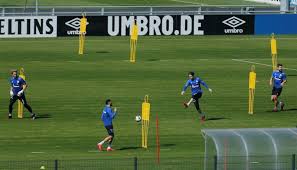
Borussia Dortmund host Schalke 04 in Germany’s fiercest derby on Saturday but no more than 300 people will be in and around the 80,000 capacity arena due to COVID-19 restrictions as the Bundesliga gets back to business after a two-month break.

The Bundesliga is the first major sports league to resume since world sport was brought to a standstill by the pandemic, and players will have to abide by a strict set of health guidelines aimed at minimizing the risk of infection.

Fans will not be able to attend the matches as part of the safety regulations, leaving it up to the players to provide the spark for what are being called “ghost” games.

“It will most certainly be the most unusual derby in history,”Dortmund’s head of pro players Sebastian Kehl said this week.

“This game lives off fans, their emotions, the intensity of the stadium. We will not experience any of that. The players will be badly missing the motivation from the atmosphere and the fans,”he told Welt newspaper.

Whatever the conditions, Dortmund will look to pick up where they left off before the break and earn a victory over their fierce rivals that would keep them in the title hunt.

With nine matches left, Dortmund are on 51 points, four behind leaders Bayern Munich and one ahead of RB Leipzig.

Dortmund have always relied on their 80,000 sold-out crowd to push them forward at every home game, but on Saturday only about 200 people will be allowed on the pitch side and in the stands, with another 100, mainly security staff, posted outside the arena.

With Europe’s biggest standing tribune, the Yellow Wall, empty on Saturday the hosts have staged several training sessions at the arena to get used to playing without fans.

During Wednesday’s training session music that is played prior to matches blared from the speakers as the team simulated Saturday’s conditions.

On paper, the hosts are favourites, having won seven of their last eight games. Since January, Erling Haaland and Jadon Sancho have scored nine goals together, more than double that of the entire Schalke team (four).

But Dortmund will be missing injured Captain Marco Reus and defender Dan-Axel Zagadou while midfielders Axel Witsel and Emre Can are also doubtful.

Schalke are without a win in their last seven league games, the longest winless stretch under coach David Wagner, and have scored just two goals in the process.

After a strong start to the season they have dropped to sixth on 37 points and are in danger of missing out on Europe next season.

Champions Bayern, chasing a record-extending eighth straight title, travel to Union Berlin on Sunday with the hosts likely to be without coach Urs Fischer, who on Wednesday left the team’s mandatory seven-day isolation camp ahead of the season restart.

Leipzig, on 50 points, host Freiburg while Borussia Moenchengladbach, a further point behind in fourth place, travel to Eintracht Frankfurt.