Home Blog Page 8035

Enugu records 3 new COVID-19 cases, total now 15

0

The Enugu State Government has announced three new confirmed cases of COVID-19 in the state, bringing the total to 15.

The Commissioner for Health, Prof. Ikechukwu Obi, disclosed this in a statement in Enugu on Tuesday.

Obi said that two previously active COVID-19 cases in Enugu had now tested negative, adding that the three confirmed cases had travel history.

“The Enugu State Ministry of Health wishes to announce that two cases out of the previously active COVID-19 cases undergoing treatment in Enugu state have tested negative and are being assessed for discharge.

“However, the state has unfortunately received three new results of persons who have tested positive for the virus.

“This means that Enugu state has 15 cases in all, with nine active cases and six cases discharged after testing negative,” he said.

Obi said that the two cases that had tested negative were cases number five and nine, adding that the three new positive cases entered Enugu State illegally during the ban on inter-state transportation.

“Case 13 is a 25-year old man from Ondo State, who lives in Lagos and made his way first to Akwa Ibom, then to Rivers State and finally to Obollo Afor in Udenu LGA of Enugu state, all within the period of boundaries closure.

“He developed symptoms while at Obollo Afor; the health authorities were alerted, he was tested and his result came out positive.

“Case 14 is a 38-year-old male from Okpuje in Nsukka LGA who lives in Nassarawa State and found his way back to Enugu State during the same period of lockdown.

“On suspecting he may have contacted the virus, he initially went into self-quarantine in a hotel at Nsukka and subsequently developed symptoms and alerted the health authorities.

” He was tested and his test result also came back positive.

“Case 15 is a 28-year-old female and a widow who hails from Igbo-Etiti Local Government Area, Enugu State, and lives in Lagos State with her husband.

“She recently lost her husband in Lagos and was able to smuggle her husband’s corpse back to Enugu state for burial, despite the lockdown in Lagos State and the national ban on inter-state movement.

“Her actions raised suspicion and the health authorities were alerted. She was subsequently tested and her result came back positive.

“These unfortunate figures are coming up as a result of individuals who have deliberately disobeyed the lockdown order and inter-state transportation as ordered by the federal and state governments,” he said.

Kwara records 5 more cases of COVID-19

0

The Nigeria Centre for Disease Control (NCDC) has confirmed five more positive cases of COVID-19 in Kwara.

The NCDC on its verified website on Tuesday stated that this brings the total number of confirmed cases to 63, with 15 patients discharged and one death recorded in the state.

It was reported that the update table showed that there were 47 active cases, while 15 had so far been discharged and one death recorded.

Senate receives Buhari’s request to confirm new SEC DG, Yuguda, others

0

The Senate has received a request from President Muhammadu Buhari for the confirmation of Mr. Lamido Yuguda as the new Director-General of the Securities and Exchange Commission (SEC).

Also to be screened and confirmed are three nominees as full-time Commissioners of the Commission.

The President’s request was contained in a letter read by the Senate President, Senator Ahmad Lawan, during plenary on Tuesday.

The letter reads: “Pursuant to Section 3 and 5(1) of the Investment and Securities Act 2007, I write to request for confirmation by the Senate, the appointment of the following four nominees as Director General and Commissioners of the Securities and Exchange Commission (SEC). Their CVs are attached herewith.

Others for confirmation are: Mr. Lamido A. Yuguda, Director General; Reginald C. karausa, full-time Commissioner; Ibrahim D. Boyi, full-time Commissioner; and Mr. Obi Joseph, full-time Commissioner.

Signed:

Ezrel Tabiowo
Special Assistant (Press)
to President of the Senate

Tuesday, May 19, 2020

Yobe State Chief Judge Is Dead

0

The Chief Judge of Yobe State, Justice Musa Nabaruma, is dead.

A family member of the late Chief Judge, Hussaini Nabaruma, confirmed this to Channels on Tuesday.

According to him, Justice Nabaruma died on Monday night after a protracted illness at the National Hospital in Abuja, the nation’s capital.

He served as the Chief Judge of Yobe for about nine years – the longest in the state.

Justice Nabaruma was appointed in 2011 by the immediate past governor of the state, Ibrahim Gaidam.

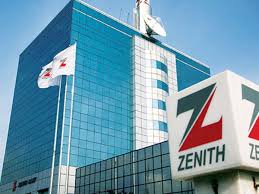
ZENITH GENERAL INSURANCE’S PROFIT BEFORE TAX RISES BY 16% TO N3.67bn

0

Zenith General Insurance Limited has released its full-year financial statements for the year ended 31 December 2019. A review of the results showed positive improvements on a year-on-year basis with profit before tax rising by 16% from N3.16bn to N3.67bn while profit after tax rose by 10% up from N2.79bn to N3.06bn. The company also maintained a robust balance sheet closing the year with total assets of N40.1bn and a shareholders’ fund of N25.9bn.

Gross premium grew by 17% year-on-year from N13.7bn to N16.1bn, while there was a 46% growth in underwriting profit from N2.77bn to N4.06bn. The company made substantial gains from reduced claim expenses and healthy growth in gross written premiums.

Investment income showed an increase of 2% year on year, up from N3.55bn in 2018 to N3.63bn in 2019 despite lower yields on most investment classes in 2019.

Commenting on the financial results, the Managing Director/CEO, Mr. Kehinde Borisade said “we are re-affirming our mission statement that Zenith General Insurance Ltd exists to ensure peace of mind and also create value to people in a world of uncertainties. This is evident in our strong financial performance showing improvement across the board through increased premium income, underwriting profits and investment income despite the economic headwinds witnessed in various sectors of the economy. We also ensured prompt settlement of claims with total claims payment of N3.8bn for the year and an average settlement turnaround time of three days.”

He added that “our company has continued to maintain a very strong and healthy financial position with a growth of 6% year-on-year on total assets, and a 4% increase in shareholders’ funds. We also continue to strive to be the best in the insurance industry; maintaining the strongest solvency position and closing the year with a solvency ratio of 726%”.

Zenith Insurance is one of Nigeria’s leading insurance institutions. The company is one of the first Insurance companies to have met the recapitalisation requirements of the National Insurance Commission (NAICOM) by recapitalising its share capital from N3bn to N10bn.

Oyakhilome sanctioned in UK over false claims on 5G Network, COVID-19 link

0

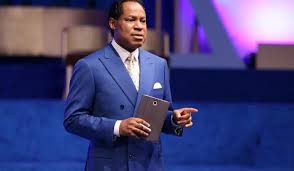
UK’s communications regulator, Ofcom has sanctioned Pastor Chris Oyakhilome’s LoveWorld Television Ministry for airing false and “potentially harmful statements” about the COVID-19 pandemic.

In a statement, Ofcom said the Christian channel aired a sermon that promoted a baseless conspiracy that the virus is linked to the roll-out of 5G Network.

It also insinuated a “global coverup”.

In addition Loveworld news also claimed that hydroxychloroquine is a cure for COVID-19, without proof.

“Our investigation found that a report on Loveworld News included unsubstantiated claims that 5G was the cause of the pandemic, and that this was the subject of a ‘global cover-up’, Ofcom said.

“Another report during the programme suggested hydroxychloroquine as a ‘cure’ for Covid-19, without acknowledging that its effectiveness and safety as a treatment was clinically unproven, or making clear that it has potentially serious side effects”, it added.

Ofcom said Loveworld breached Rules 2.1 and 5.1 of the Broadcasting Code.

Loveworld’s sanction was non-monetary, for now. Ofcom simply wanted it to broadcast its findings that debunked its fake news and sermon.

But it also warned about a further sanction: “We are considering whether to impose any further sanction,” the statement added.

Loveworld TV was not the only violator of the UK broadcasting code punished by Ofcom on Monday.

Ofcom also sanctioned London Live and radio station Uckfield FM for airing similar false claims without them being sufficiently challenged.

Oyakhilome’s Loveworld, also known as Christ Embassy, is based in Lagos but has operations in several countries across the world, including South Africa, the United States and the United Kingdom.

The church has at least 90 branches in the UK and an estimated 13 million followers around the world, according to one estimate.

Ofcom has today imposed a sanction on Loveworld Limited, which broadcasts the religious television channel Loveworld, after a news programme and a live sermon included potentially harmful claims about Covid-19.

Our investigation found that a report on Loveworld News included unsubstantiated claims that 5G was the cause of the pandemic, and that this was the subject of a ‘global cover-up’. Another report during the programme suggested hydroxychloroquine as a ‘cure’ for Covid-19, without acknowledging that its effectiveness and safety as a treatment was clinically unproven, or making clear that it has potentially serious side effects.

A sermon broadcast on Your Loveworld also included unsubstantiated claims linking the pandemic to 5G technology, as well as claims which cast serious doubt on the necessity for lockdown measures and the motives behind official health advice on Covid-19, including in relation to vaccination.

There is no ban on broadcasting controversial views which are different from, or which challenge, official authorities on public health information. However, given the unsubstantiated claims in both these programmes were not sufficiently put into context, they risked undermining viewers’ trust in official health advice, with potentially serious consequences for public health.

Given these serious failings, we concluded that Loveworld Limited did not adequately protect viewers from the potentially harmful content in the news programme and the sermon, and the news reports were not duly accurate. Loveworld Limited must broadcast our findings and we are considering whether to impose any further sanction.

We Screwed Up Public Education, Now It’s The Time To Fix It

0

By Akin Olaniyan

Nigeria has always been an interesting case. It’s the richly endowed country that is also home to some of the world’s poorest. It is where sprawling mansions exist in close proximity to slums. For some unexplainable reason, we have struggled to transform the mineral and human endowment into a better quality of life for all Nigerians. Inequality has been a permanent feature of our nation, the rich-poor divide being one of the most dispiriting.

Right from independence in 1960, when we seemed to replace one group of ‘lords’ with another, democratic politics and prebendal politics have been, what Richard Joseph, famously termed ‘one side of the same coin.’ Since 1987 when he made those observations in his book, ‘Democracy and Prebendal Politics In Nigeria: The Rise and Fall Of the Second Republic,’ politics has become the most lucrative business in the land and elevated government officials or anyone close to them, thereby furthering inequality.

This elitist system leaves the majority struggling to get anything close to a decent living. The mansions, big cars, and private jets have mostly defined inequality, but private education has lately become another feature of the widening gap between the rich and poor.

Embraced first by the rich and the middle-class, private education is preferred because of the belief that it gives the student a shot at a good life. The idea is simple: a good education will grant access to the good life and open the door to the elite, pampered class. Until 20 – 30 years ago, public schools guaranteed this social mobility. I am in the generation that knew only public schooling, and I confess they were great in those days. I recall my time in Ilesa Grammar school in the early 80s and the fact that we had teachers from the Commonwealth, including those from Canada and India. My experience at the University of Ibadan from the mid-80s was no less enriching, but my children have known nothing but private schooling.

Most of the public secondary schools and universities in our time had the human and infrastructural capacity, which helped to provide quality at reasonable costs. However, years of misplaced policy, neglect, and mismanagement have turned most public schools into shadows of themselves. It looks as though policymakers and the schools stood still at a time of rapid technological changes and increasing demand for school places. Most of our tertiary first-generation institutions, like the University of Ibadan, are particularly worst hit, a lot of them looking worse than they did when some of us were there.

The constant closures due to protests and labour disputes worsen a bad situation. Students enrol now not sure of when they would graduate; the result being that sometimes, four-year programmes don’t finish in six or seven years. Even though there is no evidence to suggest that private schools are necessarily better, most parents are happy that their wards can at least finish academic programmes on schedule. I doubt, though, if any parent will question the quality in some of those private secondary schools and universities; otherwise, they won’t be attracting the level of patronage we are seeing. The only danger, of course, is that the worsening state of public schools could further the inequality because hundreds of thousands of otherwise promising students are either denied access to quality education or when they manage to secure places, delayed for longer than necessary. Not only do many of those whose parents can afford private schools move faster, but they also end up abroad for graduate studies, further stretching their advantage. This is important because top companies appear to favour those with degrees from foreign schools in recruitment.

If the case of public schools was bad, Covid-19 threatens to make it worse. Lockdown learning is proving to be a measure of social inequality with the children from affluent homes and neighbourhoods enjoying full timetables and those from poorer families getting no home lessons. The lockdown imposed to curtail the spread of the virus means Churches, Mosques, businesses, and schools are closed. This disruption to normal life has challenged leaders and exposed the shortcomings of those who are either not prepared for change or lack the capacity to cope with it. While some are complaining about the lockdown, others have embraced it and are utilising technology to keep their companies, schools, and churches going. It should worry us, especially where our children’s education is concerned, that those willing to embrace the change are making progress during lockdown while others wait. I am impressed that some secondary schools are organising tutoring online, using Zoom and WhatsApp and that some higher institutions like Babcock University have concluded plans to conduct semester examinations online. While this is commendable, and knowing that most public schools are ill-equipped for anything but in-person tutoring and supervision, the question is: would Covid-19 further inequality?

This is a question that should be of interest to us all since increasing globalization has made education a measurement of a nation’s ability to compete in the future. The world is shrinking every day, and top firms have a pool of talents from across the globe to pick from. You don’t even get in that pool unless you have received what can be considered standard education and training. Nigeria already lags in this regard, falling behind other African countries in funding for research and development as well as research output. The frightening thing is that we even risk dropping further behind others in this all-important race due to our inability to adapt to meet the challenges of Covid-19. For instance, while most of our universities are closed, South African schools were quick to decide to move teaching online. You cannot but be impressed with the detailed arrangements. Telecoms companies were persuaded to make 30Gb free data available to students for a month to enable them to attend online classes via Zoom or Microsoft Teams. Some schools made laptops offers to students who needed assistance in that regard. The result of such quick thinking is the students have only missed the few weeks it took for the schools to set up and move lectures online. This is where the approach taken by the likes of Babcock is commendable and why the Federal Ministry of Education, as well as the National Universities Commission (NUC), must rethink their policy on tertiary education in Nigeria.

Covid-19 has shattered social relationships as we know it and may alter the way we worship, do business or study permanently.

Forward-thinking policymakers must ask: what if restrictions on social gatherings last longer than anyone can imagine? If the lockdown continues into 2021, for instance, would our tertiary institutions remain locked till then? We need to learn from those who are adapting in an exemplary fashion and act fast. Some institutions are already making preparations on the assumption that Covid-19 is the new normal, and in the absence of anything to prove otherwise, that should be a model for everyone. The California State University, America’s largest four-year college system, announced last week it is cancelling most in-person classes in its 23 campuses from September. As we approach the next school session, others may well follow the lead. The University of Johannesburg last Wednesday held a virtual graduation ceremony, again signalling the readiness to work with this new normal. With available technology, nothing should stop business meetings, church service, and tutoring.

Nigeria lags behind many African nations because successive governments and the NUC have failed miserably with policies on tertiary education, but Covid-19 presents an opportunity to course-correct. University teaching staff have always complained about funding, and their arguments may be valid because others are outspending Nigeria in research funding. Federal and state governments, Tetfund and university administrators have failed students but Covid-19 is a chance to redeem the situation. The most puzzling of all is the continued relevance of Tertiary Education Trust (Tetfund), which among other things, was founded to ‘promote cutting-edge technologies, ideas and organizational skills in education, and ensure that projects are forward-looking as well as responding to present needs.’ It has to be said though that Tetfund has done creditably well by promoting quality scholarship through foreign post graduate scholarships, and conferences that expose lecturers to the most recent theories, practices and skills. However, for as long as students in our higher institutions are still forced to submit academic papers and thesis in print; If they have to print out copies of PowerPoint to read from when making presentations; if lockdown means schools are on break until further notice; If instruction and supervision of students cannot hold without physical contact, then Tetfund is failing in one of its most important goals. Future interventions should be directed at building IT infrastructure to enable more convenient and effective learning as well as re-training of teaching staff to make them IT-compliant.

Governments at the federal and state levels, which fund tertiary education should understand the enormity of the problem and increase budgetary allocation to the sector to enable our schools compete on the global stage. Budgetary allocations usually signal the intention of policymakers and recent figures show other African countries have a better understanding of the importance of the place of education in national development. Available data shows that South Africa’s allocation to educated in 2018 was 6.16% of the country’s Gross Domestic Product (GDP), while Ghana managed 3.99% for that year. The World Bank and the United Nations Education and Scientific Organisation (UNESCO) do not have the figures for Nigeria but the federal allocation to education in 2018 was N102.9 billion, which amounts to well below 1% when the Naira rate and the GDP rate for that year are factored in. Lastly, university administrators must also re-strategise, possibly by building businesses on research and development instead of selling bread and bottled water. With a strong partnership with corporate Nigeria, they can generate more funds to invest in IT. Only a few public universities have the required infrastructure to even admit online so, to ask for remote teaching would be asking for too much. It sounds daunting, but there is no other way to compete with the rest of the world, especially if we are to address the inequality between private schools and their public counterparts.

Akin Olaniyan is a communication specialist and PhD candidate at the University of Witwatersrand, Johannesburg

ODD NEWS: Family grows 113-pound jackfruit in back yard

0

An Indian man is seeking Guinness World Records recognition for a 113.3-pound jackfruit that grew in his family’s back yard.

Johnkutty, a resident of Edamulakkal, Kollam, said his family found one of the jackfruit growing in their back yard was unusually large, and they determined the 38-inch-long fruit weighed a staggering 113.3 pounds.

The resident said his family decided to seek Guinness recognition after discovering the current world record for a jackfruit is only 94 pounds.

Johnkutty said he is also applying to have the jackfruit recognized by India’s Limca Book of Records.

ODD NEWS: Student earns Guinness record for 588-square-foot spice painting

0

A university student in India was awarded a Guinness World Record for using spices to create a 588-square-foot painting.

Guinness announced Wednesday it has approved the world record for Tatineni Sreya, an electronics and communication engineering student at SRM University Andhra Pradesh.

Sreya used spices including turmeric powder and vermilion to paint the image of a young girl watching a sunrise during a Tech Fest event at the school in September 2019. The painting took her four hours and 15 minutes to complete.

Guinness said Wednesday it had completed its review of Sreya’s feat and she would soon be receiving a certificate for the largest spice painting.

ExxonMobil donates vehicles for COVID-19

0

Mobil Producing Nigeria, an ExxonMobil affiliate, has said it is donating 22 additional vehicles including two ambulances and medical supplies to various state governments and the Nigeria Centre for Disease Control to assist in the country’s fight against the COVID-19 pandemic.

The oil major said in a statement that the Akwa Ibom State Government would receive two ambulances for emergency cases and 15 other vehicles, while Rivers State would receive five vehicles.

It said medical supplies, including World Health Organisation-certified COVID-19 test kits, sample collection kits and hospital beds valued at more than N90m would be distributed to the NCDC as well as Akwa Ibom and Rivers states.

The Chairman and Managing Director, ExxonMobil companies in Nigeria, Paul McGrath, said, “We are actively working with our partner, the Nigeria National Petroleum Corporation and other stakeholders on ways to assist in halting the spread of the virus.”

He said the NNPC/MPN Joint Venture’s efforts were being guided by government agencies’ advice with regard to specific requirements and determining the areas of greatest need.

“Supporting Nigeria’s fight against COVID-19 requires a broad, collective effort that should follow the guidelines established by the NCDC as well as the state and federal governments,” he added.

ExxonMobil’s donations are part of an oil and gas industry effort coordinated by the NNPC to provide medical supplies, deploy additional equipment and to support medical infrastructure and in-patient treatment, according to the statement.