Home Blog Page 8000

Nigeria’s GDP rose by 1.87% in Q1 – NBS

0

Nigeria’s Gross Domestic Product grew by 1.87 per cent (year-on-year) in real terms in the first quarter of 2020.

The National Bureau of Statistics disclosed this in its ‘Nigeria’s Gross Domestic Product’ report for the first quarter of 2020 on Monday.

This performance was recorded against the backdrop of significant global disruptions resulting from the COVID-19 public health crisis, a sharp fall in oil prices and restricted international trade.

In the second quarter of 2019, Nigeria’s real GDP at basic prices grew by 2.12 per cent on a year-on-year basis. Growth accelerated further in the third and fourth quarters by 2.28 per cent and 2.55 per cent respectively.

The steady increase in quarterly growth resulted in an annual growth rate of 2.27 per cent for 2019, compared to 1.91 per cent in 2018 on a year-on-year basis.

Compared to the second quarter of 2018, the performance in 2019 indicated an increase of 0.61per cent while the third and fourth quarters were 0.47 per cent and 0.17 per cent higher respectively than the corresponding quarters of 2018.

For the quarter-on-quarter assessment, real GDP growth was –14.27 per cent compared to 5.59 per cent recorded in the preceding quarter.

In the quarter under review, aggregate GDP stood at N35.65tn in nominal terms.

This performance was higher when compared to the first quarter of 2019 which recorded N31.82tn, with a nominal growth rate of 12.01 per cent year on year.

Relative to the first quarter of 2019, the nominal growth rate was higher by 0.11 per cent but lower than the preceding quarter by –0.32 per cent.

During the first quarter of 2020, an average daily oil production of 2.07 million barrels per day (mbpd) was recorded.

The production level was higher than the 1.99mbpd recorded in the same quarter of 2019 by 0.08mbpd and the fourth quarter of 2019 by 0.06mbpd.

The oil sector recorded a real growth rate of 5.06 per cent (year on year) in Q1 2020, indicating an increase of 6.51 per cent relative to the rate recorded in the corresponding quarter of 2019.

However, growth decreased by –1.30 per cent when compared to Q4 2019 which was 6.36 per cent.

Quarter on quarter, the oil sector recorded a growth rate of 11.30 per cent in Q1 2020.

The oil sector contributed 9.50 per cent to aggregate real GDP in Q1 2020, up from figures recorded in the corresponding period of 2019 and the preceding quarter, as the share of the non-oil economy declined.

Commenting, Uche Uwaleke, a professor of capital market, said the drop in the country’s real GDP growth rate from 2.55 per cent in the 4th quarter of 2019 to 1.87 per cent in Q1 of 2020 was not a surprise.

He said the non-oil sectors that drove growth included the ICT, financial institutions and agriculture which experienced relatively less disruptions.

The sectors that recorded the highest drop, he noted, included road transport and accommodation/hotel industry due in part to the movement restrictions and lockdown in many towns and cities in Nigeria.

“As a matter of fact, the drop in real GDP growth rate would have been more severe but for the moderating impact of the relatively greater tempo of economic activities in the month of January,” Uwaleke said.

Pantami may relocate office to controversial NCC complex

0

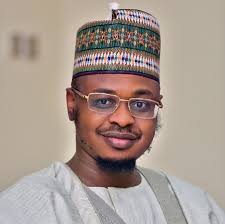
Indications have emerged that the Minister of Communications and Digital Economy, Dr Isa Pantami, plans to move his office to the Communications and Digital Economy Complex, the building from which the Nigerians in Diaspora Commission was allegedly chased away by gunmen.

Currently, Pantami’s office is among the office blocks housing the headquarters of the Ministry of Communications and Digital Economy within the Federal Secretariat Complex in Abuja.

Our correspondent learnt that the plan to move to the Communications and Digital Economy Complex, a new more modern structure located in the Mbora area of the Federal Capital Territory, was behind the eviction of the Diaspora commission from the building.

The building became the subject of an online squabble between Pantami and Chief Executive Officer of NIDCOM, Abike Dabiri-Erewa, after the later alleged that the minister ordered gunmen to throw her members of staff out of the complex.

The Nigerian Communications Commission, the original owners of the building, had accommodated NIDCOM in the complex.

The minister denied the accusation but Dabiri-Erewa maintained her grounds, noting that she suffered the harsh treatment because she is a woman.

She also alleged that office equipment belonging to NIDCOM was carted away.

However, an investigation by our correspondent on Monday, revealed that Pantami might move his office to the Communications and Digital Economy Complex.

Multiple sources informed our correspondent that the decision to ‘clear’ parts of the building housing the diaspora agency was not unconnected with the minister’s plan to relocate his office from the Federal Secretariat to the Digital Economy Complex.

It was gathered that the fifth floor – the top floor of the building where NIDCOM had a temporary accommodation – is to house the minister’s office.

The Communications and Digital Economy Complex, a tastefully furnished and well-equipped building, was in March inaugurated by President Muhammadu Buhari.

The expansive Digital Economy Complex stands on its own in a serene environment.

The plan by the minister to relocate to the new complex may have informed the branding of the building to conform with the new identity of the ministry which Pantami came up with when he was appointed communications minister.

Relevant officials of the Ministry of Communications and Digital Economy did not speak on the record when our correspondent sought an official reaction to the development.

However, a highly placed official, who did not wish to be named, said there was nothing wrong with the minister of Communications and Digital Economy moving his office to the complex.

An official said, “If the President has commissioned a building as Communications and Digital Economy Complex, is it not appropriate that the Minister of Communications and Digital Economy will have his office there?

“There are several federal ministries and agencies that operate outside the Federal Secretariat and it is not out of place for the Minister of Communications and Digital Economy to move into the Communications and Digital Economy Complex.”

Director, Public Affairs at the Nigerian Communications Commission, Dr Henry Nkemadu, said he was not aware of the planned relocation.

“I am not aware of that,” Nkemadu said in response to our correspondent’s enquiries.

He said that the commission had set the records straight in a press statement issued on Sunday in response to Dabiri-Erewa’s allegations.

The statement had denied Dabiri-Erewa’s claims that NIDCOM was “ignominiously thrown out of the NCC building” which is now known as Communications and Digital Economy Complex.

Economy may contract in Q2, NECA warns

0

The Nigeria Employers Consultative Association has called on the fiscal and monetary authorities to develop a more aggressive and decisive policies to sustain  economic recovery in the wake of further decrease in oil price.

The Director-General of NECA, Dr Timothy Olawale, made the call on Monday in a statement made available to our correspondent.

He said the association made this call because it anticipated a contraction in the second quarter, as the economy witnessed a six-week lockdown in the commercial nerve centres of the country.

Olawale noted that similar trend was witnessed in the global economy, except China, whose consumption of fuel due to opening of industrial hubs and transportation could portend mild positive growth pattern due to demand for crude oil.

The statement read in part, “We anticipate contraction in the second quarter, as the economy witnessed a six-week lockdown on the commercial nerves of the country.

“Similar trend was witnessed in the global economy, except China, whose consumption of fuel due to opening of industrial hubs and transportation could portend mild positive growth pattern due to demand for crude oil.

“There is the need for the fiscal and monetary authorities to develop a more aggressive and decisive policies to sustain an economic recovery in the wake of further low oil prices.”

The NECA boss reiterated his call for stimulus packages for the worst-hit sectors of the economy in order to avoid contraction.

He stated, “We believe that more coordinated stimulus packages targeted at the worst-hit sectors of the economy would sustain the economy from experiencing contraction of 8.9 per cent as predicted.”

He noted that Nigeria’s economy faced grave threat, like every other economy in the world, most especially oil-dependent economies.

Olawale said this was an indication of the headwinds the economy was facing from the coronavirus pandemic and low crude price occasioning a fall in government revenue.

He said the slowdown in the Gross Domestic Product growth reflected the earliest effects of the disruptions on non-oil economy, coupled with an escalating war of words between the US and China which resulted in low demand for oil.

He said, “The lockdown of the Nigerian economy commenced in April due to the pandemic. Therefore, the real impact of COVID-19 on the economy would be felt in the Q2 GDP result.”

Ighalo may leave Man Utd this week

0

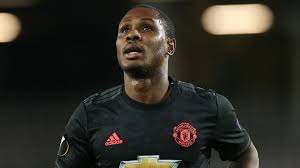
Odion Ighalo looks set to leave Manchester United at the end of his loan spell this week, with parent club Shanghai Shenhua keen to have the striker back ahead of the start of the Chinese Super League season.

Ighalo has been a hit at Old Trafford since signing a loan deal on the final day of the January transfer window, scoring four times for his boyhood club.

But his loan spell looks set to end after eight appearances, with his initial deal only penned until May 31. United’s season will now extend well beyond that as a result of the coronavirus pandemic that has caused a suspension to the campaign, with United not playing since their 5-0 demolition of LASK Linz on March 12. 

United still have nine Premier League games to play and remain in the Europa League and the FA Cup. They are keen to keep Ighalo until the end of this season and have held discussions with Shanghai Shenhua about extending the loan deal.

However, the Chinese authorities are now hopeful of beginning the Chinese Super League season in late June or early July, and as a result his club are keen to have the 30-year-old striker back in the fold.

The initial loan came at a time when the CSL season was yet to begin and China was the epicentre of the COVID-19 pandemic, but the country is now reporting far fewer cases and there is confidence the 2020 campaign could get underway within the next six weeks.

Villas-Boas returns as Marseille coach for 2020/21 season

0

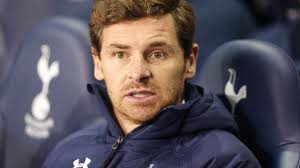
Andre Villas-Boas will return as Marseille coach for next season, the club announced on Monday, despite widespread reports the Portuguese was set to leave after just one year in charge.

“After several discussions in recent days with Frank McCourt and Jacques-Henri Eyraud, Andre Villas-Boas has confirmed that he wants to continue working with OM next season,” the club told AFP.

Last week, Marseille offered Villas-Boas – whose existing deal runs until the end of next season – a two-year contract extension as doubts persisted over his future at the club following the departure of right-hand man and sporting director Andoni Zubizarreta.

Villas-Boas, 42, led former European champions Marseille to second place behind Paris Saint-Germain in the Ligue 1 season which was ended early because of the coronavirus pandemic.

Marseille, who are owned by American tycoon Frank McCourt, are therefore set to feature in the Champions League next season for the first time since 2013/14.

However, the former Porto, Chelsea and Tottenham Hotspur coach has expressed concern about the club’s ability to invest in new signings for next season.

Confirmation that Villas-Boas — who is popular with Marseille fans — will remain in charge came just hours after supporters groups castigated the board for what they called “years of ruinous management”.

Fans criticised the system of refunds for seat-holders deprived of matches after the season ended prematurely. One option proposed by the club was for ticket holders to forgo a refund and donate the money instead to help its finances.

“It seemed logical to us a month ago to give this money to the club to help it through a difficult period,” the fans wrote in a joint statement.

“However, information since then has led us to question this. It’s clear that we are in financial difficulty due to years of ruinous management.

“It’s easy to ask for financial support from fans… while at the same time the president is incapable of overseeing a dressing room with astronomical salary claims.”

Spending since former Los Angeles Dodgers owner McCourt bought the club in 2016 has been way beyond the limits set out in UEFA’s Financial Fair Play rules.

They lost 91 million euros ($98 million) last season and that will be compounded by further losses this season, made worse by the coronavirus crisis.

UEFA announced in March that Marseille had been referred to the adjudicatory chamber of their Club Financial Control Body for not complying with an agreement to balance their books.

The club had already signed a “settlement agreement” which set out that Marseille would have to play with a reduced squad in their next European campaign and pay back up to four million euros of any prize money.

Now further sanctions are inevitable, with sports daily L’Equipe suggesting they could even be excluded from the next Champions League.

South-West APC lauds Otetubi for withdrawing suit against party

0

Reactions have been trailing the decision of a former leader of the Unity Forum of the Ondo All Progressives Congress, Mr Idowu Otetubi, to return to the mainstream of the party .

Otetubi on Sunday said he had dumped the Unity  Forum and re-joined Governor Rotimi Akeredolu’s camp after he discovered that the members of the Unity Forum were allegedly pursuing selfish interest rather than the group’s interest.

He also disclosed that he had withdrawn the case he filed against the state executive of the party, at the Federal High Court, for the sake of true reconciliation.

To this end, the South-West APC in a statement on Monday, commended Otetubi for withdrawing suits against the Ondo  APC Executive.

In the statement issued by the zonal Publicity Secretary of the party,  Mr Karounwi Oladapo, the party described Otetubi’s action as commendable and patriotic.

According to the statement, the party assured Otetubi that his loyalty and commitment to the party would not go unnoticed.

The statement partly read, “The party further reiterates that the APC places high premium on elevating the collective interests of the party above individual interests. Similar factions in the APC wherever they exist in other states of the South-West are  advised to follow the good example of Idowu Otetubi in the overall interest of the party.

“There are consequences for good behaviour as well as bad behaviour. The party commends Otetubi’s action and advice other members of the APC who have an axe to grind with the party in Ondo State to follow suit and reconcile themselves in the overall interest of the party.”

I don’t have hand in Edo APC primary, says Okunbo

0

Eminent businessman Captain Hosa Okunbo has dissociated himself from the pre-primary meeting of the All Progressives Congress (APC) held in Benin city, the state capital, last week.

He said the rumours that  he and other APC leaders were teaming up to endorse Pastor Osagie Ize-Iyamu because APC needs an aspirant who has big sponsors to win election and defeat Governor Godwin Obaseki is false.

The meeting was organised to discuss the possibility of producing a consensus candidate to face Obaseki at the shadow poll.

The five aspirants who participated at the pre-primary meeting were  Pastor Ize-Iyamu, Chris Ogiemwonyi,  Pius Odubu, General Charles Airhiavere (rtd) and Chief Solomon Edebiri.

In a statement after the partisan meeting, Hon. Sebastian Okungbowa, a staunch loyalist of Dr Odubu, alleged that Okunbo, APC National Chairman Adams Oshiomhole and other leaders were plotting to manipulate the process in favour of Ize-Iyamu.

He also claimed that pressure was on Oshiomhole to dump Odubu, who he had already promised the ticket due to his loyalty, consistency and frontline role in repositioning the party.

Okungbowa said many of them did not believe the sponsorship story, until they discovered that Oshiomhole had been silent on Odubu’s ambition.

He said Odubu enjoyed tremendous respect and folowership in the chapter.

Okungbowa said:“It is sad that we are back to where we are coming from. This was the same politics they played in 2016 that led us to where we are today.

“They came to tell us that Dangote was for Obaseki and he was ready to bring billions for his election, and again this time, it is Captain Okunbo, whose name they are now using to ring the bell that he will sponsor Ize-Iyamu, if given the ticket. This is the dummy they have sold to many that made them to immediately start running after Ize-Iyamu.”

However, Captain Okunbo said the rumour that  he and other APC leaders were teaming up to endorse Ize-Iyamu because APC needs an aspirant who has big sponsors to win election and defeat Obaseki is false.

Okunbo, who is the Chairman of Ocean Marine Solutions Limited, dissociated himself from Okungbowa’s claim , saying  that he never promised to fund any governorship candidate in Edo State.

He said the rumours that  he and other APC leaders were teaming up to endorse Ize-Iyamu because APC needs an aspirant who has big sponsors to win election and defeat Obaseki is false.

In a statement he personally issued titled: ‘Edo 2020: Smear Campaign, Mudslinging And Character Assassination, Please Leave Me Alone’, Okunbo who described the allegations  as lies, denied the report that he had pledged to fund Ize-Iyamu’s campaign and that he had already introduced him to APC leaders.

He said: “It is, from all intents and purposes, infantile, silly and odious. It is the height of mischief and evil to drag a man who has been quietly minding his business into the political arena, which he has chosen to distance himself from.

“One of such malicious write-ups sprang up in the aftermath of the alleged botched shadow primaries to pick a consensus candidate among APC aspirants, seeking to challenge the incumbent governor, Godwin Obaseki.”

Okunbo noted that he was neither involved nor a participant in the process of picking aspirants.

He noted that he had not promised “to bankroll any aspirant. I do not have free or idle funds to bankroll any aspirants. I am a businessman minding his business.”

He said: “I have maintained a close relationship with all the aspirants in the Edo governorship race. First, the governor, Mr. Godwin Obaseki, is a friend and brother. We are supporting him in the discharge of his electoral mandate.

Okunbo added: “Dr. Chris Ogiemwonyi is my elder brother. I organised a party for him in Benin City when he retired from the NNPC. So, he’s someone I have a relationship with. Dr. Pius Odubu is a brother and friend. I also have a relationship with.

“Pastor Osagie is a friend and a younger brother also; ditto the other aspirants. So, it is absolutely nonsensical to say that I attempted to manipulate the shadow primaries for a preferred candidate. It is mischief taken too far.”

Okunbo debunked another claim that he led Ize-Iyamu to Tinubu’s residence, noting that he never introduced any aspirant to the APC national leader.

“The last time I saw the APC national leader was at the birthday party of the Esogban of Benin kingdom, Chief David Edebiri in Benin City. When did this phantom visit take place? I wish to state that I am not a coward. I have never been. I do not hide behind a finger when I speak or take a position on any issue.

“In Edo race, I have chosen to stand aside from the fray for personal and private reasons. I do not want to get involved. I am not involved. From 1999 to 2015, when I got involved in the political process, I have learnt my lessons; sometimes hard lessons,”

APC urges South-West factions to unite

0

The All Progressives Congress in the Southwest has appealed to factions in states within the zone to embrace peace and return to the mainstream in the overall interest of the party.

APC Zonal Publicity Secretary, Karounwi Oladapo, said this in a statement in Ado Ekiti, on Monday.

He commended the Ondo State factional APC Chairman, Idowu Otetubi, for withdrawing his suit against the Ade Adetimehin-led State Executive Committee.

Oladapo lauded Otetubi “for his patriotic decision and steps taken to unify the party. The party assures him that such loyalty and commitment to the party will not go unnoticed.”

Otetubi, a factional leader, had announced his withdrawal from the Ondo State APC Unity Forum and his return to the mainstream ahead of the forthcoming governorship primaries and election in the state.

The zonal spokesperson said, “The party further reiterates that APC places high premium on elevating the collective interests of the party above individual interests.

“Similar factions in APC wherever they exist in other states of the Southwest are advised to follow the good example of Idowu Otetubi in the overall interest of the party.”

INEC plans to start electronic voting in 2021

0

The Independent National Electoral Commission on Monday said it would engage with the National Assembly and other stakeholders to explore ways of responding to the rising cost of conducting frequent bye-elections in Nigeria.

The commission premised its decision on the Supreme Court judgment which states that votes belong primarily to political parties, as well as its records, which show that only in 10 per cent of all bye-elections since 2015 did the party that won originally lose the election.

INEC also said it would “pilot the use of Electronic Voting Machines at the earliest possible time (not Edo and Ondo), but work towards the full introduction of electronic voting in major elections starting from 2021.”

The commission gave these details in its 17-paged policy document on conducting elections in the context of the COVID-19 pandemic, signed by its chairman, Prof. Mahmood Yakubu, made available to journalists in Abuja.

According to the document, the commission would ensure the use of electronic and non-contact means to recruit ad hoc staff beginning with the governorship elections in Edo and Ondo states scheduled for September 19 and October 10, 2020 respectively.

The commission also said it would reduce to a minimum interstate movement of staff, including ad hoc staff, for off-season and bye-elections to reduce the risk of transmission of coronavirus.

The document reads, “The commission will engage with the legislature and other stakeholders to explore ways of responding to the rising cost of conducting frequent bye-elections, especially in consideration of the Supreme Court position that votes belong primarily to political parties, as well as the Commission’s records, which show that only in 10 per cent of all bye-elections since 2015 did the party that won originally lose the election.

“The commission will engage relevant authorities, including the legislature, to designate election as an essential service to enable the commission function effectively in times of national emergency.

“The commission shall revamp its election planning and implementation-monitoring processes in the light of the COVID-19 pandemic. Consequently, the commission in planning elections shall respond to the growing demand for deepening the use of technology in the electoral processes, including the introduction of electronic voting.”

Apart from developing a new election budget template to reflect the likely impact of the COVID – 19 pandemic on the funding profile of electoral activities, INEC said it would constantly re-evaluate planned electoral activities in the light of COVID – 19 and the health risks it poses for voters, stakeholders and staff during elections.

For pre-election activities, the commission said it would “develop a Voter Code of Conduct document detailing how voters are expected to act and conduct themselves at the polling units in the light of the COVID – 19 pandemic.”

The document reads further, “The commission will ensure the use of electronic and non-contact means to recruit ad hoc staff by deploying its INECPres portal, as well as in notifying ad hoc staff of invitations and postings (for example, use of SMS) to prevent large gatherings at INEC offices during staff deployment.

“The Electoral Operations and Logistics Department will harvest all past ad hoc staff from its databases and send to each State preparing for elections.

“All ad hoc staff databases in the commission will be harmonised for better management. To reduce the risk of transmission of COVID-19, the commission shall reduce, to a minimum interstate movement of staff, including ad hoc staff, for off-season and bye-elections.

“The rule shall be that only shortfalls requested by the States are filled from outside the state. As much as possible, all election staff will be sourced in-state.

“In view of the COVID-19 pandemic, the commission shall encourage political parties to develop appropriate guidelines and regulations for conduct of party primaries that take into account the COVID-19 prevention protocols.”

Covid-19: Global Leaders at UBA Africa Day Conversations Seek Path To Economic Recovery

0

…Global co-operation needed to stem global depression

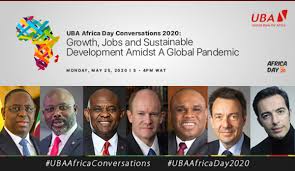
Global leaders at the second edition of United Bank for Africa (UBA) African Day Conversations, have emphasised the need for meaningful collaborations between governments and the private sector as a panacea for the quick recovery of the economy of the African continent post Covid-19.

The leaders which included the President of Liberia, H.E George Weah; United States Senator Chris Coons; the President & Chairman of the Board of Directors of the African Export–Import Bank (AFREXIMBANK), Professor Benedict Okey Oramah; President, International Committee of the Red Cross (ICRC), Peter Maurer; President spoke on Monday at the virtual Leadership Panel which was moderated by the Chairman, UBA Plc, Tony Elumelu.

Other leading voices who made up the panel were the Founder, Africa CEO Forum, Amir Ben Yahmed; the Secretary-General of the African Caribbean and Pacific Group of States (ACP), H.E George Chikoti; Administrator, United Nations Development Program (UNDP), Achim Steiner and Donald Kaberuka.

While moderating, Elumelu, who is also the Founder of the Tony Elumelu Foundation, spoke on the need to mobilise everyone and explained the necessity to discover a more fundamental solution to Africa’s challenges through collaborative efforts.

“This is the time for us to deal with the situation we have and also forge a better situation for everyone, acting again collectively,” he said. “This is not the time for finger pointing but for collaborative effort by governments and organizations to fight the pandemic globally.”

Continuing, Elumelu pointed out that all hands must be on deck if the African continent is to have a quick recovery from the pandemic, adding “There is need to flatten the curve, we need global co-operation to stem global depression. Africa requires a large stimulus package, and we need long-term solutions to prevent a cycle of debt.”

In his submission, the Liberian President, George Weah, established how collaborations worked in his government in an attempt to stem the sufferings brought about the coronavirus pandemic.

“In Liberia we have taken measures to ease the financial burden on vulnerable business in the informal sector by providing small loan assistance to SMEs and traders. In addition, we are working with commercial banks to manage the repayment of loans as well as to create stimulus packages for citizens.”

On his part, US, Senator Chris Coons, said, “It is important to take a moment to look at how African leaders have reacted to the pandemic. In order for us to recover from this pandemic, we must develop a vaccine that is free and affordable and freely distributed so that full economic activities can return. There are ways we can invest in debt relief, invest in infrastructure and human development. This is no time to be looking backwards. We recognise the power of collective collaboration on the continent.

While pointing out that the pandemic poses an opportunity for Africa to be independent and promote its growth and development as a people without external help; Prof. Benedict Okey Oramah, on his part, said  COVID 19 has taught Africa that there comes a time when every group of people will fend for themselves.

He called for the swift implementation of the African Continental Free Trade Area (AfCFTA) agreement, adding, “The priority of government should be to make sure that the AfCFTA gets implemented without delay. If there was any doubt about the importance of that agreement, this pandemic has told us that this is the way to go.

Continuing, Oramah said, “The pandemic has shown so many weaknesses we have across our continent. We know that hunger is looming if we do not do anything. If we allow hunger to take over from the COVID 19 pandemic, we will begin to see political problems filling in. For Africa the problems go beyond health challenges to other areas such as food supply. Hunger is looming and if action is not taken, Africa will see political problem. Africa has become the epicenter of the economic devastation that this pandemic has unleashed upon us.”

While disclosing that Afrexim has made available $200million to supply fertilizers and grains amongst others across Africa, the Afrexim boss added that “If Africa allows hunger takeover the people, it will see an increase in insecurity, which will take a long time to overcome.”

George Chikoti of ACP, said that the huge task of economic recovery on the continent, rests on both the government and the private sector. “The responsibility of COVID-19 does not rest on the government alone, the private sector needs to play a big role in lifting the burden of the pandemic. African governments need to accept the support of the Private Sector in alleviating the impact of the COVID-19 pandemic in Africa,” he said.

“We have been able to release $25m to all member states. One of the major challenges is to make sure that in all countries, we have agricultural activity and high productivity. What we should learn from the impact of this pandemic is that the international community can look at how well they can fund all these initiatives that come from our countries, Chikoti added.

Achim Steiner of the UNDP noted that Digital connectivity is very essential as it is a crucial opportunity to connect all schools across the continent, adding that emphasis on Healthcare is also very important. “Digital connectivity is very crucial to connect schools to the internet. We need to address inequality; also, the virus has put a spotlight on Africa’s healthcare system. Africa needs to look at intermediate strategies like micro-insurance to ramp up this sector. Healthcare has the ability to make a large percentage of the occupation fall into extreme poverty.

“What we need to look at is to find a way for government as a regulator and also as an investor, to leverage private sector investment into these areas” Steiner said.

Peter Maurer, President, ICRC, said there is the need to look at pandemics as part of a broader health system which needs stabilisation; A lot of vulnerable populations in Africa have been heavily infected by the pandemic. “We must do more than life-saving. This pandemic has illustrated the weakness of health, water, sanitation and social systems, and we have to heavily invest into the stabilization of these systems.

Throwing more light on this, Maurer said, “Two things need to follow after live saving during the pandemic. First, the pandemic has illustrated the weak situation of health, water and food systems and we need to heavily invest both by the public and private sectors to stabilize the health sector. Secondly, investment has always gone into the more developed parts of Africa and not the fragile parts. We need Private Public Partnerships and investments by multi-corporate institutions to develop these areas’ he noted.

Amir Yahmed said the crisis is going to be a super accelerator of already existing trends. “We have to get away from the commodity driven model which has failed in creating prosperity. Secondly, self-reliance should be one of the major objectives. The pandemic is wake up call for Africa – Creating new streams of revenue and self-reliance by the African continent”

“We need to use this crisis to take Africa to the next level. This crisis is going to be a super accelerator of already existing trends. I think it has to be a wake-up call for us to attain goals we haven’t reached. Create new revenues for the economy. We also need to attain self-reliance. Self reliance is an important goal. Africa manufactures [only] 2% of what it produces. We need to use this crisis to take Africa to the next level. Invest in digital infrastructure, digital education, agriculture is another opportunity we need to grab. We need to get the AFCTA working,” Yamed said.

Donald Kaberuka on his part opined that “What we need (for this crisis) is something unusual, it is not business as usual. It is not marginal action, it is radical action.”