Home Blog Page 7988

COVID -19: Zamfara assembly resumes plenary after 2 months recess

0

As the Zamfara State House of Assembly resumes plenary on Thursday after two months’ recess due to the coronavirus, members have been urged to adhere to safety measures in the house.

Malam Mustafa Jafaru-Kaura, the Public Relations Officer of the house made the call in a statement in Gusau.

According to him, preventive measures against COVID-19, especially social distancing will be observed during the plenary as enshrined by the Nigerian Centre for Disease Control (NCDC).

“After due considerations, the leadership of the house has no alternative than to reopen the chamber to embark on full legislative activities for the benefit of the people of the state.

“The legislative activities of the house will commence today, Thursday with the usual house plenary in the red chamber of the house.’’

Jafaru-Kaura said the leadership urged all members of the assembly and other legislative staff to be at the assembly complex for the plenary.

He said the general public would not be allowed to witness the sittings, adding that the changes were meant to safeguard the people and check spread of the virus.

Indonesian minister under fire for comparing virus to wives

0

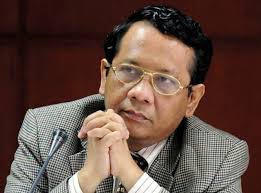
Indonesia’s security minister has been criticised for comparing the novel coronavirus to a wife – in an attempt to allay public concerns about easing COVID-19 restrictions.

The Indonesian government is preparing to lift partial lockdowns in parts of the country in early June and adopt what it calls “the new normal.”

“Are we going to be holed up forever? We can adjust to the situation while still paying attention to our health,” security minister Mohammad Mahfud said in a video posted on YouTube on Wednesday.

“The other day I got a meme from my colleague Luhut Pandjaitan that says: Corona is like your wife. Initially you tried to control it, then you realise that you can’t. Then you learn to live with it,” he said in English.

Pandjaitan is the minister for maritime affairs and investment.

The off-the-cuff remarks drew ire from women’s rights groups.

“Not only does the statement reflect the incompetence of the government in tackling the COVID-19 pandemic, it also demonstrates the sexist and misogynistic attitudes of public officials,” the Women’s Solidarity Society said in a statement.

“Jokes that objectify women will only normalise the culture of violence against women,” it said.

Indonesians on social media joined the criticism.

“A man who marries a woman with the intention to control her is horrifying. Comparing a woman to a virus is an insult to the dignity of women,” a Twitter user named Deslina wrote.

Indonesia is deploying 340,000 security personnel in four provinces – Jakarta, West Java, West Sumatra and Gorontalo – to enforce “the new normal,” Armed Forces chief Air Marshal Hadi Tjahjanto said.

They have been tasked with ensuring the public observe health guidelines set out by the government, including wearing masks and respecting social distancing.

The number of confirmed Covid-19 cases in Indonesia rose to 24,538 on Thursday, an increase of 687 from the previous day.

An additional 23 deaths brought the number of fatalities to 1,496.

Some Indonesians have expressed concerns about the plan to reopen the economy at a time when the curve appears to have not flattened.

The government has been accused by some experts of under-reporting cases of infections due to low rates of testing.

LASPOTECH produces mechanical ventilator, other COVID-19 saving equipment

0

The Department of Mechanical Engineering, Lagos State Polytechnic (LASPOTECH), Ikorodu, says it has produced mechanical ventilator, foot pedal handwashing machine and other COVID-19 life saving equipment.

Its Head of Department, Mr Adekunle Yekini, said at the unveiling of the COVID-19 life saving equipment organised by the institution on Thursday in Lagos, that it would help reduce and combat the pandemic.

Yekini said that aside the mechanical ventilator, they also produced sensor controlled handwashing machine and walk through sanitation booth in order to prepare for school resumption to reduce the spread of the virus among students.

“We decided to produce and develop these equipment which were made with local materials in support of eradication of COVID-19 and kill any bacteria or virus in our body and hands.

“The equipment are durable, portable and movable, which means they can be moved from one place to another; so everybody can have access to them.

“We also produced two series of handwashing machine, one is 100 per cent mechanical system, while the other is 100 per cent electrical system.

“The foot pedal handwashing machine is very rugged and does not need electricity to work, but uses legs to control on the pedal to disperse soap and water which can be stationed in remote communities,” he said.

Also, Dr Lukman Animashun, Principal lecturer at the institution, said that they were motivated to design the mechanical ventilator and PC units due to Coronavirus pandemic.

Animashun, also the ICT Director, said that after the production the ventilator had undergone thorough assessment by the school’s medical specialists and experts for usage at the institution’s clinic.

“We produced two different sizes one for adult and the other for children, because we noticed that imported ventilators in the hospitals are expensive and only adults can use it.

“This mechanical ventilator will be good for patients suffering from respiratory problem and COVID-19 which will help them to breath perfectly well.

“It took us a month to produce this equipment to international standards,
and they are both mechanical and electrical system,” he said.

Animashun said the mechanical ventilator has speed variation which helps to control it individually and mechanically and the PC units to monitor the conditions of the patients.

He said the locally made ventilator was a good development which would also reduce import of ventilators and as well ensure that most hospitals have access to it.

In his comments, Mr Samuel Sogunro, Rector of the institution, said the equipment was designed to help to reduce the spread of Coronavirus pandemic in the country.

Sogunro said he called the engineers in the school on what they could produce locally to assist the governments to eradicate Coronavirus.

“The engineers came up with these equipment we are seeing today; they would have finished since, but the total lockdown had affected them.

“The students will be using the equipment when they resume and those in charge of the mass production are planning on the process.

“Efforts of the Department of Mechanical Engineering in producing these COVID-19 equipment will be assessed by Lagos State Government.

“After approval, we can start mass production of the equipment at affordable rate,” he said.

Sogunro urged investors to fund the innovation to help boost mass production of the equipment.

“We need investors to key into the idea and fund the process, because currently, governments are facing a lot of challenges.

“But, we still need the state government to approve and certified the equipment,” he said.

Rep: Bill to amend 2020 budget passes second reading

0

A Bill for an Act to amend the 2020 Appropriation Act has passed second reading in the House of Representatives.

The bill, which seeks to review the 2020 budget was presented by the Majority Leader of the house, Rep. Ado Doguwa (APC-Kano) at the plenary on Thursday.

It would be recalled that the 2020 budget had a total of N10,594,362,364,830.

However, the Executive proposed that the budget be reviewed to N10,509,654,033,053 reducing the budget by N84, 708,331,777.

Leading the debate, Doguwa said that the need to amend the 2020 budget was necessitated by the global effect of the COVID-19 pandemic.

He said it had become necessary to review the parameters of the 2020 budget to meet the present day realities.

The Rep said that the review was solely in the interest of all Nigerians and the entire country following the current pandemic.

Doguwa urged members to support the bill as it promises to assist the country to combat the effects of the pandemic.

He said that the bill should be referred to the relevant committees of the house to speedily work toward its quick passage.

Rep. Mohammed Shehu said that it was the fall of oil price in the international that had necessitated the budget review.

He said that the proposal sent by the Executive did not reflect the current reality on ground.

According to the rep, we as a country are in a time when we need to tighten our belt to survive the current challenges.

He said that the recurrent expenditure in the proposal does not reflect the difficult economic times.

The lawmaker said that the recurrent expenditure should be the first item on the budget that should be reduced.

According to him, as it stands, it means we want to continue with life as usual as we plan to borrow money.

He stressed that the house should do a thorough job by reducing the recurrent expenditure so as not to send Nigeria backwards.

Rep. Sada Gibia (APC-Katsina) called the attention of the house to provisions made for the excess crude account.

He said that the house must ensure that the amendment bill conforms with the provisions of the Constitution.

Rep. Taiwo Oluga also drew the attention of the house to the amount proposed for the edification sector.

She said that enough funds should be allocated to enable the country include e-learning in the curricula.

The lawmaker said that funds should be taken from allocations to the Ministry of Finance and put into education and agriculture.

In his ruling, the Deputy Speaker of the house, Rep. Ahmed Wase referred the bill to the relevant committees of the house for further legislative action.

Irm Hermann, who worked with giants of New German Cinema, dies at 77

0

Actress Irm Hermann, whose work with celebrated director Rainer Werner Fassbinder shot her to stardom at a seminal moment for German cinema, has died aged 77.

Her agent Antje Schlag confirmed the news, citing information from the family.

Born in Munich in 1942, Irmgard Hermann first worked in her home city as a secretary, before an encounter with Fassbinder in 1966 changed the course of her life.

She starred in his short film “The City Tramp” (“Der Stadtstreicher”) that same year.

She would later go on to become a close confidante of Fassbinder, who is credited as one of the founding fathers of the postwar New German Cinema genre. He died in Munich in 1982.

Hermann starred in many of his films, including “Love Is Colder Than Death” (1969) and “Berlin Alexanderplatz” (1980).

She also worked with director Werner Herzog, starring in his 1979 film “Woyzcek,” based on the play of the same name by Georg Buechner.

After moving to Berlin in 1975, Hermann also established a prolific career in theatre, performing on some of the German capital’s most famous stages.

She was married to Dietmar Roberg, a children’s book author, with whom she had two sons.

Nasarawa requires over N40bn to clear backlog of gratuity, says Gov. Sule

0

Gov. Abdullahi Sule of Nasarawa has said that the state requires over N40 billion in order to clear the backlog of gratuity to its pensioners.

Sule disclosed this on Thursday in Lafia during a media chat to mark his one year in office.

He said that his administration was committed to the welfare of pensioners in order to improve on their standard of living.

“My administration is committed to the welfare of pensioners and other civil servants in order to better their lot.

“Over N40 billion is needed by the state government to clear the backlog of gratuity to pensioners in the state.

” I have always had that in my mind as we are hoping and praying that we will have money to pay,” he said.

He noted that the issue of payment of gratuity had been a huge liability for the state since its creation due to paucity of funds.

“It is not only Nasarawa State that is having the challenge, but several other states in the country, ” he said.

He, however, said that his administration had prioritise the full payment of salary to the state workers as well as pensions.

“It’s my believe that when you work, you must be paid.

“For the state workers, we are paying 100 per cent salary and pensioners.

Sule urged the state local government council chairmen to look inwards in order to improve on their Internally Generated Revenue ( IGR) to be able to pay full salary.

“For workers at the local government, as we are all aware that there is an autonomy in the local government.

“The truth is that the local government areas do not have the money, but I will continue to partner with them towards improving the standard of living of local government staff, ” he said.

He also urged the chairmen to works toward blocking all avenues of revenue leakages.

The governor assured the people of the state of his administration’s determination to implement policies and programmes that would have direct bearing on the lives of the people.

Mr Dogo Shammah, state Commissioner for Information, Culture and Tourism, commended the governor for his developmental strides, which he said, had impacted greatly on the people within the last one year.

Dogo also thanked journalists for publicising the activities of the state government and urged them to be objective in their reportage.

FG urges Afreximbank to simplify access to $500m dollar creative industry support fund

0

The Federal Government has implored the African Export-Import Bank (Afreximbank) to simplify the process for accessing the 500 million dollar creative support fund by the pan-African finance institution.

The Minister of Information and Culture, Alhaji Lai Mohammed made the plea in Abuja at the close of a virtual forum of the AU Ministers of Arts, Culture and Heritage on the effects of the Coronavirus (COVID-19) pandemic on the creative sector.

Thhe virtual forum organised by the AU Commission for Social Affairs was chaired by the Minister.

It also reports that no fewer than 20 ministers made contributions on the effects of the novel Covid-19 pandemic on the creative sector in their respective countries at the forum.
In a closing remarks, the minister said the President of the bank, Prof. Benedict Oramah should make the process of accessing the funding easier for small scale artists and other practitioners.

“It is this fund that most of us will rely on, in looking up to the bank to save our arts, culture and heritage from the ravages of the coronavirus pandemic.
“We want Prof. Oramah to help the industry, by simplifying the process especially for small artists, fashion designers, make-up artists and others to access the funding through the various cooperatives which we are going to encourage them to form.

“The beauty of this industry is that after agriculture it employs the largest number of people especially women and youths,” he said.
Earlier in a presentation to the forum, Oramah recalled that just before the Covid-19 came, the bank announced the creative Africa support facility to the amount of 500 million dollar.

“This facility is targeted at exporting of creative goods like films, music, fashion and all aspects of creative goods.
“It also target the financing of production, building infrastructure for the production of the creative goods and supporting companies that are engaged in the production,” he said.

He disclosed that the bank had developed a cooperative arrangement so that small scale actors in the industry could team up to access the fund.

“We know that many actors in creative industry are small and may not be able to have access to the financing giving their small sizes.

“We, therefore, created a cooperative instrument so that we can give money to them through cooperatives,” he said.
Oramah also recalled that the bank, in 2019, launched the African Payment and Settlement System to make it possible for Africans to pay for goods and services in inter-Africa trade through their local currencies.He said the system which made it possible for somebody in Kenya to buy contents produced in Mali and pay in Kenyan Shillings would open the market for Africa creative goods.

Oramah, a Nigerian National and a Manager with the Nigerian Export-Import Bank before joining Afreximbank as Chief Analyst in 1994, underscored the need to create a mechanism for e-commerce on creative goods.

He said the mechanism would make it easier for Africans to trade among themselves and by doing so the creative goods would boom.
The bank president said the Covid-19 pandemic has severely impacted on the economy of the world and the global economy is expected to suffer the worst recession.

He noted that although the creative economy had been impacted but it had also shown some improvement.
“Some production activities has stopped such as the fashion sub-sector, production of movies and music had been impacted.
“However, we have seen a tremendous growth in the demand for some creative goods as people get confined to their respective homes.

“Global distribution channels for movies and music such as Netflix, Amazon Prime and even those that focus on Africa have seen remarkable growth in subscription.

“Netflix for instance announced an unprecedented 16 million subscribers during the first quarter of this year.

“Although we do not have statistics, some local platforms in Africa have also indicated rising demand.

“So, we see that the creative economy has provided opportunity for Africa, to a large extent, mitigate the impact of Covid-19 on our economy,” he said.
The banker encouraged the ministers to promote inter-regional trade in creative product, to boost African share in the 2.25 trillion dollar global creative industry market.

Lagos unfolds projects to shore up food security status to 40%

0

The Lagos State Government has unfolded various agricultural projects to shore up food security status and ensure sustainability.

The state Commissioner for Agriculture, Mr Gbolahan Lawal, made the disclosure on Thursday while rendering accounts of activities undertaken by the ministry in the last one year.

The event was to commemorate the first year anniversary of the Mr Babajide Sanwo-Olu-led administration.

According to him, the agricultural projects will quickly shore up the food security status of the state from 18 per cent to 40 per cent.

He listed some of the projects to include Songhai Project now Avia Food Production Centre, Araga Food Production Centre, establishment of one tonne-per-hour fish feed mill (extruder system) and establishment of wholesale produce market.

Others include establishment of strategic food reserve, completion and inauguration of the 32 metric tonnes-per-hour rice mill at Imota, optimal utilisation of farm settlements and estates.

Empowerment of Lagos Agriprenurship Programme graduates and establishment of 160-hectare feedlot at Imota, are part of the projects.

The commissioner said that the current situation of food security in the state had been impacted by lessons from the coronavirus pandemic, a situation that made deliberate efforts and policy formulation by the state government imperative.

He said that the efforts and policy formulation by the government had prepared it adequately for future events that might want to test the food reserve and supply system of the state.

“In line with the Five-Year Agricultural Development Road Map earlier developed by the ministry of agriculture that highlighted intervention areas to boost productivity along the value chains where the state has comparative advantages, this pandemic has brought to fore the need to shore up quickly.

“We need to shore up the food security status of the state with a goal to scaling it up to 40 per cent in order to prevent another kind of pandemic in the form of food scarcity.

“This, therefore, calls for deliberate efforts and policy formulation on the part of government in order to prepare for future events that may want to test the food reserve and supply system of the state.

“The ministry is, therefore, to embark on some of these projects in the course of the year to shore up the food security status of the state,” Lawal said.

The official said that the projects would increase agricultural production that would meet the food needs of the state’s growing population and transform agriculture to commercial and export-oriented production.

He said the state would essentially focus on boosting local food production and employment generation especially for the youth.

Lawal added that the projects would provide training facilities for agriprenuers, youths, women and students in agricultural schemes, and promote efficient distribution systems for agricultural produce through wholesale, retail and distribution channels.

He said they would also provide good storage facilities for a purposeful food as well as generate more revenues.

“The objectives of these projects include boosting local food production, creating employment opportunities especially for the youth, and providing training facilities for agripreneurs, youths, women and students in agricultural schemes.

“It will also promote efficient distribution systems for agricultural produce through wholesale, retail and distribution channels; provide good storage facilities for a purposeful food reserve and generate more revenue for the state,” he said.

Lawal assured that the state government would continue to intensify efforts in the agricultural space especially where it had comparative ecological and socio- economic advantages.

AIICO Insurance premiums increase by 23% to N17.6bn in first quarter

0

AIICO Insurance Plc on Thursday announced a Gross Written Premiums of ₦17.6 billion for first quarter of 2020, indicating 23 per cent increase from N14.3 billion recorded in the same period of 2019.

The Company’s spokesman, Mr Ademola Adenekan, said in statement that the growth was driven by the group’s sustained positive performance which included retail, corporate and institutional businesses.

It said the group also recorded a 24 per cent increase in Profit Before Tax (PBT) of N1.44 billion, compared to N1.17bn in first quarter of 2019.

“Profit After Tax (PAT) also grew by 129 per cent to N1.88 billion, compared to N0.82 billion attained in first quarter 2019,” it said.

Mr Babatunde Fajeromirokun, Managing Director/Chief Executive Officer of the firm, said that AIICO delivered excellent first quarter results.

Fajeromirokun noted that this demonstrated the overall strength of the company and its ability to continue to meet the obligations to stakeholders even in the face of the COVID-19 global pandemic.

“We are living in a period of uncharted waters and recognise the situation presents both challenges and opportunities.

“Our resilient business continuity plans and robust technology infrastructure ensured we remained operational throughout the lockdown period.

“We have rolled out additional digital channels for the convenience and safety of our customers, and our employees have embraced the Work-From-Home (WFH) concept – indeed this is the new normal,” he said.

According to him, in the light of these outcomes, the firm recorded strong growth in its Retail Life business, which grew by 34 per cent to N10.97 billion (Q1 2019: N8.2billion ); and an increase of six per cent in its Corporate and Institutional business to N6.2 billion (Q1 2019: N5.9 billion).

Fajeromirokun explained that within the period under review, the group’s balance sheet improved with total assets growing by 11 per cent to N176 billion, compared to N159 billion in Dec 2019.

He said shareholders’ funds also rose by 0.28 per cent to N27.99 billion (Dec 2019: N27.91billion).

The Managing Director stated that insurance has a critical role to play in the economy and business environment in which we operate.

“With the advent of this pandemic, we are seeing increasing requests from corporations in Nigeria trying to understand how insurance can be deployed as a strategy for building resilience within their businesses.

“On the retail side, we are seeing new trends emerge; one of which is the shift towards a low touch world, where close-contact interaction is discouraged.

“In response, we are positioning to take advantage of these trends and opportunities presented by the COVID-19 pandemic to reshape and disrupt the way we operate, interact and our go-to-market strategy.

“I am, however, confident that we will get through this difficult times and emerge stronger,” Fejemirokun said.

Ondo 2020: I am too big to be anybody’s mole — Kekemeke

0

A leading aspirant in the July 20 All Progressives Congress (APC) governorship primaries in Ondo State, Mr Isaac Kekemeke, has refuted speculation that he was a mole for any particular candidate.

Speaking with newsmen at his campaingn office in Akure in Thursday, Kekemeke expressed disappointment at the “fake news” suggesting he might compromise his position as a leading aspirant in the upcoming Ondo APC primaries.

“Those who say such things insult my pedigree; I cannot be working tirelessly in the last 17 months, building my political structure across the 18 local councils of the state and be doing so as an undercover agent.

“It is a lie from the pit of hell, it’s a de-marketing strategy by lazy opponents and their supporters who are intimidated by the wide acceptability my political brand enjoy.

“I repeat again, I am too big to be anybody’s undercover agent,” said the former APC Chairman in Ondo State.

On the forthcoming Ondo APC primary, Kekemeke said direct primaries would help mobilise party members to participate effectively and actively in the governorship election.

He added that direct mode of primary would also give party members sense of belonging and responsibility to deliver whoever candidate that emerged at the primary.

“The party members already have a moral responsibility to deliver the candidate in the general election for victory.

“The only thing that our party can be preparing for will be an inter party contest to involve the big segment of the party through participation in the direct primary.

“So that one section will not feel other particular section is being favoured through handpicking officers at wards, local government and state levels who serve as an electorate for indirect primary.

“Adoption of direct primary will fight money polictics, fight ‘see and buy’ because nobody has the capacity to buy all eligible voters but money can do it when it comes to handpicked individuals; so the best way is to adopt direct primary at this time.

“And considering the COVID-19, asking over 2000 people to gather in a single place to vote is contrary to the protocol of NCDC, so let us decongest by asking people to decide their rightful candidate in their various wards,” Kekemeke said.