Home Blog Page 7905

Qatar 2022 World Cup stadium workers went months without pay —Amnesty

0

A Qatari company helping build a 2022 World Cup stadium has been banned from the event’s projects after its labourers went unpaid for months, organisers said on Thursday.

It is a scenario which has emerged in a case Amnesty International said showed inadequate worker welfare standards.

Around 100 employees of a Qatari sub-contractor, Qatar Meta Coats (QMC), working on the Al Bayt stadium went up to seven months without pay, Amnesty said in a report.

They have continued to be owed unpaid salaries.

QMC has also not renewed residency permits for most of its workers, necessary for foreigners working in Qatar, the rights watchdog said.

Workers interviewed said they had paid fees ranging from 900 dollars to 2,000 dollars to recruitment agents in their own countries for the job, it said.

QMC did not respond to an e-mailed request for comment.

The Supreme Committee for Delivery & Legacy, the tournament’s Qatari organiser, said it learned about the unpaid salaries in July.

It added that it engaged with QMC and other stakeholders, resulting in three months of salaries being paid.

However, the committee said owed wages continued to be paid.

QMC were taken off the stadium project and banned from working on World Cup projects until further notice, it said.

The supreme committee said it was “unacceptable” for workers to suffer hardships and that it was fully committed to the ethical treatment of workers.

Amnesty said the tournament organiser’s worker welfare standards were inadequate to prevent abuses and provide timely remedies.

It also accused FIFA of failing to take human rights abuses linked to the 2022 World Cup seriously.

FIFA said it shares concerns over unpaid wages for workers.

It however pointed out that it strongly disagreed this incident was a fair reflection of the processes in place to protect workers’ rights or FIFA’s commitment to human rights.

Qatar’s government communication office said QMC had been financially sanctioned and its operations suspended until all outstanding salaries were paid.

The company has since been sold.

Actions by the new owners to rectify “the neglect of the previous owner,” including renewing residency permits and health insurance, are being overseen by the labour ministry.

“The State of Qatar does not tolerate the unscrupulous treatment of workers,” it said.

NASS will provide legislative support for Judicial reforms – Lawan

0

…As Senate confirms Dongban-Mensem as Appeal Court President

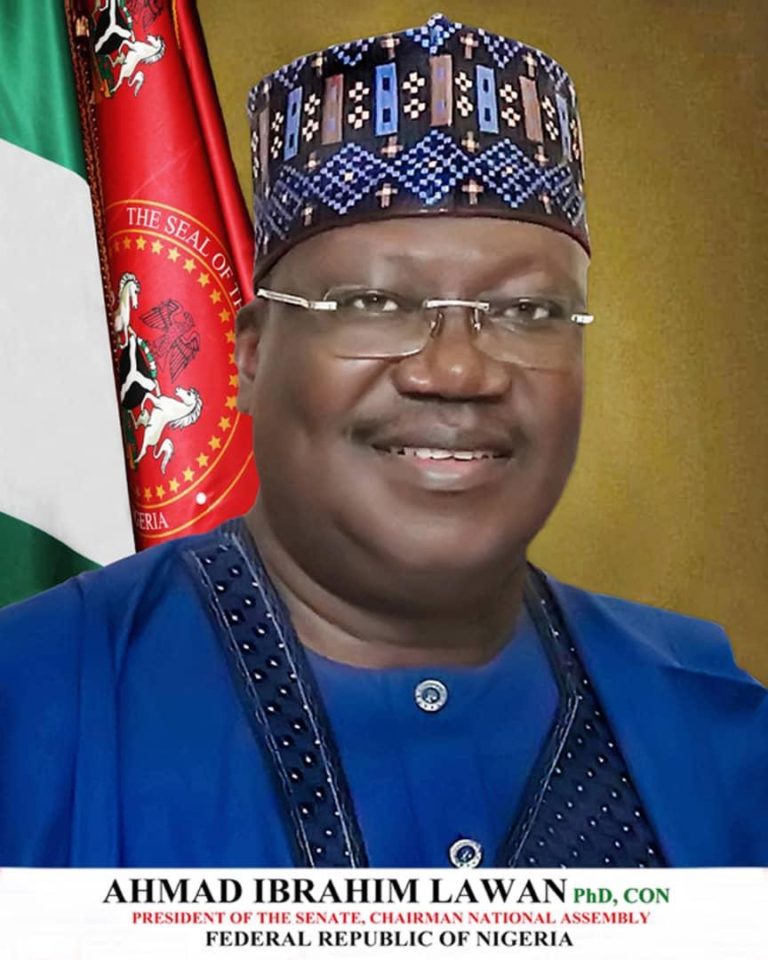
President of the Senate, Ahmad Lawan, has said that the National Assembly will provide necessary legislative support needed to carry out Judicial reforms.

Lawan made this known in his remarks after the Senate confirmed Hon. Justice Monica Dongban-Mensem as President of the Court of Appeal.

Dongban-Mensem’s confirmation followed consideration of the report of the Senate Committee on a Judiciary, Human Rights and Legal Matters.

Chairman of the Committee, Senator Michael Opeyemi Bamidele (APC – Ekiti Central) while reading the report of the committee said that the nominee “has the experience, comportment, exposure and posses the requisite leadership qualities of a Judicial Officer to effectively run the Court of Appeal.”

The Senate President while congratulating the nominee on her confirmation, underscored the urgent need for reforms in the Judiciary.

“Let me join all our colleagues who contributed or commented on the report of the Committee, and of course, the extolling of the virtues of the nominee.

The Judiciary needs a lot of reforms. The National Assembly, and Senate in particular, is available at all times to provide the legislative support and interventions that will be necessary for the reforms.”

According to Lawan, “the Justice system in this country must protect the weakest, particularly amongst us. That is the essence without prejudice to those who are very powerful.”

Signed:

Ezrel Tabiowo

Special Assistant (Press)
to President of the Senate

Ogun Assembly grants Gov. Abiodun approval to access N250bn loan

0

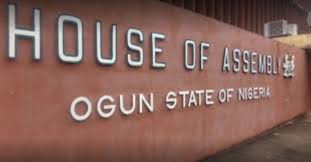
The Ogun House of Assembly on Thursday approved Gov. Dapo Abiodun’s request to access a N250 billion loan as a three-year Medium-Term Expenditure Framework (MTEF) programme of the state.

It was reported that the loan is meant to stimulate and grow the state’s economy.

The Assembly’s approval followed a resolution on the subject titled: ”Request for Bond Issuance, Public Offering or Book Building to the tune of N250 billion.”

The Majority Leader, Mr Yusuf Sherif (APC -Ado Odo Ota 1), moved the motion for the approval of the loan and was seconded by Mr Jemili Akingbade (ADC -Imeko Afon).

Sherif said the financial programme was to be carried out in tranches of N100 billion annually through bond issuance, public offering, book building or such other methods as may be approved by regulatory authorities.

He said the house had considered at several executive sessions, the request for N250 billion as three years Medium-Term Expenditure Frame Work (MTEF) programme of the state to stimulate and grow the economy post COVID-19.

“The programme is hereby approved in tranches of N100 billion only annually, through any of bond issuance, public offering, book building or such other methods as may be approved by regulatory authorities.

“Access to other tranches are subjected to further approval of the house,” he said.

The Chairman, House Committee on Finance and Appropriation, Olakunle Sobukanla (APC -Ikenne), explained that due to the economic challenges posed by COVID-19 pandemic, the state needed financial interventions with little interest rates.

The Speaker, Olakunle Oluomo (APC–Ifo1), said that such intervention was necessary to sustain the state’s economy, following the economic downturn occasioned by the pandemic.

Oluomo stated that there had been drastic reduction in the Internally Generated Revenue (IGR) of the state as well as allocation from the Federation Account, due to the upsurge of the coronavirus pandemic.

The motion was passed through a vioce vote by the whole house.

Senate confirms 42 career ambassador designates

0

The Senate on Thursday confirmed the nominations of 42 Ambassador designates presented by President Muhammadu Buhari, for confirmation as Ambassadors to Nigerian foreign missions.

The confirmation of the nominees at plenary, followed a presentation of the report of the Committee on Foreign Affairs thtough its Chairman, Sen. Bulkachuwa Muhammad, and consideration of same at the committee of the whole.

President Muhammadu Buhari had in a letter addressed to President of the Senate and read on May 12, at plenary sought the confirmation of the Senate for appointment of 42 nominees as career ambassadors to Nigerian foreign missions.

The 42 nominees confirmed are: Chikezie Nwachukwu (Abia); Alex Kefas (Adamawa); Raymond Brown (Akwa Ibom); Godfrey Odudigbo (Anambra); Obinna Onowu (Anambra); Yakubu Suleiman (Bauchi).

“Also confirmed are: Ekpebike Agnana (Bayelsa); Benaoyagha Okoyen (Bayelsa); Mustapha Okoko (Benue); Aisha Garba (Borno); Mukhtar Bashir (Borno); Mfawa Abam (Cross River); Asari Allotey (Cross River).

“George Edokpa (Edo); Anderson Madubuike (Enugu); Adamu Lamuwa (Gombe); Innocent Iwejuo (Imo); Abubakar Sarki (Jigawa); Yakubu Ahmed (Jigawa); Suleiman Umar (Kaduna); Ahmed Sule (Kano); Gambo Hamza (Kano).”

Others are: Nura Rimi (Katsina); Lami Ahmed-Remawa (Katsina); Mohammed Manu (Kebbi); lngekem Ocheni (Kogi); lsmaila Yusuf (Kogi); Mistura Abdulraheem (Kwara).

“Wosilat Adedeji (Lagos); Ogah Ari (Nasarawa); A. A. Musa (Niger); Nart Kolo (Niger); Safiyu Olaniyan (Ogun); Abiodun Adejola (Ogun); Olawale Awe (Ondo); Olukayode Aluko (Osun); Ismail Alatishe (Osun); Victor Adeleke (Oyo).

“Matin Adamu (Plateau); lbim Charles (Rivers); Zachariah lfu (Taraba) and Bukar Hamman (Yobe).

It was reported that the upper chamber also confirmed the nomination of Justice Monica Mensem, as the President of the Court of Appeal.

The confirmation followed a presentation of the report of the Senate Committee on Judiciary, Human Rights and Legal Matters.

The Chairman, Sen. Michael Bamidele, presented the report and it was considered at the senate committee of the whole.

Similarly, it also confirmed the nomination of Mr John Kolo for appointment as Commissioner of Federal Character Commission following a presentation of the report of the Committee on Federal Character and Inter -Governmental Affairs.

It was also considered by same committee of the whole.

In his remarks, President of the Senate Ahmad Lawan said, “at the moment, many of our embassies don’t have the ambassadors or high commissioners.

“I will, therefore, urge the Ministry of Foreign Affairs, to ensure they process the postings as quickly as possible.

“We need to have our interest protected in those countries. We have very strategic reasons why we should be represented properly in some of these countries.

“The absence of the ambassadors and high commissioners makes it difficult for a proper representation or even dispatches to the fatherland.

Court sentences man to 2 years imprisonment for trafficking 6.7kg of Cannabis

0

A Federal High Court sitting in Jos on Thursday sentenced a 30-year-old man, Abdullahi Salihu, to two years imprisonment for illegal possession of 6.7kg of Cannabis Sativa.

Salihu, who resides in Jos East Local Government Area of Plateau, was reportedly arrested on Sept. 6, 2019 by Officers of National Drug Law Enforcement Agency, (NDLEA) and brought before Justice Dorcas Agishi, the presiding Judge.

Justice Agishi, summarily sentenced Salihu on the request of Mr Uche Chukwu, NDLEA prosecution counsel.

The judge however gave the convict an option to pay a fine of N300, 000.

The Judge frowned at the increasing cases of young people in trafficking hard drugs in the country and pledged welding the full wrath of the law on offenders.

Agishi warned the convict to look for something tangible to do other than hard drugs trafficking in the his interest and those of his family members.

Earlier, when the one count charge was read to Salihu, he pleaded guilty to the charge.
.
Chukwu had told the court that the action of Salihu was contrary to section 19 of the NDLEA Act CAP 30 of the Law of FRN 2004 as amended.

But Salihu after pleading guilty to the charge pleaded with the court to temper Justice with mercy as he knelt down to the Judge.

He said he was a first offender and that “from today, nothing will ever make me to peddlehard drugs Agam in my life.”

Kaduna Assembly impeach Deputy Speaker

0

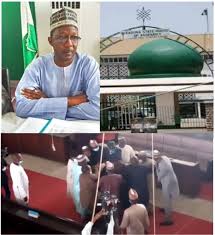
A total of 24 out of the 34 members of the Kaduna House of Assembly, on Thursday impeached the Deputy Speaker, Alhaji Mukhtar Hazo.

The development followed a vote of no confidence on him during a sitting of the House, presided over by the Speaker, Alhaji Yusuf Zailani.

It was reported that details of the allegations against the impeached Deputy Speaker were not made known during the sitting.

The members, however, elected Dr Isaac Zankai, member representing Kauru constituency as the new Deputy Speaker.

Just in: Govs declare state of emergency on rape

0

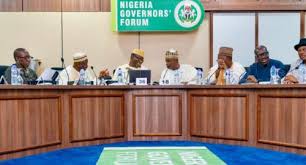
The Nigeria Governors Forum has agreed to declare a state of emergency on sexual and gender-based violence against women and children.

They also renewed commitment to ensuring that offenders face the full weight of the law.

This was contained in a communique signed by the Chairman of the NGF, Dr. Kayode Fayemi, after the forum’s 10th COVID-19 Teleconference meeting held on Wednesday.

The communique was issued in Abuja, on Thursday.

Governors agreed to, “Declare a State of Emergency on Sexual and Gender-based Violence. Governors strongly condemned all forms of violence against women and children and committed to ensuring that offenders face the maximum weight of the law;

“Call on State Governors that have not already domesticated relevant gender-based protection laws to domesticate the Violence Against Persons (Prohibition) Act, the Child Rights Act and the updated Penal Code to increase protection for women and children and ensure speedy investigation and prosecution of perpetrators in addition to creating a sex offenders register in each State to name and shame.”

COVID-19: Kaduna Govt. shuts down private school for conducting entrance exams

0

The Kaduna State School Quality Assurance Authority has shut down Future Leaders International School, Unguwar Rimi, Kaduna for conducting entrance examination in violation of the Coronavirus Quarantine Order.

The Director General of the agency, Hajiya Umma Ahmad, disclosed this in Kaduna on Thursday, adding that the school’s license would also be revoked.

Ahmad explained that the school was shut down on Wednesday for conducting entrance examination into Junior Secondary School I (JSS I) and Senior Secondary School I (SSI) for 70 pupils.

She added that they found 34 teaching and non-teaching staffers, including construction workers within the school premises.

The action, Ahmad said, was in violation of the Federal and the state’s government COVID-19 Quarantine Order, which directed that all schools should remain close.

The official added that the government had held series of meetings with the leadership of the Nigerian Association of Proprietors of Private Schools (NAPPS) in the state on why schools should remain closed.

“It was resolved that members of the association should leverage on e-learning introduced by the Ministry of Education to keep children learning at home and at no cost to parents.”

According to her, Gov. Nasir El-Rufa’i had also in a broadcast on June 9, categorically directed that all schools should remain closed.

“But against this directive, we learnt that Future Leaders International School had asked pupils and students to come to the school to write entrance examination into JSS I and SS I.

“On getting there, we met 70 pupils and students writing the examination, with 34 teaching and non-teaching staffs as well as construction ongoing in the school.

“In fact, half of the pupils and students were not wearing face masks, a situation that put the children at risk of contacting the Coronavirus.

“I, therefore, sent the pupils out, invited their parents and closed the school as directed by the Commissioner of Education, Dr Shehu Makarfi.”

The quality assurance boss added emphatically that the school’s license would be revoked.

When contacted, the proprietor of the school, Mrs Margarita Osuala, said: “I will not speak right now, but I will get back to you.”

On his part, NAPPS Secretary, Mr Philip Iorhena, described the incident as “very unfortunate”.

Iorhena acknowledged that the state government had been carrying the association along in all its decisions concerning the lockdown, and wondered why Future Leaders International School decided to open.

“Notwithstanding, we apologise on behalf of the school and we are appealing to the state government for leniency,” he said.

Who Listens To The North?

0

Azu Ishiekwene

Journalist and former Minister of Youth Development and Sports, Bolaji Abdullahi, wrote a thought-provoking piece last week entitled, “Who speaks for the North?” The article reinforces the need for an important conversation, especially as we reflect on our past, engage with the present and contemplate the future.

Who speaks for the North? In a region with a long history of eloquent speakers from Sa’ad Zungur and Tafawa Balewa to Aminu Kano and from Adamu Ciroma and Ibrahim Tahir to Maitama Sule, Musa Musawa and Bala Usman, it’s a measure of how poorly things have progressed that we should be contemplating one qualified to speak for the region at this time.

Perhaps there is a remnant that can presume to speak for the North, persons whose voices still resonate as they speak not only for the region, but also to the future of a better country.

Whatever his flaws, Sarkin Kano, Mohammad Sanusi II, has been relentless on the need for responsible parenting and better social investment; Islamic scholar Dahiru Bauchi has spent decades preaching against intolerance and extremism; Reverend Mathew Hassan Kukah never tires of talking and writing about equity, honest and accountable leadership; and the Sultan of Sokoto, Muhammad Sa’ad Abubakar III, extols fairness and compassion, sometimes at considerable risk to his throne.

Each one of them has at different times spoken about the need for the political elite to pay more than lip service to the poverty and social injustice wrecking the region. But who is listening? Who is doing?

Aliko Dangote, the region’s gift to the country and continent has spoken not from a religious platform or from the soapbox, but through his talent and charity. He has been a shining example of the return on investment that the North could get by investing in its people.

His Foundation has invested billions of naira in infrastructure, small businesses and relief materials in the North, in the hope that putting his money where his mouth is would encourage politicians to do the same. But who is following?

And more recently, retired Colonel Abubakar Dangiwa Umar has lent his untiring voice to the North’s depleted eco-chamber. His recent letter criticising President Muhammadu Buhari’s government for its potentially catastrophic lopsided political appointments surmarises his creed.

Never a bargain hunter, Umar’s entire career has been devoted to standing up for a fair shake for one and all and he laid down his army commission to prove it. He is just as opposed to injustice by one Northern against another, as he is against injustice in the country, wherever it expresses itself.

We may long for the days when one voice rallied the troops, but I think the myth is broken and the days of cult politics in the North could be ending with President Buhari. He could leave a legacy of appointing more Northerners into positions than his predecessors, yet if he is not careful, his impact on the region – and even the country – could be far less precisely because of the quality of a number of those appointments.

There have been – and would continue to be – charlatans in the region and in his piece, Abdullahi named one of the all-time greats and father of modern greenback-eyed fanaticism, Ahmed Yerima.

After decades of hearing both reactionaries, self-appointed messiahs and opportunists claiming to speak for the North, the people are now obliged to listen, not to the voices of politicians and religious charlatans who have robbed and despoiled them, but to voices from the streets. They can see what others, even those with far less resources, are doing and they must ask themselves how long they would continue to stomach empty promises.

Sure, the North could do with honest voices, those who shine the light not with microphones and empty speeches, but with their deeds and lifestyle. But the more urgent problem is not so much a shortage of speakers as it is acute shortage of listeners willing to do what they know is right by their people.

Technology will continue apace to weaken strongmen and godfathers, breaking the hold of cult politics while empowering ordinary citizens and communities. More and more influencers, outside the mainstream and outside politics, will find their own voices and express themselves as they’re doing eloquently in the arts, entertainment and the professions. They will invariably demand that past and present leaders from the North, at least, account for all the nice speeches that have left them worse off than they were many years ago.

The man who took over $500m from Saudi Arabia in 2000 to weaponise sharia law only for him to grab a baby from her mother’s cradle as wife, will have to account for his deeds, as will the one who, instead of providing healthcare when citizens were dying in numbers, said meningitis was god’s punishment on his people for their sins.

Neither the governor who re-looted Abacha’s loot nor the one who inflated the cost of vital public works and converted his garment into dollar storage, can still claim to retain the moral authority to speak for their people.

Instead, the voices that could shape the future, the voices that Abdullahi and other young, like-minded politicians should seek to engage, are those coming from the streets.

The almajiri whose lives have been ruined by politicians who enroll them during elections and discard them like vermin after; the hundreds of families in many parts of the North west and North east living in mortal fear for their lives from the daily attacks by bandits; the broken system that has made the region the country’s poorest with no clear plan of recovery; and the aftermath of deadly herder-farmer clashes, have weakened the region’s hold as a single, formidable block. It’s no longer the North as it was: the ferment is speaking a different language.

For example, the killings in Kajuru, Kaduna or the cynical treatment of the almajiri at the height of the global health crisis shows it is not a sign of insufficient speechmaking or lack of clarity about what to do. It’s simply utter lack of interest or worse – the privileging of a narrow opportunistic agenda.

Abdullahi’s “Who speaks for the North?” is a heartfelt rallying cry, but the question, in the first place, is whether the North needs speech-making more than it needs politicians who are prepared, honest and competent to use all they have heard these many years for the benefit of their people.

We really can’t get past that before another round of speech making begins. That, in fact, is where the speech making begins – listening to the voice of the streets for what politicians have done with our lives in these past two decades. And if these politicians are hungry enough, they’ve said enough already that they can eat, digest and use to get some work done.

It would be a mistake to assume, as Abdullahi did, that the rest of the country cannot move on without the North. It is moving and will continue. Any attempt to put things less plainly is not Northern-philia; it is Northern-pandering, which is worse.

It may be undesirable, but with the South-east used to a life of minimum government presence and the South-west clawing at every legal loophole it can for its security and financial autonomy, it’s only a matter of time before the centre would no longer hold or indulge its current obesity.

If nothing else, dwindling oil sales to the federation account and rapidly increasing population and demand for services would force changes where politicians are least prepared to make them. No one would be looking over their shoulders to see if the North is coming, or if it’s not willing. Northern-pandering is in its last opportunistic phase.

Abdullahi should not be surprised that even before his clarion call has taken root, a few would challenge the bona fides of a Kwara man seeking to rally the North. Some, willfully forgetting that the North once upon a place invested in talent regardless of where it came from, would ask when a man from Ilorin began to speak for the North! That’s how poorly things have become.

If the present political elite in the North will not use what it already knows to fix the region, it’s unlikely that any speaker, no matter his gift of eloquence, will change anything.

The dangerous, broken Northern street is enough word for the wise.

Ishiekwene is the MD/Editor-In-Chief of The Interview

—

NSCDC arrest suspected Boko Haram logistics supplier in Borno

0

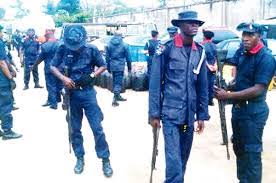
The Nigeria Security and Civil Defence Corps (NSCDC) Command in Borno has arrested a suspected Boko Haram logistics supplier with a car filled with fuel and other commodities.

The state NSCDC Commandant, Mr Ibrahim Abdullahi, made the disclosure on Friday in Maiduguri while parading the suspect.
Abdullahi said that the suspect, Bakura Ibrahim, 35, was arrested on June 6, at the Muna Garage along Gamboru Ngala Road, Maiduguri.

He said that some of the items found with him included 24 Jerry cans of 25 liters of Premium Motor Spirit (PMS), seven cartons of traditional medicine, 10 bags of fishing hooks and nets, and sex enhancement drugs.

Abdullahi said that the command has recorded tremendous success in the fight against crime through collaboration with security agencies in the state.
“We have since move forward from sharing intelligence to arresting culprits and handing them to relevant department for prosecution,” he said.

The commandant said that the command has so far arrested three high profile Boko Haram terrorists and handed them to military authorities for necessary action in 2020.

Abdullahi attributed the recent surge in terrorists’ attacks in the state to activities of informants, logistics suppliers and sympathisers who live among residents.
“In the June alone, we recorded about Boko Haram 19 attacks in the state, some of these were actually repelled.

“The command came to the conclusion that the rise in attacks is due to logistics supplies and sleeper cells which are very active in the society, hence we intensified our intelligence gathering which yielded positive results,” he said.

He said that the command also handled other criminal cases including theft and robbery.
“On April 1, one Bashir Abdulrahman, 30 of London Coli Zannari Ward Maiduguri, was arrested along Monguno road with 14 mattresses, suspected to have been stolen from a Non Governmental Organisation(NGO), which got the materials as donation from UNHCR.

“On April 4, one Mohammed Mohammed, of Ruwan Zafi, Custom area Maiduguri, was arrested with six vandalised rolls of aluminium conductor cables concealed inside a bag of beans among others,”he said.

He said that command recorded about 369 cases in 2020, out of which 319 were disposed and over N100 million recovered.