Home Blog Page 7891

ODD NEWS: Car fleeing from deputies ends up in backyard swimming pool

0

The San Diego County (Calif.) Sheriff’s Office said deputies responded to a 911 call about 4 a.m. Wednesday reporting two cars driving recklessly in Lemon Grove.

The deputies attempted to stop the vehicles, but both sped off from the scene, the department said.

Deputies called off the chase out of safety concerns before one of the vehicles crashed into the back yard of a home, the sheriff’s office said.

The vehicle ended up submerged in the home’s swimming pool, but the driver fled the scene before deputies arrived.

No injuries were reported.

ODD NEWS: Man slices 65 kiwis in one minute for Guinness World Record

0

An Idaho man who was eliminated from America’s Got Talent bounced back by breaking a Guinness World Record for slicing kiwis with a sword while standing on a balance board.

David Rush, who has broken more than 150 Guinness records to promote STEM education, was eliminated from the competition show after breaking a record for tearing T-shirts, and his stated plan for a second appearance on AGT involved slicing kiwis while standing on a Swiss ball.

ADVERTISEMENT

Rush said he decided to attempt a similar record despite being eliminated from the show, standing on a balance board instead of a Swiss ball.

Rush’s friend Jonathan Hannon threw the kiwis in the air for Rush to slice through while standing on the board.

He managed to cut through 65 of the tossed fruits, demolishing the previous record of 35.

Telecom subscribers lament poor services amid network congestion

0

Subscribers on MTN, Airtel, Glo and 9mobile networks have expressed their displeasure over the poor quality of service they have been experiencing in the past one week.

The disgruntled subscribers complained of weak Internet connections, low Internet speed, dropped calls and weak signals among others.

Major complaints from Airtel and Glo subscribers were about regular disruption of Internet connectivity when browsing on their mobile devices or personal computers.

An Airtel subscriber, Ngozi Madusha, complained of abrupt disruption or disconnection whenever she links up to virtual meetings, especially on Zoom.

A Lagos-based Globacom subscriber, Doyin Bamidele, said, “Glo signal is poor in my area, making browsing frustrating at times.

“Although, I enjoy bonuses from the network, the service is not satisfactory.”

Another subscriber to MTN who is based in Ogun State, Ayo Martins, lamented that making calls successfully had been difficult as he had been experiencing dropped calls.

“Completing a conversation that will last for 30 minute s has been difficult. Most times, the calls are abruptly cut off. Sometimes, I call just one person up to 10 times  before we finish our conversation,” he said.

For Funke Adesina, who is a subscriber to the 9mobile network, the major complaint was that data  gets exhausted quickly.

The Director of Operations, Association of Licensed Telecommunications Operators of Nigeria, Gbolahan Awonuga, said network congestion still persisted because most people were still working from home despite the easing of the lockdown.

“There is still network congestion because we still have a lot of people who have not returned to work; they are working from home. Students are also at home. Even most telecoms operators have their workers working from home,” he said.

He attributed the high rate of dropped calls to inadequate infrastructure, saying there was need to deploy more new sites across the country.

The President, Association of Telecommunication Companies of Nigeria, Olusola Teniola, said that the telecom network in the country was built mostly for voice services.

Nine million workers have pension accounts, says PenCom

0

The number of workers who have pension accounts rose to nine million as of the end of April, according to latest figures obtained from the National Pension Commission.

The commission also revealed that the total assets under the Contributory Pension Scheme rose to N10.57tn.

The acting Director-General, PenCom, Mrs Aisha Dahir-Umar, said the growth of the assets justified its emphasis on the safety of pension funds as the bedrock of sustaining the CPS.

“We assure all stakeholders that the pension reform remains steadily on course,” she added.

Dahir-Umar said the commission’s current strategic focus aimed to expand access to pension through the CPS, as a veritable tool for economic development.

She said this aligned with the pension reform objective of old age poverty reduction and improvement in the welfare and general standard of living.

She said the expansion of coverage of pension was being pursued through some transformational initiatives, especially the micro pension plan.

The PenCom boss said the MPP, which was launched in March 2019 by the Federal Government, was targeted at the informal sector and the self-employed who were not mandatorily covered under the CPS.

“It is noteworthy that the MPP was designed with significant flexibility in recognition of the peculiarities of the targeted population,” she said.

She said the Enhanced Contributor Registration System was an in-house developed ICT application, which was deployed in June 2019 to enhance the integrity of the contributors’ database.

According to her, the ECRS provided a platform for the registration of micro pension plan participants and is a major step towards the introduction of the transfer window, which will enable contributors to change to the PFAs of their choice, in line with Section 13 of the Pension Reform Act 2014.

Support Pours in for AfDB’s Adesina

0

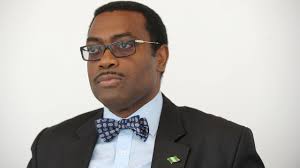
Considering the recent events at the African Development Bank, the resignation of the bank’s vice-president, Jennifer Blanke, was bound to attract attention. The African bank’s president, Akinwunmi Adesina, has over the past few months, been subjected to scrutiny by the one of the bank’s shareholders, the United States.

The US Treasury Secretary Steven Mnuchin, had on May 22, expressed reservations over the complete exoneration of Adesina over whistle-blower allegations of misconduct by the bank’s ethics committee.

However, within Blanke’s resignation letter was what turned out to be the latest of many resounding endorsements of Adesina’s stewardship at the AfDB.

According to the American-Swiss who was vice president for agriculture, human and social development at the AfDB since 2017, “I thank the president for his strong leadership, guidance and support which have undoubtedly motivated and helped my team and I to play a key role in the transformation of the bank.”

A renowned and globally respected development economist, Blanke rose to the position of chief economist of the World Economic Forum, Davos, Switzerland prior to joining to the AfDB in 2017.

“I feel privileged to have been given an opportunity to contribute to the bank’s agenda for accelerating Africa’s social and economic transformation,” continued Blanke, who is leaving the bank for “purely for family reasons” to return to Switzerland.

“I will miss the bank and the excellent team we have built, and I will continue to strongly support the bank from wherever I am,” she said.

This is just as Dr. Mima Nedelcovych, who served as the US executive director to the AfDB from 1989 to 1993, said last week that it’s in the interest of the US to support Adesina for a second term.

According to Nedelcovych, unless the US government is holding some secret that the American public is not aware of, he sees “absolutely no reason” why the US should not wholeheartedly support the re-election of Adesina.

In an interview with Pan African Visions, Nedelcovych said, “If competing with the Chinese in Africa is primordial to the US, then supporting the position of our African fellow shareholders in the AfDB and supporting President Adesina is in our own interests.”

Adesina has established the framework for furthering the critically important role that the AfDB is playing in the development and inclusive growth of the continent, Nedelcovych further said.

In truth, the focus directed at Adesina by Mnuchin has helped in shoring up his reputation, as support comes from varied sources within and outside the bank, and across different geo-political interests.

In a June 5 statement by the heads of state and governments of ECOWAS signed by Niger President Mahamadou Issoufou, the West African economic bloc reaffirmed its support of the AfDB president, by noting that “in the footsteps of his illustrious predecessors, Adesina has further strengthened and accelerated the institutions development.”

The West African economic alliance comprised of 15 countries – Benin, Burkina Faso, Cape Verde, Cote d’Ivoire, The Gambia, Ghana, Guinea, Guinea-Bissau, Liberia, Mali, Niger, Nigeria, Senegal, Sierra Leone, and Togo – further extolled Adesina’s “impressive achievements” over the past five years of his mandate, by pointing out the bank’s capital increase from $93 billion to $208 billion.

“More recently, under his leadership, the African Development Bank has launched a $10 billion crisis response mechanism to help Africa fight the COVID-19 pandemic, with the support of all shareholders,” the West African body said.

The ECOWAS heads of states and governments reaffirmed their full confidence in the leadership of Adesina and “reiterated their collective support for his re-election…”

Former Kenyan Prime Minister and the African Union’s high representative for infrastructural development in Africa, Raila Odinga, also weighed in and stated that Adesina had made “commendable strides” as president of the AfDB.

In his June 5 statement, Odinga revealed that Adesina has “prioritised Africa’s Agenda 2063 and the continents quest for transformation particularly through investment in agriculture, infrastructure development, and continental integration, among other areas that are dear to us.”

The support of these African countries and institutions extends to their past leaders led by former Nigerian President, Olusegun Obasanjo, who last month, pointed out the need to speak against the introduction of alien practices being recommended by some parties at the bank and further emphasised the need for the AfDB to remain an African-focused development bank rather than one which serves interests outside Africa.

Nigeria’s President Muhammadu Buhari, has also thrown his weight behind Adesina, by hosting him at Nigeria’s presidential villa in Abuja – a significant event considering the former’s reticence especially during the coronavirus pandemic – and restating his support, after initially nominating Adesina for the position in 2015.

Unrelenting Commitment to Growth

The widespread support for Adesina further validates the decision on May 5 of the AfDB’s ethics committee led by Japanese executive director, Takuji Yano, which described all allegations against Adesina as spurious and unfounded.

The spotlight beamed on the AfDB has further highlighted its commitment to the growth of continent.

This past week, the bank approved a $288.5 million loan to help Nigeria tackle the COVID-19 pandemic and mitigate its impact on people and businesses.

In the last month, the bank approved a $500,000 emergency assistance grant to Egypt to provide food relief, and to contribute to restoring the livelihoods of vulnerable populations severely affected by the pandemic. It also approved a $210 million loan for Mauritius to finance a national budget support programme in response to COVID-19.

More interventions in May, include a $97 million loan approved as emergency budget support for Senegal, $33m loan approved for Cape Verde (both for COVID_19) and a $13.7m grant approved to improve the health sector in Zimbabwe.

Others in May are $45million allocated for a bridge to link Cameroon and Chad and $1.67m given for study on building dams in Eswatini (Swaziland).

These visible and quantifiable interventions by the AfDB under Adesina’s leadership are reasons why he is being vigorously supported from different quarters against allegations that designed to tarnish his and the bank’s sterling reputation.

COVID-19: Banks battle new wave of non-performing loans

0

The ravaging coronavirus may have triggered unprecedented challenges for the global economy has worsened the outlook for Nigeria’s hitherto fragile economy due to the pandemic, with most of the deposit money banks groaning under the weight of non-performing loans.

The nation’s banking industry landscape has had its fair share of the macro-economic headwinds, which has resulted in declining margins and significant write-offs of impaired loans. While on the path to recovery, the banking industry is now faced with the coronavirus pandemic, which comes with greater uncertainties and unpredictability of events in the business environment. The financial sector is being closely watched considering its exposure to risky assets.  The situation is the same in Nigeria and as the economy gradually reopens, attention is now pointing towards Nigerian banks and how bad their risk assets are.

Many analysts have argued that the banks’ exposure to oil and gas, a sector that is more than any devastatingly affected by the global lockdown.

The devil’s in the details

According to recent data obtained from National Bureau of Statistics, latest banking sector report shows that non-performing loans in five major sectors rose to N143.76 billion as the end of September 2019.

The value of the NPL issued by Deposit Money Banks to operators in the Agriculture, Construction, and Education among others hit N143.76 billion as at the end of September 2019. The five major sectors that witnessed a rise in NPLs include construction, education, agriculture, government, and management and remediation activities.

The report stated that the NPLs in these sectors rose from N127.32 billion in Q3 2018 to N143.76 billion in September 2019. This represents an increase of N16.44 billion.

Analysis of the banking sector data shows that NPLs in the construction sub-sector rose from N72.34 billion in Q3 2018 to N81.60 billion. This means NPLs in the construction sectors rose by N9.25 billion within the period.

Education sector ranks second on the chart with N8.69 billion NPLs, a N4.22 billion rise in one year.

The agriculture sector also recorded a rise in NPLs, as NPLs in the sector rose from N48.33 billion in September 2018 to N49.96 billion as at September 2019. This means NPLs in the sector rose by N1.63 billion.

Other sectors that recorded increase in NPLs within the period include government (N1.28 billion) and management and remediation activities (N2.24 billion).

It is however instructive to note that the report added that the NPL in the oil and gas sector dropped from N1.002 trillion in Q3 2018 to N264 billion in Q3 2019. This means NPLs in the sector dropped by N738.15 billion.

Other sectors that recorded big drop in NPLs include Power and Energy (N116.01 billion); Real Estate Activities (N74.02 billion); Manufacturing (N43.67 billion); Information and Communication (N39.40 billion), and Finance and Insurance (N34.42 billion).

The rise in NPLs in some sectors may partly affirm concerns of analysts and industry stakeholders that the move of the apex bank to raise Loan-to-Deposit ratio (LDR) to 65% might increase the level of non-performing loans in the economy.

Rating agencies’ verdict on banks’ loan risk

Meanwhile, some rating agencies have given their informed analysis on the growing risk associated with banks loan, stressing that the aftermath of COVID-19 is bound to have a listing effect on banks.

One of such report is that of Augusto & Co Limited, a credit rating firm. The firm earlier in the year published its preliminary forecasts (pre-COVID-19) for the Nigerian banking sector’s non-performing loans (NPL) ratio for the 2020 financial year. The agency had projected 9.4% based on its expectations that major impaired loans would be written off, there would be growth in the loan portfolio and that the IFRS 9 impact would be moderated.

With the advent of COVID-19 and associated risks, Augusto increased its projection to 13% in the short term. In the report sighted by The Nation the agency justified the need for revising its outlook for the banks.

“We have revised our NPL ratio expectations to 13% in the short term. Our revised forecast is a moderated revision of CBN’s 2016 stress test on the impact of the lower oil prices on the banking industry’s loan book. Our forecast assumes that with crude oil prices averaging $30-$35 per barrel, a proportion of the oil and gas loan book will be impaired. We also expect a rise in impairment levels in other sectors.

“However, our prognosis may be somewhat moderated by the forbearances granted by the Central Bank of Nigeria (CBN) to banks to cushion the impact of the pandemic on the Industry’s performance. These forbearances include the allowance for restructurings of loans to businesses and individuals highly impacted by the pandemic, such as hospitality, manufacturing, and oil and gas firms, to reflect challenges in the sectors.

“In addition, the banking industry tightened credit risk management following the 2016 recession, shifting to short-dated, cash-backed trade transactions that self-liquidate and converting some unhedged FCY loans to naira loans for instance. Notwithstanding, we recognise that some banks are still in the process of cleaning up the loan portfolio from the last recession.”

With the lockdown resulting in skeletal operations, banks have leveraged their electronic banking platforms to boost income, as more banking transactions were consummated through digital channels during the lockdown period.

However, minimal trade activities will moderate credit related fees, as it is expected that some correspondent banks will pull back on their lines of credit. These correspondent banks are expected to reprice their rates to reflect the elevated credit risks emanating from lower liquidity in the foreign exchange market.

Outstanding obligations to foreign portfolio investors seeking to exit Nigeria stood between $700 million and $900 million as at April 2020. The regulatory induced reduction in bank charges, which became effective in January 2020, will also moderate non-interest income.

Nonetheless, expected revaluation gains from a further devaluation of the domestic currency will support the earnings of banks with net foreign currency assets positions.

The report suggests that the coronavirus pandemic will weaken the asset quality of the Nigerian banks in view of the impact on State Governments’ finances, purchasing power of households and the performance of businesses. Although the degree of impact will vary across different sectors, the key sectors that will bear the brunt are oil and gas (upstream), real estate, construction, transportation (aviation) and manufacturing (non-essentials).

The exposure of the banking industry to the above mentioned vulnerable sectors threatens asset quality. Firstly, the decline in global crude oil prices which was triggered by the slump in demand due to economic lockdowns in several countries will result in a sharp reduction of revenue for the oil and gas firms and government. The revenue from oil accounts for about 60% of the country’s revenue and about 90% of its export proceeds. Being the largest spender, a decline in the government’s revenue will affect key sectors such as construction, manufacturing, real estate and general commerce.

With the slower than expected progress in tests that have been carried out for the coronavirus disease, the country faces increasing uncertainties that will push it into recession with 7% contraction in 2020.

Subsequently, the report revised non-performing loan ratio expectations to 13% in the short term due to the coronavirus pandemic as against the initial 9.4%. This is based on the assumption that the average crude oil price will be $30-$35 per barrel.

In a related development, Moody’s Investors Service had last month changed its outlook for Nigeria’s banking system from stable to negative. Moody’s rating agency highlighted that the change reflects its view that banks will face weakening loan quality and foreign-currency liquidity challenges as depressed oil prices and the global pandemic weigh on Nigeria’s economy.

The outbreak of COVID-19 and the sharp downturn in crude oil prices, which have accelerated capital flow reversals, continue to stoke fears of a further devaluation in the Naira. We say further devaluation because the CBN had in March moved the official exchange rate from N307/US$1 to N360/US$1. At the Investors and Exporters Window (I & E), the CBN also adjusted the NGN peg upwards by 5.7%, as it raised its intervention rate to N380 from N366. Depressed oil prices and subsequent devaluation affect banks in a number of ways.

A few sectors show more vulnerability to depressed oil prices and devaluation in the local currency and as such bank lending to these sectors will most likely show signs of strain. One of such sectors is the oil and gas upstream/midstream sector. In conversations with banks over the past few weeks, we understand that some banks like Guaranty Trust Bank have hedged their oil and gas exposure over several months while many others believe that it will be possible to restructure these loans – apparently with little effect on asset quality in the short term.

CBN monetary policy to ease off bad debts

Interestingly, in the wake of the COVID-19 pandemic, the CBN maintained the current monetary policy rate in March, but introduced additional measures, including: reducing interest rates on all applicable CBN interventions from 9 to 5 percent and introducing a one-year moratorium on CBN intervention facilities.

Besides, the apex bank created a NGN50 billion (USD139 million) targeted credit facility, and liquidity injection of NGN3.6 trillion (stimulus package in the form of loans) (2.4% of GDP) into the banking system along with another tranche of NGN100 billion to support the health sector, NGN2 trillion to the manufacturing sector, and NGN1.5 trillion to impacted industries in the real sector.

The government also reviewed its 2020 budget and, given the expected large fall in oil revenues, announced plans to cut/delay non-essential capital spending by NGN1.5 trillion (close to 1% of GDP).

A three-month repayment moratorium was also granted to all TraderMoni, MarketMoni and FarmerMoni loans with immediate effect. Similar moratorium to be given to all Federal Government-funded loans issued by the Bank of Industry, Bank of Agriculture and the Nigerian Export Import Bank.

This is just as the CBN governor, Godwin Emefiele, had last month, stressed the need to urgently diversify the economy and “create institutional structures that will insulate the economy from oil shocks.”

Furthermore, Emefiele said cautious policy was irrefutable as growth was still low while per capita income and unemployment rate remained outside tolerable levels.

“I am of the view that a favourable resolution of these challenges, reinforced by sustained FX stability, as well as continued implementation of the Loan-to-Deposit Ratio (LDR) policy, will further boost short-term outlook,” he added.

“I note the improvements in banks’ Non-Performing Loans (NPLs) position and our continuing efforts at de-risking the target sectors.

“Robust credits will bolster domestic investment, household demand and factor productivity while accelerating economic diversification, and ensuring strong and inclusive growth,” he added.

The apex bank said the move was part of the bank’s continued effort to mitigate the impact of the coronavirus (COVID-19) on households, businesses and regulated institutions.

It announced that CBN intervention facilities obtained through participating OFIs Microfinance Banks (MFBs), Primary Mortgage Banks, and Institutions, among others would be given a further one-year moratorium on all principal repayments, also effective March 1, 2020.

Expatiating on the decision of the Bank, the Director, Corporate Communications Department, Mr Isaac Okorafor, said the management approval for the restructuring of credit facilities in the OFI sub-sector was in line with the Bank’s desire to alleviate momentary strain on households, businesses and regulated institutions triggered by the lockdown due to COVID-19.


Nigeria exported N32bn worth of electricity in 2019 — NERC

0

The Republics of Togo, Niger and Benin received a total invoice of N32.04bn for the electricity supplied to them from Nigeria in 2019, data from the Nigerian Electricity Regulatory Commission have shown.

Nigeria, through some of its power plants, sell electricity to the neighbouring countries, which are classified as international customers in the Nigerian power sector.

Niger’s power firm, Societe Nigerienne d’electricite, received a total invoice of N3.01bn for electricity supply from Nigeria in the first quarter of 2019; N3.69bn in Q2; N4.1bn in Q3; and N2.07 in Q4.

Communaute Electrique du Benin, a power firm owned by Togo and Benin, received a total invoice of N9.74bn for the power supplied to it in Q1; N7.16bn in Q2; and N2.27bn in Q3 but none in Q4.

According to NERC’s quarterly reports, the international customers did not make any payments in each of the four quarters of last year.

“During the quarter under review, the special and international class of customers made no payment to the Nigerian Bulk Electricity Trading Plc and the Market Operator,” NERC said in its fourth-quarter report.

It said the invoice issued to Ajaokuta Steel Co. Ltd (designated as a special customer) and the international customers stood at N29.50m and N2.07bn respectively.

“The Federal Government has continued to engage the governments of neighbouring countries benefitting from the export supply to ensure timely payments for the electricity purchased from Nigeria,” the regulator added.

The immediate past Managing Director of the Transmission Company of Nigeria, Mr Usman Mohammed, told our correspondent in March this year that power supply to Benin and Togo was disconnected in October 2019 because of the non-payment of the outstanding debt.

According to him, the amount of electricity being sold to international customers is around 300 megawatts, with Togo being supplied by Calabar Power Plant; Benin by Paras Energy & Natural Resources Development Limited; and Niger by Mainstream Energy Solutions Limited.

Sports Minister Praises Buhari, MKO at National Stadium Unveiling

0

The Minister of Youth and Sports Development Mr. Sunday Dare has eulogised President Muhammadu Buhari for renaming the Abuja National Stadium after the winner of the acclaimed June 12 1993 presidential election Chief Moshood Abiola, describing the President as a man who chose to walk the path many failed to.

The Minister disclosed that the occasion was an attestation of the President’s vision of giving recognition to worthy citizens while encouraging the younger generation to join him in building a “strong, virile and indivisible nation”.

While also describing the late Abiola as a great Pan Africanist and a great lover of sports, he said, “Abiola was a consummate sports lover. He invested his time and resources in sports development particular football. Not many sports administrators will forget Abiola in a hurry.

“It is therefore fitting and proper for President Buhari to have named our national stadium, an iconic monument after such an illustrious citizen and a lover of sports. This renaming beyond its symbolism will remain a reminder through time of the indelible footprints Abiola left in our political and sports development as a nation.

“The naming of this stadium will serve to beckon to other Nigerians with ways and means like Abiola to emulate him and embrace, support and invest in sports development.

The President was represented at the occasion by the Minister of the Federal Capital Territory, Mallam Musa Bello as the Special Guest of Honour, while Kola Abiola, represented the family.

Joshua’s Injury Fears Eased, won’t Affect His Career

0

Anthony Joshua’s injured leg will not prevent his next fight against Kubrat Pulev or his plan to face Tyson Fury, promoter Eddie Hearn said.

Joshua wore a brace over his left knee and had a crutch when he spoke at a Black Lives Matter last weekend.

“When you’re on crutches with your leg in a brace it is never great, but it’s not something that will affect his 2020 career or his career at all,” Hearn told Sky Sports.

“He will have the brace on for three or four weeks just to make sure he is good to go to resume training.

“He tweaked the inside of his knee. He’s had scans. No surgery, so that’s good news.
“He’s got to make sure he doesn’t do any running or heavy work over the next few weeks.”
Joshua and Fury, who own every major heavyweight belt between them, have agreed financial terms for two fights in 2021 to decide an undisputed champion.

But Joshua’s next defence of the IBF, WBA and WBO titles is expected to be against his mandatory challenger Pulev, with the UK still the priority location.

Fury is set to face Wilder again in a third WBC title fight, while Dillian Whyte has also lined up a mandatory shot at the WBC belt by February 2021.

“In our minds, Joshua versus Pulev happens in November,” said Hearn.

“We know that Deontay Wilder’s side are working on the Fury fight. We have Dillian Whyte hopefully fighting at our headquarters in August against Alexander Povetkin.

“There are talks to stage the Pulev fight around November. That’s the fight that is next. It’s the IBF mandatory.”

Osaze: I want to go into coaching

0

Ex-Super Eagles forward, Osaze Odemwingie, has revealed plans to go into coaching in the near future.

Osaze, who turned to golf after announcing his retirement from football in 2019, obtained a golf coaching badge in December 2019 and has also registered for a higher coaching course.

But the former Lille and Stoke City star says he is considering going into football management.

“In about three to four years, I would like to become a football coach,” the former player said in an Instagram live session monitored by our correspondent.

“At the moment the plan is to spend as much time as possible with my kids. I travelled a lot during my career and didn’t get to spend as much time with them as I would have wanted, but now I’m enjoying being a dad.

“Now I’m into golf because that gives me the knowledge about other sports and the knowledge I need about football coaching but for now, I’m focusing on golf because I have a genuine passion for it.”

The former Bendel Insurance player also revealed his desire to go into football administration.

“Golf is my priority now but football is a plan B for me. Hopefully, I can get one degree in management, that can help me in the administrative circle for the federation in the future. The more ammunition you have, the better,” he added.