Home Blog Page 7889

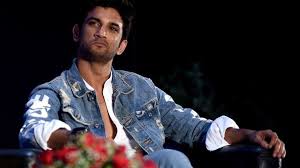
Bollywood Actor Sushant Singh Rajput Dies At 34

0

A young Bollywood heartthrob lauded for his portrayal of cricket star M.S. Dhoni on the silver screen has died, Mumbai police said Sunday.

“Police found Sushant Singh Rajput’s body at his residence Sunday afternoon,” Mumbai police spokesman Pranaya Ashok told AFP, confirming that the 34-year-old had taken his own life.

Rajput, renowned for his numerous hits on the big and small screens, reportedly battled depression.

He passed away just a few days after the shock death of his former manager Disha Salian.

“It pains us to share that Sushant Singh Rajput is no longer with us,” Rajput’s management team said in a statement.

“We request his fans to keep him in their thoughts and celebrate his life, and his work like they have done so far.”

“I will miss him so much,” tweeted Bollywood superstar Shah Rukh Khan alongside a selfie with Rajput. “His energy, enthusiasm and his full happy smile.”

Fellow star Akshay Kumar wrote on Twitter that he was “shocked and speechless”.

“Such a talented actor… may God give strength to his family.”

Bollywood is still struggling to come to terms with the loss of two luminaries, Irrfan Khan and Rishi Kapoor, in April.

In early June, Wajid Khan, one of the top composers of Bollywood dance songs, died at the age of 42 after contracting coronavirus, according to media reports.

Celebrated filmmaker Basu Chatterjee passed away just a week ago. He was 90.

Born in Patna in the eastern state of Bihar, Rajput quit his studies in engineering to pursue a career in acting and dance.

He got his big break in Bollywood in 2013 with “Kai Po Che”, a film about cricket, love and politics that won acclaim at the Berlin film festival.

His most recent films were comedy-drama “Chhichhore” and action movie “Drive”, both released last year.

Rajput in 2016 told AFP of the emotional rollercoaster he went through filming the biopic of Indian cricket hero Dhoni, “M S Dhoni: The Untold Story”, which included retelling the death of the ex-skipper’s former girlfriend.

“It was very difficult because, after we did the preparation, in my head I was him and everything that was happening was actually affecting me,” he said.

AFP

Buhari Condoles with Pastor Itua Ighodalo on Loss of Wife

0

BY TAIWO OGUNMOLA-OMILANI

President Muhammadu Buhari expresses shock at the passage of Mrs Ibidun Itua-Ighodalo, wife of Pastor Itua Ighodalo of Trinity House, based in Lagos.

Femi Adesina, Special Adviser to the President on Media and Publicity disclosed this in a statement made available on Sunday.

The President shares the pain and sorrow of the family at the sudden death, and prays God’s comfort for the entire family, friends and members of Trinity House.

He recalled that Pastor Ighodalo is one person who faithfully prays for the country, and the government, noting that he sent him a personal letter of condolence when his former Chief of Staff, Mallam Abba Kyari, passed away in April.

“Please accept my condolence. May God give you the fortitude to bear the loss, and strengthen you at this trying time,” President Buhari says.

PASTOR IGHODALO’S WIFE, IBIDUN IGHODALO DIES AT 40

0

Mrs. Ibidunni Igbodalo, the wife of popular Lagos Pastor, Ituah Ighodalo, has passed away at the age of 40.
According to reports, the former Miss Lux died on Sunday morning in her room at a yet-to-be identified hotel in Port Harcourt, Rivers State.

Ibidun is survived by her husband, Pastor Ituah Ighodalo, the head pastor of Trinity House church, and their two adopted children, Keke and Zenan.

Until her death, she ran the popular events company, Elizabeth R and had been travelling around the country building COVID19 centres. She left Lagos for Port Harcourt just this last Friday for work.

And just last week, Ibidun paid a visit to her father’s grave.

Covid 19: NECA To Sign MoU with NLC, TUC to Address workplace Challenges

0

BY TAIWO OGUNMOLA-OMILANI

The umbrella body of Employers in Nigeria, the Nigeria Employers’ Consultative Association (NECA) and the two Central Labour organizations, Nigeria Labour Congress (NLC) and Trade Union Congress of Nigeria (TUC) will on Monday signed a Memorandum of Understanding at the NLC Headquarters, Abuja.

In a statement signed by the Director-General of NECA, Dr. Timothy Olawale said the MoU is aimed at forming a coalition to address the challenges arising from the Covid-19 pandemic in the workplace and its impact in Nigeria as a whole.

Olawale stated that “the Covid-19 pandemic has done significant damage to businesses and changed the dynamics of the world of work. As employers and workers are both directly affected by the pandemic, it became necessary to work together in addressing the critical labour and socio-economic issues arising fromthe pandemic, especially from the perspective of the Work-place”.

Speaking further on the importance of MoU, the NECA DG noted that “as Social Partners, whose overall interest is enterprise-competitiveness, protection of workers’ rights and development of national economy, the desire to pool reflections, initiatives, and actions in the fight against Covid-19 and any external threat to businesses and workers in the Private and Public Sectors necessitated the collaboration.

“It is no gainsaying that the rate of enterprises fatality and job loss due to Covid-19 was worrisome. The effects of the pandemic have escalated it to an alarming rate with large scale negative consequences for our nation” he said.

While commending parties to the MoU, Olawale stressed that “the signing of this MoU would be done by the Nigeria Employers’ Consultative Association (NECA), Nigeria Labour Congress (NLC) and Trade Union Congress (TUC), with the International Labour Organization (ILO), Abuja Office as witness.

“This Coalition will continue to work together post-Covid-19 to develop programmes with Government and other Stakeholders to ensure business sustainability and competitiveness, creation of decent jobs and rapid national development”, he added.

He averred that MoU heralds greater understanding, collaboration and mutual respect between employers and workers and provide a joint platform to constructively engage Government in the advocacy for a favourable business environment that will aid economic recovery in the short term and post Covid-19”.

NIGERIA DEMOCRACY AT TWENTY-ONE

0

INTRODUCTION

The 21 years of uninterrupted democracy in Nigeria has earned the country enormous goodwill as one of the few stable democracies in Africa. The economy has benefited from this goodwill as investors are generally more comfortable with a democratic environment. However, core democratic values are yet to take firm root in the Nigerian democracy, especially in the following respects:
i. Quality and independence of democratic institutions – Electoral bodies, Law Enforcement Agencies, Judiciary etc
ii. Separation of powers and the inherent Checks and balances
iii. Accountability by the political leadership
iv. Transparency in the management of public finance
v. Rule of law
vi. Citizen engagement in the democratic process.
vii. Entrenchment of the ideals of

Federalism
We recognise that Nigerian democracy is still work in progress, but it is crucial to recognise the importance of these democratic ideals in the sustenance of our democracy.

It is remarkable as well that the military has, over the last 21 years, demonstrated absolute loyalty, respect and submission to the constituted democratic authorities. This has earned Nigeria a great deal of respect in the comity of nations.
However, a strong and virile economy is critical for a sustainable democracy. Worsening poverty poses a great deal of risk to the democratic process and the security of the nation. A strong economy driven by the private sector is fundamental to the building of strong democratic structures and processes. This is therefore the time to reflect on the critical gaps in our democratic structures and processes as well as our economic architecture.
The political leadership at all levels should rededicate themselves to the creation of enabling environment for private sector development with emphasis on the following, among others:
i. Streamlining the democratic structures for cost effectiveness and better economics.
ii. Reduction in cost of doing business through the provision of critical economic infrastructures.
iii. Creation of a level playing field for all economic players.
iv. Tackling corruption at all levels and spheres of the polity.
v. Strengthening macroeconomic fundamentals of the Nigerian economy.
vi. Promotion of transparency and accountability in the conduct of government business.
vii. Strengthening of national institutions.
viii. Promotion of inclusiveness and engagement in the democratic process.
ix. Development of human capital.
The citizens also have an important responsibility to constantly engage the players in the political space for quality assurance in the political governance process.

ECONOMIC PERFORMANCE REVIEW

[2015 -2019]
The review covers the period over which there is full year data. There is a partial analysis of the developments in 2020, especially the impact of the Covid 19 pandemic. This review focuses on the following areas:
• Macroeconomic Assessment.
• Global Ranking Assessment. decline
• Socioeconomic & Welfare Assessment.
• Economic Diversification Assessment.
• Sectoral Growth Assessment.
• Infrastructural Development Assessment.
TABLE 1: Macroeconomic Assessment
S/N Indicators 2015 2019 Remarks

  1. GDP Growth Rate (%) 2.82 2.27 Declined
  2. Inflation (%) 9.0 11.39 More intense
  3. Foreign Direct Investment ($’bn) 1, 446.62 934.34 Declined
  4. External Reserves 28.28 38.6 Improved
    5 Public Debt (Trillion) 12.6 27.8 Worsened
  5. Balance of Trade (Billion) (2230.90) 2,232.40 Improved
  6. Stock Market All-Share Index 28,642.25 26,842.07 Declined
  7. Exchange Rate (Official Rate) 196.99 306.95 Weakened
  8. Credit to Private Sector (Trillion) 18.72 26.69 Moderate Improvement
  9. Prime Lending Rate 16.96 14.99 Improvement
  10. Maximum Lending Rate 26.84 30.72 No improvement
    Source: NBS, CBN, DMO, NSE
    Acknowledging the fact that the covid-19 pandemic and the unprecedented collapse in crude oil prices impacted most macroeconomic variables, and the fact that full year data is not available for 2020, we reviewed the performance in 2015 against 2019 for a fair assessment and comparative analysis.

The macro-indices outlined in Table 1 shows that the country’s macroeconomic fundamentals are largely weak, and the situation remains the same till date. These yardsticks including foreign direct investment, balance of trade, exchange rate was driven to a significant extent by the direction of crude oil prices, an exogenous variable beyond the control of economic managers and policymakers.

During periods of shocks in the global energy markets, most macro indicators are thrown into negative territory. From the data above, performance was negative in the following areas – GDP growth, Inflation, FDI, Public Debt, Stock Market All-Share Index, Exchange Rate and Maximum Lending Rate within the period reviewed. More importantly, we note the decline in FDI flows into the country driven by weak investors’ confidence resulting from heightened regulatory risks, state of infrastructure, policy risks, quality of dispute resolution systems, among others.

The moderate improvement in foreign reserves within the period could be ascribed to favourable oil prices. Improvement in credit to Private Sector and prime lending rate was driven largely by the aggressive push by monetary authorities for robust credit flows into the real economy. Meanwhile, the increase in maximum lending rate underscores the fact that cost of credit remains a challenge for businesses, particularly Micro, Small and Medium-sized enterprises (MSMEs).

Table 2: Global Ranking Assessment
S/N Indicators 2015 2019 Remarks

  1. Ease of Doing Business Ranking 169/189 131/190 Improvement
  2. Global Competitiveness Ranking 127/140 116/141 Improvement
  3. Corruption Perception Index Ranking 136/180 146/180 Average Performance
  4. Human Development Index 157/189 158/190 (2018*) No improvement
  5. Global Peace Index 149/163 148/162 Average Performance
    Source: WorldBank, WEF, TI, UNDP
    Performance assessment based on global rankings shows mixed results. While the country improved on ease of doing business and competitiveness ranking, performance on corruption perception and human development was weak.

Nigeria’s 131st position on World Bank’s 2020 Ease of Doing Business Ranking is the best performance since 2010. This is a positive development attributable to several reforms by the Presidential Enabling Business Environment Council (PEBEC) aimed at making doing business easier. We note that Nigeria featured among the top ten improvers on the ranking. However, these improvements in ranking has not been adequately reflected in the reality of the daily experiences of investors, especially in the areas of energy cost for business operation, logistics challenges, regulatory issues, security situation in parts of the country and the processes of cargo clearing at the sea ports.
On Global Competitiveness Ranking, while the data showed improvement from 127th position in 2015 to 116th in 2019, relative comparison with performance of African peers such as South Africa (66th), Morocco (75th) and Egypt (93rd) in 2019, underscores the need for much greater efforts to improve the competitiveness of the business environment.

Nigeria’s ranking on Corruption Perception Index (CPI) ranking dropped from 136th to 146. This underlines the need for much greater efforts in fighting corruption. It should however be acknowledged that some achievements have been recorded by the antigraft agencies, especially regarding some high-profile corruption cases. President Buhari reported in his democracy day speech that the anti-graft agencies have secured more than 1400 convictions and recovered funds in excess of N800 billion.

For Human Development Index (HDI) Ranking, Nigeria fell a spot lower to 158th position in 2018 from 157th position in 2015, still within the low human development category. This reflects the poor funding of the education and health sectors at all levels of government. The poor state of public educational and health institutions are graphic illustrations of the situation.
While the Global Peace Index ranking shows marginal improvement, the level of insecurity in parts of the country, attacks by Boko-Haram sect, kidnapping, armed robbery, banditry and farmers-herders tussle, ethnic clashes remain a major cause for concern.

Table 3: Socioeconomic & Welfare Assessment
S/N Indicators 2015 2019 Remarks

  1. Income per capita ($) 2,412.37 2,396.3 (2018*) No improvement
  2. Poverty Rate (%) 33.1 40 No improvement
  3. Unemployment Rate (%) 10.44 23.1 (Q3-2018*) No improvement
  4. Food Inflation (%) 9.89 13.73

No improvement

Source: WorldBank, NBS, Oxfam
The present administration’s performance, from a socioeconomic and welfare perspective, was not up to scratch. The data on trends in per capita income, poverty, unemployment and food inflation supports this position. Per capita income fell steadily between 2015 and 2018. Although dataset ended in 2018, however judging from present realities, GDP per capita fell further in 2019 as population growth rate (estimated at 2.7%) exceeded GDP growth (2.27%) in 2019.

The performance from poverty reduction perspective gives cause for concern. In 2018, Nigeria overtook India as the country with the world’s most extreme poor people despite India having a population seven times larger than Nigeria’s. According to the World Poverty Clock, the number of extremely poor Nigerians rose to 91.6 million in 2019 from 87 million in 2018, implying that close to half of Nigerian’s population size live below the poverty line. A more recent data by the National Bureau of Statistics put poverty rate at 40% in 2019, indicating that 80 million Nigerians are in poverty. Worsening poverty situation in Nigeria is partly driven by rising cost of living particularly prices of food products. The acceleration in average food prices from 9.9% in 2015 to 13.7% in 2019 reinforces this position. Other factors are inadequate investment in social infrastructure [education and health] at all levels of government, quality of infrastructure which is a major limiting factor to productivity growth in the economy.

The unemployment situation in Nigeria worsened as rate of joblessness spiked from 10.44% in 2015-Q4 to 23.1% in 2018-Q3. Latest unemployment figure of 23.1% does not reflect recent realities following the Covid 19 induced downturn in the economy.
Productivity issues, quality of educational curriculum, rising population, weak economic diversification, and fragile economic growth are some of the key drivers of unemployment.

Table 4: Economic Diversification Performance
S/N Indicators 2015 2019 Remarks

  1. Share of Oil Exports in Total Exports (%) 92.5 76.5 Improvement
  2. Share of Oil Revenue in Federally Collected Revenue (%) 55.4 54.2 Improvement
  3. Contribution of Agriculture to GDP (%) 25.1 25.2 –
  4. Contribution of Industry to GDP (%) 17.9 22.3 –
  5. Contribution of Services to GDP (%) 57.0 52.6 –
    Source: NBS, CBN
    On account of sectoral contribution to the Gross Domestic Product [GDP], it could be argued that the Nigerian economy is diversified. However, the non-oil sector which contributes over 90% to total economic activities, contributes an estimated 50% to revenue and less than 10% to foreign exchange earnings. These outcomes underline the imperative of scaling up productivity and competitiveness in the non-oil sector of the economy.

Table 5: Sectoral Performance
S/N Indicators 2015 2019 Remarks

  1. Agriculture 3.72 2.36 No improvement
  2. Manufacturing -1.46 0.77 Marginal
    Improvement
  3. Construction 4.35 1.81 No improvement
  4. Trade 5.14 -0.38 No improvement
    5 Transportation & Storage 4.51 10.78 Improvement
  5. ICT & Communication 6.22 11.08 Improvement
  6. Financial Institutions & Insurance 7.12 2.56 No improvement
  7. Real Estate 2.11 -2.36 No improvement
  8. Education 7.67 0.8 No improvement
  9. Human Health & Services 2.48

0.3 No improvement
Source: NBS

Performance of major ten sectors was largely weak particularly in sectors with potentials to spur economic diversification.

While growth of the manufacturing sector advanced to 0.77% in 2019 from -1.46% in 2015, present realities provide evidences that the sector failed to improve within reviewed period due to myriad challenges such as poor infrastructures, weak purchasing power, competition, high production cost and unfavourable economic conditions. More importantly, the real economy (agriculture, manufacturing, trade and constructive) continues to underperform as result of growth and productivity challenges. The impact of the 2016-17-naira devaluation also contributed to their poor footing.

We note the strong growth performance in ICT & Communication and Transport & Storage. The performance in ICT could be ascribed to the increasing ICT application in many sectors, notably the financial services sector. The general increase in the tempo of economic activities, especially in the distributive trade sector, was a major driver of growth in the transport & storage. Inadequate finance combined with poor educational and health infrastructures constrained growth performance in the health and education sectors. Overall, sectoral performance between 2015 and 2019 was weak.

Table 6: Infrastructural Development Assessment
Data limitations constrained a quantitative assessment of the current administration’s performance in infrastructure.

Nonetheless, the state of physical infrastructure remains a challenge to socioeconomic development of the nation. Deplorable road networks, inefficient railway system, weak port infrastructures and epileptic power supply constitute significant cost pressures on businesses and corporates. This further resulted in weak global competitiveness of domestic firms and declining profit margin by investors in the country.

The Federal Government’s resolve in improving the quality of infrastructures by constantly seeking liquidity to fund capital projects is noted. Our infrastructural challenge stems from the fact that we are spending far below the recommended $100 billion yearly required to finance our infrastructure deficit under the infrastructure masterplan.

CONCLUSION
The Nigerian economy has tremendous potentials both in terms of human and material resources. Sustained engagement with stakeholders and the adoption of evidence-based policy formulation process would bring considerable value to the economy. The imperative of policy, regulatory and institutional reforms cannot be over stressed.

DR MUDA YUSUF
DIRECTOR GENERAL
LAGOS CHAMBEROF COMMERCE AND INDUSTRY
14TH JUNE 2020
LAGOS DISTRIBUTES MAIZE, SORGHUM TO FARM SETTLEMENTS

0

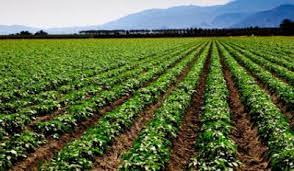
Lagos State Government says it has begun the distribution of maize and sorghum to feed millers, farm settlements and other stakeholders in the livestock industry as mitigation measures to the COVID-19 pandemic to boost agricultural production in the State and avert food scarcity in coming years.

The State Acting Commissioner for Agriculture, Ms. Abisola Olusanya who made this known over the weekend noted that the injection of these ingredients into the feed mill industry would have a multiplier effects on the input and output of feed millers and consequently on food production.

Olusanya explained that maize being the major source of energy in the feed mill industry as well as accounting for between 60 and 70% of the total ingredients used in feed formation and production, usually determines the final cost of the finished feed such that any fluctuation in the cost of maize in the market also has direct effects on the finished feed and seems to be the life line of the feed mill industry.

She explained that the country’s animal feed mill sector was rather undeveloped largely due to high production costs stressing that the distribution of these ingredients to feed millers and farm settlements in the State would lead to a significant reduction in the production costs, production of quality feeds and consequently availability of quality food to Lagosians.

“Nigeria’s animal feed sector remains underdeveloped, largely due to high production costs. 70% of the operational costs of most poultry, aquaculture and other livestock operations go to feed. The animal feed sector at over $2 billion continues to attract significant local and foreign investment in large scale feed mill operations.

“Recently, during the COVID-19 lock down, the Federal Government of Nigeria presented the Lagos State Government with consignments of maize and sorghum; thus, the State Government approved the distribution of 3,300 Tonnes of Maize and 900 Tonnes of Sorghum to Feed Millers, Farm Estates and Settlements and other stakeholders in the animal feed industry across the State,” Olusanya averred.

According to her, these feed millers include commercial feed millers, toll millers, ingredient sellers and distributors of finished feed and other stakeholders and investors in the industry such as the small holder private livestock farmers like the Sheep and Goat Farmers, and the Lagos Chapter of Poultry Association of Nigeria among others.

She gave the list of Farm Settlements and Estates that have benefited from the scheme to include the Ikorodu Farm Settlement, Odogunyan; Ajara Farm Settlement, Badagry; Araga Farm Settlement, Epe; Imota Farm Settlement, Ikorodu; Agbowa GFS/NDE Estate, Epe; Igboye Farm Settlement, Epe; Poultry Estates at Erikorodo, Ikorodu and Ayedoto in Ojo; Piggery Estates at Gberigbe, Ikorodu and Oke-Aro; Arable Crop Estate, Agbowa, Epe; Vegetable Estate, Yafm, Badagry; and Fish Farm Estates at Odogunyan, Ikorodu; and Ketu Ereyun in Epe.

Olusanya noted that the distribution would help the feed millers save time and money spent on searching for quality maize, shorten production time as well as reduce wastage of ingredients during production.

“Apart from ensuring that quality and affordable feed is produced, this distribution will also help our feed millers and other key actors in the animal feed industry to produce feed according to the recommended standard. It is important to note that the overall aim here is to produce good quality feeds for our animals which will in effect help livestock and animal farmers to generate low mortalities, stimulate high productivity, produce a high rate of return on investments, produce quality food to Lagosians, sustain the industry’s integrity while encouraging more investors to support the animal feed industry,” Olusanya asserted.

The Acting Commissioner opined that the distribution is coming on the heels of the empowerment of 650 farmers in the State with maize seeds for the new planting season adding that all these measures by the State Government was to cushion the effects of the COVID-19 pandemic and its threat to food security and availability in the State.

She urged beneficiaries to make judicious use of these inputs to improve the animal feed industry as it would go a long way in rearing healthy animals and in return produce quality food for Lagosians.

Insecurity: Tambuwal Seeks death sentence for unlawful possession of arms

0

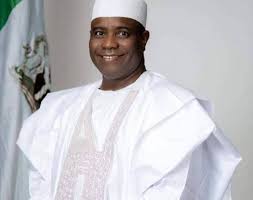
Gov. Aminu Tambuwal of Sokoto State has urged the National Assembly (NASS) to produce a legislation that would prescribe death sentence or life imprisonment for unlawful possession of arms in the country.

Tambuwal made this call in a statement issued by his Special Adviser on Media and Publicity, Malam Muhammad Bello.

The statement said Tambuwal was talking to students and youths in an interactive session on security matters in Sokoto State on Saturday.

The governor said that there are more small and light weapons in the hands of non-actors across the country, than there are in the hands of security operatives.

He expressed dissatisfaction over the proliferation of small and light weapons in the country.

“I am therefore appealing to NASS and the Presidency to come up with a legislation that will proscribe disarmament in the country.

“Those in possession of unlicenced arms should go and register them and if the arms cannot be licensed, they should be surrendered to government and the government will pay them,” he said.

He however said they should be given a grace period, after the grace period, those who did not comply, if caught, should be given a maximum punishment.

He said “like a death sentence or life imprisonment should be prescribed for unlawful possession of arms. This is the only way we can have peace in this country,” he said.

He also suggested a robust recruitment and equpping of security agencies, especially, the police, in order to ensure the protection of the citizens.

He urged stakeholders to improve renumeration and life insurance policy for security operatives in the country.

Tambuwal commended the federal government for establishing the Police Trust Fund, which would go a long way in addressing their challenges.

On the activities of bandits in some parts of Sokoto, the governor said arrangements are in top gear to establish a state vigilante group which could be deployed to troubled areas.

He explained that the group would operate within the ambit of the law and in conjunction with the security agencies, so that “they will not take laws into their hands”.

He recalled that the recent reprisal attacks in which the bandits killed dozens was triggered by the activities of vigilante in some of the areas attacked.

The governor noted that ignorance and climate change are among the causes of insecurity in the state.

He said some of the bandits lacked even basic knowledge of Islam, thus, ignorant of what the religion says on killing of innocent souls.

He tasked the dominant religious groups in the state to take their preachings to villages and other remote areas where it was needed the most, noting that education is vital to peace and development.

Kaduna reopening: Church maintains online fellowship, says no physical gathering yet

0

The Lighthouse Church, Damaturu Road, Kaduna, has directed its members to maintain virtual fellowship via the social media platforms, in spite of the lifting of the ban on religious gathering by the State Government.

Gov Nasir El-Rufa’i had on June 10, lifted the ban on religious gathering as parts of the gradual reopening of the state, after 75 days of lockdown due to coronavirus (COVID-19).

El-Rufa’i explained that Church services would be allowed only on Sundays and Mosques would be allowed to conduct only the Friday Juma’at prayers, subject to compliance with safety guidelines.
However, Pastor Joseph Onilede, in a statement on Sunday in Kaduna said: “we will not resume physical church gathering in the immediate.

“This is to enable us to put all the needful protocols and standards in place, for your safety and in full compliance in righteousness with all rules and standards so prescribed.

“We will in the meantime continue our online broadcasts and ministry on the following gateways: Facebook, YouTube, Twitter, and Instagram,” he said.
Onilede recalled that physical congregational gatherings were suspended by the government in an effort to reduce, contain and stop the spread of the disease.
He added that the Lighthouse Church had complied with the directive and walked down the unexpected pathway of the coronavirus pandemic lockdown in the state.

The cleric noted that pursuant of its assignment, the Church had strengthened its online presence and fellowship through regular broadcasts and had been very impactful.

“We are glad that the restrictions on religious gathering have been lifted and we are free to return to our physical congregational worship.
“But for us, we are not resuming physical fellowship yet. The date for physical service resumption will be communicated very soon.

“Pastors of this church stand committed and accountable to Jesus, the Chief Shepherd and to this great family.
“Be rest assured that we will do the needful in readiness for our return to physical congregational worship,” he said.

Edo APC Recommends Sack Of Obaseki, Others Over Alleged Anti-Party Activities

0

The All Progressives Congress (APC), in Edo State, has recommended the expulsion of Governor Godwin Obaseki, and the Chairman of the party, Anselm Ojezua as well as the state women leader, Dr Aisosa Amadasun from the party.

Speaking at a news conference in Benin City on Sunday, the David Imuse-led executive, also commended the disqualification of Governor Obaseki by the party’s governorship primaries screening committee, noting that the decision will help the party avert a repeat of the scenario which played out in Bayelsa State.

Imuse cited anti-party activities, dragging the party to court without exploring all available internal dispute resolution options as some of the wrongs of those recommended.

On Saturday, the National Working Committee had confirmed that the governor was disqualified from participating in the party’s primaries for the upcoming governorship election.

According to the National Chairman of the party, Adams Oshiomhole, Obaseki in addition to presenting faulty certificates, had abused his powers as Governor of the state.

He also accused Obaseki of orchestrating the inauguration of only nine out of 24 members of the State House of Assembly, an act he described as unacceptable to the party.

“Our democracy is founded on a tripod of executive, legislature and the judiciary,” Oshiomhole said. “When a Governor decides to muzzle the legislature, then democracy is dead.”

He insisted that Obaseki frustrated moves to resolve the issue as he obtained court orders restraining the Senate President, the National Assembly and the reconciliation committee from intervening in the matter.

Consequently, Oshiomhole said the party has cleared three persons that will participate in the Edo state primaries: Hon. Pius Odubu, Mr. Osaro Obaze, and Pastor Osagie Eze-Iyamu.

Female poly student macheted to death in Ibadan

0

A 21-year-old female student of Oke-Ogun Polytechnic, Saki, Oyo State, Grace Oshiagwu, has been macheted to death by unknown assailant(s) in Akinyele Local Government Area of the state.

SP Olugbenga Fadeyi, the Oyo State Police Public Relation Officer (PPRO), confirmed the incident in a statement issued on Sunday in Ibadan.

Fadeyi said that the deceased was macheted on the head in a church building in Idi-ori area of Shasha, off Expressway, by unknown assailant at about 3 p.m. on Saturday.

The PPRO said that investigation into the death of the 21-year-old Oshiagwu had begun and the police tactical teams were on the trail of the assailant(s).

“While efforts have been intensified, we want to solicit for credible information from members of the communities around the area and the general public, to enable us to unravel the misery behind these dastard killings,” Fadeyi said.

He said that the corpse of the deceased had been deposited at Adeoyo State Hospital, Ring Road, Ibadan, for autopsy.

However, a source who pleaded anonymity, said that Oshiagwu was raped and macheted to death.

It was recalled that there have been frequent killings and rape cases in the Akinyele local government area of Ibadan in recent months.

An 18-year-old Barakat Bello was reportedly raped and killed on May 31, by unknown hoodlums.

Similarly, 29-year-old woman, Azeezat Shomuyiwa said to be seven months pregnant, was killed on June 5 in that axis.