Home Blog Page 7845

FIRS: The New Spirit of Teamwork

0

By Olufunke Caleb

 In the 21st century, rating effective leadership is now based on leaders’ possession of ‘soft skills’. Leadership today is no longer rated by intimidating or swaying charisma like that of Adolf Hitler. Soft skills, according to Joana Marques in ‘Leadership Today’ include purpose, morality, values, vision, authenticity, empathy and emotional intelligence, spirituality, and trust among others.

Proponents of liberal systems such as democracy agree to the importance of teamwork and collective responsibility. They believe that individuals in a group or organization should work in collaboration and be allowed to be a part of the decision-making process after which every individual becomes responsible for the decision taken by the group or organization: good or bad.

If you have witnessed any event of the Federal Inland Revenue Service (FIRS) where the Executive Chairman, Muhammad Nami and his Management team were in attendance, you would have noticed a demonstration of emphasis on collective ownership of the decision-making process. Nobody, not even the Executive Chairman, takes the glory of the job well done. And the Chairman does not shift the blame to any of his team members should anything go wrong. That is leadership at its best.

After witnessing Nami’s leadership approach in an FIRS event recently, a Leadership Coach, Linus Okorie, noted that he was inspired by how Nami introduced and interacted with the FIRS Management team. It was a brief show, but it demonstrated the relationship between Nami and each member of the FIRS team. The Executive Chairman knows each member of his team to their third names. He had given each of them a fun name to reflect their behaviours during Management meetings. There is one he called, the Class Prefect, the other, he called, the Accurate Timekeeper, etcetera.   Nami presents the members of FIRS Board and Management as a team where everyone is important irrespective of the position one occupied.

“This shows teamwork. This is great and commendable”, Mr. Okorie noted before commencing his presentation on effective leadership.

To build a team with team spirit might sound simple, but it involves intricate details. You need to get the right people together and influence them to give their best for the achievement of the overall objective of the group or organization. This is where the current leadership of FIRS has scored high points and it is manifesting in their outputs in terms of revenue collection despite the COVID-19 challenges.

Nami has two things working for him: purpose and humility. It does not matter the type of organization you have been appointed to or the level of responsibility you have been charged with, leaders of whatever category must learn to have purpose. It is this that will galvanize all cooperating factors for goal attainment.

Today, there is some level of public confidence with the FIRS unlike what was obtainable in the Service a few years ago. This is because someone who has his agenda clearly defined has taken over the leadership position. Nami took over in the organization fully prepared and had his vision marshalled out at the outset.

Second, the FIRS Chairman is an unassuming tax professional. He believes that everyone has a part to play and he works to bring out the best in everyone. No matter the level of knowledge they have acquired, you hardly catch a good leader using his intelligence to flog his followers; instead, he uses his wealth of knowledge to build-up followers. 

Reports coming out from the revenue authority have confirmed that Nami has been able to bring the staff together to work in one direction.

It is instructive to note that Nami was inaugurated with a Board. This means that no single person, not even the Executive Chairman, takes certain far-reaching decisions alone.  The Board has to sit to take decisions on critical issues like project funding, staff recruitment and promotion.

Second, Nami has taken the initiative to re-build the FIRS structure consisting of six Groups headed by Coordinating Directors. The structure was not like this in the recent past. This is making decision-making process in the FIRS to be goal oriented. And it is also good to learn that the Management of the Service sits to take decision on how the organization is run. A good example is how the FIRS took some decisions during Coronavirus lockdown.

The FIRS as a tax agency interfaces with the taxpayers to get them to pay their taxes. With the impact of COVID-19 on businesses across Nigeria, it became certain that peoples’ livelihood had been affected; so the FIRS needed to provide some palliative measures to cushion the effect of the pandemic. There was the need also to continue engaging the taxpayers so that the tax revenue would not drop too drastically.

A statement by the FIRS noted: “During the lockdown, on 31 March 2020, the Management of FIRS in a virtual meeting, committed to provide palliatives to support the taxpayers pull-through the challenges of the COVID-19 pandemic even as the Service struggles to raise revenue for the country”.

The palliative measures include: Taxpayers can now take advantage of the FIRS simple, user friendly and robust e-filing process to submit their documents online instead of visiting the tax offices. Dedicated email addresses for each of the offices are available on the FIRS website: Late Returns Penalty (LRP) has been waived for taxpayers who pay early and file later. Supporting documents can also be emailed to the dedicated email addresses or submitted later to the tax offices by those who are not able to use the email facility; Remittance of VAT on or before 21st of every month has been extended to the last day of the month; Taxpayers facing challenges in sourcing for FOREX to offset their liabilities are hereby given the option of paying in Naira at the prevailing Investors and Exporters (I & E) FOREX window rate on the day of payment.

Others are: The period to file PIT returns for Foreign Affairs, Non- Residents, Military and Police has been extended to the 30th June 2020 and Field Audit, Investigations and Monitoring visits have been suspended till further notice.

The Service also launched a Business Continuity Plan (BCP) and took measures to ensure the safety and well-being of staff, taxpayers, stakeholders, and visitors.

It is pertinent to acknowledge that to get a workforce of about 10, 000 people drawn from various inclinations across the country to think and work together in one direction cannot be a tea-party.  It takes the leader who is ready is to listen to his followers to lead effectively.

Another courageous action that the Nami-led FIRS took was the peaceful retirement of staff who had reached and passed their time for retirement. It was a courageous decision because previous administrations attempted to do it but they lacked the will to do so.

But on the realization that his dream of building a FIRS system that would guarantee career progression would be hampered, those directors that had served up to eight years and above had to retire peacefully. Nami consulted the FIRS Management and Board and upon their approval, he effected the staff retirement. This action has been applauded by staff because it brought relief and hope to them that they are more likely to be promoted when they are due.

It is no surprise that within a short period in the office, Nami has been able to get the FIRS back on the trajectory of growth. Since his assumption of office late last year, the Nami-led FIRS has been able to take some far-reaching decisions and recorded a number of remarkable achievements starting with the hosting of the FIRS Management Retreat and also Group Retreat for the first time since the past seven years.

Olufunke Caleb, a Human Development Specialist, writes from Kubwa, Abuja.

Delay in passage of Water Resources Bill, major setback- FG

0

Mr Suleiman Adamu, the Minister of Water Resources, has expressed worry that delay in passage of the National Water Resources Bill is a major setback to actualisation reforms in the water resources sector.

Adamu said that the bill, which was still before the Senate, would address all the grey areas, especially on the road map and other concerns in the sector.

He expressed optimism that the 9th Assembly would address all grey areas and speedy up its passage toward vigorous regulation of the water resources sector in proper licensing, avoiding indiscriminate borehole drilling and empowerment of water users’ association.

According to him, some progress has been made on its 15-year roadmap with full completion of 20 out of 116 projects inherited from previous administration, saying on dams alone, four additional dams would be completed before 2021.

He said that with regards to river basins, the ministry was trying to make them more relevant with emphasis on agriculture and rural development, using the concept of Transforming Irrigation Management in Nigeria (TRIMING).

The minister said that such efforts were being done using the Songhai Model of agriculture had yielded massive returns of investment with poverty reduction and youth empowerment.

“We have been able to transform the river basins, we are trying to get them to be more relevant to agriculture and rural development and therefore the concept of TRIMING has been embedded into the river basin development authorities.

“We introduced the Songhai model which some of them have started implementing, it’s all coming in phases depending on the on how much money they are able to get from the allocation.

“We also have the graduate and youth empowerment programme which is going on in some river basins.”

Adamu said that Federal Government had begun negotiations for partial commercialisation of the river basins, adding that a comprehensive study in conjunction with the National Council on privatisation with the Bureau for Public Enterprises (BPE) was being analysed.

Adamu said that the ministry had introduced the restoration and restructuring of essential services of river basins by ensuring that they were in line with the core mandate of supporting irrigated agriculture and not constituency projects.

“There have been a lot of distortions because many zonal intervention projects (constituency projects) always creep in and we try to make sure that even with that, they don’t lose focus of their main mandate which is to support irrigation agriculture.

“I always remind them that they should know that they are enablers, and not a limited liability company, when they are giving their progress report, you hear them say they have built water bottling company, and I tell them no.

“I asked how much have you impacted on the surrounding communities, the farmers around the basins, that is the most important thing, how many hectares of irrigation have you added and that’s what we task them every year.

“They must come and report to use how many hectares of irrigation have they added from the last budget and how much produce have they been able to generate.”

The minister said Federal Government was also discussing modalities to see how private investors could come into the tourism sector, with the use of land and dams as resorts and overall economic development.

He said that discussions had started with Kaduna state government to see how the land in the Gurara dam area would be expanded with the private sector spearheading it.

“We are looking at opportunities in tourism, we have lots of dams that can be used in recreational activities and these are areas that we are looking into. We are already talking with some investors, particularly on Gurara dam.

“We just had presentations recently that in addition to the farms, the water transfer to lower Usuma dam, and the 30 megawatts, that we can also build a beautiful tourist resosrt around that place with lots of amenities.

“We are also looking at that possibility within the land that we own as Federal Ministry of Water Resources.’’

India’s virus caseload mounts as infections rise in hinterland

0

India on Monday recorded its highest single-day jump in deaths of 445, linked to coronavirus as the disease spreads rapidly across its vast countryside, officials said.

According to its Health Ministry’s daily update, the spike in cases has taken the country’s tally to 425,282, while the COVID-19 death toll rose to 13,699.

“In the last 24 hours, 14,821 new cases have been reported,“it said.

India is the fourth-worst-affected country in terms of case numbers, after the U.S., Brazil and Russia.

Many cases were reported from rural districts after hundreds of thousands of daily-wage migrant workers returned to their villages, having found themselves without work during the nationwide lockdown introduced in March.

According to Bloomberg News Agency, Indian states that received the most workers, like Bihar, Assam, Jharkhand and Uttar Pradesh, witnessed the sharpest rise in new cases on June 8.

Officials from Niti Aayog, the government’s planning body, said figures reported by Bloomberg were not factually correct.

“The situation is fully under control. The numbers are small so far,” the official said.

However, a vast majority of cases was still concentrated in the cities, like New Delhi, Mumbai and Chennai.

The health officials were mainly concerned about infections spiking in villages that with poor health infrastructure and home to almost 70 per cent of India’s population.

Health experts warn that India, the world’s second-most populous country, with 1.3 billion inhabitants, could see the peak of the pandemic by July or August.

Meanwhile, 57 girls tested positive for COVID-19 in a state-run shelter in the Northern city of Kanpur. Most of them were asymptomatic and moved to an isolation centre.

India has been in the process of opening up after a prolonged lockdown that began in March in spite of exponential growth in the number of infections in recent days.

The Federal Government had largely left the decision on re-opening or re-imposing restrictions to individual state authorities.

Chennai, India’s sixth-largest city, re-imposed a lockdown on Friday, unable to control the spiraling coronavirus infections.

According to state officials, only essential services and neighbourhood grocery shops will be permitted to function during the 12-day lockdown.

Japan pulls out of hosting bid for Women’s World Cup in 2023

0

Japan on Monday withdrew its bid to host the 2023 Women’s World Cup just three days before FIFA’s decision on the venue.

FIFA had confirmed that Japanese Football Federation had pulled out of the running due to the Tokyo 2020 Games being delayed a year to commence on 2021 and the impact of the coronavirus crisis.

The FIFA Executive Committee would therefore, choose on Thursday between a combined Australia/New Zealand bid, widely seen as favourite, and Colombia for the newly expanded 32-nation event.

FIFA, while previously evaluating the bids, said Australia/New Zealand offered good options in sporting and general infrastructure, and would also appear to present the most favourable commercial proposition.”

Colombia’s bid met minimum requirements but FIFA expressed doubt as to whether the necessary support and investment from local stakeholders would be forthcoming.

The Asian Football Confederation (AFC), President Shaikh Salman Al-Khalifa announced his region’s backing for Australia/New Zealand after Japan’s withdrawal.

“On behalf of the AFC, and AFC family, I will be supporting the Australia/New Zealand bid to host the FIFA Women’s World Cup in 2023.

“I’m sure that I will be supported by all the AFC’s FIFA council members.

“Not only is this a historic first cross-Confederation bid, with our close friends and neighbours from Oceania.

“But most importantly, this is the most technically impressive of the bids that the Council must choose from on June 25 and we must be guided by the experts,” he said.

Brazil also withdrew a bid just before the deadline for final submissions.

The U.S. won the 2019 edition, out of the 24 teams, held in France.

COVID-19: We won’t reopen Unilorin mosque now–Muslim community

0

The University of Ilorin Muslim Community says the time is not yet ripe for the reopening of its mosque for religious activities.

Prof. Nasir Abdusalam, the Chief Imam of the mosque, said this in a statement on Monday in Ilorin.

The cleric said that the decision was in line with the general consensus of the leadership of the university’s Muslim community.

He said the decision was reached after a careful study of the release from the Kwara State Council of Ulamau authorising the reopening of mosques in the state.

Abdusalam said that the ravaging COVID-19 pandemic was not showing any sign of abating.

Citing the reality of COVID-19 pandemic infection in the state, the cleric said that the institution’s Muslim community believed that the coast was not yet clear enough.

“The daily statistical figures of patients that tested positive are increasing geometrically in the state,” he said.

Abdusalam also said that after a meeting with religious leaders on June 17, the government team declined to offer free fumigation of religious houses across the state.

“Deductions from the bitter experiences of Saudi Arabia, Korea, Israel, Lagos and Oyo States where they rushed into easing out restrictions but quickly had to reverse the order serve as a lesson.

“There is the need to be cautious and not to be careless with the lives of worshippers.

” A choice must be made between human life and religious demand,” he said.

He said that the University of Ilorin was currently not in full academic session and there were alternatives for the few staff on essential duty, adding that reopening of the mosque remained on hold till further notice.

“This is a painful decision to take but we cannot be careless about our lives.

” Only the living will worship Allah,” he said.

Cambodian PM says his party will remain in power for 100 years

0

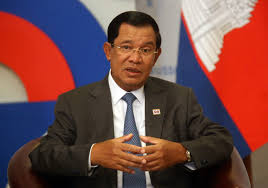
Cambodian Prime Minister Hun Sen said on Monday his ruling party would be a dominant force in politics for as long as a century, telling the opposition it should wait until the next life if it wants to take power.

”The CPP’s vision is not just for two or three years, but for the next 50 or 100 years,” Hun said.

He, however, commended government’s investment in infrastructure and human resources, while taunting the opposition Cambodia National Rescue Party (CNRP).

“Never underestimate my government, and my ability to solve problems,” he said.

The CPP was installed following the Vietnam-backed invasion that toppled the Khmer Rouge in 1979.

Hun became prime minister in 1985 and briefly shared power with a royalist party in the 1990s before ousting his rivals in a coup in 1997.

The CNRP came close to winning a national election in 2013.

hey have since faced a sustained crackdown, including the dissolution of the party by the government-controlled judiciary in 2017.

Hun’s oldest son, Hun Manet, is widely seen as his father’s anointed successor.

Group Wants Chima Igwe back as Acting director

0

The Coalition of Civil Society Groups in Nigeria has in a renewed call in Lagos recently asked the Governing Board of the Federal Institute of Industrial Research Oshodi (FIIRO) to reinstate Dr Chima Igwe as the acting Director General of the Institute as directed by the federal government.

Making this call on behalf of the group, Comrade Emmanuel Ayodeji, who described the purported demotion of Dr Igwe as a charade and gross abuse of power by the board, said it is unfortunate that the board chairman, who issued the suspension letter, has not obeyed the federal government’s directive through Dr Ogbonaya Onu, Minister of Science and technology to reinstate him.

Ayodeji reminded that the group, had at several occasions, accused the workers unions and some members of the management team of FIIRO, of orchestrating a campaign of calumny against Igwe, who from all indications have truly completed his PhD programme, but rather being accused by unions of not possessing one.

While describing the act as gross abuse of power by the governing board of the Institute, considering the recent number of its arbitrary decisions taken without any recourse to the Ministry of Science and technology, Ayodeji stated that the law is clear about the functions of the governing council, and among the many functions listed there; none empowers the council to even oversee the daily running of the affairs of the Institute, as being witnessed under the current board.

Due to this refusal by the board chairman of FIIRO to honour the instruction, Boss Mustapha, Secretary to the Government of the Federation (SGF) in a recent secular has issued detailed disciplinary procedure against any chief executive officer of federal government parastatals, agencies and departments, who errs.

The secular, which was issued on May 19, 2020, stated that the federal government has observed with dismay the arbitrary removal of chief executive officers (CEOs) and heads of parastatals, government-owned companies, agencies and institutions, and its impact on stability and service delivery.

This move might not be unconnected with what is going on at the FIIRO, where the governing board suspended Dr Igwe over allegation of fake doctorate degree certificate from the Universite d’Abomey-Calavi, Benin Republic, in 2001.

It would be recalled that the media was awash with news concerning this allegation in recent times, and the frantic efforts been made by Dr Onu to reinstate the embattled Igwe.

Soon after his appointment as the acting DG, there were petitions by union members as regards the genuineness of the certificates in igwe’s possession, instigated by top notch staff of the institute with covert support from some individuals outside of the institute, who hoped to benefit from the imbroglios by becoming the substantive DG of the institute.

FIIRO Board framed Igwe up with the intention of bringing him to public opprobrium, and to remove him from office by plotting to discredit his qualifications that qualifies him for the position he occupied.

Information gathered by our source revealed that ethnic card was been played in this matter, as several text messages and personal conversations with some persons in the heart of the crisis, point to the plot.

According to our source, the accusers were quick to say that the slot belongs to a particular tribe in the country, and should not be taken away from them as if it is a traditional title.

The accusers also felt that Igwe had come to unravel the massive corruption taking place in the Institute, which has made the cartel to be at war with him.

Based on this allegation, Dr. Onu then ordered investigation into the allegation of the certificate forgery, and subsequently asked that the Independent and Corrupt Practices Commission (ICPC); an agency of government saddled with such issue to take it up, investigate and make public their findings.

At the end, Igwe was eventually discharged of all the charges, and his certificate authenticated and proven original, as the various anti-corruption agencies have investigated him, and none, till date, has found him guilty of involvement in any form of corruption.

It is also worth knowing that since his emergence as a scholar and head of an institute, Igwe has never been indicted publicly or privately for financial malfeasance or any form of ill conduct.

It was based on the clearance from all the charges, that the federal government directed the immediate reinstatement of Dr. Igwe as the acting D-G of the Institute.

As a point of order, Mustapha, in the recent secular explained that “Accordingly, Mr. President has approved the following streamlined procedure for the discipline of Chief Executive Officers of government parastatals, agencies and departments in accordance with the Public Service Rules (PSR).

“When an act bordering on serious misconduct against a Chief Executive Officer is reported, it shall be the duty of the supervising minister through the permanent secretary, to refer the matter to the governing board for necessary action in line with the relevant provisions of the Establishment Act and the principles guiding Chapters 3 and 16 of the Public Service Rules.

“The board shall in line with due process, issue him/her a query requesting an explanation with respect to the specific act(s) complained about; the board shall forward its findings and recommendations to the minister for further consideration and necessary action.

“The minister, after due consideration of the submission from the board, shall on the advice of the permanent secretary, forward the ministry’s position along with the recommendations of the Board and the explanation of the Chief Executive Officer to the Secretary to the Government of the Federation (SGF) for processing to Mr. President, for a decision.

“Upon receipt of the submission from the minister, the Secretary to the Government of the Federation (SGF) shall without delay cause an independent investigation and advice Mr. President on the appropriate course of action.”

It is clear from these directives that the board of FIIRO did not act in accordance with the secular by issuing Dr Igwe a query requesting an explanation with respect to the specific act(s) complained about, and there was no forwarding of its findings and recommendations to the minister for further consideration and necessary actions.

Rather, it took a unilateral decision by removing Dr. Igwe and replacing him with Dr. Agnes Yemisi Asagbra.

Pursuant to these therefore, the SGF warned in the secular that “This procedure shall serve as a mandatory guide and all ministers of the Federal Republic of Nigeria, and any other public officer in similar supervisory position, are enjoined to strictly abide by its content”.

Former top Australian judge accused of sexually harassing staff

0

A former Australian High Court judge, Dyson Heydon, was found by an independent inquiry released on Monday to have sexually harassed six young female associates.

The inquiry, run by former inspector general of intelligence and security, Vivienne Thom, was set up after the women took their complaints to Chief Justice Susan Kiefel in March 2019.

However, Heydon denied the accusations.

“We are ashamed that this could have happened at the High Court of Australia,” Chief Justice Kiefel said in a statement.

She confirmed the lengthy investigation found that “the Honourable Dyson Heydon, AC, QC” had harassed six former staff members.

“The findings are of extreme concern to me, my fellow justices, our chief executive and the staff of the court,” the chief justice said.

The High Court is the highest court in the Australian judicial system.

She apologised to the six women, saying “their accounts of their experiences at the time have been believed.”

Heyson, 77, a conservative legal scholar, served in the High Court from 2003 to 2013 and in 2014 ran a royal commission into trade union corruption.

Heydon denied the claims via his lawyers, who said “any allegation of predatory behaviour or breaches of the law is categorically denied by our client.”

“Our client says that if any conduct of his has caused offence, that result was inadvertent and unintended, and he apologises for any offence caused,” law firm, Speed and Stracey, said in a statement to the Sydney Morning Herald.

India’s virus caseload mounts as infections rise in hinterland

India on Monday recorded its highest single-day jump in deaths of 445, linked to coronavirus as the disease spreads rapidly across its vast countryside, officials said.

According to its Health Ministry’s daily update, the spike in cases has taken the country’s tally to 425,282, while the COVID-19 death toll rose to 13,699.

“In the last 24 hours, 14,821 new cases have been reported,“it said.

India is the fourth-worst-affected country in terms of case numbers, after the U.S., Brazil and Russia.

Many cases were reported from rural districts after hundreds of thousands of daily-wage migrant workers returned to their villages, having found themselves without work during the nationwide lockdown introduced in March.

According to Bloomberg News Agency, Indian states that received the most workers, like Bihar, Assam, Jharkhand and Uttar Pradesh, witnessed the sharpest rise in new cases on June 8.

Officials from Niti Aayog, the government’s planning body, said figures reported by Bloomberg were not factually correct.

“The situation is fully under control. The numbers are small so far,” the official said.

However, a vast majority of cases was still concentrated in the cities, like New Delhi, Mumbai and Chennai.

The health officials were mainly concerned about infections spiking in villages that with poor health infrastructure and home to almost 70 per cent of India’s population.

Health experts warn that India, the world’s second-most populous country, with 1.3 billion inhabitants, could see the peak of the pandemic by July or August.

Meanwhile, 57 girls tested positive for COVID-19 in a state-run shelter in the Northern city of Kanpur. Most of them were asymptomatic and moved to an isolation centre.

India has been in the process of opening up after a prolonged lockdown that began in March in spite of exponential growth in the number of infections in recent days.

The Federal Government had largely left the decision on re-opening or re-imposing restrictions to individual state authorities.

Chennai, India’s sixth-largest city, re-imposed a lockdown on Friday, unable to control the spiraling coronavirus infections.

According to state officials, only essential services and neighbourhood grocery shops will be permitted to function during the 12-day lockdown.

Ondo poll: Pro-Akeredolu group deploys 15,045 canvassers for campaign

0

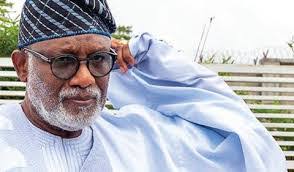
Ibi Giga Ambassadors, an advocacy group seeking the re-election of Gov. Oluwarotimi Akeredolu of Ondo State, says it has deployed no fewer than 15,045 canvassers across the 18 local government areas of the state.

Mr Yinkasalard Akinterinwa, the media director of the group, said this in a statement on Monday in Akure.

” Ahead of the July 20, 2020 APC primaries in Ondo State, the Ibi Giga Ambassadors, the foremost support group that is championing the cause for the re-election of Arakunrin Oluwarotimi Akeredolu, SAN, has activated15, 045 unit canvassers.

“These canvassers cut across the 203 electoral wards in the 18 local governments of the state.

“It will be recalled that Ibi Giga Ambassadors recently boosted the re-election campaign team of Akeredolu with 30 vehicles.

“And to further forge ahead with the “Aketi for 2nd Term” vision, a five-man team of canvassers per unit has now been activated to publicise this noble cause,” he said.

Akinterinwa quoted Prof. Lanre Olu-Adeyemi, the Director General of group, as saying the canvassers had been carefully chosen to cover the grounds in all the 3,009 electoral units of the state.

He noted that the canvassers consisted of those convinced that Akeredolu had impacted positively on the majority of the people and therefore deserved a second term.

“The Convener of the Ibi Giga Ambassadors, Chief Alex Ajipe, has applauded the build- up of the unit canvassers.

“To Chief Ajipe, politics is all about planning strategically and getting prepared for any eventuality.

“The re-election of Arakunrin Akeredolu is a task that must be done in the interest of the people of Ondo State in general.

“We can no longer leave the helms of affairs of the state in the hands of charlatans and ill-prepared leaders who are only seeking power at all cost.

“Every legitimate political approach must be employed to achieve this goal, ” he said.