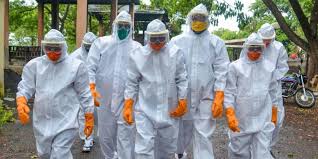
The novel coronavirus has existed worldwide and broke out whenever and wherever favourable conditions occurred rather than starting in China, an Oxford University expert said.
Dr Tom Jefferson, Senior Associate Tutor at the Centre for Evidence-Based Medicine (CEBM) at Oxford and a visiting professor at Newcastle University said.
“I think the virus was already here; here meaning everywhere.
“We may be seeing a dormant virus that has been activated by environmental conditions,’’ said.
“There was a case in the Falkland Islands in early February. Now, where did that come from?
“There was a cruise ship that went from South Georgia to Buenos Aires and the passengers were screened and then on day eight, when they started sailing towards the Weddell Sea, they got the first case.
“Was it in prepared food that was defrosted and activated?’’ he said.
“Strange things like this happened with Spanish Flu.
“In 1918, around 30 per cent of the population of Western Samoa died of Spanish flu and they hadn’t had any communication with the outside world.’’
“The explanation for this could only be that these agents don’t come or go anywhere.
“They are always here and something ignites them, maybe human density or environmental conditions and this is what we should be looking for,’’ Jefferson said.
He argued there was growing evidence that the virus was elsewhere before it emerged in Asia.
Last week, Spanish virologists announced the discovery of traces of the novel coronavirus in a sample of Barcelona wastewater collected in March 2019, nine months before COVID-19 was identified in China.
The Italian National Institute of Health said in June that sewage water from Milan and Turin showed coronavirus traces on Dec. 18, long before the country’s first confirmed cases.
Lagos, Nigeria, July 07, 2020: United Bank for Africa Plc (UBA), the leading pan-African financial services group, is pleased to announce the appointments of Ayoku Liadi and Oliver Alawuba as Deputy Managing Directors in charge of UBA’s Nigeria and Africa businesses, respectively.
The creation of the new positions, reporting to Group CEO, Kennedy Uzoka, represents further strategic recognition of the growth of UBA’s pan-African business, now representing in excess of 40% of Group revenue, and the critical importance of Nigeria, the Group’s largest market. Combined with UBA’s unique International Business, operating from New York, London and Paris, UBA Africa and Nigeria, offer an unparalleled service offering to clients across Africa and globally.
Commenting on the appointments, Group Chairman Tony O. Elumelu said:
“In 2005, we set out our pan-African vision. Fifteen years later, we are present in 20 African countries, serving over 20 million clients, leveraging our service culture and technology platform, to provide an integrated and seamless customer offering across the continent. In Africa, we lead in innovation and service, whilst our International Business, operating from New York, Paris and London, provides global and African clients access to treasury, trade finance and corporate banking products, uniquely tailored to the African opportunity. These senior appointments represent our commitment to optimise our management structure to best serve our clients and drive our business success.”
Oliver Alawuba has worked with the UBA Group for almost 20 years and was appointed in January 2020, CEO for the Group’s Africa operations. Oliver’s knowledge of UBA’s business in Africa is unrivalled. He previously held the role as CEO of UBA in Ghana and more recently, as Regional CEO for UBA in Anglophone Africa.
Ayo Liadi joined the UBA Group in 2014 and was appointed the Executive Director of Lagos and West bank in Nigeria, two years later. Ayo is widely recognised for his innovation in driving business development.
Also announced today by the UBA Group Board, was the retirement from the Board with effect from August 01, 2020, of Dan Okeke who has been with the UBA Group for 22 years. Dan served on the board as an Executive Director for three terms and a total of nine years. According to the Group Chairman, ‘Dan was born for UBA. He has worked tirelessly for the Group and achieved so much in the past two decades. We will miss him, but he will still be very much around us’.
UBA is one of the largest employers in the financial sector on the African continent, with approximately 20,000 employees group wide and serving over 20 million customers. Operating in 20 African countries and globally in the United Kingdom, the United States and France, UBA provides retail, commercial and institutional banking services, leading financial inclusion and implementing cutting edge products such as the first ever banking chat bot in Africa, LEO.
Following the havoc caused by Covid-19 pandemic across the nations, West African Examination Council (WAEC) on Tuesday appealed to governments and Multi-National companies, corporate organizations and philanthropic individuals to donate fund or Personal Protective Equipment to them.
It also announced that a total of 1,549,463 candidates have registered for the diet from 19,129 schools out of which 786,421 are males and 763,042 are females.
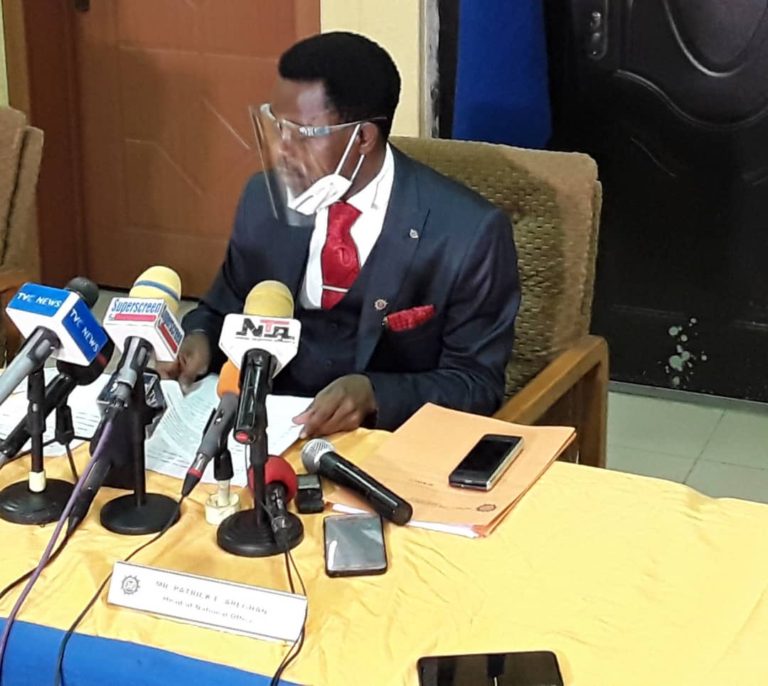
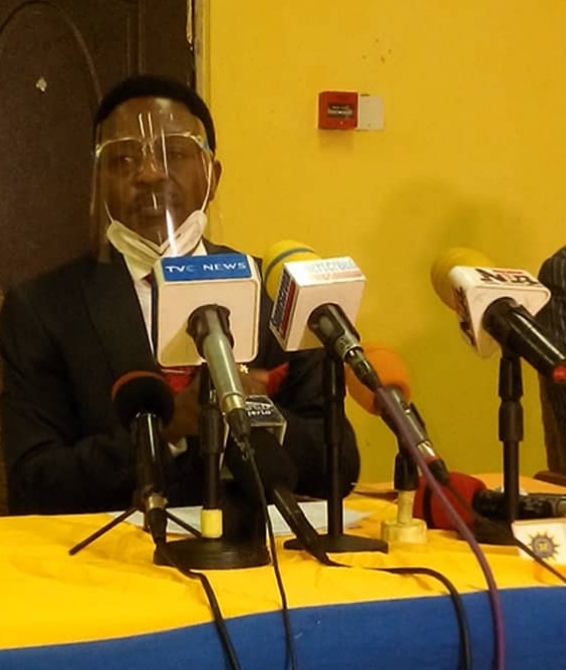
This was disclosed by the Head of the Nigeria National Office of WAEC, Mr. Patrick Areghan while briefing newsmen on the preparation of the West African Senior School Certificate Examination (WASSCE).
” On this note, therefore, we are appealing to the governments at various levels to come to our aid. We equally call on Multi-National companies, corporate organizations and philanthropic individuals to donate these PPE to us. It is essential that all examination functionaries are well kitted to avoid the spread of the disease. May I also use this medium to escalate our challenge to the Presidential Task Force (PTF) on Covid-19 and to humbly request for any possible assistance.
According to him, A total of One Million Five Hundred and Forty Nine Thousand Four Hundred and Sixty Three (1,549, 463) candidates have registered for the diet from 19,129 schools out of which 786,421 are males and 763,042 are females.
“The choice of the period (August 3rd to September 5th, 2020) for the conduct of the examination was not arbitrarily set”, he said.
The HNO emphasised that schools must make provisions for facemasks and sanitizer and other personal equipment needed.
“All examination functionaries, including the Council’s staff on distribution; Supervisors; Invigilators, Inspectors; candidates and school officials will be required to wear face masks, wash and sanitize their hands daily and throughout the duration of the examination.
“Let me assure you and the general public that we shall adhere strictly to social/physical distancing in the examination halls by making sure that candidates sit two (2) metres apart.
” This means that many more classrooms will be used and many more supervisors and invigilators will be required to conduct the examination.
” This has certainly raised the supervision fee to be paid to supervisors as well as the provision of Personal Protective Equipment (PPE) to staff, Supervisors and other examination officials.
“No doubt, all these measures have financial implications which were not contemplated at the time of drawing up the budget for the conduct of the examination. The big question looming now is how can this extra fund be raised?, Areghan said.
The HNO maintained that WAEC consulted extensively with the governments of all the five member countries before arriving at the period and duration of the examination.
In deference to the Federal Government of Nigeria, the five-week arrangement was arrived at in order to make room for the other Examining Bodies to equally conduct their examinations in good time.
He said the shortening of the period is also of advantage in terms of reducing the period of mass social interaction with its attendant consequences.
The HNO assured that during the waiting period, “we continued to fine tune and perfect all arrangements for the smooth and successful conduct of the examination and I am happy to inform you that we are set to conduct the examination in Nigeria.
” In conducting the examination, we have taken due cognizance of the various measures/protocols rolled out by the Federal and State governments of Nigeria, aimed at checking the spread of the pandemic.
” We have encapsulated all these measures in a pamphlet which will be circulated to all stakeholders for their necessary guidance” .
” WAEC has Zonal and Branch Offices all over the Federation. The various state governments can donate the required PPE to the WAEC offices in their states. Gentlemen of the media, these are no normal times. This examination is going to be conducted under a very unfriendly atmosphere and conditions. I will like to use this opportunity to advise all schools and candidates to make the best use of the situation in order to turn adversity into success.
“I must not fail to warn all schools and candidates to shun any form of examination malpractice. Lack of preparedness is not an excuse to cheat. For the benefit of doubt, standards already set remain sacrosanct. Do not delude yourself by thinking that they will be lowered due to the prevailing circumstances.
“Therefore, as usual, you get what you deserve. It will be a double tragedy for any candidate to write the examination under very difficult circumstances and not to have any result.
” Schools and candidates must resist the temptation of patronizing dubious websites that claim or would claim to have examination questions at their disposal. We cannot claim not to know that they are right now strategizing on their evil machinations. They are fake and conscienceless destiny destroyers. Self-reliance is the sure key to success. The Final International Timetable has been sent to all the WAEC Zonal and Branch Offices for onward dispatch to schools and Federal and State Ministries of Education”, he added.
WAEC promised to make Timetable available tomorrow, Wednesday for schools.
A man in the United Kingdom has been jailed for throwing a five-month baby at a TV cabinet after losing a live football bet.
Taylor Biggins, who is from Birstall, Leeds, was sentenced to two years and ten months for throwing the baby towards a TV cabinet causing him to crack his head, The Sun UK reports.
Biggins, 24, had lost money betting on live football earlier in the day. The baby started crying and would not settle when Biggins shook him and threw him towards the TV cabinet near the bed.
Prosecutor Tom Storey told Leeds Crown Court that a police investigation revealed Biggins had gambling problems. Losing money on live football betting may have contributed to his aggressive mood.
Mr Storey said medics expect the baby to have ‘at least mild cognitive impairment to his motor skills in the years to come’.
The baby also suffered damage to his retinas but it is not yet clear whether his sight has been permanently harmed. The baby’s mother said what happened was a ‘poisonous act’.
She said: “The baby is likely to have brain damage throughout his life.
“The sad reality is that no prison sentence will compare to the life sentence he has caused.”
Biggins confessed he flew into a rage when the baby would not settle after waking up in the early hours of the morning. The boy was found unresponsive when police went to a flat in the early hours of October 25 last year. He was in a critical condition with skull fractures and bleeding to the brain and doctors did not think he would survive.
Biggins was arrested by police the next day and protested his innocence.
He claimed he had found the baby unconscious and not breathing when he went to check on him. Then he claimed the tot was injured by accidentally falling to the floor. Biggins admitted inflicting grievous bodily harm shortly before he was due to go on trial.
The plea was on the basis that he did not intend to cause serious injury.
He said: “I accept that I picked him up and shook him and threw him across the bed.
“He went across the bed and struck his head on the TV cabinet. I accept by my actions that I am responsible for the totality of the injuries.”
Taylor Biggins has a previous conviction for assault in 2015 when he kicked his ex in the stomach while she was pregnant
Adrian Waterman, mitigating, said:
“No one suggests that he intentionally set out to hurt the baby that night. It seems clear that it was his own failings, his own inadequacies, his own immaturity, which he allowed to get the better of him.
“This was a moment of utter madness born out of his own failings and immaturity and lack of responsibility.”
Sex robots whose designers say are capable of holding conversations have gone on sale in their thousands for a £12,000 price tag for those looking for a mechanical lover according to a report by The Mirror.
The silicone dolls, which are designed to look like “surgically-enhanced porn stars”, were manufactured by California-based company RealDoll. The robots use Artificial Intelligence (AI) to give them a “personality” complete with different moods.
The company owner Matt McMullen said some of the dolls are given British accents as Brits “sound clever”. He said he hopes that one day the devices will be able to walk around.
Matt told author Jenny Kleeman in her book Sex Robots & Vegan Meat:
The AI will learn through interaction, and not just learn about you, but about the world in general. You can explain certain facts, she will remember them and they will form part of her base knowledge.
She described meeting a doll named Harmony, who was equipped with a “mood system” which means she can feel insulted if she’s mocked. When she’s called stupid, Kleeman wrote, she responded:
I’ll remember you said that when robots take over the world.
She’s also able to discuss films, music, and books, including the work of Shakespeare.
He further said that in the future, the robots will be equipped with facial recognition technology, meaning they can identify their partners by sight.
When speaking about their customers, the owner said:
Most of them are just lonely. Some have lost their partner or have got to a point where dating is not feasible. They want to come home at the end of the day to something that’s beautiful to look at, that they can appreciate and take care of.
The Central Bank of Nigeria debited N122bn ($338m) from banks’ excess cash with the apex bank before weakening the currency at a retail auction on Friday in a move to unify its multiple exchange rates.
Reuters reported on Monday that Nigeria’s multiple foreign-exchange rates were imposed to manage dollar demand after oil prices crashed.
The bank had earlier hinted of its plans to unify the multiple exchange rates, to generate more local currency from its dollar inflows and further achieve naira stability.
The central bank, Nigeria’s main forex supplier, asked lenders to bid for dollars at N380 to the dollar on Friday, five per cent above its official rate.
The naira, however, opened weaker at 387 against the dollar on the over-the-counter spot market widely quoted by investors and importers. It further weakened to N462 at the black market on Monday.
The currency had come under pressure in recent months after the coronavirus pandemic and a fall in price of oil, Nigeria’s main export, and as foreign investors exited, leaving the country with large financing gap.
The oil price crash had caused dollar shortages on official markets, shifting demand to the black market, where the naira is much weaker.
Central Bank Governor, Godwin Emefiele, had said he would not unify rates close to the black market rate.
The bank had been withdrawing liquidity from the financial system before forex auctions, part of measures to support the currency and curb speculation, bankers said.
Money market rates spiked to 25 per cent following the debit, from just under two per cent the previous session, bankers added.
Nigeria is also under pressure from foreign lenders such as the World Bank and International Monetary Fund for currency reforms.
The World Bank is expected to approve a $3bn budget support loan for Nigeria in the coming months.
PwC Nigeria has said the headline inflation in Nigeria will average 12.2 per cent in 2020, compared to 11.4 per cent last year.
The firm said this on Monday in a new report titled ‘Demand and supply shocks from COVID-19 keep inflation higher for longer’.
It noted that headline inflation rose by 12.4 per cent year-on-year in May, the highest in 26 months, from 12.3 per cent in April, citing figures from the National Bureau of Statistics.
The report said barring a second wave of the COVID-19 pandemic, coupled with the absence of major shocks of food supply in Nigeria, inflation outlook for the rest of the year could be influenced by two factors.
“Firstly, the elevated base effect, and secondly, waning household incomes. The first factor is likely to have a greater impact,” the PwC said.
According to the report, the continued rise in headline inflation was partly caused by the supply shocks to the commodity process and the fallout from the pandemic.
It said these factors had kept the inflation rate above its long-term rate of 11.9 per cent.
PwC added that on a month-on-month basis, headline inflation rose the fastest since July 2018 by 1.2 per cent in May.
It said this was due to significant disruptions to domestic and global supply chains on account of the lockdown measures brought on by mitigating the pandemic’s spread.
The firm advised that support should be given to the agricultural and food processing sectors, an adequate supply-chain mechanism should be provided and a functional and an effective price regulatory system should be ensured.
President Muhammadu Buhari has given an approval to the Federal Ministry of Aviation to stop all aides of public office holders and other very important personalities from gaining entry into airport terminals.
According to the Minister of Aviation, Hadi Sirika, all special assistants or personal assistants of VIP are no more allowed at airports when such persons are not travelling.
Sirika also declared that any passenger who fails to wear a face mask would not be allowed to board their flight as commercial activities resume fully on Wednesday, beginning with Abuja and Lagos airports.
The minister disclosed this at Monday’s briefing of the Presidential Task Force on COVID-19 in Abuja.
He said, “President Muhammadu Buhari has approved; and this is a very serious matter for us, that hitherto big men, especially military men, ministers, members of the National Assembly, governors and the judiciary are culprits.
“They have all these their PAs and SAs, who are not travelling and they insist on taking them inside up to the aircraft. This will not be allowed; it will not be permitted and they will be stopped.”
According to him, firearms are not allowed at airports.
On whether there would be physical distancing in airplanes, Sirika explained that it was very safe to be in the aircraft cabin, describing the air inside airplanes as fresh, clean and already purified.
The minister said unruly passengers would not be allowed to fly as no pilot would fly a plane carrying an unruly traveller.
“An unruly passenger is not allowed to board our aircraft. Once you are an unruly passenger, the pilot will not move and you will be dropped. So by not wearing the mask, you will be classified as an unruly passenger,” he said.
The minister said the last cabin row in every aircraft would be reserved as isolation centre in case any passenger eventually exhibited COVID-19 signs.
Sirika also stated that operators in the aviation sector including airlines and ground handling companies would get loans at five per cent interest rate beginning from 2021.
He noted that the loans were being worked out with the finance ministry and the Central Bank of Nigeria, adding that when the facility is set for disbursement, it would be made public.
Meanwhile, the House of Representatives Committee on Aviation on Monday visited the Nnamdi Azikiwe International Airport Abuja to inspect the level of preparedness of the facility.
The was made known through a statement, titled ‘Airport Reopening: Nnaji Calls for Adherence to Safety Protocols’, issued on Monday by Titus Agbo, media aide to the Chairman, House Committee on Aviation, Mr Nnolim Nnaji.
The statement quoted Nnaji as stressing the need for every passenger to strictly observe the safety protocols put in place by the Federal Airports Authority of Nigeria.
Nnaji, while speaking to our correspondent on the telephone, said he was satisfied with what he saw during the oversight visit.
The World Bank has estimated that Nigeria will lose up to 70 per cent of its earnings from crude oil sales in 2020 due to the devastating impact of the Covid-19.
In a recent report titled: ‘Nigeria Development Update 2020,’ the Bank stated that prices of crude oil which accounts for majority of Nigeria’s foreign exchange earnings were expected to remain low, supported mostly by persistent supply glut and slowed recovery of the economies of Nigeria’s trading partners.
According to the Washington-based institution, the pandemic forced Nigeria to revise its benchmark on oil production and price from 2.3 million barrels a day (mbd) and $57/b to 1.9mbd and $28/b. “Oil prices are expected to stay below pre-pandemic levels in 2020–21 because of slowed economic activity and a persistent supply glut. After averaging $65 per barrel (bbl) in 2019, the baseline scenario for this report assumes that prices of Nigerian crude oil will average $30/bbl in 2020 and $40/bbl in 2021.
“Oil prices are projected to begin recovering gradually in second half of 2020, but accumulated inventories will continue to push prices down through 2021 even as global demand recovers, and the Covid-19 crisis subsides,” it added, suggesting that with the right pace of reforms, a sustained economic recovery was possible for Nigeria despite downside risks.
It noted that in a baseline scenario in which oil prices in 2020 average $30/b, the Covid-19 outbreak in Nigeria was contained, and the authorities carry out a package of economic-relief policies in 2020, the country’s economy would still contract by at least three per cent.
The bank stated that: “Government oil revenue would be down by over 70 per cent, cutting total general government revenue to 5.3 per cent of GDP for the year.” It further stated that faced with large and widening fiscal deficits, mounting pressure on health spending, and less room to borrow, “Nigeria can be expected to cut capital spending, especially subnational, further diminishing its already low levels of investment and limiting service delivery at all levels.”
“Falling domestic demand, which is sensitive to oil-dollar liquidity, will cause the non-oil economy to contract. With manufacturing and services hit hard by COVID-19 in April–May 2020,” it added. According to the bank, the global economy, and not just Nigeria’s, will contract by at least 5.2 per cent, impacting several of Nigeria’s major trading partners.
It explained that the pandemic has sharply curtailed both oil and nonoil revenue streams at a time when fiscal resources are urgently needed to contain the virus and support economic activity, adding that by April Nigeria’s crude oil prices had fallen to $20 a barrel; down nearly 70 per cent in three months.
“After this extraordinary oil-price shock, which led to a steep drop in oil production, oil revenues are expected to fall from 3.2 per cent of GDP in 2019 to about 1 per cent in 2020. “Though oil production is expected to stabilise, it would not immediately contribute much to growth because investment in the sector is likely to remain subdued until the price outlook becomes more favourable,” the Bank noted.
The Federal Government has decided to write off 60 per cent of the N7bn owed by radio and television stations in licensing and renewal fees.
The government has also slashed the existing licence fee by 30 per cent for all open terrestrial radio and television services with effect from July 10.
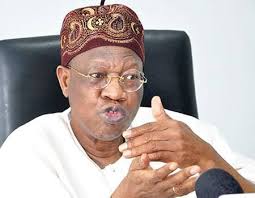
The Minister of Information and Culture, Lai Mohammed, disclosed these at a press conference he addressed with the acting Director-General of the National Broadcasting Commission, Prof. Armstrong Idachaba, in Abuja on Monday.
The N7bn being owed the Federal Government by the broadcast industry is the total outstanding from television and radio stations on renewal of their operating licences.
Mohammed however said for any debtor station to benefit from the 60 per cent debt relief, it must be ready to pay the 40 per cent balance within the next three months.
He said the debt relief offer would open on July 10 and close on October 6, 2020.
The minister said the measures announced were aimed at giving a lifeline to the broadcast industry, which, he said, had been affected by the COVID-19 pandemic.
He said while the pandemic had affected all sectors of the nation’s economy, the broadcast industry had been particularly hard hit due to falling revenues occasioned by the dwindling adverts and sponsored programmes.
The measures, the minister added, were in addition to the two-month licence-fee waiver granted to terrestrial broadcast stations in the country by the NBC.
He however said Pay TV stations would not benefit from the debt relief and discounted licence fee offer.
Mohammed said, “According to the NBC, many Nigerian radio and television stations remain indebted to the Federal Government to the tune of N7bn.
“Also, many of the stations are faced with the reality that their licences will not be renewed, in view of their indebtedness.
“Against this background, the management of the NBC has therefore recommended, and the Federal Government has accepted, the following measures to revamp the broadcast industry and to help reposition it for the challenges of business, post-COVID-19:
“(a) 60 per cent debt forgiveness for all debtor broadcast stations in the country; (b) the criterion for enjoying the debt forgiveness is for debtor stations to pay 40 per cent of their existing debt within the next three months.
“(c) Any station that is unable to pay the balance of 40 per cent indebtedness within the three-month window shall forfeit the opportunity to enjoy the stated debt forgiveness.
“(d) The existing license fee is further discounted by 30 per cent for all open terrestrial radio and television services effective July 10, 2020.
“(e) The debt forgiveness shall apply to functional licensed terrestrial radio and television stations only. (f) The debt forgiveness and discount shall not apply to pay TV service operators in Nigeria.”
When asked what the government was doing about the print media industry, the minister said he was waiting for the leadership of the Newspapers Proprietors Association of Nigeria to provide him with information based on their agreement during a webinar he had with members recently.
He said engagements were on as he had already discussed the matter with the Governor of the Central Bank of Nigeria, Godwin Emefiele.
On the “Pay as you view” policy being proposed for the PAY TV stations, Mohammed said it was the way to go.
He said the conclusion from his recent appearance before the House of Representatives was that the policy could be implemented in Nigeria.