Home Blog Page 7737

Greece transfers several hundred migrants from Lesbos to mainland

0

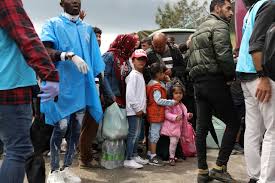
Greece has transferred 784 migrants from the island of Lesbos to the mainland since July 1, seeking to relieve the overcrowded refugee camps on the Aegean islands, national broadcaster ERT reported on Thursday.

According to the report, citing the Migration Ministry, in June, a total of 2,144 people living in camps on the islands of Lesbos, Chios and Samos had already been brought to the mainland.

For the first time in several months, less than 15,000 migrants were recorded as living in and around the notorious Moria camp in Lesbos, which housed about 19,000 migrants at the end of March.

According to the ministry, the overall number of migrants in refugee camps on the Aegean islands, which are notoriously overcrowded and unhygienic, was also significantly reduced by the mainland transfers.

While on March 3, there were over 40,000 migrants recorded as living in camps on the islands, as of July 8 there were 32,177 recorded in camps in Lesbos, Chios, Samos, Leros and Kos, where the intended combined capacity was only 8,000.

Russian activists planning anti-Putin protest detained by authorities- opposition

0

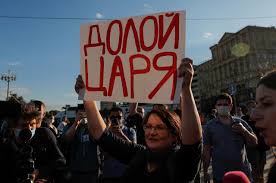
Two Russian activists involved in a campaign against what they say are President Vladimir Putin’s illegal plans to remain in power were detained by authorities on Thursday.

“While four others had their homes searched,’’ an anti-Kremlin group said.

Moscow’s Investigative Committee, which looks into serious crimes and the city’s police force, did not immediately respond to comment requests.

Activists had planned a protest in central Moscow on July 15 advertised on social media as “No to an eternal Putin”.

A landslide vote this month handed Putin the right to run for two more presidential terms, an outcome the Kremlin described as a triumph. 

Opposition activists say the vote was illegitimate, marred with violations, and that it is time for Putin, who has ruled Russia for over two decades as president or prime minister, to step down.

Mass gatherings are currently banned in the capital due to COVID-19 restrictions and protests of over one person require authorities’ advance consent in normal times.

Open Russia, a movement founded by Kremlin critic Mikhail Khodorkovsky, said its offices in central Moscow were being searched and that two of its employees, including executive director Andrei Pivovarov, had been detained.

Pivovarov earlier posted a link on Twitter encouraging people to attend coming week’s protest.

Yulia Galyamina, a Moscow city councillor, said police arrived at her apartment and threatened to tear down the door if they were not let in.

“It’s because of the campaign against the constitutional reforms, also because of the planned protest,” she told Reuters.

The homes of Tatiana Usmanova and Olga Gorelik, from Open Russia, were also searched on Tuesday, Open Russia said.

“Sergei Prostakov, editor-in-chief of MBKh Media, a news outlet founded by Khodorkovsky, was also targeted by the searches,’’ his organisation said.

Alexei Navalny, a prominent opposition figure, said the searches were designed to scare Kremlin critics.

“This is an attempt to demoralise those who are against Putin and publicly punish those who opposed Putin’s amendments,” Navalny wrote on Twitter

Coronavirus stalks cells of Cameroon’s crowded prison

0

On the morning of April 24, Fritz Takang became so breathless he could barely walk across the cramped cell he shared with 60 inmates at the main prison in Cameroon’s capital, Yaounde.

That night, he said, he was evacuated with five others to an apartment complex that was being used to quarantine suspected COVID-19 cases.

Near dawn the following morning, Takang, 48, heard a fellow inmate in distress in a neighbouring room.

With no doctors present, he said, he went to the man’s bedside and laid a hand on his feverish forehead. Moments later, the man died.

“I prayed for him before the last breath,” Takang, a pastor, said. “I asked God to soften his pain.”

Correctional facilities worldwide have been fertile ground for COVID-19, the disease caused by the new coronavirus.

Africa’s prison population of more than one million is especially vulnerable because of overcrowding, malnutrition and limited healthcare, health experts say.

Patchy testing and reporting have frustrated efforts to track and contain its spread – both behind bars and in the community.

Authorities in Togo, Democratic Republic of Congo, South Africa and Kenya have reported outbreaks in their prisons.

Cameroon’s government has not publicly acknowledged infections inside its correctional facilities, although President Paul Biya signed a decree on April 15 to de-congest prisons in an effort to contain the virus.

About 1,800 inmates were freed by May 8, according to preliminary figures from the Office of the U.N. High Commissioner for Human Rights.

The government has not provided numbers.

Hundreds of cases of COVID-19 were recorded among the inmates released from five prisons dotted across Cameroon’s central region in April, according to government data seen by Reuters which has not been made public.

Some were allowed home before their test results came in, while others were released with little or no screening to determine if they could be at risk of spreading the virus into the community.

Yaounde Central Prison, where Takang is held, was the worst hit, according to the data. The prison did not reply to requests for comment.

Behind its mouldy walls, the virus appears to have swept through packed, squalid cells, overwhelming its ill-equipped infirmary, according to interviews with over a dozen current and former inmates, four prison officials and two lawyers.

Some asked not to be identified for fear of reprisals. Prisoners are not officially allowed to possess phones, but many do.

More than 31 inmates have died there since the beginning of April, compared with the usual one or two a month, a senior prison official told Reuters, adding that none were tested for COVID-19.

A Cameroon health ministry spokesman declined to comment, as did officials at the prison authority and a leading official in the coronavirus response.

The justice and communications ministries did not respond to questions sent via Whatsapp, email and in person.

Two sources present at recent health ministry briefings that were not open to the press said the government has made efforts to stem the spread of the virus in prisons, often struggling with limited resources and manpower.

“I am sure a thousand people are infected,” Takang said in a croaky voice from an isolation bed at the Cameroonian Presbyterian Church Hospital in Yaounde, where he was taken on April 25.

“You cannot leave your room without passing a hundred people. It is a horror.”

The inmate population exceeds prison capacity in 42 of the 47 African countries and territories where data is available, according to the World Prison Brief, a database compiled by the Institute for Crime and Justice Policy Research (ICPR) at Birkbeck, University of London.

In Europe, prisons are over-full in 17 of 57 countries and territories.

“This is a ticking time bomb. Prisons in Africa are already struggling to provide the most elementary standards of sanitation,” said Catherine Heard, director of the World Prison Research Programme at ICPR.

Cameroon has around 15,000 confirmed cases of COVID-19, one of the worst infection rates in sub-Saharan Africa, with more than 350 deaths.

Of 832 samples collected from inmates released from five prisons in April, 358 tested positive for COVID-19, according to the unpublished government data – 16 per cent of the national total at the beginning of May.

The majority of positive samples came from Yaounde Central Prison, Cameroon’s largest, where the infection rate of those released and tested was 58 per cent.

Its population is still around 3,000, three times the capacity, said the senior prison official.

Many who tested positive were quarantined.

But dozens were allowed home before their results came back or without being tested, according to three prisoners released in April and May, and a guard who oversaw releases.

“I signed my release papers; they opened the gates and let us out,” said one inmate who said he was freed on May 22 with 15 others without testing.

Others fled quarantine, the guard said. He could not say how many.

Takang spent two weeks in hospital before returning to prison.

A vocal supporter of Cameroon’s Anglophone separatist movement, he has been confined there for over a year on charges of sponsoring terrorism, which he denies.

His trial is ongoing.

His test result for COVID-19, seen by Reuters, was negative. He tested positive for malaria and typhoid, he said.

While he was in hospital, inmates and prison staff said they noticed an unusual number of people with coughs and fevers.

Inmates cut up bed sheets and old t-shirts to make masks, they said.

“There is fear everywhere. Everyone has the feeling that they are next,” said Mancho Bibixy Tse, a 36-year-old inmate reached by phone.

The prison infirmary, made up of a dozen metal beds with thin mattresses, overseen by one doctor and a few nurses, was quickly overwhelmed.

By mid-April, patients lay three to a bed, said three inmates treated there. Patients bought medication from outside the prison – if they could afford it.

In late April and early May, authorities disinfected cells and stopped prison visits, staff and inmates said.

Inmates, prison staff and their families were given the anti-malarial drug chloroquine, although there is no firm evidence to show it is effective against COVID-19.

Disposable masks and buckets of water and soap were placed in cell blocks so inmates could wash their hands.

But overcrowding makes social distancing impossible, some inmates and guards said.

In some quarters, hundreds of men share one pit latrine. Dozens are crowded into cells of no more than 25 square meters.

“I am lucky that I am in a room with just 15 people. Some rooms you have to walk over (sleeping) bodies to get out,” said Tse.

When an inmate dies, their family has 24 hours to collect the body, the senior official said, no small task in a country the size of Spain with threadbare transport links.

Of the 31 who died in April and May, the official said, only four were collected. The rest were taken away by authorities for burial.

Deaths have continued since, the official said, but he has stopped counting. 
Just In: NUPENG Pickets Variant Energy Services Over Anti Labour Practices

0

BY TAIWO OGUNMOLA-OMILANI 

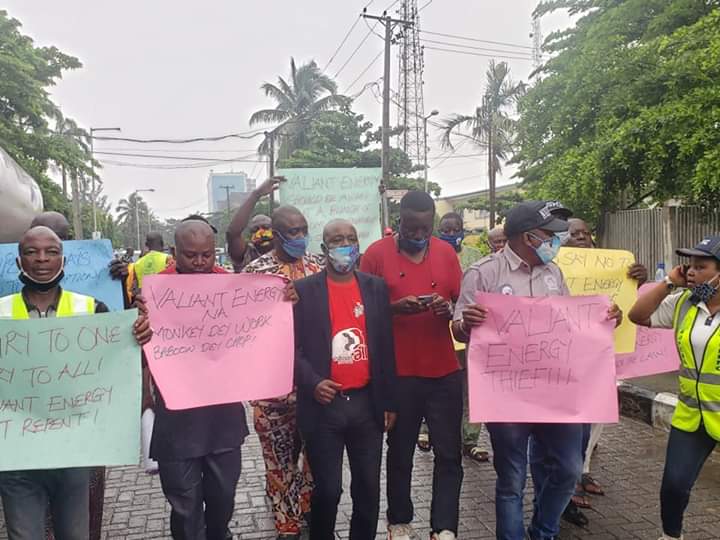
Members of the Nigeria Union of Petroleum and Natural Gas Workers (NUPENG) on Thursday  staged a peaceful protest at the Victoria Island office of Variant Energy Services, located at Ologun Agbaje Street, over what it described as anti labour practices by the company.

The picketing began very early in the morning with the affected workers holding placards with various inscriptions and chanting solidarity songs to drive home their legitimate demands from their recalcitrant employer.
Some of the inscriptions on the placards read: ‘’Enough is enough over master–slave dialectic’’, ’’ Workers are not slaves’’, ’’Pay us our terminal benefits’’, ’’Pay us our money’’, “there shall be no peace for debtors’’. 

Further inscriptions on the placards are “We say no to Variant Energy anti Labour posturing”,  “Variant Energy thief!!!”, “Operation pay us our money on course”, “EFCC do your job on Valiant Energy!”, “Variant Energy  must be punished for violating labour/employment guidelines”, “injury to one is injury to all, Variant Energy must repent in the interest of industrial peace”, “NUPENG can no longer be hoodwinked” etc.
Reacting to the protest, Comrade Tayo Aboyeji, Chairman of NUPENG Lagos Zone, said the Union is a law abiding one but its patience and understanding have been taken for granted by Variant Energy Services as well as their collaborators. He stressed that the action of the management of the company is somewhat provocative and an affront to the global best practices, decency and integrity in the oil and gas industry.
Comrade Aboyeji strongly condemned the unlawful termination of the employment of NUPENG members on the 28th of October, 2019 in very dubious manner and in violation of provisions of the extant labour law and failure of the management of Valiant Energy Services to pay the terminal benefits of the affected workers. The well organized trade unionists in their large numbers defiled early morning downpour all wearing face masks and carefully observing social distancing protocols and guidelines maintained that they can no longer tolerate the flippant attitude of the management of the company and their principal company, Shell Petroleum Development Company of Nigeria Limited. The workers equally decried the flagrant refusal of the management to honour the path of peaceful negotiation and also frowned at the use of COVID-19 pandemic and slide in the global crude oil prices as part of the excuses to inhumanly and retrogressively rationalize anti labour practices at the expense of the already impoverished and depressed workers. The oil workers maintained that indecent work conditions, nonpayment of severance package for workers whose jobs had been terminated laden with flagrant and unprocedural behaviour would be justifiably resisted at all cost.

Notable members of the Union present are Comrade Rotimi Benjamin (NUPENG Vice President Lagos Zonal Council), Comrade Olusegun Ekun (NUPENG Vice Chairman Lagos Zone), Comrade Lanre Badmus to mention a few.

ODD NEWS: Man Murdered His Parents, Used Tips He Found Online

0

A man who stabbed his mother and father to death was convicted of murder partly because he searched online for tips including: “how to kill your parents and get away with it”.

29-year-old Daniel Maoz wanted money from his inheritance in order to pay heavy gambling debts, the Jerusalem District Court found. He was sentenced to life imprisonment for the murders.

The case presented an unusual challenge to the prosecution: DNA evidence linking Maoz to the killings was found at the murder scene, his parents’ apartment, and he tried to explain that away by accusing his identical twin brother of the crime.

In its decision, the court cited other physical evidence and an examination of the defendant’s computer to refute that.

The incriminating Internet searches also included “can soap clean DNA from a knife?” and “murder for inheritance”, a transcript of the ruling showed.

Maoz said he made the searches out of “academic curiosity”.

ODD NEWS: Woman Arrested For Kissing Cop On The Nose ‘Against His Will’

0

When 62-year-old Peggy Hill reportedly laid a wet one on a police officer, she basically kissed her freedom goodbye.

The Florida woman was arrested for allegedly kissing a cop on the nose Saturday evening and jailed on charges of felony battery of a law enforcement officer.

Authorities were responding to a report of an altercation between Hill and one of her Bradenton neighbors when the smooch reportedly took place.

According to the Manatee County Sheriff’s Office arrest report, obtained by The Smoking Gun, Sgt. Randy Lamb was speaking to Hill when she suddenly leaned in and kissed him on the nose.

“[S]he approached him and kissed him on his nose against his will. He stepped away from her, wiped off the saliva from his nose, attempted to take her into custody and she started to struggle with him,” an assisting officer wrote in the report.

Deputies noted that Hill later allegedly admitted to drinking about three glasses of wine prior to the debacle, the Sun-Sentinel reports.

A search of the Manatee County Sheriff’s Office website reveals that Hill is still in custody on $5,000 bond.

Currency in circulation dropped to N2.29tn, says CBN

0

Currency in circulation dropped by N52.5bn from N2.35tn at the end of May to N2.29tn in June, the latest figures from the Central Bank of Nigeria showed on Wednesday.

Recent figures showed that there was a steady rise in cash in circulation during the lockdown introduced in some states to contain the COVID-19 pandemic in the country.

Statistics obtained from the CBN showed that currency in circulation, which stood at N2.29tn at the end of March, rose to N2.3tn in April.

The apex bank said, “Currency in circulation at end-November 2019 rose by 9.9 per cent to N2.2tn, in contrast to the decline of 0.4 per cent at the end of the third quarter of 2019.

 “The development, relative to the level in the preceding quarter, reflected mainly the increase in its currency outside banks component and seasonal factors.

 “Currency in circulation is defined as currency outside the vaults of the central bank; that is, all legal tender currency in the hands of the general public and in the vaults of the Deposit Money Banks.”

The CBN stated that it employed the “accounting/statistical/withdrawals and deposits approach” to compute the currency in circulation in Nigeria.

This approach involved tracking the movements in currency in circulation on a transaction by transaction basis.

It said for every withdrawal made by a DMB at one of CBN’s branches, an increase in the CIC was recorded, adding that for every deposit made by a DMB at one of CBN’s branches, a decrease in the CIC was recorded.

The transactions are all recorded in the CBN’s CIC account, and the balance on the account at any point in time represents the country’s currency in circulation.

According to the apex bank, analysis of the currency in circulation showed that a large and increasing proportion of the Nigerian currency outside the commercial banking system was held by the general public who hoard a lot of the new banknotes.

House accuses NNPC of tampering with $1.05b NLNG dividend

0

The House of Representatives on Tuesday accused the Nigeria National Petroleum Corporation (NNPC) of tampering with about $1.05 billion from the dividend account of the Nigeria Liquidified Natural Gas (NLNG).

The House, therefore, mandated its Committee on Public Accounts to invite the management of the NNPC as well as that of the NLNG and  probe what happened to the dividend.

The House resolution followed a motion of urgent public importance sponsored by Hon Ndudi Elunelu on the need to investigate the illegal withdrawal.

Elumelu said the NLNG was incorporated as a limited liability company in 1989 to produce liquefied natural gas and natural gas liquids for export and its production kick-started in 1999.

According to him, the NLNG is owned by the Federal Government represented by the NNPC with a shareholding of 49per cent, Shell Gas B.V. 25.6per cent, Total Nigeria Limited, 15per cent and ENI International, 10.4per cent.

Elumelu, the Minority Leader of the House, said dividends from the NLNG are supposed to be paid into the consolidated revenue funds account of the Federal Government and to be shared among the three tiers of government.

He expressed concern that the NNPC, which represents the government on the board of the NLNG, had without the required consultations with states and the mandatory appropriation from the National Assembly  tampered with the funds at the NLNG dividends account to the tune of $1.05 billion, thereby violating the nation’s appropriation law.

“There was no transparency in this extra budgetary spending as only the group managing director and the corporation’s chief financial officer had the knowledge of how the $1.05 billion was spent,” he said.

He stressed that there were no records showing the audit and recovery of funds from the NLNG by the office of the Auditor-General of the Federation, hence the need for a thorough investigation of the NLNG dividends account.

Meanwhile, the House of Representatives yesterday passed the N168.8 billion budget of the Federal Inland Revenue Service (FIRS) at the Committee of Supply.

This followed the consideration of the report on the budget as laid by the Chairman of the Committee, Hon. James Faleke

Presenting the report before the House at plenary, Faleke said: “That the House do consider the Report of the Committee on Finance on the 2020 budget of the FIRS and approve the recommendations therein” (Pursuant to Order 18, Rule 41 (2)01) of the Standing Orders of the House of Representatives) (Committee of Supply).

“That a total expenditure of N168,809,476,220 be approved to defray the proposed personnel, overhead and capital expenditure cost of the Service during the fiscal year 2020;

“That the digitalisation of all processes in the administration of tax in FIRS should be undertaken so as to catch up with rapidly increasing economic activities most often carried out on-line without physical presence;

“That FIRS (Establishment) Act and other tax laws be amended to make it possible for FIRS to modernise its operations with relevant technology.”

All the recommendations in the report were adopted and the members approved the proposed cash for the tax agency.

The House gave the Service an extra N100 billion as an intervention fund.

Hon Faleke said the committee: “Accepts the need for the Service to have an Intervention Fund and recommends an approval of one off Special Purpose Fund to the tune of N100, 000,000,000.

“This fund will expressly assist the F IRS fund its immediate but pressing needs such as completion of the FIRS Head Office building complex within 12 months, six training schools, 30 prototype tax operations offices, purpose-built facilities for efficient taxation of the upstream petroleum industry and ICT infrastructure to identify and track digital transactions.”

The additional funds went without opposition and hence was passed by the House.

It would be recalled that the FIRS had appeared before the House committee to defend its budget and explain  how it spent its 2019 budget.

Based on the performance of the Mohammad Nami-led management before the Committee, members agreed to follow through with the needs of the tax agency before the House during the presentation of its budget.

UK Nominates Fox for WTO DG

0

The United Kingdom (UK) has nominated Dr. Liam Fox for the position of the Director General of the World Trade Organisation (WTO).

According to the timetable announced by the Chair of the General Council, David Walker, the nomination period closed yesterday.

“Shortly after the nomination period has closed, candidates will be invited to meet with members at a special General Council meeting, present their views and take questions from the membership,” a statement from the WTO explained.

From today, Walker would be expected to issue to members, a consolidated list of all candidates.

“Once the nomination period has closed, candidates will be invited to meet with members at a special General Council meeting from 15 to 17 July. At this meeting, they will have the opportunity to present their views and take questions from the membership,” the statement added.

Face mask can cause failed ATM transactions – Banks

0

Banks have advised customers to remove their face masks when carrying out transactions through Automated Teller Machines to ensure that their faces are properly recognised.

Findings revealed that some banks have installed face detection features in their ATMs which can prevent an ATM from dispensing cash if it is unable to recognise the face of the user.

While the banks have introduced the wearing of face masks as a condition to enter the banking halls, they have also advised customers to remove it when they want to withdraw money from ATMs.

In an email to its customers on measures to keep transactions protected, Fidelity Bank said, “Wearing of face masks is a safety and precautionary measure we must all adhere to in this period of the COVID-19 pandemic.

“However, we advise that you remove your face mask while making withdrawals or carrying out ATM transactions to allow our ATM properly recognise you.

“Fidelity Bank ATM machines have face detection features installed to curb incidences of fraudulent ATM withdrawals.

“Consequently, you may not be able to carry out any transaction if our ATMs are not able to properly recognise you. We apologise for the inconvenience that this may cause you.”

As lockdown continues to ease gradually, banks have continued to expand their operations.

In an email to its customers, Guaranty Trust Bank Plc listed its branches that would be accessible to customers.

It said, “When visiting any of our branches, kindly protect yourself by wearing a face mask at all times. It is also very important that you keep a safe distance when in a queue inside or outside the branch.

“Before visiting any of our branches, please remember that you can withdraw up to N150,000 at all our ATMs and that you can do most of your banking from the safety of your home.”

GTBank said the customers could bank through its e-payment platforms.