Home Blog Page 760

PenCom Moves to Strengthen Oversight of PFAs, Unveils Complaint Tracking System

0


BY TAIWO OGUNMOLA -OMILANI

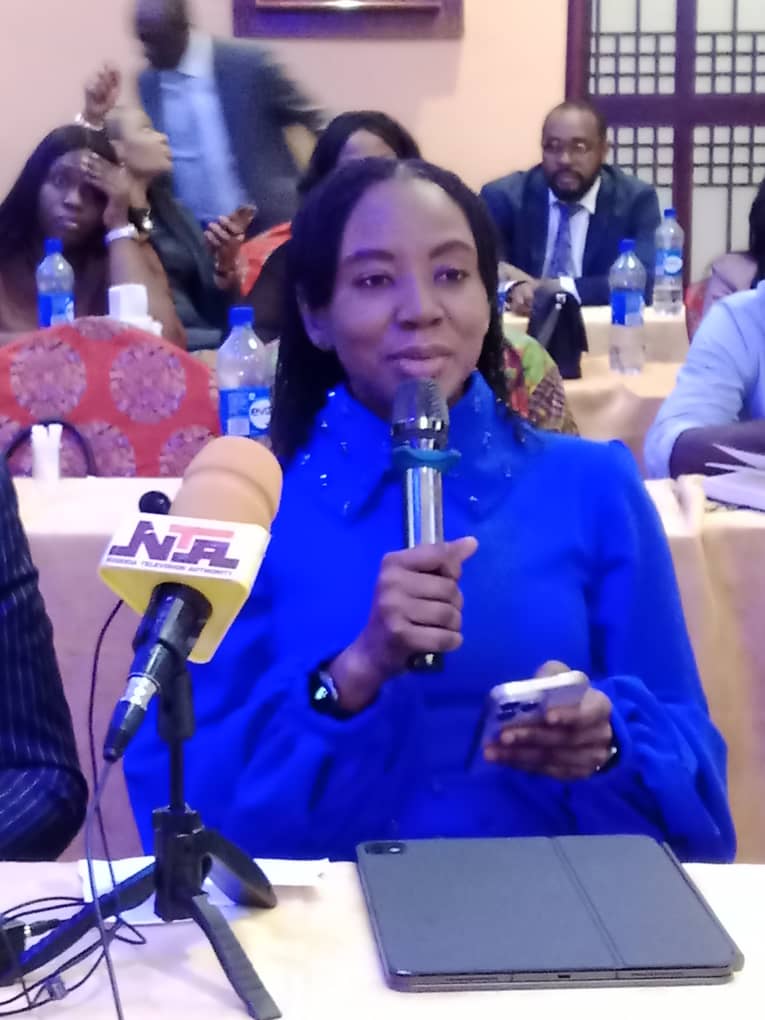
The Director-General of the National Pension Commission (PenCom), Ms. Omolara Oloworaran, has dismissed claims that Pension Fund Administrators (PFAs) deliberately frustrate retirees, insisting that it is in the best interest of PFAs for pensioners to remain alive and continue receiving their benefits.

Oloworaran stated this in Lagos while addressing journalists at the 2025 Pension Revolution Summit, themed “A 365 Days Scorecard.”

Responding to concerns over the treatment of retirees by PFAs, the PenCom boss acknowledged that poor service delivery remains a major source of complaints in the pension industry. She explained that many grievances arise from communication gaps and customer service failures rather than deliberate wrongdoing.

“No PFA wishes anyone dead. Even in the event of death, the funds are paid to beneficiaries. In fact, it is in their interest for retirees to stay alive and continue receiving their pensions gradually,” she said.

To address persistent service-related complaints, Oloworaran disclosed that PenCom is developing a Customer Relationship Management (CRM) system that will allow contributors and retirees to log complaints directly against PFAs, while giving the Commission real-time oversight.

According to her, the system—currently undergoing a pilot phase—is expected to be fully rolled out by June 1, 2026. She added that sanctions would be applied where PFAs are found to have violated service standards.

She also urged the public to engage PenCom directly, noting that the Commission has functional consumer protection lines and responds promptly to calls and emails.

On pension delays, Oloworaran insisted that prolonged waiting periods for retirement benefits are largely a thing of the past, provided retirees complete required documentation ahead of retirement.

“As things stand today, PFAs are paying retirement benefits in real time. Some even process payments within 24 hours. As of July, PFAs are not owing verified retirees,” she said, urging anyone with genuine cases of non-payment to forward details to the Commission for investigation.

The PenCom DG also raised concerns over non-compliance by employers, particularly those who deduct pension contributions but fail to remit them. She described the practice as “daylight robbery” and revealed that efforts are ongoing to strengthen enforcement provisions in the proposed new Pension Reform Act (PRA), including possible criminal sanctions.

On state government participation in the Contributory Pension Scheme (CPS), Oloworaran said only eight states are currently compliant at varying levels, while the majority are yet to fully implement the scheme. She noted that PenCom is intensifying engagement through its zonal offices and direct consultations with state governments.

“Our preference is engagement, not confrontation. But if engagement fails, we will explore stronger measures to ensure states do the right thing,” she said.

She also spoke on efforts to expand pension coverage to the informal sector, acknowledging demands for government-backed incentives similar to employer-matching contributions. While admitting that funding remains a major challenge, she said PenCom is working with the federal government on proposals that could make broader inclusion feasible.

Oloworaran assured stakeholders that the Commission would continue consultations across all levels to improve compliance, service delivery, and pension security nationwide.

EFCC Arraigns Three Indians, Nigerian for Alleged Criminal Breach of Trust

0


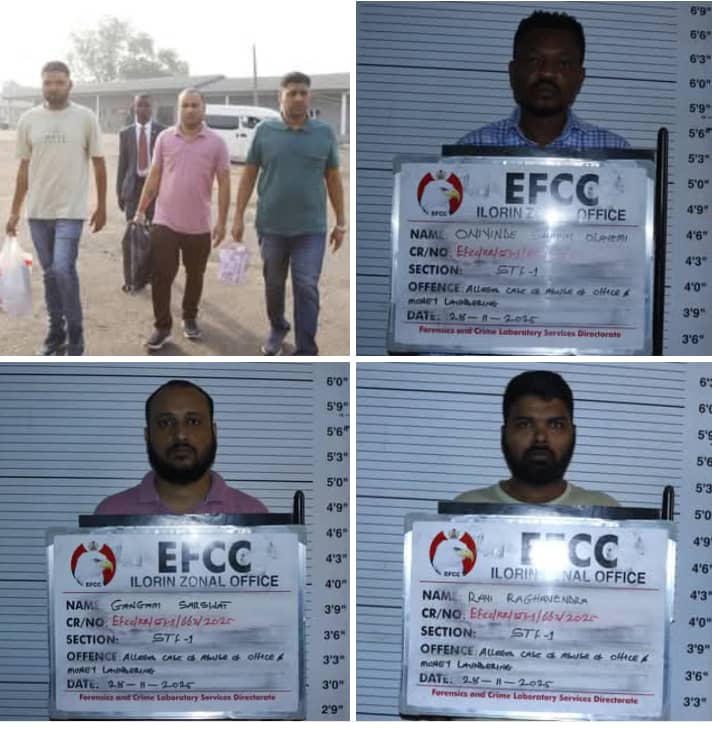
The Economic and Financial Crimes Commission, EFCC, on Wednesday, December 17, 2025 arraigned three Indians, Lalit Sarwat, Ravi Raghavendra and Gagan Sarswat—alongside an Ilorin-based dispatch manager, Oniyide Samuel, before Justice Sulaiman Akanbi of the Kwara State High Court sitting in Ilorin

They were arraigned on a two-count charge bordering on conspiracy and criminal breach of trust, contrary to and punishable under Sections 97 and 314 of the Penal Code.

The Commission alleged that the defendants, while being servants in the employment of KAM Steel Integrated Company Limited, conspired among themselves between November 2024 and September 2025 to commit criminal breach of trust.

Count one of the charge reads:

“That you, Lalit Sarwat, Kumar Saroj (at large), Oniyide Samuel (trading under the name and style of Incognito Steel), Ravi Raghavendra and Gagan Sarswat, between November 2024 and September 2025, whilst being servants in the employment of KAM Steel Integrated Company Limited, agreed among yourselves to do an unlawful act, to wit: criminal breach of trust, and thereby committed an offence punishable under Section 97 of the Penal Code.”
Particulars of count two state:

“That you, Lalit Sarwat, Kumar Saroj (at large), Oniyide Samuel (trading under the name and style of Incognito Steel), Ravi Raghavendra and Gagan Sarswat, between November 2024 and September 2025, whilst being servants in the employment of KAM Steel Integrated Company Limited and in that capacity entrusted with the company’s property, to wit: steel rebars, committed criminal breach of trust in respect of the said properties and thereby committed an offence punishable under Section 314 of the Penal Code.”

The defendants pleaded not guilty to the charges when they were read to them.

Following their pleas, EFCC Counsel, Cosmas Ugwu, applied for the remand of the defendants in the custody of the Nigerian Correctional Service pending trial.

Counsel to the defendants, Ademuyiwa Abe, S. J. Ochai and D. M. Ayuba, however filed applications for bail on behalf of their clients, arguing that the offences for which they are charged are bailable.

Opposing the bail applications, Ugwu urged the court to refuse the applications on the grounds that three of the defendants are foreign nationals and posed a flight risk. He further urged the court to grant an accelerated hearing of the matter.

After hearing arguments from both sides, Justice Akanbi adjourned the matter to Friday, December 19, 2025, for ruling on the bail applications and ordered that the defendants be remanded in the custody of the Nigerian Correctional Service.

PDP Raises Alarm Over Alleged Tax Law Alteration, Declining Global Standing, Tinubu’s ECOWAS Absence

0


The Peoples Democratic Party (PDP) has accused the APC-led Federal Government of poor governance, alleging serious irregularities in lawmaking, declining international influence, and misplaced leadership priorities under President Bola Ahmed Tinubu.

In a statement issued on December 18, 2025, and signed by its National Publicity Secretary, Comrade Ini Ememobong, the opposition party said Nigerians have witnessed a series of “absurdities” in recent days that threaten democratic institutions and national credibility.

The PDP expressed concern over an alleged disparity between the Tax Act passed by the National Assembly and the version later gazetted. The party referenced a public disclosure by a member of the House of Representatives, Hon. Abdussamad Dasuki, who reportedly identified insertions and substitutions in the gazetted copy that were not enacted by parliament.

According to the PDP, the matter must be thoroughly investigated to safeguard legislative integrity and public trust. The party warned against treating the issue lightly, arguing that inserting unenacted provisions into law constitutes a serious breach.

It called on the House of Representatives leadership to ensure transparency and demanded that the commencement date of the Tax Act be postponed by at least six months, from January 1, 2026, to allow for investigations, proper publication of the authentic law, and public enlightenment.

The opposition party also criticised what it described as Nigeria’s declining regional and global influence, citing the reported detention of Nigerian Air Force personnel and aircraft in Burkina Faso and the introduction of stricter United States visa restrictions on Nigerians. The PDP attributed these developments to worsening insecurity and ineffective governance, particularly in Northern Nigeria.

It further pointed to a reported decline in Nigeria’s military ranking, noting that the country dropped from 36th position in 2023 to 39th in the 2024 Global Firepower Index. The party accused the administration of politicising security issues instead of addressing core challenges.

The PDP also faulted President Tinubu’s absence at the 68th Ordinary Meeting of ECOWAS Heads of State and Government held in Abuja, where he was represented by Vice President Kashim Shettima. While acknowledging the President’s right to delegate, the party argued that attending a political event the following day created a negative perception about Nigeria’s commitment to regional stability.

In its conclusion, the PDP urged the Tinubu administration to prioritise governance over politics, calling for increased investment in security, education, healthcare, and infrastructure. It warned that legislative integrity, international reputation, and regional leadership are national imperatives that transcend partisan politics.

“The stakes are too high for business as usual,” the party said, stressing that Nigerians deserve transparent governance, evidence-based policies, and decisive leadership.

President Tinubu Approves Reconstitution of NERC Board

0


The following individuals have been appointed to the Board of the Nigerian Electricity Regulatory Commission (NERC):

– Mulisiu Olalekan Oseni, PhD.— Chairman (effective December 1, 2025)

– Yusuf Ali, PhD.— Vice Chairman (effective December 1, 2025)

– Nathan Rogers Shatti — Commissioner
– Dafe Akpeneye — Commissioner

-Aisha Mahmud Kanti Bello — Commissioner

– Dr. Chidi Ike — Commissioner

– Dr. Fouad Animashaun — Commissioner (new appointee, effective December 2025)

Dangote Cement Ibese Reaffirms Commitment, Empowers Youth, Others

0

Dangote Cement Plc, Ibese Plant, has reiterated its strong commitment to sustainable development and inclusive growth, with a renewed focus on education, healthcare, infrastructure, and empowerment programmes for its host communities.

The company made this known during its 2025 Host Community Day celebration held in Ibese, Ogun State. The event, themed “Sustaining Growth, Strengthening Bonds,” brought together key stakeholders, government officials, traditional rulers, and community representatives in a colourful display of cultural unity and partnership.

Speaking at the event, the Plant Director, Mr. Ayyagari Subbaraidu, described the Community Day celebration as a vital platform for strengthening relationships with host communities and strategic partners. Represented by the Chief General Manager (Maintenance), Mr. Hemant Dave, Subbaraidu said the company’s commitment to the wellbeing of its host communities remains irrevocable.

“This celebration is not only about our achievements in cement production, but also about reflecting on our journey of care, inclusion, and partnership,” he said, noting that the impressive turnout and vibrant cultural performances reflected the strong bond between Dangote Cement and its stakeholders.

He expressed appreciation to the Ogun State Government for its continued support, acknowledging the presence of dignitaries including the Speaker of the Ogun State House of Assembly, the Commissioner for Community Development and Cooperatives, executive chairmen of host local governments, and other top officials.

Subbaraidu explained that the event was designed to deepen trust and collaboration with host communities, stressing that development is a shared responsibility. He highlighted the company’s sustained investments in education, healthcare delivery, infrastructure development, and empowerment programmes for youths and women as evidence of Dangote Cement’s long-term commitment to responsible corporate citizenship.

The Plant Director also commended traditional rulers, youth groups, and women associations for their cooperation, assuring them of the company’s continued support for meaningful community development.

In his remarks, the Speaker of the Ogun State House of Assembly, Mr. Oludaisi Elemide, praised Dangote Cement for its consistent engagement with host communities and its impactful contributions to social welfare and economic growth in the area. He called for sustained cooperation between the company and its host communities and urged other affluent Nigerians to emulate the company’s founder, Aliko Dangote, by investing locally to drive national development.

Similarly, the Ogun State Commissioner for Community Development and Cooperatives, Mr. Ademola Balogun, lauded Dangote Cement’s robust Corporate Social Responsibility initiatives. He reaffirmed the state government’s commitment to strengthening collaboration with the company and host communities to promote peace and sustainable development.

“Through cooperation, transparency, and shared responsibility, we can achieve the progress we all desire,” Balogun said.

Presenting the Ibese Plant’s 2025 social investment scorecard, the Head of Social Performance, Mr. Ademola Ojolowo, highlighted significant progress recorded in economic empowerment, education, healthcare, and infrastructure development. He disclosed that the plant plans to roll out several new social investment projects in 2026, building on the successes of previous initiatives.

Ojolowo added that the company has increased its scholarship scheme for secondary and tertiary students and is nearing completion of several development projects across the 17 host communities.

Speaking on behalf of traditional rulers, the Aboro of Ibeseland, Oba Oluseyi Mulero, expressed gratitude to Dangote Cement for its empowerment programmes and developmental interventions, which he said have significantly improved the quality of life of the people. He encouraged the company to expand its initiatives and urged community members to take ownership of projects to ensure sustainability while maintaining peace.

The Community Day celebration featured traditional games, cultural performances, and prize presentations. As part of its commitment to youth development and digital literacy, beneficiaries of the company’s ICT training programme received laptops, while several women were empowered with grinding machines to support income-generating activities.

Ahmed’s Fall, the Dangote Challenge and a Rentier System Azu Ishiekwene

0

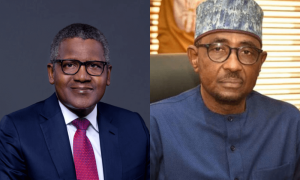
It’s rare to find a multibillionaire who hasn’t had nasty battles. Yet, as battles go, the fight between Aliko Dangote, the founder of the Dangote Refinery, and the CEO of the Nigerian Midstream and Downstream Petroleum Regulatory Authority (NMDPRA), Farouk Ahmed, is among the most spectacular that Africa’s wealthiest man has had to fight in recent times.

It won’t be a surprise if the resignation of Ahmed (and the chief executive of the Nigerian Upstream Petroleum Regulatory Commission, Gbenga Komolafe) on Wednesday marks a pause, rather than an end, because the problems run very deep.

Dangote’s cement and noodle wars were rough. They earned him many scars and lifelong bitter enemies. Yet, in retrospect, they look like skirmishes compared to the battle to secure the refinery. This battle has pitted him against vested state interests that have enjoyed the vast pleasures of a rentier economy for decades.

Scalding like fire
In scalding press statements and advertorials signed by Dangote this week, he accused Ahmed of living above his means, with children attending elite Swiss schools that cost up to $5 million in fees. He challenged him to show how he could have afforded that from his legitimate income.

Dangote followed up on his press statements by filing a petition against Ahmed with the Independent Corrupt Practices and Other Related Offences Commission (ICPC), which is believed to contain even more damaging allegations than what was publicly disclosed.

The man who is usually microphone-shy is not only shaking the table but also calling out the regulator in a multi-layered war for self and country.

Not even when President Umaru Musa Yar’Adua revoked the sale of the Port Harcourt and Kaduna Refineries to Bluestar in 2007, after the Dangote-led consortium paid $670 million to seal the deal, was the fallout as bitter as it has been since the Dangote Refinery was commissioned.

Greasy as Oil Business
The reason is simple: Oil is not just a business; it’s political power. Unlike cement and noodles, oil does not just respond to history, it shapes and drives it.

Two great books that shed light on oil and political power are “The Seven Sisters: The Great Oil Companies and the World They Shaped” by Anthony Sampson (1975) and “The Prize” by Daniel Yergin (1990), with the latter, which won a Pulitzer, offering a riveting account of the battles between pioneers in the oil industry and the state actors they fought.

When John D. Rockefeller transformed the oil industry from a curiosity into a global industry through Standard Oil, for example, it began as a joke. The state was not interested. Coal was the primary driver of global energy supply at the time, and oil didn’t seem to have a promising future.

Rockefeller secured the supply chain from transportation and refining to the markets until the 20th century, when oil became a strategic military asset. The British navy converted its fleet from coal to oil, and Winston Churchill insisted on state involvement in the oil industry. That changed everything.

After two world wars fought with oil as a decisive factor, and producer states claiming to have defeated corporate dominance, new problems have emerged to show that oil pioneers almost always collide with entrenched power once they threaten the existing rent structure.

Ahmed’s fall
Ahmed has fallen, but he may have fallen to save the system. While the war raged, he not only represented a regulatory agency, but he was also the nexus where pioneer desperation and entrenched power collided.

The accusation that Ahmed’s children are in foreign schools that his legitimate income cannot afford will be sniffed at in many circles for at least two reasons: a) regulators’ income is usually set to match industry levels, which means that Ahmed’s income may be comparable to those in the oil industry, and b) leaving above means is the rule rather than the exception, especially in the public service.

An attempt to enact a law for public officers and their families to use only public schools and health institutions has been stalled at the First Reading stage in the House of Representatives since July. It may never progress, even at gunpoint.

In his over 38-year career, Ahmed has built a cosy relationship with petrol importers. At PPMC, the pipeline subsidiary of NNPC, he wielded petrol import licensing power like a commercial actor. Even when he later became a regulator requiring impartiality and fairness, he still behaved like a commercial actor, earning him a reputation as the standard-bearer of the rentier status quo.

The godfathers
The Nigerian godfathers of oil rent, to paraphrase Yergin, are putting up fierce resistance against the new dynamics Dangote’s entry is bringing into the industry. Ahmed is not the last stand, only a symbol of it. Just as Dangote often asks himself why he didn’t put his $20 billion elsewhere instead of a refinery, the state may occasionally regret why it gave him the licence in the first place.

It’s a struggle for market share and ultimately, profit, a struggle for “the world’s biggest and most pervasive business…” In this fight, the vested interests who have always hidden behind public bureaucracy for self-enrichment are suddenly aware that an independent player is changing the game, if not the rules.

In November, the NMDPRA had advised President Bola Ahmed Tinubu to shelve plans to ban imports of refined petroleum because local output could not meet the national demand, put by the regulator at 55 million litres daily.

Dangote countered the claim, arguing that the regulator was distorting the actual refining capacity by reporting offtake statistics instead of the true production data. He also argued that continued importation of petrol hurts jobs, investments, and undermines Nigeria’s energy security.

It’s the rent, stupid!
Incumbents rarely say, “We want to protect rents.” They say, “We’re protecting the system.” Yet, for decades, continued petrol importation has not only drained billions of dollars from the country, but also encouraged the importation of low-quality, vehicle-damaging products. Apart from that, an estimated N11.35 trillion (approximately $25 billion) spent on repairing the country’s state refineries has ended up in the pockets of freeloaders, unaccounted for.

Herein lies the state’s dilemma. Whatever the pretences of the managers of the state oil company and their godfathers in high places, state actors are not neutral. Ahmed’s fight is their fight; his fall may well be a strategic reset. NNPC is a centre of elite capture, and they know that reforms would dilute their discretion, make them vulnerable and dismantle their rent.

Monopolist at work?
Does Dangote aim to become a monopoly? Perhaps. Is his fight altruistic? Unlikely. But if the regulator had tried to be more like a regulator, rather than an antagonist, it would have done at least two things: a) addressed the moribund state-owned refineries and tackled refinery licencees who have been AWOL, and b) applied the relevant provisions of the Petroleum Industry Act for a fair and transparent pricing framework.

But rather than try to make a difference, Ahmed was too accustomed to the old ways – rents from fuel imports, foreign exchange arbitrage, subsidy-era patronage networks, and, not to mention, the political leverage built on scarcity.

Dangote must accept that Ahmed was only a symptom of a deeper, systemic problem. The only proof that Ahmed was not removed to save the system is that he should be investigated so that he can either clear his name or face the consequences.

*Ishiekwene is Editor-In-Chief of LEADERSHIP and author of the new book A Midlifer’s Guide to Content Creation and Profit*
Tinubu Reconstitutes NERC Board, Charges Members to Deepen Power Sector Reforms

0

President Bola Ahmed Tinubu has approved the reconstitution of the Board of the Nigerian Electricity Regulatory Commission (NERC), following the confirmation of its members by the Senate on December 16.

The reconstituted Board is expected to steer the next phase of reforms in Nigeria’s power sector in line with the Electricity Act, 2023.

The members of the new NERC Board are:

Dr. Mulisiu Olalekan Oseni — Chairman
Dr. Oseni joined the Commission as a Commissioner in January 2017 and later served as Vice Chairman. His appointment as Chairman took effect from December 1, 2025, and will run until the completion of his statutory 10-year tenure, in accordance with the Electricity Act, 2023.

Dr. Yusuf Ali — Vice Chairman
Dr. Ali was first appointed as a Commissioner in February 2022. His designation as Vice Chairman became effective on December 1, 2025, and will subsist until the completion of his first term.

Mr. Nathan Rogers Shatti — Commissioner
Mr. Shatti is serving a second term as Commissioner, having been first appointed in January 2017.

Mr. Dafe Akpeneye — Commissioner
Mr. Akpeneye is also serving a second term, following his initial appointment in January 2017.

Aisha Mahmud Kanti Bello — Commissioner
Aisha Bello is in her second term as Commissioner, having been first appointed in December 2020.

Dr. Chidi Ike — Commissioner
Dr. Ike is serving his first term, having been appointed as a Commissioner in February 2022.

Dr. Fouad Animashaun — Commissioner
Dr. Animashaun is serving his first term, effective December 2025. An energy economist with extensive experience in the Nigerian power sector, he most recently served as Executive Commissioner and Chief Executive Officer of the Lagos State Electricity Regulatory Commission.

President Tinubu has charged the reconstituted Board to deepen and consolidate the ongoing transformation of Nigeria’s power sector, in strict alignment with the letter and spirit of the Electricity Act, 2023.

The announcement was contained in a statement issued by Bayo Onanuga, Special Adviser to the President on Information and Strategy.

The Senate today confirmed the nomination of all career and non-career ambassadors sent by President Tinubu, except for the nomination from Yobe, who passed away.

0

The Senate today confirmed the nomination of all career and non-career ambassadors sent by President Tinubu, except for the nomination from Yobe, who passed away.


NAFDAC destroys substandard products worth N10bn in Kano

0


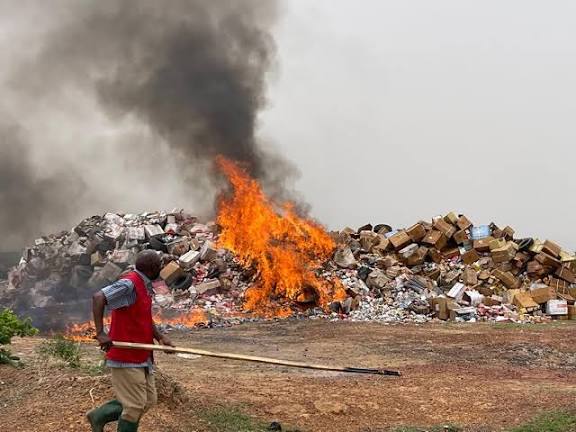
The National Agency for Food and Drug Administration and Control (NAFDAC) on Thursday destroyed 618 tonnes of fake, counterfeit, substandard, expired and unwholesome regulated products worth over N10.19 billion in Kano.

The Director-General of NAFDAC, Prof. Mojisola Adeyeye, made this known during the burning exercise in Kano.

She said the exercise marked a major milestone in Nigeria’s commitment to safeguarding public health.

Adeyeye, who was represented by the NAFDAC Director, North-West Zone, Mr Fraden Nantim-Mullah, said the destruction was not merely an enforcement action, but a clear statement that the era of impunity for those endangering lives through fake and dangerous products is ending.

She explained that NAFDAC, established under Act Cap N1, Laws of the Federation of Nigeria 2004, was empowered to regulate and control foods, drugs, cosmetics, medical devices, chemicals and related products to ensure their safety, quality and efficacy.

“Our mandate is unequivocal: to ensure that every regulated product available to Nigerians meets stringent standards of safety and quality.

“Today’s exercise demonstrates our unwavering commitment to executing this mandate without compromise,” Adeyeye said.

The NAFDAC boss warned manufacturers, importers, distributors and retailers involved in the production and sale of counterfeit and substandard products that the agency’s surveillance and enforcement mechanisms were robust and that offenders would face legal consequences.


According to her, the products destroyed were seized from unscrupulous operators across the pharmaceutical, food, cosmetic and chemical sectors.

She listed the destroyed items to include counterfeit medicines such as antibiotics, anti-malarials, antihypertensives, analgesics, herbal remedies and controlled psychoactive substances.

Other items included adulterated vegetable oils, contaminated beverages, unsafe sachet water, substandard condiments and falsified tomato paste, as well as hazardous cosmetic products containing dangerous chemical compounds.

Adeyeye said fake agrochemicals, including insecticides and pesticides that threatened food security, and counterfeit medical devices such as diagnostic kits and compromised infusion equipment were also destroyed.

“Each of these categories represents a deliberate assault on public health. Those involved are not just breaking regulations; they are endangering lives and undermining Nigeria’s health security,” she said.

Adeyeye also highlighted Nigeria’s recent attainment of the World Health Organisation (WHO) Maturity Level 3 status, describing it as evidence of a stable and well-functioning regulatory system.


She said the agency was working towards achieving WHO Maturity Level 4 status, which would position NAFDAC as a world-class regulatory authority, with the support of President Bola Tinubu’s administration.

On the economic benefits of quality assurance, Adeyeye said removing substandard and falsified products from circulation would reduce healthcare costs, improve productivity and enhance national economic growth.

She acknowledged the support of stakeholders, including compliant pharmaceutical companies that surrendered expired products and the Nigeria Customs Service, Kano/Jigawa Command.

She listed other critical stakeholders as the Nigeria Police Force, the Kano State Government, the Pharmaceutical Society of Nigeria (PSN), the National Association of Proprietary and Patent Medicine Dealers (NAPPMED), NGOs and trade unions.

Adeyeye reiterated the agency’s zero-tolerance policy towards regulatory
violations.

“The citizens must exercise vigilance, refuse to purchase medicines from
unlicensed hawkers and street vendors; report suspicious products
through NAFDAC’s reporting mechanisms” she warned

Gov. Abba Yusuf of Kano State, represented by the Director of Pharmaceutical Services, State Ministry of Health, Mr Kamilu Yakasai, commended NAFDAC for the exercise.

He said the destruction of seized and expired products was necessary to prevent them from re-entering society and causing harm to unsuspecting citizens and assured that the Kano State Government would continue to support such initiatives.

He reaffirmed the commitment of the state government to collaborating with NAFDAC to protect public health and improve healthcare delivery.

Representatives of the Nigeria Customs Service, Nigeria Police Force, National Drug Law Enforcement Agency (NDLEA), Department of State Services (DSS) and other stakeholders were present at the destruction exercise.

Tinubu to present 2026 budget to NASS on Dec. 19

0


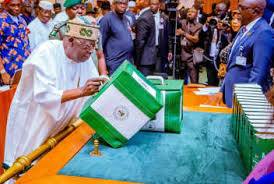
President Bola Tinubu has written to the House of Representatives seeking audience to present the 2026 Appropriation Bill.

In a letter read on the floor of the house on Thursday by the Speaker, Rep. Abbas Tajudeen, Tinubu requested to be scheduled for noon to present the bill to a joint session of the national Assembly.

“I write to crave the kind indulgence of the House of Representatives to grant me the slot of 1200hrs on Friday, December 19, 2025, to formally present the 2026 budget to a joint session of the National Assembly,” the letter read.

It was reported that in the 2026–2028 Medium-Term Expenditure Framework (MTEF) and Fiscal Strategy Paper (FSP) currently under review in the house, the total size of the expected budget is N54.46 trillion, of which N34.33 trillion is the retained revenue.

The new borrowings stood at N17.88 trillion which constitutes both domestic and foreign borrowings, while debt service was valued at N15.52 trillion, with pensions, gratuities and retirees’ benefits standing at N1.376 trillion and fiscal deficit at N20.13 trillion.

The capital expenditure is projected at N20.13 trillion, which is exclusive of transfers and statutory transfers standing at N3.15 trillion and Sinking Fund projected at N388.54 billion.

The total recurrent (non-debt) is projected at N15.265 trillion, while special interventions for recurrent and capital are pegged at N200 billion and N14 billion respectively.