Ajibade Undergoes Successful Surgery After Fibula Fracture
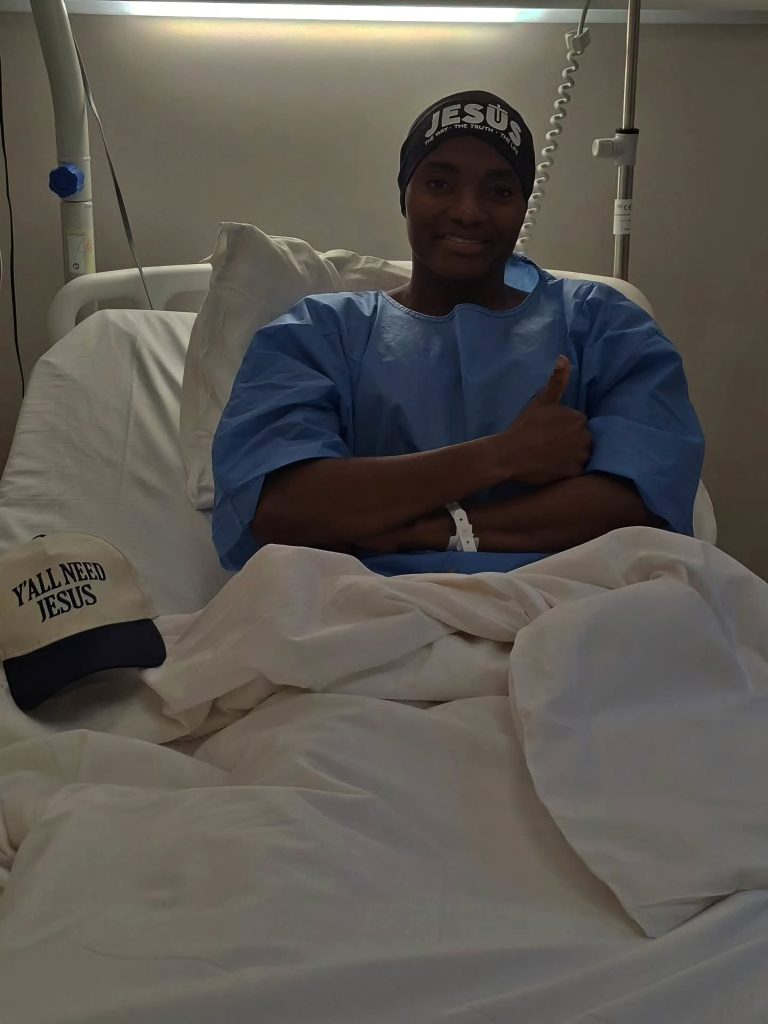
Super Falcons captain Rasheedat Ajibade has successfully undergone surgery following a fractured fibula injury she sustained during Nigeria’s 7-0 victory over Comoros in the second leg of the 2028 Olympic qualifiers.
Following the successful operation, Ajibade will begin her rehabilitation at Paris Saint-Germain’s medical centre as she commences her recovery.
Presidency Dismisses Makinde’s Claim of Withheld ₦250bn NLNG Dividends as False
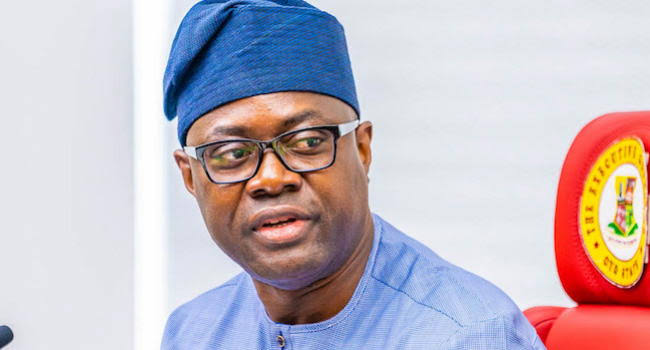
The Presidency has dismissed Oyo State Governor Seyi Makinde’s claim that the Federal Government is withholding ₦250 billion in Nigeria LNG (NLNG) dividends meant for each state of the federation, describing it as false and misleading.
In a statement, the Special Adviser to the President on Information and Strategy, Bayo Onanuga, urged the public to disregard the claim, saying it was intended to mislead citizens and create unnecessary disaffection against the Federal Government.
The Presidency said Makinde made the claim at the 2027 Budget Stakeholders’ Consultative Engagement held at the Olola Ogunlana Hall, International Conference Centre, University of Ibadan, on Friday.
The governor had alleged that the Federal Government planned to delay the release of the funds until after the 2027 elections, despite states having identified projects for which the money would be used.
“Each state was supposed to get ₦250 billion. We had already identified projects that would expand Oyo State’s economy. But they have now said the money will not be paid until after the election. Is the election more important than the people of Nigeria?” Makinde said.
However, the Presidency argued that the figures cited by the governor were inconsistent with the revenue-sharing formula and the historical dividend payments made by NLNG.
According to the statement, distributing ₦250 billion to each of the 36 states would amount to ₦9 trillion, excluding the Federal Government, the Federal Capital Territory and the 774 local government councils.
It explained that, under the Federation Account Allocation Committee (FAAC) revenue-sharing formula, states receive 26.72 per cent of distributable Federation Account revenue.
The Presidency said the states’ share alone would require total NLNG dividend payments exceeding ₦33.68 trillion, or approximately $25 billion, in a single declaration to generate the ₦9 trillion being claimed.
“NLNG has never paid $25 billion in dividends to the Federation Account in a single payout,” the statement said.
Providing historical context, the Presidency stated that NLNG had paid approximately $21.5 billion in dividends to the Federation over the past 25 years, with less than $3 billion realised since President Bola Tinubu assumed office.
It argued that the claim of a single dividend payout exceeding the company’s total lifetime distribution to the Federation was inconsistent with the available figures.
The Presidency also criticised Makinde’s public statements, urging him to exercise restraint and provide verifiable facts rather than make claims it described as misleading.
It recalled that the governor had previously described the substantial financial allocations from the Federation Account to states, including Oyo, as “voodoo.”
While acknowledging Makinde’s constitutional right to pursue his presidential ambition, the Presidency urged him to desist from making what it described as false claims and spreading disinformation.
Sharpen the headline and lead
Fuel subsidy gone forever!
•We won’t return it, says FG •Unveils $78.5bn investment plan, targets 7% growth as CBN vows to sustain reforms
As global stakeholders draw the curtain on the 2026 Annual Meetings of the International Monetary Fund and the World Bank in Bangkok, Thailand, Nigeria is returning home with renewed optimism about its economic prospects after unveiling a $78.5 billion investment pipeline anchored on 65 bankable projects.
They cut across energy, transport, industry and mining, agriculture, health and urban services.
The Minister of Finance and Coordinating Minister of the Economy, Taiwo Oyedele, who led the Nigerian contingent, said the government targets seven per cent economic growth and not the 4.3 per cent IMF projected for 2027, describing it as conservative.
Oyedele ruled out a return to fuel subsidies or multiple exchange rates, saying the recent temporary reduction in the retail fuel margin by the Nigerian National Petroleum Company Limited was a commercial decision rather than a subsidy funded by the government.
He said the economy is moving from stabilisation to acceleration, expansion and job creation.
He said the aforementioned projects had undergone feasibility studies and were structured to accommodate private-sector participation, including investments from local and foreign investors.
This comes as the Governor, Central Bank of Nigeria (CBN), Olayemi Cardoso, vowed to sustain various economic reforms already being implemented.
He said the changes, though scathing, have proven potent enough to tow the nation’s economy out of rough waters.
He said the cocktail of reforms helped Nigeria’s inflation rate fall to 14.63 per cent in September 2026, while foreign reserves rose above $55 billion.
Cardoso noted that the progress reflected the impact of difficult policy adjustments and provided an opportunity to attract more investment, increase productivity and achieve sustainable economic growth.
The CBN governor also said formal remittance inflows were approaching $1 billion monthly, while Nigerian banks had raised N4.65 trillion in fresh capital through the on-going recapitalisation exercise, with slightly more than 70 per cent of the funds coming from domestic investors.
According to him, the strong participation of local investors demonstrates confidence in the resilience and long-term prospects of the Nigerian banking system.
Cardoso added that Fitch Ratings had recently revised Nigeria’s sovereign outlook from stable to positive, reflecting improving assessments of the country’s economic direction.
He, however, stressed that the gains must be protected through consistent policies, credible institutions and effective cooperation between monetary and fiscal authorities.
“Our responsibility now is to consolidate this progress and translate it into greater investment, productivity and sustainable economic growth,” he said.
Oyedele, while responding to questions, said the government was working towards lower inflation and borrowing costs to make it easier for businesses to access affordable credit, expand production and employ more Nigerians.
He said Nigeria’s economy grew by 4.4 per cent in the second quarter of 2026, while inflation had declined for four consecutive months. He also put the country’s external reserves above $55 billion.
The minister said the government’s tax-to-GDP ratio rose from about seven per cent less than three years ago to 12.5 per cent at the end of 2025, while private capital inflows increased from about $300 million in 2023 to nearly $6 billion in 2026.
He added that federation revenues had quadrupled since 2021, while public debt remained at about 36 per cent of gross domestic product (GDP).
Oyedele said the government was determined to build on the progress made so far by addressing the structural problems that continue to limit investment, production and employment.
“We are not saying it simply because it sounds good, we are saying it because we have a plan,” he said of the government’s growth ambition.
According to him, the fiscal authorities must complement the CBN’s monetary policy efforts to bring inflation down to low single digits and create conditions for single-digit interest rates.
He said businesses currently faced borrowing costs of close to 30 per cent, making it difficult for them to expand, despite the economy’s growth.
Oyedele argued that significantly lower lending rates would unlock investment and economic opportunities, provided the government tackled the major sources of inflation, particularly food, energy and transportation costs.
He said exchange-rate pressures, which previously pushed up the prices of imported goods, had eased considerably following improvements in the foreign exchange market.
According to him, investors from Asia and Europe had already expressed interest in the opportunities.
Oyedele said the initiative was designed to turn international confidence in Nigeria’s economic reforms into actual investment, rather than relying on announcements and expressions of interest.
He also disclosed that the World Bank Group had reaffirmed support for power and infrastructure through guarantees and other financing arrangements, while the IMF had committed to continued technical assistance on fiscal policy, transparency and national statistics.
The European Union identified energy and local pharmaceutical manufacturing as priority areas under its Global Gateway programme, while the United States Treasury offered deeper technical cooperation in health, fiscal policy administration and financial integrity.
The minister cautioned, however, that these engagements should not be presented as confirmed financial inflows until formal agreements had been signed and results began to emerge.
On policy consistency, both officials sought to reassure investors that the government would not reverse its major economic reforms.
Cardoso similarly said Nigeria would not abandon the reforms that had helped restore stability to the foreign exchange market and improve investor confidence.
He said investors were repeatedly asking whether the government would maintain its current policy direction, adding that abandoning the reforms could undermine the progress already achieved.
“We have come a long way and demonstrated that the reforms can work. Stability is returning to our economy, and we must build on that progress,” the CBN governor said.
Cardoso also said the reduction in the gap between the official and parallel foreign exchange market rates from about 60 per cent at its peak to approximately three to four per cent had reduced currency-related risks and improved the prospects for long-term investment.
He said greater exchange-rate stability would enable development finance institutions, including the Africa Finance Corporation, Bank of Industry and Development Bank of Nigeria, to mobilise more long-term funds for productive sectors.
The governor said the CBN would remain focused on price stability and financial system soundness rather than take on the direct development-financing responsibilities of institutions established for that purpose.
On Nigeria’s engagement with international credit-rating agencies, Cardoso said the government was working towards achieving investment-grade sovereign ratings in the medium term through consistent policies and stronger institutions.
He said the CBN had also held discussions with international financial institutions and rating agencies, including S&P Global Ratings, Moody’s and Fitch, on Nigeria’s economic outlook.
The governor added that Nigeria was strengthening financial ties with Asian economies, particularly Singapore and China, to improve cross-border payments, settlement arrangements, financial technology and trade finance.
He disclosed that discussions with the Governor of the People’s Bank of China, Pan Gongsheng, focused on practical arrangements to facilitate payments, trade and investment between both countries.
Cardoso said the engagements would be followed by further discussions during a planned visit to Beijing.
Meanwhile, both officials highlighted the need to ensure that economic growth translates into jobs, particularly for young people.
Oyedele cited World Bank estimates that about 1.2 billion young people would enter the global labour market over the next 10 to 15 years, while current trends suggested that only about 400 million jobs would be created, leaving a potential shortfall of 800 million jobs.
He said Nigeria must prepare for the challenge by investing in skills, directing investments towards job-intensive sectors and ensuring that the benefits of artificial intelligence (AI) were widely shared.
The minister warned that AI could increase productivity without generating enough employment, making it necessary for governments to ensure that technology adoption did not deepen unemployment.
Cardoso also described AI as a defining opportunity for developing economies, warning that African countries risked falling further behind advanced economies if they failed to develop clear strategies for adopting the technology.
He said AI could improve productivity in areas such as pharmaceutical production and the operations of small and medium-sized businesses, but stressed the need to address cybersecurity threats and other risks to financial stability.
The governor called for greater international cooperation and appropriate safeguards to ensure that developing countries benefited from technological advances.
Oyedele urged international financial institutions to measure their success not only by the amount of financing mobilised or the growth recorded but also by the number of jobs created.
He said Nigeria’s challenge was to convert improving economic indicators and growing international confidence into higher investment, affordable financing and decent jobs.
“Stability was the first test. Growth that employs our people is the second,” he said.
Sun
Makinde’ll defeat Tinubu in 12 battleground states, others – APM
The Allied Peoples Movement (APM) Presidential Campaign Organisation has expressed confidence that its candidate, Seyi Makinde, will defeat President Bola Tinubu in 12 states identified as battlegrounds for the 2027 presidential election, as well as other parts of the country.
In a statement by the Director of Strategic Communication of the Makinde-Daura Presidential Campaign Organisation (MDPCO), Richard Ihediwa, the party said alleged intimidation, political manoeuvring and abuse of incumbency would not reverse growing opposition to Tinubu’s re-election bid.
The statement followed reports that the All Progressives Congress (APC) Presidential Campaign Council had identified Kaduna, Rivers, Plateau, Oyo, Borno, Enugu, Bauchi, Sokoto, Delta, Kano, Adamawa and Lagos as states where Tinubu would personally campaign.
The MDPCO claimed that the decision reflected the President’s apprehension over Makinde’s growing political support and his Reset Nigeria agenda.
“Mr President should know that his visit to these states, if he eventually does, will not in any way change the direction or the determination of the people to vote him out, given his unpardonable failures in office, which have brought unprecedented hardship across the country,” the statement said.
The campaign organisation challenged Tinubu to travel by road across the country to witness the state of federal highways, living conditions and infrastructural decay.
Sun
Nigeria’s justice system riddled with corruption, delays – Ex-Justice Augie
..Says rule of law, justice delivery critical to attracting investment
Retired Supreme Court Justice, Amina Augie, has warned that corruption, prolonged court proceedings and the high cost of justice are undermining public confidence in Nigeria’s legal system, calling for urgent reforms.
Augie spoke while delivering an anniversary lecture titled, “The Rule of Law and Justice Delivery: The Last 40 Years, Today and Tomorrow — Whither Nigeria?” at the 40th anniversary celebration of the Nigerian Law School Class of 1986, known as the Centennial Class of ’86, in Abuja.
She said Nigeria had made democratic progress since the return to civilian rule in 1999 but warned that such gains could not be sustained without institutions capable of protecting citizens, restraining government power and holding public officials accountable.
“The essence of the rule of law is that we should never operate under the rule of force or fear,” she said.
According to Augie, the rule of law is fundamental to economic development, investment and the protection of individual rights.
“For a developing country like Nigeria, it is not the reward of prosperity; it is the precondition of prosperity,” she said, adding that investors would be reluctant to commit capital where contracts could not be enforced, property rights were uncertain and disputes took years to resolve.
“Investment is an act of confidence in tomorrow, and the rule of law is what makes tomorrow predictable,” she added.
Augie identified the excessive number of appeals reaching the Supreme Court as a major structural weakness, arguing that constitutional reforms were needed to enable the apex court to focus on matters of national importance.
Recalling her experience on the Bench, she said the court was burdened with cases that should have been resolved at lower levels. She also expressed concern that some cases were being assigned hearing dates as far ahead as 2031.
“The only way forward is to amend this Constitution,” she said, advocating reforms to restrict appeals.
She criticised the high cost of litigation, warning that financial resources could determine who was able to pursue justice.
The retired justice also condemned public authorities that disobey court judgments, particularly orders for the release of detained persons. She said such conduct undermined judicial authority and sometimes forced litigants to seek redress from institutions such as the ECOWAS Court.
“A nation cannot ask its people to obey the law while its government refuses to be bound by it,” she said.
Augie identified insecurity, poverty and inequality as additional factors weakening public confidence in the state. She also expressed concern over allegations of lawyers offering inducements to influence judicial decisions, urging the Bar, Bench and court registries to enforce ethical standards consistently.
She said public trust depended on professional conduct rather than titles or declarations of commitment to ethics.
On electoral justice, Augie welcomed what she described as the absence of post-election litigation following the recent Osun governorship election, expressing hope that the 2027 general elections would produce a similar outcome.
She stressed, however, that the courts must remain available to address genuine electoral grievances.
Citing the World Justice Project’s Rule of Law Index, she said Nigeria ranked 120th out of 143 countries, reflecting persistent institutional weaknesses.
Looking to the future, Augie urged lawyers to embrace artificial intelligence (AI) without surrendering professional judgment or responsibility. She warned that reliance on AI-generated research could expose courts to fabricated cases and false citations.
While AI could assist with research and summarise judgments, she said it could not replace moral judgment, compassion or courage.
“A machine can summarise a thousand judgments, but it cannot feel the weight of sending a person to prison or taking a child from a parent,” she said.
“Let the machine carry the load. Never, never, ever let it carry the conscience of justice,” she added.
She also urged law firms to develop expertise in international commercial law, arbitration, technology law, data protection and AI regulation to remain competitive globally.
Augie charged members of the Centennial Class of ’86 to defend the rule of law and mentor younger practitioners.
Earlier, Chairman of the anniversary organising committee, Mohammed Adoke, a former Attorney-General of the Federation and Minister of Justice, urged members to strengthen professional fellowship, mentorship and ethical standards.
The class chairman, Marcel Oru, said members had distinguished themselves in the judiciary, academia, public service, the military and the private sector. He highlighted the class’s contributions to legal education, including the construction of four moot courts, donation of a Toyota Hiace bus and establishment of an award for the best student in professional ethics skills.
Sun
How ex-govs plot total control of 11th Senate
The Independent National Electoral Commission (INEC) has published the final list of candidates for the January and February 2027 general elections, formally opening a campaign season that will run over the next four months. With the ban on campaigning lifted and the timetable now fixed, the country moves into what is expected to be one of the most consequential election cycles in its recent history. The elections will be contested by 18 presidential candidates, 4, 860 candidates for the 109 Senate and 360 House of Representatives seats, and thousands more standing for governorship and state assembly positions across the 36 states.
A close reading of the final Senate list, however, points to a development that will shape the character of the National Assembly long after the ballots are counted. Nigeria’s Senate, already dominated by a political class drawn heavily from former state executives, is set to deepen that pattern in 2027, with a striking concentration of sitting and former governors seeking seats in the Red Chamber.
Sule
The presidential field itself offers a preview of how thoroughly the political establishment has repositioned itself for the coming contest. President Bola Ahmed Tinubu leads the All Progressives Congress (APC) ticket with Vice President Kashim Shettima as his running mate. The African Democratic Congress (ADC) is fielding former Vice President Atiku Abubakar alongside former Rivers State Governor and one time Transport Minister Chibuike Rotimi Amaechi. The Nigeria Democratic Congress (NDC) has nominated former Anambra State Governor Peter Obi, running with former Kano State Governor Rabiu Kwankwaso as his vice presidential candidate. The arrangement effectively pairs two former governors from opposite ends of the country on a single presidential ticket.
Okowa
Further down the ballot, the Peoples Democratic Party (PDP) settled for Professor Sandy Ojang Onor, while the Social Democratic Party (SDP) is fielding lawyer and businessman Adewole Adebayo.
The Allied Peoples Movement (APM) has nominated sitting Oyo State Governor Seyi Makinde, whose candidacy places a serving governor directly into the presidential race itself. Of the 18 presidential and vice presidential pairings certified by INEC, two presidential candidates and four running mates are women, out of a slate whose ages range from 35 to 80 years.
According to the final list released by INEC, six serving governors are contesting Senate seats alongside their current responsibilities as state chief executives. They are AbdulRahman AbdulRazaq of Kwara, Dapo Abiodun of Ogun, Hope Uzodimma of Imo, Muhammadu Inuwa Yahaya of Gombe, Mai Mala Buni of Yobe, and Abdullahi Sule of Nasarawa, all of whom are seeking election on the platform of the ruling All Progressives Congress.
They are joined by at least 12 former governors and two former deputy governor also seeking election or re-election to the Senate. The list includes former governor of Abia State, Senator Orji Uzor Kalu, contesting Abia North, Ifeanyi Okowa in Delta North, Adams Oshiomhole in Edo North, Mukhtar Ramalan Yero in Kaduna North, Ibrahim Shekarau in Kano Central, Muhammadu Adamu Aliero in Kebbi Central, Yahaya Bello in Kogi Central, Abubakar Sani Bello in Niger North, Simon Bako Lalong in Plateau South, Aliyu Magatakarda Wamakko in Sokoto North, and Abdullahi Yari in Zamfara West. They are joined by former Abia State deputy governor, Eyinnaya Abaribe and ex- deputy governor in Lagos State, Idiat Oluranti Adebule.
At least 20 governors, former governors or deputy governors are on the Senate ballot for 2027. The number dwarfs the concentration seen in most previous assemblies and reflects what analysts describe as a well-established migration pattern within Nigeria’s political class.
At least, 12 of Nigeria’s 36 state governors are already serving their constitutionally permitted second and final terms, with 10 of them due to complete eight years in office on 29 May 2027. For many of these outgoing chief executives, the question is no longer whether they will remain politically relevant after leaving office, but where within the country’s power structure they intend to relocate, and the Senate remains the preferred destination.
The current 10th National Assembly already has 14 former governors sitting in the Senate, reinforcing what has become a well-worn path from Government House to the Red Chamber. The migration accelerated notably from 2007, when a cohort of governors completing their terms, including Adamu Aliero of Kebbi, moved almost immediately into senatorial seats, establishing a template that subsequent generations of term limited governors have followed closely.
From Government House to the Senate presidency
The concentration of former governors in the Senate has, over time, translated into a concentration of former governors at the very top of the chamber’s leadership. Bukola Saraki, a former two-term governor of Kwara State, became Senate President in 2015 after his own bruising contest for the position. The current Senate President, Godswill Akpabio, is himself a former two-term governor of Akwa Ibom State who assumed the leadership of the tenth Senate in 2023.
The precedent is shaping expectations for the 11th National Assembly. Adams Oshiomhole, the former two-term Governor of Edo State, now seeking re-election to the Senate, is widely believed within the National Assembly to be nursing ambitions for the Senate Presidency in 2027. His repeated clashes with Akpabio through 2026, including a widely reported floor confrontation in which Oshiomhole attempted to raise a point of order only to be firmly rebuffed by the Senate President, have been interpreted by multiple sources within the chamber as early skirmishes in that leadership contest.
The tension deepened after the Senate amended its Standing Orders to restrict eligibility for principal and presiding offices in the 11th National Assembly to ranking members with at least two consecutive terms, a change critics said was designed to narrow the field of contenders for the Senate Presidency. Oshiomhole publicly argued that Akpabio himself would not have qualified for his current office under the amended requirements, one of the most forceful public criticisms of the Senate President since the chamber’s inauguration.
Political observers within the National Assembly are anticipating the arrival of additional former governors, including Okowa and Uzodimma, alongside the return of several ranking senators. This is expected to make the contest for the Senate’s principal offices considerably more competitive, given that former governors traditionally exert outsized influence within the chamber because of their political experience, financial resources and established networks across party lines.
The productivity question
The growing concentration of former governors in the Senate has revived long standing concerns about legislative productivity, concerns that predate the 2027 election cycle but have gathered fresh urgency as the incoming Senate’s composition becomes clearer.
Senator Nkechi Nwogu, an APC chieftain, was blunt in her assessment of the trend, warning that the Senate was gradually turning into what she called a political burial ground for retiring governors.
Findings indeed showed that some of the 13 former governors in the 10th Senate had yet to sponsor a bill within the assembly’s first ten months. Another assessment of the 10th National Assembly’s overall output found that lawmakers had introduced 1,033 bills as of April 2026, of which only 106, or roughly 10 per cent, had completed the full legislative process, while the National Assembly had spent close to 58 per cent of its lifespan on recess since its inauguration in June 2023.
The criticism extends beyond bill sponsorship to plenary attendance and committee engagement. Public affairs commentator Emmanuel Okechukwu, writing on the phenomenon of legislative absenteeism, argued that many of the lawmakers most associated with poor attendance were former public office holders, whom he accused of treating the Senate as a retirement package rather than a working legislature.
Not every former public holder or former governor in the Senate fits this description, and defenders of the trend argue that legislative experience gained from years of executive administration can strengthen, rather than weaken, the quality of debate and oversight. Sponsors of individual appropriation bills, tax reform measures and constitutional amendments have, on occasions, come from the ranks of former governors, and their familiarity with the workings of the executive arm is often cited as an asset during budget scrutiny and oversight hearings. But the recurring pattern of poor bill sponsorship among some of the chamber’s most prominent former governors has kept the criticism alive, and the scale of the incoming cohort for 2027 suggests the debate is unlikely to subside once the new Senate is sworn in.
The 2022 communiqué of the National Conference of Former Deputy Governors Forum of Nigeria, issued at a gathering in Uyo, identified the personalisation of state power and weak democratic institutions among the structural factors undermining productivity in governance more broadly, a diagnosis that critics of the Senate’s composition say applies with particular force to a chamber increasingly staffed by former chief executives accustomed to wielding unilateral executive authority rather than negotiating consensus among equals on the floor of a legislature.
Key senators who will not be returning
Beyond the growing dominance of former governors, the final list also confirms the exit of several senators whose absence had been the subject of speculation since the conclusion of party primaries earlier in the year.
The most closely watched casualty is Senator Ned Nwoko, representing Delta North, who lost the APC ticket to former Delta State Governor Ifeanyi Okowa by a wide margin during the party’s May primaries. Nwoko’s absence from the final list confirms one of the biggest upsets of the primary season, and hands Okowa a direct route into the Senate four years after leaving Government House in Asaba.
Also missing is Danjuma Goje, the former Gombe State Governor and serving senator, who lost the APC ticket for Gombe Central to Mohammed Ahmed and does not appear on the final list, ending a Senate career that had included a stint as chairman of the Senate Committee on Appropriations. In Kogi East, Senator Jibrin Isah, popularly known as Echocho, lost the APC primary to Dr Erico Ameh
and will not be returning. In Edo South, Senator Neda Imasuen lost his ticket to a former member of the House of Representatives, Omoregie Ogbeide Ihama.
The most politically significant departure from the ruling party’s ranks, rather than from the Senate itself, is that of Ovie Omo-Agege, the former Deputy President of the Senate, who resigned from the APC after losing the party’s Delta Central primary to Senator Ede Dafinone and subsequently secured the ticket of the Nigeria Democratic Congress (NDC) for the same seat, meaning his Senate career might continue, but outside the ruling party.
The scale of change within the ruling party’s own ranks has been considerable. Party sources told Saturday Sun that more than 70 serving members of the National Assembly, comprising senators and members of the House of Representatives, failed to secure APC tickets during the primaries, a level of turnover that party insiders privately described as unusual for a governing party so close to a general election, when incumbents typically enjoy clear advantages in name recognition and access to campaign resources.
Senate President Akpabio was reported to have moved to reassure affected lawmakers in the aftermath of the primaries, offering what he described as congratulations in advance for those who might yet find their way back through the courts or party reconciliation processes, though the final INEC list suggests few of those appeals altered the outcome. Not all of the departures were the result of primary defeats alone. The APC’s National Working Committee subsequently dropped a small number of candidates who had emerged victorious in their primaries, following a report from the party’s Primary Election Appeal Committee.
Among those affected was Gabriel Suswam, the former Governor of Benue State, who had defected from the PDP to the APC in February 2026 specifically to pursue a Senate seat, only to be dropped by the party leadership after the appeal process and replaced with Emmanuel Memga Udende.
Also notable is the continued presence on the ballot of Senator Natasha Akpoti Uduaghan, the Kogi Central senator whose earlier clash with Senate leadership drew national attention. She appears on the final list as the PDP candidate for Kogi Central, setting up a direct contest against former governor Yahaya Bello, who is standing for the same seat on the APC platform, in what is likely to be one of the most closely watched senatorial races of the 2027 cycle.
What list means for quality of the next Assembly
The final list paints a picture of a National Assembly that will be simultaneously more experienced, but one described by critics as potentially less dynamic than the electorate might hope for. Long serving lawmakers such as Senator Ali Ndume of Borno West, first elected to the National Assembly in 2003, and human rights advocate turned senator Shehu Sani of Kaduna Central, both secured their spots on the final ballot, ensuring a measure of institutional memory within the chamber. Around 190 current members of the House of Representatives and 54 serving senators secured the APC’s nod to seek fresh mandates, suggesting that despite the scale of upheaval within the primaries, a substantial core of incumbents will still return.
For now, whether that combination, seasoned incumbents, a record number of former state executives, and a handful of high profile newcomers, produces a more effective Senate than its predecessor remains to be seen. What is already clear from the final list is that the chamber’s leadership contest, and by extension its overall direction for the next four years, will be shaped heavily by a cohort of former governors expected to compete vigorously for the Senate’s most powerful offices.
With the presidential and National Assembly elections now just four months away, scheduled for 16 January 2027, and governorship and state assembly elections following on 6 February 2027, the campaign season ahead will test whether voters share the concerns raised by critics within the National Assembly itself, or whether the familiar calculus of name recognition, financial resources and political networks once again favours the very governors whose Senate ambitions have drawn such pointed criticism from their own colleagues.
Sun
2027: Keke riders endorse Mbah, Tinubu ..As gov scraps daily ticketing, extends operational time to 10pm
The Tricycle Riders Association of Enugu State has endorsed the state governor, Dr. Peter Mbah, for a second term in office, citing improved security, road infrastructure, and social amenities in the state.
The association, popularly known as Keke Riders, also endorsed President Bola Tinubu, citing the Enugu–Onitsha Road, Enugu–Port Harcourt Expressway, New Artisan Bridge, Obinagu Flyover, and strategic appointments.
This was even as Governor Mbah scrapped the N750 daily payment by tricycle operators and also extended their operational time from 9pm to 10pm.
Mbah also said they would continue to operate at no cost at all the state’s modern transport terminals.
Leading the endorsement at Okpara Square, Enugu, during the conclusion of a “One Million March” event on yesterday, the state Chairman of the Tricycle Riders Association of Nigeria, Comrade Kingsley Edeh, said the endorsements were predicated on achievements, especially those that have impacted the lives and businesses of tricycle riders, their families, and the people of Enugu State in general.
“Which ones will we reel out and leave the other? Is it the security and good roads, which now enable us to ply our trade without any problems, the 267 Smart Green Schools, the completion of long-abandoned projects such as the International Conference Centre, Nigergas Limited, Sunrise Four Mills, Hotel Presidential, and many more?
“We can also see the infrastructure President Tinubu is building in the South East and the support he is giving to our governors.
“So, we will vote APC from top to bottom come 2027,” he declared.
Corroborating the position of the Tricycle Riders Association in Enugu, the body’s National Secretary, Comrade Sunday Enang, described Mbah as a ‘magician’ in the art of governance, stressing that no governor anywhere had done what he was able to accomplish in three years.
“Your ‘Tomorrow Is Here’ vision is evident in the construction of modern transport terminals, the establishment of Enugu Air, investment in an asphalt plant, intra- and inter-city road construction, and efforts to improve traffic flow and urban transportation.
“These initiatives are promoting safer, more organised, and more efficient movement across the state.
“We also commend the policy allowing tricycle operators to use designated terminals without paying toll fees. This support recognises their contribution to the economy and the livelihoods of thousands of families.
“These practical policies reflect disruptive innovation and demonstrate how effective leadership can turn vision into tangible opportunities,” he said.
In his response, Mbah described tricycle operators as critical players in the state’s economy, stressing that while his administration was focused on growth, it was equally determined to eradicate poverty, hence the various interventions to increase their disposable incomes.
“You are the powerhouse of our economy because you set out early in the morning, working long hours, navigating traffic, taking our workers to work, taking our students to school, moving our people from urban areas to rural communities, connecting businesses, and helping traders get to their businesses. A lot of people earn their living because of what you do.
“But we also see your struggles. So, I have started engaging with your executives on how we can make life better for you. As the Managing Director of the Transport Terminal just said, no more payment by our tricycle riders at any of the transport terminals.
“Let me also recognise something. Our government, as you know, is not just about growth. We are also interested in ending poverty and making sure that you have more money or disposable income to take care of your family. And so, the issue of tickets is sealed. No more tickets for you.
“Again, when we came into the office in 2023, we inherited a curfew on tricycle operators such that they could only operate from 6am to 9pm. There was a sit-at-home, but we have ended that with your support. Today, Enugu State is safe. So, we will be shifting your operational time limit from 9pm to 10pm,” he said.
While acknowledging their commendation for the rapid construction of roads, Mbah said this was part of the government’s deliberate steps to increase their disposable incomes by reducing their spending on repairs, assuring them that his administration would construct and reconstruct all the remaining 1,022 urban roads in the state.
“Because I understand how bad roads can be terrible, not only for your tricycles and the money you spend on repairs, but also for the time you spend at the mechanic, all the roads in Emene, Abakpa, Idaw River, Trans-Ekulu, Awkunanaw Area, Coal Camp, New Haven, Thinkers Corner, Uwani, among others, are paved or being paved.
“I can assure you that there will be no road in our city that will be unpaved. We are going to pave all the remaining 1,022 roads,” he emphasised.
Meanwhile, Mbah has vowed that his administration would take every step within the law to preserve the security and peace that the people of Enugu had worked to build in the state.
“You must treasure it. You must protect it. Enugu is on an upward trajectory. We will not allow those deceptive voices and politicians who campaign in poetry but only govern in prose. With our government, you have experienced real development and real growth.
“Let me also warn that we have worked extremely hard to establish a safe state. Nobody, no matter their ambition, will take that away from us. And we will not stop at anything, deploying all means necessary within the law to bring to book any violator or anybody who tries to import thugs to disrupt the peace and public safety we enjoy in this city and this state. We have zero tolerance for violence.”
He enjoined the people to make good their endorsements by getting their PVCs ready for the 2027 elections and voting massively for him, all APC candidates, and President Bola Tinubu, whose policies, he said, ensured the availability of resources to execute the numerous projects they listed.
Other speakers at the event were the Enugu State Chairman of the APC, Dr. Martins Chukwunweike; Grand Patron of the Enugu State Traditional Rulers Council, HRH Igwe Greg Ugwu; and the Managing Director, Enugu East Zone Transport Terminals, Dr. John Egbo.
Sun
TINUBU’S CAMPAIGN STRATEGY AND THE UNNECESSARY POLITICAL STORM By Tunde Rahman
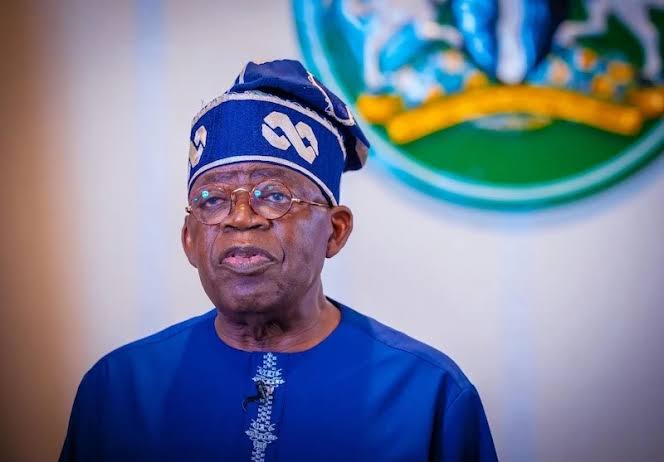
The inauguration of President Bola Ahmed Tinubu’s Presidential Campaign Council last Wednesday in Abuja predictably generated talking points and criticisms. Two criticisms stand out: the inclusion of some opposition figures and the President’s acceptance of the Hope Uzodimma-led Progressive Governors’ recommendation that he should not campaign physically in all 36 states of the federation because of the exigencies of state duties.
On deeper reflection, both criticisms reveal more about our old politics than about the President’s new campaign strategy.
Politics, at its most mature, is about inclusion, not exclusion. That is my interpretation of the inclusion of opposition figures in the APC Presidential Campaign Council, such as Osun State Governor Ademola Adeleke of the Accord Party, Anambra State Governor Charles Soludo of the All Progressives Grand Alliance, and Federal Capital Territory Minister Nyesom Wike of the Peoples Democratic Party. All three politicians will serve as President’s Campaign Coordinators: Adeleke in Osun, Soludo in Anambra, and Wike in Rivers and FCT.
For those not well-versed in President Tinubu’s politics, they should note the following: President Tinubu has always been a big tent builder, from the formation of the Action Congress to the Action Congress of Nigeria, and to the All Progressives Congress. The Renewed Hope coalition was never meant to be an APC-only choir. It is a national movement.
So the presence of opposition figures in the Campaign Council is not a sign of weakness in the APC as an election vehicle, as some claim. In my view, it is a sign of strength. It shows that the President’s performance resonates even among those who once opposed him. In a democracy, when your opponents start seeing reason in your vision, you don’t slam the door shut; you leave it wide open and welcome them.
Every major re-election in Nigeria’s history, from 2003, 2011, to 2019, was won by expanding the tent. In 2003, former President Obasanjo, who lost his South-west base in 1999, had to ally with the Afenifere and governors of the defunct Alliance for Democracy to broaden his support base. However, the alliance turned out to be a deception and an onslaught against the AD governors. Former Ogun State governor, Aremo Olusegun Osoba, aptly captured all of that on pages 277 to 300 in his book “Battlelines-Adventures in Journalism And Politics.”
In 2011, former President Goodluck Jonathan reached out to then ACN leader Asiwaju Bola Tinubu to win Lagos. In 2019, the alliance of legacy parties that gave birth to the APC and powered President Buhari’s 2015 election was further strengthened for his re-election.
The point is straightforward: to win Nigeria, you must carry Nigeria along. The President’s campaign council reflects that national character: progressives, technocrats, and former rivals now united by reforms already yielding fruit in economic growth, Naira stability, investor confidence, infrastructure development, NELFUND student loans, and CrediCorp, among others.
Importantly, President Tinubu’s statement that he will not campaign in every state is neither arrogance nor
disregard for states he would skip. It demonstrates honesty and strategic depth. In 2022, he went to every corner of this country, even visiting some states twice or thrice, asking for a mandate to reform. He got it. In the last three years, he has spent that mandate working – not politicking.
A sitting President campaigning in all 36 states for months would ground governance. The President has chosen to let his record campaign for him in many states, while deploying a robust council, surrogates, and grassroots structures to cover the field. This is what modern campaigns do globally. Barack Obama, Joe Biden and even our own President Buhari in 2019 did not physically visit every county or local government.
It’s even unthinkable that a sitting President would visit every state in the United States. Barack Obama did not campaign in person in every U.S. state during his presidential bids. According to Time Magazine and Reuters, in both his 2008 and 2012 campaigns, Obama’s team famously used a “50-state strategy”. This meant building a massive nationwide volunteer and office infrastructure across all 50 states to organise supporters, raise small-dollar donations and pressure opponents.
What matters is presence- not just physical presence, but the presence of campaign structures, party agents, projects, and benefits. What matters is building alliances and strategic partnerships.
President Tinubu will be on the campaign trail, but he will also be in the Villa, ensuring governance does not halt, FAAC allocations continue to increase for states, security operations are funded, and foreign dignitaries and key international investors get the attention they deserve.
Critics like the perennial presidential election loser, irredentist ethnic champion, and outgoing governor and presently misguided presidential candidate, as well as some rancorous television anchors, would rather have a campaign of noise and endless rallies. They are indulging in empty remonstrations. President Tinubu is offering a results-based campaign.
The inauguration of the campaign council marks a shift from emotional politics to evidence-based politics. The coalition is wider because the reforms are working and the results are clearer and more visible. The strategy is smarter because the President is already governing.
His successful reforms, projects across the six geopolitical zones, and his coordinators across states, local councils, and wards will spread the message: message of hope, message of reforms, results, and imminent prosperity.
In the end, elections are not won by who shouted in the most states, but by who delivered for the country’s present and future, and who provided more money for states to cater for their people and build infrastructure.
*Rahman, Senior Special Assistant to President Tinubu on Media and Special Duties, is a Fellow of the Nigerian Guild of Editors.
Presidency Dismisses Makinde’s Claim of ₦250bn NLNG Dividends for Each State
The Presidency has dismissed Oyo State Governor Seyi Makinde’s claim that the Federal Government is withholding ₦250 billion in Nigeria LNG (NLNG) dividends meant for each state of the federation.
In a statement, the Special Adviser to the President on Information and Strategy, Bayo Onanuga, described the claim as false, urging the public to disregard it.
Makinde had made the claim at the 2027 Budget Stakeholders’ Consultative Engagement held at Olola Ogunlana Hall, International Conference Centre, University of Ibadan, on Friday.
The governor alleged that the Federal Government had delayed the release of the funds until after the 2027 elections, despite his administration having identified projects to boost Oyo State’s economy.
“Each state was supposed to get ₦250 billion. We had already identified projects that would expand Oyo State’s economy. But they have now said the money will not be paid until after the election. Is the election more important than the people of Nigeria?” Makinde said.
However, the Presidency argued that the figures cited by the governor did not align with the revenue-sharing formula and NLNG’s historical dividend payments.
According to Onanuga, distributing ₦250 billion to each of the 36 states would amount to ₦9 trillion, excluding the Federal Government, the Federal Capital Territory and the 774 local government areas.
He explained that under the Federation Account Allocation Committee (FAAC) revenue-sharing formula, states receive 26.72 per cent of distributable revenue from the Federation Account.
For the states’ share alone to reach ₦9 trillion, Onanuga said, total NLNG dividends paid into the Federation Account would have to exceed ₦33.68 trillion, or approximately $25 billion, in a single declaration.
“NLNG has never paid $25 billion in dividends to the Federation Account in a single payout,” he said.
Onanuga added that NLNG had paid approximately $21.5 billion in dividends to the federation over the past 25 years, with less than $3 billion realised since President Bola Tinubu assumed office.
He argued that the claim of a single dividend payout exceeding the company’s total lifetime contributions to the Federation Account was inconsistent with the available figures.
The presidential aide also criticised Makinde’s public statements, accusing him of making misleading claims since embarking on his presidential ambition.
Onanuga recalled that the governor had previously described the substantial financial allocations from the Federation Account to states, including Oyo, as “voodoo”.
He said that although Makinde was constitutionally free to pursue his presidential ambition, he should avoid making what he described as false claims and disinformation.
The Presidency urged Nigerians to disregard the governor’s allegations, arguing that they could mislead citizens and create unnecessary tension between the public and the Federal Government.
The statement was signed by Bayo Onanuga, Special Adviser to the President on Information and Strategy.