Home Blog Page 758

Tinubu Commends Zulum’s Investments, Commissions Projects in Borno

0


President Bola Ahmed Tinubu on Saturday in Maiduguri, Borno State, commended Governor Babagana Umara Zulum for his sustained investments in education, health and transportation, noting that the initiatives are steadily improving the livelihoods of the people of the state.

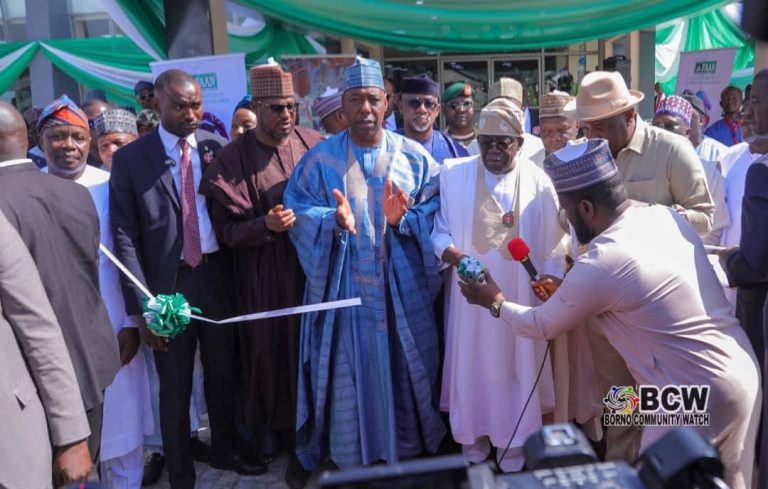
The President, who was on a three-state official tour of Borno, Bauchi and Lagos States, arrived in Maiduguri at about 12:30 p.m. and proceeded to commission several projects executed by the state government.

These included the international wing of the Muhammadu Buhari Airport, a new VIP terminal extension, electric vehicles, intra-state buses, tricycles, as well as three model primary, junior secondary and senior secondary schools.

While commissioning the schools, President Tinubu reaffirmed the importance of education to national development. “I am commissioning these primary, junior secondary and senior secondary schools to the glory of God and for the continuous education of our children,” he said.

During the visit, the President also attended the wedding ceremony of Sadeeq Sheriff, son of a former Governor of Borno State, Senator Ali Modu Sheriff, and his bride, Hadiza Kam Salem.

In line with Kanuri cultural traditions, President Tinubu stood in as the father of the groom, while Governor Zulum acted as the father of the bride to receive the traditional bride price, presented in the form of gold coins.

The wedding ceremony was hosted by the Shehu of Borno, Alhaji (Dr.) Abubakar Ibn Umar Garbai Al-Amin El-Kanemi, at the Maiduguri Central Mosque.

The events were attended by several dignitaries, including Governors Dikko Umaru Radda of Katsina State, Agbu Kefas of Taraba State, Mai Mala Buni of Yobe State, Sheriff Oborevwori of Delta State, Muhammadu Inuwa Yahaya of Gombe State, Ahmadu Umaru Fintiri of Adamawa State and Prince Dapo Abiodun of Ogun State, as well as senators and ministers.
President Tinubu departed Maiduguri for Bauchi State at about 3:25 p.m.

Festive season: Lagos Lawmaker, Yishawu Launches 50% Discount Food Market

0

BY TAIWO OGUNMOLA -OMILANI


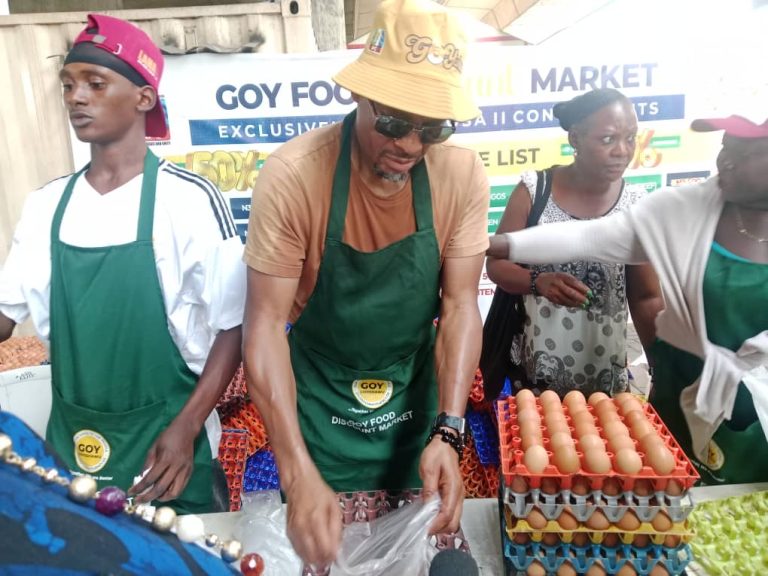
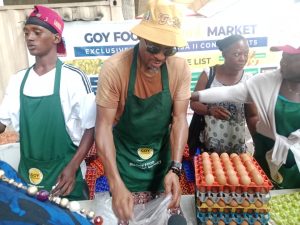
Hon. Gbolahan Olusegun Yishawu (GOY), a member of the Lagos State House of Assembly representing Eti-Osa Constituency II, has launched a 50 per cent discount food market to support residents during the Christmas and New Year festivities.

The initiative, held on Saturday in the constituency, saw the sale of essential food items at heavily subsidised rates, with some products discounted by more than 50 per cent. Items made available included rice, beans, gari, yam, palm oil, eggs, bread, meat, chicken, fish and Indomie noodles, while buyers also received free pepper mixes to help families prepare meals.

Speaking at the event, Yishawu explained that the discount market was part of his ongoing social intervention programmes aimed at easing the economic burden on residents, especially during the festive season.

“We run several programmes in our constituency, ranging from education and digital training to entrepreneurship. Considering the festive season, we decided to reach out to our people by bringing down the prices of staple food items they really need,” he said.

According to the lawmaker, over 10,000 food items were made available, with each buyer allowed to purchase up to five items to ensure wider access. He added that residents were free to combine different food categories to meet their household needs.

Yishawu noted that although the initiative was introduced for the first time, plans were underway to make it a regular feature during festive periods. He cited the sustainability of past programmes, including a free school bus scheme that has been running for over five years, as evidence of his commitment to continuity.

On participation, the lawmaker stressed that the programme was non-partisan. “Nobody was asked for a party card. We represent everybody in this constituency. We reached out through SMS, billboards, flyers and social media over several weeks,” he said.

He added that voter registration cards were used only as a means of identifying residents within the constituency, encouraging eligible citizens to see voter registration as a civic responsibility.

The initiative drew commendation from local government officials and political leaders. Chairman of Ikoyi-Obalende LCDA, Bola Oladunjoye, described the programme as timely and impactful, noting that “every saving counts” for families amid rising food prices.

Similarly, the Executive Chairman of Iru/Victoria Island LCDA, Mrs Aminat, applauded Yishawu for consistently providing relief to constituents, adding that the discount market would enable residents to enjoy cheaper food items during the festivities.

Residents who benefited from the market also expressed appreciation. One buyer described the prices as “amazingly low” and said the initiative would help less-privileged families enjoy the festive season.
With large crowds still trooping in hours after the programme began, Yishawu assured residents that sufficient supplies had been prepared to meet demand, reaffirming his commitment to initiatives that bring relief and support to his constituents.

Ben Okezie Kalu: The Lawmaker in Our Hearts- By Kassim Omomia

0


We have watched Ben Okezie Kalu the deputy speaker of the House with all admiration. He exudes humour, humility and hardwork.
Kalu did not catch our glimpse from the wrong side but from a prism of competence, dedication and above all patriotism in his legislative duties. Even though we may not have a full grasp of Okezie’s elementary political life up till his ascension to the exalted office of Deputy speaker, House of Representatives, Federal Republic of Nigeria, but it is on record that he served extremely well and meritoriously when as a first time member of the House of Representatives he was chairman Media and Publicity committee, doubling as spokesperson and image maker.

Okezie stirred the House public outlook to the approval of Nigerians and the outside world,comparing that unit of the Nigerian bicameral legislature he managed its image to world parliaments, like the US Congress and the British House of Common,among others. At home, the House of Representatives earned “the Peoples Parliament” accolade “.
Recalling Okezie’s past,the nostalgia breeds excitement and a continuous commitment to legislative and representatives’ service to his people and the country.

Albeit these well delivered services, his underscoring accomplishments were reinforced by his promotion and advancement to the post of Deputy Speaker House of Representatives, a divine elevation to yet, many exalted offices to come.Kalu qualifies to be governor, and Vice President, even the President of this great country ,if young men are roundly supported for such enviable positions.

Notwithstanding, his Bills , motions are not watery but of immense value to democratic governance, systemic reforms and overall growth and welfare of Nigerians. Call it democratic dividends, the Bende constituents have never had it so good, until now. Similarly his quest for a people’s constitution brings to fore his worthy contributions in the current alteration of the1999 Constitution exercise which he midwife’s for the House of Representatives. He speaks continually about a people’s inclusiveness in people’s document. He speaks about equity, justice and fairness for all. He’s concerned about security, a community policing strategy where states look critically into domestic security and policing. Okezie speaks for all: about good life for Nigerians, not only the Abia people he represents.
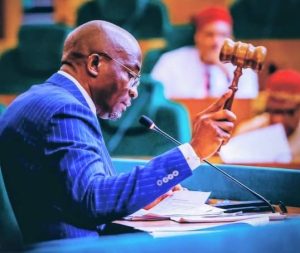
Curiously, I have also come in good terms and stead with his leadership style, especially his legislative prowess in presiding, either as Speaker in Chair or Chairman at the Committee of Whole”,a serious and critical aspect of legislative business, where reports become laws made by the parliament. At this critical level of legislative engagement, Ben Okezie Kalu has performed extremely well ,surpassing past deputies. This scoring is without prejudice or gainsaying but with all modesty.
I have written about parliamentary activities,from plenary to investigative hearings, to deliberations and considerations of reports , either in Committee of Supply for money issues -budgets etc, since 2000. I have also been privileged to sit for longer periods listening from the gallery, deliberations at the “Committee of Whole’, a tedious and significant session of legislative processes and never seeing a deputy speaker as pragmatic and intelligent like Kalu. it takes a Chair that is not lazy but with dexterity, humility, patience and resilience to succeed in any report consideration at the “Committee of Whole”.And one former deputy speaker who comes close to Kalu in assesment was Hon Lasun.But with this current Deputy Speaker, the magic wand to navigate these trying moments where every member appears uninterested in their legislative function, is unprecedented.

Two manoeuvres that beat my imagination and exhibit Kalu’s superb style is his smooth management of deliberations and final consideration of the 2025 Electoral.Amendment Bill and the passage of the 2026-2028 MTEF and FSP, on Thursday December 18 2025, few moments to the 2026 Budget presentation by President Ahmed Tinubu to the joint session of the National Assembly.
His mental alertness, understanding of the subject matter, his assessment of the mood and psyche of the members and his strategic demeanour coupled with the patience and resilient approachas well as his humility, diplomacy in getting an unwilling session sit for hours, unknowingly to the members that they had sat for so long and passed a record two critical national assignments, still leaves even the members amiss how it began but ended well.

For over two weeks now, there have been several adjournments to consider the Electoral amendment Bill. The constraints at times point to the inconsequential number of members in session , or when there’s a seeming quorum, inertia and unwillingness sets in.
According to checks, members’ lacklustre attitude in these ending times, come from failed promises from the executive branch such that it was gathered that the lawmakers were adjourning for the yuletide break without cash -backings.This development not only worries the legislators who are at a loss over how to satify their insatiable constituents during the Christmas festivities, but has resulted to the lethargy displayed by them in carrying out their statutory duties of law making . Fears are that, the members may not chorus “on your mandate we stand”, going forward, especially on 19 Friday December 2025, when the President presents his 2026 budget to the joint session of the National Assembly
While the outcome of that session is awaited, the success gained in the House of Representatives for completing and finally passing the MTEF/FSP in record time and upon which premise President Tinubu submits the 2026 Appropriation Bill, after the Senate hurriedly put out their own since Tuesday evening,underscores the goodwill the deputy speaker enjoys from his colleagues,expectedy due to his humility and resilience,such that in over six- unstoppable hours, he successfully managed a tensed session to effectively pass the MTEF and Electoral.amenment Bill. This is all kudos to a young PAN- Nigerian legislator in our hearts

That Ben Okezie Kalu displays an uncommon leadership acumen, which promotes unity and which with he won the hearts of all who sat in plenary on that faithful Thursday 18 2025,is an understatement . This is so because all the lawmaker at that Thursday session,wether Hausa, Fulani, Yoruba,Edo, TIV ,Idoma,Gbagy and of course Ibo were in sync with, aligning with his master stroke with which he chaired that earlier unpredictable session that later became a huge success. I have a dream that Ben Okezie Kalu shall accomplish more in his political career, given his character, competence and leadership capacity.

He will excel beyond this time, tide and position. Ben Okezie Kalu is the lawmaker in our hearts and qualifies for our award as ‘ A Legislature- Exemplar’ even as we watch him deliver again during the final voting of the alteration to the 1999 constitution ( As Ammended) in the days to come

Kassim Omomia of the Bigeyeonline writes from Abuja

Tinubu Congratulates Prof. Segun Gbadegesin on 80th Birthday

0


President Bola Ahmed Tinubu has congratulated his longtime friend and political ally, Prof. Segun Gbadegesin, on the occasion of his 80th birthday, celebrated on December 20.

In a goodwill message, the President rejoiced with the renowned Professor of Philosophy, commending his lifelong dedication of knowledge, wisdom and intellect to national service, with enduring impact on democracy and good governance in Nigeria.
President Tinubu acknowledged the courage, brilliance and clarity of thought displayed by the United States-based democratic activist during the struggle to restore democratic rule in Nigeria, particularly in the campaign to secure recognition of the winner of the June 12 presidential election of the 1990s, a struggle that often put his life at risk.

The President also highlighted Prof. Gbadegesin’s significant contributions to Nigeria’s educational development through research, scholarly articles, authorship of books, teaching and counselling, noting that he has left a lasting legacy of discipline, focus and resourcefulness among students and colleagues alike.

As the scholar marks his entry into the octogenarian years, President Tinubu expressed confidence that his influence across academia, governance and democratic institutions will continue to grow, especially in politics, philosophy and economics, fields in which he remains a respected authority.

The President joined family members, friends and associates in celebrating the milestone, describing it as one marked by enduring memories of loyalty, service and patriotism.
He prayed that Almighty God would bless Prof. Gbadegesin with good health, renewed strength and greater wisdom to continue serving the nation he loves.

Banditry: Christian clerics, others call for arrest of Bafarawa, Yerima over killings in north West

0


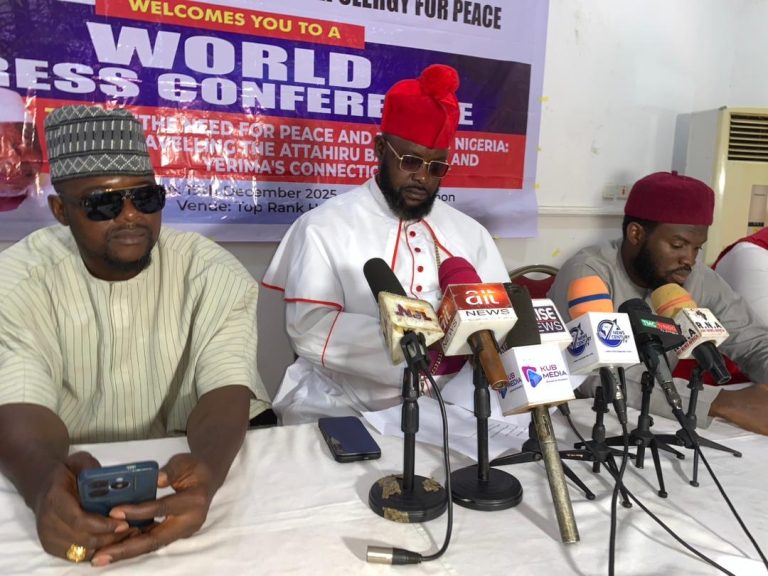
A group of inter-faith religious leaders from northern Nigeria, styling themselves as the Concerned Northern Inter-Faith Clergy for Peace, has urgently called on President Bola Tinubu to order the immediate arrest and prosecution of former governors Attahiru Bafarawa of Sokoto State and Ahmed Sani Yerima of Zamfara State.

The clerics led by Bishop Sunday Bawa in a press conference in Abuja alleged that the two ex-governors bear responsibility for laying the foundations of the rampant banditry terrorising the North-West region.

The appeal, issued in a strongly worded statement during the Yuletide season, references a widely circulated video released earlier this month by notorious bandit kingpin Bello Turji.

In the video, Turji accused Bafarawa and Yerima of seizing and selling vast grazing reserves designated for herders and arming vigilante groups, known as Yan Banga, which he claimed targeted and killed Fulani communities.

These actions, Turji alleged, sparked ethnic tensions and cycles of reprisal attacks that escalated into the current wave of kidnappings, massacres, and cattle rustling.

“Even though Turji is a confessed terrorist… we cannot ignore his words,” the clergy said in statement signed by Imam Sheikh Yusuf Sarki, Bishop Pius Dauda and 10 others.

The group emphasised that the allegations point to deep-rooted issues of land dispossession and armed vigilantism that allowed criminal gangs to evolve into the “monsters” now plaguing the region.

The inter-faith body, comprising imams, pastors, bishops, and other spiritual leaders, expressed solidarity with bereaved families who have also petitioned President Tinubu for an investigation into the claims.

These families, many of whom have lost loved ones to bandit attacks, described the president as their “last hope” for justice after local efforts yielded no results.

Bawa highlighted the devastating toll of banditry, describing it as an “unfolding genocide.”

They cited figures indicating over 13,485 deaths from banditry between 2010 and May 2023, with at least 2,266 killed in the first half of 2025 alone—surpassing the total for all of 2024.

Reports from bodies like Amnesty International and the National Human Rights Commission document thousands kidnapped, injured, or displaced, while economic losses run into trillions of naira due to disrupted farming, trade, and ransoms.

The statement criticised responses from Bafarawa and Yerima as “empty echoes” and denials, noting that the former governors claimed no significant banditry existed when they left office in 2007 and questioned the timing of the accusations.

“Time heals no guilt,” the clerics retorted, arguing that evasion only fuels suspicion and impunity.
In a direct Yuletide appeal to President Tinubu, the group urged him to “immediately direct the arrest and prosecution” of the two former governors for “alleged acts that laid the foundations of this terror.”

They further called for a transparent, independent probe—possibly with international oversight—into the allegations, alongside measures to address root causes like poverty and land disputes.

Civil Society Situation Room Rates NNPC GCEO High on Performance

0

***Lauds Reforms on Transparency, Improved Crude Production

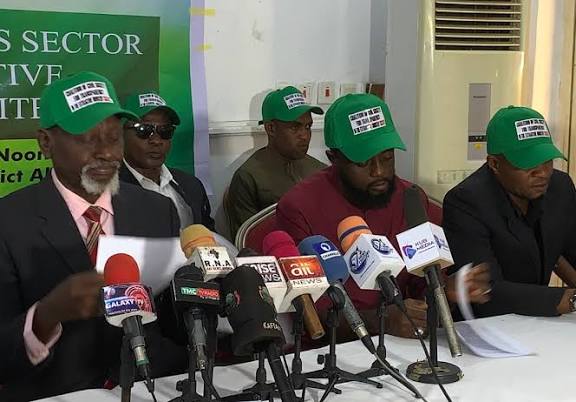
The Coalition of Civil Society for Transparency in the Extractive Industry (CCSTEI) has highly commended the Group Chief Executive Officer (GCEO) of the Nigerian National Petroleum Company Limited (NNPC Ltd), Engr. Bashir Bayo Ojulari, for his transformative leadership in Nigeria’s oil and gas sector.

Speaking at a press conference in Abuja. the coalition’s National Coordinator, Dr. Agabi Emanuel praised Ojulari’s bold reforms that have enhanced transparency, boosted operational efficiency, and driven significant improvements in crude oil production.

The CCSTEI highlighted that since Ojulari’s appointment in April 2025, NNPC Ltd has shifted from longstanding perceptions of opacity and inefficiency to a more commercially driven and accountable entity.

Key achievements noted include the consistent publication of monthly performance reports, which have fostered real-time stakeholder oversight.
Financially, the coalition applauded the company’s 2024 audited results, which showed a record revenue of ₦45.1 trillion and a profit after tax of ₦5.4 trillion – marking a 64% year-on-year growth in profit.

On the production front, the group celebrated the milestone reached by NNPC Exploration and Production Limited (NEPL), the company’s upstream subsidiary, which hit a daily crude oil output of 355,000 barrels on December 1, 2025 – the highest in 36 years.

This contributed to an average daily production increase of 52%, from 203,000 barrels per day in 2023 to 312,000 barrels per day in 2025.

The statement also acknowledged ongoing investments in gas infrastructure, including progress on projects like the Ajaokuta-Kaduna-Kano (AKK) pipeline, Escravos-Lagos Pipeline System (ELPS), and Obiafu-Obrikom-Oben (OB3) pipeline, aimed at achieving ambitious targets of 10 billion cubic feet per day by 2027 and 12 billion by 2030.

While recognizing persistent challenges such as lingering public skepticism, oil theft, and global energy transitions, the CCSTEI called for continued support for Ojulari’s leadership.

It recommended further enhancements in public engagement, third-party audits, anti-corruption measures, local content development, and alignment with energy transition goals.

Concluding the appraisal, Dr. Emanuel stated: “Bashir Bayo Ojulari and his team for restoring confidence in NNPC Limited after many challenging years.

“You have proven that visionary leadership, coupled with accountability and performance excellence, can redefine an institution for the better. We charge you to soldier on undeterred.

“The Nigerian people are watching, and with your continued resolve, NNPC Limited will not only drive economic prosperity but also serve as a beacon of transparent governance in Africa.”

Tinubu to Visit Borno, Bauchi, Lagos on Official Private Engagements

0


President Bola Ahmed Tinubu will depart Abuja on Saturday for visits to Borno, Bauchi and Lagos states.

According to a statement, the President will begin his trip in Borno State, where he is scheduled to commission several projects executed by the Babagana Zulum-led state government in collaboration with the Federal Government.
While in Maiduguri,

President Tinubu will also attend the wedding ceremony of Sadeeq Sheriff, son of former Borno State Governor, Senator Ali Modu Sheriff, and his bride, Hadiza Kam Salem.

From Borno, the President will proceed to Bauchi State to pay a condolence visit to the Bauchi State Government and the family of Sheikh Dahiru Bauchi, the renowned Islamic scholar and leader of the Tijjaniyya Muslim Brotherhood, who died on November 27.

Following the condolence visit, President Tinubu will travel to Lagos State, where he will spend the end-of-year holidays.
During his stay in Lagos, the President is expected to serve as the guest of honour at the Eyo Festival slated for December 27. The festival, to be held at Tafawa Balewa Square, will honour notable personalities, including President Tinubu’s mother, Alhaja Abibatu Mogaji, as well as former Lagos State governors, Alhaji Lateef Jakande and Chief Michael Otedola.
The statement was signed by Bayo Onanuga, Special Adviser to the President on Information and Strategy.

PDP Faults Tinubu’s 2026 Budget

0


The Peoples Democratic Party (PDP) has criticised President Bola Ahmed Tinubu’s 2026 budget, describing it as a document that fails to reflect the economic realities faced by most Nigerians.

President Tinubu on Friday presented the 2026 Appropriation Bill to a joint session of the National Assembly, with the theme, “Budget of Consolidation, Renewed Resilience and Shared Prosperity.” However, the PDP said the budget represents what it termed “consolidated and renewed suffering” for Nigerians.

In a statement signed by its National Publicity Secretary, Comrade Ini Ememobong, the opposition party argued that despite government claims of economic stabilisation, Nigerians have continued to experience severe hardship under the current administration.

The PDP reacted to the President’s claim that the economy grew by 3.98 per cent, noting that economic growth figures alone do not translate into improved living standards. It cited the 2025 World Bank Poverty and Equity Brief, which reportedly shows that over 30.9 per cent of Nigerians live below the international extreme poverty line.
According to the party, the data suggests that economic growth has not resulted in shared prosperity, as poverty remains widespread despite the reported GDP expansion.

The PDP also faulted the President for not identifying the sectors driving the reported growth or clarifying who benefitted from it. It compared the 3.98 per cent growth rate with the 6.87 per cent recorded in 2013 under the previous PDP administration, which it said was largely driven by non-oil sectors such as agriculture and trade.
While acknowledging the security allocation in the 2026 budget, the party stressed that funding alone would not solve the nation’s security challenges. It called for transparent and effective utilisation of security funds to ensure improved equipment, intelligence gathering, ammunition supply and better welfare for security personnel deployed across various conflict zones.

The PDP further expressed concern over the President’s admission that the implementation of the 2024 capital budget had been extended to December 2025, while the 2025 budget remains in operation. It described the concurrent running of multiple budgets as a breach of fiscal best practices, warning that it undermines transparency, accountability and financial discipline.

“This confirms long-standing concerns about the simultaneous operation of multiple budgets, which should not occur in a properly managed fiscal system,” the statement said.

The party concluded by calling for greater transparency and accountability in the management of public finances, noting that these principles are essential for rebuilding public trust and ensuring effective governance.

2026 BUDGET SPEECH “BUDGET OF CONSOLIDATION, RENEWED RESILIENCE AND SHARED PROSPERITY”

0

Presented by:
His Excellency, Asiwaju Bola Ahmed Tinubu, GCFR
President, Federal Republic of Nigeria, At the Joint Session of the National Assembly, Abuja, Friday, 19 December 2025

PROTOCOLS
o Distinguished Senate President,

o Rt. Honourable Speaker and Honourable Members of the House of Representatives,

o Distinguished Senators and Honourable Members of the National Assembly,

o Fellow Nigerians,

1. I am here today to fulfil an essential constitutional obligation by presenting the 2026 Appropriation Bill to this esteemed Joint Session of the National Assembly for your consideration.

2. This budget represents a defining moment in our national journey of reform and transformation. Over the last two and a half years, my government has methodically confronted long‑standing structural weaknesses, stabilised our economy, rebuilt confidence, and laid a durable foundation for the construction of a more resilient, inclusive, and dynamic Nigeria.

3. Though necessary, the reforms have not been painless. Families and businesses have faced pressure; established systems have been disrupted; and budget execution has been tested. I acknowledge these difficulties plainly. Yet, I am here, today, to assure Nigerians that their sacrifices are not in vain. The path of reform is seldom smooth, but it is the surest route to lasting stability and shared prosperity.

4. Today, I present a Budget that consolidates our gains, strengthens our resilience, and takes this country from out of the dark tunnel of hopelessness, from survival to growth.

5. The 2026 Budget is themed: “Budget of Consolidation, Renewed Resilience and Shared Prosperity”. It reflects our determination to lock in macroeconomic stability, deepen competitiveness, and ensure that growth translates into decent jobs, rising incomes, and a better quality of life across for every Nigerian.

6. Mr. Chairman, Leaders of the National Assembly, while the global outlook continues to improve, this Budget aims to further strengthen our Nigerian economy to benefit all our citizens.

7. I am encouraged that our reform efforts are already yielding measurable results:
1) Our economy grew by 3.98 per cent in Q3 2025, up from 3.86 per cent in Q3 2024.

2) Inflation has moderated for eight consecutive months, with headline inflation declining to 14.45 per cent in November 2025, from 24.23 per cent in March 2025. With stabilising food and energy prices, tighter monetary conditions, and improving supply responses, we expect the deflationary trend to persist over the 2026 horizon, barring major supply shocks.

3) Oil production has improved, supported by enhanced security, technology deployment, and sector reforms.

4) Non‑oil revenues have expanded significantly through better tax administration.

5) Investor confidence is returning, reflected in capital inflows, renewed project financing, and stronger private‑sector participation.

6) Our external reserves rose to a 7‑year high of about US47 billion dollars as of last month, providing over 10 months of import cover and a more substantial buffer against shocks.

8. These outcomes are not accidental or lucky. They are the consequence of our difficult policy choices. Our next objective is to deepen our gains in pursuit of enduring and inclusive prosperity.

9. Mr. Chairman, Distinguished Members, our 2025 budget implementation faced the realities of transition and competing execution demands. As of Q3 2025, we recorded:
· 18.6 trillion naira in revenue — representing 61% of our target; and
· 24.66 trillion naira in expenditure — representing 60% of our target.

10. Following the extension of the 2024 capital budget execution to December 2025, a total of 2.23 trillion naira was released for the implementation of 2024 capital projects as of June 2025.

11. While fiscal challenges persisted, the government met its key obligations. However, only 3.10 trillion naira — about 17.7% of the 2025 capital budget — was released as of Q3, reflecting the emphasis on completing priority 2024 capital projects during the transition period.

12. Let me be clear: 2026 will be a year of stronger discipline in budget execution. I have issued directives to the Honourable Minister of Finance and Coordinating Minister of the Economy, the Honourable Minister of Budget and Economic Planning, the Accountant‑General of the Federation, and the Director‑General of the Budget Office of the Federation to ensure that the 2026 Budget is implemented strictly in line with the appropriated details and timelines.

13. We expect improved revenue performance through the new National Tax Acts and the ongoing reforms in the oil and gas sector — reforms designed not merely to raise revenue, but to drive transparency, efficiency, fairness, and long‑term value in our fiscal architecture.

14. I have also provided clear and direct guidance regarding Government‑Owned Enterprises. Heads of all agencies have been directed to meet their assigned revenue targets. To support this, we will deploy end‑to‑end digitisation of revenue mobilisation — standardised e‑collections, interoperable payment rails, automated reconciliation, data‑driven risk profiling, and real‑time performance dashboards — so leakages are sealed, compliance is verifiable, and remittances are prompt. These targets will form core components of performance evaluations and institutional scorecards. Nigeria can no longer afford leakages, inefficiencies, or underperformance in strategic agencies. Every institution must play its part.

15. Mr Chairman and fellow Nigerians, the 2026 Budget is guided by four clear objectives:
1) Consolidate macroeconomic stability;
2) Improve the business and investment environment;
3) Promote job‑rich growth and reduce poverty; and
4) Strengthen human capital development while protecting the vulnerable.

16. In short: we will spend with purpose, manage debt with discipline, and pursue broad-based, sustainable growth.

17. Distinguished Members, the 2026 Federal Budget is anchored on realism, prudence, and growth.

18. The key aggregates are as follows:
1) Expected total revenue is 34.33 trillion naira.

2) Projected total expenditure is 58.18 trillion naira, including 15.52 trillion naira for debt servicing.

3) Recurrent (non‑debt) expenditure is 15.25 trillion naira.

4) Capital expenditure will be 26.08 trillion.

5) The Budget deficit is expected to be 23.85 trillion naira, representing 4.28% of GDP.

19. These numbers are not mere accounting lines. They are a statement of national priorities. We remain firmly committed to fiscal sustainability, debt transparency, and value‑for‑money spending.

20. The 2026–2028 Medium‑Term Expenditure Framework and Fiscal Strategy Paper sets the parameters for this Budget. Our projections are based on:
1) a conservative crude oil benchmark of US64.85 dollars per barrel;
2) crude oil production of 1.84 million barrels per day; and
3) an average exchange rate of 1,400 naira to the US Dollar for the 2026 fiscal year.

21. We will continue to reduce waste, strengthen controls, and ensure that every naira borrowed or spent delivers measurable public value.

22. Our allocations reflect the Renewed Hope Agenda and the practical needs of Nigerians. Key sectoral provisions include:
1) Defence and security: 5.41 trillion naira
2) Infrastructure: 3.56 trillion naira
3) Education: 3.52 trillion naira
4) Health: 2.48 trillion naira

23. These priorities are interlinked. Without security, investment will not thrive. Without educated and healthy citizens, productivity will not rise. Without infrastructure, jobs and enterprises will not scale. This Budget is, therefore, designed to provide a single, coherent programme of national renewal.

A. National Security and Peacebuilding
24. National Security remains the foundation of development. The 2026 Budget strengthens support for:
· modernisation of the Armed Forces;
· intelligence‑driven policing and joint operations;
· border security and technology‑enabled surveillance; and
· community‑based peacebuilding and conflict prevention.

25. We will invest in security with clear accountability for outcomes — because security spending must deliver results. To secure our country, our priority will remain on increasing the fighting capability of our armed forces and other security agencies and boosting the effectiveness of our fighting forces with cutting-edge equipment and other hardware.

26. We will usher in a new era of criminal justice. We will show no mercy to those who commit or support acts of terrorism, banditry, kidnapping for ransom and other violent crimes.

27. Our administration is resetting the national security architecture and establishing a new national counterterrorism doctrine — a holistic redesign anchored on unified command, intelligence gathering, community stability, and counter – insurgency. This new doctrine will fundamentally change how we confront terrorism and other violent crimes.

28. Under this new architecture, any armed group or gun-wielding non-state actors operating outside state authority will be regarded as terrorists.

29. Bandits, militias, armed gangs, armed robbers, violent cults, forest-based armed groups and foreign-linked mercenaries will all be targeted. We will go after all those who perpetrate violence for political or sectarian ends, along with those who finance and facilitate their evil schemes.

B. Human Capital Development: Education and Health
30. No nation can grow beyond the quality of its people. The 2026 Budget strengthens investments in education, skills, healthcare, and social protection.

31. In education, we are expanding access to higher education through the Nigerian Education Loan Fund. Over seven hundred and eighty eight thousand students have been supported, in partnership with two hundred and twenty nine tertiary institutions nationwide.

32. In healthcare, I am pleased to highlight that investment in healthcare is 6 per cent of the total budget size, net of liabilities.

33. We also appreciate the support of international partners. Recent high‑level engagements with the Government of the United States have opened the door to over 500 million United States dollars for health interventions across Nigeria. We welcome this partnership and assure Nigerians that these resources will be deployed transparently and effectively.

C. Infrastructure and Economic Productivity
34. Across the nation, projects of all shapes and sizes are moving from vision to reality. These include transport and energy infrastructure, port modernisation, agricultural reforms, and strategic investments to unlock private capital.

35. We will take decisive steps to strengthen agricultural markets. Food security shall remain a national priority. The 2026 Budget focuses on input financing and mechanisation; irrigation and climate‑resilient agriculture; storage and processing; and agro‑value chains.

36. These measures will reduce post‑harvest losses, improve incomes for small holders, deepen agro‑industrialisation, and build a more resilient, diversified economy.
37. In 2026, the Bank of Agriculture plans to plant confidence back into our soil; mechanising through seven regional hubs, protecting harvests with fair prices and substantial reserves, providing affordable finance to millions of small holders and growing export value. Under the plan, Nigerian farmers will cultivate one million hectares, create hundreds of thousands of jobs, and prove that prosperity can rise through better use of our God given land.

D. Procurement
38. Starting in November last year, the government has embarked upon a comprehensive framework of procurement reforms. These reforms have enhanced efficiency and generated significant cost savings for the government, resulting in resulting in reduced processing times for Government contracts and better enforcement procedures directed against erring contractors and government officials.

39. Our Nigeria First Policy has been established to encourage self-sufficiency and sustainable growth within Nigeria by promoting domestic products and businesses. By mandating that all Ministries, Departments, and Agencies (MDAs) consider Nigerian-made goods and local companies as their primary option, the policy aims to support local industries, create job opportunities, and reduce dependency on imported items. This bold new approach is expected to enhance the competitiveness of Nigerian enterprises, foster innovation, and ultimately contribute to the country’s overall economic development.

40. Distinguished Members and fellow Nigerians, the most significant budget is not the one we announce. It is the one we deliver.

41. Therefore, 2026 will be guided by three practical commitments:
1) Better revenue mobilisation through efficiency, transparency, and compliance.
2) Better spending by prioritising projects that can be completed, measured, and felt by citizens.
3) Better accountability through strengthening of procurement discipline, monitoring, and reporting.

42. We will build trust by matching our words with results, and our allocations with outcomes.

43. Distinguished Members of the National Assembly, fellow Nigerians, the 2026 Budget is not a budget of promises; it is a Budget of consolidation, renewed resilience and shared prosperity. It builds on the reforms of the past two and a half years, addresses emerging challenges, and sets a clear path towards a more secure, more competitive, more equitable, and more hopeful Nigeria.

44. I commend the people of this country for their understanding and resilience. My administration remains committed to easing the burdens of the transition to a more stable and prosperous nation. We promise to make sure that the benefits of reform reach households and communities across the Federation.

45. In united purpose between the Executive and the Legislature; and with the resilience of the Nigerian people, we will deliver the full promise of the Renewed Hope Agenda.

46. It is, therefore, with great pleasure that I lay before this distinguished Joint Session of the National Assembly; the 2026 Appropriation Bill of the Federal Republic of Nigeria, titled: “Budget of Consolidation, Renewed Resilience and Shared Prosperity”. I seek your partnership in charting the nation’s fiscal course for the coming year.

47. May God bless the Federal Republic of Nigeria.

48. Thank you.

Bola Ahmed Tinubu, GCFR
President, Commander-in-Chief of The Armed Forces,
Federal Republic of Nigeria
Tinubu Presents 2026 Budget of Consolidation, Resilience, Shared Prosperity to NASS

0


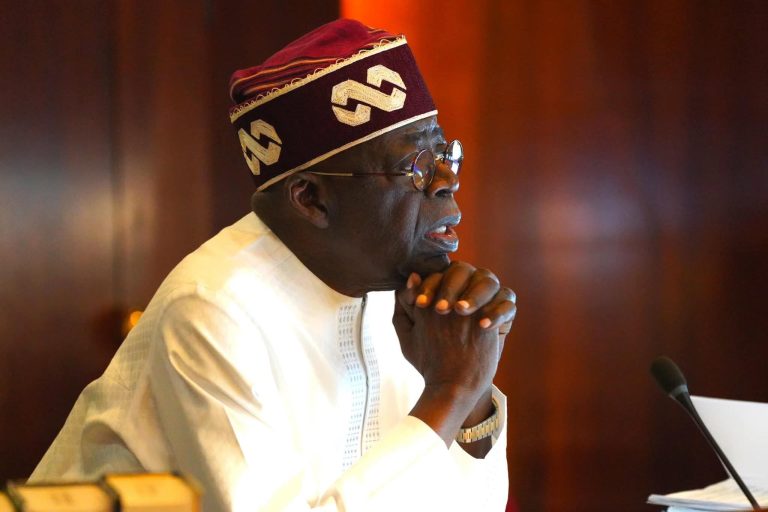
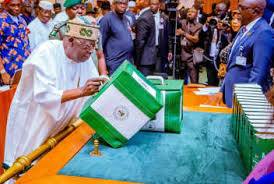
President Bola Ahmed Tinubu on Friday presented the 2026 Appropriation Bill to a joint session of the National Assembly, describing it as a “Budget of Consolidation, Renewed Resilience and Shared Prosperity” aimed at stabilising the economy and translating reforms into improved living standards for Nigerians.

Speaking at the National Assembly complex in Abuja, the President said the budget marked a defining moment in Nigeria’s reform journey, noting that his administration had, over the past two and a half years, tackled long-standing structural weaknesses, restored confidence and laid the groundwork for a more inclusive and resilient economy.

Tinubu acknowledged that the reform process had come with difficulties for households and businesses but assured Nigerians that the sacrifices were necessary and would yield lasting stability and shared prosperity. He said the 2026 budget was designed to consolidate gains, strengthen resilience and move the country from survival to sustainable growth.

According to the President, recent economic indicators show that reform efforts are yielding results. He said economic growth improved in the third quarter of 2025, inflation had moderated consistently for several months, oil production had increased due to better security and sector reforms, while non-oil revenues had expanded through improved tax administration. He added that investor confidence was returning and that Nigeria’s external reserves had risen to a multi-year high, providing a stronger buffer against external shocks.

Reviewing the implementation of the 2025 budget, Tinubu said execution was affected by transition challenges and competing demands, with revenue and expenditure performance below projections. He noted that emphasis was placed on completing outstanding capital projects from the previous fiscal year, while assuring lawmakers that 2026 would usher in stricter discipline in budget implementation. He said clear directives had been issued to ensure the budget is executed strictly in line with appropriations and timelines.

The President said improved revenue performance was expected from new tax laws and ongoing reforms in the oil and gas sector, stressing that the reforms were aimed not only at raising revenue but also at promoting transparency, efficiency and fairness. He added that government-owned enterprises would be held accountable for meeting revenue targets, supported by full digitisation of revenue collection to eliminate leakages and improve compliance.

Tinubu explained that the 2026 budget is guided by four main objectives: consolidating macroeconomic stability, improving the business and investment environment, promoting job-rich growth and poverty reduction, and strengthening human capital development while protecting vulnerable Nigerians. He said the government would spend with purpose, manage debt with discipline and pursue broad-based, sustainable growth.

Outlining the fiscal framework, the President said the budget was anchored on realism, prudence and growth, with projected revenues and expenditures reflecting national priorities and a commitment to fiscal sustainability and value-for-money spending. He added that projections were based on conservative assumptions for oil prices, production levels and exchange rates.

The President said significant allocations were made to defence and security, infrastructure, education and health, noting that the sectors are interconnected and critical to national renewal. He stressed that security remains the foundation of development, with increased support for modernising the armed forces, intelligence-driven policing, border security and community-based peacebuilding.

Tinubu also announced plans to reset the national security architecture, including the introduction of a new counterterrorism doctrine that treats armed groups operating outside state authority as terrorists. He said the government would show zero tolerance for terrorism, banditry, kidnapping and other violent crimes.

On human capital development, the President said the budget prioritised education, healthcare and social protection. He highlighted expanded access to higher education through the Nigerian Education Loan Fund and increased investment in healthcare, supported by partnerships with international donors.

In the area of infrastructure and economic productivity, Tinubu said the government would continue investing in transport, energy, agriculture and port modernisation to unlock private capital and boost growth. He said food security remains a national priority, with emphasis on mechanisation, irrigation, storage, processing and agro-value chains to reduce post-harvest losses and improve farmers’ incomes.

The President also pointed to ongoing procurement reforms, which he said had improved efficiency and generated cost savings, as well as the Nigeria First Policy designed to promote local content, support domestic industries and reduce dependence on imports.

Tinubu concluded by stressing that the true value of the budget lies in its delivery, pledging better revenue mobilisation, smarter spending and stronger accountability in 2026. He called on the National Assembly to partner with the Executive in charting Nigeria’s fiscal course, expressing confidence that the Renewed Hope Agenda would deliver a more secure, competitive and equitable nation.

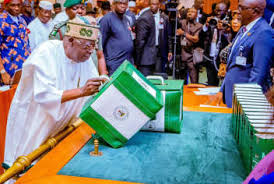
He formally laid the 2026 Appropriation Bill before the National Assembly and urged lawmakers to give it prompt and favourable consideration.