Home Blog Page 751

Tinubu Departs for Europe Ahead of Abu Dhabi Sustainability Summit

0


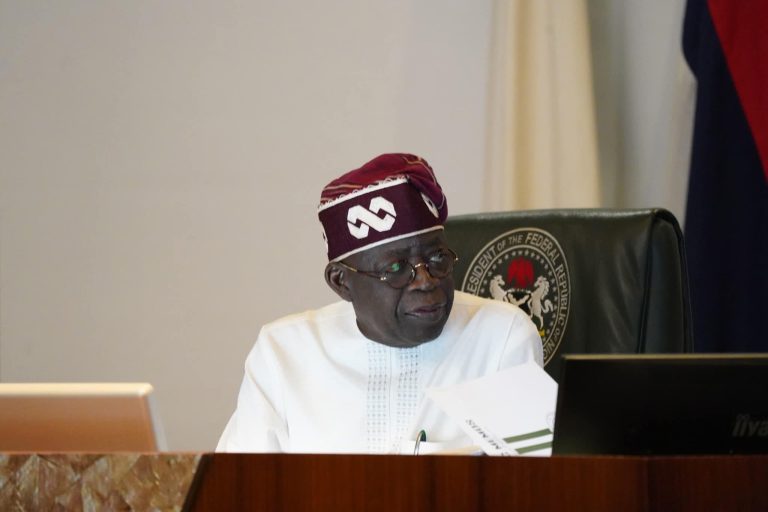
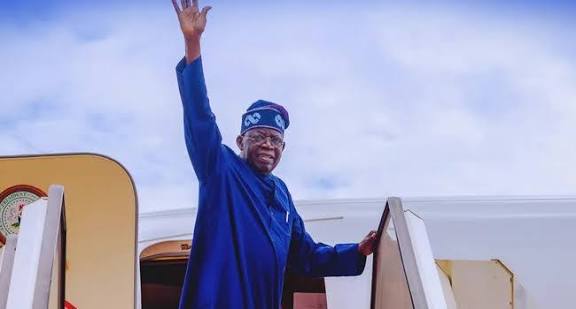
President Bola Ahmed Tinubu on Sunday, December 28, departed Lagos for Europe as part of his end-of-year break, ahead of an official visit to Abu Dhabi in the United Arab Emirates.

President Tinubu is scheduled to attend the 2026 edition of the Abu Dhabi Sustainability Week (ADSW 2026) Summit at the invitation of the President of the United Arab Emirates, His Highness Sheikh Mohamed bin Zayed Al Nahyan. The summit will hold in early January in Abu Dhabi.
Abu Dhabi Sustainability Week is a weeklong annual global forum that convenes leaders from government, business and civil society to shape the future of sustainable development worldwide.

The 2026 summit, themed “The Nexus of Next: All Systems Go,” will focus on connecting ambition with action across innovation, finance and people, while showcasing pathways for advancing global sustainability with confidence.

President Tinubu is expected to return to Nigeria after the conclusion of the summit.

Bridging the gaps in budget implementation

0


By Tunde Rahman

To state that there are gaps in the implementation of the 2024 and 2025 budgets is actually stating the obvious. One does not need to be an economist or an expert in fiscal matters to know this. Top government functionaries charged with budgetary matters have all made the point and confirmed that the budgets were not fully funded for apparent reasons. This admission reflects an attribute typically rare in government – transparency.

In August, at a stakeholders’ engagement on the implementation of the 2025 capital budget and related issues in Abuja, Dr. Tanimu Yakubu, the Director-General of the Budget Office of the Federation, pointed out that the Federal Government was funding the capital component of the 2024 budget using revenue accruing under the 2025 Budget. He also noted that the 2025 revenue projections in the budget had been underperforming because the country had not met the oil production quota.

Questions, therefore, arose in some quarters about the level of budget implementation. President Bola Tinubu’s announcement in August that the administration had met its 2025 non-oil revenue target even triggered more questions. What then was the issue regarding budget implementation?

It must be noted, however, that there are additional revenue sources for funding budgets beyond Internally-Generated Revenue. These include funding by development partners and foreign and domestic loans. If the IGR performs and there are gaps in other revenue sources, there could also be limitations in budget implementation. In that seemingly innocuous statement, President Tinubu was referring to the non-oil revenue component of the budget for the year.

Following the below-par performance of the 2024 Budget, the National Assembly approved the rollover of the budget into 2025. The parliament later also approved the rollover of 70 percent of the 2025 capital projects into 2026. Given this background of poor budget execution, some had suggested a holistic review of the budgeting process to upend the cycle of rollovers and non-implementation. Dr Muda Yusuf, the CEO of the Centre for the Promotion of Private Enterprises, among others, proposed that rather than discard projects that were approved but not implemented, it would be more prudent to consolidate outstanding projects, clear the accumulated backlog and re-present them within a more coherent and credible framework.

Two weeks ago, President Tinubu moved decisively to address the implementation problems associated with the 2024 and 2025 budgets by using the practical template of the 2026 budget. Presenting the N58.18 trillion 2026 budget proposals to the National Assembly on Thursday, December 18, 2025, the President declared an end to budget rollovers and multiple budgets. Despite the challenges, the 2026 budget aligns well with the December-January budget cycle.

Aptly titled “Budget of Consolidation, Renewed Resilience and Shared Prosperity,” this new budget is essentially anchored on fiscal planning, discipline, resilience and sustainable development in line with the Renewed Hope Agenda. With the budget, President Tinubu plans to consolidate macroeconomic stability, improve the business and investment environment, promote job‑rich growth, reduce poverty and strengthen human capital development, while protecting the vulnerable.

But rather than appreciate the government’s challenge, the courage demonstrated in accepting the fact of poor implementation of the budget and the firm resolve to correct the anomaly, the opposition African Democratic Congress took the notoriously mischievous route to upbraid President Tinubu. The party described the new budget and the government’s remedial plans as “a copy and paste” of previous years’ spending plans. The party’s interim National Publicity Secretary, Bolaji Abdullahi, said ADC’s economists reviewed the budget, claiming that “it reflects fiscal recklessness and unrealistic projections.” Propagating a doomsday theory, ADC opined that, like its predecessors, the 2026 Budget would end up as another unimplemented document.

It is fair to argue that the 2025 budget faced the challenge of transition and competing execution demands. But presenting the 2026 Budget to the lawmakers, President Tinubu assured that the budgetary situation would be different this time. The President said: “As of Q3 2025, we recorded: 18.6 trillion naira in revenue — representing 61% of our target; and 24.66 trillion naira in expenditure — representing 60% of our target.

“Let me be clear: 2026 will be a year of stronger discipline in budget execution. I have issued directives to the Honourable Minister of Finance and Coordinating Minister of the Economy, the Honourable Minister of Budget and Economic Planning, the Accountant‑General of the Federation, and the Director‑General of the Budget Office of the Federation to ensure that the 2026 Budget is implemented strictly in line with the appropriated details and timelines.

“We expect improved revenue performance through the new National Tax Acts and the ongoing reforms in the oil and gas sector — reforms designed not merely to raise revenue, but to drive transparency, efficiency, fairness, and long‑term value in our fiscal architecture,” he added.

President Tinubu recognises the importance of fiscal guardrails, as evidenced by his clear directive to Government‑owned Enterprises and to the heads of all agencies to meet their assigned revenue targets.

To support this, he said: “An end‑to‑end digitisation of revenue mobilisation — standardised e‑collections, interoperable payment rails, automated reconciliation, data‑driven risk profiling, and real‑time performance dashboards — will be deployed so that leakages are sealed, compliance is verifiable, and remittances are prompt.”

These targets, President Tinubu noted, will form core components of performance evaluations and institutional scorecards. “Nigeria can no longer afford leakages, inefficiencies, or underperformance in strategic agencies. Every institution must play its part. In short: we will spend with purpose, manage debt with discipline, and pursue broad-based, sustainable growth.”

These are grand plans and clear directives from President Tinubu. The National Assembly, too, has a vital role to play in ensuring the successful implementation of the 2026 budget. Many of the unimplemented projects in the 2025 Budget, for instance, were constituency projects, the brunt of which was borne by lawmakers who tended to allocate the jobs even when the projects had not been cash-backed. Beyond approving the 2026 appropriation, therefore, the lawmakers must show greater restraint and prudence in handling their constituency projects.

The 2026 budget has other notable aspects. One, it re-presents a defining moment in the national journey of reform and transformation. The 2026 Budget, as President Tinubu said, “reflects the government’s determination to lock in macroeconomic stability, deepen competitiveness, and ensure that growth translates into decent jobs, rising incomes, and a better quality of life for every Nigerian.”

Two, in line with the Renewed Hope Agenda and the practical needs of Nigerians, the budget prioritises five critical sectors: defence and security – N5.41 trillion; infrastructure – N3.56 trillion; education – N3.52 trillion; and health – N2.48 trillion. As the President rightly said, these priorities are interlinked: “Without security, investment will not thrive. Without educated and healthy citizens, productivity will not rise. Without infrastructure, jobs and enterprises will not scale.”

To all intents and purposes, the government has drawn appropriate lessons from the drawbacks of the 2024 and 2025 budgets. That is why the 2026 Budget is guided by three basic principles: better revenue mobilisation, better spending by prioritising projects, and better accountability through strengthened procurement discipline, monitoring, and reporting. There is a strong optimism that it will yield outcomes that benefit all, which hopefully the perennial cynics would acknowledge.

-Rahman is Senior Special Assistant to the President on Media & Special Duties.
𝐕𝐈𝐃𝐄𝐎: 𝐓𝐡𝐢𝐬 𝐘𝐞𝐚𝐫 𝐖𝐢𝐥𝐥 𝐍𝐨𝐭 𝐒𝐞𝐞 𝐌𝐲 𝐄𝐧𝐝, 𝐀𝐜𝐭𝐫𝐞𝐬𝐬 𝐀𝐥𝐥𝐰𝐞𝐥𝐥 𝐀𝐝𝐞𝐦𝐨𝐥𝐚 𝐒𝐢𝐧𝐠𝐬 𝐈𝐧 𝐋𝐚𝐬𝐭 𝐏𝐨𝐬𝐭 𝐁𝐞𝐟𝐨𝐫𝐞 𝐃𝐞𝐚𝐭𝐡

0


In a development that has sent shockwaves through the Nigerian entertainment industry, a social media post from Nollywood actress and filmmaker, Allwell Ademola, has gone viral following the report of her sudden death on Saturday.

Barely 24 hours before she was reported dead, the 43-year-old actress shared a video on her Instagram page where she was seen singing a soulful prayer, with lyrics that focused on surviving the year.

“In the name of Jesus, I will see the end of this year; this year will not see my end,” the lyrics read.


credit: punch

Group Names Senator Musa ‘Renewed Hope Ambassador of the Year’, Lauds Commitment to Promoting Tinubu’s Policies

0

The Renewed Hope Ambassadors Network, a leading advocacy group championing President Bola Ahmed Tinubu’s Renewed Hope agenda, has named Senator Mohammed Sani Musa, CON, Chairman of the Senate Committee on Finance, as the Renewed Hope Ambassador of the Year.

The group came to this conclusion after a careful review of key promoters and stakeholders championing Mr. President’s ideological and developmental agenda.

It noted that Senator Musa came out tops for his outstanding contributions, loyalty, and strategic advocacy both at home and on the global stage.

In a statement signed by Opialu Fabian Opialu, Senator Musa was described as a “towering figure” whose tireless efforts have significantly advanced the Renewed Hope vision.

“Senator Mohammed Sani Musa exemplifies the Renewed Hope vision through his relentless commitment and exceptional representation,” Opialu stated.

“His recent address at the Oxford Africa Governance Forum in the United Kingdom was a defining moment, where he boldly showcased Nigeria’s readiness for business and positioned our country as a prime destination for equitable global investment.”

Opialu highlighted Musa’s presentation titled “Finance, Sovereignty, and Structural Reform: Rethinking Capital for Africa’s Future,” calling it “a masterful articulation of President Tinubu’s economic reforms.”

He added, “Senator Musa did not seek aid; he demanded fairness in climate finance and sovereign partnerships, proving that Nigeria under President Tinubu is confidently charting its own economic destiny.”

The group also praised the Senator’s pivotal role in fiscal oversight and legislative reforms.

“As Chairman of the Senate Committee on Finance, Senator Musa has ensured transparency in borrowing and loan approvals, subjecting every proposal to rigorous scrutiny aligned with national priorities,” Opialu said.

“He is leading comprehensive tax reforms that will widen the tax net, streamline compliance, and propel Nigeria toward its trillion-dollar economy ambition.”

Opialu commended Musa’s sponsorship of landmark bills, including the National Rural Employment Guarantee Bill and the Critical Infrastructure Protection Bill.

“These initiatives reflect his deep alignment with the Renewed Hope agenda, tackling unemployment and safeguarding critical assets for national resilience,” he emphasized.

On constituency development, he lauded Musa’s people-centered projects in Niger East Senatorial District. “From solar-powered boreholes and modern farm inputs to ICT centers and overseas scholarships, Senator Musa has delivered tangible dividends of democracy, empowering his constituents in line with the President’s vision of inclusive growth,” he said.

The group also recognized General Leo Irabor (rtd.), former Chief of Defence Staff, as a fellow Renewed Hope Ambassador for his contributions to national security.

“His efforts have created a stable environment essential for economic progress under President Tinubu,” Opialu noted.

Opialu concluded, “Senator Musa is not just a supporter; he is a principled architect of the Renewed Hope agenda.

“His actions—from dissecting complex finance bills in Abuja to projecting Nigeria’s potential on the global stage—demonstrate rock-solid commitment to President Tinubu’s transformative national project.”

The group presented the award as a tribute to leaders who translate policy vision into measurable impact for Nigeria’s citizens and its rising global stature.

ABIODUN FALEKE: WHY GOOD MEN ARE BORN ON CHRISTMAS DAY

0


By Philip Agbese

The man Rt. Hon. Chief Abiodun Faleke is as unique as his name, literally translated Ìbí Ìdùnwòsì Àti Ìpè Àṣe, Abiodun, meaning, the birth of festivity, or born on a day of celebration, has been enhancing and fostering the unique role of attracting joy, and prosperity to others.

Born on December 25, he has spent his life embodying the spirit of that sacred day—bringing hope, compassion, and prosperity to those around him. His existence seems almost predestined to reflect the themes of renewal, generosity, and communal harmony that Christmas represents.

In a world where genuine leaders are often scarce, individuals like Faleke stand out as exceptionally rare. His character, shaped by his name, birth date, and lived values, has made him a trusted figure in Nigerian politics and society. As Chairman of the House Committee on Finance and a respected member of the House of Representatives, he carries forward the cherished Yoruba ideals of integrity, service, and collective well-being.

Faleke’s journey reflects a deep commitment to national progress. A loyal stalwart of the All Progressives Congress (APC), he has consistently placed public duty above personal gain. His political career gained national attention when he served as the deputy governorship candidate to the late Prince Abubakar Audu in Kogi State during the 2015 election. Though circumstances beyond his control prevented him from assuming office after Audu’s passing, Faleke’s grace and resilience during that period earned him widespread admiration. It underscored his dedication to service, even in the face of disappointment.

Hailing from Kogi West but born in Ijebu-Ode, Ogun State, Faleke now represents Ikeja Federal Constituency in Lagos. Over the years, he has built an unbreakable bond with his constituents through consistent, people-centered leadership. His approach is rooted in listening, engaging, and delivering results that improve lives. Whether addressing local needs or contributing to national policy, Faleke demonstrates a rare blend of humility, wisdom, and determination.

Beyond the National Assembly, Faleke’s impact extends through deliberate acts of kindness and strategic empowerment. He has invested in education by providing scholarships, supporting schools, and creating opportunities for young people to thrive. Healthcare access has been another priority, with initiatives that ensure quality medical services reach underserved communities. Economic empowerment programs—ranging from skill acquisition to small business support—have helped many families achieve financial stability.
These efforts cut across ethnic, religious, and gender lines, reflecting his belief in inclusive development.

His leadership philosophy aligns closely with the African concept of Ubuntu: “I am because we are.” This principle guides his actions, emphasizing shared progress over individual ambition. Faleke is known for his integrity in public life, transparency in decision-making, and accountability to those he serves. He treats his word as a bond, approaches challenges with compassion, and extends kindness even to those who disagree with him.

As Chairman of the House Committee on Finance, Faleke plays a pivotal role in shaping Nigeria’s economic direction. He advocates for prudent budgeting, efficient taxation, and responsible management of public funds. His work promotes transparency in government spending, ensuring resources benefit ordinary citizens. By focusing on fiscal discipline and equitable allocation, he helps stabilize the economy and rebuild public confidence in institutions.

In an era of economic challenges, his contributions provide a foundation for sustainable growth and improved living standards across the country. Education remains a cornerstone of Faleke’s vision for Nigeria. He views it as the key to unlocking potential and driving societal progress. Through scholarships, infrastructure support, and mentorship programs, he empowers youth to overcome barriers and pursue their dreams. These investments create lasting change, equipping the next generation with the tools to lead and innovate.
Faleke’s advocacy extends to gender equity. He actively supports women’s participation in governance, recognizing their vital role in nation-building. His empowerment initiatives often prioritize women, providing training, funding, and platforms for leadership. This commitment to inclusivity mirrors the Christmas message of unity and shared humanity.

Despite facing political hurdles, criticism, and opposition throughout his career, Faleke has remained steadfast. His ability to rise above adversity highlights his inner strength and unwavering focus on what matters most. This resilience inspires many, showing that principled leadership requires courage and perseverance.

Looking ahead, Faleke continues to champion economic development, social justice, and opportunity for all Nigerians. His policies and programs reflect a deep desire to create a fairer, more prosperous society. The generosity and compassion he displays—qualities often associated with the Christmas season—define his public and private life.

Celebrating Rt. Hon. Chief Abiodun Faleke is more than marking a birthday. It is an opportunity to honor a man who has lived out the true meaning of service. His patriotism, fiscal prudence, and dedication to inclusivity have left a lasting mark on Nigeria.

Like the enduring light of Christmas, Faleke’s legacy shines through his actions, offering hope and renewal to his constituents and the nation. Born on a day of joy and festivity, he has become a living example of what leadership can achieve when guided by purpose and compassion.

His story reminds us that good men are indeed born on Christmas Day—not by chance, but by design. They arrive to spread light, foster unity, and build a better tomorrow. Rt. Hon. Chief Abiodun Faleke is one such man, and his contributions will continue to inspire generations long after the holiday lights have faded.

*Agbese is the Deputy Spokesman, 10th House of Representatives

Omokri Slams ADC Over Reaction to Anti-Terror Strike, Questions Party’s Commitment to National Security

0


Omokri Slams ADC Over Reaction to Anti-Terror Strike, Questions Party’s Commitment to National Security
Public affairs commentator and former presidential aide, Reno Omokri, has criticised the African Democratic Congress (ADC) over what he described as the party’s selective outrage in matters relating to terrorism and national security.
In a statement on Saturday, Omokri expressed concern that the ADC had failed to issue strong condemnations when terrorists carried out attacks that led to the killing of innocent Nigerians, but swiftly released a strongly worded statement condemning the Nigerian and United States governments following a recent joint strike against terrorist targets.

Omokri challenged Nigerians to identify any previous statement in which the ADC condemned terrorist attacks with the same intensity it directed at the Federal Government after the coordinated operation.

According to him, the party’s silence in the face of repeated terrorist attacks contrasts sharply with its vocal criticism when decisive action is taken against terrorist groups.

“They are quiet when terror strikes and outspoken when you strike terror,” Omokri said, arguing that the ADC appeared more agitated by efforts to combat terrorism than by the actions of terrorists themselves.

He further questioned the party’s stance on sovereignty, noting that while it allegedly remained silent when foreign terrorists violated Nigeria’s territorial integrity, it reacted strongly when international partners collaborated with Nigeria to address security threats.

Omokri concluded by questioning whose interests the ADC was truly representing, adding that the party’s posture raised serious concerns about its priorities in the fight against terrorism.

Abiodun Celebrates SGF George Akume at 72, Hails Legacy of Service, Unity

0

Ogun State Governor, Dapo Abiodun, has congratulated the Secretary to the Government of the Federation (SGF), Senator George Akume, on his 72nd birthday, describing him as an elder statesman whose life exemplifies service, integrity and commitment to nation-building.

In a goodwill message on Friday, Governor Abiodun praised Senator Akume’s long and distinguished career in public service, noting his contributions at various levels of governance, including as Governor of Benue State, a member of the National Assembly, the Federal Executive Council and now as SGF.

According to the governor, Akume’s journey reflects wisdom, resilience and selfless patriotism, adding that his leadership style has consistently promoted unity, bridge-building and a deep understanding of Nigeria’s diverse and complex fabric.

“Senator Akume has demonstrated calm leadership and noble service over the years, earning him respect across political and regional lines,” Abiodun said.

The governor prayed for renewed strength, sound health and greater grace for the SGF, expressing confidence that Akume’s wealth of experience would continue to benefit the nation in the years ahead.

He concluded by wishing Senator Akume a happy 72nd birthday and commending his enduring legacy of service to Nigeria.

AFCON: Beyond the Pitch My opinion on the Supporters club absence

0


By Seun Oloketuyi

As the Africa Cup of Nations (AFCON) continues to deliver thrilling football moments, attention has naturally shifted from the pitch to the stands ahead of Nigeria’s crucial clash with Tunisia. In recent days, social media conversations have questioned the number of Nigerian supporters backing the Super Eagles at the tournament venue, prompting widespread debate.

While these conversations have been intense, the situation deserves clarity and context. At present, about 40 Nigerian supporters are on ground, proudly cheering the team courtesy of NSC
Though this number may seem modest, it does not reflect a lack of passion or commitment. It is also important to note that this was not always the case.

Historically, Nigerian supporters were a global reference point for football fandom. Across Africa and beyond, supporter groups looked up to Nigeria’s fans for their unmatched energy, creativity, and presence. The rhythmic beating of drums, coordinated chants, white-and-green face paint, and the unmistakable colours of the nation transformed stadiums into cultural carnivals. There was truly nothing like them.

Globally, supporter clubs operate through a combination of voluntary contributions from members and corporate sponsorships, often complemented by support from governments and football federations. These layered funding structures make it easier for fans to travel, organize, and represent their countries at major tournaments.

The Nigerian Supporters Club, as a voluntary organization, operates under unique realities. Members are largely volunteers and do not manage the organization as a full-time occupation. Like many volunteer-driven bodies, it has faced structural challenges and internal wrangling, which may be affecting its ability to attract and retain corporate sponsorship. These challenges should be viewed with understanding rather than criticism, as they reflect the complexities of managing large voluntary groups.

There is, however, an opportunity for growth. Rather than relying solely on government support to mobilize fans for international competitions, the Supporters Club can explore additional professional support. Engaging a marketing or sponsorship consultant, for example, could help strengthen its sponsorship drive, improve brand positioning, and open doors to partnerships with corporate organizations. This approach acknowledges the voluntary nature of the club while offering a sustainable path forward.

Ultimately, this conversation should not be framed as fault-finding, but as a collective desire to see Nigerian football culture thrive again in full force. With improved internal harmony, transparent structures, and strategic collaboration with private organizations, Nigeria can once more flood AFCON stadiums with colour, sound, and spirit.

As the Super Eagles prepare to face Tunisia, the players will take to the field with pride and determination. They deserve to look up into the stands and feel the strength of a united nation behind them not just in words, but in presence. Restoring Nigeria’s legendary supporter culture is not about blame; it is about building together and sustaining a winning football tradition.

PETROAN Calls for Privatization of NNPCL Refineries by Q1 2026

0


The Petroleum Products Retail Outlets Owners Association of Nigeria (PETROAN) has urged the Federal Government to privatize Nigeria’s four state-owned refineries operated by the Nigerian National Petroleum Company Limited (NNPCL), insisting that the process should be transparently concluded by the first quarter of 2026.

In a statement, PETROAN’s National President, Billy Gillis-Harry, said decades of heavy public investment in the refineries had failed to yield meaningful commercial output, describing continued government ownership as fiscally wasteful and counterproductive to the growth of the downstream petroleum sector.

According to Gillis-Harry, sustained public funding of the refineries has consistently fallen short of delivering optimal results, making private sector-led management inevitable if Nigeria is to attain energy security and stability in its downstream operations.

PETROAN listed several benefits of privatization, including improved operational efficiency through modern technical expertise, attraction of fresh private capital, reduced reliance on imported petroleum products, conservation of foreign exchange, enhanced fuel supply stability, and job creation across the value chain. The association also noted that privatization would free up government resources for critical national priorities such as security and infrastructure development.

The association stressed that a transparent and well-structured privatization process would align Nigeria’s refining sector with global best practices, promote healthy competition, and complement ongoing investments in upstream oil and gas production.
PETROAN linked its advocacy to the assumptions of the 2026 national budget, which projects crude oil production at 1.84 million barrels per day and an oil price benchmark of between $64 and $65 per barrel.

It expressed optimism that decisive refinery reforms, combined with improved security for oil infrastructure, effective host community engagement under the Petroleum Industry Act (PIA), and adequately funded regulatory agencies, would significantly enhance investor confidence and sector performance.
The renewed call comes amid sustained debate within Nigeria’s oil and gas industry. While NNPCL has previously opposed full privatization—particularly of the Port Harcourt refinery, which it reiterated its commitment to retain and rehabilitate in mid-2025—pressure from industry stakeholders has intensified due to decades of underperformance and the economic burden associated with the refineries.

PETROAN maintained that privatization has become critical to unlocking the full potential of Nigeria’s oil and gas resources, ending recurring fiscal losses, and achieving a more stable and competitive downstream petroleum sector in the near term.

Tinubu Hails $1.126bn Financing for Lagos–Calabar Coastal Highway Phase 1, Section 2

0


President Bola Tinubu has commended the Federal Ministry of Finance for successfully securing $1.126 billion in financing for the execution of Phase 1, Section 2 of the Lagos–Calabar Coastal Highway, describing the deal as a major milestone in the delivery of one of Africa’s most ambitious infrastructure projects.

The President praised the Ministries of Finance and Works, as well as the Debt Management Office (DMO), for their collaboration in closing the transaction, noting that the Federal Government will continue to explore innovative financing options to fund critical infrastructure nationwide.

“This is a major achievement. Closing this transaction means the Lagos–Calabar Coastal Highway will continue unimpeded. Our administration will keep exploring available funding opportunities to execute priority economic and infrastructure projects across the country,” Tinubu said.

Phase 1, Section 2 of the project spans approximately 55.7 kilometres, linking Eleko in Lekki to Ode-Omi, key economic corridors expected to significantly boost national trade efficiency and logistics connectivity.

The latest financing follows the earlier $747 million closed for Phase 1, Section 1, underscoring the scalability and bankability of the highway project.

The financing package was fully underwritten by First Abu Dhabi Bank (FAB) and Afreximbank, with partial risk mitigation support from the Islamic Corporation for the Insurance of Investment and Export Credit (ICIEC). The transaction represents ICIEC’s largest involvement since Nigeria’s recent institutional and regulatory reforms, reflecting growing investor confidence in the country’s reformed investment climate.

SkyKapital served as Lead Financial Adviser, overseeing deal structuring, lender engagement and execution. Environmental and Social advisory services were provided by Earth Active (UK), ensuring compliance with IFC Performance Standards, the Equator Principles, and international ESG best practices. Legal advisory services were led by Hogan Lovells as International Counsel and Templars as Nigerian Legal Counsel.
Describing the transaction as a “defining moment in Nigeria’s infrastructure journey,” the Minister of Finance and Coordinating Minister of the Economy, Mr Wale Edun, said the funds would be deployed responsibly to ensure timely delivery of the project.

“The signing on December 19, 2025, of the $1.126 billion financing for Phase 1, Section 2 follows the successful closing of the $747 million financing for Phase 1, Section 1 on July 9, 2025. Together, these landmark transactions firmly establish the Lagos–Calabar Coastal Highway as a flagship project of President Bola Ahmed Tinubu’s Renewed Hope Agenda,” Edun said.

He noted that the deal is particularly significant as it marks the first time a Nigerian road infrastructure project of this magnitude has been fully underwritten, with FAB contributing $626 million and Afreximbank $500 million, supported by ICIEC coverage.

Construction of the highway is being handled by Hitech Construction Company Limited, whose rapid progress and early opening of key sections have earned commendation from lenders for engineering excellence, operational discipline and speed of execution.

In line with the Federal Government’s commitment to transparency and fiscal discipline, a comprehensive Value-for-Money (VfM) assessment was conducted by the Federal Ministry of Works in collaboration with SkyKapital and independently reviewed and confirmed by GIBB.

The successful close of Phase 1, Section 2 is seen as a major boost to market confidence, highlighting Nigeria’s ability to translate vision into execution and reforms into tangible development under President Tinubu’s Renewed Hope Agenda.