Home Blog Page 743

Tinubunomics and the arithmetic of illusion

0

By Tanimu Yakubu

A striking feature of Nigeria’s current economic debate is the enthusiasm with which huge numbers are circulated—and the casualness with which they are assembled. Tax collections are added to oil receipts; oil receipts are added again under customs or “subsidy savings”; borrowing is treated as income; and the resulting total is presented as proof of incompetence or theft.

This is not an economic analysis. It is an arithmetic illusion.

At the core of most viral critiques of Tinubunomics lies a fundamental failure to distinguish between revenue, cash, and financing, and between federation-wide collections and federal budgetary resources. These are not technicalities. They are the foundation of public finance.

Revenue is not the same as cash available to the Federal Government. Borrowing is not income; it is financing and creates future obligations. Federation receipts are not equivalent to what the Federal Government can spend.

Once these distinctions are ignored, any number—no matter how dramatic—can be manufactured.

The familiar pattern runs as follows. Aggregate tax collections are cited, often correctly, in gross terms. Oil revenues are then added without clarifying whether they are gross or net, federation-wide or federally retained, or whether costs, deductions, and under-recoveries have been netted off. Customs receipts are layered on, sometimes without stating whether they are already embedded in non-oil revenue totals. Borrowing is then added as though it were free money. Finally, “subsidy savings” are thrown into the mix, as if stopping a fiscal leak produces a vault of idle cash.

The result is a large headline number—₦150 trillion, ₦170 trillion, ₦180 trillion—followed by the question: where did the money go?

The answer is straightforward: much of it never existed in the form being implied.

Subsidy reform, for instance, does not conjure discretionary cash. It closes a hole. Under the old regime, underpricing manifested through arrears, opaque netting, and quasi-fiscal obligations. Reform first eliminates these hidden drains. The fiscal benefit appears gradually—through reduced deficit pressure, better budgeting discipline, and explicit, targeted support—not through a sudden pile of spendable “savings.”

Debt figures are similarly abused. A significant portion of Nigeria’s recent increase in debt stock in naira terms reflects exchange-rate revaluation of existing external obligations, not fresh borrowing. When the exchange rate adjusts, the naira value of dollar-denominated debt rises automatically. Treating this accounting effect as new borrowing is a category error, not a discovery.

Most persistently, federation-wide collections are presented as if they belong solely to the Federal Government. They do not. Revenues in a federation are shared, earmarked, netted, and statutorily allocated. Federal budget reality is determined by FGN retained revenue plus deficit financing, not by gross federation inflows aggregated for political effect.

Tinubunomics was never a promise of instant abundance. It is a macro-fiscal reset undertaken within hard constraints: inherited debt service, FX realism, security spending, legacy arrears, and competing constitutional obligations. Its logic is structural—restoring price signals, strengthening revenue administration, rebuilding credibility, and re-pricing the public balance sheet while protecting the most vulnerable.

Those who insist on treating national finance as a household ledger will always find scandal where none exists. But accountability does not begin with social media addiction. It starts with audit logic.

The proper way to interrogate government performance is simple: examine federal retained revenue; separate it clearly from financing; track expenditure across debt service, personnel, capital, and transfers; and then assess outputs—roads built, power delivered, rail extended, schools and clinics rehabilitated.

Anything else is not subject to scrutiny. It is a theatre.

And no amount of theatrical arithmetic can substitute for fiscal discipline.

– Yakubu is the Director-General of the Budget Office of the Federation.
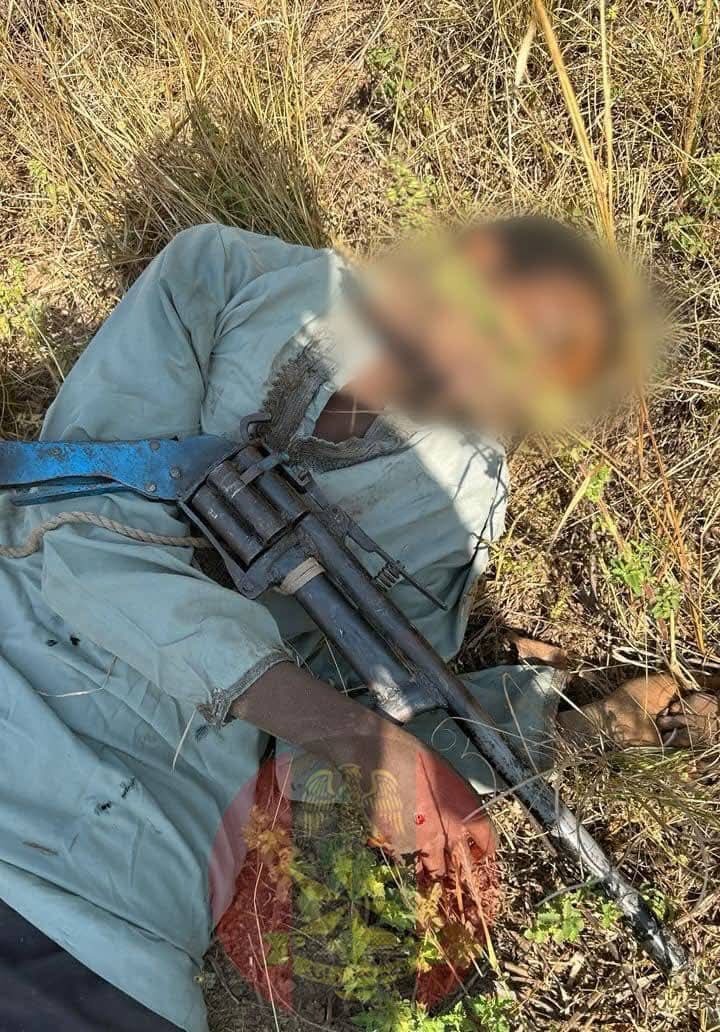
Troops Neutralise Bandits, Arrest Suspected Logistics Supplier in Kogi Operations

0


Troops of 12 Brigade, Nigerian Army, Lokoja, has recorded significant operational successes following coordinated fighting patrols and ambush operations across parts of Kabba Bunu and Yagba West Local Government Areas of Kogi State.

Acting on credible intelligence about the movement of bandits from the Adankolo general area towards Agbadu Bunu in Kabba Bunu LGA, troops swiftly deployed and laid a deliberate ambush at an identified crossing point.

The bandits ran into the ambush and were engaged, forcing them to withdraw with indications of casualties, as bloodstains were observed during exploitation of the area.
During the encounter, troops neutralised two bandits and recovered one AK-47 rifle, one magazine, 99 rounds of 7.62mm special ammunition, one locally fabricated gun and 11 cartridges.
In a related development, further intelligence revealed bandit movement around Saminaka village in Yagba West LGA.

Troops, in collaboration with local vigilantes, conducted a fighting patrol to the village and adjoining forested areas. On arrival, the village was found deserted, prompting troops to dismount and exploit the surrounding forest and routes leading towards the Saminaka–Sabo Rijiya road.

Troops later made contact with an unconfirmed number of bandits and engaged them, leading to their withdrawal through the forest. During subsequent exploitation, troops traced the withdrawal route and discovered one neutralised bandit, one AK-47 rifle and 17 rounds of 7.62mm special ammunition.
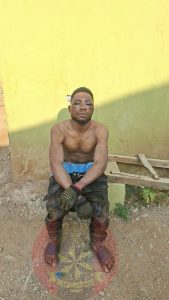
During the same operation, troops arrested a suspected bandit logistics supplier identified as Sunday Adedotun from Odo Eri village in Yagba West LGA.

The suspect was apprehended on a farmland within Saminaka village, where he claimed to assist farmers in transporting produce after harvest. Items discovered at the settlement included cartons of energy and soft drinks, bottled water and harvested farm produce.

The suspect is currently in custody undergoing investigation.
The operations underscore the sustained pressure being mounted by troops against criminal elements and their support networks in the area.

The Commander, 12 Brigade Nigerian Army, Brigadier General Kasim Umar Sidi, commended the troops for their professionalism, courage and timely response to credible intelligence, noting that their actions reflect a high level of commitment to duty.

He assured the public that troops will continue to sustain aggressive patrols, ambushes and intelligence-driven operations to deny criminal elements freedom of action within the area.

DUTY, DILIGENCE, AND PROTECTION: STATE RESPONSIBILITY IN ADDRESSING DOMESTIC AND GENDER-BASED VIOLENCE

0


By Oluwatoyin Omotayo Esq

Domestic and gender-based violence (DGBV) is not a private dispute, a cultural issue, or an unfortunate social reality. It is a grave violation of human rights that engages the legal responsibility of the state. Where governments fail to act with urgency, consistency, and accountability, violence thrives, survivors are silenced, and justice becomes elusive.
At the heart of the global response to domestic and gender-based violence lies a clear principle: the state has a duty to protect. This duty is anchored in international human rights law, regional treaties, and domestic constitutional obligations. It demands not sympathy, but action.
State Duty Under International Human Rights Law
International instruments such as the Convention on the Elimination of All Forms of Discrimination against Women (CEDAW), the Maputo Protocol on the Rights of Women in Africa, and the Istanbul Convention articulate the state’s responsibility to prevent, investigate, punish, and remedy gender-based violence. These frameworks recognise that violence against women and girls is both a cause and a consequence of structural inequality.
Central to these obligations is the principle of due diligence, the requirement that states act reasonably and effectively to protect individuals from harm, even when violence is perpetrated by private actors. Failure to do so is not merely poor governance; it constitutes a breach of human rights obligations.
From Legal Duty to Practical Diligence
The existence of laws and policies is not sufficient. State responsibility extends beyond formal commitments to the effective implementation of protections. Governments must ensure that institutions, police, courts, health systems, and social services, are equipped, trained, and resourced to respond to domestic and gender-based violence.
In many jurisdictions, including Nigeria, survivors encounter weak enforcement, delayed investigations, insensitive handling by law enforcement, and judicial processes that prioritise reconciliation over accountability. These systemic failures reflect a lack of due diligence and undermine public confidence in state institutions.
Protection as a Core Governance Function
Protection is not an optional social service; it is a core function of governance. States must provide accessible shelters, medical care, psychosocial support, legal aid, and economic assistance for survivors. Without these safeguards, legal remedies remain theoretical, and survivors are often forced to choose between continued abuse and social or economic destitution. Where governments fail to fund and sustain these services, responsibility cannot be shifted to civil society alone. Non-state actors may support survivors, but they cannot replace the state’s legal obligation to protect.
Accountability and the End of Impunity
Impunity is one of the greatest enablers of domestic and gender-based violence. When perpetrators are not held accountable, violence is normalised and repeated. States must therefore ensure prompt investigation, prosecution, and punishment of offenders, regardless of status or influence.
Judicial actors must be trained to understand the dynamics of abuse and reject harmful stereotypes that blame survivors or minimise violence. Accountability must also extend to state institutions themselves, where negligence or inaction contributes to harm.
Prevention and Structural Change
True diligence requires prevention. Government must address the root causes of domestic and gender-based violence through education, public awareness, and policies that promote gender equality. School curricula, media regulation, and community engagement, particularly with men and boys, are essential to dismantling norms that excuse or legitimise violence.
Prevention is not a long-term aspiration; it is an immediate legal and moral obligation.
Nigeria’s Governance Challenge
Nigeria’s legal framework reflects both progress and persistent gaps. While laws such as the Violence Against Persons (Prohibition) Act provide important protections, their uneven adoption across states and the non-domestication of key international treaties weaken national coherence. This fragmentation results in unequal protection and inconsistent access to justice for survivors.
The failure to fully domesticate international obligations signals a troubling gap between commitment and compliance, undermining the state’s ability to meet its duty of care.
Conclusion
Domestic and gender-based violence tests the integrity of governance and the sincerity of state commitment to human rights. Duty demands legal recognition, diligence requires effective implementation, and protection must be tangible, accessible, and survivor-centred.
States cannot claim progress while survivors remain unprotected, institutions remain under-resourced, and accountability remains elusive. Ending domestic and gender-based violence is not an act of charity or political goodwill, it is a legal obligation rooted in human dignity and the rule of law.
Where the state acts with diligence, justice becomes possible. Where it does not, violence persists. The choice before government is clear.

Oluwatoyin Omotayo Esq is the
Founder TOOF

Pro-Tinubu Group Lauds Deputy Speaker’s PISE Project Over Peaceful Yuletide

0


***Commends Kalu’s Support for President

The Renewed Hope Coalition, a pro-President Bola Ahmed Tinubu advocacy group, has hailed the Peace in the South East Project (PISE-P) initiated by the Deputy Speaker of the House of Representatives, Rt. Hon. Benjamin Okezie Kalu, for contributing to the relatively peaceful Yuletide season experienced in the South East region this year.

In a statement issued in Enugu, the National Coordinator of the Renewed Hope Coalition, Comrade Emmanuel Okoro, described the 2025 Christmas and New Year celebrations in the South East as a marked departure from previous years plagued by insecurity and enforced sit-at-home orders.

“Unlike in the past, when fear and tension dominated the festive period due to unrest, this year’s Yuletide has been remarkably calm, allowing families to travel home freely, reunite, and celebrate in peace,” Okoro said.

“We attribute this positive development largely to the non-kinetic approach of the Peace in the South East Project (PISE-P), convened by the Deputy Speaker, Rt. Hon. Benjamin Kalu.”

The group praised PISE-P’s focus on reconciliation, community engagement, and development initiatives as key factors in restoring stability and confidence in the region.

Launched in late 2023, the project has continued to promote dialogue and socio-economic programs aimed at addressing the root causes of insecurity without reliance on military force alone.

The Renewed Hope Coalition also commended Rt. Hon. Kalu for his support for President Bola Ahmed Tinubu’s administration.

During his recent annual end-of-year town hall meeting in Bende Federal Constituency, Abia State, Kalu highlighted the fruits of the President’s bold economic reforms and expressed gratitude for the administration’s inclusive policies.

“We salute the Deputy Speaker for his steadfast loyalty to the Renewed Hope Agenda,” Okoro added.

“His legislative achievements, constituency projects, and peace-building efforts align perfectly with President Tinubu’s vision for a united and prosperous Nigeria.

#Kalu’s recent announcement of a ₦1 billion donation to support 2,000 MSME start-ups in Abia State, alongside palliatives and infrastructure developments, further demonstrates his commitment to uplifting the people.”

The group called on all stakeholders in the South East to sustain the momentum of peace and rally behind initiatives like PISE-P, while urging continued support for President Tinubu’s transformative leadership.

“As we enter 2026, the Renewed Hope Coalition remains confident that with leaders like Rt. Hon. Benjamin Kalu championing peace and progress, the South East will fully reclaim its position as the economic powerhouse of Nigeria,” the statement concluded.

Trump Says U.S. Will Oversee Venezuela Transition, Announces Oil Investment Plans

0


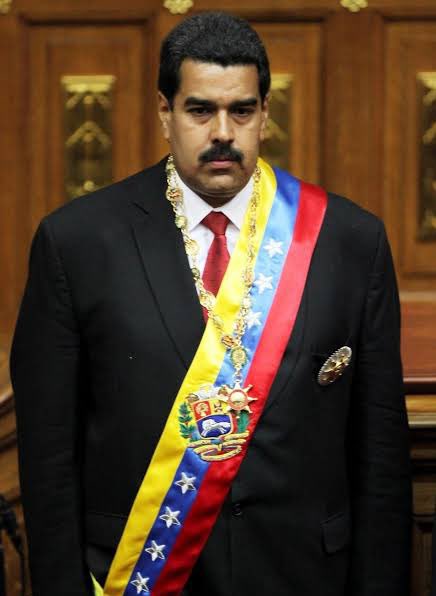
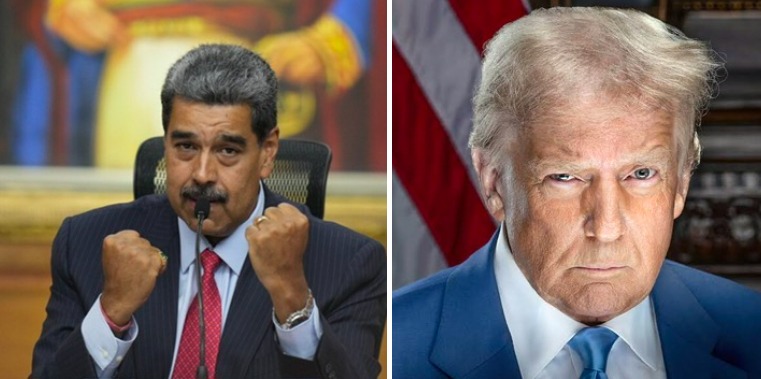
President Donald Trump has announced his intention for the United States to run the affairs of Venezuela until a new leader takes over from President Nicolás Maduro.

“We are going to run the country until a safe, proper, and judicious transition. We don’t want to be involved in someone else getting in with the same situation,” Trump said.

He also disclosed that, late last night and early today, the U.S. Armed Forces carried out what he described as an extraordinary military operation in the Venezuelan capital.

“At my direction, the U.S. Armed Forces conducted an extraordinary military operation in the capital of Venezuela. It was an assault like people haven’t seen since World War II,” he said.

President Trump further announced that major U.S. oil companies are set to invest billions of dollars in Venezuela to help stimulate the country’s economy.

“Our very large U.S. oil companies will go in, fix the badly broken oil infrastructure, and start making money for the country,” he added.


https://x.com/i/status/2007496768187940992

U.S. Unseals Indictment Against Maduro, Cabello, Others Over Alleged Narco-Terrorism Conspiracy

0


The United States Department of Justice has unsealed a superseding indictment charging former Venezuelan President Nicolás Maduro, senior government officials, and criminal figures with narco-terrorism and a massive cocaine trafficking conspiracy.

According to the indictment, filed in the U.S. District Court for the Southern District of New York, federal prosecutors accuse six high-ranking Venezuelan figures of orchestrating a decades-long scheme to traffic thousands of tons of cocaine into the United States while partnering with designated foreign terrorist organisations and transnational criminal groups.

Those charged include Nicolás Maduro Moros, former president and current de facto ruler of Venezuela; Diosdado Cabello Rondón, Minister of the Interior, Justice and Peace; former Interior and Justice Minister Ramón Rodríguez Chacín; Cilia Adela Flores de Maduro, de facto First Lady of Venezuela; Nicolás Ernesto Maduro Guerra, son of Nicolás Maduro and a member of Venezuela’s National Assembly; and Héctor Rusthenford Guerrero Flores, also known as “Niño Guerrero,” leader of the Venezuelan gang Tren de Aragua.
Prosecutors allege that from approximately 1999 to 2025, the defendants participated in a narco-terrorism conspiracy that involved partnerships with groups including the FARC and its successors, the ELN, the Sinaloa Cartel, Zetas/Cartel del Noreste, and Tren de Aragua. The indictment claims Venezuelan government institutions, the military, and diplomatic channels were used to protect and facilitate the transport of cocaine into the United States.

The charges further allege that Venezuela provided safe haven for drug traffickers and terrorists, while the accused enriched themselves and their families through corruption, bribery, money laundering, and patronage networks commonly referred to as the “Cartel de los Soles.”

Prosecutors also cite the alleged use of military escorts, clandestine airstrips, diplomatic passports, and commercial containers to move large drug shipments, including seizures of more than 5.5 tons of cocaine in Mexico in 2006 and 1.3 tons in France in 2013.

The defendants face charges including narco-terrorism conspiracy, conspiracy to import cocaine, possession of machine guns and destructive devices during drug trafficking crimes, and conspiracy to possess such weapons in connection with drug offenses.

The case builds on earlier investigations into Venezuela’s alleged role as a narco-state. Previous co-conspirators, including former intelligence chief Hugo “El Pollo” Carvajal, who pleaded guilty in June 2025, and Cliver Alcalá Cordones, who pleaded guilty in 2023, have cooperated with U.S. authorities.

The indictment describes Venezuela under Maduro as a system in which drug trafficking profits were used to entrench political power, fund narco-terrorist groups, and benefit elite families, while hundreds of tons of cocaine allegedly moved annually through Caribbean and Central American routes toward the United States.
No arrests of the principal defendants have been made, as they remain in Venezuela. The United States has long refused to recognise Maduro as the country’s legitimate president following disputed elections in 2018 and 2024.

The unsealing of the indictment marks one of the most sweeping cases brought against senior foreign government officials in connection with international drug trafficking and narco-terrorism.

Distinguishing between Federal Government Revenue and the Federation Account

0


By Temitope Ajayi

Public debate on government finances in Nigeria is once again clouded by confusion, little knowledge, and deliberate misrepresentation. At the centre of the current controversy is a misunderstanding of the distinction between total revenue generated by government agencies and the portion that actually belongs to the federal government.

The confusion has been amplified by commentators who should know better and by a media ecosystem increasingly driven by noise rather than nuance. As a result, statements by President Bola Tinubu on revenue performance and remarks by the Minister of Finance and Coordinating Minister of the Economy, Mr Wale Edun, have been wrongly framed as contradictory, when in fact they address two entirely different fiscal realities.

There is a deliberate effort by some individuals to muddy the waters by feeding the public with misleading information. One wonders why anyone would take pleasure in unleashing such information warfare on the public.

Regrettably, it appears the mainstream media, which should help frame rational and meaningful public discourse, increasingly relies on social media for stories. They appear more interested in amplifying popular sentiments, even when wrong or absurd, for clicks and views rather than clarity. The situation is even worse on television and radio, where self-styled experts are given ample airtime to spread ignorance. These individuals parade themselves as public affairs analysts, often lacking the requisite expertise.

Last September, President Tinubu said the federal government had achieved its non-oil revenue target for 2025 by August. He made this statement during a meeting with members of the defunct Congress for Progressive Change (CPC) and The Buhari Organisation (TBO), led by former governor of Nasarawa State, Senator Tanko Al-Makura.

By August, the Nigeria Revenue Service had collected over ₦22 trillion in taxes, while the Nigeria Customs Service had generated over ₦5 trillion. The NNPC also reported several trillions of naira in remittances to the government. These figures did not even include receipts from other revenue-generating agencies such as the Nigerian Ports Authority (NPA), the Nigerian Maritime Administration and Safety Agency (NIMASA), the Nigerian Communications Commission (NCC), and others.

However, during a public hearing at the National Assembly late last year, Edun said the Federal Government could not fund its capital budget adequately because it did not have enough money. Some analysts and opposition figures, due to their poor understanding of the minister’s statement, seized on it as a talking point to misinform Nigerians. In reality, President Tinubu was correct, and Minister Edun did not contradict him.

Here are the facts:

President Tinubu was right to say revenue targets were met, as revenue-generating agencies exceeded their 2025 targets. Meeting revenue targets does not mean a government has all the money it needs. No government in the world, including the wealthiest nations, has all the money it needs. This is why most governments run deficits. A deficit is the gap between revenue and expenditure, which is usually financed through borrowing and other non-revenue sources. Nigeria’s situation is like that of a man who needs ₦10 million annually to meet his personal and family obligations but earns ₦3 million. If he sets a target to increase his income to ₦6 million and succeeds, he has met his target but still falls short of his needs.

All revenues generated by agencies such as the Nigeria Revenue Service, NNPC, NIMASA, NPA, Customs, NCC, NMDPRA, and NUPRC are paid into the Federation Account. The money in the Federation Account does not belong solely to the Federal Government. It is a pool from which the federal government, state, and local governments receive their statutory allocations.

When Mr. Edun spoke about ₦10 trillion as Federal Government revenue in 2025, he was referring to the Federal Government’s share from the Federation Account— the actual money available for federal spending.

The money being spent by the 36 states, the FCT, and the 774 local governments is primarily derived from the Federation Account through monthly FAAC allocations, as stipulated by the 1999 Constitution (as amended). Apart from Lagos State, Rivers State, the Federal Capital Territory and possibly two other states, over 90 per cent of the revenue of 32 states and the 774 local governments comes from their share of the Federation Account. The internally generated revenue of many states and local governments, as reflected in their 2026 budget proposals, is less than 10 percent of their planned expenditure for the year. It, therefore, the federally collected revenues into the federation account that the entire machinery of the three levels of government essentially run on. It is very important that this distinction is made for a better public understanding of how our government is funded.

While it is the job of the opposition and civil society to criticise and hold the government accountable, the media must act as the buffer and guardrails in promoting honest and open public conversations. The media as the watchdog and moral compass of the society should frame national debate in a way that the public is properly educated and enlightened. A well-informed citizenry is essential to sustaining democracy and promoting good governance. Democracy is endangered when charlatans are given unhindered access to microphones to ventilate falsehoods and misrepresent facts.

-Ajayi is Senior Special Assistant to President Tinubu on Media and Publicity

Trump Says U.S. Airstrikes Hit Venezuela, Maduro and Wife ‘Captured, Flown Out’

0


U.S. President Donald J. Trump announced early Saturday that American forces have carried out what he described as a “large-scale strike” against Venezuela, claiming that Venezuelan President Nicolás Maduro and his wife, Cilia Flores, were captured and flown out of the country following the operation.

In a statement posted on his social media platform, Trump said the strikes — which included explosions reported across the Venezuelan capital Caracas and other regions — were executed with the involvement of U.S. law enforcement and marked a “successful” campaign against Maduro’s government.

“The United States of America has successfully carried out a large scale strike against Venezuela and its leader, President Nicolas Maduro, who has been, along with his wife, captured and flown out of the country,” the U.S. president wrote in the message.

He also announced a press briefing scheduled for 11 a.m. at Mar-a-Lago to provide further details.

According to US Senator Mike Lee, President Maduro of Vanuawella has been detained to face criminal charges in the United States.

He said, “Just got off the phone with Secretary Rubio. He informed me that Nicolás Maduro has been arrested by U.S. personnel to stand trial on criminal charges in the United States, and that the kinetic action we saw tonight was deployed to protect and defend those executing the arrest warrant

“This action likely falls within the president’s inherent authority under Article II of the Constitution to protect U.S. personnel from an actual or imminent attack.”

Adeboye Urges Employers to Treat Domestic Staff with Dignity, Says Destinies Are Connected

0


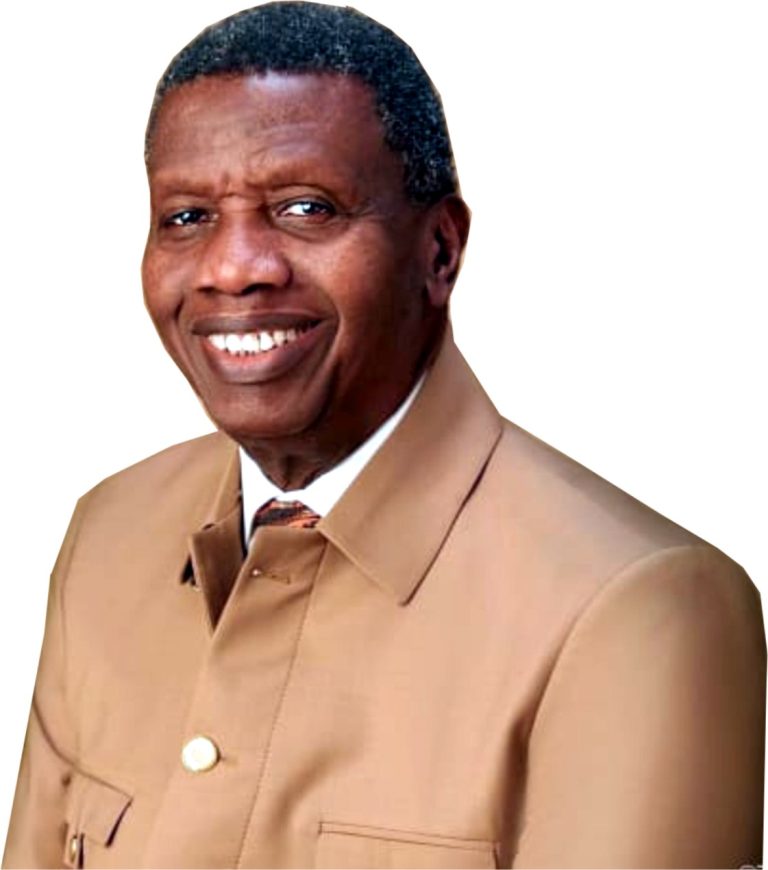
The General Overseer of the Redeemed Christian Church of God (RCCG), Pastor Enoch Adeboye, has urged employers, especially influential men and women, to treat their domestic staff with kindness and respect, noting that destinies are often intertwined.

Adeboye gave the admonition on Friday during the first Holy Ghost Service of the year, held at Redemption City in Ogun State, where he spoke on the theme, “The Brand New Beginning.”

Addressing the congregation, the revered cleric, fondly called “Daddy G.O.,” said house helps, including house boys and maids, should not be looked down upon, as circumstances—not destiny—often place people in positions of service.

“The big men and women should treat whoever comes to serve in their house well,” Adeboye said. “They came to your house because your destiny is tied with theirs. Change your attitude towards your servants.”

He stressed that no one was created to be a servant permanently, noting that many domestic workers are educated and capable of achieving greatness if given support.

“There is nobody who stays as a house boy or house girl—many of whom today are graduates—who cannot prosper if they receive help,” he said. “Nobody was created to be a servant. Circumstances may make you a guard today, while those you serve may later become great.”

Adeboye also shared a personal anecdote to underline the importance of humility, recounting how someone once questioned why he addressed his driver respectfully.
“I replied that there is only one true boss, and that is Jesus Christ,” he said.

The RCCG leader warned that servants and aides could be critical to one’s success, urging employers to be mindful of how they treat those around them.

“They might be the link to your ultimate victory,” he said, citing biblical examples to buttress his point.

INEC Denies Releasing Timetable for 2027 General Election

0

The Independent National
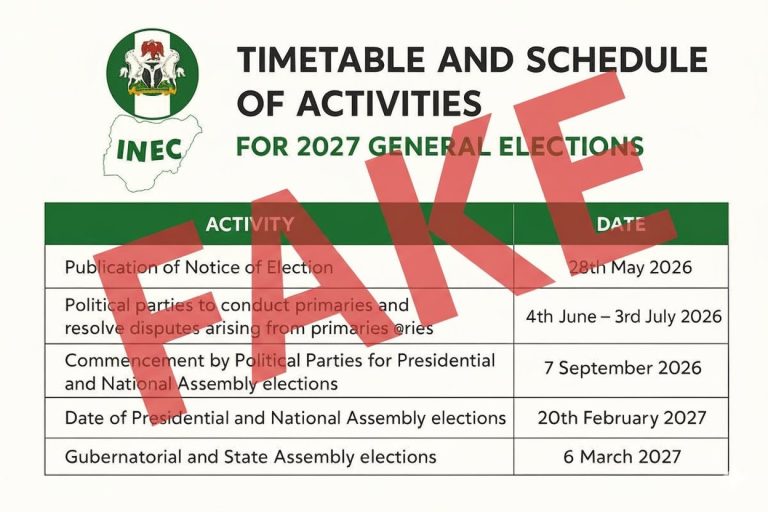
Electoral Commission (INEC) has dismissed reports claiming that it has released the timetable and schedule of activities for the 2027 General Election, describing the information as false and misleading.

The statement was e-signed by Adedayo Oketola, Chief Press Secretary and Media Adviser to the INEC Chairman.

In a statement on Tuesday, the Commission clarified that it has not issued any timetable or schedule for the 2027 polls.

INEC stressed that it operates strictly within the provisions of the law, noting that Section 28(1) of the Electoral Act, 2022 mandates the Commission to publish a Notice of Election not later than 360 days before the date appointed for a general election. It added that any timetable released outside this statutory framework could not have emanated from the Commission.

The electoral body assured Nigerians that the official timetable and schedule of activities for the 2027 General Election would be released in due course, in full compliance with the 1999 Constitution (as amended) and the Electoral Act, 2022.

INEC further stated that when the timetable is released, it will be communicated through the Commission’s established and verified channels.
The Commission urged the public and the media to disregard the fake reports and rely solely on information from INEC’s official platforms for accurate and authoritative updates.