
Home Blog Page 730

There’s need to confront culture that glorifies corruption – Olukoyede

0

The Chairman of the Economic and Financial Crimes Commission (EFCC), Mr Ola Olukoyede, has drawn a fresh battle line in Nigeria’s long war against corruption, declaring that the struggle goes far beyond arrests and prosecutions to confront the beliefs and attitudes that make crime seem acceptable.

According to him, economic and financial crimes do not flourish merely because laws are weak or institutions fail, but because society has, over time, tolerated ideas and narratives that portray wrongdoing as smart, profitable, and even admirable.

Olukoyede disclosed this in his Foreword to a new compelling and incisive book titled “Crime Is a Bad Market”. The book is written by a Nigerian media entrepreneur, edutainment strategist and youth development advocate, Mr Tayo Folorunsho.

According to Olukoyede, the message in the book aligns directly with the core mandate of the EFCC and reinforces the agency’s evolving approach to tackling corruption at its roots.

The EFCC boss also stressed that the commission has always viewed its responsibility as deeper than law enforcement, saying there is the need to break the menace of corruption for positive growth of the economy.

He said, “The Commission is focussed on breaking the siege of corruption to stimulate growth in the economy. The EFCC has long understood that the fight against economic and financial crimes is not merely a legal obligation; it is a moral crusade. Our battle is not only against offenders but against the ideas, narratives, and cultural mindsets that make wrongdoing appear rational, even aspirational.”

Olukoyede further argued that national decline is rarely sudden, noting that it is often the outcome of repeated moral compromises that eventually become normalised. He explained that criminal acts usually begin long before they attract the attention of investigators.

He further said, “It is an obvious fact that nations do not decline suddenly; they decline gradually, choice by choice, value by value, compromise by compromise. Long before a crime appears on the radar of law enforcement, it begins as a quiet negotiation within the human mind: a moment where principle is weighed against profit, and discipline is traded for desire. “Crime Is a Bad Market” is a compelling illumination of this hidden battleground.”

Olukoyede said the book arrives at a time when shortcuts to wealth have gained dangerous appeal and illicit success is too often celebrated in public spaces. He described the work as a timely counterweight to a culture that rewards excess without questioning its source.

“In a society where the allure of shortcuts has become dangerously attractive, and where the false glamour of illicit wealth is often celebrated, this book provides a profound philosophical antidote”, he said.

The EFCC boss added that the author dismantles the illusion of quick gain and exposes the long-term cost of unlawful behaviour, both to individuals and to the nation.

The anti-graft czar further stated that the book “exposes the deception behind easy gain and demonstrates, with clarity and conviction, that every unlawful profit is a future loss disguised as success. Crime may appear to offer advantage in the moment, but it always destroys more than it delivers: reputation, peace, purpose, and ultimately, one’s destiny.”

Beyond condemnation, Olukoyede said the book reframes integrity as a practical and profitable choice, rather than a moral burden. According to him, it challenges the notion that honesty is a disadvantage in modern society.

He said, “What this book offers is a reorientation of thought: a return to the foundational truth that integrity is not just virtuous but profitable, that honesty is not weakness but strength, and that a nation’s future is secured not only by the enforcement of laws but by the elevation of values.”

Olukoyede noted that “Crime Is a Bad Market” goes beyond figures, case files, and enforcement strategies to interrogate the deeper origins of criminal behaviour. In his view, corruption often takes root far from government offices.

“Crime Is a Bad Market” moves beyond statistics and enforcement to explore the psychological, social, and cultural origins of criminal behaviour.
It reminds us that corruption does not begin in government offices; it begins in the formative spaces: homes, schools, peer groups, and personal ambitions, where the human spirit learns what to prize and what to reject. In this sense, the book speaks directly to the heart of preventive governance, which is at the core of the EFCC’s mission.”

The EFCC chairman said he was particularly drawn to the book’s emphasis on redemption and renewal, noting that it offers hope rather than despair.

He said, “I am particularly inspired by the book’s message of redemption. It does not merely condemn wrongdoing; it offers a pathway to renewal, progress, and national rebirth. It challenges every reader (young or old, privileged or struggling) to align their lives with integrity and to see wealth not as the accumulation of things but as the cultivation of character, peace, and purpose.”

Olukoyede also described the book as timely, especially at a period when nations are increasingly defined by the strength or weakness of their moral foundations. He said the work complements the EFCC’s broader vision of a Nigeria where accountability is collective and honest labour regains its dignity.

He said, “In an era where nations rise or fall on the strength of their moral foundations, this work could not be more timely. It serves as a powerful companion to the EFCC’s efforts to build a corruption-free Nigeria, where accountability is a shared responsibility and where the dignity of honest labour is restored.”

He commended the author for producing what he described as a rare and thought-provoking contribution to national discourse, urging Nigerians across sectors to engage with its message.

“I commend the author for producing a work of rare insight, one that speaks to the intellect, awakens the conscience, and calls every Nigerian to a higher standard of citizenship. I recommend “Crime Is a Bad Market” to policymakers, educators, leaders, youth, and all who seek to contribute to the rebuilding of our national values.”

Olukoyede expressed hope that the book would spark conversations across the country and inspire a shift in mindset, particularly among young people.

“May this book ignite conversations, reshape mindsets, and inspire a new generation committed to integrity as a way of life,” he added.


About the Author
Tayo Folorunsho (Teeflo) — the author of Crime is a bad market — is the Founder of Edutainment First International Ltd/GTE, using education-driven entertainment to empower young people.

He also created “The Big Break Moment Africa”, a platform for discovering and showcasing student talent across Africa.

In 2025, he launched “You Against Crime International”, a civic initiative focused on non- kinetic approach that’s aimed at combating crime and creating awareness round universities and colleges in Nigeria.
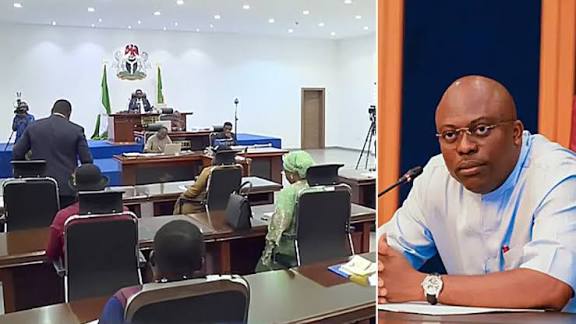

Rivers Assembly Raises Alarm Over Alleged Moves to Secure Ex-Parte Orders Outside Port Harcourt

0


The Rivers State House of Assembly has alleged that certain individuals are plotting to obtain ex-parte court orders from High Courts outside the Port Harcourt Judicial Division to unlawfully halt the Assembly from carrying out its constitutional responsibilities.

The allegation was contained in a press release issued on Monday and signed by the Chairman of the House Committee on Information, Petitions and Complaints, Hon. Dr. Enemi Alabo George, DSSRS. According to the statement, the Assembly received what it described as credible intelligence indicating that the plots were aimed at frustrating its ongoing legislative processes.

“The Rivers State House of Assembly has received information of plots by certain persons to utilize some Rivers State High Courts, especially outside the Port Harcourt Judicial Division, to issue ex-parte orders to illegally stop the Rivers State House of Assembly from performing her constitutional duties,” the statement said.
The Assembly noted that those allegedly behind the moves were fully aware of relevant constitutional provisions, including Section 272(5) of the 1999 Constitution (as amended), which vests jurisdiction on the Federal High Court to determine whether the tenure of a member of a House of Assembly, a governor, or deputy governor has ceased or become vacant.

It also cited Section 188(10) of the Constitution, which provides that proceedings or determinations of a House of Assembly or its investigative panel on impeachment matters “shall not be entertained or questioned in any court.”

The lawmakers further referenced recent judicial pronouncements, including a Court of Appeal decision, which faulted similar ex-parte orders previously issued by a Rivers State High Court in contravention of Section 272(3) of the Constitution.
“A word is enough for the wise,” the statement warned.

With the approval of the Speaker, the Assembly called on those concerned to exercise restraint and desist from actions it described as inimical to the Constitution and the rule of law. It urged affected office holders who have been served with notices of allegations of gross misconduct to respond to the allegations “item by item” rather than resort to what it termed “subterranean moves” or media attacks against the Assembly.

The House reaffirmed its commitment to constitutionalism and the rule of law, while calling for calm amid heightened political tensions in the state.

Meanwhile, political observers have suggested that President Bola Ahmed Tinubu has intervened in the impeachment process initiated by the Rivers State House of Assembly against Governor Siminalayi Fubara, amid concerns over the broader political implications for the state ahead of the 2027 general elections.

GSFE, LOANI Donate 251 Books to Traveling Libraries Serving Rural Communities Across Africa

0


The Global Society for Female Entrepreneurs (GSFE) and Leaders of All Nations International (LOANI) have partnered to deliver 251 books to traveling libraries serving underserved villages across Africa, in a joint initiative aimed at expanding access to education, literacy and empowerment.

The initiative supports mobile libraries that move from village to village, bringing books and learning resources to communities without access to permanent library facilities.

The project is designed to promote literacy, leadership development and lifelong learning among children, youth, women and community leaders.

The donated books were carefully selected across seven categories: children’s books and early literacy (62); women’s empowerment and leadership (41); business, entrepreneurship and financial education (47); inspiration, faith and personal growth (39); health, healing and well-being (28); fiction and storytelling (21); and educational, activity and reference materials (13).

According to the organisations, the collection is intended to strengthen education, creativity, economic empowerment and community development, particularly in remote areas.

The initiative was funded by GSFE members and implemented in partnership with LOANI.

It was led by Lady Ambassador Dr. h.c. Robbie Motter, Founder and Chief Executive Officer of GSFE, and Dr. Caroline Makaka, Founder and Chief Executive Officer of LOANI.
Dr. Motter said the collaboration highlights the impact of collective action in advancing education. “These books are far more than paper and ink. They represent hope, dignity, knowledge and the opportunity to transform lives,” she said.

Dr. Makaka described traveling libraries as critical tools for reaching marginalized communities. “Knowledge that moves and reaches remote areas can change entire futures. This is education in motion,” she noted.

The project was inspired by Dr. Motter’s visit to Africa during the LOANI Summit, where she witnessed the impact of access to books firsthand. Following the visit, GSFE members were encouraged to donate books during the GSFE World Kindness Day event to support the initiative.

The collaboration aligns with the United Nations Sustainable Development Goal 4 on Quality Education and reflects the organisations’ shared commitment to education, empowerment and community development.
GSFE is a registered 501(c)(3) nonprofit organisation focused on empowering and mentoring individuals to build purposeful and impactful lives and businesses. LOANI is a global humanitarian nonprofit dedicated to leadership development, education, peace-building and community empowerment.

Both organisations have pledged to continue collaborating on future initiatives aimed at expanding access to education and development opportunities across communities worldwide.

Lagos Govt Orders Probe Into Death of Chimamanda Adichie’s Son at Private Hospital

0


The Lagos State Government has expressed deep sorrow over the reported death of Nkanu, the son of renowned Nigerian author, Ms. Chimamanda Ngozi Adichie, following a medical incident at a private healthcare facility in Lagos on January 6.

In a statement issued on behalf of the government and people of Lagos State, the state extended its heartfelt condolences to Ms. Adichie and her family, describing the loss of a child as a profound and irreparable tragedy. The government assured the family of its concern and commitment to ensuring justice.

Reaffirming that it places the highest value on human life, the Lagos State Government stated that it maintains zero tolerance for medical negligence or unprofessional conduct in any health facility operating within the state.

Consequently, Governor Babajide Sanwo-Olu has directed the Health Facility Monitoring and Accreditation Agency (HEFAMAA) to immediately commence a thorough, independent, and transparent investigation into the circumstances surrounding the incident, with the aim of determining both the immediate and remote causes of the death.

In compliance with the directive, HEFAMAA has begun its investigation and has already visited the facility involved.

The agency said it will conduct a comprehensive review of all allegations and reports connected to the incident.
HEFAMAA, which is statutorily mandated to regulate, monitor, and accredit public and private health facilities in Lagos State, noted that it routinely investigates cases of alleged medical negligence and unethical practices to uphold patient safety, professional standards, and quality healthcare delivery.

The agency will also collaborate with the Medical and Dental Council of Nigeria (MDCN) and other relevant regulatory bodies to ensure a holistic, credible, and professional investigation process.

According to the statement, the investigation will examine compliance with established clinical protocols, professional conduct, patient safety standards, and the roles and responsibilities of all parties involved. The findings will be made public at the conclusion of the process in the interest of transparency and public accountability.

The Lagos State Government assured residents that any individual or institution found culpable of negligence, professional misconduct, or regulatory violations would face appropriate sanctions in line with existing laws and regulations.

While urging the public to remain calm and avoid speculation, the government emphasized that due process is being followed to guarantee fairness, justice, and credible outcomes.
The statement reiterated the state’s commitment to safeguarding the health, safety, and rights of all residents and to strengthening oversight of medical practice to prevent a recurrence of such tragic incidents.

The government once again extended its deepest condolences to Ms. Chimamanda Adichie and her family.


#AGreaterLagosRising
#LASG

Bayelsa Adopts Harmonised Tax Law to End Multiple Taxation

0


Bayelsa State has enacted a new Harmonised Taxes Law, joining a growing list of states implementing key fiscal reforms aimed at eliminating multiple taxation and curbing illegal tax collection.

The development was disclosed by the Chairman of the Presidential Committee on Fiscal Policy and Tax Reforms, Mr. Taiwo Oyedele, who commended the Bayelsa State Government for taking the bold step toward strengthening its tax administration framework.

According to Oyedele, Bayelsa now stands alongside other states that have already enacted similar laws, including Anambra, Ekiti, Gombe, Kogi, Nasarawa, Plateau and Zamfara. He added that several other states are currently at advanced stages of passing and gazetting the harmonised tax legislation.

He noted that the adoption of the law signals a shift towards a more coordinated, transparent and investor-friendly fiscal environment across the country, as the reforms are designed to streamline tax processes and protect businesses and individuals from arbitrary levies.

Oyedele described the growing acceptance of the Harmonised Taxes Law by states as the beginning of a transformative fiscal era in Nigeria, one that will enhance compliance, boost investor confidence and promote sustainable economic growth.

Nigeria Qualifies for AFCON semi-final

0


The Super Eagles of Nigeria have qualified for the semi-final of the 2025 Africa Cup of Nations (AFCON).

The team defeated Algeria 2-0 in the quarter-final on Saturday.


#ALGNGA

Lagos Police Hunt for Husband Over Alleged Killing of Mother of Five

0

An estate in Lagos was thrown into mourning on January 8 following the alleged killing of a woman, a mother of five, during a domestic dispute with her husband.
The suspect, identified simply as AY, is accused of attacking his wife at their residence, reportedly in the presence of their children, before fleeing the scene. The incident sparked outrage among residents and prompted an immediate response from security agencies.
Police authorities launched a manhunt for the suspect and appealed to members of the public for information that could lead to his arrest. Initial reports indicated that he fled Lagos and was believed to be heading toward Kaduna State.

Body of Ogun murder suspect found

The body of Ayoola Ayanwale, the prime suspect in the alleged murder of his wife, Ayobami Ganiyatu, has been found in the Palmgroove CDA, Sotubo area of Ogun State.

Police said a bottle of suspected Sniper, a poisonous substance, was recovered at the scene.

Lagos Environmental Taskforce Arrests 56, Clears Illegal Activities Along Akowonjo–Cele Axis

0


The Lagos State Environmental Taskforce has arrested 56 suspects during a midnight clean-up and enforcement operation along the Akowonjo Road by Cele Bus Stop on the mainland.

Commissioner for the Environment and Water Resources, Mr. Tokunbo Wahab, disclosed this in a statement on Friday, saying the operation commenced at about 12:20 a.m. on January 10, 2026, as part of the state’s ongoing efforts to rid Lagos of environmental violations and criminal activities.

According to Wahab, the taskforce observed that the entire stretch of Akowonjo Road had been taken over by illegal activities, including makeshift beer parlours, open drug peddling, and the presence of criminal elements. He noted that these activities obstructed free movement and posed serious security and environmental risks to residents.

The enforcement team subsequently cleared the area of all violations of state environmental laws, seizing chairs, tables, and other items that had been spread across the road and were hindering the free flow of traffic.
Wahab added that the suspects arrested during the operation would be charged to court as soon as possible.

He reiterated the state government’s zero-tolerance stance on environmental degradation and criminality, assuring residents that similar operations would continue across Lagos to maintain order, safety, and cleanliness.

FG Defends New Tax Laws, Faults KPMG’s Interpretation

0


The Presidential Fiscal Policy and Tax Reforms Committee has pushed back against a recent publication by KPMG on Nigeria’s newly enacted tax laws, saying the report largely misinterpreted policy intent and presented opinions as factual errors.
In a detailed response, the committee acknowledged that some of KPMG’s observations were useful, particularly those relating to implementation risks and clerical or cross-referencing issues. However, it maintained that most of the concerns raised reflected misunderstandings of deliberate policy choices, missed context on broader reform objectives, or preferences different from those adopted by government.

According to the committee, disagreements over policy direction should not be framed as “errors” or “gaps,” noting that other professional firms engaged constructively with government to seek clarification and provide technical input during consultations.
Stock Market, Transition and Global Best Practices
Addressing concerns about the taxation of shares, the committee dismissed fears of a stock market sell-off, explaining that the applicable tax on chargeable gains is not a flat 30 per cent but ranges from 0 to a maximum of 30 per cent, with plans to reduce the top rate to 25 per cent. It added that about 99 per cent of investors qualify for unconditional exemptions, while others are exempt subject to reinvestment.
The committee said the stock market’s record performance and increased investment flows show investor confidence in the reforms, describing claims of a sell-off as unsubstantiated.

On the commencement date of the new laws, it argued that fixing implementation strictly to the start of an accounting period would ignore the complexities of transition across different assessment bases, audits, deductions and credits.

It also defended provisions on indirect transfer of shares, stating that they align with global best practices and Base Erosion and Profit Shifting (BEPS) initiatives aimed at closing long-standing tax loopholes.

Clarifying VAT, Definitions and Dividends

The committee rejected claims of gaps in the VAT treatment of insurance premiums, stressing that insurance is not a taxable supply under Nigerian law and therefore does not require a specific exemption.

It also clarified that the inclusion of “community” in the definition of a taxable person does not create ambiguity, explaining that modern legislative drafting uses comprehensive definitions to avoid repetition. Similarly, it defended the composition of the Joint Revenue Board as intentional and consistent with its revenue-focused mandate.
On dividend taxation, the committee accused KPMG of conflating foreign-controlled companies with foreign operations of Nigerian firms, noting that dividends from foreign companies cannot be franked since no Nigerian withholding tax is deducted.

Policy Choices Under Scrutiny

The committee further rejected proposals it said would undermine reform objectives, including exempting foreign insurance companies from tax on premiums written in Nigeria and allowing tax deductions for foreign exchange sourced from the parallel market. It described these provisions as deliberate fiscal policy choices aimed at protecting local industry, supporting monetary policy and stabilising the naira.

It also defended linking VAT compliance to tax deductibility and maintaining a progressive personal income tax structure. The committee said the top marginal tax rate of 25 per cent for high earners is competitive internationally and balances fairness with economic growth, especially alongside a reduced corporate tax rate.

Correcting Alleged Errors
Responding to claims about the Police Trust Fund, the committee noted that the fund expired in June 2025 after its six-year statutory lifespan, making any call for repeal unnecessary. It also said concerns about small company tax exemptions affecting large firms pre-dated the new laws and were introduced under the Finance Act 2021.
What the Committee Says KPMG Omitted
The committee criticised KPMG for failing to highlight key structural gains of the reforms, including tax harmonisation, the planned reduction in corporate tax rates, expanded input VAT credits, exemptions for low-income earners and small businesses, elimination of minimum tax on turnover and capital, and enhanced investment incentives for priority sectors.

Way Forward
The committee said the tax reforms followed extensive stakeholder consultations and public hearings, adding that minor clerical issues are already being identified and addressed. It described the overhaul as a bold step toward a self-sustaining and competitive Nigerian economy.

It urged stakeholders to move from “static critique” to constructive engagement, stressing that effective implementation will rely on administrative guidance, regulatory clarifications and continued collaboration between government and the private sector.

𝐑𝐞𝐬𝐩𝐨𝐧𝐬𝐞 𝐭𝐨 𝐊𝐏𝐌𝐆: 𝐎𝐛𝐬𝐞𝐫𝐯𝐚𝐭𝐢𝐨𝐧𝐬 𝐨𝐧 𝐍𝐢𝐠𝐞𝐫𝐢𝐚’𝐬 𝐍𝐞𝐰 𝐓𝐚𝐱 𝐋𝐚𝐰𝐬

0


—𝘉𝘺 𝘗𝘳𝘦𝘴𝘪𝘥𝘦𝘯𝘵𝘪𝘢𝘭 𝘍𝘪𝘴𝘤𝘢𝘭 𝘗𝘰𝘭𝘪𝘤𝘺 𝘢𝘯𝘥 𝘛𝘢𝘹 𝘙𝘦𝘧𝘰𝘳𝘮𝘴 𝘊𝘰𝘮𝘮𝘪𝘵𝘵𝘦𝘦

We welcome all perspectives that contribute to a shared understanding and successful implementation of the new tax laws. We acknowledge that a few points raised by KPMG are useful, particularly those related to implementation risks and clerical or cross-referencing issues. However, the majority of the publication reflected a misunderstanding of the policy intent, a mischaracterisation of deliberate policy choices, and, in several instances, the repetition of opinions and preferences as facts.

𝐆𝐞𝐧𝐞𝐫𝐚𝐥 𝐨𝐛𝐬𝐞𝐫𝐯𝐚𝐭𝐢𝐨𝐧𝐬

A significant proportion of the issues described as “errors,” “gaps,” or “omissions” by KPMG are either:

– the firm’s own errors and invalid conclusions,

– issues not properly understood by the firm,

– missed context on broader reforms objectives,

– areas where KPMG prefer different outcomes than the choices deliberately made in the new tax laws, and

– obvious clerical and editorial matters already identified internally.

While it is legitimate to disagree with policy direction, disagreements should not be framed as errors or gaps. KPMG would have been more effective if the firm adopted a similar approach like other professional firms who engaged directly providing the opportunity for clarifications and mutual-learning.

It is equally important to distinguish between policy choices designed to achieve the reform objectives and proposals that merely represent a firm’s preference.

𝐏𝐨𝐥𝐢𝐜𝐲 𝐂𝐡𝐨𝐢𝐜𝐞𝐬 𝐚𝐧𝐝 𝐂𝐥𝐚𝐫𝐢𝐭𝐲 𝐨𝐧 𝐑𝐞𝐟𝐨𝐫𝐦𝐬

1. Taxation of Shares and the Stock Market

Contrary to the presumption that the new tax provisions on chargeable gains would trigger a sell-off on the stock market, the fact is that the applicable tax rate on share gains is not a flat 30%. The tax framework is structured from 0% to a maximum of 30%, which is set to reduce to 25%. Furthermore, a significant majority of investors (99%) are entitled to unconditional exemption, with others qualifying subject to reinvestment.

The market’s performance, which is at an all-time high with increased investment flow, demonstrates investors understanding that the tax changes will enhance the fundamentals of firms both in terms of profitability and cash flows. The sell-off narrative is unsubstantiated as any disposals in December 2025 would have benefited from the re-investment exemption or enhanced deductions under the new law.

2. Commencement Date and Transition

The suggestion to set the commencement date as the start of an accounting period (e.g., 1 January 2026) takes a narrow view of the complex transition issues. A wholesale reform affects myriad issues beyond the accounting period, spanning multiple periods, different bases of assessment (preceding year, actual year), as well as issues related to audit, deductions, credits, and penalties. Limiting the commencement to a single date for accounting periods would fail to address the intricacies of continuous transactions and other transition matters. KPMG’s proposal is therefore not a “gold standard” to be applied to all new laws as suggested.

3. Indirect Transfer of Shares

The new provision to tax indirect transfer of shares is a policy choice aligned with global best practices and BEPS initiatives. Its objective is to block a long-exploited tax loophole by multinationals and other investors, not to affect competitiveness. This is a common provision in international tax, and the assertion that it may affect the country’s economic stability is disingenuous.

4. VAT Exemption on Insurance Premium

KPMG’s point regarding a specific VAT exemption on insurance premium is technically unnecessary, as an insurance premium is not a “taxable supply” defined under the Nigeria Tax Act. Insurance relates to risk transfer, not the supply of goods or services subject to VAT. As this has always been the administrative and legal position, a specific amendment for exemption is academic. If it is not broken, don’t fix it.

𝐈𝐬𝐬𝐮𝐞𝐬 𝐑𝐞𝐟𝐥𝐞𝐜𝐭𝐢𝐧𝐠 𝐌𝐢𝐬𝐮𝐧𝐝𝐞𝐫𝐬𝐭𝐚𝐧𝐝𝐢𝐧𝐠 𝐁𝐲 𝐊𝐏𝐌𝐆

5. Inclusion of ‘Community’ in Definition

The concern about the inclusion of “community” in the definition of a ‘person’ but its omission from the charging section does not constitute a gap or ambiguity. In statutory interpretation, definitions provided in the law apply wherever the defined term appears, unless the context requires otherwise. Hence, ‘person’ and ‘taxable person’ are used in the charging section, and both definitions include ‘community.’ This approach is consistent with modern legislative drafting principles, which use comprehensive definitions to streamline operative provisions and avoid redundancy. This is similar to the inclusion of partnerships and executors in the definition but not under the charging section. The use of the word “includes” further signifies that the list of taxable persons is not exhaustive.

6. Joint Revenue Board (JRB) Composition

The composition and mandate of the Joint Revenue Board (JRB) are intentional. Its policy advisory role is specifically to provide a subnational tax and revenue perspective that complements the fiscal policy mandate of the Ministry of Finance. Its membership is appropriately limited to revenue-focused agencies, which is why it is called the Joint Revenue Board. This is a similar composition under which the former JTB operated effectively, and its functions remain consistent with the need for inter-agency coordination.

7. Distinction in Dividend Treatment

KPMG’s analysis appears to mix the distinction between a foreign-controlled company and a foreign operation of a Nigerian company. Dividends distributed by a foreign company cannot be “franked” since no Nigerian Withholding Tax (WHT) would have been deducted. Section 162(1)(s) confers exemption on dividend, interest, rent, or royalty derived from outside Nigeria and brought into Nigeria through approved channels. The choice to treat dividends distributed by Nigerian companies differently from foreign companies is a deliberate policy choice, as they are fundamentally different for tax purposes.

8. Non-Resident Registration and Final Tax

The view that a payment subject to deduction as final tax should automatically exempt the non-resident recipient from tax registration misses a critical distinction. While the law conditionally exempts passive income from registration, the deduction of tax on non-passive income is not synonymous with an exemption from registration or filing of returns. The same way that residents are required to file returns on income such as interest (in the case of individuals) and dividend where WHT is final. Returns serve a broader purpose beyond solely generating tax revenue.

𝐊𝐏𝐌𝐆’𝐬 𝐏𝐫𝐨𝐩𝐨𝐬𝐚𝐥𝐬 𝐓𝐡𝐚𝐭 𝐖𝐨𝐮𝐥𝐝 𝐔𝐧𝐝𝐞𝐫𝐦𝐢𝐧𝐞 𝐊𝐞𝐲 𝐑𝐞𝐟𝐨𝐫𝐦 𝐎𝐛𝐣𝐞𝐜𝐭𝐢𝐯𝐞𝐬

9. Tax on Foreign Insurance Premiums

The proposal to exempt foreign insurance companies from tax on premiums from insurance written in Nigeria to deepen penetration, while local insurance companies continue to pay tax, would be detrimental to the domestic insurance sector. This would create an unfair and harmful competitive disadvantage for local firms in their own market. The current policy is designed to protect and promote local industry and ensure a level playing field.

10. Parallel Market Forex Deduction

The new law disallows tax deduction for the difference where a business buys foreign exchange in the parallel market at a premium over the official rate. This is a critical fiscal policy choice designed to complement monetary policy, strengthen, and stabilise the Naira. By removing the tax subsidy for patronage of the parallel market, the policy aims to reduce incentives for round-tripping and redirect legitimate FX demands to the official market. This is policy congruence, not an error.

11. VAT Compliance-Linked Deductibility

The non-tax deduction for taxable transactions on which VAT has not been charged is a necessary anti-avoidance measure. It removes the advantage that some taxpayers previously enjoyed by patronising suppliers who evade VAT. This is a matter of fairness and is squarely within the control of a business to manage, especially given the provision for the self-charge of VAT. It also ensures that responsible businesses play their part in promoting voluntary tax compliance across the ecosystem.

12. Progressive Personal Income Tax

While KPMG acknowledges the reform objective of fairness and progressivity, the firm disagrees with a top marginal tax rate of 25% for the highest earners. In reality, the effective tax rate can be as low as 22% for an individual earning billions a year simply by contributing 10% to pension. This rate is competitive when compared to many other countries, including Angola 25%, Egypt 27.5%, Ghana 35%, Kenya 35%, the U.S. (Federal) 37%, South Africa 45%, and the U.K. 45%. So, the rate is not “oppressive” or one that will negatively affect economic growth as claimed, rather it ensures progressivity without compromising competitiveness. From a broader policy objective perspective, the increase in top marginal rate for high income earners and the reduction in corporate tax rate is designed to address the existing higher tax burden associated with business formalisation.

𝐅𝐚𝐥𝐬𝐞 𝐈𝐧𝐜𝐥𝐮𝐬𝐢𝐨𝐧 𝐚𝐧𝐝 𝐅𝐚𝐜𝐭𝐮𝐚𝐥 𝐄𝐫𝐫𝐨𝐫 𝐛𝐲 𝐊𝐏𝐌𝐆

13. Police Trust Fund

The Police Trust Fund was signed into law on May 24, 2019, with a six-year lifespan under section 2(2) of the Act, which ended in June 2025. Therefore, KPMG’s point that the new tax law should be amended to repeal the taxing section of the Police Trust Fund Act is needless, as the provision no longer exists.

14. Small Company Verification

The analysis concerning the tax exemptions for small companies affecting large companies’ obligations is not a new issue or an inconsistency in the new law. The small business threshold was introduced via the Finance Act 2021. This issue pre-dates the current tax laws and should not be presented as an error or omission simply by virtue of a higher tax exemption threshold under the new law.

𝐖𝐡𝐚𝐭 𝐊𝐏𝐌𝐆 𝐋𝐞𝐟𝐭 𝐎𝐮𝐭

While acknowledging the objectives of the reform, KPMG could have highlighted the major structural improvements under the new laws, including:

– simplification and tax harmonisation,

– the scope for reduction in corporate tax rate from 30% to 25%,

– expanded input VAT credits for businesses,

– tax exemption for low-income earners and small businesses,

– elimination of minimum tax on turnover and capital, and

– improved investment incentives for priority sectors.

A balanced assessment would have recognised these transformative elements, among others.

𝐂𝐨𝐧𝐜𝐥𝐮𝐬𝐢𝐨𝐧 𝐚𝐧𝐝 𝐖𝐚𝐲 𝐅𝐨𝐫𝐰𝐚𝐫𝐝

The tax reform is the result of an extensive consultation with various stakeholder groups, in addition to the legislative process that included widely publicised public hearings, avenues intended for all stakeholders, including international firms, to provide technical expertise at the formative stage.

In any comprehensive overhaul of a nation’s tax framework, clerical inconsistencies or cross-referencing gaps may arise, and the government is already identifying them. The tax reform represents a bold step toward a self-sustaining and competitive Nigeria.

An effective review needs to connect identified gaps to clear policy intent and the realities of modern tax systems, within the context of economic development and global competitiveness.

At this stage, the effectiveness of the tax law depends on administrative guidance, clarifications from the tax authority, and regulations that, where necessary, complement precise statutory provisions, pending future amendments.

We urge all stakeholders to shift from a static critique to a dynamic engagement model that enables clarification and a productive partnership in implementing the new tax laws.