Home Blog Page 73

Makinde questions FG’s coastal road, demands petrol pricing details

0

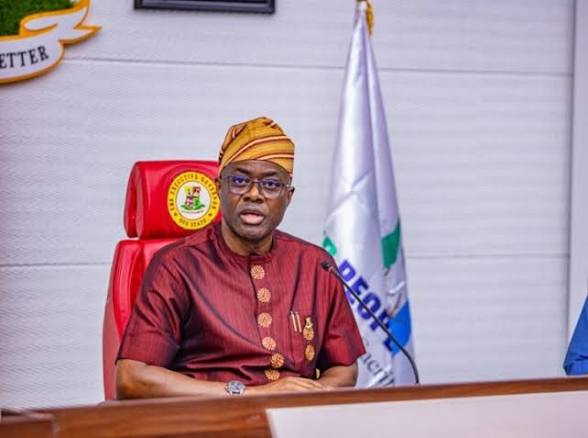
Oyo State Governor and Allied Peoples Movement (APM) presidential candidate, Seyi Makinde, has questioned the Federal Government’s spending priorities, demanding to know how major projects such as the Lagos-Calabar Coastal Highway and the Presidential Initiative on Compressed Natural Gas (CNG) would ease the hardship faced by Nigerians.

Makinde spoke on Tuesday at the APM Presidential Campaign Organisation’s South-South Town Hall Meeting in Uyo, Akwa Ibom State, where he criticised what he described as the government’s preference for mega-projects without clear evidence of benefits for ordinary citizens.

“I have also told them, ‘You cannot keep complicating the lives of Nigerians’. Everything from them is mega.

“They want to do a superhighway from where to where? They want to do mega this and mega that,” the APM presidential candidate said.

He also questioned the impact of the government’s CNG initiative and the Naira-for-Crude policy on transport costs, arguing that the policies had yet to deliver the relief Nigerians expected.

“There’s a Presidential Initiative on CNG, it came to nothing. ‘Naira for Crude’ came to nothing. Has it translated to lower costs of transportation for millions of Nigerians?” he asked.

The Lagos-Calabar Coastal Highway, a flagship project of President Bola Tinubu’s administration, is designed to run for about 700 kilometres along Nigeria’s coastline, connecting Lagos in the South-West to Calabar in Cross River State, near the border with Cameroon.

The project is intended to improve transportation links and support tourism, but its cost and long-term sustainability have attracted public debate.

Critics have raised concerns about the project’s viability amid rising living costs and the effects of rising sea levels and coastal erosion along the Gulf of Guinea.

Tinubu, however, previously described the highway as a road that would “outlive all of us here” during the inauguration of its first section.

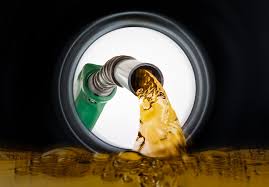
Makinde also criticised the Federal Government’s proposed price modulation policy for petroleum products, introduced more than three years after the removal of petrol subsidy.

“So now they say they want to modulate the price of petroleum products. They want to modulate the lives of millions of Nigerians.

“They want to modulate the destiny of the most populous Black nation on the face of the Earth,” he said.

The governor challenged the government to publish the pricing framework behind the proposed policy, arguing that greater transparency would allow Nigerians with relevant expertise to assess the figures and offer practical solutions.

“My question is very simple. Let’s assume that we are not evil, we’re not smart I’m not saying we’re smart but provide for Nigerians your pricing template.

We will see Nigerians that can tell us how to make it work for millions of Nigerians. So don’t complicate things and say, ‘This policy, that policy, we want to modulate the prices.’

“Give us the template. Once we have the template, we can point out the real figures and tell you how to make this thing work for millions of Nigerians.”

Sun
HAMZAT PLEDGES INTEGRATED TRANSPORT SYSTEM TO EASE LAGOS TRAFFIC

0

HAMZAT PLEDGES INTEGRATED TRANSPORT SYSTEM TO EASE LAGOS TRAFFIC

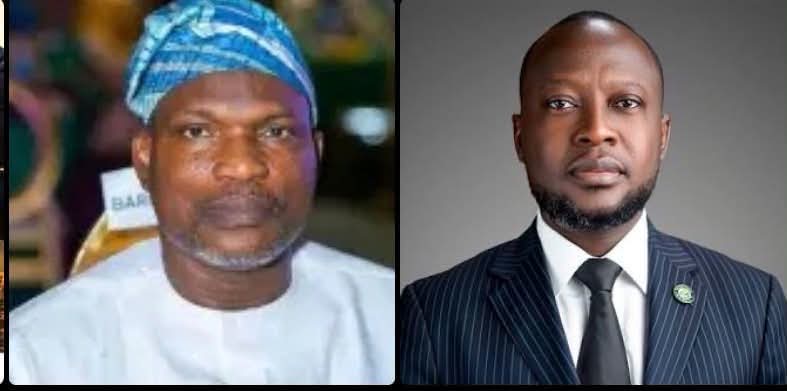
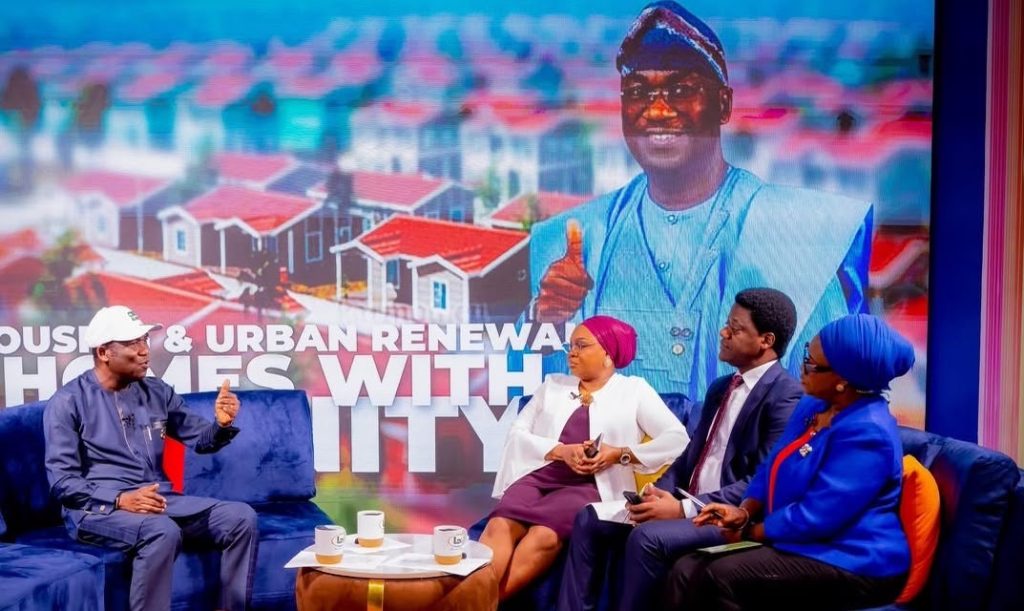
Lagos State Deputy Governor and All Progressives Congress (APC) Governorship Candidate, Dr. Kadri Obafemi Hamzat, has promised to strengthen Lagos’ integrated transportation system to ease traffic congestion and reduce travel time if elected governor.

Hamzat, who spoke on Tuesday during separate interviews with Lagos Television (LTV), Eko FM (107.5 FM) and Lagos Traffic Radio (96.1 FM), Agidingbi, said his transportation plan would integrate road, rail and waterways to provide commuters with more efficient travel options.

He explained that the state’s transportation blueprint is designed to improve mobility, reduce pressure on roads and connect different modes of transportation, stressing that an efficient transport system was essential to the growth of other sectors, including housing, education, business and youth development, among others.

According to him, “Our transportation system is what I prescribed to link all resources in Lagos. For us, moving our people easily without traffic is important and essential because this is the bedrock of everything. From housing, to education, to the ease of doing business, youth development are all functions of transportation. So, we will provide more BRT buses, decongest our bus stops and ensure that when an accident happens, we respond fast to avoid traffic.”

He further noted that addressing traffic congestion requires more than expanding road infrastructure, stressing the importance of providing commuters with reliable alternatives and improving the coordination of transport services across the state.

The Deputy Governor pledged to complete the Blue Line extension to Okokomaiko and link it with the Red Line at the National Theatre, Iganmu to improve connectivity across Lagos. He said the connection would enable commuters travelling from areas such as Yaba and Agege to reach Marina more conveniently, while residents along the Okokomaiko corridor, including students of Lagos State University (LASU), would benefit from improved rail access.

On water transportation, Hamzat said the Omi-Eko project would provide seven electric ferries, five of which had been delivered, to expand commuting options for residents. “Lagos is a water state, and as such, we must utilise the lagoon as a network of water routes so that at least we can move a lot of our people on water as we are moving on roads, and of course now on rail,” he said.

Speaking on the proposed Fourth Mainland Bridge, Hamzat expressed confidence that the project could be delivered through partnerships with private-sector investors, noting that the state must be cautious about borrowing to finance major infrastructure projects. “We must build it through partnerships, and we also need to be careful as a state in terms of borrowing,” he said.

The Deputy Governor explained that the bridge’s design and costing had been undertaken with private-sector involvement, while negotiations had been held with prospective concessionaires. He added that successful delivery would require an understanding of the responsibilities associated with public-private partnerships, including tolling arrangements that could support investors’ participation.

Hamzat also stressed the need for improved traffic management, particularly during accidents and road repairs, noting that security operatives must respond promptly to incidents to prevent severe congestion. He attributed the challenge partly to Lagos’ high vehicular density and called for better organisation, planning and traffic management.

He said his proposed approach would focus on connecting transport systems, improving commuter access and reducing travel delays, thereby supporting productivity and economic growth across the state.

Lagos Waste Crisis: Gbadegesin Out, Sanuth In

0

Lagos Waste Crisis: Gbadegesin Out, Sanuth In

Lagos State Governor, Mr Babajide Sanwo-Olu, has appointed Dr. Hassan Sanuth as the new Managing Director of the Lagos Waste Management Authority (LAWMA), following reports that the incumbent, Dr. Muyiwa Gbadegesin, had been asked to resign over persistent waste management challenges across the state.

However, relevant state authorities had yet to officially confirm the development as of press time.

Sources familiar with the matter said the governor had become dissatisfied with the continued accumulation of refuse on major roads, residential streets and drainage channels despite directives to improve waste collection.

One of the sources, who spoke on condition of anonymity, said Sanwo-Olu had asked Gbadegesin to resign over the weekend, although the outgoing managing director was reportedly seeking more time to address the situation.

“The directives aim at addressing the waste challenges in the state,” the source told Vanguard.Newspaper subscription service

Sanuth, before his reported appointment, was the Director of Sanitation Services in the Office of Environmental Services, Ministry of the Environment and Water Resources.

The reported development comes amid renewed concerns over waste collection and disposal across Lagos, despite the state government’s recent interventions to address the problem.

Recall that Sanwo-Olu, during a visit to the Olusosun Dumpsite in Ojota about a month ago, expressed dissatisfaction with the heaps of refuse across the state, describing the situation as “embarrassing”.

The governor ordered immediate action, directed a comprehensive overhaul of LAWMA’s operational structures and management, and declared a state of emergency on waste management.

Accompanied by his deputy, Dr. Obafemi Hamzat, Sanwo-Olu met with stakeholders in the waste management sector at the dumpsite to assess the challenges affecting municipal waste collection and outline immediate, medium- and long-term solutions.

He acknowledged the slow pace of waste collection, attributing the situation partly to the failure of Private Sector Participation (PSP) operators to meet their obligations in the preceding weeks.

The governor also said waste compaction activities were ongoing at the Olusosun and Solous 3 dumpsites, adding that completing the exercise would facilitate faster evacuation.

He explained that recent fire incidents at the dumpsites had slowed operations but said work had resumed, with contractors working to clear the sites for daily waste disposal.

According to him, completing the projects would enable each dumpsite to receive about 450 trucks of municipal waste daily, effectively doubling the capacity of PSP operators.

Refuse Accumulation Persists Across Communities…

Despite the interventions, residents have continued to report refuse accumulation in several parts of Lagos, including Mushin, Egbeda, Surulere, Ajegunle, Ikorodu, Ojo, Obalende, Apapa and Mile 2.

The situation has prompted repeated complaints about decomposing waste along streets, road medians, major highways and drainage channels.

A source familiar with the matter said the governor was dissatisfied that the situation had not improved despite his earlier directives.

“The governor was upset when he observed that the situation had not improved despite his clear directive,” the source said.

The source added that Gbadegesin was reportedly appealing for more time and seeking the intervention of prominent individuals.

In a weekly update on waste management posted on his X handle on Saturday, however, Gbadegesin reported progress in clearing some affected areas and sustaining collection services on selected routes.

He said Mile 2 had been cleared, with routine collection sustained, while three additional trucks had been deployed to Doyin-Orile and its environs.

“11 of the 15 routes in this week’s programme now have field updates,” he wrote.

According to the update, daily waste collection had been maintained on Ijesha Road and Itire-Ikate, while Bucknor-Ijegun had been cleared and placed on a three-times-weekly collection schedule.

He also said Okeira and Oluodo had been placed under LAWMA’s interim service following the termination of their PSP arrangements, while collection continued at Ogolonto and Igbokusu.

Obalende, he added, had been cleared, provided with a waste bin and placed under surveillance, while clearance operations continued at Iraye.

Gbadegesin identified Apapa, Abesan Estate, Idimu-Ejigbo Road and the Isheri-Igando corridor as the four routes awaiting field updates.

“The objective is to progress from clearance to sustained collection and prevention of recurrence, not simply remove visible waste,” he said.

Gbadegesin was reappointed to head LAWMA by Sanwo-Olu following the governor’s re-election.

Meet the Reported Successor

Dr. Hassan A. Sanuth holds a PhD in Environmental Microbiology and a master’s degree in Microbiology from the University of Ibadan.

His research interests include epidemiology, biodegradation and bioremediation, and environmental monitoring.

He also holds certificates in Environmental Monitoring and Modelling from the Institute for Water Education in Delft, the Netherlands, and Multilevel Water Governance from The Hague Academy for Local Governance.

Sanuth has more than 23 years of public service experience and has worked in various environmental management and protection departments, including pollution control, billing and monitoring, conservation, and ecology.

He also served as Nigeria’s focal point for environment under the United Nations Industrial Development Organisation-sponsored Collaborative Action for Sustainable Tourism programme in sub-Saharan Africa.Nigerian political analysis

Sanuth is a member of the Science Association of Nigeria, Nigeria Environmental Society and American Society for Microbiology, as well as an associate of the Nigerian Institute of Management.

Credit: Vanguard

2027: Tinubu promises traditional rulers inclusivity in governance

0

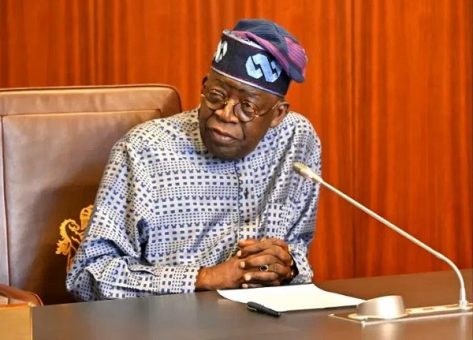
Ahead of next year’s presidential election, President Bola Tinubu, has promised traditional institutions across the country that his administration will deeply integrate them in the scheme of things if re-elected.

President Tinubu gave the promise when the Director General of the All Progressives Congress (APC) Presidential Campaign Council (PCC), Senator Abdulaziz Yari, led a delegation on a courtesy visit to the palaces of some Emirs in the northern part of the country.

A statement by the Yari Media Office noted that the visit was in continuation of the nationwide consultations with leading traditional rulers in the country.
The statement explained that Yari and his team visited; His Royal Highnesses, the Emir of Gwandu; Emir of Katsina, Emir of Daura, and the Emir of Zaria.

Speaking during the visit, the Tinubu Campaign DG said: “The royal visits form part of a broader consultative tour to traditional and political leaders across the country, as the Council builds consensus and galvanises support ahead of key campaign activities leading up to 16th January 2027, a significant date in the electoral calendar.”

Speaking further, Senator Yari affirmed that the Council’s engagement with traditional institutions is a cornerstone of its consultative strategy, stressing that the PCC was not seeking for endorsement, but the prayers, blessings, and wise counsel of the royal fathers, who are bestowed with moral and spiritual guidance.

“This PCC and our party want to reassure you of our profound respect for Nigeria’s traditional institutions and the pivotal role you play in fostering peace, unity, and stability. This government remains committed to carrying all stakeholders along in the build-up to the 2027 general elections.”

The royal fathers in their individual palaces, had offered prayers and blessings for peace, unity, and the success of the nation’s democratic journey.

Some of the dignitaries on the entourage of Senator Yari were former Borno state governor, Sen. Ali Modu Sheriff: former Kano State Governor, Dr. Abdullahi Umar Ganduje; former Kebbi state governor, Sen. Adamu Aliero; former Zamfara state governor, Sen. Sani Ahmad Yarima, among others.

Sun

Gombe tertiary institutions begin indefinite strike over unresolved salary adjustments, others

0


The Joint Union of Gombe State Tertiary Institutions (JOUGTIN) has announced an indefinite strike across four public tertiary institutions in the state from Tuesday, October 20, over unresolved salary adjustments, unpaid allowances and other staff welfare demands.

The unions said the industrial action would commence at midnight following the expiration of a one-month window granted to the Gombe State Government to address their grievances without any concrete and verifiable commitments.

In a communiqué dated October 19, 2026, JOUGTIN said the decision followed unsuccessful negotiations with the government, including a meeting with representatives of the Ministry of Education on Saturday, October 17.

The union said the government had requested additional time to resolve the dispute but explained that its leadership could not grant another extension without the approval of the constituent unions’ congresses.

According to the statement, the congresses had unanimously mandated the leadership to commence an indefinite strike if the government failed to resolve the outstanding demands within the agreed period.

The dispute affects staff of the College of Education, Billiri; Gombe State Polytechnic, Bajoga; College of Health Science and Technology, Kaltungo; and College of Education and Legal Studies, Nafada.

JOUGTIN said its demands include the implementation of the N30,000 and N70,000 national minimum wage provisions and consequential adjustments, approved 25 and 35 per cent CONPCASS/CONTISS salary adjustments, and the 2024 salary structure.

The unions are also demanding payment of outstanding minimum wage-related salary adjustments, wage awards and palliatives introduced following the removal of fuel subsidy, as well as annual increments allegedly outstanding for more than eight years.

Other demands include the implementation of approved CATA and CONTTA allowances for staff of public tertiary institutions.

The unions had earlier issued a 14-day ultimatum in August before embarking on a two-week warning strike from September 2. They suspended plans for an indefinite strike after the government appealed for a one-month window for further negotiations.

JOUGTIN said it accepted the extension in good faith to preserve industrial harmony but regretted that the agreed period expired without a satisfactory resolution.

While directing members to remain peaceful and disciplined throughout the strike, the unions expressed readiness to resume negotiations if the government presented concrete commitments and a credible plan to resolve the dispute.

The unions appealed to the government to urgently address the demands in the interest of staff welfare, students and the stability of tertiary education in Gombe State.

Sun

Wike woos Fubara’s supporters for Tinubu, promises Rivers more federal appointments

0
Screenshot

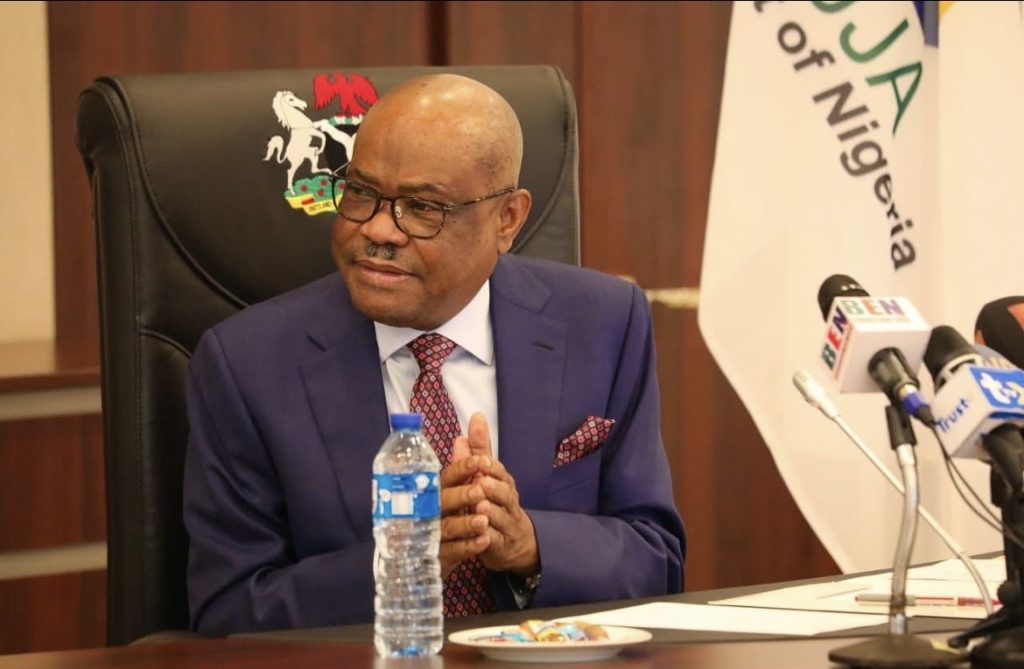
Minister of the Federal Capital Territory (FCT), Nyesom Wike, has urged supporters of Rivers State Governor, Siminalayi Fubara, to close ranks with his political camp and mobilise massive votes for President Bola Tinubu in the 2027 presidential election, promising that a strong showing by the state could attract more federal appointments and infrastructure projects.

Wike made the appeal on Monday in Port Harcourt during a meeting with supporters of Fubara and youth leaders aligned with the governor, as efforts to reconcile rival political camps in the state gathered momentum ahead of the elections.
The minister said Rivers stood to benefit from greater representation in the Federal Government if it emerged among the three states delivering the highest number of votes for Tinubu.

“All I want to hear in this state is Tinubu and nothing but Tinubu. If we play the role we are playing now, and we are one of the first three states that get the highest number of votes, we will get more of the appointments.”

Wike cited federal appointments already given to Rivers indigenes and infrastructure projects, including the Bonny road, as evidence of the Tinubu administration’s commitment to the state.

He urged aggrieved political stakeholders to put their differences behind them, stressing that reconciliation was necessary to strengthen the state’s position in national politics.
“We are talking for survival and growth,” he said, urging grassroots youth leaders to return to their respective local government areas and begin preparations for the forthcoming campaigns.

“I am not going to be governor again; this is for your own interest. I want this state to grow. I want this state to play an important role in the politics of Nigeria,” he added.

Earlier, former Port Harcourt Mayor, Ezebunwo Ichemati, who spoke on behalf of Fubara’s supporters, pledged their loyalty to Wike and the Rainbow Coalition, including its plan to mobilise support for Tinubu’s re-election.

Ichemati claimed that Fubara was aware of and supported the meeting, describing the engagement as a significant step towards resolving the political differences between the governor’s camp and Wike’s supporters.

He said grassroots youth leaders who had previously been divided by the political crisis would henceforth work together to strengthen the coalition ahead of the 2027 elections.

“What you see here today will transform into a force that will deliver,” he said.

Ichemati also declared support for Kingsley Chinda as the coalition’s preferred governorship candidate in Rivers State.

Sun

FG to introduce fuel tax when incomes improve

0

FG to introduce fuel tax when incomes improve

Says proceeds’ll fund roads, cushion price shocks

The Federal Government said it would introduce a fuel tax when the economy stabilises, and Nigerians’ incomes improve sufficiently to accommodate the additional cost.

Minister of Finance and Coordinating Minister of the Economy, Taiwo Oyedele, who made the disclosure, said revenue from the levy would support road infrastructure and the development of a fuel reserve to cushion future price shocks, stressing that implementation would require a ministerial order published in the Official Gazette.

Oyedele spoke during an interview on the sidelines of the 2026 International Monetary Fund and World Bank annual meetings in Bangkok, Thailand.

His comments come against the background of previous resistance by organised labour and business groups to the five per cent surcharge on chargeable fossil fuel products provided for in Nigeria’s tax framework. Its commencement remains subject to an order by the finance minister. He said introducing the tax while petrol was subsidised would have been counterproductive because the government would effectively have paid the charge itself. Imposing it immediately after subsidy removal, he added, would have placed additional pressure on Nigerians.

“The objective should be that instead of trying to suppress prices, which hasn’t worked for us, it hasn’t worked for any country in the world, not one. Instead of trying to suppress prices, think about how to grow income faster than prices rise.

“That’s how you bring prosperity and grow the middle class and that is exactly what we are doing as led by Mr. President himself.

“At the appropriate time, when the economy has stabilised and income level will be able to accommodate it, those taxes will come. Not because we want to impose taxes,” Oyedele said. Fuel pricing has remained a contentious issue since President Bola Tinubu declared that “fuel subsidy is gone” during his inaugural address on May 29, 2023.

The resulting increase in petrol prices drew opposition from organised labour, which demanded measures to cushion the consequences for workers and households.

The prospect of a further charge on petroleum products sparked another round of resistance in September 2025, when the Trade Union Congress rejected the proposed five per cent surcharge and threatened nationwide industrial action.

In a statement signed by its President, Festus Osifo, and Secretary-General, Nuhu Toro, the congress argued that another levy would deepen hardship for citizens already struggling with subsidy removal, rising living costs and naira depreciation.

“Strike action is firmly on the table,” the union warned.

Business groups have also expressed concern about the implications for production, transportation and consumer prices. The Association of Small Business Owners of Nigeria urged the government to prioritise relief for enterprises and households, warning that an additional fuel charge would worsen their financial burden.
Responding to the concerns at the time, then finance minister, Wale Edun, traced the surcharge to the Federal Roads Maintenance Agency Amendment Act of 2007. He said the provision was designed to finance road maintenance, with 40 per cent of the proceeds allocated to FERMA and 60 per cent to state road maintenance agencies.

The government maintained that its inclusion in the tax reforms was intended to harmonise existing provisions.

Explaining the proposed use of the revenue, Oyedele said the fuel reserve would “help moderate prices of fuel products if anything happens.”

He added that the government could temporarily waive the tax during future price shocks to ease pressure on consumers.

“The good thing is that the law says that tax cannot come into effect until there is a gazette. There has to be an order published in the gazette by the finance minister, which means we can’t do it in secret. Plus, we have no intention of doing stuff in the secret.

“At the appropriate time, it will be clear to everyone why it needed to be done and the benefits will be clear also to every Nigerian,” he said.

The existing surcharge framework exempts household kerosene, cooking gas, compressed natural gas and clean or renewable energy products.

As recently as June 16, 2026, the government dismissed reports that it was introducing fresh taxes on petroleum products following recommendations in the IMF’s Article IV consultation report. It said the VAT waiver on petroleum products remained in place and that no process to activate the fuel surcharge was then under consideration.

Comparing Nigeria’s position with other countries, Oyedele said taxes accounted for between 20 and 80 per cent of pump prices in some jurisdictions, while several African countries imposed between six and 10 different charges on petroleum products.

He also explained the sequencing of the petrol subsidy removal and foreign exchange reforms, saying the government initially removed support for petrol prices before allowing the naira to adjust gradually.

According to him, exchange-rate movements significantly influenced petrol prices, requiring the government to manage the transition with consideration for its impact on Nigerians.

“That is the reason why there was still a bit of subsidy in 2023. It was to manage that process because you need to be mindful of the impact on the people.”

Oyedele said petrol subsidy was completely removed in October 2023, when government support for both petrol prices and foreign exchange was no longer in place.

Sun

Tinubu Extends Tenures of Correctional Service, Immigration Chiefs by 18 Months

0

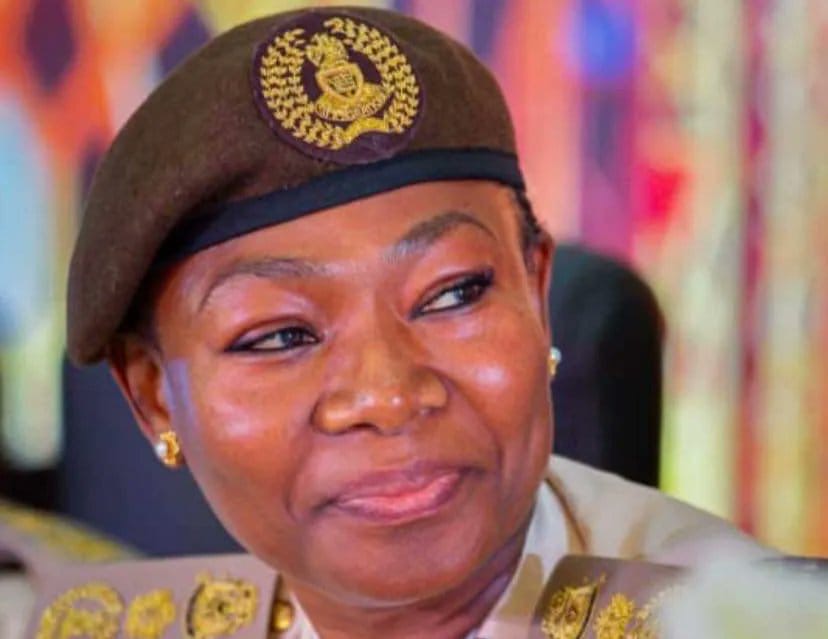
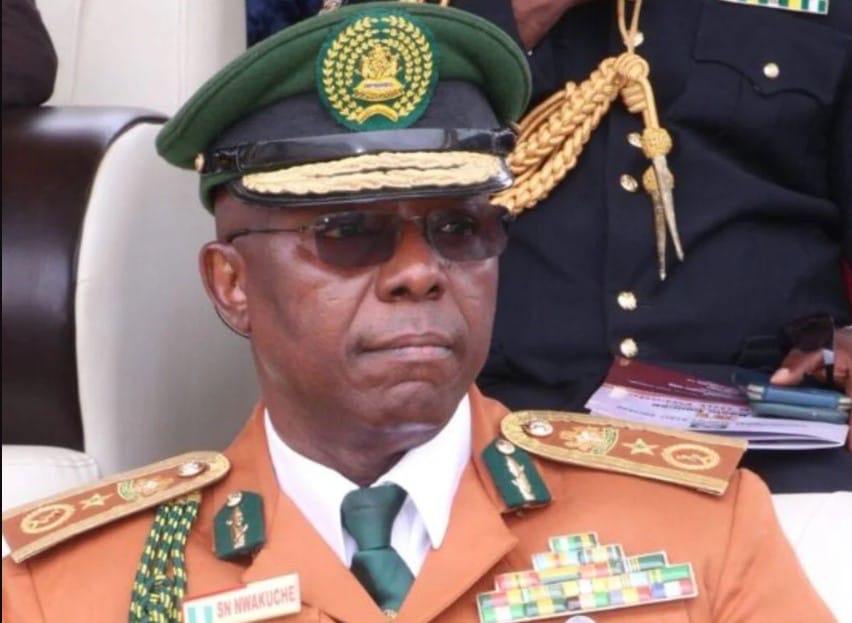
President Bola Tinubu has approved 18-month tenure extensions for Sylvester Ndidi Nwakuche, Controller-General of the Nigerian Correctional Service, and Kemi Nanna Nandap, Comptroller-General of the Nigeria Immigration Service.

Following the approval, Nwakuche’s tenure will now end on May 26, 2028, while Nandap’s tenure will end on June 30, 2028.

The approval, which followed a recommendation by the Minister of Interior, Olubunmi Tunji-Ojo, is aimed at addressing a succession gap in both services and allowing their boards sufficient time to appoint successors.

President Tinubu commended Nwakuche and Nandap for the reforms achieved under their leadership and charged them to consolidate the gains.

Tinubu nominated Nwakuche as Controller-General of the Nigerian Correctional Service in December 2024. The Senate confirmed his appointment in March 2025.

Similarly, Tinubu nominated Nandap as Comptroller-General of the Nigeria Immigration Service on February 21, 2024. The Senate confirmed her appointment on March 1, 2024.

2027: I’m not asking Nigerians abroad to abandon families – Peter Obi

0


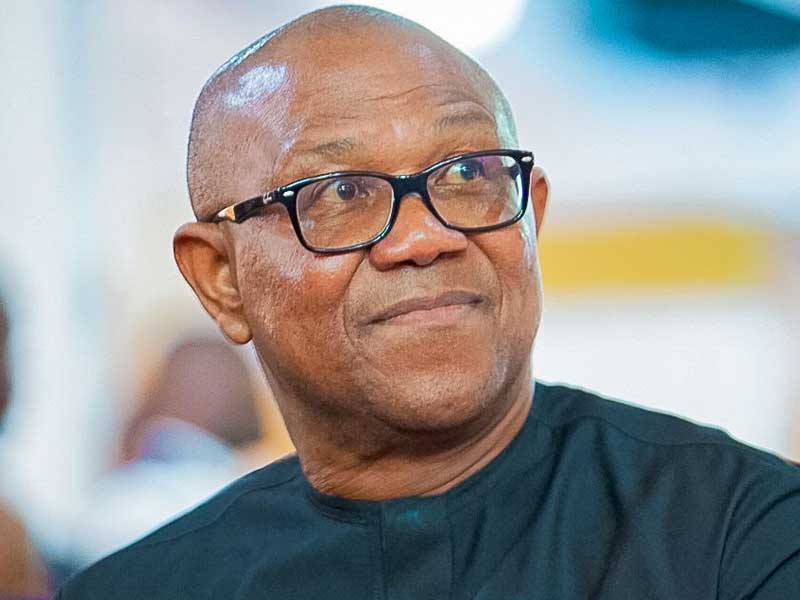
The 2027 presidential candidate of the Nigeria Democratic Congress (NDC), Peter Obi, has clarified his position on Nigerians living abroad, insisting that he never asked them to stop supporting their families in Nigeria.

Obi said his earlier message had been misrepresented by political opponents, adding that his concern was the country’s continued dependence on financial support from relatives living overseas.

In social media post on Tuesday, the former Anambra State governor expressed appreciation for Nigerians in the diaspora who work hard and make sacrifices to provide for their loved ones at home.

Speaking via X, Obi noted that money sent home by Nigerians abroad helps families meet essential needs, including school fees, medical expenses, rent and food.

Obi said the contributions of these Nigerians deserved recognition and respect, stressing that his position was not a call for them to withdraw their support.

“I never asked them to abandon their loved ones. My concern is that Nigeria should not remain a country where millions depend on relatives abroad for basic survival,” he said.

The politician argued that Nigeria should focus on building an economy capable of providing citizens with employment, accessible healthcare, quality education and opportunities to improve their living conditions.

According to him, the country should work towards a situation where families can meet their needs without relying heavily on money sent by relatives outside the country.

Obi also accused political opponents of distorting his message, maintaining that his position was centred on the need for better governance and improved living standards.

“Political opponents may twist my message, but the truth remains clear: I am not asking Nigerians abroad to abandon their families. I am advocating for a Nigeria that will no longer abandon its own people,” he stated.

Peter Obi concluded his message by expressing goodwill towards Nigerians at home and abroad, saying, “God bless Nigerians at home and abroad. God bless Nigeria.”

Sun

NAFDAC Uncovers Suspected Counterfeit Alcoholic Drinks Factory in Aba

0

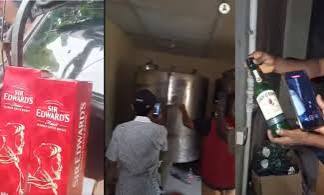
NAFDAC has uncovered a suspected counterfeit alcoholic drinks production facility at No. 25 Omenazu Street, Aba, Abia State.

Acting on credible intelligence, officials discovered the facility operating in unhygienic conditions.

The suspected operator reportedly fled upon the team’s arrival, abandoning a vehicle in which counterfeit packaging materials bearing the names of Sir Edwards Scotch Whisky and Scottish Hills Whisky, empty bottles and a drum containing approximately 200 litres of liquid were found.

Inside the facility, officials found counterfeit packaging materials, bottle caps, sealing machines, empty bottles, cartons, tanks containing various liquid concoctions and dirty sieves reportedly used in the production process. Plastic buckets and 200-litre drums containing ethanol and tree bark immersed in ethanol were also discovered, raising serious concerns about the safety and quality of the products being produced.

The estimated value of the equipment, materials and facility components is over ₦500 million.

The Agency urges members of the public to provide credible information on suspected illegal manufacturing activities to the NAFDAC Call Centre on 0800-1-623322 or 0700-1-623322, or email reforms@nafdac.gov.ng.