Home Blog Page 685

Overloading: LASTMA impounds 27 commercial buses in Lagos

0


The Lagos State Traffic Management Authority (LASTMA) has commenced a statewide enforcement initiative aimed at tackling hazardous practice of vehicular overloading.

The General Manager of LASTMA, Mr Olalekan Bakare-Oki, disclosed this in a statement on Thursday in Lagos.

He noted that the impounding of vehicles was part of the authority’s sustained commitment to enhancing road safety and enforcing uncompromising compliance with extant traffic regulations across the state.

According to him, 27 commercial and private vehicles impounded during an early-morning enforcement exercise, was after repeated warnings issued through multiple public sensitisation platforms.

“The operation was executed following heightened concerns over the escalating risks posed by overloaded vehicles on major arterial corridors and densely trafficked inner-city routes.

“LASTMA enforcement officers field assessment exposed a deeply disconcerting pattern wherein motorists particularly operators of commercial vehicles indiscriminately burden their vehicles with assorted goods, stored indiscriminately within luggage compartments and precariously mounted atop vehicle roofs.

“Such unsafe practices grossly obstruct rearward visibility, destabilise vehicular balance and critically impair a driver’s situational awareness of approaching traffic, especially during overtaking, thereby substantially increasing the probability of avoidable road traffic collisions,” he said.

The general manager emphasised that vehicular overloading constitute a serious contravention of the state’s traffic laws, posing grave dangers not only to the occupants of the offending vehicles but also to other road users.

He consequently, reaffirmed the agency’s zero-tolerance stance against all traffic infractions that imperil lives and property, warning that enforcement actions against defaulters would remain sustained, intensified and uncompromising.

“LASTMA urges all motorists to adhere strictly to stipulated loading capacities, maintain unobstructed visibility at all times and prioritise roadworthiness and safety in their daily operations.

“The agency remains resolute in the execution of its statutory mandate to enforce traffic laws professionally, equitably and without prejudice in furtherance of the Lagos state government’s unwavering commitment to a safe, orderly and efficient transportation system across the state,” he said

LASTMA urged members of the public to promptly report any commercial or private vehicles found to be in violation of prescribed loading limits, through its toll-free line on 0800-005-27862, to enable swift enforcement.

BREAKING: Remaining abducted Kaduna Christians regain freedom

0


Worshippers abducted from three churches in Kurmin Wali community, in the Kajuru LGA of Kaduna state, have regained their freedom.

A source in the community told TheCable that the remaining abducted Christians have been released.

On January 18, gunmen attacked three churches in the community and whisked away about 167 worshippers.

credit: thecable

Sri Lankan schools face teacher shortages

0


More than 3,000 schools across Sri Lanka are operating with fewer than 10 teachers, highlighting widespread staffing shortages in the country’s education system.

This is according to data released on Thursday by the Department of Census and Statistics.

The data showed that 3,126 schools, including one national school, function with fewer than 10 teachers.

A further 4,263 schools have between 10 and 25 teachers, indicating that majority of schools operate with limited teaching staff.

Significant disparities in school size were also revealed, as 1,576 schools enroll fewer than 50 students each, while 36 schools accommodate more than 4,000 students.

The data indicates that nearly 3.82 million students are currently enrolled in state-run schools nationwide.

Meanwhile, the government has invited applications from graduates to join the Sri Lanka Teachers’ Service, saying that recruitment would cover Sinhala, Tamil and English mediums at both national and provincial schools.

Education sector observers say addressing teacher shortages remains critical to ensuring equitable access to quality education across the country.

Electricity subsidy: FG to deduct N3.6tn from Federation Account

0


The Federal Government has proposed a N3.6tn deduction from the Federation Account to fund electricity subsidies in 2026, 2027, and 2028, a move designed to distribute the financial burden across federal, state, and local governments, The PUNCH reports.

The move represents a decisive step by the Federal Government to confront the rapidly mounting electricity subsidy debt, which has severely constrained liquidity across the power sector, while also strengthening fiscal transparency by making subsidy obligations explicit and better accounted for.

The deduction proposal, detailed in the Medium-Term Expenditure Framework Fiscal Strategy Paper for 2026–2028, analysed by one of our correspondents on Tuesday, reflects a strategic shift toward distributing the financial burden of the power sector across all tiers of government, amid growing concerns over unsustainable debts and systemic inefficiencies.

According to Table 6.2 of the MTEF document, which outlines “Other FAAC Deductions” under the Federation Account Revenue – Main Pool, VAT, and Stamp Duty, the electricity subsidy for 2026 is pegged at N1.2tn.

It is projected to remain at this level through 2027 and 2028, signalling the government’s commitment to stabilising the sector while preventing hidden liabilities from ballooning into a fiscal crisis.

“The document read, “Transfer to NBET (Electricity Subsidy) is estimated at N1.2tn in the 2026 budget proposal and projected to remain at N1.2tn each in 2027 and 2028.”

The proposed approach aligns with earlier statements by the Budget Office of the Federation, which indicated plans to end the practice of the Federal Government bearing electricity subsidy costs alone.

The Budget Office DG, Tanimu Yakubu, during a training and sensitisation workshop for ministries, departments, and agencies on the 2026 post-budget preparation process using the Government Integrated Financial Management Information System Budget Preparation Sub-System, said President Bola Tinubu had directed that electricity subsidy costs be made explicit, tracked, and fairly shared across tiers of government.

“If we want a stable power sector, we must pay for the choices we make,” he said. “When tariffs are held below cost, a gap is created. That gap is a subsidy. And a subsidy is a bill.”

He added that from 2026, the Federal Government would no longer treat electricity subsidies as an open-ended obligation borne solely by the centre, especially where policy decisions and political benefits are shared.

“In 2026, we will stop pretending that this bill can be left to the Federal Government alone, especially where the policy choice or the political benefit is shared across tiers of government,” Yakubu said.

According to him, the President has instructed that the existing electricity sector legal framework be invoked to ensure that subsidy sharing is practical, transparent, and enforceable.

“This means subsidy costs must be explicit, tracked, and funded, so they do not return as arrears, liquidity crises, or hidden liabilities in the market,” he said. “If any tier of government chooses affordability interventions, the funding responsibilities must be clear, agreed, and enforceable,” he stated.

Currently, the Federal Government
NBET acts as an intermediary, purchasing electricity from generation companies (GenCos) and selling it to distribution companies (DisCos) at regulated tariffs, often lower than the actual cost of production.

The gap between the regulated tariff and the cost of electricity generation is effectively covered by government subsidies, which are meant to shield consumers from the full cost of electricity while maintaining stability in the power market.

However, this subsidy framework has placed a growing strain on federal finances, and accumulating unpaid obligations has caused a drastic increase in sector debt.

By the end of 2025, total outstanding sector debt, including unpaid obligations to generation and other power companies, is projected to rise to about N6.5tn, up from around N4tn earlier in the year, as a result of unfunded subsidy shortfalls and low payments to power producers.

This has prompted the proposed 2026 measure to deduct N1.2tn directly from the Federation Account for electricity subsidies, which aims to make payments explicit, transparent, and shared among federal, state, and local governments, a strategy intended to address both fiscal sustainability and operational efficiency in NESI.

By deducting funds directly from the Federation Account, the central revenue pool managed by the Federation Account Allocation Committee before revenue distribution, the government aims to encourage states and local governments to prioritise efficiency and provide targeted support for vulnerable households.

Providing further insight into the Federal Government’s proposed electricity subsidy funding framework, energy policy expert Habu Sadeik explained that the N1.2tn earmarked in the Medium-Term Expenditure Framework and Fiscal Strategy Paper will be deducted directly from the Federation Account Allocation Committee pool before revenues are shared among the three tiers of government.

According to Sadeik, the MTEF document clearly captures the N1.2tn electricity subsidy as a first-line deduction from gross FAAC revenue, meaning the amount will be removed before distributable revenue is calculated for the Federal Government, states, and Local Governments.

He explained that the MTEF-FSP, which is prepared every three years, sets the strategic direction for government budgeting and spending across the federation, including how revenues are shared and which obligations are treated as priority deductions.

“What the government has done is to provide for a deduction at source from the gross FAAC revenue to the Nigerian Bulk Electricity Trading Plc (NBET) amounting to N1.2tn,” Sadeik said.

He noted that the approach is similar to the funding structure adopted for the Presidential Metering Initiative, under which about N800bn has been carved out from FAAC over time to fund nationwide metering, thereby reducing estimated billing and commercial losses in the power sector.

Under the new electricity subsidy framework, Sadeik explained, any deduction made from the gross FAAC pool effectively reduces what states and local governments eventually receive.

“For example, if total FAAC revenue in a particular month is N1tn and N200bn is deducted upfront, it means every state and local government has indirectly contributed to that N200bn,” he said.

He clarified that the proposed N1.2tn is not an ad-hoc payment but a planned transfer to NBET beginning in 2026, to be executed before revenue is distributed to sub-national governments.

“This money is planned to be paid to NBET ahead of distribution. It is no longer something the Federal Government will try to settle later through its own budget,” Sadeik explained.

Historically, electricity subsidies have been funded solely through federal budgetary allocations, placing the full burden on the Federal Government. However, Sadeik noted that the new arrangement represents a fundamental shift in responsibility.
“The key difference is the burden,” he said. “Before now, the burden of electricity subsidy was on the Federal Government alone. Under this new framework, the burden is shared by the entire federation, the Federal Government, states, and Local Governments.”

He added that previous budgetary provisions for electricity subsidies were grossly inadequate when compared with the scale of liabilities in the Nigerian Electricity Supply Industry.

“In 2024, only about N450bn was provided in the budget. In 2025, it increased to N900bn, but these amounts were still far below the level of accumulated subsidy obligations,” he said.

The planned FAAC deduction, according to Sadeik, is intended to close this funding gap by making subsidy payments explicit, predictable, and sustainably funded, while ending the long-standing practice of masking electricity subsidies within federal fiscal operations.

Commenting on the proposal, the Executive Director and Convener of PowerUp Nigeria, Adetayo Adegbemle, applauded the initiative, describing it as consistent with the principles of federalism.

Adegbemle said the arrangement reflects a system in which all federating units actively participate in governance, noting that the Federal Government, states, and local governments would collectively contribute to the cost of electricity subsidies.

“This is in the spirit of federalism, where all federating units are involved in government. Under this arrangement, the Federal Government, the states, and the local governments will all contribute to the payment of electricity subsidy,” he said.

While noting that the full implementation details were still unclear, Adegbemle described the proposal as a positive development that allows all tiers of government to share responsibility for the power sector.

“I don’t know if the government has already worked out all the details, but this is a good development because all levels of government can come in and make their own contributions,” he added.

He explained that the policy would apply mainly to states that have yet to establish their own electricity markets under the amended Electricity Act. “As earlier mentioned, this will involve all states that have not created their state electricity markets. States that have already set up functional local electricity markets will be exempted,” Adegbemle said.

Although he reiterated his long-standing position that electricity subsidies should ideally be phased out completely, Adegbemle noted that the proposed framework would significantly ease the financial burden on the Federal Government while improving accountability across the sector.

“Even though some of us have advocated for the complete removal of the electricity subsidy, this move will drastically reduce the burden on the Federal Government and also bring more accountability,” he said.

According to him, shared responsibility would compel each tier of government to properly audit its electricity customer base and closely monitor connections to the national grid, thereby reducing inefficiencies and revenue leakages in the power sector.

“This will force every level of government to take responsibility for auditing their customer base and their connections to the national grid,” he added.

Ministry backs moves

When contacted, the Minister of Power, Adebayo Adelabu, speaking through his media aide, Bolaji Tunji, said the ministry supports the proposed electricity subsidy funding framework, describing it as a step in the right direction for the power sector.

He explained that while the announcement was made by the Director-General of the Budget Office, the Ministry of Power aligns with the initiative and agrees with its underlying objectives.

“This announcement was made by the Director-General of the Budget Office, and his office should be contacted for further clarification on the implementation strategy. However, we agree with him on this,” Tunji said.

The implications of the proposed N1.2tn FAAC deduction for electricity subsidies are significant for state and local governments.

Under the current FAAC revenue-sharing formula, states are entitled to 26.72 per cent of the Main Pool, while local governments receive 20.60 per cent. With projected FAAC revenue for 2026 at about N41.06tn, this would translate to roughly N10.97tn for states and N8.45tn for Local Governments.

However, because the electricity subsidy is to be deducted upfront from the gross FAAC revenue, the amount available for distribution to subnational governments will effectively be reduced.

The deduction means governors may need to reassess allocations for critical sectors such as infrastructure, education, and healthcare to accommodate their share of the subsidy payment.

State energy commissioners react

Meanwhile, the Forum of State Commissioners of Power and Energy in Nigeria has said that it believes that President Bola Tinubu would not do anything against the interests of the masses.

FOCPEN Chairman, Prince Eka Williams, who also serves as the Commissioner for Power and Renewable Energy in Cross River State, told The PUNCH that the forum would make known its positions on the matter later after thorough understanding.

“If that’s what the Federal Government has said, we have to look at it and digest it very well. We have to look at the pros and cons. For now, we have not seen a copy of what the president said.

“But I’m sure what the government would do would be in the interest of Nigerians. I know he’s a President who cares about the masses. We have not seen him sign into law an anti-people bill,” Williams said.

He said FOCPEN would listen to the analysis of experts before making its decision known to the public.

“Let experts look at the policy very well, not just relying on what people have interpreted it to be. Let experts look at it, and in no distant time, we will make a public statement,” he submitted.

Punch

Lagos Assembly Launches Audit of All 20 LGAs, 37 LCDAs — Seeks to Plug Financial Leaks

0


BY TAIWO OGUNMOLA -OMILANI

The Lagos State House of Assembly has kicked off a full-scale audit of the state’s 20 Local Government Areas (LGAs) and 37 Local Council Development Areas (LCDAs), aiming to root out mismanagement and boost transparency at the grassroots.

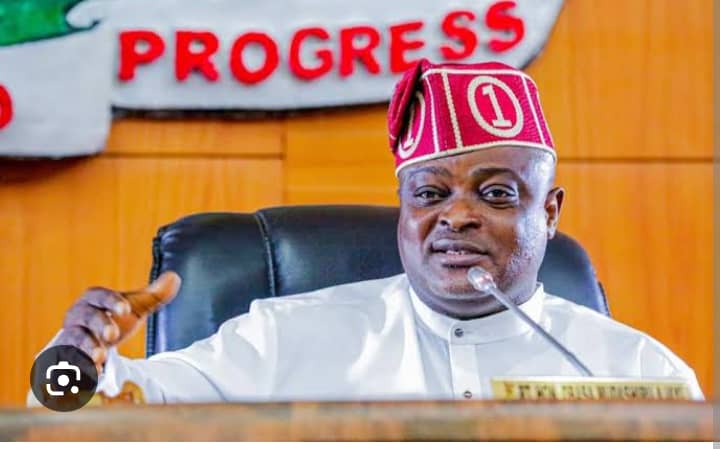
The exercise was officially launched Wednesday at the Lateef Jakande Hall by Hon. Nureni Akinsanya, Chairman of the House Committee on Public Accounts (Local), acting on behalf of Speaker Rt. Hon. Mudashiru Obasa.

“This audit is non-negotiable,” Akinsanya declared. “We’re here to check books, verify compliance, and ensure every kobo is accounted for.”

Under Section 52 of the Local Government Administration Law 2024 and Rule 116 of the Assembly’s Standing Orders, the audit will:

“Where mistakes are found, we’ll correct them — not to punish, but to guide,” Akinsanya said. “Our goal is clean governance, not blame games.”

The committee will grill top officials — including LGA chairmen, vice-chairmen, council managers, treasurers, and executive committee members — over their stewardship of public resources.

Akinsanya promised: “We’ll review the 2023 Auditor-General’s report with laser focus — no favoritism, no fear. What’s wrong will be exposed. What’s right will be praised.”

First up: Epe LGA, Ikoyi-Obalende LCDA, Ifelodun LCDA, Agboyi-Ketu LCDA, and Ojo LGA.

Findings will be tabled before the House for legislative follow-up — meaning heads may roll, systems may change, budgets may be tightened.

This isn’t just paperwork. It’s Lagos saying: _“We’re watching. And we’ll act.”_
Want to track progress? Stay tuned — the Assembly’s Public Accounts Committee isn’t done yet.

Video of me massaging lady’s feet is AI-generated, says Oshiomhole

0


Adams Oshiomhole says a widely circulated video appearing to show him massaging a woman’s feet aboard a private jet is a “fabrication created using artificial intelligence (AI)’.

The controversial video, which surfaced on social media on Tuesday, depicts a man resembling the former Edo state governor engaging in a lighthearted conversation with a woman, massaging her feet as they rest on his lap.

The woman was initially misidentified as Lara Fortes, the wife of the senator representing Edo north district.

It was later reported that the woman in the video is Leshaan Dagama, a South African lifestyle influencer and adult content creator.

– The Cable

NNPC ran refineries at monumental loss — Ojulari

0


The Group Chief Executive Officer of the Nigerian National Petroleum Company Limited, Bayo Ojulari, has disclosed that Nigeria’s state-owned refineries were operating at a “monumental loss” to the country, prompting his leadership team to halt operations to prevent further value erosion.

Ojulari disclosed this on Wednesday in Abuja during a fireside chat titled “Securing Nigeria’s Energy Future” at the Nigeria International Energy Summit 2026, where he offered rare insight into the commercial and operational realities confronting NNPC’s refining assets.

According to him, public anger over the refineries was justified, given the scale of public funds invested over the years and the high expectations placed on the facilities.

“On the refineries, Nigerians were angry. A lot of money has been spent, and expectations were very high. So we were under extreme pressure, extreme pressure,” Ojulari said.

He admitted that upon assuming office, refining was not his core area of expertise, having spent most of his career in the upstream sector, but said accountability demanded rapid learning.

“My background is upstream, so I was on a vertical learning curve. You are accountable, so you must learn very quickly. Otherwise, there is no escape,” he said.

Ojulari explained that once his management team began a detailed review of refinery operations, the financial reality became immediately clear.

“The first thing that became clear, and I want to say this very clearly, is that we were running at a monumental loss to Nigeria. We were just wasting money. I can say that confidently now,” he said.

He revealed that NNPC was consistently pumping crude cargoes into the refineries each month, yet utilisation levels hovered around 50-55 per cent, resulting in significant value leakage.

“We were spending a lot of money on operations, a lot of money on contractors. But when you look at the net, we were just leaking away value,” Ojulari said.

More troubling, he noted, was the absence of any credible plan to turn the losses around.

“Sometimes you make a loss during investment, but you have a line of sight to recovery. That line of sight was not clear here,” he added.

As a result, Ojulari said the first major decision of his administration was to halt refinery operations to prevent further losses and allow for a rapid reassessment.

“We decided to stop the refinery and do a quick check. We planned that if things were lined up, we would reopen and work on them,” he said.

He disclosed that part of the value destruction stemmed from the quality of products being produced, citing the Port Harcourt Refinery as an example.

“The crude we were taking into Port Harcourt was producing mid-grade products. When you aggregate their value compared to what you put in, it was a waste,” he said.

Ojulari acknowledged that the decision to halt operations was politically sensitive, noting that NNPC had historically been pressured to keep refineries running to ensure fuel supply continuity.

“There were political pressures to keep the refinery product, lots of pressure. But when you have been trained for over 35 years to focus on commerciality and profitability, you can’t sleep with that,” he said.

Nigeria’s four state-owned refineries, Port Harcourt (two plants), Warri, and Kaduna, have for decades operated far below capacity despite repeated turnaround maintenance exercises costing billions of dollars.

At various points, the plants have operated at single-digit capacity or been shut down entirely, forcing Africa’s largest oil producer to rely almost entirely on fuel imports.

Between 2015 and 2023 alone, successive administrations approved multiple rehabilitation contracts, yet domestic refining output remained negligible, intensifying public scrutiny of NNPC’s operational efficiency.

Ojulari’s comments mark one of the most candid acknowledgements by an NNPC chief executive that continued refinery operations, under prevailing conditions, were economically unjustifiable.

The remarks underscore a broader shift within NNPC, under the Petroleum Industry Act, toward commercial discipline, even in politically sensitive areas such as domestic refining.

Punch

₦80.2bn Fraud: Court Insists on Receipts Before Admitting CTCs

0

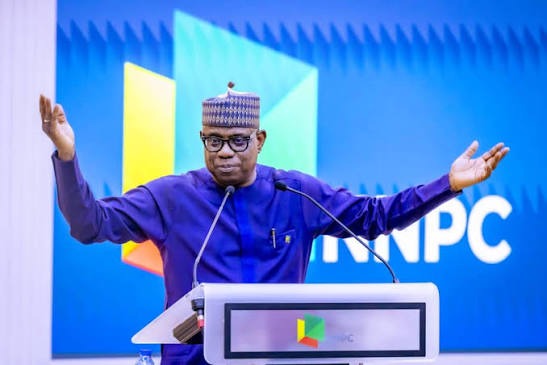
The trial of former Kogi State Governor, Yahaya Adoza Bello continued on Wednesday, February 4, 2026, before Justice Emeka Nwite of the Federal High Court, Maitama, Abuja, with the cross-examination of Prosecution Witness Seven (PW7).

Bello is being prosecuted by the Economic and Financial Crimes Commission, EFCC, on a 19-count charge bordering on money laundering to the tune of ₦80,246,470,088.88.

At the resumed proceedings on Wednesday, prosecution counsel, Kemi Pinheiro, SAN, informed the court that the matter was slated for the cross-examination of PW7, adding that the prosecution had three witnesses available.
PW7, Olomotane Egoro, a compliance officer with Access Bank Plc, was led to the witness dock and affirmed that he remained under oath.

During cross-examination by defence counsel, J.B. Daudu, SAN, the witness confirmed that he testified pursuant to a subpoena and tendered Exhibits 32, 33(1–11), and 34. He also confirmed that he had previously testified before another Federal High Court in relation to the same exhibits but could not recall the specific defendants or whether he testified as PW2.

While the defence sought to tender Certified True Copies (CTCs) of documents from the other court, Pinheiro, noted that the prosecution had no objection to the documents but raised a procedural issue regarding the absence of receipts evidencing payment for the CTCs. He also maintained that the witness had been consistent in his testimony.

Meanwhile, Justice Nwite held that the documents could only be admitted upon the presentation of the required receipts, agreeing with the prosecution. The defence subsequently informed the court that efforts were ongoing to retrieve the receipts.

Further cross-examination centred on bank transactions involving Keyless Nature Limited, Fazab Oil, and Abba Adaudu. The witness confirmed a counter cheque payment at the Otukpo Branch of Access Bank and transfers, including ₦200,000 and ₦8 million, made in favour of Abba Adaudu.

On local government inflows, the witness testified that payments were made for specific purposes, including: ₦7,500,144.61 from Okehi Local Government for the supply of medical items; ₦10,863,247.50 from Omala Local Government on June 3, 2022, for the supply of sporting materials; and ₦12,228,400.10 from Yagba East Local Government on June 6, 2022, for the procurement of medical consumables.

He also stated that entries in Exhibit 33(11) were consistent with normal banking transactions and that the account opening package of Fazab Oil was not immediately available but could be retrieved.

Justice Nwite thereafter adjourned the matter to Thursday, February 5, 2026, for the continuation of the cross-examination of PW7.

Kaduna Govt, National Institute of Sports Explore Partnership on Youth Development

0


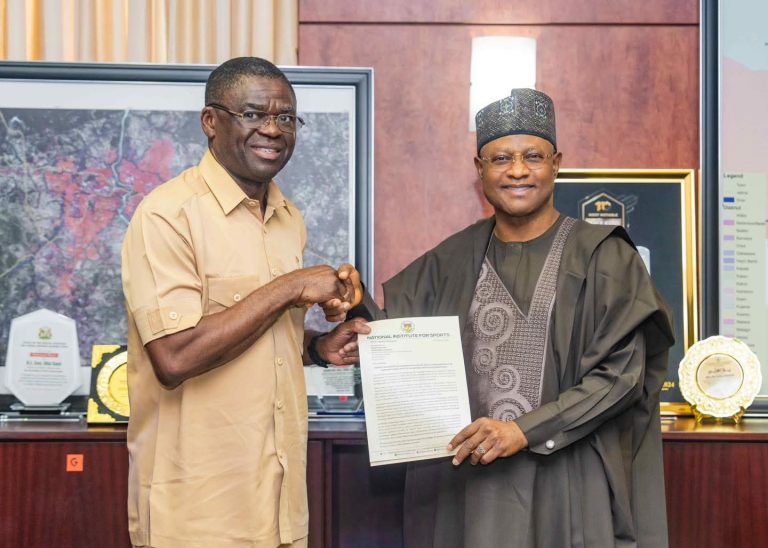
The Kaduna State Government has expressed readiness to collaborate with the National Institute for Sports (NIS) to advance youth development, sports growth and institutional capacity building in the State.

Governor Uba Sani stated this while receiving a high-powered delegation from the NIS, led by its Director-General, Comrade Philips Shuaibu, who paid him a courtesy visit to explore areas of strategic partnership.

The governor said the meeting was driven by a shared belief that sports, when deliberately invested in, go beyond recreation to serve as a powerful tool for national cohesion, human capital development and social renewal.

He welcomed the Director-General’s commendation of the state government’s developmental efforts in the sports sector, particularly the ongoing total reconstruction of the Ahmadu Bello Stadium, which is being upgraded to meet full FIFA standards. According to him, the project reflects the administration’s commitment to excellence and global competitiveness.

Governor Sani also expressed satisfaction with the decision of the National Institute for Sports to establish its North West Zonal Office in Kaduna State, noting that the choice was informed by the state’s strategic location and renewed confidence in its development trajectory.
While commending Comrade Shuaibu for his leadership and determination to reposition the Institute as a key driver of sports development in Nigeria, the governor reaffirmed that sports remain a vital instrument for youth empowerment, discipline, social cohesion and sustainable economic growth.

He highlighted the state’s continued investment in sports infrastructure, including the expansion of the Ahmadu Bello Stadium from a 16,000 to a 32,000 seating capacity, and acknowledged capacity building as a major gap in the sector.

Governor Sani assured the delegation that the Kaduna State Government would provide a fully furnished facility to support the operations of the NIS zonal office, adding that the achievements recorded were made possible by the peace and stability restored across the state over the past two and a half years.

Police arrest murder suspect, recover firearm in Oyo

0


The Police Command in Oyo State says it has arrested a murder suspect and recovered a locally fabricated single-barrel gun at Budo Panu area of Tede, Oyo State.

The Command’s Public Relations Officer (PRO), DSP Ayanlade Olayinka disclosed this in a statement to newsmen on Wednesday in Ibadan.

Olayinka said that the command acted on credible intelligence, following a reported incident of murder.

According to him, the operatives arrested a male adult in connection with the death of Amodu Saliu.

The PRO said that a locally fabricated single-barrel gun was recovered at the scene of the incident.

Olayinka said that the suspect was cooperating with investigators and providing useful information that would help in thorough investigation.

He said that the corpse of the deceased had been released to his family for burial in accordance with Islamic rites, following a request by the family.