Home Blog Page 682

Electoral Act Amendment: Democracy doesn’t belong to politicians – Ezekwesili

0


Former Education Minister Oby Ezekwesili has expressed dissatisfaction over the Senate’s handling of the Electoral Act Amendment Bill 2026.

While appearing in an interview with Arise TV’s ‘The Morning Show’ on Friday, Ezekwesili cautioned lawmakers against inciting Nigerians, saying democracy belongs to the citizens, not politicians.

According to the former minister, the political class, particularly the Senate, makes decisions that alienate Nigerians.

“Stop playing with fire. It’s almost as if the political class, especially as exemplified by the Senate, just wakes up every morning and says, ‘What shall we do today to upset Nigerians?’

“Now, anyone who at all supports the idea that it is okay for citizens to not be very annoyed at the excesses and the sheer lack of even wisdom on the part of our senators — I don’t know where that person is reading from.

“Nobody wants anybody to be incited, but it is entirely necessary for citizens to know that they are acting within their right when they exercise what Thomas Jefferson, one of the legendary presidents of the United States, said — that eternal vigilance is the price that citizens pay for freedom, for liberty.

“These senators cannot run Nigeria as though it were their fiefdom. Nigerian democracy belongs to the people; it doesn’t belong to the politicians,” Ezekwesili stated.

Sun

Sealed PDP national secretariat will be reopened Monday – Anyanwu

0


The Abdulrahman Mohammed-led Peoples Democratic Party (PDP) National Caretaker Committee says the party’s national secretariat, Wadata Plaza, will be reopened on Monday.

The party’s faction, backed by Minister of Federal Capital Territory (FCT), Nyesom Wike, disclosed this after the Independent National Electoral Commission’s (INEC) quarterly meeting with leaders of political parties in Abuja on Thursday.

The News Agency of Nigeria (NAN) reports that the Nigeria Police Force had, on Nov. 19, 2025, locked the PDP national secretariat, following a clash between the Taminu Turaki-led National Working Committee (NWC) and that of the factional acting National Chairman, Abdulrahman Mohammed.

Asked why the party leaders had not possessed the Wadata Plaza, Sen. Samuel Anyanwu, the acting National Secretary, recalled that the secretariat was locked, following a clash between the two groups in the party.

“We wrote to the police. Remember that the police sealed the place and then the other group went to court to ask the police to open it.

“The matter was dismissed because they have no locus. So by Monday, we are taking over the office,” he said.

Anyanwu insisted that there was no faction in PDP and that the party remained under the leadership of Mohammed, the reason they attended INEC meeting with other political parties.

“Yes, we had issues, court issues, and last week Friday, as a matter of fact, the Federal High Court in Ibadan made it very clear that the problem of PDP is over because the so-called convention of Nov.15 and 16, 2025 is a nullity.

“No other person should parade himself or herself as a member of the NWC of the PDP.

“The body that has the full powers to speak for the party and administer the party is the National Caretaker Committee, led by Hon. Abdulrahman Mohammad,” he said.

Anyanwu said that members were now happy that normalcy had returned to the party.

For those who were afraid that PDP would not have candidates in the forthcoming elections, he said it was now settled that the party would field candidates for all positions.

“So we’re happy; people are happy that normalcy has come to the party now.

“You can see something different because you have old hands who have been in this party, who have been managers of this party for a long time, for the last 25 years.

“We are still involved. So, we are going to fast-track everything,” he said.

On the forthcoming FCT area council elections, Anyanwu said that interim caretaker committee would work for the victory of the party in the exercise.

“We are going to hit the ground running with our campaign until the Feb. 18, the last day for campaign,” Anyanwu said.

Reacting to the registration of two new political parties by INEC, Anyanwu described it as a welcome development for the country’s democracy.

“For us, it’s a good development. What it means now is that we have 21 political parties in Nigeria, which is a good development,” he said.

NAN reports that Mohammed and Anyanwu had earlier in the day represented PDP at a meeting held by INEC with political parties. (NAN)

Press freedom, intelligence power, and Nigeria’s democratic signal to West Africa

0

By Ademola Oshodi

West Africa’s democratic breakdowns have increasingly followed a predictable sequence. Civic space narrows, dissent is reframed as a security problem, and coercive institutions begin to set the boundaries of permissible speech long before constitutions are suspended. In that context, the decision by the Nigerian National Committee of the International Press Institute to confer a Press Freedom Commendation Award on the Director-General of the Department of State Services, Mr. Oluwatosin Ajayi, deserves attention beyond the familiar cycle of praise.

The award provides a lens for assessing how Nigeria is governing the relationship between intelligence power and democratic accountability, and what that posture signals about Nigeria’s leadership and soft power diplomacy in West Africa.
The International Press Institute, founded in 1950 and headquartered in Vienna, operates as a global network of editors, media executives, and senior journalists focused on press freedom and the rule of law. Its national committees, including Nigeria’s, are designed to scrutinise state conduct where security power intersects with civic space. When such a body recognises the head of a domestic intelligence service, the recognition functions as a public judgement about institutional behaviour. It is an assessment that an institution traditionally associated with secrecy and coercive authority has exercised restraint, legality, and dialogue in its engagement with the press.

This framing matter because West Africa’s democratic stress has increasingly been shaped by the securitisation of governance. For instance, in Mali, Burkina Faso, Guinea, and Niger, intelligence and military establishments became arbiters of political order long before coups were announced. Civic space narrowed early, and the press faced pressure as a precursor to broader democratic reversal. The erosion of press freedom in these contexts accompanied the securitisation of governance and the narrowing of civic space under the pretext of national survival.

Against this backdrop, the leadership approach adopted by the Department of State Services under Mr. Ajayi represents a deliberate departure from a regional pattern that treats the media as an adversary to be contained. Since his appointment in August 2024, the DSS has recalibrated its engagement with journalists and media organisations, emphasising dialogue over intimidation and lawful process over discretionary force. The IPI’s citation explicitly notes this shift, describing an “unmistakable commitment to press freedom and respect for journalists and media organisations.” Such language is not casually deployed by an organisation whose legitimacy rests on scepticism toward state power.

The significance of this recognition extends beyond domestic governance. Nigeria’s foreign policy posture in West Africa has historically relied on normative leadership as much as strategic capacity. Whether mediating political crises, enforcing regional protocols, or advocating constitutional order within ECOWAS, Nigeria’s influence depends on credibility. That credibility weakens when internal security institutions are perceived as instruments of repression or political management. When intelligence authority is aligned with constitutional limits and civic rights, Nigeria’s position strengthens in regional diplomacy because credibility becomes easier to defend.

From the perspective of international diplomacy, intelligence governance has become a determinant of trust. This is where soft power diplomacy enters the analysis. Soft power depends on perceived legitimacy, institutional discipline, and the coherence between domestic practice and external advocacy. Foreign governments, multilateral institutions, and international media organisations assess how Nigeria’s security agencies interact with civil society and the press, because those interactions reveal the operational meaning of democratic commitments. An international press freedom commendation directed at an intelligence leader therefore affects Nigeria’s reputation in a measurable way: it provides an external reference point that can be cited in diplomatic engagement, cooperation frameworks, and narrative competition across the region.

President Bola Ahmed Tinubu’s public endorsement of the award reinforces this link between institutional conduct and democratic identity. By encouraging other security agencies to emulate the DSS approach under Mr. Ajayi, the Presidency situates press freedom within a wider governance agenda, with consequences for Nigeria’s external posture. Nigeria’s regional advocacy for constitutional order requires internal consistency, because West African audiences evaluate Nigeria’s arguments through Nigeria’s behaviour. Nigeria cannot plausibly argue for the restoration of constitutional order in neighbouring states while tolerating practices at home that mirror the very abuses it condemns.

There is also an operational logic that connects press freedom to intelligence effectiveness. Open media ecosystems surface grievances, corruption risks, social fractures, and local conflict dynamics that formal reporting channels often miss. When journalism is suppressed, state agencies lose information density and reduce their capacity for anticipatory analysis. When journalism is respected within the law, intelligence assessment gains an additional layer of societal visibility. Press freedom therefore supports democratic accountability and improves situational awareness for security planning.

Read through this lens, the IPI commendation of the Director-General of the DSS is evidence of an institutional posture that understands security as a protector of democratic order. In a West African environment where security institutions increasingly claim political guardianship, such an example carries regional relevance. It offers a counter-model to the securitised governance frameworks that have normalised coups and civic repression under the banner of stability.

The future of democracy in West Africa will be shaped by how intelligence power is exercised, restrained, and held accountable. Nigeria’s ability to project influence, mediate crises, and sustain diplomatic authority depends on this balance. This award matters because the conduct it highlights has consequences that extend beyond one office and one event. It is a statement about institutional choice, democratic intent, and the kind of leadership Nigeria seeks to project in a region searching for democratic bearings.

-Oshodi is Senior Special Assistant to President Tinubu on Foreign Affairs

Kanu Nwankwo, Okocha, Finidi George to participate in Africa Legend Football Match

0


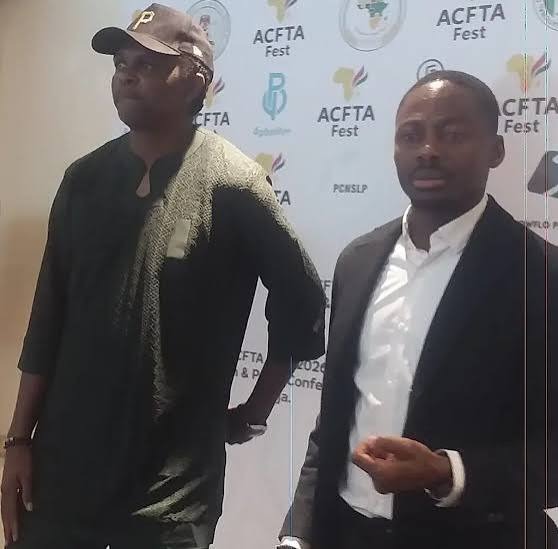
Former Nigerian Super Eagles legend Kanu Nwankwo has confirmed that he, alongside Jay Jay Okocha, Finidi George and many other African football legends, will feature in the African Legends United Gala Match.

Nwankwo made this known in an interview with newsmen on the sidelines of the African Continental Free Trade Area Festival (ACFTA Fest) in Abuja on Thursday.

According to him, the African Legend United Gala match as part of ACFTA Fest is going to be one of a kind.


“It’s happening in Nigeria and the legends are going to be there. They are going to do what we normally know how to do. And then we’ll perform and everybody will enjoy it.

“We are involved in this project because we want to promote the culture of Africa. At the same time, empower the grassroots.”
According to him, when you talk about legends, you have legends all over the world. This is African legends. And being in Nigeria, all the legends are going to come out.

“We are doing this to ensure that the young ones growing up can understand and make them think about their continent, which is Africa. And also the grassroots.

“It’s legends because we are giving back as well. And that’s why we all agreed to be involved in this kind of event.

“So, myself, Jay Jay Okocha, Daniel Amokachi and others will participate in the match on March 28.”

Also speaking, former Cameroonian Football legend, Eyond Enoh, said the ACFTA Fest would start on the 26th to the 28th of March.

According to him, the Legends game will be on the 28th, at the Moshood Abiola National Stadium, Abuja.

He said one of the core value of the match was unity, adding that unity doesn’t happen by itself.

“You need initiatives to drive it. Just like we know we have a lot of projects, we have a lot of promises, but the actions to drive that is a big deal.

“The only difference between Cameroon and Nigeria is a line that was drawn colonially. I don’t see myself just as a Cameroonian. I see myself as an African.

“So, the African Continental Free Trade Area and the festival of it, which we are initiating, is to change from the lines that divide to the lines that unite. And this is that line through this fest.

“So, I think it’s the most viable initiative to unite Africa. And of course, our motto is one Africa, one market, one future. And again, that’s why I’m part of this,” Enog said.

The News Agency of Nigeria (NAN) reports that the ACTFA Fest 2026 will start on March 26 to March 28 with the African Legends United Gala Match at the Abuja Stadium.

There would be other events under categories such as Startup Fames, Heritage Waves and the African Legends United Gala Match. (NAN)

Trump tried to name airport, rail station after himself – US media

0


Trump tried to name airport, rail station after himself – US media
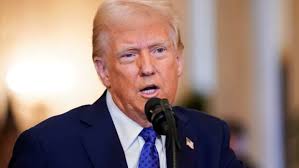
US President Donald Trump offered to unfreeze federal infrastructure funding if the top Senate Democrat would help rename a major airport and train station after him, US media reported Thursday.

Trump, a real estate mogul who plastered his name on buildings around the world, has sought to leave his mark on the country in an unprecedented image and building campaign.

In December, Trump’s handpicked board of the Kennedy Center, an arts complex and memorial to late president John F. Kennedy, voted to rename itself the “Trump-Kennedy Center.”

Meanwhile he has pushed for the construction of an “Independence Arch” similar to the Arc de Triomphe in Paris and launched the construction of a new White House ballroom, tearing down the storied building’s East Wing to make way.

But New York’s Penn Station and Washington’s Dulles International Airport are also in Trump’s sights, CNN and NBC reported.

Citing unnamed sources, the outlets reported Trump offered a quid-pro-quo for the held-up funding, meant for a New York infrastructure project, if New York Senator Chuck Schumer agreed to help get the train station and airport named after him.

Schumer rebuffed the offer, the broadcasters reported. CNN reported the offer was made last month.

New York and New Jersey are currently suing for the $16 billion in blocked federal funds, meant to be used for a tunnel connecting them.

Trump’s moves to insert his name and likeness across the government is unprecedented. Buildings and infrastructure are typically named after presidents once they leave office or die, to avoid overt politicization.

The Treasury has confirmed reports that drafts have been drawn up for a commemorative $1 coin featuring Trump’s image, even though there are laws against displaying the image of a sitting or living president on money.

New York Representative Jerry Nadler called the attempt to rename Dulles airport and Penn Station an “extortion racket.”
Vanguard

Coastal logistics may drive petrol prices to N1,000/litre – Dangote

0


Dangote Petroleum Refinery has warned that continued reliance on coastal delivery of petroleum products could push petrol prices close to N1,000 per litre in Nigeria.

The company stressed that its preferred gantry loading remains the most efficient and cost-effective method to ensure price stability for consumers.

The refinery, in a statement on Thursday, explained that its position is supported by sustained investments in critical infrastructure, including a “world-class gantry facility” with 91 loading bays capable of loading up to 2,900 tankers daily.

Operating on a 24-hour basis, it said the facility can evacuate over 50 million litres of premium motor spirit, 14 million litres of diesel, and other refined products each day.

While acknowledging that coastal loading is an option where logistics require, the refinery emphasised that gantry evacuation eliminates additional costs.

“Direct gantry evacuation eliminates port charges, maritime levies and vessel-related costs that do not add value to end users, helping to optimise costs, improve distribution efficiency and support price stability,” the company stated.

It also clarified that marketers are free to choose their preferred mode of evacuation, with PMS and other refined products available at competitive gantry prices.

“However, reliance on coastal delivery, particularly within Lagos, may introduce avoidable costs with material implications for fuel pricing, consumer welfare, and overall economic well-being. In our opinion, coastal logistics can add approximately N75 per litre to the cost of petrol, which, if passed on to consumers, would push the pump price of PMS close to N1,000 per litre,” the refinery said.

The company further estimated that sustained dependence on coastal logistics could impose an additional annual cost of roughly N1.75tn, based on Nigeria’s average daily consumption of about 50 million litres of PMS and 14 million litres of diesel.

It warned that this cost would ultimately be borne by producers or Nigerian consumers.

Dangote refinery also renewed calls for coordinated investment in pipeline infrastructure nationwide. It argued that functional pipelines linking refineries to depots would significantly cut distribution costs, improve supply reliability, and strengthen national energy security.

Addressing allegations that it imports finished petroleum products, the refinery described such claims as misleading.

“While our Residue Fluid Catalytic Cracking Unit is currently undergoing maintenance, we only import intermediate feedstock in line with global industry practice. We challenge anyone with credible evidence of finished product importation to present it to the appropriate regulatory authorities. Such claims are often driven by interests seeking to justify continued dependence on fuel imports,” the refinery reiterated.

Explaining the benefits of domestic refining, the company noted that since operations began, diesel prices have fallen from about N1,700 per litre to between N980 and N990, while PMS prices have dropped from around N1,250 per litre to between N839 and N900.

It added that increased local supply has sharply reduced fuel importation, eased foreign exchange pressures, and contributed to a stronger naira, recently trading at about N1,385 to the dollar.

The refinery concluded by urging marketers, regulators, and policymakers to support logistics and distribution decisions that align with national economic interests, protect consumers, and sustain the long-term benefits of domestic refining.

Punch

Kwara massacre: UN condemns killings as Türkiye pledges support

0


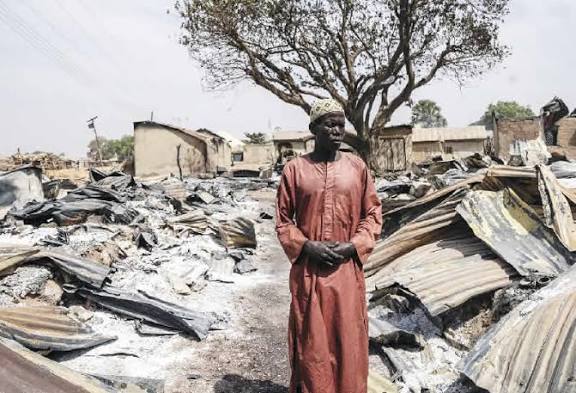
President Bola Tinubu on Thursday held an emergency security meeting with the Kwara State Governor, AbdulRahman AbdulRazaq, as national and international outrage mounted over the massacre of residents in Kaiama Local Government Area of the state.

The meeting came as the United Nations and Türkiye condemned the killings, northern senators demanded a sweeping security overhaul, and the Inspector-General of Police ordered the deployment of tactical teams to the affected communities.

The deadly attack, which claimed at least 75 lives, according to government figures, has triggered renewed calls for mass recruitment of security personnel, expansion of armouries and intelligence capacity, and stronger federal intervention, with lawmakers warning that Nigeria’s worsening insecurity—particularly in rural communities—now poses a grave threat to national stability.

Also, the Northern Senators Forum called on the Federal Government to urgently recruit more security personnel and strengthen operational capacity to curb the rising wave of violent attacks across several states.

The appeal followed the deadly assaults in Kwara, Katsina and Benue states, which lawmakers said had left more than 130 people dead.

Chairman of the Forum, Senator Abdulaziz Yar’Adua, made the call in a condolence message issued in Abuja on Thursday, commiserating with the affected states and communities.

At least 100 people were feared killed during an attack on Tuesday night on the Woro and Nuku communities in the Kaiama Local Government Area of Kwara State by Islamic militants.

“We acknowledge the efforts of security agencies and urge citizens to cooperate with them by reporting suspicious activities,” Yar’Adua said. “However, we call on the Federal Government to urgently increase the recruitment of security personnel and enhance their capacity to combat these growing threats.”

He added: “We express our deepest condolences to the governments and people of Kwara, Katsina and Benue states on the recent brutal attacks that have claimed over 130 lives. These senseless acts of violence are a stark reminder of the insecurity plaguing our nation.”

According to him, the Forum remains committed to supporting measures that address the root causes of insecurity and promote national stability.

The lawmakers’ intervention adds to growing concerns within the National Assembly over worsening insecurity, particularly in rural communities repeatedly targeted by bandits and extremist groups.

Meanwhile, the Inspector-General of Police, Kayode Egbetokun, on Thursday, ordered the immediate deployment of tactical, operational and intelligence assets to Kaiama Local Government Area of Kwara State.

In a statement by the Force Public Relations Officer, Benjamin Hundeyin, the police confirmed that 75 persons were killed in the attack.

“The Nigeria Police Force strongly condemns the violent attack that occurred on Tuesday, February 3, 2026, in Kaiama Local Government Area of Kwara State, which sadly resulted in the confirmed death of seventy-five persons.
“The Inspector-General of Police extends his heartfelt condolences to the families of the victims, as well as to the Government and people of Kwara State, over this deeply painful and tragic incident.”

He assured Nigerians that the police remained resolute in protecting lives and property.

“In response, the Inspector-General of Police has ordered the immediate deployment of tactical, operational and intelligence assets to Kaiama and surrounding communities to restore calm, strengthen security presence and prevent further acts of violence,” he said.

Hundeyin disclosed that an intensive manhunt had been launched for the perpetrators and their collaborators.

“All available resources have been mobilised to ensure that those responsible are identified, apprehended and brought to justice. The perpetrators will not escape the long arm of the law,” he added.

Residents were urged to remain calm and provide credible information through police stations and established communication channels.

Kwara State Governor AbdulRahman AbdulRazaq stated that the deployment of troops under Operation Savannah Shield would deter further attacks and restore peace in Kaiama and its surrounding areas.

The governor spoke to journalists in Abuja on Thursday after a closed-door meeting with President Bola Tinubu at the State House.

“I’m confident because the force commander of Operation Savannah Shield has reported in Kwara and is hitting the ground running,” AbdulRazaq said. “We rely on the military to do what they do best.”

He said he briefed the President on the gory attack that left at least 75 people dead, with several others still missing.

“I came to brief Mr President about what happened in Kaiama Local Government Area and to thank him for the prompt action taken. The establishment of Operation Savannah Shield will go a long way in bringing calm to the region,” he said.

According to the governor, President Tinubu had directed the Armed Forces to move in decisively to flush out the attackers and secure the area.

President Tinubu, on Wednesday, ordered the deployment of an army battalion to Kaiama and approved the creation of a new military command to lead the operation. He condemned the attack as cowardly and inhumane, expressing anger that victims were targeted for rejecting extremist ideology in favour of peaceful Islamic practice.

He called for closer collaboration between federal and state agencies to support affected communities and ensure the perpetrators are brought to justice.

In a related development, the governor directed the state emergency management agency to mobilise support for victims of the Tuesday night terrorist attacks.

He gave the directive around 2 a.m. on Thursday, during his visit to the community where he commiserated with the victims, the Emir of Kaiama, Alhaji Muazu Omar, and the people of Kaiama Emirate over the attack.

Ahead of the visit to Woro, the governor first arrived in Kaiama on Wednesday night, accompanied by the House of Assembly Speaker, Salihu Yakubu-Danladi, security commanders, and senior government officials. The Head of Woro, Alhaji Saliu Umar, and his chiefs also joined the Emir to receive the governor.

‘’At least 75 people of the Muslim majority village lost their lives and properties to the unfortunate incident that occurred on Tuesday,’’ the governor told reporters shortly after receiving briefings from security forces and community leaders.

AbdulRazaq commended Tinubu for approving an immediate deployment of a battalion of soldiers under ‘Operation Savannah Shield’.

“At the moment, the state emergency services will be going to carry out the enumeration and look for how to take care of the members of the family,” the governor said.

“This is a major challenge to tackle now, because it goes beyond Kwara and to the Kainji Park in Niger State. They have murdered sleep, and I can assure you that within the next month, the whole place will be flooded with soldiers. And the results will be positive, God willing.”

Alhaji Muazu, for his part, explained that the attackers were followers of Mahmuda, who preached a strange ideology and attacked their victims who rejected their doctrine.

Outrage grows

The Speaker of the House of Representatives, Tajudeen Abbas, condemned the killings in Kwara and Benue States.

In a statement issued on Thursday by his Special Adviser on Media and Publicity, Musa Krishi, the speaker expressed deep concern over the continued loss of lives across the country, noting that innocent citizens keep dying in questionable circumstances. He urged security agencies to rise up to their constitutional responsibility of protecting lives and property.

Lamenting the deaths and destruction caused by insecurity nationwide, the speaker called for drastic and concerted efforts by all stakeholders to stem the tide of violence and restore public confidence in the state’s ability to guarantee safety.

Abbas described the socio-economic impact of insecurity as immeasurable, stressing that “both the government and the governed must collaborate to face the nation’s common enemies.”

He assured Nigerians that the National Assembly would continue to work with President Bola Tinubu to ensure the provision of the resources required by security agencies to confront insecurity head-on.

The Chairman of the Northern States Governors’ Forum and Governor of Gombe State, Muhammadu Yahaya, strongly condemned the recent spate of violent attacks and killings, describing them as barbaric, senseless and a direct assault on the collective conscience of the nation.

In a statement on behalf of the Northern Governors, made available by Director-General Press Affairs Gombe Government House, Ismaila Misilli, Yahaya expressed deep sorrow over the tragic loss of innocent lives, extending his heartfelt condolences to the bereaved families, the affected communities and the governments and people of the three states.

“These heinous acts of violence are unacceptable and must be condemned in the strongest terms.

“The relentless targeting of defenceless citizens, including women, children and the elderly, lays bare the inhumanity of these attackers and underscores the pressing necessity for firm and decisive action,” he said.

Yahaya commended the governors of Kwara, Katsina and Benue States for their leadership and resilience in the face of repeated security challenges, noting their continued efforts to support affected communities, strengthen local security architecture and collaborate with federal authorities to restore peace.

He charged the nation’s security agencies to intensify intelligence gathering, surveillance and coordinated operations to track down the perpetrators and their backers, stressing that the protection of lives and property remains a sacred duty.

“The Northern Governors’ Forum stands firmly with our security agencies and urges them to deploy all lawful means necessary to bring the perpetrators to justice. These crimes must not go unpunished,” Governor Yahaya stated.

The NSGF Chairman reassured Nigerians of the Forum’s commitment to working with the Federal Government, security agencies, traditional institutions and community leaders to confront insecurity through a combination of robust security responses, intelligence-led policing and long-term socio-economic interventions.

The Peoples Democratic Party blamed the Federal Government for what it described as ignored early warnings, calling the military deployment “reactive.”

“The most painful part of this tragedy is that notice of the impending attack was available for months without meaningful proactive action,” the party said, demanding an independent investigation and a national security summit.

The opposition party, in a statement by its National Publicity Secretary, Ini Ememobong, criticised the Presidency for focusing more on politics than on fulfilling its core responsibility of safeguarding lives and property.

“The most painful part of this sad story is the fact that several community leaders have stated that the notice of this impending attack was available for months, without any meaningful proactive action from the Government, which makes the post-carnage military deployment weak, reactive, and irresponsible.

“The Presidential deployment of the military cannot bring back the killed people or erase the concomitant trauma imposed upon the community.’’

Former Senate President, Dr Bukola Saraki, described the killings as a national disaster and urged President Tinubu to personally intervene.

“What we require now is decisive and direct intervention from the President,” Saraki said. “Kwara is too strategic to allow insurgency to gain ground.”

Similarly, Senator Natasha Akpoti-Uduaghan described the attacks as “deeply troubling,” warning that unchecked insecurity threatened national cohesion.

While lamenting the continued bloodshed, the Senator representing Kogi Central denounced the Kwara killings, describing the attacks as “unacceptable and deeply troubling,” and warned that the rising wave of violence poses a grave threat to national peace and stability.

She said, “The persistent killings of innocent Nigerians are unacceptable and deeply troubling. My heart goes out to the families who have been plunged into grief by these senseless acts. Protecting lives and ensuring justice must be non-negotiable. The safety of our citizens should always be the highest priority of government.”

The lawmaker further called on federal and state authorities to move beyond rhetoric and deploy coordinated and effective measures to address the worsening security situation across the country.

UN, Türkiye react

The United Nations Secretary-General Antonio Guterres also condemned the killings.

Guterres stated on his X handle, “I strongly condemn the terrorist attack of 3 February, in Kwara State, Nigeria.

My heartfelt condolences to the families of the victims & to the people & Government of Nigeria. I wish a speedy recovery to the injured.

“I strongly condemn the terrorist attack of 3 February in Kwara State, Nigeria.

“My heartfelt condolences to the families of the victims & to the people & Government of Nigeria. I wish a speedy recovery to the injured.”

Also, the Republic of Türkiye strongly condemned the attack, describing it as heinous.

In a statement issued by its Ministry of Foreign Affairs, Türkiye said it was “deeply saddened by the loss of lives caused by the terrorist attack that took place in Nigeria’s Kwara State.”

“We strongly condemn this attack and extend our condolences to the families of those who lost their lives and to the people of Nigeria,” the statement said. “Türkiye will continue to support Nigeria in its fight against terrorism.”

The spate of attacks has renewed nationwide calls for a stronger security presence, improved intelligence gathering, and sustained federal intervention to address Nigeria’s deepening insecurity crisis.

Kidnapped Kwara freed

The Oniwo of Afin, Oba Simeon Olanipekun, abducted by gunmen in Ifelodun Local Government Area of Kwara State, has regained his freedom after his family reportedly paid an additional N12 million ransom to his captors.

The monarch was released on Wednesday night after spending about one month in captivity, two weeks after his son, Olaolu, who was kidnapped alongside him, was freed following the payment of an initial N20 million ransom.

A family source, who spoke with The PUNCH on condition of anonymity, confirmed the development, saying intense negotiations led to the monarch’s release.

“It is true the monarch was released on Wednesday night after we paid N12 million and two power banks in addition to the earlier N20 million paid before.

“They dropped him at a local herders’ settlement around Oreke in Ifelodun Local Government Area. From there, he was taken to the military base in Oreke, where they contacted us,” the source disclosed.

According to the source, the traditional ruler is currently receiving medical attention at an undisclosed hospital after suffering physical and psychological trauma during his captivity.

“He is in high spirits now. The family and the entire Afin community are grateful to everyone who ensured his safe release,” the source added.

The state police command spokesperson, Adetoun Ejire-Adeyemi, confirmed the release of the monarch but denied knowledge of ransom payment.

“The command is aware that the release of the monarch was secured last night, and he has been reunited with his family. You are aware that there are ongoing joint security operations on that axis, and the bandits are fleeing. We are not aware of any ransom payment.’’

Punch
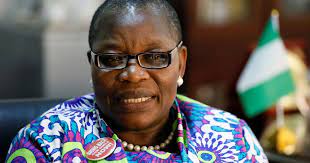
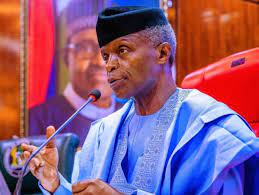
Osinbajo advocates endowments to tackle education underfunding

0

Former Vice President Yemi Osinbajo has urged Nigerian schools to embrace endowments as a strategic measure to address the chronic underfunding of the nation’s educational institutions.

Osinbajo made the call at the 94th Founders’ Day celebration of Igbobi College, Lagos, describing an endowment as a pool of funds or assets donated by individuals or corporations and set aside to support schools over the long term.

“Many great institutions are backed by large endowments that sustain their operations for decades,” he said. “Endowments are not just about financial provision; they are about sustaining standards, cultures, values and norms. It is not just continuity, but continuation of an ethos and a world.”

Recalling the history of Igbobi College, founded in 1932 by Anglican and Methodist missionaries, Osinbajo noted that the institution itself was built on endowment support. “While the school charges fees, the moral and civic environment that shaped generations of students was made possible by earlier philanthropic sacrifices,” he said.

The former vice president also decried the neglect of Nigeria’s education system, warning that the country was “paying a heavy price” for decades of underfunding. “Many schools are broken and under-resourced,” he said.

Osinbajo highlighted the formative role of secondary education in shaping future leaders. “The discipline of waking up at 5:30 AM and the ‘lights out’ rules in secondary school are what actually build great leaders. The habits that sustain adults are formed in school, not improvised later in life,” he said.

He further stressed that the roots of effective leadership extend beyond public office. “By the time a child turns 18, their ethical instincts are already likely formed,” he noted, adding that national leadership failures often reflect weaknesses in foundational education.

“Every investment in a school is an investment in the future of the country,” Osinbajo said, reminding stakeholders of education’s generational impact. “Our early leaders did not emerge by accident; they were shaped by schools deliberately protected from volatility.”
Osinbajo, who attended Igbobi College between 1969 and 1975, credited the institution for instilling values that shaped his career. He recalled receiving the State Merit Award and the African Statesman Intercollegiate Best Speaker’s Prize, describing them as products of the school’s disciplined, value-driven environment.

The event, moderated by Professor of Strategy and Development, Prof. Anthony Kila, was themed: “Building Generational Strength for Educational Institutions in Nigeria.”

During the celebration, the Igbobi College Old Boys’ Association (ICOBA) unveiled a ₦10 billion Endowment Fund to revitalise the school and safeguard its legacy for the next century.

Chief Yomi Badejo-Okusanya, the 12th President of ICOBA, said the fund would finance new hostels, upgrade science laboratories, and introduce advanced learning technologies. He assured stakeholders that professional asset managers, Chapel Hill Denham, would oversee the fund to ensure accountability.

“We don’t want anyone to ‘use the money anyhow,’” he said, urging alumni to contribute generously. Quoting an Igbo proverb — “Good soup na money kill am” — he emphasised that quality requires investment and long-term commitment, encouraging contributions even from the estates of deceased alumni.

Representing the Governor of Lagos State, the Commissioner for Basic and Secondary Education, Jamiu Alli-Balogun, pledged government support for initiatives such as ICOBA’s fund.
“When a school like Igbobi produces disciplined individuals, it helps the government save money on social problems and strengthens the leadership pipeline for the nation,” he said, linking educational quality to national development and infrastructure management.

Chairman of the lecture, Mr Ademola Adeyemi-Bero, described endowment as a shift from “short-term intervention to long-term institutional stability,” underscoring the need for structured, professional management of educational assets.

Punch

Electoral Act: Opposition pushes back as e-transmission faces firestorm

0


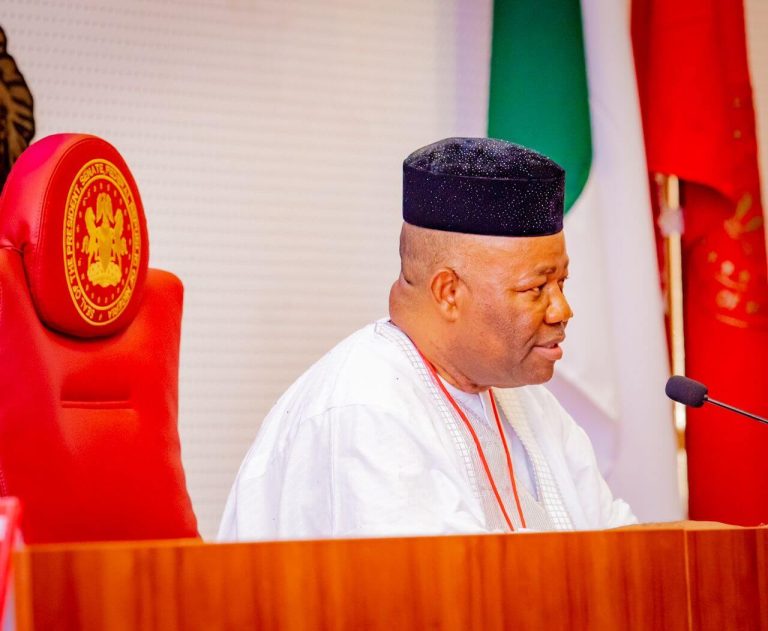
The Senate Minority Caucus clarified on Thursday that the Senate did not reject the electronic transmission of election results before the leadership passed the Electoral Act (Amendment) Bill, contrary to widespread media reports.

The clarification came barely 24 hours after the upper chamber came under fire on Wednesday following reports that lawmakers rejected proposals for the electronic transmission of election results and a 10-year ban on vote-buyers and other electoral offenders.

Shortly after the report went viral, Senate President Godswill Akpabio dismissed the claims as misleading.

Akpabio also maintained that lawmakers retained electronic transmission as provided under the 2022 Electoral Act, a distinction he said was necessary to avoid legal and operational ambiguities.

Speaking to journalists on Thursday, former Senate Minority Leader Senator Enyinnaya Abaribe, said the caucus was compelled to address what he described as a widespread misunderstanding of proceedings at Wednesday’s plenary.

“Since yesterday (Wednesday), the media has been awash with reports suggesting that the Senate rejected electronic transmission of election results. That is not correct,” Abaribe said.

“To put the record straight, the Senate did not — I repeat, did not — reject electronic transmission of results as provided for in the 2022 Electoral Act.”

He explained that what the Senate passed was the electronic transmission of results, a position which, according to him, was also clarified by the Senate President during plenary.

Abaribe stressed that senators hold public trust derived from the confidence reposed in them by their respective constituencies, adding that the caucus considered it necessary to address the issue in the interest of transparency.

“We came here under the trust of our senatorial districts. When it appears that our actions have been misunderstood, it becomes necessary to clarify exactly what happened,” he said.

He outlined the legislative process that led to the decision, beginning with the joint committee of the Senate and the House of Representatives on electoral matters.

According to him, the joint committee held several retreats within and outside Abuja, with the participation of the Independent National Electoral Commission (INEC) and civil society organisations.

“At the end of those retreats, everyone agreed that electronic transmission of results was the way to go. That position was reflected in the reports presented to both chambers,” he said.

He noted that the process also involved extensive debates, public hearings, and consultations, describing electronic transmission of results as a core, non-negotiable provision.

Following the submission of the Senate Committee on Electoral Matters’ report, Abaribe said an ad hoc committee was constituted to further review the report.

The ad hoc committee, chaired by Senator Sadiq Umar, presented its findings, which were deliberated upon during a closed-door session.

“The closed session was held to tidy up all outstanding issues so that when we returned to plenary, the bill could be passed without rancour,” he explained.

According to him, the Senate Committee on Electoral Matters, the ad hoc committee, and senators at the executive session unanimously agreed on the provision for electronic transmission of results, as contained in Section 65 of the bill.

“At plenary yesterday, we passed electronic transmission of results. However, because of movement and noise in the chamber, it appeared to some that something went wrong,” he said.

Abaribe added that senators later sought confirmation and were reassured, noting that video records also show the Senate President affirming that electronic transmission of results was passed.

The senator further explained that a harmonisation committee was set up because of differences between the House and Senate versions of the bill on issues such as timelines.

“The role of the harmonisation committee is to reconcile differences between both versions and produce a single document for presidential assent,” he said.

However, he noted that the Senate has not yet adopted the Votes and Proceedings, which is a procedural requirement before harmonisation can commence.

“After plenary yesterday, we adjourned without adopting the Votes and Proceedings. Under our rules, harmonisation cannot begin without that step,” he explained.

Abaribe assured that the Senate would reconvene to adopt the Votes and Proceedings, insisting that it must accurately reflect the provision on electronic transmission of results.

“Only after that can the harmonisation committee meet. At harmonisation, you either adopt the House version or the Senate version — nothing else,” he said.

He reiterated that what the Senate passed was the electronic transmission of results in real time.

“This is not a party matter,” Abaribe added. “Senators across party lines agree on this because transparent, free, and fair elections are the foundation of democracy. If results are not transparent or the process is distorted, then it is not democracy.”

Responding to questions on why an ad hoc committee was constituted despite the work of the standing committee, opposition lawmakers explained that the Senate reserves the right to regulate its internal processes, noting that committee members were present to clarify issues during deliberations.

They maintained that the Senate leadership would ensure due process is followed and that the final document reflects the will of the legislature.

The caucus concluded by reiterating that no harmonisation can lawfully occur until the Senate adopts the Votes and Proceedings confirming electronic transmission of election results.

Punch

UN urges Burkina Faso junta to reverse political party ban

0


The United Nations rights chief called on Thursday on the Burkina Faso government to halt all repression of civic space and to overturn its plan to prohibit all political parties.

The junta running the West African nation said last week it planned to dissolve all political parties, whose activities have been suspended since the military rulers seized power in 2022.

“Instead of banning political parties and jailing people for expressing their opinions, the authorities in Burkina Faso need to open up space for civil society, including humanitarian actors,” Volker Turk said in a statement.

They must, he said, “respect the exercise of freedom of association and expression, and lift bans on the activities of political parties, in accordance with their international obligations and commitments”.

The UN rights office highlighted that the Burkinabe authorities last year suspended the activities of several national and international organisations, either without explanation or citing vague grounds, such as unauthorised data collection.

In July, they also enacted a restrictive new law on freedom of association and, in November, issued a new decree requiring NGOs and associations to open and maintain cash accounts exclusively with a state-run bank.

The rights office warned that the combined effect of the suspensions and decisions “sharply constricted civil society’s activity in the country”.
Although the authorities last year released several people who had been arbitrarily detained, the rights office said it continued to receive further allegations of “enforced disappearances and arbitrary arrests” in the country.

“Among the victims are journalists, members of the judiciary, leaders and members of political parties and civil society organisations,” it said.

It highlighted that the Burkina Faso government had committed in a roadmap agreement with the UN in December to end impunity and respect human rights in the context of security and military operations and to respect fundamental freedoms.

“These commitments are important and need to be translated urgently into concrete action,” Turk said.

“The authorities need to repeal restrictive laws, allow and facilitate rapid and unimpeded passage of humanitarian assistance to all those in need across the country, and unconditionally release those arbitrarily detained,” he said.

“Accountability for serious human rights violations must be pursued.”

AFP