Home Blog Page 678

Pope, Northern CAN condemn Kwara massacre, one killed in fresh attack

0

VATICAN CITY / KANO/ILORIN—Pope Leo XIV and the Christian Association of Nigeria (CAN), have expressed deep sorrow over the recent attacks on communities in Kwara State, which left more than 75 people dead and many others injured.

In a post on X, Pope Leo XIV conveyed his “prayerful closeness” to all victims of violence and terrorism, urging authorities to continue their efforts to ensure the safety and protection of every citizen. “It is with sorrow and concern that I learned of the recent attacks against various communities in Nigeria leading to a heavy loss of life,” the pontiff said.


Meanwhile, Northern CAN, representing the 19 Northern states and the Federal Capital Territory, extended condolences to the families of the victims and solidarity to the state government, its people, and the Muslim community affected by the tragedy.

In a statement, Northern CAN Chairman Rev. Joseph John Hayab described the attack in Kaiama Local Government Area as brutal and inhumane. He commended President Bola Ahmed Tinubu and security agencies for their swift response, particularly the deployment of an Army battalion under Operation Savannah Shield, and urged authorities to intensify security measures to prevent further loss of lives.

While the nation reels from the Woro community massacre, another attack occurred on Sunday in Koro community, Ekiti Local Government Area. About 15 heavily armed bandits invaded the community, firing sporadically and forcing residents to flee.

Forest Guards and local hunters intercepted the attackers near a secondary school, leading to a gunfight in which one Forest Guard, Samuel, was killed. His body was taken to Egbe Hospital mortuary in nearby Kogi State. The bandits reportedly retreated into the forest, and no arrests were made.

The Pope’s remarks, alongside the strong condemnation from Northern CAN, highlight growing concern over security challenges in Nigeria and reinforce calls for proactive measures to protect vulnerable communities.

Vanguard

I’ve no rift with Oshiomhole — Tenebe

0


….Says Okpebholo remains leader of Edo APC

….Gives insight on 3.5m votes promised Tinubu

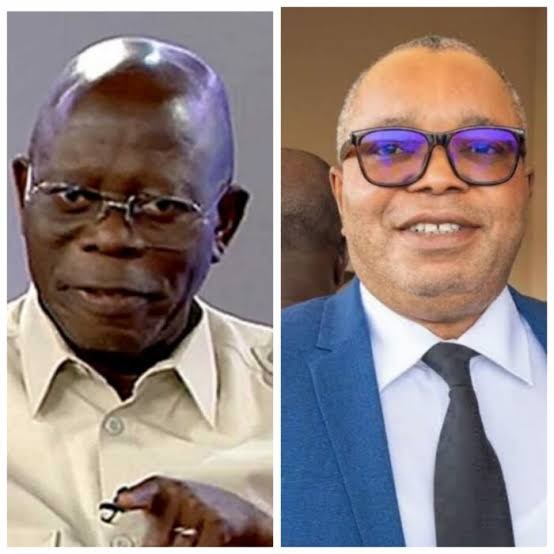
BENIN CITY—Contrary to reports, the Edo State Chairman of the All Progressives Congress, APC, Jarret Tenebe, yesterday, said he has no issues with a national leader of the party, Senator Adams Oshiomhole, insisting that Governor Monday Okpebholo remains the leader of the party in the state.

Speaking to journalists at his residence in Benin City, Tenebe said the party would hold rancour-free ward, local government and state congresses, assuring that he would emerge as the chairman of the party in the state to begin his term, having completed that of his predecessor, Col. David Imuse (rtd), who resigned to contest the 2024 governorship election.

The APC chairman also explained how the party would deliver 3.5 million votes to President Bola Tinubu in the 2027 election, saying the party was massively mobilising people to register as members and also participate in the Independent National Electoral Commission (INEC) Continuous Voters Registration.

According to him, “The leader of the party in the state is the Governor of Edo State, Monday Okpebholo. There have been insinuations that Senator Adams Oshiomhole and I are not working together, and that is very far from the truth. The only point where we differed was during the primaries. I insisted that the right thing should be done, and once I push for what is right, I do not renege until the proper thing is done. However, we have all gone past that stage.

“After the primaries, we had the election, we campaigned together, we won together, and since then we have continued to work together. There are absolutely no cracks on the wall.”

On the coming congresses, he said: “I have been acting, and this will be my first term to be confirmed as substantive chairman, having served under the caretaker arrangement. I also do not think the party will change the winning team. We started the fight to ensure that we had a good candidate and a good government in Edo State, and we achieved that.

“The next step is to support the government to succeed. As party chairman, it is my responsibility to stand with the governor, defend him, and ensure that he delivers the dividends of democracy he promised the people.”

Tenebe said the 3.5 million votes promised President Bola Tinubu are not a mirage, stating that “by next week, we will receive all the Labour Party LGA chairmen into the APC. We have also held meetings with 16 PDP LGA chairmen who are defecting. If you look closely, you will see that the opposition has already collapsed.”

“We analysed the voters’ register and discovered that Edo State has about three million registered voters, many of whom are not currently living in the state. I have been travelling across the country to meet Edo people who registered at home, encouraging them to return during the election. We have also concluded plans with donors to provide logistics to bring them back.

Vanguard

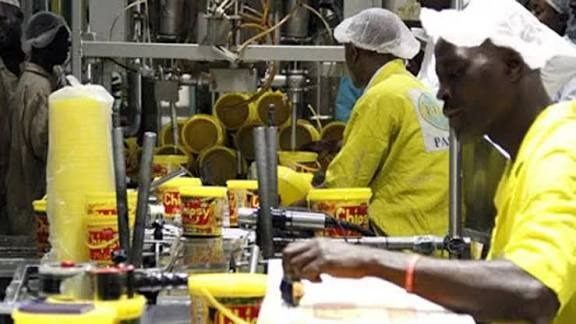
Manufacturers record N1.8trn unsold goods as demand slumps

0

Loans to manufacturers
…Inventory surge contradicts official claims of economic recovery


Despite signs of improving macroeconomic indicators published by the Federal Government, the latest financial results of Nigeria’s manufacturing sector have indicated that significant pressures persist.


Financial Vanguard’s findings show that the manufacturers have continued to grapple with rising inventories (unsold goods) littering warehouses along with swelling stockpiles of raw materials, exposing deep inflationary constraints, foreign-exchange and credit pressures that continue to weigh on industry performance.

Leading manufacturing firms, in the first nine months of 2025 (9M’25), recorded combined inventories increase of N200 billion, rising to about N1.8 trillion from N1.6 trillion recorded in the corresponding period of 2024 (9M’24), representing an increase of about 18.8 per cent. Over the same period, raw materials inventories climbed by about 15.4 per cent to nearly N1.5 trillion.

Financial and industry experts say the structure of the increase suggests that inventory accumulation in 2025 was driven not only by unsold finished goods but also by deliberate stockpiling of inputs as firms struggled to hedge against inflation, exchange-rate volatility and tight monetary conditions.

Industry experts argued that the trend contradicts official claims that inflation moderated significantly in 2025, given the persistent rise in production costs and replacement values.

Inventory position
A breakdown of inventory positions among 17 major manufacturing companies highlights the scale of the challenge.
Dangote Cement Plc posted the highest inventory figure at N769.5 billion compared with N669.7 billion in 9M’24.

Nigerian Breweries Plc saw inventories rise to N224 billion in 9M’25 from N181.3 billion in 9M’24, while Nestlé Nigeria Plc recorded inventories amounting to N203.4 billion in 9M’25 compared to N174.8 billion in 9M’24.

Lafarge Africa Plc recorded N117 billion from N104.2 billion, while BUA Foods Plc posted N76.7 billion from N59.8 billion. Cadbury Nigeria Plc posted N26.7 billion against 13.8 billion.

International Breweries Plc recorded N107 billion from N89.7 billion, and Guinness Nigeria Plc recorded a rise to N63.7 billion from N41.9 billion.

Other firms that also recorded significant increases in inventory included Northern Nigeria Flour Mills which posted N20.8 billion against N16.5 billion, while Champion Breweries Plc posted N3.7 billion from N2.9 billion.
Vitafoam Nigeria Plc recorded N28.7 billion against N20.5 billion.

However, Financial Vanguard observed that some of the manufacturers recorded improved inventory positions.

Dangote Sugar Plc recorded a decline in inventory in 2025 at N130.5 billion compared with N131.5 billion in 9M’24, while UAC of Nigeria Plc recorded N37.5 billion against N54.9 billion.

In the similar direction, NASCON Allied Industries Plc posted a decline to N14.3 billion against N17.6 billion in 2024.

Also Unilever Nigeria Plc recorded N28.3 billion against N30.8 billion previous year, while Berger Paints posted N2.5 billion from N3.3 billion.

Raw materials inventories deepen pressures
The inventory build-up was mirrored by a sharp rise in raw materials holdings, reflecting manufacturers’ hedge against inflation, forex challenges and imported inflation.

Leading the pack was Nigerian Breweries Plc which held stock of raw materials worth N486.9 billion up from N407.2 billion previous year. It was followed closely by Dangote Sugar Plc recording increase to N450.7 billion from N401.6 billion.

Nestlé Nigeria recorded raw materials build up to N84 billion in 9M’25 against N73.5 billion in 9M’24, while Cadbury Nigeria posted N10 billion from N5 billion.

BUA Foods recorded N52.5 billion raw material inventory as against N38.6 billion in 2024.

However, some other manufacturers recorded decline in their stock raw materials.

Experts speak
Industry experts say the rise in raw materials inventories, reflects exchange-rate pressures during the period. Many manufacturers depend heavily on imported inputs, and the weak naira significantly raised replacement costs.
To hedge against FX volatility and potential supply disruptions, firms increased their holdings of raw materials even as production volumes and sales declined.

“Manufacturers were forced to hold more raw materials as a hedge against FX instability. But this came at a cost, especially in an environment where demand was already weak,” a financial expert said.

Why unsold inventory’s rising
Commenting, Dr. Muda Yusuf, Chief Executive Officer of the Centre for the Promotion of Private Enterprise (CPPE), said the challenges of unsold inventory alongside rising raw materials stockpiles reflect a difficult operating environment driven by macroeconomic headwinds and structural constraints.

A key factor, he said, is weak purchasing power. “Over the last three years, inflationary pressures have significantly eroded household incomes in real terms. As purchasing power weakens, consumers become less able to buy manufactured products, especially those that are not considered essential,” he stated.

Yusuf also pointed to rising production costs, saying, “For many manufacturing firms, the cost of production has increased considerably driven by factors such as energy costs, foreign exchange pressures, logistics costs and other input-related challenges. Naturally, firms have been compelled to adjust their product prices upwards in order to remain viable” he said.

However, he said higher prices further constrained demand. “Once these higher costs are reflected in final product prices, demand becomes even more constrained because consumers already grappling with weaker purchasing power cannot absorb the price increases” he added.

Yusuf, also explained that changing consumption patterns have compounded the problem. “With incomes largely stagnant and prices rising sharply, households are forced to prioritise spending. Under such circumstances, demand for non-essential manufactured products tends to fall sharply” he said.

Yusuf explained that when finished goods fail to sell, inventories naturally accumulate. “The situation is even more severe for manufacturers producing goods with expiry dates, where high inventories translate into heavier financial losses and greater operational risk” he noted

The CPPE CEO, added: “When finished goods remain unsold, raw material stocks will also remain high. Inputs are not being depleted at the expected pace because production cycles slow down in response to weak sales. Therefore, rising raw material inventory is often a direct consequence of rising finished-goods inventory.”

Industrialisation efforts under strain
On the broader implications, Yusuf warned that the trend weakens Nigeria’s industrialisation drive. “The broader implication is that Nigeria’s industrialisation effort is weakened. Industrial growth remains sluggish: in the last quarter of 2025, GDP growth in the industrial sector was approximately 1.25 per cent, compared with overall GDP growth of about 4.3 per cent” he added,

He said this is associated with low capacity utilisation, potential job losses, declining investor confidence, weaker incentives to invest in manufacturing, reduced profitability and diminished capacity to deliver shareholder value and dividends.

On the way forward, Yusuf said there is a strong case for expanding resource-based industrialisation to reduce exposure to FX volatility and lower costs through improved local input sourcing. He added that firms must remain flexible through cost restructuring, product redesign, targeted market segmentation and innovation.

Rising costs, weak demand squeeze firms
Reacting, Oluropo Dada, 13th President of the Chartered Institute of Stockbrokers (CIS), said the increase in inventories reflects rising production costs, weak consumer demand and continued dependence on imported inputs.
“The cost of labour has also increased significantly, which tends to shoot up prices of local raw materials and other inputs,” he said. “Despite the relative foreign exchange stability recorded in Nigeria in 2025, most developed economies recorded higher inflation rates, which accounted for increases in imported raw materials through imported inflation” he said.

Dada said the economic implications include increased working capital pressure, margin compression, higher financing costs, risks of capacity underutilisation and job losses. For consumers, he said, the outcome is higher prices, reduced product variety and quality adjustments such as smaller package sizes.

He advised manufacturers to pursue backward integration by developing local supply chains, investing in supplier partnerships and improving demand forecasting and inventory management to reduce FX exposure and stabilise costs.

Inflation contradiction
David Adonri, Executive Vice Chairman of Highcap Securities Limited, said inventory values can rise due to increased volumes or inflation. “The disproportionate rise in cost of production indicates that inflationary growth played a big role. This scenario contradicts the official claim that inflation rate moderated massively in 2025” he said.

He added that inflation affected both producers and consumers. “Any import-dependent enterprise that does not earn in hard currency will continue to be exposed to currency risk. This underscores the importance of backward integration, although rural insecurity makes this challenging” he noted.

Financing and demand pressures

Ambrose Omordion, Financial Analyst and Chief Operating Officer at InvestData Consulting Limited, said the jump in inventories points to slower movement of finished goods.

“High inflation in the nine months of 2025 eroded household purchasing power, as consumers prioritised spending on essentials such as food, transport and energy,” he said. “Manufacturers raised prices to survive, but consumers responded by buying less” he noted.

He added that high interest rates worsened the situation, as unsold goods funded through bank loans attracted interest expenses, squeezing margins and turning inventory from a buffer into a financial liability.

Backward integration under scrutiny
Beyond demand and financing pressures, Omordion stated that the sharp rise in raw materials inventories raises questions about the effectiveness of Nigeria’s backward-integration policy. “The policy aims to reduce dependence on imported inputs across key value chains such as food processing, cement, sugar, textiles and pharmaceuticals.

However, the persistence of high raw material inventories suggests uneven progress, leaving manufacturers exposed to inflation, currency volatility and weak consumer demand” he noted.

Vanguard

Police, military foil cattle-rustling attack in Kebbi, neutralise suspect

0


The Nigeria Army have dislodged armed criminals and recovered 91 rustled cattle in Southern Taraba
Operatives of the Kebbi State Police Command, in collaboration with the military and other security agencies, have foiled a cattle-rustling attack by suspected Lakurawa bandits in Bunza Local Council of the state, neutralising one suspect in the process.

It was gathered that the attackers invaded Tungan Babu Lada village, where they shot and killed a 35-year-old man, Usman Ferungu, before fleeing with rustled cattle. Their escape was, however, cut short following the swift response of a joint security team.

The state command’s spokesperson, SP Bashir Usman, said at the weekend that the team, led by the Divisional Police Officer of Kangiwa Division, pursued the fleeing suspects and intercepted them at Garin Mayo Mine.
He said: “A gun battle ensued during which one of the suspected bandits was neutralised, while four motorcycles believed to have been used by the criminals were recovered.”

The command said the operation disrupted the activities of the criminal gang, prevented further attacks and averted additional loss of lives.

The police added that aggressive patrols and intelligence-driven operations would continue across the state in line with the proactive policing strategy of the Commissioner of Police.

Guardian

Port inefficiencies cost Nigeria huge losses daily, PEBEC laments

0


CPPE advocates domestic processing capacity before imposing restrictions
Presidential Enabling Business Environment Council (PEBEC) has lamented that Nigeria loses significantly every day due to operational inefficiencies at the ports, which manifest in missed opportunities, jobs not created, and delayed economic growth.

This was stated at a recent three-day stakeholder engagement in Lagos organised by PEBEC in collaboration with the Nigerian Ports Authority (NPA), titled: “Achieving a Seven-Day Cargo Dwell Time.”

The session, which was held at the Lagos Port Complex (LPC) in Apapa, followed an extensive “shadowing” exercise where officials observed real-time vessel berthing and cargo clearance operations at both the Tin Can Island and Lagos Port complexes.

Speaking at the event, PEBEC Director General, Zahrah Mustapha, emphasised that the session was designed to move beyond identifying hurdles toward implementing long-overdue practical solutions.

Mustapha noted that the initiative integrates both government regulators and private sector stakeholders to ensure transparency and accountability, with the ultimate goal of reducing cargo dwell time and improving vessel turnaround time.

Earlier, the Managing Director of the NPA, Dr Abubakar Dantsoho, reiterated the authority’s commitment to supporting PEBEC’s mandates.

He said NPA’s progress efforts included collaborating with the International Maritime Organisation (IMO) to deploy the Port Community System (PCS), which would serve as the digital backbone for the National Single Window, a move expected to eliminate manual bottlenecks and synchronise port operations.

Dantsoho said the outcomes of this engagement were expected to be implemented within the coming months.

Guardian

2027: How 3 southern senators scuttled real-time e-transmission of election results — Sources

0


ABUJA— Fresh facts have emerged on how the Senate rejected a proposal to make real-time electronic transmission of election results mandatory, ahead of the 2027 general election.

The proposal formed part of the Electoral Act, 2022 (Repeal and Enactment) Bill, 2026 (SB. 903), specifically an amendment to Clause 60(3), which sought to compel presiding officers of the Independent National Electoral Commission, INEC, to upload polling unit results to the INEC Result Viewing Portal, IReV, in real time.


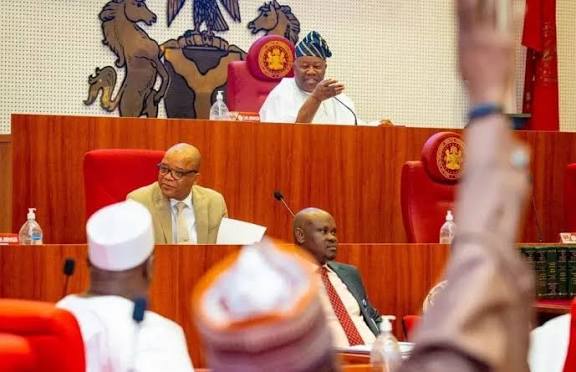
The recommendation, which also triggered wider reforms on election timelines, penalties for electoral offences and voting technology, was voted down by the 10th Senate under the leadership of Senate President, Senator Godswill Akpabio.

At the centre of the controversy is Section 60(3) of the bill, dealing with the transmission of polling unit results. The provision was recommended by the Senate Committee on Electoral Matters, chaired by Senator Simon Lalong (APC, Plateau South).

Sources told Vanguard that during clause-by-clause consideration of the committee’s report, the Senate initially worked on a version that retained real-time electronic transmission.

However, after hours of deliberations and as plenary dragged late into the evening, the final version passed by the Senate was altered at the last minute to expunge the provision.

This, sources said, was even though the Senate had earlier approved electronic transmission overwhelmingly during a closed session.

An ad-hoc committee, chaired by Senator Niyi Adegbonmire, APC (Ondo Central), had also endorsed it after more than one year of consultations.

The Adegbonmire committee engaged INEC, civil society organisations and stakeholders through joint sessions and zonal public hearings, where consensus was reportedly reached that electronic transmission must be explicitly legalised to avoid the legal controversies that trailed the 2023 general elections.

Page 45 of the report of the Senate Committee on Electoral Matters, Clause 60(3) provided: “The Presiding Officer shall electronically transmit the results from each polling unit to the IREV portal in real time and such transmission shall be done after the prescribed Form EC8A has been signed and stamped by the Presiding Officer and/or countersigned by the candidates or polling agents available at the polling unit.”

A source said that when senators got to the clause, many assumed it would pass smoothly, given prior resolutions.
“That was when the unexpected happened,” the source said, adding that three ranking Southern senators allegedly intervened.

According to the source, the senators approached the Senate President and urged him to retain the provision of the 2022 Electoral Act.

Akpabio was said to have upheld the existing law, which allows electronic transmission only after votes are counted and publicly announced at polling units.

Instead of “transmission,” the word “transfer” was adopted, in line with the 2022 Act, even though no fresh debate was conducted on the floor.

The rejected amendment would have mandated real-time upload of results to IReV immediately after completion of Form EC8A.

The adopted provision states: “The Presiding Officer shall transfer the results, including the total number of accredited voters and the results of the ballot, in a manner as prescribed by the commission.”

Senate bows to pressure, to hold emergency sitting tomorrow, instead of Feb 24

However, following the widespread criticisms that have trailed its rejection of a proposed amendment to Clause 60, Subsection 3, of the bill, which sought to make the real time electronic transmission of election results mandatory, the Senate has been forced to reconvene an emergency plenary sitting tomorrow, February 10, 2026, at 12:00 noon.

It had on Wednesday, adjourned plenary till February 24.

The new development to reconvene tomorrow was formally contained in an official notice dated February 8, 2026, signed by the Clerk of the Senate, Emmanuel Odo, on the directive of the President of the Senate, Senator Godswill Akpabio.

The notice to the senators, sighted yesterday, read: “I am directed by President of the Senate, Distinguished Senator Godswill Obot Akpabio, to inform all senators of the Federal Republic of Nigeria that an emergency sitting of the Senate has been scheduled to hold as follows: Date: Tuesday, 10 February, 2026. Time: 12:00 Noon.

“Venue: Senate Chamber. Senators are kindly requested to note this emergency sitting date and attend. All inconveniences this will cause to senators are highly regretted.”

Although the official notice did not state the reason for the emergency session, the timing strongly suggests a connection to the intense national controversy trailing the Senate’s handling of key provisions in the Electoral Act amendment, particularly Section 60(3).

The Senate had adjourned plenary last week after the passage of the Electoral Act (Amendment) Bill, 2026, to allow lawmakers participate in ongoing budget defence sessions by ministries, departments and agencies, MDAs, ahead of the final consideration of the ¦ 58.47 trillion 2026 Appropriation Bill, scheduled for March 17.

Recall that during the clause-by-clause consideration of the Electoral bill, the Senate, presided over by Akpabio, adopted a motion moved by Senate Chief Whip Tahir Monguno, APC, Borno North and seconded by the Deputy Senate President Barau Jibrin, APC, Kano North, to reject the proposed Section 60(3).

The rejected amendment sought to make real-time electronic transmission of election results from polling units to the INEC Result Viewing (IReV) portal mandatory. It proposed that:

“The presiding officer shall electronically transmit the results from each polling unit to the IReV portal in real time, and such transmission shall be done after the prescribed Form EC8A has been signed and stamped by the presiding officer and/or countersigned by candidates or polling unit agents, where available.”

Instead, the Senate retained Section 60(5) of the Electoral Act, 2022, which states.

Parliamentary sources said the Senate must reconvene to approve the votes and proceedings to validate the decisions taken.

This, they argued, would clarify whether “transfer” or “electronic transmission” was adopted by senators and enable the conference committee to function.

Without approval of the votes and proceedings, the conference committee constituted by Akpabio to harmonise the bill with the House of Representatives cannot effectively commence work.

Members of the conference committee include Senator Simon Lalong (Chairman); Senators Niyi Adegbonmire, APC, Ondo Central; Tahir Monguno, APC, Borno North; Adamu Aliero, APC, Kebbi Central; Orji Uzor Kalu, APC, Abia North; Abba Moro, PDP, Benue South; Asuquo Ekpenyong, APC, Cross River South; Aminu Iya Abbas, Adamawa; and Tokunbo Abiru, APC, Lagos East.

Beyond electronic transmission, the Senate also made sweeping changes to other provisions of the bill.
It dropped stiffer penalties for buying and selling of voter cards, which proposed fines ranging from N500,000 to N5 million and a 10-year ban from contesting elections.

The Senate reduced the period for INEC’s notice of election from 360 days to 180 days under amended Clause 28.
It also cut the timeline for political parties to submit candidates’ lists from 180 days to 90 days under Clause 29.

Under Clause 47, the Senate replaced smart card readers with the Bimodal Voter Accreditation System, BVAS, but rejected electronically generated voter identification, retaining the Permanent Voter Card, PVC, as the sole mode of identification at polling units.

Clause 142, which sought to ease proof of non-compliance in election petitions by relying on documentary evidence, was also struck out following concerns that it could clog the courts.

Delay may not derail 2027 polls—NBA
Meanwhile, the Nigerian Bar Association, NBA, has expressed concern over the Senate’s delay in concluding work on the Electoral Act Amendment Bill.

NBA President, Mr Afam Osigwe, SAN, said while the Bar was worried about the pace of the National Assembly, the delay would not necessarily derail the 2027 general elections if INEC and stakeholders worked with the existing legal framework.

“The process itself has not really started. But if those amendments can be brought in, and they improve credibility, it will be better,” Osigwe told Vanguard.

He advised INEC to continue preparations under the subsisting law, noting that technological issues, such as result transmission, only come into play on election day.

“You can pass the best laws, and if the judicial interpretation is anything but progressive, we have still not achieved anything,” he said, citing how courts interpreted provisions of the 2022 Electoral Act.

Also reacting, civil society leader, Mr Clement Nwankwo, urged INEC to immediately issue the notice for the 2027 elections under the existing Electoral Act, which requires 360 days’ notice.

“What I am saying is that INEC should use our current Electoral Act and go ahead and announce the notice for elections in 2027,” he said.

Nwankwo, Executive Director of the Policy and Legal Advocacy Centre, PLAC, accused the Senate of undermining national consensus by allegedly altering the agreed version of the bill.

“The Electoral Act is not the personal property of anybody; it is a national property,” he said on Channels Television, warning that secrecy around executive sessions had resulted in what he described as a “legislative ambush.”

He disclosed that a joint committee involving the Senate, House of Representatives, INEC and judicial experts had agreed that results must be transmitted electronically in real time to IReV.

“Nigeria’s elections are among the most expensive in the world. You can’t spend billions on BVAS and then short-change Nigerians on its use,” Nwankwo said, warning that continued manipulation of legislative outcomes could erode public trust and fuel unrest.

NLC threatens mass boycott, mass action over electoral ambiguity
Meanwhile, the Nigeria Labour Congress, NLC, has threatened mass action and a possible nationwide boycott of future elections over what it described as confusion and contradictions surrounding the Senate’s amendment of the 2022 Electoral Act, particularly on the real-time electronic transmission of election results.

Raising concerns over the credibility of the 2027 general elections, the NLC accused the Senate of undermining public trust in the electoral process and warned that failure to clearly mandate real-time electronic transmission of results could plunge the nation into another electoral crisis.

NLC in a statement by the President, Joe Ajaero, said: “NLC expresses deep concern over the confusion and contradictory narratives emerging from the Senate regarding the amendment to the 2022 Electoral Act, particularly on electronic transmission of results.

‘’This lack of clarity undermines public trust and is deeply troubling for our democracy. The Nigerian people deserve a transparent electoral process where their votes are not only counted but seen to be counted.

‘’We urge the Senate to provide an immediate, official and unambiguous account of its proceedings and final decisions. Public records suggest the proposed amendment to mandate INEC to transmit results electronically in real-time was not adopted, with the existing discretionary provision retained.

‘’This has generated nationwide apprehension, and subsequent explanations have only added to the confusion. At a critical juncture, following the 2023 elections, such legislative ambiguity risks institutionalising doubt at the heart of our electoral integrity and echoes past controversies that have caused national distress.

“Therefore, NLC demands immediate clarity and transparency. The Senate must issue a definitive statement on the exact provisions passed, clarifying the final wording and rationale.

‘’The National Assembly leadership must also ensure the harmonisation process produces a final bill with crystal-clear provisions. Any ambiguity in the transmission and collation of results is a disservice to our democracy.

“We call on the Senate to restore legislative credibility by ensuring its processes are transparent and its outcomes clear. The amended Act must provide an unambiguous mandate for INEC to transmit and collate results from polling units in real-time electronically. The path to the 2027 elections must be built on certainty, not confusion.

“Nigerian workers and citizens are watching closely. The NLC is working within its networks to advocate clarity and integrity. We will not stand by while the trust of Nigerians is betrayed again and the clarity of our electoral laws is compromised.

‘’Failure to add electronic transmission real-time will lead to mass action before, during and after the election or total boycott of the election.

‘’Our nation must choose the path of clarity and integrity. We need to avoid the same confusion that trailed the 2023 elections. A people united can never be defeated! Workers united can never be defeated!”

Vanguard
Dangote Cement vows to make Africa self-sufficient

0


Dangote Cement Plc has reaffirmed its commitment to making Africa fully self‑sufficient in cement production, strengthening the continent’s industrial backbone and reducing reliance on imported construction materials.

Speaking during a strategic briefing on the company’s expansion drive, the Group Managing Director of Dangote Cement, Mr Arvind Pathak, emphasised that the company is accelerating its investments across African markets to close supply gaps and support the continent’s infrastructural ambitions.

According to him: “Our vision is clear — to ensure Africa produces enough cement to meet its own needs, through continuous expansion, operational excellence, and a strong distribution network, we are positioning Dangote Cement to power growth across the continent. We are not just building a business; we are building Africa’s future.”

Pathak added that Dangote Cement remains Africa’s leading cement producer and is targeting a production capacity of 90 million metric tonnes per annum across the continent by 2030.

“Through our collective determination, we have eliminated Nigeria’s dependence on imported cement and transformed the country into a net exporter of cement to several neighbouring nations,” he said.

Dangote Cement currently operates in multiple African countries, with integrated plants, grinding facilities, and distribution hubs strategically located to serve diverse markets. The company’s ongoing projects include plant upgrades, capacity expansions, and the introduction of advanced energy‑efficient technologies designed to reduce operational costs and carbon footprint.
Reinforcing the company’s long-term vision, its founder and President, Aliko Dangote, described self-sufficiency as both an economic imperative and a continental responsibility.

“Africa has no reason to depend on cement imports,” said Aliko Dangote. “We have the raw materials, the talent, and the determination. Our goal at Dangote Cement is to unlock Africa’s potential by ensuring that every nation on this continent can access affordable, high‑quality cement produced within Africa. This is how we build prosperity, job opportunities, and sustainable development.”

Dangote added that the company’s investments reflect its passion for unlocking continental competitiveness and fostering industrialisation across Africa.

With major infrastructural projects rising across African cities — from highways and bridges to housing developments — the demand for cement continues to grow. Dangote Cement’s renewed push toward continental self‑sufficiency is expected to address supply challenges, stabilise prices, and enhance construction reliability in the years ahead.

Dangote Cement Plc is Africa’s largest cement producer, with a mission to provide high‑quality, affordable cement products that support the continent’s infrastructural and economic development. The company operates in several African countries and continues to expand its footprint through innovation, investment, and sustainability initiatives.

Guardian

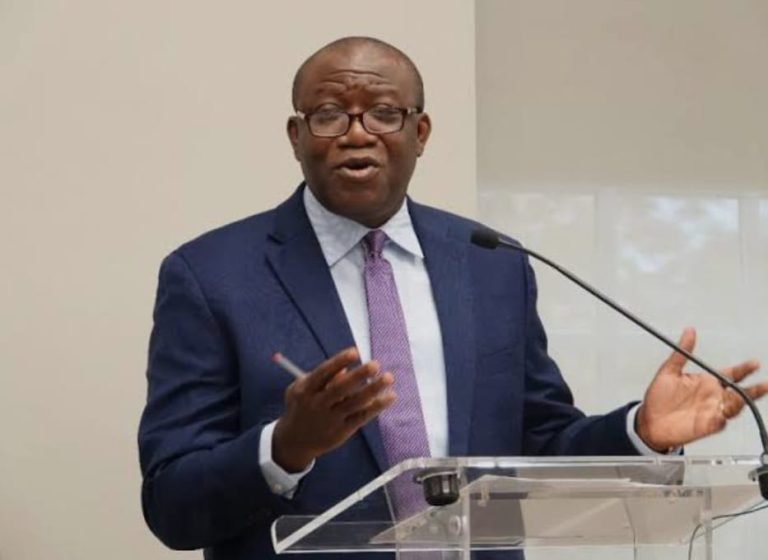
FAYEMI, A GLOBAL BRAND AT 61

0


_By Segun Dipe_

Turning 61 is a milestone that can evoke a mix of emotions. For persons who are career-restless, it marks the beginning of a new chapter, filled with opportunities for growth, reflection, and giving back. It’s such a time to leverage experience, expertise, and networks to make a lasting impact. As Deborah Baker, American biographer and essayist. puts it, “At 61, I’m healthier, stronger, and more fit than ever.”

One such person is Dr John Kayode Fayemi CON, the immediate past governor of Ekiti State. He is constantly on the go, seeking new challenges, innovation, and growth. He becomes quickly bored, disengaged, or unfulfilled in stagnant or predictable roles. Outside the government house, Fayemi busied himself with very important and most times, highly visible engagements, the way a Bill Clinton would do in the United States. He became sucked into the vortex of international diplomacy, CSO activism, giving lectures and so on.

Yet, every 9 February is Fayemi’s stock-taking day. Now at 61, the former Governor is a true reflection of a global human brand. He’s a renowned academic, security expert, and politician. He has served two terms as Ekiti State Governor (2010-2014 and 2018-2022) and was in-between the Minister of Mines and Steel Development under President Muhammadu Buhari (2015-2018).

Fayemi’s influence extends beyond Nigeria’s borders. He lectures in Africa, Europe, the Americas and Asia. He advises governments and institutions on transitional justice, regional integration, and security sector reform. He is also a Fellow of the Centre for Peace and Conflict Studies, University of Ibadan, and Adjunct Professor of Security Studies at the African Centre for Strategic Studies, National Defense University, Washington D.C.

Throughout his career, Fayemi has demonstrated remarkable resilience and courage. From his early days as a pro-democracy activist to his current role as a respected statesman, he has remained committed to serving the people. Fayemi’s leadership has been marked by intellectual depth, good governance, and strategic vision. His unwavering commitment to democracy, human rights, and development has earned him recognition and respect globally. He is a strong advocate for decentralization, believing that effective regional integration is key to Nigeria’s development.

Fayemi’s impressive resume includes serving as Chairman of the Nigerian Governors’ Forum, and emerging pioneer president of the Forum of Regions of Africa (FORAF). He has made significant impacts in governance, security, and constitutionalism, earning recognition worldwide. Fayemi’s leadership took Ekiti State to a new height, introducing transformative policies like free education, healthcare, and social security for the elderly.

Dr. Kayode Fayemi’s policies and impact on Nigerian politics are quite impressive. As Ekiti State Governor, he introduced several transformative policies, including abolition of levies and taxes on public schools, making education free for all, and introduction of free healthcare services for vulnerable citizens. He implemented a monthly stipend of ₦5,000 for elderly citizens without livelihoods. In the area of agricultural development, he initiated large-scale irrigation farming and established the Youth in Commercial Agriculture Development (YCAD) programme. He did not fail in infrastructure development either, as he constructed over 952 kilometers of roads, built schools, hospitals, and fast-tracked the building of an international cargo airport.

Dr. Fayemi’s view on Nigeria’s economic development was to focus on transforming the country through strategic investments in human capital, infrastructure, and economic diversification. He believes youths and women should be adequately captured in budgetary allocations to drive growth, a passion he passed on to his successor, Governor Biodun Abayomi Oyebanji. He also saw to the transformation of Ekiti State into a knowledge-based economy, leveraging its intellectual capital and strategic location.

As Minister of Mines and Steel Development, Fayemi repositioned the Mining Sector by enforcing the “use or lose” clause, revoking dormant mining licenses and attracting investments. He Increased Revenue by Generating over ₦30 billion in intervention funds and secured a $150 million World Bank support.

Regionally, Fayemi worked to promote regional cooperation, serving as the first elected president of the Forum of Regions of Africa (FORAF). His view on regional integration emphasizes collaboration and economic cooperation among states cannot be ignored. He believes Nigeria’s development hinges on effective regional integration, citing the need for geo-economic zones focused on production rather than resource sharing. Fayemi advocates for granting regional commissions autonomy, ensuring transparency, and fostering sustainable intergovernmental collaboration.

History will not forget how Dr. Fayemi’s second term as governor of Ekiti State (2018–2022) was crowned by a seamless handover of power to his chosen successor, incumbent Governor Biodun Abayomi Oyebanji. This transition was significant because it was the first time in the history of Ekiti State that a sitting governor would hand over to a successor from the same political party, thus breaking a recurring “jinx” of the ruling party losing elections in the state.

Happy Birthday Your Excellency, Dr. John Olukayode Fayemi, CON. You’re such an enigma, yet an inspiration, a rock, and a joy to everyone around you. May your day be filled with the same happiness, strength, and blessings you bring to the world.

_Segun Dipe is the Publicity Secretary of the All Progressives Congress, APC, in Ekiti State_

DMO gets 3rd consecutive NGX capital market excellence award

0


The Debt Management Office (DMO) has once again been honoured at the 2025 Made-of-Africa Awards by the Nigerian Exchange Group (NGX Group), receiving the “Special Recognition for Capital Market Excellence (Fixed Income)”.

The agency made this known in statement on Sunday in Abuja,

The statement said that the prestigious honour marked the third consecutive year the DMO had been celebrated for its capital market excellence following similar wins in 2023 and 2024.

The statement also said that the recognition highlighted significant impact and pioneering initiatives of the DMO in developing Nigeria’s fixed-income securities market.

“These initiatives, such as the introduction of long-dated government bonds, the sukuk and the green bonds, have opened up the domestic market to other borrowers – corporates and state governments.

“Also, through the issuance of Federal Government of Nigeria securities and the adoption of best practices, the DMO has attracted diverse investors, including foreign investors to Nigeria.

“As the DMO celebrates its 2025 recognition by the NGX Group, it remains committed to implementing further initiatives and collaborating with stakeholders to elevate Nigeria’s fixed-income securities to higher levels,”’ it said.

The DMO is a Federal Government agency responsible for managing Nigeria’s public debt.

Its key functions include managing Nigeria’s domestic and external debt, advising government on borrowing and debt sustainability, and issuing government securities like FGN bonds, treasury bills and sukuk.

It is also responsible for maintaining a reliable debt database, and developing strategies to reduce debt risks and costs.

The current Director-General of the DMO is Patience Oniha.

Oniha has played a key role in developing Nigeria’s domestic debt market, including introducing benchmark bonds and expanding investor participation.

She also introduced sukuk and green bonds to help finance infrastructure; issuance of long-term bonds domestically and internationally, including 30-year tenors; strengthening debt management reforms, and broadening investor participation.

In her role, the director-general continues to guide Nigeria’s public debt strategy and institutional capacity, working with stakeholders locally and internationally to manage the country’s debt efficiently.

Police intercept large consignment of illicit drugs in Ibadan

0


The Oyo State Police Command has intercepted 101 wraps of Canadian loud, nine bags of Indian hemp, and other illicit drugs.

This is disclosed in a statement by the Police Public Relations Officer (PPRO), DSP Ayanlade Olayinka, on Sunday in Ibadan.

Olayinka stated that the drugs were stockpiled in an apartment on Abanise Street, Academy area, Olomi, Ibadan.

He explained that the seizure was made possible through credible intelligence provided by one of the command’s strategic and progressive partners.

According to him, information received indicated that the apartment was being used to store a large consignment of suspected illicit drugs by one Oluwadamilare, who is currently at large.

“In response, detectives were promptly deployed to the location to verify the information and act accordingly.

” A thorough search of the apartment and its immediate surroundings was conducted.

“During the operation, nine bags of dried leaves suspected to be Indian hemp, 101 wraps of dried leaves suspected to be Canadian loud, as well as other hard and illicit drugs, were recovered and secured as exhibits,” he said.

Olayinka added that the state Commissioner of Police, Femi Haruna, has ordered intensive surveillance and a coordinated manhunt to apprehend the suspect believed to have concealed the drugs.

Haruna commended the strategic partnership and collaboration between the police, other security agencies, and community stakeholders, which contributed to the success of the operation.