‘Don’t rush into cohabitation’ – Michelle Obama advises women
By Enitan Abdultawab
Former United States First Lady Michelle Obama has advised women against moving in with a partner too early in a relationship, stressing the importance of time, patience and emotional clarity before taking such a major step.
Speaking on The TMZ Podcast, Obama said cohabiting in the early stages of a relationship can complicate matters before couples truly understand one another.
“If it’s early on in the relationship, you should not be moving in,” she said. “First of all, I don’t care how much money he had or does not have.”
Obama explained that financial comfort should not be the deciding factor for living together, noting that emotional readiness and compatibility are far more important.
According to her, relationships require more than feelings of love in the beginning.
“It might be controversial but I think you have to have a deep ‘likeness’, not love, for someone,” she said.
“Because it takes time to fully know how someone reveals themselves to you over time — to know whether your affections or feelings stand the test of time.”
She emphasised that relationships go through different phases and challenges, and couples need to experience those “tests” before making long-term commitments such as sharing a home.
“There are so many tests you need in a relationship,” Obama stated, adding that rushing the process can lead to regrets.
Her advice to young couples was clear and direct: “My recommendation is always; take your time. Make moving in always way down the line.”
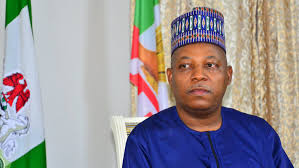
Vice-President Kashim Shettima on Thursday departed Abuja for Addis Ababa, Ethiopia, to represent President Bola Tinubu at the 2026 African Union (AU) Summit.
The News Agency of Nigeria (NAN) reports that the theme of the summit is: ‘Assuring Sustainable Water Availability and Safe Sanitation Systems to Achieve the Goals of Agenda 2063’.
It will focus on advancing continental commitments towards sustainable water management, improved sanitation systems, and the broader development aspirations encapsulated in the AU’s Agenda 2063 framework.
While in Addis Ababa, the vice-president will join other African leaders at the 39th Ordinary Session of the Assembly of AU Heads of State and Government.
Similarly, Shettima will attend the 30th General Assembly to be held Feb. 14 and 15.
The vice-president will participate in high-level side events and hold bilateral engagements with political and business leaders aimed at strengthening Nigeria’s diplomatic, economic, and strategic partnerships across the continent.
Shettima, who is being accompanied by cabinet Ministers and other senior government officials, is expected to return to Nigeria at the conclusion of his official engagements in Addis Ababa.
President Bola Ahmed Tinubu has commended the Bank of Industry (BOI) for disbursing a record N636 billion to businesses in 2025, describing it as the highest annual financing volume in the institution’s history.
The President said the milestone demonstrates that ongoing macroeconomic reforms are strengthening development finance institutions and unlocking capital for productive sectors of the economy.
The N636 billion was disbursed to more than 7,000 enterprises nationwide. Of the total, N202 billion went to agro-allied enterprises, N100 billion to critical national infrastructure such as broadband, power, aviation and transportation, N79 billion to manufacturing, N77 billion to extractive industries, and N55 billion to services.
Additionally, the bank deployed N73 billion in managed and matching funds on behalf of state governments and institutional partners.
According to President Tinubu, the disbursement directly translates into expanded productive capacity across Nigeria.
He noted that the funding supported agro-processing expansion, strengthened manufacturing output, enhanced infrastructure delivery and empowered thousands of enterprises across the States.
“At a time of global financing constraints, Nigeria expanded access to long-term capital for its businesses. That is a direct outcome of reform, credibility and institutional discipline,” the President said.
A breakdown by business size showed that nano enterprises received N51 billion, micro businesses accessed N32 billion, small and medium enterprises got N178 billion, while large enterprises accounted for N375 billion, reflecting what the President described as a deliberate inclusion strategy.
Under the Federal Government’s N200 billion MSME intervention programme, BOI achieved over 95 per cent performance as the disbursing institution. The Presidential Conditional Grant Scheme reached 957,400 beneficiaries in 2025 alone.
BOI’s financing activities also led to the creation and retention of approximately 1.6 million jobs. During the year, the bank supported more than 7,000 MSMEs and 570 startups.
Inclusive financing initiatives recorded measurable impact. Through the N10 billion Guaranteed Loans for Women Programme, which provides up to N50 million per beneficiary, women-owned enterprises expanded access to affordable credit. Youth-owned enterprises received N12 billion in financing, while 880 rural-based enterprises across the 36 states and the Federal Capital Territory accessed over N6.5 billion under the Rural Area Programme on Investment for Development.
Strategic interventions under the 2025 disbursement included upgrading a tomato processing facility from 3.1 metric tonnes per hour to 10 metric tonnes per hour and linking 47,508 smallholder farmers to formal processing value chains.
The bank also supported the deployment of 100 mini-grids in partnership with global development finance institutions, connecting 11,777 new customers to electricity. BOI-financed projects contributed to an estimated annual reduction of over 20,000 tonnes of carbon emissions.
Through the Investment in Digital and Creative Enterprises programme, 500 founders were prepared for investment, 100 technology ventures received funding and 400 youths were trained through innovation initiatives targeting over 300,000 Nigerians.
President Tinubu further noted that BOI maintained strong asset quality, recording a non-performing loan ratio below 1.5 per cent despite macroeconomic headwinds.
He acknowledged the €2 billion syndicated facility secured in 2024 and the additional €210 million mobilised from international partners in 2025, which strengthened the bank’s lending capacity.
He emphasised that development finance must be disciplined, measurable and aligned with national priorities, adding that Nigeria’s economic transformation would be built on production, value addition and enterprise growth.
The President also welcomed BOI’s designation as Nigeria’s first National Implementing Entity to the United Nations Adaptation Fund and its recognition for sustainable finance and financial inclusion, describing the achievements as strengthening Nigeria’s global development finance standing.
President Tinubu reaffirmed his administration’s commitment to consolidating reform gains and expanding credit access to enterprises as part of a long-term strategy to accelerate industrialisation and inclusive economic growth.
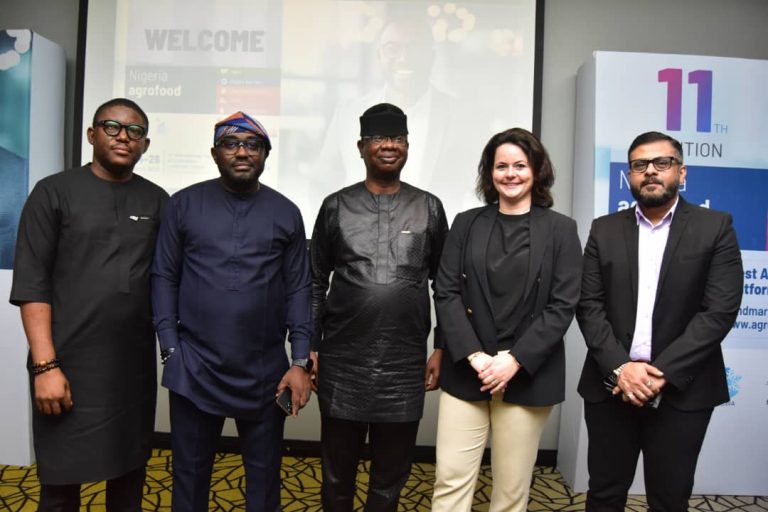
L-R: Public Relations Manager, Manufacturers Association of Nigeria (MAN), Salami Musa; Nigerian Partner, agrofood Nigeria, Odion Aleobua; Director General, Nigerian Association of Chambers of Commerce, Industry, Mines and Agriculture (NACCIMA), Engr. Olushola Obadimu; Exhibition Director, fairtrade Messe, Freyja Djeten and Institution Head Sales, Kamlesh Pitale, SIMBA TVS, at the Media and Stakeholders Parley, in preparation for the 11th edition of the agrofood Nigeria Tradeshow and Conference scheduled for March 24 – 26, 2026, in Lagos.
BY TAIWO OGUNMOLA -OMILANI
Nigeria’s efforts to build a competitive and industrialised food economy are gathering momentum as policymakers and industry leaders intensify moves to cut food imports, curb inflation, and transform agricultural output into scalable, export-ready value chains.
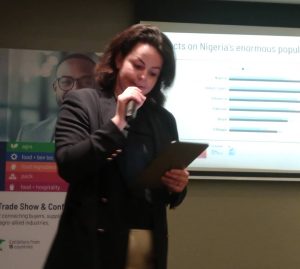
Speaking on Thursday at a press conference held at Radisson Blu, Lagos, Exhibition Director of fairtrade Messe, Freyja Djeten, said although agriculture contributes over 22 per cent to Nigeria’s Gross Domestic Product (GDP), limited processing capacity and persistent post-harvest losses continue to restrict value addition, job creation and foreign exchange earnings.
She said it is against this backdrop that agrofood Nigeria 2026, the 11th edition of West Africa’s leading agrofood and agro-allied industry platform, will convene key stakeholders to advance the next phase of Nigeria’s agro-industrial transformation.
The three-day exhibition is scheduled to be held from March 24 to 26, 2026, at the Landmark Centre, Victoria Island Annex, Lagos.
Djeten disclosed that the Netherlands—one of the world’s most advanced agri-food economies and the second-largest agricultural exporter globally—will headline the event as Guest of Honour and Lead Country Pavilion Exhibitor.
According to her, Dutch participation will showcase globally tested solutions in food processing, cold chain logistics, horticulture, seed technology, packaging and sustainable production systems, offering practical pathways to accelerate Nigeria’s agro-industrial scale-up.
The 2026 edition will host exhibitors from more than 15 countries, reinforcing agrofood Nigeria’s reputation as West Africa’s most international agro-industrial marketplace.
Confirmed country pavilions include the Netherlands as Guest of Honour and Lead Pavilion; Germany focusing on food processing and packaging engineering; China showcasing processing machinery, automation and packaging technologies; Belgium presenting precision farming, food processing innovation and circular production systems; and South Africa’s Western Cape Pavilion highlighting regional capabilities.
Organisers said the national showcases would provide structured entry points for technology transfer, partnerships and investment across Nigeria’s food and agro-allied value chains.
The conference segment will focus on macroeconomic trends, trade competitiveness and export-led growth.
Day One will feature Bismarck Rewane, Managing Director and Chief Executive Officer of Financial Derivatives Company Limited, who is expected to deliver a data-driven macroeconomic outlook for agribusiness and food manufacturing.
His presentation will examine inflation trends, foreign exchange exposure, cost of capital, consumer demand and broader investment signals shaping the sector.
Day Two will spotlight Dr. Yemi Kale, Group Chief Economist and Managing Director, Research and Trade Intelligence at the African Export-Import Bank (Afreximbank). Kale will lead discussions on trade, data and Africa’s agro-industrial growth trajectory under the African Continental Free Trade Area (AfCFTA), with emphasis on positioning Nigeria’s agro-allied industries for regional and global export markets.
Speaking on the significance of the 2026 edition, Paul Maerz, Managing Director of fairtrade Messe, said Nigeria’s food challenge now extends beyond primary production.
“The decisive question is how quickly the country can industrialise its food system, reduce losses, deepen processing and meet international quality standards.
The Netherlands’ leadership at this edition reflects agrofood Nigeria’s focus on practical, scalable solutions,” he said.
Odion Aleobua, Conference and Exhibitor Partner for agrofood Nigeria, described the upcoming edition as a shift “from potential to execution,” noting that Nigeria’s agro-industrial future would be shaped by policy clarity, private capital, technology adoption and trade readiness.
The Director General of the Nigerian Association of Chambers of Commerce, Industry, Mines and Agriculture (NACCIMA), Engr. Olushola Obadimu, said the exhibition comes at a critical time, citing climate change, rising production costs, post-harvest losses and limited market access as pressing challenges requiring strategic partnerships and practical solutions.
Similarly, Director General of the Manufacturers Association of Nigeria (MAN), Mr. Segun Ajayi-Kadir, said the platform would serve as a bridge between Nigerian manufacturers and international technology providers, supporting technology acquisition, adoption of global food processing standards and strengthening of the Made-in-Nigeria brand.
Also speaking, Director General of the Lagos Chamber of Commerce and Industry (LCCI), Dr. Chinyere Almon, said the trade show offers an opportunity to align stakeholders toward advancing food security and improving production quality across the agricultural value chain.
Rewane, a member of Nigeria’s Presidential Economic Advisory Council, has over 40 years of experience in macroeconomic research, banking, capital markets and public policy. Kale, a former Statistician-General of Nigeria, is widely recognised for his work in bridging finance, policy, data and development across Africa.
Agrofood Nigeria remains West Africa’s annual business platform for the agrofood industry, connecting processors, manufacturers, agribusinesses, policymakers, financiers and solution providers across processing, packaging, cold chain systems and value-chain optimisation.
The Minister of Education, Dr Olatunji Alausa, and former Katsina State Governor, Aminu Masari, are among other eminent Nigerians who would be honoured today at the convocation ceremony and 50th anniversary of the Federal College of Education (FCE) Abeokuta, Ogun State, for their contributions to the development of the institution.
According to the institution, its Information and Communications Technology (ICT) building is expected to be named after Alausa, while Masari will be honoured with an Honorary Fellowship of the College, among other awardees.
Meanwhile, Provost of the College, Dr Rafiu Soyele, has lauded the Federal Government’s (FG) policy allowing concurrent running of Nigerian Certificate in Education (NCE) and degree programmes by selected Colleges of Education in the country, noting that the policy was a pragmatic, cost-effective, mutually and doubly beneficial to the government, the institutions students and the Nigerian public.
Explaining further, Soyele noted that the move was for the government to use one stone to kill two birds, by using the same human resources and infrastructure to run both programmes.
He said students in the NCE programme would find it more expedient and at reduced cost to run their degree programmes after the completion of their NCE programme.
He further said that running the programmes simultaneously could easily give a moral boost and a challenge to NCE graduates to return much earlier to conclude their degree programmes.
Underscoring the significance of NCE, while applauding the government for not phasing it out, the educationist argued that products of the programme were still highly relevant to a successful implementation and attainment of the goal and objectives of the country’s educational policy, especially at the primary and junior secondary school levels.
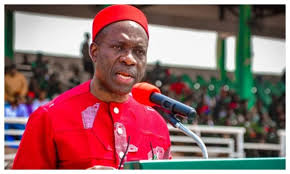
Anambra State Governor, Chukwuma Soludo, yesterday, disclosed that the suspension of the weekly sit-at-home order in the South-East has begun to yield visible economic recovery, with more than 45,000 shops reopening for business on Mondays at the Onitsha Main Market alone.
Soludo attributed the renewed commercial activity to sustained security operations by his administration, which, he said, had led to the dismantling of over 62 criminal camps across the state.
Speaking with journalists after a closed-door meeting with President Bola Tinubu at the Presidential Villa, Abuja, the governor described the reopening of markets and schools on Mondays as a “turning point” for the region’s economy.
According to him, years of enforced shutdowns under the sit-at-home directive declared by the Indigenous People of Biafra (IPOB) over the incarceration of Mazi Nnamdi Kanu had inflicted deep social and economic costs, pushing some businesses and investments out of the South-East.
He noted that the economic impact extended beyond lost daily income, warning that recurring closures eroded investor confidence and long-term growth prospects.
Soludo explained that his government moved early to strengthen community-based security structures, establishing theAgunechemba vigilante outfit alongside anti-cult and anti-touting task forces to restore order and public confidence.
He said the collaboration among the various groups had significantly reduced criminal activity, enabling residents and traders to resume normal routines.
Highlighting the scale of the losses previously suffered, the governor said each lost Monday represented nearly a fifth of weekly productivity for informal businesses and schools that operate six days a week.
He pointed to Onitsha Main Market, regarded as one of West Africa‘s largest trading hubs, as a clear example of the turnaround, recounting scenes of large crowds and celebratory mood among traders since the resumption of full Monday operations.
Soludo also disclosed that the state government had commenced plans to regenerate the market’s infrastructure, reclaim parking areas converted to stalls and reposition the facility as a leading commercial centre in the sub-region.
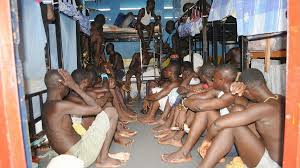
The Nigeria Correctional Service (NCoS) has proposed N14.83 billion in its 2026 budget for the feeding of inmates nationwide.
Its Controller-General, Sylvester Nwakuche, disclosed this while presenting the agency’s 2025 budget performance and 2026 estimates before the House of Representatives Committee on Reformatory Institutions in Abuja.
According to him, the proposed allocation is to feed an estimated inmate population of 91,100 at a daily rate of N1,125 per person.
Nwakuche emphasised that adequate feeding aligns with the United Nations Minimum Standard Rules for the Treatment of Offenders.
The CG also presented the full 2026 budget proposal of N198.85 billion, covering personnel costs, recurrent overhead, operational expenses, inmate feeding, and capital expenditure for both custodial and non-custodial operations nationwide.
Of the total proposal, N138.30 billion is earmarked for personnel costs to cater for a projected staff strength of 37,541, while N50.40 billion is allocated to recurrent overhead, which includes the N14.83 billion feeding component.
An additional N100.50 billion is proposed for capital expenditure to address infrastructure deficits, while N37.99 billion is sought for the implementation of non-custodial measures across the country’s 774 local council areas.
Nwakuche noted that the service currently has a total inmate population of 80,812, of which 51,955 are awaiting trial, 24,913 are convicted, and 3,850 fall under other detention categories.
He highlighted that while personnel and operational expenses are critical, capital funding remains crucial for the construction and rehabilitation of custodial facilities, procurement of operational vehicles and security equipment, and the development of prison farm centres and ICT systems.
Nwakuche described the NCoS as a critical institution within the criminal justice system, responsible for custodial and non-custodial services, safe custody of legally detained persons, as well as their rehabilitation and reintegration as law-abiding citizens.
He added that the service is mandated to ensure inmates are adequately fed in line with the United Nations Minimum Standard Rules for the Treatment of Offenders.
On the 2025 budget performance, the Controller-General disclosed that the service received a total appropriation of N184.63 billion during the year, covering personnel, overhead and capital expenditure.
Of the N124.31 billion approved for personnel costs, N112.68 billion, representing 90.6 per cent, was released and fully utilised for salaries, pensions and health insurance contributions under the Integrated Payroll and Personnel Information System (IPPIS).
He said recurrent overhead releases stood at 73.7 per cent, with the last tranche for October 2025 released in December.
From the funds received, Nwakuche said N27.28 billion, representing 71.7 per cent, was spent on inmates’ feeding nationwide, while outstanding obligations for food rations stood at N10.75 billion.
He added N6.49 billion was expended on operational costs, including staff training, fuelling of operational vehicles for court duties, electricity, security services and facility maintenance.
Earlier, Chairman of the House Committee on Reformatory Institutions, Chinedu Ogah, called for urgent reforms in the nation’s correctional system, including increased funding, improved infrastructure, and assent to the Correctional Service Trust Fund Bill.
He lamented that many facilities, some over a century old, have deteriorated significantly, contributing to congestion and operational strain.
Ogah praised ongoing efforts to expand access to education within correctional centres, noting that about 10 study centres of the National Open University of Nigeria have been established in prisons nationwide, including the Abakaliki Correctional Centre, enabling inmates to acquire education free of charge.
Business magnate Femi Otedola has congratulated President of Dangote Group, Aliko Dangote, on the Dangote Petroleum Refinery attaining its full production capacity of 650,000 barrels per day.
In a message celebrating the milestone, Otedola described the achievement as not only historic for the Dangote Group but transformational for Nigeria and the African continent.
He noted that the refinery’s capacity to supply up to 75 million litres of Premium Motor Spirit (PMS) daily would significantly alter Nigeria’s energy landscape and reduce the country’s longstanding dependence on imported refined petroleum products.
According to Otedola, the commencement of large-scale domestic refining after decades of reliance on imports is expected to ease pressure on the foreign exchange market and conserve scarce foreign reserves.
“With domestic refining now firmly underway, pressure on the foreign exchange market should ease significantly,” he stated, expressing optimism that the naira would strengthen meaningfully in the coming months.
He added that the prospect of the naira trading below ₦1,000 to the dollar before the end of the year is “increasingly within reach,” given the positive impact of local refining on foreign exchange demand.
Otedola further revealed that Dangote is embarking on an additional $12 billion expansion project to scale up refining capacity to 1.4 million barrels per day.
The expansion will also include the production of 2.4 million tons of polypropylene and 400,000 metric tons of Linear Alkyl Benzene for detergent manufacturing.
He noted that work on the expansion has already commenced.
Otedola concluded by congratulating Dangote once again, describing the refinery’s achievement as a source of pride for Nigeria.
The Adamawa State Police Command has rescued two teenagers abducted in Song Local Government Area and arrested a suspected kidnapper during a joint security operation.
The victims, Rabe Mamman Sani (18) and Aminu Mamman Sani (16), were kidnapped from Gwewan Village in Dumne, Song Local Government Area.
They were freed unharmed following a coordinated raid on a suspected kidnappers’ hideout at Suktu Mountain on February 11, 2026.
In a statement made available to journalists on Thursday, the Police Public Relations Officer, Suleiman Yahaya Nguroje, said the operation was carried out by police operatives in collaboration with local security outfits.
Nguroje attributed the success of the operation to the strategic deployment of security assets by the Commissioner of Police, Dankombo Morris.
According to the statement, the suspects opened fire on the operatives upon sighting them, leading to a gun duel.
The kidnappers, however, fled the scene with possible gunshot injuries, abandoning the two victims.
“During the operation, officers arrested one suspect, Sanda Bello (22), of Salasa Village in Dumne. The suspect has confessed to participating in the crime,” the statement said.
The rescued teenagers were taken to a hospital for medical examination and were confirmed to be in good condition.
Police said efforts are ongoing to track down other members of the kidnapping syndicate who escaped during the raid, adding that the Command’s Anti-Kidnapping Unit has commenced further investigation.
Commissioner Morris commended the bravery of the operatives and the support of local security groups, reaffirming the Command’s commitment to safeguarding lives and property.
He urged residents to report suspicious persons, particularly individuals with gunshot wounds.
Nigeria and China have pledged to deepen cooperation in renewable energy, the digital economy, and agriculture, as both countries mark 55 years of diplomatic relations
Nigeria and China have pledged to deepen cooperation in renewable energy, the digital economy, and agriculture, as both countries mark 55 years of diplomatic relations
Nigeria and China have pledged to deepen cooperation in renewable energy, the digital economy, and agriculture, as both countries mark 55 years of diplomatic relations amid renewed commitments to economic transformation and people-to-people engagement.
Both nations acknowledged that their long-standing partnership has evolved into a strategic relationship delivering significant gains in infrastructure development, trade, and economic growth across Nigeria.
The commitment was reiterated at a reception held in Lagos to celebrate the Chinese New Year and the 55th Anniversary of the Establishment of Diplomatic Relations between China and Nigeria.
Speaking at the event, the Chairman, House Committee on Nigeria–China Relations, Hon. Jaafaru Yakubu, said the bilateral relationship—established in 1971—was founded on mutual respect, non-interference, and shared development objectives.
Yakubu noted that China remains one of Nigeria’s most important partners in key areas such as infrastructure development, technology transfer, industrialisation, education, and cultural exchange. He added that visible outcomes of the partnership include major rail, road, and power projects, as well as growth in manufacturing and digital innovation.
The lawmaker reaffirmed the National Assembly’s commitment to strengthening legislative cooperation and improving bilateral frameworks to ensure partnerships remain transparent, sustainable, and beneficial to citizens.
He said policymakers would continue to promote investment-friendly policies capable of creating jobs and supporting Nigeria’s long-term economic transformation.
Yakubu also identified opportunities for expanded collaboration in renewable energy, healthcare, science and technology, agriculture, and human capital development, noting that such cooperation would further strengthen South-South relations and contribute to global development.
In her remarks, the Consul General of China in Lagos, Ms Yan Yuqing, said 2025 recorded notable milestones in China–Nigeria relations, including increased high-level diplomatic engagements and expanded economic cooperation.
She disclosed that Nigeria participated in major Chinese trade exhibitions, while more Chinese enterprises scaled up investment activities across the country.
Yuqing highlighted key projects delivered through bilateral cooperation, including the Abuja Greater Water Supply Project, which she said improved access to potable water for about three million people, and increased operational capacity at the Lekki Deep Sea Port.
She added that passenger and freight traffic on the Lagos–Ibadan Railway and Lagos Light Rail reached record levels, significantly enhancing mobility and cargo transportation.
The Chinese envoy said China’s economy maintained steady growth, surpassing RMB 140 trillion in Gross Domestic Product (GDP), while continuing to drive global economic expansion and innovation in areas such as artificial intelligence, aerospace, and semiconductor technology.
She reaffirmed China’s commitment to high-level opening-up and to sharing development opportunities with Nigeria and Africa.
Yuqing further highlighted expanding sub-national cooperation between Chinese provinces and Nigerian states, as well as growing cultural and educational exchanges through Confucius Institute programmes and cultural festivals.
She noted that charity initiatives supported by the Chinese Consulate and Chinese enterprises had provided assistance to cataract patients and low-income households across Nigeria.