Home Blog Page 650

Over 30 miners die, 25 hospitalised in Wase carbon monoxide tragedy

0


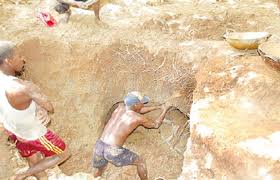
ZURAK, Wase — At least 30 miners were killed and 25 others hospitalised on Wednesday after inhaling carbon monoxide while working underground at a mining site in Wase Local Government Area, Plateau State.

Eyewitnesses said the victims, mostly young men aged 20 to 35, collapsed while carrying out routine operations at the mining company. Some of the injured are in critical condition and receiving treatment at a nearby primary health centre.


Haruna Safiyanu, a miner in Wase, told reporters that toxic gas had accumulated in poorly ventilated tunnels, leading to the sudden collapse of several workers.

Rescue teams, assisted by mining site personnel, quickly cordoned off the area and evacuated survivors for urgent medical attention. Authorities are investigating the cause of the gas build-up and working to prevent further incidents.

Vanguard

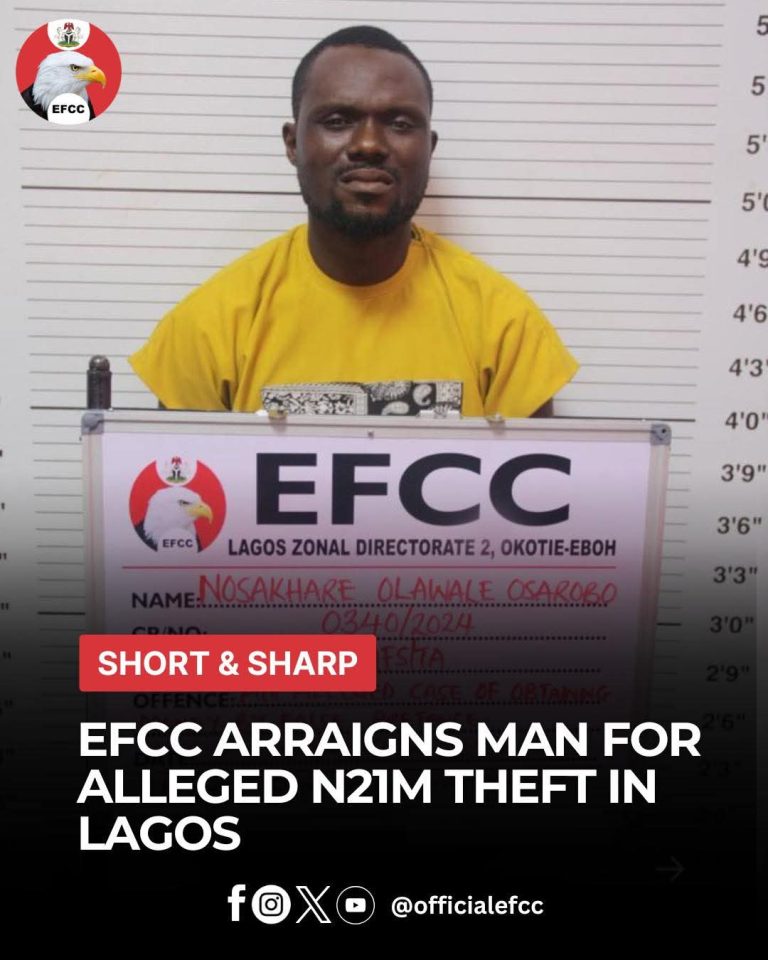
EFCC Arraigns Man for Alleged N21m Theft in Lagos

0


‎‎The Lagos Zonal Directorate 2 of the Economic and Financial Crimes Commission, EFCC, on Wednesday, February 18, 2026, arraigned one Nosakhare Osarobo Olawale for an alleged N21m theft before Justice O.A. OKunuga of the Lagos State High Court sitting in Ikeja, Lagos.

‎Olawale is being prosecuted on a two-count charge bordering on stealing to the tune of N21, 000,000 (Twenty One Million Naira).

Ramadan: Kano govt orders closure of event centres

0

The Kano State Government has directed the immediate closure of all entertainment centres across the state for Ramadan fasting period.

The announcement was made on Tuesday by Abdullahi Sulaiman, Public Relations Officer of the Kano State Censorship Board.

The directive affects entertainment venues popularly known as gala houses, as well as disc jockey (DJ) operators under the board’s regulatory jurisdiction.


“Effective from Wednesday, 18 February 2026, all such venues will remain closed until the end of the holy month of Ramadan. The directive will take effect from 10:00 p.m. on that day,” the statement read.

Sulaiman explained that the measure aims to create a calm and morally conducive environment for Muslim faithful to observe the fasting period without distractions.

“The action is intended to create a peaceful environment for residents to observe the Ramadan fast in accordance with religious injunctions,” he said.

He added that entertainment activities under the board’s supervision would remain suspended throughout Ramadan, with reopening dates, particularly for Eid celebrations, to be announced later.

“The closure will remain in force throughout the fasting period, while the date for reopening, particularly during the Eid celebrations, will be announced at the appropriate time,” Sulaiman said.

The board urged owners of affected centres and DJs to comply fully, warning that enforcement teams would monitor adherence and violations would attract sanctions.

The agency noted that the decision falls within its mandate to regulate entertainment activities and promote moral and social order during religious seasons.

Amid concerns and mixed reactions from residents, the board clarified that the directive does not apply to event centres used for weddings, conferences, or political gatherings.

One board director, Usman Dankwano, emphasised that only venues strictly classified as entertainment outlets, such as gala houses under the board’s jurisdiction, are affected.

“Event centres are not even under our jurisdiction. People misunderstood the directive,” he added.

Vanguard

Vote Buying Won’t Be Tolerated, Amupitan Warns Ahead of FCT Area Council Poll

0


The Chairman of the Independent National Electoral Commission (INEC), Prof. Joash Amupitan, SAN, has assured residents of the Federal Capital Territory (FCT) of a peaceful, transparent and credible Area Council election scheduled for Saturday, February 21, 2026.

Speaking at a high-level stakeholders’ forum in Abuja, Prof. Amupitan said the Commission had substantially concluded preparations for the poll, describing the exercise as a shared responsibility among political parties, security agencies, civil society groups, the media and voters.

“This engagement provides an opportunity for open and constructive dialogue as we approach Election Day. While INEC is constitutionally mandated to conduct elections, their success depends on the cooperation, restraint and commitment of all stakeholders,” he said.

According to him, 1,680,315 registered voters are expected to cast their ballots in 2,822 polling units across the six Area Councils — Abaji, Abuja Municipal Area Council (AMAC), Bwari, Gwagwalada, Kuje and Kwali. A total of 570 candidates are contesting 68 constituencies, comprising Chairmanship, Vice-Chairmanship and 62 Councillorship seats.

He noted that the FCT Area Council poll remains the only local government election conducted by INEC.

Prof. Amupitan disclosed that 11 out of the 13 activities in the Commission’s timetable had been completed, with the close of campaigns at midnight on February 19 and Election Day on February 21 remaining.

He added that 106,099 Permanent Voter Cards (PVCs) were collected during the Continuous Voter Registration exercise, while 89 observer groups and 700 journalists from 72 media organisations had been accredited.

The INEC chairman said the upgraded Bimodal Voter Accreditation System (BVAS) would be deployed in all polling units, with results uploaded to the INEC Result Viewing Portal (IReV).

A mock accreditation exercise conducted in 289 polling units, he said, yielded satisfactory results. For logistics, the Commission has secured 1,132 vehicles, 620 motorcycles and 14 boats, with polling units expected to open at 8:30 a.m.
Reiterating that INEC has no preferred candidate or political party, Prof. Amupitan warned against vote trading, stressing that it would not be tolerated.

He disclosed that the Economic and Financial Crimes Commission (EFCC) and the Independent Corrupt Practices and Other Related Offences Commission (ICPC) would deploy personnel to arrest offenders.

In his welcome address, the FCT Resident Electoral Commissioner (REC), Mallam Aminu Kasimu Idris, said preparations began on January 22, 2025, including monitoring party primaries, publication of candidates’ particulars, voter register display and PVC distribution.

He said the Commission had re-displayed the voter register at polling units to help residents confirm their voting locations, following challenges recorded during the 2022 elections due to voter migration.

National Commissioner supervising the FCT, Mallam Muhammad Kuku Haruna, described the stakeholders’ meeting as one of the final engagements before the poll, revealing that on-the-spot assessments conducted in Gwagwalada, Kuje and Bwari showed a high level of preparedness.
Also speaking, IPAC FCT Secretary, Adama Umar Yahaya, commended INEC’s transparency and pledged political parties’ commitment to peaceful elections. FCT NYSC Coordinator, Ateli Samson, assured that corps members serving as ad hoc staff had received intensive training.

Meanwhile, FCT Commissioner of Police, Miller G. Dantawaye, announced extensive security deployment across polling units and identified flashpoints, assuring residents of adequate protection.

The forum ended with an interactive session, after which Prof. Amupitan and other commissioners proceeded to a meeting of the Inter-Agency Consultative Committee on Election Security (ICCES) to fine-tune security arrangements ahead of the poll.

Tinubu Urges Unity as Lent, Ramadan Commence Simultaneously

0


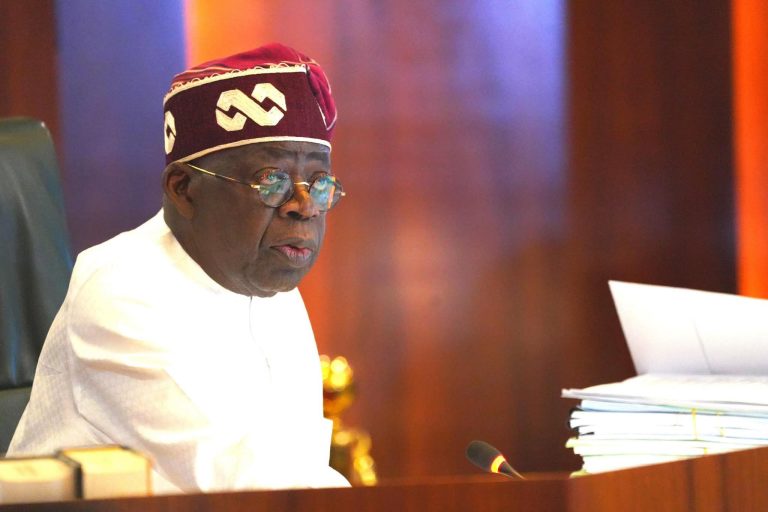
President Bola Ahmed Tinubu has extended greetings to Christians and Muslims as the sacred seasons of Lent and Ramadan begin on the same day, describing the coincidence as a reminder of shared faith and common values among Nigerians.

In a message issued on February 18, 2026, the President said the rare alignment of both observances highlights the nation’s spiritual unity, noting that Nigerians, regardless of religion, remain “one people under God.”

He explained that for Christians, Lent is a solemn period marked by fasting, abstinence and penitence, following the example of Jesus Christ before His crucifixion and the salvation of mankind.

According to him, Ramadan holds equal spiritual significance for Muslims as a period of total submission to God, sacrifice, devotion, service and charity, representing one of Islam’s five pillars and encouraging deep reflection beyond the obligatory fast.

Tinubu called on citizens to use the period to promote good neighbourliness, peace, unity and national stability.
“As we embark on these important observances, let us pray for the progress and security of our nation and remain honourable in our duty to God and fellow humans,” he said.

The President also prayed that the lessons and blessings of the seasons would endure among Nigerians and strengthen national harmony.

Sanwo-Olu, Makoko and the Test of Leadership

0


By Gboyega Akosile

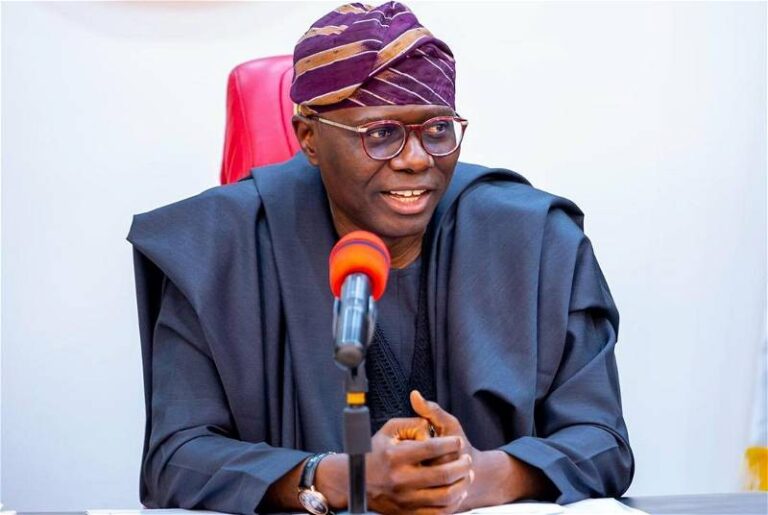
Leadership is not tested in moments of applause. It is tested in moments of discomfort, when decisions are unpopular, emotions are high, and the future must be weighed against the present. The recent Makoko challenge in Lagos is one such moment, and it goes beyond a waterfront settlement. It is a defining test of leadership especially for a man who has confronted many of such daunting challenges and has surmounted them.

Makoko has existed for decades, evolving into a symbol of Nigeria’s urban contradictions—resilience alongside neglect, and survival amid dysfunction. While its cultural narrative is often celebrated, its reality raises urgent concerns around sanitation, environmental safety, public health, and urban planning. These are not abstract issues; they affect the city’s ecosystem, its waterways, and the wellbeing of millions beyond the community itself.

At the heart of the Makoko debate lies a hard truth: governance cannot be driven by sentiment alone. Responsible leadership sometimes requires decisions that are emotionally difficult but socially necessary. When governments consistently postpone tough choices, the cost does not disappear but multiplies and passes on to the future. And sometime in the future, the government inaction will give way to avoidable consequences.

This is why Makoko represents more than a policy dilemma; it is a leadership crossroads.

Throughout history, many world leaders have taken difficult, often deeply unpopular decisions to prioritise the long-term well-being of the masses over short-term popularity or immediate political convenience. From Olusegun Obasanjo to Lee Kuan Yew and from Angela Merkel to Nelson Mandela, down to Julius Nyerere and others, at one time or the other, a tough decision had been taken, which though didn’t sit well with majority but had the capacity of rewriting history for better.

For instance, upon assuming office in 1999, President Olusegun Obasanjo enforced the retirement of about 93 senior military officers who had previously held political positions—such as military administrators, governors, or ministers—to curb the risk of future coups and strengthen democratic governance. Notable officers in this category included two former Lagos military administrators, Col. Buba Marwa and Prince Olagunsoye Oyinlola.

Also, during the 2015 refugee crisis, German Chancellor Angela Merkel made a difficult, politically costly decision to keep German borders open to refugees, thereby prioritizing humanitarian aid over popular political sentiment.

In his inauguration speech, on May 29, 2023, President Bola Tinubu sent the biggest shockwave to the entire country, when he announced that “fuel subsidy is gone”! A very tough decision, which, in less than three years of the administration is manifesting positively.

At the moment, Governor Babajide Sanwo-Olu falls in this category. But definitely, like other visionary leaders, Sanwo-Olu will weather the storm and the society will be better. Besides, this is not the first time he would be on the hot seat and make the best out of it. His style of governance has, over the years, been marked by calmness under pressure, strategic thinking, and a preference for structured responses over impulsive reactions. Lagosians witnessed this during the COVID-19 pandemic, when fear threatened to overwhelm the system. Rather than panic, the state adopted a coordinated approach that balanced public health priorities with economic survival and security—an exercise in measured leadership at a time of national uncertainty.

The EndSARS protests presented an even sterner challenge: a volatile mix of youth anger, legitimate grievances, and widespread breakdown of order. While the crisis exposed some institutional weaknesses, it also reinforced the complexity of leadership in moments when emotions run high and decisions must be made in real time. Leadership, in such moments, is rarely about perfection; it is about restraint, responsibility, and learning.

In both challenging circumstances, Governor Sanwo-Olu demonstrated effective leadership with calmness, transparent communication, and a clear, adaptable vision that guided his teams through uncertainty. Leaders must foster trust, empower employees through delegation, and maintain motivation by recognising efforts, even when facing external pressures like resource shortages or internal conflicts. Key strategies include maintaining high emotional intelligence, staying proactive, and prioritising both team well-being and long-term goals. One unique approach that worked for Governor Sanwo-Olu in the two cited cases was that he was honest about challenges and steps taken to address them. Thus, he fostered a culture of trust and psychological safety.

Applying this leadership lens to Makoko, one thing is clear: doing nothing is no longer an option. The challenges posed by the settlement—environmental degradation, safety risks, and urban disorder—are far-reaching. Avoidance may earn temporary applause, but it ultimately deepens the problem and shifts the burden to the next generation.

Any meaningful intervention in Makoko will be controversial. It will provoke resistance and criticism. In fact, some established civil society organizations will feast on it. But leadership is not the art of pleasing everyone; it is the courage to act in the long-term interest of society while ensuring humane, inclusive, and well-structured solutions for affected communities.

If properly handled, the Makoko challenge could mark a turning point. It could open conversations around sustainable urban renewal, structured resettlement, environmental restoration, and inclusive development. More importantly, it could set a precedent that Lagos is ready to confront its most complex urban problems, not manage them indefinitely.

History is rarely kind to leaders who choose comfort over courage. But it often rewards those who take hard decisions with foresight, empathy, and clarity of purpose. Makoko is not just a settlement under scrutiny—it is a moment of truth. And how it is handled will speak volumes about the kind of leadership Lagos chooses to uphold.

With his handling of the Makoko situation, Governor Sanwo-Olu has chosen to be remembered for doing the good under a difficult circumstance and he certainly will have the right place in history.

Gboyega Akosile is the spokesman to Governor Babajide Sanwo-Olu.
FG to strengthen humanitarian response framework

0


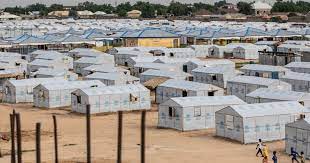
Internally Displaced Persons (IDP) learning centre

The Minister of Humanitarian Affairs and Poverty Reduction, Dr Bernard Doro, said the ministry is finalising an expansive coordination framework to overhaul Nigeria’s humanitarian response architecture.

Doro said the ministry’s new framework would help eliminate fragmented interventions and silo-driven programming that, over time, have weakened efficiency, reduced coverage, and limited measurable impact.

He said the plan is coming on the heels of more than 25 million citizens who require assistance each year, and with over 60 per cent of Nigerians living in multidimensional poverty.

According to him, a unified and accountable system is no longer optional but urgent, noting that Nigeria has continued to grapple with protracted insecurity in parts of the North-East, recurring climate-induced flooding across several states, urban displacement and economic pressures that have pushed millions deeper into vulnerability.

Against this backdrop, Doro said the ministry’s new framework seeks to reposition coordination as the backbone of humanitarian and poverty reduction efforts. For instance, in the case of a flooding disaster, early warning signals would henceforth be given to people, followed by enlightenment and, if necessary, action.

He also said that, central to the reform and the achievement of targeted goals, was the establishment of the National Council on Humanitarian Affairs and Poverty Reduction, recently inaugurated as a permanent institutional platform to align federal, state, and local council interventions.

Doro said the council is expected to harmonise humanitarian response with poverty reduction strategies, disaster risk management, climate adaptation planning and long-term development priorities.

According to the minister, one of the most significant challenges confronting Nigeria’s humanitarian ecosystem has been duplication of efforts, weak data-sharing mechanisms and inconsistent financing structures across tiers of government.

The new coordination blueprint aims to address these gaps by strengthening inter-agency collaboration and establishing clearer accountability benchmarks.

Guardian

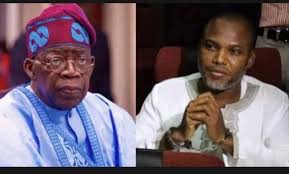
Monarch calls for Kanu’s release as Tinubu’s aide faults comparison with Igboho

0


Amid calls for the unconditional release of detained leader of the Indigenous People of Biafra (IPOB), Nnamdi Kanu, the Special Adviser to President Bola Tinubu on Public Communication and Orientation, Sunday Dare, yesterday, faulted insinuations in some quarters that there is no difference between Kanu, who is currently serving a life imprisonment for terrorism charges and the Yoruba nation activist, Sunday Adeyemo, popularly known as Sunday Igboho.

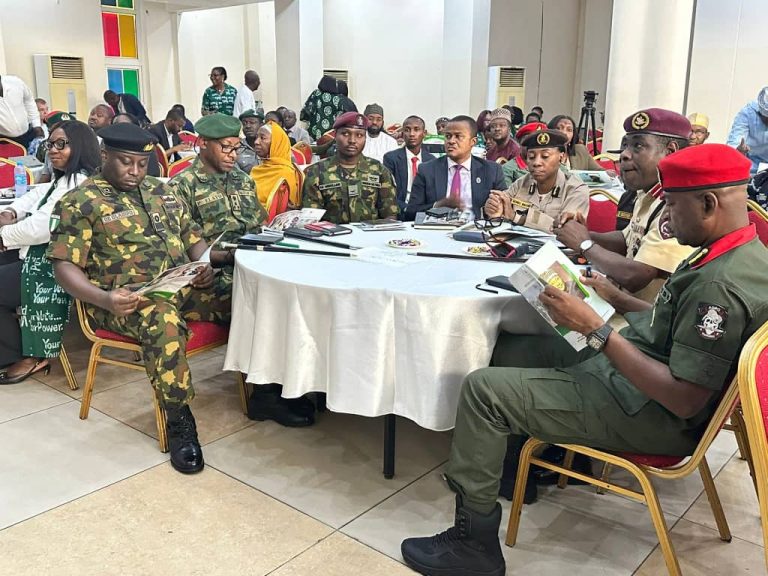
A traditional ruler from the South-East, Eze Ogbunechendo of Ezema Olo Kingdom, Dr Lawrence Agubuzu, had, during the 2026 National Traditional and Religious Leaders Summit on Health held at the State House Conference Centre, Abuja, appealed President Bola Tinubu to release the convicted IPOB leader or return him to Kenya, where he was arrested, warning that his continued detention was fuelling agitation among youths in the region.

He said: “I must tell you, Mr President, that personally I don’t feel very happy because you were not here in the morning when the Ooni of Ife gave the opening remarks and was encouraging us to work as one,” he said.

The Enugu-based monarch questioned the sincerity of the unity message, alleging that the Ooni was arranging to confer a high traditional honour on the Yoruba Nation activist, Sunday Igboho, whom he described as Kanu’s counterpart in the South-West.

“Please, do something about this. We cannot make progress in this country if we don’t tell ourselves the truth,” Agubuzu told the President.

However, Dare argued that while Kanu engaged in insurrection and armed confrontation with the Nigerian state, which resulted in the killing of more than 700 innocent people, economic paralysis of South-East states, Igboho’s activism centred on defending South-West communities against criminal activities of rogue herders and peaceful agitation for the Yoruba nation.

In a statement, Dare pointed out that there is no basis for comparison between the duo, noting that it is imperative to highlight the differences in proper perspective for a clearer understanding in the public domain.
According to the statement, “Nnamdi Kanu’s IPOB movement involved elements widely associated with insurrection and direct confrontation against the Nigerian state. This included enforcement of ‘sit-at-home’ orders (often through threats and violence), resulting in numerous deaths (reports cite over 700 fatalities linked to enforcement clashes and defiance killings).

“Other inimical activities include attacks on security forces, destruction of public infrastructure, and the formation of armed groups like the Easter Security Network (ESN). Kanu’s rhetoric and actions escalated to calls that many viewed as inciting violence against the state and even against his own people in the South-East, who defied orders.

“In contrast, Sunday Igboho’s activism centred on defending Yoruba communities, primarily against alleged killings, kidnappings, and farm destruction by suspected herders. He focused on self-defence, warding off criminal elements from Yoruba land.”

Guardian

Shuaib Urges Christians to Embrace Reflection, Compassion as Lent Begins

0


Former Edo State Deputy Governor, Philip Shaibu, has called on Christians to use the Lenten season as a time of spiritual renewal, humility and service to humanity.

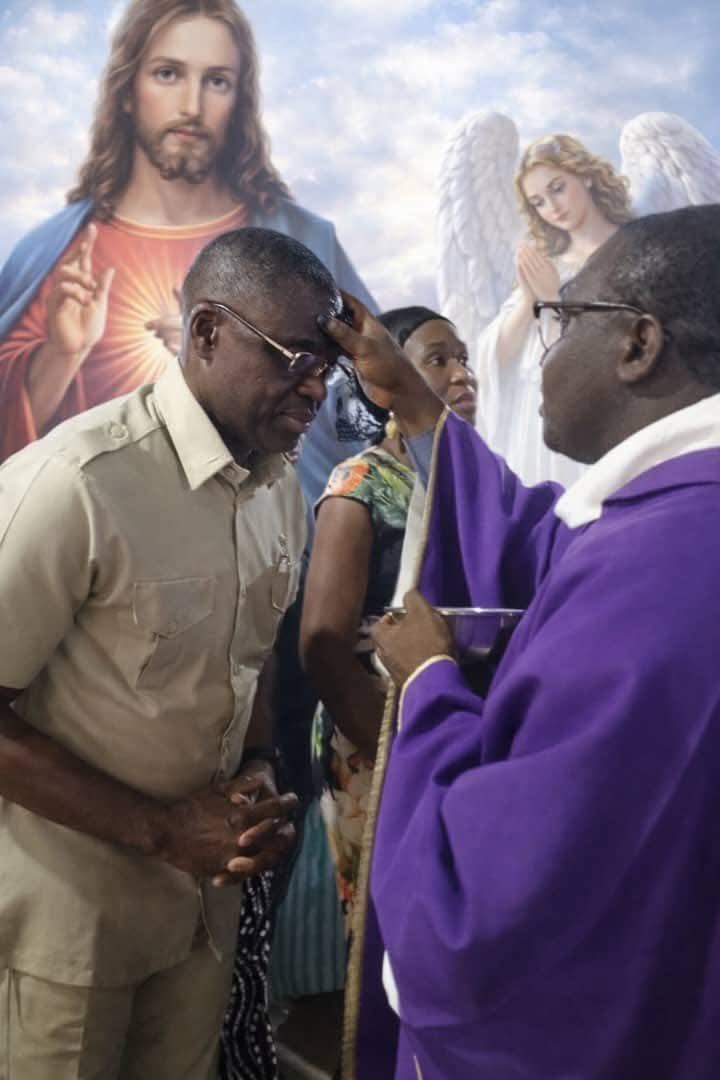
In a message marking Ash Wednesday, Shaibu said he joined worshippers at St. Agnes Catholic Church, Wuye, Abuja, where he received ashes to signify the beginning of the solemn period of reflection, repentance and renewal.

According to him, Lent reminds believers that beyond public offices and social status, individuals are accountable first to God, urging faithful to slow down and examine their lives.

He noted that prayer draws Christians closer to God, fasting teaches discipline and self-control, while almsgiving encourages compassion for the needy, describing them as practical expressions of faith rather than mere religious routines.

The former deputy governor added that the season presents an opportunity to mend broken relationships and strengthen commitment to doing good in society.
Shaibu encouraged Nigerians to choose kindness over anger, service over self-interest and integrity over convenience during the 40-day period.

He prayed that the Lenten season would deepen faith, renew strength and inspire citizens to become better individuals for their families, communities and the nation.

8 Terrorists Killed in Police Operation in Southwest Pakistan

0


Eight suspected militants were killed in an intelligence-based operation carried out by the Counter-Terrorism Department in Pakistan’s southwestern Balochistan province, officials said on Wednesday.

According to a statement from the Counter-Terrorism Department (CTD), the operation was launched after authorities received reports of the presence of armed militants in the area.

An exchange of fire ensued during the raid, resulting in the deaths of eight suspected terrorists.

The statement said that three CTD personnel were injured in the confrontation and were shifted to a nearby hospital for medical treatment.

Authorities also recovered a large cache of weapons and ammunition from the scene.

The Officials added that security forces later cordoned off the area and conducted a search operation to ensure the situation was fully under control.

Initial reports indicated that the slain militants were affiliated with a banned organisation, though investigations are ongoing to confirm their identities and determine the extent of their network, the CTD said.