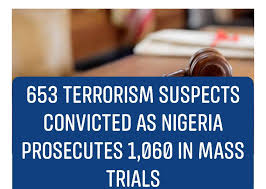
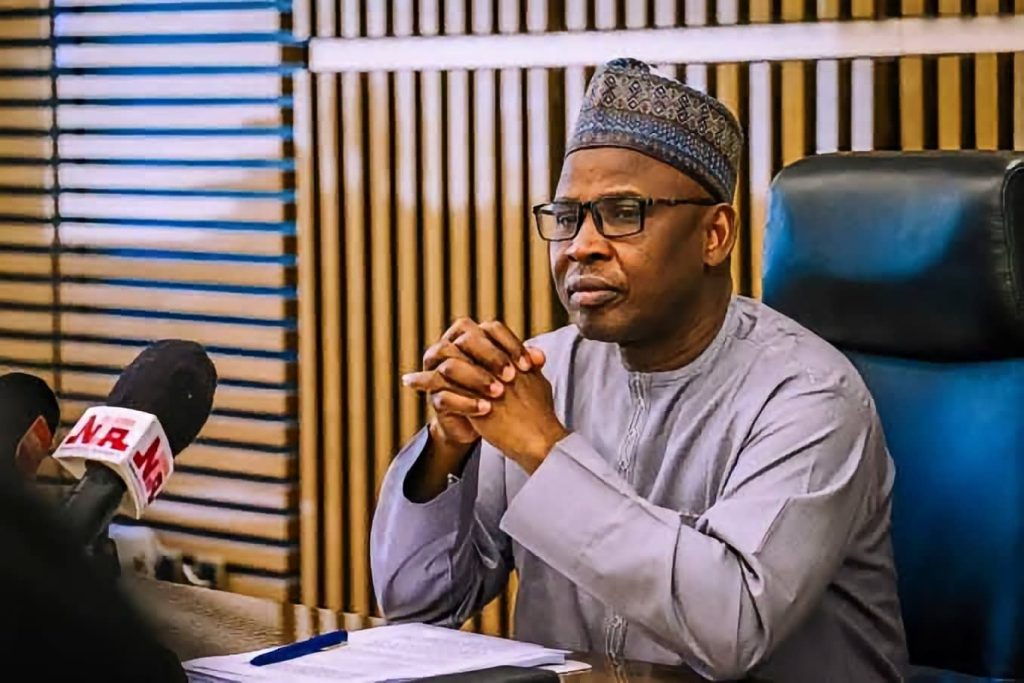
The Attorney General of the Federation and Minister of Justice, Lateef Fagbemi (SAN), has disclosed that 653 suspects have been convicted so far in the ongoing 11th phase of the mass trial of terrorism suspects at the Federal High Court in Abuja.
Fagbemi stated this on Friday, noting that 1,060 suspects were brought before the court for the phase, which runs from 19th to 24th October. He described it as the largest since the exercise began.
According to him, 880 cases had been disposed of as of 12:15 pm on Friday, resulting in 653 convictions, seven acquittals and 27 discharges. He said final figures would be released after the exercise ends today.
“This is the third phase this year alone. But generally, this is the 11th phase. That is if you consider everything since we started,” he said. Nigeria remains committed to curbing drug scourge through innovative interventions – Tinubu The AGF attributed the progress to the cooperation of judges, prosecution and defence lawyers, as well as security and other agencies involved.
He singled out the judges sitting under Justice Binta Nyako, who he said had been presiding on behalf of the Chief Judge of the Federal High Court.
He also acknowledged the contributions of the Office of the National Security Adviser, the Department of State Services, the military, the police, correctional centres and the Legal Aid Council, saying their collaboration had been instrumental to the prosecution of terrorism-related offences.
On defence representation, Fagbemi said the Legal Aid Council was not the only body providing lawyers, as members of the private bar were also taking part. He said defence lawyers had engaged the suspects before the trials, including visiting detention facilities and preparing them for their cases.
Fears over Nigeria’s preparedness for Ebola have intensified, with concerns over a reported N10 billion response fund, delayed diagnosis and inconsistent contact figures threatening public confidence as health experts warn that early detection is critical to containing the outbreak.
Co-Chair, G7 Investment Initiative on Global Health, Dr. Ayoade Olatunbosun-Alakija, raised the alarm over the delay in diagnosing Nigeria’s imported Ebola case, warning that the next two weeks would be critical to preventing further transmission.
Olatunbosun-Alakija, while speaking on a national TV station, urged hospitals, particularly private facilities, to strengthen surveillance, promptly report suspected cases and ensure adequate supplies of personal protective equipment, warning that poor preparedness could expose more people to infection. Alakija also called for intensified public education and regular handwashing, urging Nigerians to remain vigilant without panicking. She said decisions on restricting large gatherings and political rallies should be guided by scientific evidence, contact tracing and testing.
The warning comes as a Nigeria Health Watch report reveals that questions about funding, political mistrust and hospital readiness are increasingly overshadowing public health advice following confirmation of an imported Ebola case in the Federal Capital Territory. The report, which monitored online conversations from October 20, to 22, 2026, recorded 927 Ebola-related mentions out of 2,442 conversations. Discussions about money, politics and mistrust rose from 10 per cent of Ebola-related conversations on Tuesday to 26 per cent by Thursday morning.
It also highlighted discrepancies in official contact figures, noting that authorities initially identified 44 close contacts, while a subsequent directive placed 46 contacts on a 21-day no-fly list.
The report further found that mentions sharing the Nigeria Centre for Disease Control (NCDC) and Prevention’s emergency hotline, 6232, fell from 15 per cent of Ebola-related conversations on Tuesday to just one per cent by Thursday morning, raising concerns about the visibility of official health guidance.
Meanwhile, in Uganda, authorities have recorded 131 Ebola cases and 48 deaths, according to officials at a World Health Organisation (WHO) Africa briefing on Friday.
The Federal Government has directed relevant agencies and health institutions to strictly enforce Ebola Virus Disease (EVD) screening and other entry protocols at Nigeria’s designated points of entry following reports of non-compliance with approved measures.
The Federal Ministry of Health and Social Welfare, in a circular dated October 22, 2026, also directed relevant Ministries, Departments and Agencies (MDAs) to strengthen surveillance, information-sharing and accountability mechanisms to prevent potential cross-border transmission of the disease. The directive followed concerns raised by the Office of the National Security Adviser (ONSA) over reported breaches of the Federal Government-approved Ebola entry protocols. The Permanent Secretary of the ministry, Daju Kachollum on behalf of the Coordinating Minister of Health and Social Welfare, Professor Muhammad Ali Pate, signed the circular, with reference number PS/FMOH/08/VIII/48. In a press release issued in Abuja on Friday, and signed by the Assistant Director, Information and Public Relations, Ado Bako, the ministry emphasised the need for consistent, effective and non-discriminatory enforcement of the approved measures to protect public health and national security.
It directed all concerned institutions to ensure strict compliance with prescribed Ebola screening procedures, health declarations, surveillance requirements and other applicable entry protocols. The ministry also called for improved coordination and communication among stakeholders to facilitate early detection and prompt response to potential public health threats. It urged relevant agencies to promptly document and report any actual or attempted breach of the approved protocols through established channels. The ministry further called on institutions to provide the necessary support to officials responsible for enforcing the measures and establish effective monitoring and accountability mechanisms to ensure sustained compliance.
It stressed that personnel assigned to enforce the protocols must be allowed to discharge their responsibilities professionally and without undue interference.
According to the ministry, the directive is intended to address identified lapses and strengthen the implementation of measures designed to prevent the possible importation and spread of Ebola into the country.
The APC has accused former Vice President Atiku Abubakar and his party of plans to discredit the All Progressives Congress presidential campaign flag-off in Kaduna today, Saturday, October 24th, 2026.
Through subterfuge and mindless propaganda, the former Vice President and the African Democratic Congress have perfected their plans to misinform and disinform the public, manipulate public opinion through fake news operations and planting of false news in mainstream news platforms and social media with the use of Artificial Intelligence, deepfake videos, and counterfeit documents, all in a bid to discredit the APC rally in Kaduna, President Bola Tinubu, Governor Uba Sani, and leaders of our party.
According to the APC in a statement signed by Dele Alake, the APC PCC spokesperson, “In the last 24 hours, we have seen these tactics deployed to mislead the unsuspecting public. It began with the mischievous release of a picture of a security vehicle on a routine patrol, innocuously stationed at a junction near one of APC’s numerous campaign billboards in Kaduna metropolis”
Alake said, “Atiku and the ADC propaganda machinery twisted the narrative, claiming the security agents were there to protect the APC billboards in Kaduna. They then planted the story in a national newspaper known for its anti-government and anti-APC editorial stance.”
Immediately after the newspaper published the fake, distorted story, Atiku Abubakar, in a coordinated manner, latched onto it and shared it on his official social media handles to generate traffic and trends.
Not too long after the first episode of the well-choreographed plot, Atiku Abubakar and ADC agents of disinformation released another fake letter online purportedly written by Governor Uba Sani and addressed to the Director-General of the APC Presidential Campaign Council, Senator Abdulaziz Yari, on the release of N2.3 trillion by the Kaduna State Government to host the APC rally.
We are still at a loss as to how anyone can imagine and concoct this senseless and utterly baseless lie that defies logic and basic common sense. How much is the entire annual revenue of Kaduna State, or any state, for that matter, that a state would spend N2.3 trillion to host a rally?
“The N2.3 trillion that Atiku and his hirelings are circulating online is more than Kaduna State’s annual budget for three years.”
For context, the combined Kaduna State budgets for 2024 (N458.271 billion), 2025 (N790.439 billion), and 2026 (N985.9 billion) are still less than N2.3 trillion.
We know these two scenarios are only a part of the grand plan. The ADC and Atiku’s hirelings have also perfected plans to circulate old, doctored, and deepfake videos as the rally gets underway later today to show purported resentment by the people.
We hereby use this opportunity to alert the general public about this malicious and ignoble plan.
It is a fact that Atiku Abubakar and the ADC, his special-purpose vehicle, are incapable of winning any election. They will pull any strings, no matter how despicable and atrocious, to stay afloat in their desperate bid to grab power at all costs.
We urge Nigerians to be vigilant and reject their machinations, the statement concluded.
The Labour Writers Association of Nigeria (LAWAN) will hold its 2026 conference on Friday, October 30, at the Golden Tulip Hotel, Airport Road, Lagos, with a focus on workers’ rights, welfare and economic justice.
The conference, themed “Workers at the Centre of Nigeria’s Political Transition: Defending Rights, Advancing Welfare and Building Economic Justice,” is expected to bring together labour leaders, government representatives and academics to discuss issues affecting Nigerian workers.
Labour leaders which include the President of the Nigeria Labour Congress (NLC), Comrade Joe Ajaero, President of the Trade Union Congress (TUC), Comrade Festus Osifo, and other leaders are expected to play an active role at the conference.
Keynote speakers include the Managing Director of the Nigeria Social Insurance Trust Fund (NSITF), Barrister Oluwaseun Faleye, and the Director-General of the National Pension Commission (PenCom), Ms Omolola Oloworaran.
Other speakers are Professor Tunde Akanni, Professor of Journalism at Lagos State University (LASU); Dr Ganiu Okunnu, Senior Lecturer in the Department of Public Relations and Advertising, LASU; and Comrade Ismail Bello, Deputy General Secretary of the NLC.
The Minister of Labour and Employment, Dr Mohammed Maigari Dingyadi, and the Deputy Governor of Lagos State, Dr Obafemi Hamzat, are listed as special guests of honour.
The conference is scheduled to begin at 10 a.m.
According to the chairman of the Association, Comrade Toba Agboola, said LAWAN’s choice of theme places workers’ welfare and labour rights at the centre of discussions on Nigeria’s political transition, with emphasis on advancing economic justice and improving the well-being of workers.
Mobilises states, hospitals, experts; urges public cooperation as campaigns progress
Nigerians express concern as govt rolls out guidelines to prevent spread
Nigeria is intensifying efforts to prevent the confirmed Ebola case in the country from developing into a wider outbreak, with the Federal Government mobilising health agencies, state governments, hospitals and international partners, backed by a Presidential Task Force established months before the infection was detected.
At the centre of the response is a delicate race against time: identifying everyone who may have been exposed, contain the infection, strengthen surveillance and reassure a public increasingly concerned about the disease and the government’s preparedness. The challenge, perhaps, extends beyond medical facilities. With political campaigns and other large gatherings approaching, the authorities must balance public health precautions with the continuation of public activities, while ensuring that misinformation and distrust do not undermine containment efforts.
At a press briefing in Abuja on Thursday, October 22, the Coordinating Minister of Health and Social Welfare, Prof Muhammad Ali Pate, confirmed that the Ebola patient’s condition was improving, with laboratory results showing significant progress and raising the possibility of recovery.
“Thankfully, that individual has been taken care of and, in fact, is recovering. Today (on Thursday), I spoke to the clinicians handling the case, and I was informed that her laboratory results are showing great improvement, and there is a possibility that she would recover from this,” Pate said.
He cautioned, however, that the situation required continued vigilance, explaining that the government’s immediate priority was to prevent the infection from spreading into communities.
“We have one important case. We are trying to contain it so that it does not go out to the communities or become generalised. Hopefully, it will not get to that,” he said.
The minister disclosed that the patient was asymptomatic when she arrived in Nigeria but developed symptoms a few days later. “After confirmation of the infection, health authorities began tracing people who might have been exposed through her hospital attendance, domestic interactions and visit to a private medical facility. “
The contacts were categorised according to their exposure levels. High-risk contacts were quarantined in a designated facility, while others were isolated and monitored under public health guidelines,” he said.
Pate further stated that there was no evidence of community transmission at the time of the briefing, but stressed that the government would not relent in its efforts to prevent further spread.
Presidential taskforce activated
Nigeria’s response is not beginning from scratch. On June 9, President Bola Tinubu approved the establishment of the Presidential Task Force on Ebola Virus Disease Preparedness and Emerging Public Health Threats and directed the immediate release of N10 billion for emergency preparedness and response activities.
The Task Force is chaired by the Chief of Staff to the President, Femi Gbajabiamila, with membership drawn from relevant ministries, departments and agencies, as well as state representatives. The initiative followed outbreaks in other African countries and was intended to strengthen Nigeria’s preparedness against the possible importation of Ebola (which eventually happened) and other emerging public health threats.
Among the measures announced at its establishment were intensified passenger screening at international airports, enhanced temperature checks, stronger monitoring of passengers arriving through designated high-risk routes, and activation of referral and isolation centres at the Lagos and Abuja international airports.
The President also directed states hosting international airports and international border corridors, alongside relevant federal agencies, to submit their preparedness plans, funding requirements and intervention needs for coordinated implementation.
Eventually, the taskforce’s work gained renewed urgency following confirmation of the case of Ebola virus a few days ago in Abuja. After an emergency meeting at the State House on Wednesday, October 21, Gbajabiamila said the committee had been working behind the scenes since June and that the systems put in place had helped authorities identify the infected traveller.
He explained that the patient did not initially show symptoms, which developed four days after she arrived in Abuja, and credited the identification process and established protocols with helping authorities detect the infection. “The Task Force is on top of it. NCDC is on top of it; everyone is on deck,” Gbajabiamila said, while urging Nigerians to cooperate with health officials and avoid panic.
It was gathered that the Presidential Task Force has brought together health authorities and other agencies whose responsibilities are essential to disease surveillance, including immigration, aviation, port health and state health institutions. Its task is to strengthen coordination, close gaps in preparedness and ensure that the government can respond quickly if additional infections are detected.
NCDC coordinate states, hospitals and experts
Pate identified the Nigeria Centre for Disease Control and Prevention (NCDC) as the focal point for coordinating the operational response. He confirmed that the agency has activated the incident management system, bringing together surveillance, contact tracing, laboratory investigations, clinical management and other response activities.
The minister told journalists that himself alongside relevant individuals have briefed the Nigeria Governors’ Forum and the National Economic Council. State governments have also been informed, with those yet to complete their response plans urged to do so with guidance from the NCDC. Pate said most states already had response plans and that the government was working to strengthen coordination between federal and subnational authorities.
“The authorities are also engaging state Commissioners of Health and Information to ensure that public health guidance is communicated consistently and accurately across the country.
“The World Health Organisation (WHO), Africa Centres for Disease Control and Prevention (Africa CDC), development partners and experts with experience managing Ebola outbreaks are supporting the response.
“Professor Christian Happi, a genomics expert at Redeemer’s University, has also been invited to complement the work of local health authorities, including efforts to obtain further information about the virus through genomic sequencing,” the minister said.
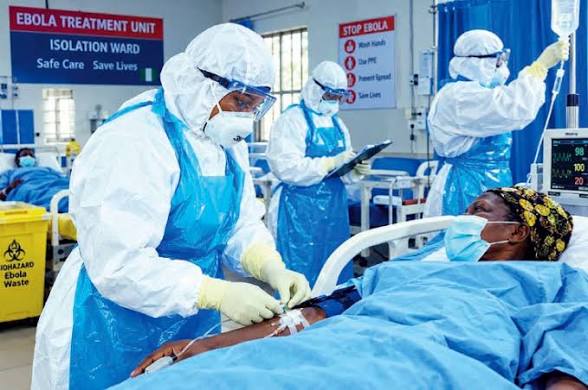
He also stated that the government has mobilised additional resources for the NCDC, and is seeking to strengthen the capacity of health facilities to manage suspected cases safely. Pate said hospitals have been notified to prepare bed spaces and isolation arrangements, and reinforce infection prevention and control measures to protect patients and healthcare workers.
“Private hospitals are also important to the response. The patient’s visit to a private facility before the infection was confirmed has highlighted the need for private practitioners to promptly report suspected cases and maintain close contact with public health authorities.
“The private sector is important, because as you saw, this case went to a private facility. In 2014, it was a private facility. So private practitioners of all kinds should also be sensitised and connect to the public health authorities,” the minister said. He said government is also strengthening surveillance at airports and other points of entry, including ensuring that thermal imaging equipment is functional and that travellers are assessed according to relevant public health risks. These measures are intended to improve early detection, but screening at entry points cannot replace monitoring after arrival, particularly when an infected traveller has not yet developed symptoms.
The N10bn question
The approval of N10 billion for emergency preparedness has also brought attention to the resources available to support the response. The funding was announced in June, 2026, as part of the establishment of the Presidential Task Force, with the stated purpose of strengthening the NCDC’s operational preparedness and supporting critical national public health emergency activities. However, the status of the money has become a subject of public debate following the confirmation of the Ebola case. In a statement reported on October 22, the APC Presidential Campaign Council claimed that the N10 billion approved for the emergency remained untouched, arguing that the NCDC, the Federal Airports Authority of Nigeria (FAAN), and other surveillance agencies had been using other available resources. However, the council did not provide financial records to independently establish the fund’s status or explain why it had not been utilised, according to the report.
As the government intensifies its response, transparent information about funding, procurement and the resources deployed would help demonstrate how the preparedness plan is being implemented. For now, Pate has said additional resources have been made available to support the NCDC, while the government continues to mobilise domestic capacity and technical assistance.
Political campaigns: No restrictions for now
The government’s position on political rallies and other large public gatherings is another major concern as Nigeria approaches the 2027 general election. The Minister of Health said there was no indication at the time of the briefing on Thursday that required the government to alter planned gatherings. He, however, made it clear that the position could change if the public health situation deteriorated.
“The government has therefore not announced a general ban on political rallies, conferences or other major events. Its position remains subject to review as health authorities assess the risk.
“Ebola is not transmitted through the air in the same way as measles or influenza. It spreads primarily through direct contact with the blood or other body fluids of an infected person who is showing symptoms, or with contaminated materials.
“This means that the size of a crowd alone does not determine whether Ebola will spread. Nevertheless, gatherings require vigilance, and the absence of a ban should not be interpreted as a declaration that all events are risk-free.
“Attendees should practise good hand hygiene, avoid direct contact with anyone who is ill and comply with official public health advice. Organisers should remain alert to any change in government guidance,” he said.
Pate also urged political leaders not to politicise the outbreak, stressing that public health should unite rather than divide Nigerians. “Health has no political party, has no citizenship, has no nationality, has no tribe, no religion. It is a great unifier,” he said.
Public trust, the final line of defence
Even with surveillance systems, laboratory capacity and emergency response plans in place, the government’s efforts could be weakened if Nigerians distrust health warnings or refuse to cooperate. Pate expressed concern about claims that the case was fabricated or exaggerated for financial or political reasons. He said the patient had tested positive three times, although he explained that individual test results could not be publicly released because of medical confidentiality.
He warned that misinformation could discourage people from reporting symptoms, cooperating with contact tracers or complying with quarantine instructions.
“The alternative to trusting the experts is tragedy. It’s really tragedy,” the minister said, urging Nigerians to rely on qualified health professionals and credible official sources.”
He recalled Nigeria’s experience with misinformation surrounding polio vaccination, warning that distrust could undermine public health interventions and expose communities to preventable harm. “The government has also been engaging traditional and religious leaders, including the Sultan of Sokoto and the leadership of the Christian Association of Nigeria (CAN), to help communicate health advice and encourage cooperation. Pate also appealed to journalists to verify information, avoid amplifying unsubstantiated claims and provide the public with accurate updates. “The government has promised continued communication as investigations progress,” he said.
What Nigerians must do to stay safe
Nigerians were urged to remain calm but vigilant, practise regular hand-washing with soap and running water, and avoid unnecessary contact with other people’s body fluids. The government asked that anyone who develops symptoms such as fever, headache and muscle aches, particularly after possible exposure or travel to an affected area, should promptly contact public health authorities for guidance and avoid exposing others. It said those identified as contacts must comply with monitoring, isolation or quarantine instructions. Healthcare workers and private practitioners, it noted, must follow infection prevention and control procedures and promptly report suspected cases.
“Nigerians should also avoid spreading unverified information and seek updates from the NCDC, the Federal Ministry of Health and other credible health authorities,” he said.
He stated that the government’s immediate objective is to contain the confirmed case, monitor potentially exposed people and prevent further transmission. “The Presidential Task Force, NCDC, state governments, hospitals and technical partners are central to that effort,” he said.
The government maintained that as the response continues, its success will depend not only on the capacity of institutions and the availability of funds, but also on timely information, transparent communication and public cooperation.
“Nigeria has experience responding to Ebola, and the relevant authorities say the systems needed to contain the current case are being activated. The task now is to ensure that the response remains coordinated, that gaps are addressed quickly and that the infection does not spread beyond the people already identified by health officials. “The race to stop the virus is therefore not only a test of Nigeria’s health system. It is also a test of preparedness, public trust and the country’s ability to act collectively in the face of a public health threat,” the minister said.
Meanwhile, Nigerians have been reacting to the Ebola scare in Nigeria. Those that spoke with Saturday Sun’s Ngozi Nwoke in Lagos expressed their fear about the deadly disease.
Wilberforce Okili, a trader, noted: “When Ebola came in 2014 we lost customers because people were scared to come to the market. If it is back, it means we will suffer again. We buy and sell food, and people touch money, touch goods. I’m already telling my children to carry hand sanitiser and not to shake hands anyhow. Government should come and talk to us in the market early this time. Don’t wait until people start dying before you bring radio announcements. We need to know the signs and where to report.”
Goodwill Etame, a fitness coach, said his first thought was about the hospitals.
“Last time, people were running from hospital to hospital. I drove people to clinics that year. I feel angry because we keep hearing ‘preparedness’ but when things happen, there’s no ambulance, no information. I hope it’s just rumors, but if it’s real, government should be honest with us from day one.”
A school owner and principal, Mrs Ibim Ene, said she was more worried about children. “Ebola spreads fast and children touch everything. In 2014 we had to close down schools, do temperature checks at the gate, and parents were panicking. It affected learning for almost a term. I feel frustrated because we just recovered from COVID and now this. Ministries of Education and Health must work together this time, send us guidelines, send us thermometers, and tell us exactly what to do. We cannot guess with children’s lives.”
A nurse, Kindness Nwaobilor, said this Ebola case had brought bad memories.
“I was a volunteer during the last outbreak in Lagos. We did contact tracing house to house and people were hiding sick relatives because of the stigma. My feeling now is a mix of fear and determination. Fear because our health centres are still overstretched, and determination because we know what to do. The key is early reporting and no denial. If we act fast and apply the safety measures, we can contain it.”
Abayomi Ogungbekun is a medical doctor in Lagos. He told Saturday Sun: “The resurgence of Ebola is a serious public health threat and we must not treat it lightly. Prevention has to be immediate and layered. Every hospital, clinic, and primary health centre must screen for fever and contact history. Suspected cases must be isolated immediately and reported to NCDC within 24 hours. There should be hand washing stations, chlorine, and no reuse of needles. Burial teams must be trained because unsafe burials drove spread in 2014.
“People need to know the symptoms which are fever, vomiting, bleeding, diarrhoea and most importantly avoid contact with body fluids, avoid bush meat, and do not touch an infected corpse without professionals. The biggest enemy of Ebola is not taking precautionary measures.”
The interview was scheduled for publication last Saturday, but a rush of adverts halted the plan. It was moved to today.
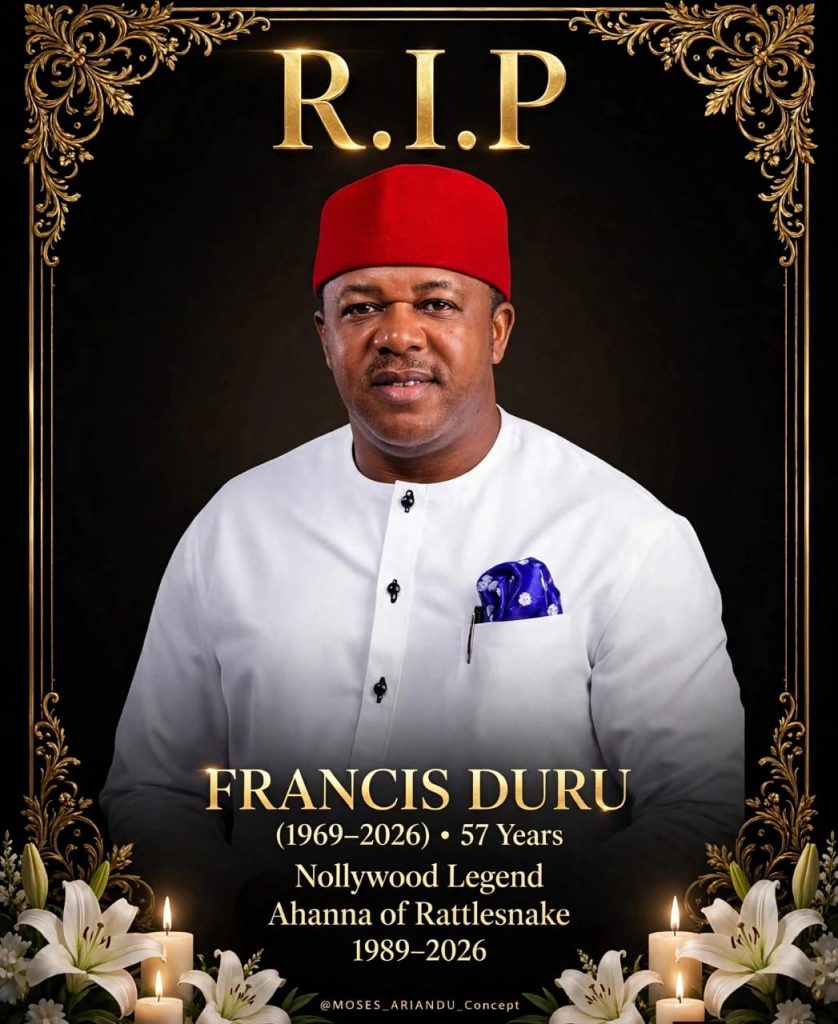
Unfortunately, the unexpected happened on Friday, and the demise of iconic thespian, Francis Duru, was announced by his family. As the nation mourns the departed Nollywood star, below is the last interview he granted Saturday Sun before his transition.
The day Francis Duru stepped into a theatre production to replace an absent actor, he had no idea he was beginning a career that would span 36 years – and counting – and more than 150 films.
What began as a favour to a friend became a defining moment. Duru moved from theatre to television and film, becoming one of the familiar faces of Nigeria’s evolving entertainment industry—from the home-video era and the rise of Nollywood to today’s streaming age.
Born in Bamenda, Cameroon, on July 27, 1967, Duru returned to Nigeria and endured the challenges of establishing himself in Lagos. His breakthrough came with Rattlesnake, but his career has since extended beyond acting into advocacy and development communication, including work with UNICEF and other development partners.
Now approaching 60 and pursuing a doctorate in development communication, Duru believes the creative arts should do more than entertain—they should educate, preserve culture and contribute to social development.
Can you tell us a bit about your childhood?
I was born in the Cameroons on July 27, 1967 — not 1969. I was born in Bamenda, Mankon, in the North-West Province of Cameroon, where English is spoken.
I attended St Joseph’s College, Mankon, and Sacred Heart College, where I left in 1984 and returned to Nigeria with my father. I continued at St Thomas Aquinas until 1990, when I got my first admission into the Theatre Arts Certificate Programme at the University of Port Harcourt. I later continued to the BA programme in Theatre Arts.
So, predominantly, my foundation was laid in Cameroon. Sacred Heart College, in particular, formed the core of my academic development, from secondary school, while St Joseph’s College was also an important part of my early education.
Is there any backstory to why your family was in Cameroon?
There was a civil war at the time. My father was part of a group of kinsmen who went over there, and that was how we found ourselves in Cameroon. We were essentially fleeing the conflict.
What was your ambition like growing up?
Growing up, you really wanted to become somebody, but you did not necessarily know who you wanted to become. You did not have that motivation telling you, “This is exactly who you are going to become.”
The church provided that foundation for me. I was an altar server, and as I mingled with my classmates in secondary school, we all had ambitions—to become lawyers and so on. But we did not have a definite push.
Actually, that continued throughout my life until I found my calling in Theatre Arts. My case was more or less that of a rolling stone, but stopping at the right places. I believe that was part of my destiny. At every place I stopped, I was being built to move on until I finally got into what God called me to do in theatre.
In 1989 or 1990, I followed a friend just to watch a drama at the Repertory Theatre. It was a Sette Productions by Paul Uriel Worika, who was the first director of Basi and Company. I went there simply to help my friend.
Lo and behold, they had a problem. One of the cast members —the person who was supposed to play a particular role did not show up. I said, “I can try it,” and that was how my journey into theatre started.
From there, I joined Sette Productions, went for auditions, met people in the creative industry, interacted with lecturers in the Theatre Arts Department and gradually discovered my talent.
They told me I needed to go to the University of Port Harcourt, and from there, the journey began.
So, it was more or less accidental—you stepped in, discovered your talent and enjoyed it. How did that experience lead to your decision to study Theatre Arts at university?
UTME was a major hurdle for me. After completing WASSCE, I was strong in the arts, with As in History, Literature and other subjects, but got a P7 in Mathematics. I was actually happy because I joked that Mathematics might force me into a “second missionary journey” if I failed to gain admission.
Having left secondary school in 1986, I struggled to understand Nigeria’s admission system because, in Cameroon, O-Level was followed by A-Level and then university. I wrote JAMB several times and did well, but the cut-off points remained a challenge. I applied for Mass Communication and Law and even lost money to someone who promised to help me secure admission.
Eventually, I joined Sette Productions and discovered Theatre Arts. At Telefest in Port Harcourt, Professor Marcelo advised me to pursue the one-year professional Certificate Course in Theatre Arts rather than the degree programme. I took his advice, and after that year, I was professionally prepared for the industry.
By then, my drama sketches with Hogan had made “Francis and Hogan” popular in Rivers State. After the course, The Missing Mask came our way from Aba, and I was given the lead role. I had not auditioned; the opportunity came because I was prepared.
Later, I joined Julius Agwu, Victor Osuagwu and others in Lagos for the Rattlesnake audition. With help from senior colleagues such as Uche Obonna and Sam Dede, we got opportunities that led to more auditions. Eventually, many of us from the University of Port Harcourt became part of Rattlesnake, and its release pushed me into the limelight.
Looking back, my journey was shaped by setbacks, mentorship, preparation and opportunities that I was ready to seize.
It looks as if it was all smooth sailing from what you said?
It was not rosy at all. Those early days in Lagos were tough, from finding accommodation to feeding. But we were fortunate to have people who believed in us and were willing to help.
One of them was Ejike Asiegbu. Because of his large heart and our relationship, he opened his doors to us. By the time we left the University of Port Harcourt, we were already working professionals. During our Certificate Course in Theatre Arts, we had become popular on campus, performed skits outside the university and featured in private productions by lecturers. We knew our abilities and had begun building relationships with seniors already established in the industry.
When we arrived in Lagos, Ejike was living with his twin sisters in Palmgrove, and he accommodated me. We would wake up, clean up and head to a woman’s food spot where he had an arrangement to eat. All of us would go there together.
When he eventually bought a small car, he would drop his sister at work, return to pick us up and drive us around for auditions. That support made a huge difference.
But there were also difficult moments. I remember being asked to leave a cousin’s house because he was away and his younger brother objected to me staying in the parlour. I had to fend for myself. It was a journey filled with rough patches, uncertainty and hardship.
Yet, strangely, the difficulties did not discourage us. Our focus was always the next audition or production. We were passionate about acting. Whether we were paid or not, whenever any of us had money, we pooled it together and found something to eat. And somehow, help always came.
Ejike was truly God-sent to us. We kept pushing, often without realising that we were making progress, until Rattlesnake finally clicked. That production changed everything and propelled us into the limelight. The rest, as they say, became history.
How did your family receive your decision to go into theatre arts?
They never really had a problem with my decision because I had already left home in Cameroon. When my mother learned I was doing theatre, she came to see me at the university. I was in my rehearsal clothes, which surprised her.
She watched our rehearsal and asked, “Is this what you want to do?” I said yes, and she simply prayed for me. May her soul rest in peace.
Beyond acting, you’ve worked as an emcee and with international organisations. How did these opportunities come about, and how have they shaped your experience?
My career as an emcee began in Lagos. When A Night of a Thousand Laughs by Opa Williams came to the University of Lagos, my popularity with Francis and Hogan earned me a place in the show. It exposed me to stand-up comedy, event hosting and other forms of entertainment.
When I moved to Abuja around 2000 or 2001, I drew on that experience. I had become frustrated with Lagos, where productions were often delayed and payments uncertain, and I wanted a new environment.
During a visit to Abuja for a wedding, I met Richard Osama, popularly known as Daddy Richie, a friend of Ejike Asiegbu. He encouraged me to relocate, offered me accommodation, taught me proposal writing and introduced me to development projects.
My involvement with Family Worship Centre became another turning point. After giving my life to Christ, I became active in the church, hosting weddings and other events and participating in drama productions. People began recognising my abilities and referring me for jobs.
Through church connections, I started producing advocacy dramas for UNICEF and other development partners, while also securing major emceeing and creative projects, including assignments connected to the State House and Democracy Day celebrations.
One opportunity came through a church member close to President Olusegun Obasanjo, who asked me to handle the send-off of his ADCs at the Presidential Villa. Another came through a church member at the Ministry of Information, who invited me to develop a drama around the Democracy Day theme, A Bond Too Strong. The proposal reached the then Information Minister, Jerry Gana, and I was invited to work on the project.
That was how acting, emceeing, advocacy and development communication began to converge. Family Worship Centre became a major platform for my growth. The principle was simple: someone would say, “He is my brother in church; I know he can do it.” Once you delivered with excellence, another opportunity followed. That cycle of trust, referrals and performance continued to expand my career.
Looking back at your career so far, can you say roughly how many movies you have featured in?
I’ve honestly lost count, but I know I’ve done more than 150 films, and that is only what I can remember. I still have about 20 to 25 unreleased movies, so there are several projects audiences have yet to see.
For me, it is not just about the number of films. It is about the journey—the different characters I have played, the people I have worked with and the experiences each production has brought. Every project has contributed to my growth and evolution as an actor.
Produced by others or yourself?
Yes, I have produced several projects, though not mainstream movies in the conventional commercial sense. Most were advocacy productions designed to educate, raise awareness and address specific social issues.
Over the years, I have used drama and storytelling as tools for public education, advocacy and social development. For me, the focus has always been the message and its impact. If my talent can educate people, influence behaviour and draw attention to important issues, then I am contributing meaningfully to society.
How do you define the South-East’s role as a foundation of Nollywood, and how does that history fit alongside earlier Nigerian theatre and film pioneers such as Hubert Ogunde and practitioners from other parts of the country?
What I mean by Nollywood is that the phenomenon we know today took off with Kenneth Nnebue’s Living in Bondage. I have great respect for the Yoruba theatre and home-video traditions, particularly the pioneering work of Hubert Ogunde, but Living in Bondage created a new level of momentum and visibility.
Its success triggered the growth of Igbo-language home videos, which soon evolved into English-language productions, bringing together actors and practitioners from the South-East, Yoruba-speaking communities and other parts of Nigeria. Films such as Rattlesnake, Nneka the Pretty Serpent and Taboo followed, tackling social issues such as ritual killings and 419.
The marketers based around Idumota, Opebi, Pound Road and other commercial centres were also crucial. They financed, distributed and produced films on a scale that created the volume and commercial momentum that eventually attracted international attention. The industry expanded beyond the South-East to the North, Ghana and other parts of Africa.
So, while I acknowledge the contributions of earlier pioneers such as Hubert Ogunde and the Yoruba theatre tradition, my point is that Kenneth Nnebue’s Living in Bondage sparked the particular home-video phenomenon that evolved into what we now call Nollywood. That is the history I witnessed, and I believe the role of the early Igbo marketers and filmmakers in building that movement should be recognised.
How has Nollywood’s transition from home videos to cinema and now streaming platforms changed the industry? What has it gained, lost, and what are its biggest challenges and lessons today?
Nollywood has evolved tremendously, moving from home videos to cinema and streaming. We may not be where we should be, but we have certainly moved forward. The world is paying attention and waiting to see what more we can achieve.
However, streaming remains a major challenge. Many quality films struggle to reach platforms like Netflix or find the right audience. Despite our population and creative talent, we have not developed and sustained home-grown streaming platforms capable of serving Nigeria and the wider West African market.
Imagine a regional platform attracting 30 million viewers. The potential is enormous. These are the gaps we must address and the opportunities we must seize to take Nollywood further.
So, who will fill the gaps?
There are people working on it, including those who have invested in cinema for years. But I particularly commend the Yoruba film industry for how it has used film to preserve and showcase Nigerian culture. They have gone beyond traditional epics to tell stories about historical figures, personalities and different aspects of our heritage.
Films such as Colour of Fire and Colour of Water, as well as stories about Fela’s mother, demonstrate how Yoruba productions can tell distinctly Nigerian stories that resonate beyond one ethnic group.
I believe the North and South-East can do the same by drawing from their rich cultural heritage. If every region tells its stories well and puts them on the global stage, it will be difficult for the world to ignore Nigeria.
We have extraordinary landscapes, histories and traditions that have already attracted international journalists and audiences. Yet, we have barely scratched the surface. There is still enormous potential to use film and cinema to preserve our heritage and introduce it to the world.
With films from Kunle Afolayan, Funke Akindele, Toyin Abraham and others competing for audiences, concerns have grown over crowded release dates and cinemas favouring certain productions. From your experience, what is driving this problem, and what needs to change?
What we need to do is have a common strategy that can help every movie thrive. Don’t forget, it is a capitalist-natured enterprise. So, whether you like it or not, there will be competition and, sometimes, unhealthy rivalry, just as you find in every business.
It is business. These people put money into it, and they need to protect their investments.
So, we need a common strategy that can ensure that any movie you release has the opportunity to generate significant revenue before it leaves the market. That is the void I believe we need to fill.
Is it possible to release five movies at the same time and have all of them succeed? These rivalries are born out of the fact that everybody wants to protect their own movies.
So, what is the solution? Is it coming from the actors themselves?
No. Like I said, if you have a common streaming platform that allows people to come in easily and showcase their work, that is what we need.
If it becomes a problem, we create the solution. And that solution must not come only from the actors and producers. We have people who are into business. We have banks and other institutions that can also play a role.
Look at Globacom. When it came, it was a disruptive innovation. It disrupted the market and forced others to respond. Today, Glo remains a telecommunications company that Nigerians can be proud of as a proudly Nigerian brand. If you look at their content, from their adverts to everything else, it is proudly Nigerian.
The point is, can we also do that in the film industry, particularly in streaming? So, these are some of the solutions. The question is: Who will bail the cat?
How would you assess government support for the industry so far?
Government support has largely been palliative rather than sustainable. There is a need for stronger policies, financing and an enabling environment, particularly from the Ministry of Industry, Trade and Investment.
The government has made efforts, such as the Nollywood Road Show with the Nigerian Export Promotion Council, which took us to The Gambia, Kenya and Namibia for master classes and cultural exchanges. But more can be done through public-private partnerships. Afreximbank’s CANEX initiative is also important, although there is still room to deepen its impact.
We also need to look beyond cinemas and streaming. VCDs may seem outdated, but they still serve audiences at the lower end of the market. The question is: how much revenue are we leaving on the table by ignoring these audiences?
Not everyone can afford regular cinema visits, especially in difficult economic times. Why not develop affordable community cinemas, even in places such as Mararaba, dedicated to Nigerian films?
Ultimately, filmmakers need reliable distribution and marketing channels. When producers do not know where their audience or market is, investment becomes risky, and many productions end up with their money tied down. We must build systems that take Nigerian films to audiences across the income spectrum, both locally and globally.
Do you share Omotola Jalade-Ekeinde’s concern that, despite a film’s large box-office gross, producers can end up with very little after deductions? And if so, what practical steps could help address this imbalance in Nollywood?
Endorsements and partnerships can help reduce production costs, but ultimately, every filmmaker has to find a model that works for their audience and allows sustainable production.
The industry is already evolving. Some creators, such as Isbae U, have built successful models around YouTube, showing that filmmakers can no longer rely solely on the traditional cinema model. The key is to explore different platforms, reach audiences where they are, recover investments and keep producing.
But as more creators move to YouTube, we must also ensure the streaming industry does not suffer. The future should be about developing multiple platforms and sustainable models rather than abandoning one for another.
We used to watch good movies and series on NTA, but we don’t have that anymore…?
What government policies are actually driving the growth of the creative industry? Platforms such as StarTimes exist, but I believe the sector still lacks sufficient policy attention.
Development partners and policymakers need to recognise the creative industry as a major economic opportunity. We should be asking: How much revenue does the sector generate? How much does it contribute to the economy? And what policies and investments can help it grow?
The creative industry is creating significant value, yet its economic contribution is rarely discussed with the same seriousness as other sectors. There is clearly a policy gap that needs to be addressed.
Who should drive such a conversation?
It starts with the ministries, particularly the Ministry of Culture and Tourism and the Ministry of Industry, Trade and Investment. Government needs reliable data on Nollywood’s economic value, employment, challenges and potential before it can properly support and promote the industry.
We often claim that Nigeria has the world’s third-largest film industry, but such claims must be backed by credible data. We need to know exactly how much Nollywood contributes to the economy, the jobs it creates and its wider value to Nigeria.
Beyond entertainment, what role can Nollywood play in addressing societal challenges? And are today’s films tackling these issues as effectively as Living in Bondage and other early productions?
I can speak from my own experience. People have met me and told me that some of my films changed their perception of life and made them reflect on what they would do in similar situations.
I met a man in the United States who told me that my role in Rattlesnake inspired him to leave his village for Lagos. Things worked out for him, and that journey eventually took him to America.
That is the power of film. Movies can reach people’s minds, shape perspectives and plant ideas in ways that go beyond entertainment. Even when a film is imperfect, there is often a message or experience audiences can take away.
Film also provides a powerful platform for advocacy, awareness and social change. Through their work on and off screen, actors can draw attention to important issues and influence conversations. That is how far Nigerian film has come—within the country and beyond.
Having worked with different generations of actors, how do you see the industry today? What are the younger practitioners doing well, and what areas do you think still need attention?
Today, there seems to be more emphasis on fame, popularity and money, with less attention to passion, discipline and professional ethics. For me, professional discipline, alongside the grace of God, has been the foundation of my 36-year career.
The quick-rise mentality is a problem. Someone can enter the industry, get featured in several productions and suddenly become popular without properly learning the craft. I always advise young practitioners to learn the ropes, build their skills and grow through the process.
My principle is simple: “When you jump up, you come down; but when you grow up, you stay up.” That discipline has sustained me throughout my career.
You’ve spent 36 years in the industry, which means you’ll mark four decades in another four years. Do you have any plans to commemorate the milestone?
Next year will be my 60th birthday, and after almost 40 years in the industry, it will be a significant milestone. I plan to mark it, not just as a celebration of age, but as an opportunity to reflect on my journey, the people I have worked with, the experiences I have gained and how far I have come. It is a landmark that deserves to be properly celebrated.
Despite your achievements and demanding schedule, you chose to return to school. What inspired that?
What inspired me was my growing involvement in development issues. I wanted to understand development communication more deeply and bring my work in entertainment under that broader framework. That led me to the Institute of Strategic and Development Communication (ISDEVCOM), Nasarawa State University, Keffi.
I particularly appreciate Professor Emmanuel DanDaura for inspiring the programme, as well as friends and mentors including Dr Innocent Michael (CJ Nations), Dr Emmanuel Onchono, Dr Azubuike Erinugha, Dr George Ndukwu and the current NIPR Registrar, Chief Uzoma Onyegbadue, among others, for encouraging me to pursue my doctorate.
For me, it is about looking beyond entertainment and understanding how film, drama and other creative forms can communicate ideas, raise awareness and contribute meaningfully to social and economic development.
Nigeria just marked another Independence anniversary. What message do you have for entertainers and creatives amid challenges such as corruption, ethnic divisions and the growing role of religion in elections?
I believe Nigeria is at a critical point, and we need to be honest about our problems and focus on finding people who can genuinely address them, regardless of their ethnic or religious background. What we need is leadership, competence and a sense of responsibility—leaders who see public office as service.
As entertainers and creatives, we also have a responsibility. Our platforms reach millions, so we must use our influence responsibly rather than allow ethnicity, religion or political affiliation to divide us. We should encourage people to look beyond identity and consider competence, capacity and commitment to service.
Through our films, music, comedy and other creative works, we can promote unity, tolerance and responsible citizenship, challenge divisions and help tell the story of the Nigeria we want to build. Leadership requires sacrifice, but citizenship also demands responsibility, and creatives have a role to play.
How can the church disciple young people, build strong values and prepare them for the marketplace?
I have been at Family Worship Centre for more than 23 years, and one of our key commitments has been moulding leaders. Our messages consistently emphasise true leadership, and this year’s Independence Day theme, “Leadership versus Popularity,” reflects that focus.
Over the years, we have raised young men and women who now occupy leadership positions and are expressing godly values in their workplaces. Some of the children I taught have grown into leaders, and that is one of the church’s important responsibilities.
When we say, “Know Jesus for yourself,” we are pointing people to a model of true leadership. The question is how much of His character we reflect in our own lives and leadership.
The process starts early. A child may come to church confused, lacking confidence or direction, but through mentorship, skills development and consistent support, that child can discover purpose, build confidence and eventually become a productive leader.
If we are serious about shaping the next generation, we must confront behaviours we have normalised. One child, when asked what the New Nigeria needs, simply answered, “We need courage.” That stayed with me.
Change begins in the home, is reinforced in the church and must extend into society. If we deliberately build character, confidence, purpose and leadership in our children, we can help shape a better generation.
How do you balance work, family and self-care, and how do you unwind when you get some time for yourself?
For me, the balance revolves around three things: spirituality, family and work. The physical body has sometimes paid the price, and I have had to seek medical attention after periods of burnout.
Church, family and work can be demanding. There are times I finish church service and go straight into rehearsals with the children, or travel because a job requires it. The key is ensuring that one does not take undue advantage of the other.
I am learning to recognise the signs of exhaustion and slow down when necessary. Ultimately, balance means giving attention to work, family and spirituality while remembering that the body also needs care.
…free surgeries give hope to Isheri, Agege’s poor residents
In a decisive push against preventable blindness, Rotary Club Zone 2, District 9111, has restored hope and independence to scores of low-income residents in Lagos through a two-day free eye screening and cataract surgery outreach in Isheri and Agege.
The exercise, held under the “Mission for Vision (M4V)” programme and tagged “Free Cataract Surgery Outreach,” offered free eye checks and surgeries to the less privileged. It underscored Rotary’s commitment to delivering life-changing health interventions at the grassroots amid widespread economic hardship. President of the Rotary Club of Gowon Estate Lagos, Ibiam Festus, said the decision to embark on the outreach was driven by deep concern for community health and the inability of many vulnerable people to afford treatment. “Cataracts can cause severe visual impairment and blindness. Providing free surgery removes a major financial barrier to treatment,” he stated.
Festus explained that restoring sight enables beneficiaries to return to work, support their families, and regain their dignity and confidence. He noted that the initiative reflects Rotary’s focus on identifying genuine health challenges and developing practical, sustainable interventions.
During the two-day programme held at Royal Estate, LASU Isheri Road, Egbeda, and Sango Primary Health Care, Agege, 342 patients underwent eye screening. Of these, 83 were identified with cataracts and assessed for free surgery. Patients with other eye conditions received medical advice, prescriptions, or referrals for further treatment. “By mobilising Rotary Clubs, healthcare professionals, volunteers, and other stakeholders, Zone 2 can reach more people than individual Clubs might be able to serve alone,” Festus said. He added that the project demonstrates Rotary’s commitment to service, collaboration, and lasting community impact.
Chairman of the 2026/2027 Mission for Vision, District 9111, Chandra Nalode, reaffirmed that the exercise was aimed at restoring sight to the needy and strengthening Rotary’s commitment to disease prevention and community health.
Beneficiaries who spoke with Sunday Business Day praised the intervention, describing it as life-changing. They said the free surgeries would restore their sight and give them a new lease on life.
Abiola Aderoju Ogundeji of Rotary District 9111 noted that the Mission for Vision programme is an annual initiative that has, over the years, reached millions through screening and eye-care services, while thousands have benefited from free cataract surgeries.
The outreach aligns with District 9111’s broader vision that no one should lose their sight or remain unnecessarily blind simply because they cannot afford treatment.
Bayern Munich manager Vincent Kompany has reportedly been taken to a hospital in Munich after an emergency medical team was called to the club’s training ground on Friday.
President Bola Tinubu has approved the reinstatement of M.S. Danjuma, Permanent Secretary, Finance (Special Duties), with effect from October 21, 2026.
The Head of the Civil Service of the Federation, Olumuyiwa Enitan Abel, conveyed the President’s approval in a letter dated October 22, 2026.
Danjuma was suspended on August 21, 2026, alongside two other Permanent Secretaries, following an ICPC report on the activities of a purported agency known as the National Brands Development and Made in Nigeria Special Project Office.
The agency was allegedly promoted by George Buchi Nwabueze, with suspected involvement of public servants in the Office of the Secretary to the Government of the Federation.
Following due diligence, President Tinubu lifted Danjuma’s suspension and directed him to resume duties in line with the Public Service Rules, applicable regulations and ethical standards of the Federal Civil Service.