Home Blog Page 641

From Hope to Doubt: New Electoral Law stirs anxiety as Utomi, Sowore, Igini, Osaze-Uzzi react

0

2027: Utomi lists ‘groups’ that will form mega party

Last Thursday in Aso B, Mararaba, the sprawling border settlement between Abuja and Nasarawa State, 32-year-old Joshua Okoh sat on a plastic chair outside his one-room apartment, his phone glowing faintly in the dusk.

He had queued for hours during the last general election, determined to play his part. He remembered the dust, the arguments, the hopeful chatter in the line. For him, voting was never just civic duty, it was belief.

Now, reading that President Bola Ahmed Tinubu had signed the Electoral Act 2026 into law, he slowly shook his head.
“I still want to believe in the system. But honestly, news like this makes it harder to keep that faith,” he said quietly.

For Okoh, the controversy is not about legal clauses or political talking points. It is about whether the long wait under the sun, and the fragile faith that carried him there, still counts for anything. Across Nigeria, millions are asking the same quiet question.

A Signature That Ignited a Firestorm

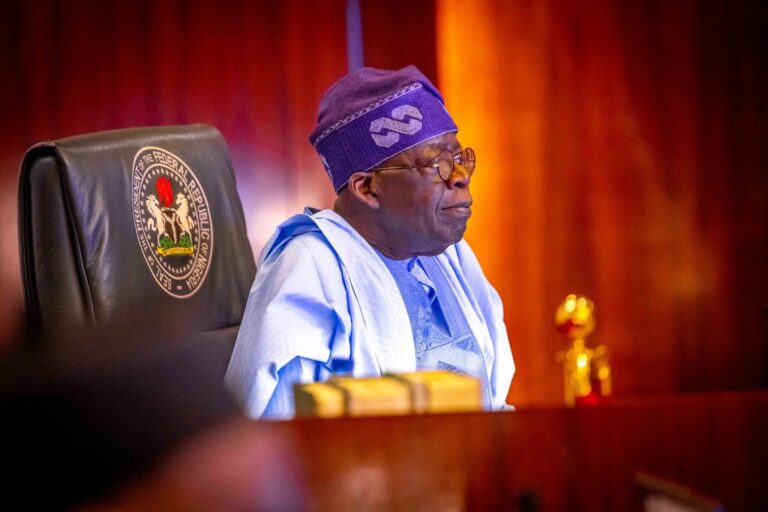
On Wednesday, President Tinubu assented to the Electoral Act 2022 (Repeal and Re-Enactment) Bill 2026 at the State House, Abuja, barely 24 hours after it cleared the National Assembly.

The speed of the assent stunned observers and triggered backlash from opposition parties, civil society groups, analysts and ordinary citizens.

At the centre of the storm is one contentious provision: the law permits electronic transmission of results from polling units but retains manual collation as a fallback where network failures occur. Supporters describe the approach as pragmatic. Critics say it opens the door to manipulation.

Tinubu’s Case: Humans Still Matter

Defending the law, Tinubu argued that democracy ultimately depends on human oversight.

“It is time that we have confidence in our system. No matter how good a system is, it’s managed by the people, promoted by the people, and the result is finalised by the people,” the president said after signing.

He warned against over-dependence on electronic systems, citing risks of glitches, interference and hacking, and questioned whether Nigeria’s broadband infrastructure is strong enough for fully digital collation nationwide.
“In fact, for final results, you are not going to be talking to the computer. You are going to be talking to human beings who announce the result,” he added.

But in communities like Mararaba, where trust in institutions is already thin, that reassurance has struggled to calm nerves.

Why Critics Remain Uneasy
Election analysts say the hybrid structure could recreate controversies that shadowed previous polls.

Telecom operators and election officials have repeatedly reported high levels of network coverage sufficient for basic result uploads. That is why many critics view the manual fallback not simply as caution, but as a potential structural vulnerability.

For voters like Okoh, the issue is more personal than technical.

“If there’s technology that can make elections more transparent, then we should be using it properly. That’s what many of us were hoping for,” he said.

A Nation’s Confidence on the Line
Across major cities and satellite towns, interviews with voters reveal a mix of fatigue, caution and simmering suspicion.

Civil society organisations have also raised concerns about both the substance of the amendment and the speed of its passage, warning that public confidence in the electoral process could suffer if doubts are not addressed.

PUBLIC REACTIONS
Public responses to the Electoral Bill have been sharp and wide-ranging, reflecting both cautious support for having a legal framework in place and deep concern about transparency, trust, and the future of Nigeria’s electoral process.

Igini to Tinubu: Remember the Democracy Struggle
Mike Igini, former Resident Electoral Commissioner, appealed to the president’s democratic legacy, urging him to remember the sacrifices made during Nigeria’s pro-democracy struggles.

“It is indeed my humble recommendation to Mr President that you are a man of history. You were a senior man to very many of us in the struggle at the time when the journey of Nigeria and the prospect of democracy was less certain. And also remember that, at a time when the PDP was in office and when we were in office, and they were saying that there was going to be a federal might, some of us stood out to say no,” Igini said.

ACF Backs Urgency but Demands Full Disclosure
Tukur Muhammad-Baba, National Publicity Secretary of the Arewa Consultative Forum, emphasised the urgency of putting an electoral law in place ahead of the next general elections but urged full disclosure of the bill’s contents.

“The Electoral Bill, as assented to by the President, as hurried as it may seem, deals with processes of the electoral system which are time-bound. Given that we are just about a year to the 2027 general elections, the time to put the law in place is a critical, even non-negotiable step. The general public, including the ACF, has to date, only snippets of the bill. Outside of the contentious issue that emerged recently, that is, provisions regarding the mode of transmission of election results, we would like to see the contents of the full bill, warts and all.”

Citizens Feel Let Down, Says Bello
Maryam Bello, a public sector worker in Abuja, said many ordinary citizens feel disappointed that real-time electronic transmission was not fully embraced.

“As a citizen, I feel let down that the call for real-time transmission of results was ignored. Many of us believed this reform would curb manipulation and rebuild confidence in elections. The speed with which the president signed the bill makes it seem like transparency may not be the top priority. It feels like our concerns didn’t really count. Honestly, the signing is a mixed bag. It’s positive that there’s now a legal framework for the next elections, but the controversy over manual transmission hasn’t gone away,” she said.

PDP Alleges ‘Well-Choreographed Drama’
Ini Ememobong, National Publicity Secretary of the Peoples Democratic Party, alleged that the speed of the assent confirms what the opposition views as a coordinated political move.

“The hurried grant of a presidential assent to the contentious bill as passed by both chambers of the National Assembly, despite the widespread opposition by Nigerians, is a confirmation of the fact that this was a well-choreographed drama by the APC. The party’s fear of the inevitable defeat from a free and fair election is palpable and they are unable to conceal it again. This is indeed a sad day for democracy. The Nigerian people have been dealt a bad card, which existentially threatens democracy,” he said.

Young Voters Fear Step Backward
Dennis Bawa, an undergraduate and first-time voter, framed the issue from a youth perspective, arguing that the decision could dampen enthusiasm among young Nigerians.

“As a young voter, this feels like a step backward. Technology should be fully embraced, not pushed aside,” he stated.

Civil Society Flags Democratic Concerns
Jake Epelle, Founder and Chief Executive Officer of TAF Africa, said civil society groups recognise the passage of the law but remain troubled by the manner in which it was handled.

“The speed and opacity raise serious concerns about transparency and the commitment to genuine electoral reform. Such an approach risks eroding public trust at a time when confidence in the electoral system remains fragile,” he said.

Manual Fallback Could Be Abused — Osaze-Uzzi
Oluwole Osaze-Uzzi, former Director at the Independent National Electoral Commission, expressed technical concerns, warning that the fallback to manual processes could become routinely abused.

“Without sounding like a prophet of doom, I honestly think we are going to be haunted by the ghosts of the past because there has not been any significant change. If we say transmission fails and the presiding officer should revert to manual processes, this will become the norm. Presiding officers may be compelled to claim that there is no network in order to avoid electronic transmission. My expectations for the next election under the current legal framework are not particularly high. We should not expect anything fundamentally different from what happened in 2023 if these issues are not addressed.,” Osaze-Uzzi stated.

NNPP: Assembly Acting as Rubber Stamp
Ladipo Johnson, spokesperson of the New Nigeria Peoples Party, said the development reflects what he described as a pattern of legislative deference to the executive.

“Well, I am not surprised that the bill passed as it did and that the president signed it into law immediately. Because if you look at the history, you would know that the National Assembly we have, the Senate, the House of Reps, are largely a rubber-stamped National Assembly. They probably do virtually everything that the presidency wants. They don’t care about that,” Johnson said.

Utomi: ‘Freedom Has Been Murdered’
Pat Utomi, political economist and public commentator, delivered one of the most starkly worded reactions, portraying the development as a defining democratic moment.

“The line is drawn. It is politicians in power versus the Nigerian people. Before us is life and death. Choose life that you may live. Back in the 1990s I put my life on the line that Nigeria may be free. Today it became clear that freedom has been murdered,” he said.

Sowore Calls for Resistance
Omoyele Sowore, activist and former presidential candidate, went further, characterising the law as a direct threat to credible elections.

“Tinubu has now signed the 2026 ‘Electoral Act,’ a law designed to undermine and ultimately forbid free, fair, and credible elections in Nigeria. We must resist this assault on democracy,” Sowore stated.

ActionAid Warns on Electoral Legitimacy

Andrew Mamedu, Country Director of ActionAid Nigeria, stressed that the speed of passage undermined inclusive lawmaking and could weaken electoral legitimacy.

“Such haste did not permit the patience, openness, and broad consultation that legislation of this magnitude demands… When citizens begin to believe that electoral rules are shaped without them or against their interests, the legitimacy of future elections becomes vulnerable. This is not a partisan matter. It is a matter of democratic survival and public trust,” he insisted.

Elite Interests May Have Prevailed — Ojo
Gbade Ojo, political scientist at the University of Ilorin, argued that the outcome appears to favor entrenched political interests.

“The sense one gets is that the interest of the government elite has been protected, not necessarily that of the electorate,” he added.

Warning of Potential Loopholes
Bayo Ogunleye, public affairs commentator, concluded on a cautionary note, warning that loopholes in the new law could be exploited.

“The bill will not be what the Nigerian masses will benefit from. There’s room now for games to be played,” he said.

Back in Mararaba, the Quiet Question
Later that night, Okoh locked his door against the noise of passing tricycles and lay down on his thin mattress.
He says he will probably still vote in 2027.

But the certainty he once carried , the belief that his vote would travel cleanly from the polling unit to the final tally, is beginning to thin. “If results don’t go through instantly the way they should. People will keep doubting the whole process,” he told Saturday Vanguard softly. For Nigeria’s democracy, that quiet doubt, growing in rooms like his across the country, may prove more consequential than any clause in the new law.

Vanguard
Tomb more than 1,000 years old found in Panama

0


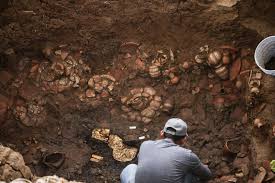
Archaeologists have discovered a tomb more than a thousand years old in Panama containing human remains alongside gold and ceramic artifacts, the lead researcher told AFP on Friday.

The discovery was made at the El Cano site in the Nata district about 200 kilometers (124 miles) southwest of Panama City.

Scientists and archaeologists have already unearthed other remains of pre-Hispanic cultures in the region that has been excavated for two decades.


The skeletal remains were found surrounded by gold objects and pottery decorated with traditional motifs, pointing to these being “high-ranking” individuals, archaeologist Julia Mayo told AFP, adding that the tomb was built between 800 and 1000 AD.

“The individual with the gold was the one with the highest social status in the group,” she said.

That body was found with two bracelets, two earrings, and pectoral jewelry that featured bats and crocodiles, she added.

The El Cano archaeological site is linked to the societies that inhabited the central provinces of Panama between the 8th and 11th centuries.

“This is where they buried their dead for 200 years,” said Mayo.

Nine other tombs “similar” to the one found on Friday had already been found at the site, she added.

Panama’s Ministry of Culture said the discovery was “of great importance for Panamanian archaeology and the study of pre-Hispanic societies of the Central American isthmus,” referring to the land that connects North and South America.

According to experts, these excavations demonstrate that death did not represent an end for these societies, but a transition to another phase where social status remained important.

Chinese police retrieve thousands of relics robbed from Song Dynasty tombs
Over 100 ancient coffins unearthed in necropolis near Cairo.

Vanguard

𝗧𝗶𝗸𝗧𝗼𝗸 𝘀𝘁𝗮𝗿 𝗣𝗲𝗹𝗹𝗲𝗿 𝗲𝘀𝗰𝗮𝗽𝗲𝘀 𝗳𝗶𝗿𝗲 𝗶𝗻 𝗟𝗮𝗴𝗼𝘀 𝗺𝗮𝗻𝘀𝗶𝗼𝗻

0


Nigerian TikTok sensation Peller, real name Habeeb Hamzat, has escaped a fire incident involving the generator at his Lagos mansion. See the video.. ..

Insecurity worsens, we need help — Governor declares

0


•Some politicians can’t go home, remain in Abuja, Lagos
•Army intensifies operations, arrests 131, kills 57 terrorists in one month
•Experts warn of infiltration risks in fresh recruitment drive

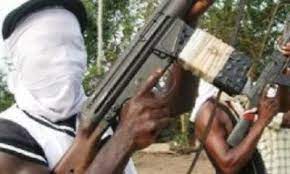
On a humid Wednesday night, February 18, 2026, silence hung over Ahungha Village in Akure North, Ondo State, until it was shattered by gunfire.

They came like phantoms in the dark, heavily armed and merciless. Their target was neither a rival gang nor a security outpost. It was a palace , the sacred home of a traditional ruler.

By the time the night exhaled its last breath, Oba Kehinde Jacob Faledun, the revered monarch of Ahungha, lay in his own blood.

The gunmen had invaded his palace to abduct him. For resisting, he was killed.

Hours later, as if to underline the country’s collective anguish, 34 Muslim worshippers were massacred in Kebbi State, barely two days into Ramadan. Two separate horrors. One unifying message: In today’s Nigeria, human life appears increasingly vulnerable.

GEOGRAPHY OF FEAR
From Borno to Zamfara, Niger to Yobe, Ondo to Kwara, Edo to Kebbi, the map of Nigeria is increasingly marked by violence. Communities once known for farming, fishing and festivals are now defined by curfews, mass burials and ransom negotiations.

Terrorists move with chilling audacity. Villagers are dragged from their homes. Worshippers are seized mid-prayer. Travellers vanish along highways that have become hunting grounds.

Security agencies, though battling fiercely, are facing expanding fronts , a reality some state governors now acknowledge.

GOVERNOR CALLS FOR HELP
In a chance meeting with a sitting governor of one of the affected states, I asked pointedly: “Your Excellency, isn’t this getting too much? What is the way out?”
He paused, then responded in a subdued tone:

“We need more support. Our military are working tirelessly, but they are engaged on multiple fronts. These groups are growing in numbers, and where or how they access weapons remains troubling. If this has been going on for 15 years without decisive improvement, it means the problem is bigger than any one institution.”

He added: “It has become a lucrative trade. Kidnappers and terrorists now prey on vulnerable communities, forcing them to pay ransoms. No one should hesitate to seek collaboration when the challenge is overwhelming.”

His words reflected concern not condemnation but a call for broader national and international cooperation.

THE POWERFUL CANNOT GO HOME
The crisis has blurred class lines. Wealth and political influence no longer guarantee immunity.

Saturday Vanguard gathered that some politicians from terror-ravaged northern communities now reside largely in Abuja and Lagos for safety reasons.

This was confirmed by Senator Ali Ndume, representing Borno South, in a recent interview on Channels Television, where he disclosed that insurgency has effectively kept him away from his ancestral home.

“For the past 16 years, I cannot go to my village,” he said. “Even under escort, you don’t risk travelling from Maiduguri. Even if one of my own dies today, I cannot just go like before.”

Ndume welcomed recent United States assistance in intelligence, surveillance and training.
“The Americans are helping us in terms of the fight against insurgency. It’s a welcome development. We have been looking for it but did not get it.

“If your house is on fire, even if it’s your enemy that offers water, you take it.”

TROOPS AND MORALE
Beyond strategy and diplomacy lies another concern — morale.

Security analysts note that remuneration and welfare remain critical to sustaining fighting spirit. Ndume highlighted disparities in pay, noting that soldiers risking their lives deserve adequate compensation.
One soldier, who spoke on condition of anonymity, said:

“This war is not beyond the military. We have the capacity. What we need is sustained political will and coordinated support.”

Another questioned the release of arrested insurgents, saying,
“We risk everything to capture them, and sometimes they return to the field. It affects morale.”

INFILTRATION RISKS IN FRESH RECRUITMENT DRIVE
Retired Brigadier General Mustapha Dogo warned that Nigeria’s renewed recruitment drive, though necessary, must be handled with extreme caution.

“In a war defined by intelligence leaks and sleeper cells, even one compromised recruit can undo months of operational planning,” he said.

He stressed that the focus must be on rigorous vetting and background checks to prevent infiltration.

Similarly, retired Commodore Samuel Akin expressed concern that releasing arrested insurgents without comprehensive rehabilitation could heighten risks.

“When you release a terrorist without thorough deradicalisation, you create uncertainties,” he said. “Such individuals understand security processes and could attempt to exploit recruitment windows.”

Both officers also pointed to declining enlistment interest among youths due to the prolonged conflict.

“Young Nigerians weigh the risks carefully,” Dogo noted. “Service must remain honourable, secure and well-supported.”
A serving Staff Sergeant, who identified himself as Eddy, added: “The rush to recruit could be a blessing or a challenge. Proper screening is key. The system must be watertight.”

STRATEGIC SHIFT
Amid the rising tide of kidnappings from Kaduna to Katsina, the Nigerian Army has recalibrated its strategy under the Chief of Army Staff, Lieutenant General Waidi Shaibu.

The new approach focuses on dismantling the economic and logistical lifelines of kidnapping gangs while strengthening community trust.

In the first weeks of 2026, troops reportedly arrested 131 suspects, neutralised 57 terrorists and rescued 91 kidnapped victims. In Sokoto, a kidnap cell was intercepted with six AK-47 rifles recovered. In Nasarawa, an illegal arms fabrication workshop was dismantled.

“These are targeted strikes against the logistics and financial backbone of the kidnapping industry,” a senior officer explained.

Through Civil-Military Cooperation projects including schools and clinics , the Army is also pursuing non-kinetic efforts, based o findings revealed.

“There is no alternative to a dual-track approach,” Lt. Gen. Shaibu said in Zamfara. “The Army cannot make the desired impact without the people.”

AN ELUSIVE ENEMY
Yet the adversary remains adaptive. Camps shift. Networks evolve. Intelligence gaps persist.
A senior retired military officer said:

“If the political leadership provides sustained backing and clear coordination among agencies, this menace can be significantly reduced.”

For now, Nigerians are hoping and praying that ongoing reforms and renewed assurances from the Minister of State for Defence and the Service Chiefs will translate into lasting peace.

Vanguard

Again, fire razes another Kano market

0

By Bashir Bello, KANO

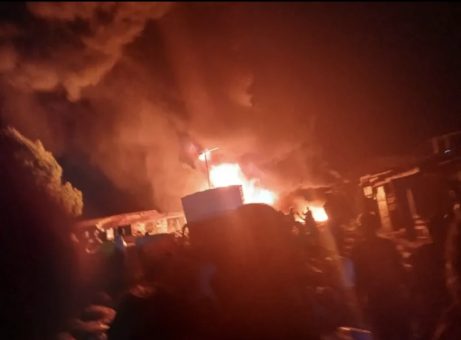
An early morning fire on Friday has gutted several shops at the Kwalemar Fatima Simra Market in Dakata, Nassarawa Local Government Area of Kano State.

This was coming barely days after the mysterious fire that lasted more than 48 hours at the popular essential commodity market, Singer market.


Confirming the latest incident, the Chairman of the market’s fire committee, Dauda Haruna, said so far about 50 shops were destroyed as the fire continued to burn.

He said that most of the shops affected were small-scale businesses involved in peanut oil refining and recycling of plastic and rubber.

Haruna noted that the market officials had immediately alerted the relevant agencies as soon as they noticed the fire.

According to him, “From what we saw initially, about 50 shops have already been gutted, and the fire is still burning. We are still waiting for the Kano State Fire Service to arrive.

“We did our best to call them and inform them of the situation. I can even hear their vehicles now,” Haruna said.

As at the time of filing in this report, the level of damage could not be ascertained.

In the meantime, the authorities of Kano State Fire Service were yet to issue any official statement on the incident, as efforts to reach the spokesperson, Saminu Yusif, also proved abortive.

Vanguard

FCT Polls: Igbo community backs APC candidate for AMAC chair

0


Members of the Igbo community in the Abuja Municipal Area Council (AMAC) have endorsed the re-election bid of Hon. Christopher Zaaka Maikalangu, the All Progressives Congress (APC) candidate, for the chairmanship of the council in the 2026 FCT Area Council elections.

The endorsement comes ahead of the polls scheduled for Saturday, February 21.

They also condemned a recent endorsement of the Social Democratic Party (SDP) candidate, Obinna Simon, describing it as unrepresentative of the Igbo people in the council.

Speaking for the AMAC Igbo community at a press conference in Abuja, Hon. Benson Ovoh and Comrade Ike Duru, commended the Maikalangu administration for fostering political inclusiveness, promoting market allocations, and resolving long-standing issues affecting traders who had suffered decades of uncertainty due to market demolitions.

They said the administration’s efforts had strengthened the unity and economic participation of the Igbo in AMAC.

The group said, “For the benefit of hindsight, it is important to highlight that the Igbo populace in AMAC has been of progressive leaning right from the inception of the FCT.
“We have participated in building the economy of the place and shaping the nature of the local polity. In the hands of the indigenous people, we have forged an alliance envied by many. This is despite the occasional loggerheads, which were most times resolved in harmony.

“Ndigbo in AMAC in recent times have witnessed a new brotherliness in the areas of political inclusiveness, patronages, market allocations and business development. The Christopher Zaaka Maikalangu administration in AMAC has given us a sense of belonging and restored our confidence in the unity project of the FCT.

While dissociating themselves from the SDP candidate, the Igbo community accused Simon of not identifying with the Igbo community before his declaration for the AMAC chairmanship.

The Igbo leaders noted that they appreciate the cordial relationship they have enjoyed with their host communities in AMAC, as well as the council’s good governance demonstrated in recent times.

“We appreciate the efforts of the Maikalangu administration in settling our traders, who for almost three decades have been haunted by the demolition of their markets. This singular act demands reciprocation.

“We wish to state that for purposes of fair play, brotherliness, a continuation of the convivial business environment for our businessmen, respect for the indigenous populace of AMAC, we hereby declare the Igbo endorsement of Hon. Christopher Zaaka Maikalangu as the Igbo choice for the AMAC chairmanship in the 2026 FCT Area Council elections”, they added.

Guardian

Elections in FCT, Kano, Rivers: Tinubu Calls for Orderliness, Urges INEC to Strengthen Voter

0


President Bola Ahmed Tinubu has called on voters, security agencies, and officials of the Independent National Electoral Commission (INEC) to conduct themselves in an orderly and peaceful manner during Saturday’s elections in the Federal Capital Territory (FCT) and the states of Kano and Rivers.

INEC is set to hold polls in the six area councils of the FCT, as well as bye-elections in Ahoada East II and Khana II State constituencies in Rivers, and Kano Municipal and Ungogo constituencies in Kano State.

President Tinubu urged all eligible voters to exercise their franchise without fear, emphasising that a thriving democracy requires calm, tolerance, and mutual respect. He also appealed to political parties, candidates, and their supporters to refrain from violence, inflammatory statements, or any acts that could undermine the integrity of the electoral process.

The President cautioned against intimidation or any high-handed actions that could disenfranchise voters, stressing that security personnel are deployed to safeguard lives, property, and the sanctity of the ballot.

He further called on INEC to take all necessary steps to boost voters’ confidence by ensuring timely accreditation, smooth voting procedures, accurate collation, and prompt transmission of results in line with the 2026 Electoral Act.


“Fellow Nigerians, I assure you that the Federal Government under my administration will continue to support institutions responsible for delivering free, fair, and credible elections,” President Tinubu said.
He added, “To all residents of the FCT, Kano, and Rivers, I commend your civic consciousness.

I am confident that these elections will reflect the will of the people and further strengthen our democratic journey as a nation.”

Court Convicts, Fines Firm for Illegal BDC Operation in Lagos

0


Justice D.I.Dipeolu of the Federal High Court, sitting in Ikoyi, Lagos, on Friday, February 20, 2026, convicted and sentenced a company, AP Mcnisi Initiatives Limited, to a fine of N500,000( Five Hundred Thousand Naira) for operating a Bureau De Change (BDC) business without a valid licence.

The conviction followed the arraignment of the company by the Lagos Zonal Directorate 2 of the Economic and Financial Crimes Commission (EFCC), Ikoyi, Lagos on a one-count charge bordering on illegal foreign exchange transactions.

The charge reads: “ That you, AP Mcnisi Initiatives Limited, on or about June 7, 2024, in Lagos, within the jurisdiction of this Honourable Court, engaged in a foreign exchange transaction with one Adeoye Phillips Tomilola other than through the official foreign exchange market and without a valid licence from the Central Bank of Nigeria (CBN) to carry on the business of Bureau De Change, and you thereby committed an offence contrary to Section 11(1)(a) of the National Economic Intelligence Committee Establishment (Etc.) Act and punishable under Section 11(2) of the same Act.”

Upon arraignment, the company pleaded “guilty” to the charge.

In view of the plea, the prosecution counsel, A.A. Usman, reviewed the facts of the case through an EFCC operative, Bello Buhari Kobi.

Kobi told the court that the Commission received a petition alleging that the defendant received the sum of N10,000,000 in its account domiciled with Guaranty Trust Bank for conversion to $9,000, but failed to deliver the dollar equivalent to the complainant.

He stated that investigations revealed that the company was not licensed by the CBN to carry out BDC operations.

He further disclosed that Adekunle Fadibe Mcnisi, identified as the alter ego of the company, admitted that the firm had not obtained the requisite approval from the apex bank to operate as a BDC.

The operative added that the defendant had refunded the complainant.

The prosecution, thereafter, tendered the petitioner’s letter, correspondence with the bank, the bank’s response, and the extra-judicial statement of the alter-ego of the defendant, which were admitted in evidence by the court.

Consequently, Justice Dipeolu convicted the defendant and ordered it to pay a fine of N500,000, failing which its assets worth the sum of N500,000 shall be forfeited to the Federal Government of Nigeria.

Idodo Market City unveils ambitious plans for traders, investors in Enugu

0


The management of Idodo Market City and Residence, Enugu, has showcased the vast opportunities its project offers to traders and investors across Nigeria and abroad.

The Managing Director of the Idodo Market City and Residence, Engr Ben Nnaji, disclosed this on Wednesday during a press briefing at Alaba International Market, Lagos.

Nnaji also revealed that the Enugu State Government has fully endorsed the development and has issued a Certificate of Occupancy for the land.

He said, “The vision for the project is to make it the best, biggest and most modern Market City in Africa”

Nnaji also outlined the factors that make investment in the city highly attractive, including significant returns, affordability, and robust security.

According to him, investors will enjoy a fully integrated commercial environment with round-the-clock solar-powered electricity, modern malls, hotels, office spaces, banks, a Customs Bonded Terminal, fibre-optic internet, shops, and warehouses.

Engr Nnaji also emphasized that the project welcomes participation from Nigerians both at home and abroad, saying that the objective is to ensure inclusive development in Enugu.

He added that construction of solid, world-class structures will be handled by the Chinese construction giant, CCECC, with green spaces and well-paved landscapes designed to enhance the city’s aesthetic and functional appeal.

High Chief Camilius Amajuoyi, President of the Alaba International Market Union, praised the initiative, noting that the project promises benefits not just for traders but for Nigeria’s wider economy. “Our members have fully embraced the project and will actively participate in it,” he said.

Several traders expressed optimism about the project, noting that the development will enable them to diversify their business operations and increase profitability.

The press conference was attended by the Chairman of Idodo Market City and Residence, Kester Enwereonu, a respected entrepreneur and international investment expert, alongside Engr Francis Nwogwu of Vintage Group. Representing the Enugu State Government was Dr Ifeanyi Onah, a permanent secretary in the Ministry of Trade, Investment, and Industry. Sectional presidents of the Alaba International Market Unions also graced the event

Adding vibrancy to the event, musical artists like ME, Zoro, MC Monica performed while several Nollywood actors graced the gathering, drawing a lively audience and further highlighting the project’s nationwide appeal.

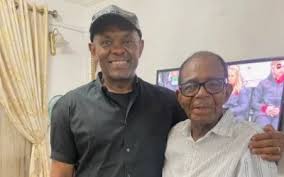
Tony Elumelu Mourns Father-in-Law, Chief Israel C. Ogbue, on His 99th Birthday

0


Billionaire philanthropist and entrepreneur Tony Elumelu has announced the passing of his father-in-law, Chief Israel C. Ogbue, describing him as a foundational figure in his life. Chief Ogbue passed peacefully on Wednesday, February 18, 2026—coinciding with his 99th birthday.

In a heartfelt tribute, Elumelu recalled Chief Ogbue’s pivotal role in his professional journey, particularly during the 2005 merger of Standard Trust Bank and UBA Group, one of Sub-Saharan Africa’s most transformative banking consolidations.

Chief Ogbue joined the UBA Board that same year as a Non-Executive Director, bringing decades of senior leadership experience from the National Insurance Corporation of Nigeria and NAL Merchant Bank, along with a reputation for integrity and principled leadership.

Appointed UBA Chairman in 2011, Chief Ogbue served until 2013, reinforcing corporate governance, accountability, and long-term strategic thinking—values that continue to guide the institution.

Beyond his professional achievements, Elumelu described Chief Ogbue as a man of unwavering faith, a devoted husband, father, and patriarch, whose family remained his greatest pride.

“A life that long, and that beautifully lived, is its own kind of monument. The kind that doesn’t crumble,” Elumelu wrote.
He concluded, “Rest well, Chief O, as I fondly called him. We will miss you dearly.”


#TOEWay