Home Blog Page 629

US Congress recommends measures to end Christian persecution in Nigeria

0


The US Congress has recommended measures to address the escalating persecution of Christians in Nigeria, calling for strengthening of the country’s institutions, including improving policing, enhanced anti-money laundering methods, and support for legal reforms.

Recall that President Donald Trump had set up a Rep panel to investigate persecution of Christians in Nigeria and submit the report to him.

The Federal Government in a swift reaction, said Nigeria had no policy on religious persecution, describing the development as an opportunity for deeper engagement and broader cooperation between both countries.

But the US lawmakers, for the umpteenth time, urged the US president to invoke and announce the Country of Particular Concern, CPC, presidential directive to name and shame perpetrators of violence against Christians, implement sanctions against the individuals, and continue its on-going visa restrictions against perpetrators.

The recommendations put forward by the Congress, in conjunction with House Foreign Affairs Committee and House Appropriations Committee, followed months of investigations into alleged Christian genocide in Nigeria after Trump redesignated Nigeria as a Country of Particular Concern.

Insisting that Nigeria was the deadliest place in the world to be a Christian, the lawmakers called for repeal of sharia codes and blasphemy laws in Nigeria’s northern states, which had been used to silence dissent and target minorities.

They urged the Trump’s administration to leverage its position to compel Fulani herdsmen to disarm, potentially by blocking beef exports to countries such as Ghana, South Africa and Senegal.

To counter the influence of extremist groups, the lawmakers called on the government to allow farmers engage in legitimate self-defence and also implement programmes to disrupt terrorist financing networks.
Additionally, the Congress recommended divesting from Russian military equipment for American military equipment and countering Chinese influence in Nigeria, especially “their destabilising practice of paying protection money to Fulani militias.”

They further recommended that the US should require a “GAO audit report” on the effectiveness of aid to Nigeria to ensure transparency and accountability in the use of funds.

The lawmakers urged the US government to withheld certain U.S. funds, pending demonstrable action by the Nigerian government to stop violence against Christians, while working with international partners, including France, Hungary, and the United Kingdom to end the atrocities against Christians.
Islamic leaders push back on US call to scrap Sharia, blasphemy laws
In an accompanying statement to the recommendations, the lawmakers said: “Findings after decades of persecution, Nigeria is the deadliest place in the world to be a Christian. Christians are subject to ongoing violent attacks from well-armed Fulani militias and terrorist groups, resulting in the death and murder of tens of thousands of Christians, including pastors and priests, the destruction of thousands of churches and schools, as well as kidnappings.

“Blasphemy laws in Nigeria’s northern states are used to silence speech and dissent, target Christians and minorities, and justify so-called ‘convictions’ without due process.

“President Trump’s bold action, and attention from Congress, has created a once-in-a-generation opportunity for real change to address this two-decades-long crisis.”

They tasked the Nigerian government to demonstrate the political will, including by allocating their own financial resources, to immediately reduce and then eliminate the violence.

“The United States and Nigeria should take this moment to redefine a new strategic partnership to make America and Nigeria safer, stronger, and more prosperous,” they added.

The Recommendations
*Strike a bilateral agreement between the United States and the government of Nigeria to protect vulnerable Christian communities from violent persecution, eliminate jihadist terror activity in the region, further economic cooperation, and counter adversaries in the region, including the Chinese Communist Party and Russian Federation. Such an agreement should include: commitments by the government of Nigeria to:

Co-fund donor-supported humanitarian assistance, including through faith-based organisations, and to prioritise underserved communities of Internally Displaced Persons, IDPs, and their host communities, especially in the predominantly Christian Middle Belt region;
Support and respond to early-warning mechanisms to prevent attacks and kidnappings, including deploying sufficient and capable security forces to the Middle Belt to enable rapid and effective response, and hold those who ignore the warnings accountable;
*Remove Fulani militias from confiscated, productive farmland and enable the voluntary return of displaced communities to their homes, including ensuring security and infrastructure, thereby reducing the need for humanitarian aid and generating economic development through increased agricultural productivity;

*Continue and expand security cooperation with the United States, including divestment of Russian military equipment for American military equipment through sales and financing.

*Technical support to the government of Nigeria to reduce and then eliminate violence from armed Fulani militias, including developing a demobilisation, disarmament, and reintegration programme to address illicit weapons and support safer communities while allowing farmers to engage in legitimate self-defense:

Supporting the new Ministry of Livestock, ranching plans, and meaningful land reform efforts; and enhancing the recruitment, technical capabilities, and willingness of the security forces and military to prevent and respond to violent attacks.
*Comprehensive counter-terrorism cooperation to rid the region of foreign terrorist organizations that pose a direct threat to the American homeland, including through the provision of excess defence equipment and use of relevant drawdown authorities.

*Counteract the hostile foreign exploitation of Chinese illegal mining operations and their destabilising practice of paying protection money to Fulani militias.

Speaking on the recommendations in a statement posted on his X handle, Rep Riley M Moore, said: “Following today’s (yesterday) productive meeting at the White House, I want to thank President Trump for redesignating Nigeria as a Country of Particular Concern and for his administration’s commitment to protecting our brothers and sisters in Christ from persecution and addressing the broader security challenges plaguing Nigeria.

“Since President Trump redesignated Nigeria as a CPC and tasked me to lead a congressional investigation, I have worked diligently with my colleagues to produce the report we presented today.

‘’I also want to thank House Appropriations Committee Chairman, Tom Cole, Vice Chair, Mario Diaz-Balart, Foreign Affairs Committee Chairman, Brian Mast, and Congressman, Chris Smith, for their leadership on this comprehensive investigation and delivering this report to the White House.

“I travelled on a bipartisan delegation to Nigeria and saw with my own eyes the horrific atrocities Christians face, and the instability the Nigerian government must combat.

‘’Through Congressional hearings, expert testimony, meeting with Internally Displaced Persons, hearing from religious leaders, and engaging with high-level Nigerian government officials, we have provided a clear picture of the threat environment in Nigeria and the horrific persecution Christians face.

“This report outlines concrete steps to impose accountability measures, counter radical Islamic terrorism, and lays out a plan to work in coordination and cooperation with the Nigerian government to bring security to all the people of Nigeria.

“Our brothers and sisters in Christ have suffered in silence for too long. The world is now watching, and I urge the Nigerian government to take the opportunity to deepen and strengthen its relationship with the United States.

“Doing so is in the interest of both our great nations. Together, we must address these pressing security challenges and bring an end to violence against Christians.”

No policy on religious persecution, FG replies US Congress
Replying the US Congress yesterday, the Minister of Information and National Orientation, Mohammed Idris, said in a statement that the Federal Government had taken note of the recommendations contained in the report submitted to the White House by the House Foreign Affairs Committee and the House Appropriations Committee.

While acknowledging that parts of the country continued to grapple with serious security challenges , including terrorism, banditry and communal clashes , the minister stressed that the violence confronting Nigeria was not rooted in state policy or religious bias.

“Nigeria does not have, and has never had, a state policy of religious persecution,” he said, adding that the ongoing security threats stemmed from complex factors such as terrorism, organised criminality and longstanding communal tensions.

The minister expressed deep concern over the loss of lives and destruction of property caused by criminal elements, extending sympathies to victims and their families “regardless of faith, ethnicity or region.”

Reaffirming Nigeria’s constitutional commitment to religious freedom, Idris noted that the Constitution guaranteed freedom of religion and worship for all citizens and assured equal protection under the law.
To address the evolving security landscape, he said the government hads strengthened coordinated military and law enforcement operations in affected areas.

According to him, counter-terrorism offensives have significantly degraded the operational capacity of armed groups, disrupted kidnapping networks and led to the arrest and neutralisation of key criminal actors.

He disclosed further that intelligence sharing and inter-agency collaboration had been enhanced to improve early warning systems and rapid response mechanisms, particularly in vulnerable rural communities.

As part of renewed security strategies, the minister said surveillance and clearance operations had been intensified in forested areas long exploited by criminal groups.

He said specially trained forest guards had also been deployed to deny terrorists and bandits safe havens, bolster territorial control and reinforce community-level security presence.

These efforts, according to him, are being supported by increased investments in modern equipment, mobility assets and technology for the armed forces and other security agencies.

Beyond security operations, Minister Idris highlighted ongoing humanitarian interventions for internally displaced persons, as well as initiatives aimed at facilitating the safe return of affected communities and promoting peacebuilding efforts to ensure sustainable coexistence.

“The Federal Government will continue to engage international partners through appropriate diplomatic channels while remaining focused on its primary duty -the protection of all Nigerians,” he added.

US pressure on Sharia risks tension in Nigeria — CAN
Reacting to the report yesterday, Christian Association of Nigeria, CAN, warned that calls by a United States congressional panel for Nigeria to repeal Sharia and blasphemy laws could heighten religious tension and destabilise the country.

Instead of scrapping Sharia provisions, the Christian body is advocating a fresh, people-driven constitution, arguing that only a new constitutional framework, not piecemeal amendments, could fairly reflect Nigeria’s complex religious and ethnic realities.

Speaking to Vanguard in confidence because of the sensitivity of the matter, a senior CAN official said international pressure must be handled carefully and responsibly.

“This is a very sensitive issue. If you look at the process required to amend the Constitution, you will see that it could create serious tension.

“At one of the recent meetings of the Nigeria Inter-Religious Council, NIREC, some Muslim clerics strongly argued that Sharia was a way of life and part of the culture of certain northern communities, and, therefore, cannot simply be repealed or removed from the Constitution,
“That is why we believe this matter must be handled with a high level of responsibility and wisdom. If it is mishandled, it could destabilise the country.

‘’Religion is extremely sensitive, and there are ignorant and extremist adherents in both the Christian and Muslim communities. So even how this issue is discussed in the media requires great care.
“However, rather than focusing on repealing Sharia law, what we have consistently advocated is the need for a new constitution for Nigeria.

‘’The country needs a truly people-driven constitution that accommodates the interests of every segment of the nation. All religions should be carried along fairly, and ethnic and minority concerns must also be properly addressed.

“We must not also allow anyone to hide under Sharia to perpetrate wrongdoing. At the same time, we are not saying Sharia is unimportant. Our concern is that some people exploit it to justify various abuses.

“Our position is that Nigeria needs a new constitutional framework, one that genuinely reflects the will of the people. We believe the foundation of the 1999 Constitution is flawed, having originated from military rule, and that amendments alone may not fix the deeper problems.

‘’Rather than repealing specific laws, we are calling for a new constitution that accommodates all interests. Where Sharia is recognised, other faith-based legal systems, such as canon law, should also be guaranteed and protected within the constitutional framework,” the CAN official said.

Vanguard

Naira appreciates to N1,359/$ in the official market

0


The naira yesterday depreciated to N1,359 per dollar in the Nigerian Foreign Exchange Market, NFEM.
However the Naira remained stable at N1,360 per dollar in the parallel market.

Data from the Central Bank of Nigeria, CBN, showed that the indicative exchange rate for the naira rose to N1,359 per dollar from N1,353.5 per dollar on Monday, reflecting N5.5 depreciation for the naira.

Vanguard

How we escaped assassination in Benin — Obi, Oyegun

0

•Gunmen storm ADC secretariat, Odigie-Oyegun’s residence
•We got intelligence of attack — Odigie-Oyegun
•APC, Edo govt deny complicity; ADC, Atiku, Akpata, Owie react

BENIN CITY — Tension gripped Benin City, Edo State, yesterday, as 2023 Presidential Candidate of the Labour Party, LP, Mr Peter Obi, former Governor of Edo State, John Odigie-Oyegun, and other leaders of the African Democratic Congress, ADC, escaped attacks from gunmen.

Few minutes after leaders of the ADC, including Peter Obi received former president of the Nigerian Bar Association, NBA, and the LP Edo 2024 governorship candidate, Olumide Akpata into the party, gunmen attacked the facility at Ogbelaka Street, Off Sokponba Road, Benin City, and the residence of the party’s National Leader, Odigie-Oyegun.

Obi, narrating his ordeal, declared: “It is time to speak up. It is time those in government act. They are not going to be there forever. What they allowed to happen in the country today will take its revenge on all of us and the country.”

Eyewitnesses said the attackers, who arrived in an unmarked Sienna bus and on a motorcycle, fired several gunshots and vandalised party property, including chairs, canopies and banners. Some members reportedly sustained injuries.

Attack shifts to Oyegun’s residence
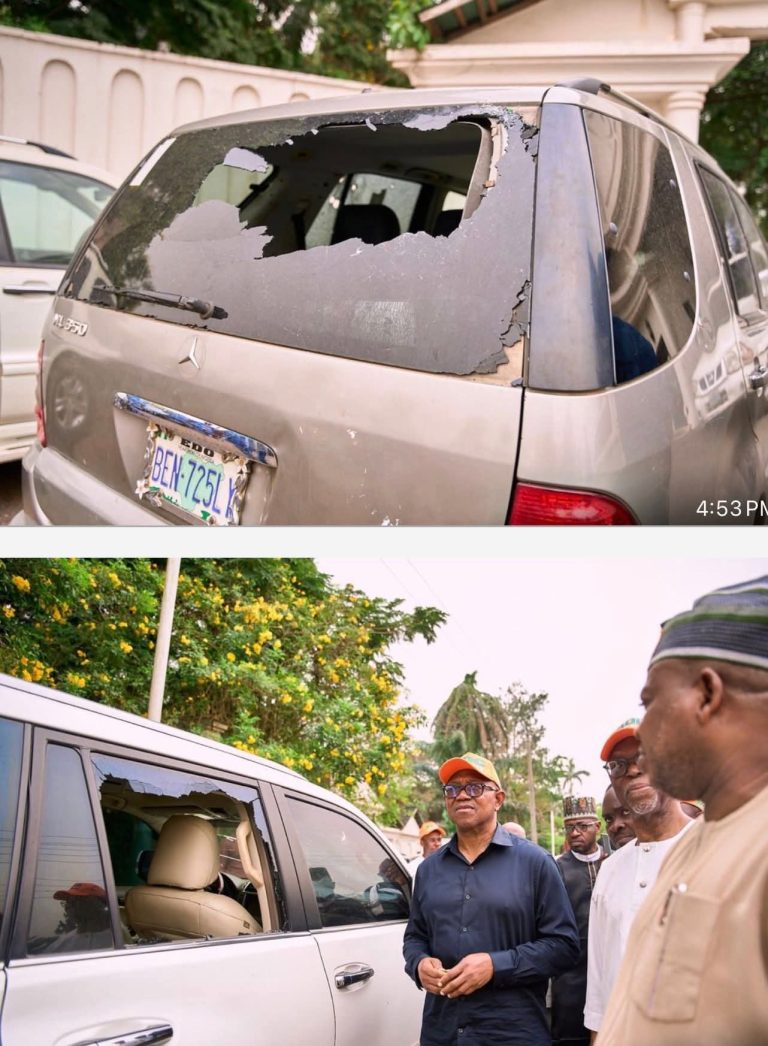
Not satisfied, the assailants reportedly proceeded to the residence of Odigie-Oyegun on Reservation Road, where more gunshots were heard and vehicles parked near the gate were riddled with bullets.

A video circulating online showed damaged vehicles and a gate perforated with bullet holes.

Speaking in the video, Obi said: “This is a former governor of the state(Odigie-Oyegun). You can see what happened in front of his house where hoodlums came, shooting.Look at the gate, see the bullet holes at the gate, several cars damaged. That is where our democracy has reached.”

National Coordinator of the Obidient Movement, Yunusa Tanko, alleged that the attackers trailed the leaders from the secretariat.

“The leadership of the ADC is under siege and attack in Benin, Edo State. Armed individuals followed us from the ADC Secretariat to the residence of John Odigie-Oyegun and shot at the gate, destroying several vehicles,” he said.

We got intelligence — Oyegun
Speaking to journalists, Odigie-Oyegun warned that the development could trigger chaos if not checked.
“I am afraid that our leaders, both at the centre and in this state, are playing with fire. The consequences could be terrible, much more than any of you expect,” he said.

According to him, the meeting at the secretariat was duly scheduled when they received a security alert.
“Halfway through the proceedings, we got intelligence report certainly from one of the security agencies that they have information that the place is going to be attacked, so we should please try to wind up.

“You can’t ignore information. So we cut short our proceedings and I think we were just barely lucky to have left there in time because thereafter it looked like all hell broke loose. People arrived here in about 10 vehicles shooting all over the place… People were injured.”

He questioned the absence of coordinated security response.

“There was no cooperation, coordination between the security agencies such that that venue at least will get emergency protection. People were able to come in so many vehicles, shoot their way, break into the building… and go away. And this is a state where we have a governor and where the first duty of any government is to protect us?”

On the attack on his home, he added: “We had a guest… the former governor of Anambra and one of the prominent leaders of the ADC. From all indications, an aspirant.

“The government here had threatened that if he came to Edo State without permission, his security cannot be guaranteed. He was paying a courtesy visit to me and bullets started raining all over the place… When did we degenerate to that kind of level?”

ADC alleges APC involvement
Edo State Chairman of ADC, Kennedy Odion, accused the All Progressives Congress, APC, of masterminding the attack.

“We heard APC was coming to attack us. We quickly cut short the event and ended the programme. Few minutes after we ended, we heard thugs stormed the venue. They injured three people… After they scattered the place, they came to Oyegun’s house where we were having another meeting. All the vehicles parked outside were destroyed.”

“Myself, Peter Obi, Senator Owie and Oyegun have left the venue when we heard about the thugs’ attack. They injured three people. ”

“We have reported the matter and the Commissioner of Police came to see the level of damage that has been done. He assured them they will investigate. I told him not to allow this attack slide. Three persons were injured. The vehicles destroyed were many.”

He said the Commissioner of Police visited the scene and promised investigation.

Edo govt, APC deny complicity
However, Edo State Commissioner for Information, Kassim Afegbua, attributed the violence to internal crisis within the ADC.

“The crisis has been ongoing. Even yesterday, we had to use the police to quell the crisis… What happened was just the height of it.”

On allegations that Governor Monday Okpebholo had earlier warned Obi against visiting Edo without permission , Afegbua said: “If Peter Obi had informed the governor that he was coming, what happened today would not have happened. The governor would have provided security for him… Thank God nothing happened to Peter Obi.”

Similarly, Edo APC Chairman, Emperor Jarret Tenebe, denied involvement.

“Did the attackers wear APC uniforms? What is happening in ADC is a factional fight. You saw Owie fighting Oyegun. They should not drag us into their fight.”

Owie: No crisis between me and Oyegun
Speaking on the issue, Senator Owie, in a chat with Vanguard there is no rift between him and Oyegun and attributed the attacks to the poor governance of Governor Okpebholo.

Asked what happened, he said: “We were at the ADC secretariat where Mr Olumide Akpata came to declare for the ADC. We rounded off the programme and left for home. I later saw on the television that they raided the secretariat and atacked former Governor Oyegun’s house.

What they are turning Edo State into is unfortunate.”

On allegations that criss in ADC between him and Oyegun were responsible for the attack, Owie said: “How can that be? There is nothing like that. This government has tunred the state upside down. Strange things are happening in the state now. There is no government in the state. Insecurity has been high in Edo since Okpebholo took over.”

Akpata: Opposition under attack
Akpata described the incident as a sad commentary on democracy.

“Such happening makes someone very sad but it shows that people are not comfortable with opposition which should be part of democracy. Opposition must be allowed to thrive, that’s what makes democracy. As far as I am concerned, it is because we are in the opposition that is why we are under attack.”

Police confirm attack

The Edo State Police Command confirmed the incident.
Public Relations Officer, Eno Ikoedem, said: “On 24 February 2026 at about 2:55 p.m., a political gathering was held at the ADC State Secretariat… Shortly after the event concluded, a group of suspected hoodlums disrupted the premises and chased attendees away. Personnel of the Command responded swiftly…

“Some plastic chairs and canopies were damaged… No casualties were reported. Security has since been reinforced… Investigations are ongoing.”

However, when Vanguard visited both locations, armed policemen were stationed around the facilities.

Police take over facilities

When Vanguard visited the ADC secretariat at Ogbelaka and Odigie-Oyegun’s house along Reservation Road several armed policemen were sighted around the facilities.

Atiku condemns attack
Former Vice President, Alhaji Atiku Abubakar, described the incident as “utterly condemnable.”

“The violent attack on Peter Obi, John Oyegun, Prof. Oserheimen Osunbor, Olumide Akpata, and other Coalition ADC leaders in Benin… is utterly condemnable and unacceptable in any democracy.

“In recent times, we have witnessed reckless and inflammatory rhetoric from elements within the ruling party in Edo State… Words, when weaponised, often precede actions. What happened in Benin did not occur in a vacuum.

“Nigeria must not descend into a theatre where politics is settled by violence.”*

The attack has heightened political tension in Edo State, with opposition figures warning of creeping intolerance, while the state government and APC insist the violence stemmed from internal party disputes.”

As investigations commence, the question on many lips remains: Is Nigeria’s democracy coming under siege?

Vanguard

WHO probes hydrocarbon exposure in Ogoniland

0


THE World Health Organisation has begun a comprehensive health study of Ogoniland, Rivers State, to investigate the prevalence of ailments associated with long-term exposure to hydrocarbons.

This initiative aligns with the recommendations of the United Nations Environment Programme report, which called for a follow-up health study to complement the environmental remediation of the oil-devastated area.

The health study is being conducted by the International Agency for Research on Cancer, an agency under WHO.


The Project Coordinator of the Hydrocarbon Pollution Remediation Project, Prof. Nenibarini Zabbey, had in July 2025 stated that the agency commissioned WHO to carry out the study as part of the ongoing implementation of the UNEP report.

Speaking during a visit to the traditional rulers of Gokana and Tai local government areas on Tuesday, Lead Scientist of IARC, Ann Olysson, said the study is part of the UNEP recommendations for Ogoni.

She stated, “We are about, with your permission, to begin a study that was originally recommended by the UNEP study. We are in collaboration with HYPREP to conduct the tests, and the choice of our agency to conduct the study is in international recognition for this type of research.”

Project Coordinator of UNEP and the lead researcher of the 2009–2011 study, Mr Michael Cowing, which led to the report, said one of the key recommendations was this health assessment of the Ogoni population.

Cowing further said the study, which is expected to last nearly three years, began in mid-2025 with desk work, mapping, and preliminary research. He noted that the study will cover 4,000 participants across both the most impacted and non-impacted communities to ascertain results.

“And now, with your approval, we are going to engage in the fieldwork. Simply put, across Ogoniland, we’re looking to have approximately 4,000 participants representing the most impacted communities.

“We know where the epicentres of contamination are. We’ve plotted the communities on those maps, and they will be the impacted communities where we will focus the study. But we are also conducting studies in unimpacted communities for comparison.

“We will be looking at people involved in specific activities, whether farming, fishing, sand mining, or artisanal refining, to assess different levels of exposure to hydrocarbons. So it’s going to be a very comprehensive study,” he said.

Professor Iyenemi Kakulu, of the Department of Land Management at Rivers State University, said participants will be scientifically selected for the study.

Kakulu stated, “We are here on a friendly note to ask for your support, to grant us access to your kingdom, so that we can interact with your people and intentionally select participants for the study.

“Basically, we will speak to people in their homes in some scientifically selected communities. We will seek your permission to speak with community chiefs and gain access to conduct our work.

“We are also interested in occupational hazards. People exposed by the nature of their work in and around Ogoniland will be subjects of interest. We will talk to them and seek their voluntary consent to participate in the study, which involves collecting some personal data and human samples, such as blood and urine.”

Earlier, HYPREP Project Coordinator Prof. Nenibarini Zabbey, represented by the Director of Technical Services, Prof. Damian Paul-Aguiyi, told the traditional councils that the delegation sought support for adequate security, sensitisation, and collaboration.

He emphasised that the study is not a contracted job and called on the traditional rulers to provide an enabling environment for the team to carry out their work.

Responding, the King of Tai Kingdom, HRM Samuel Nnee, assured the delegation of the support of his people. He noted that before the advent of oil exploration, the Ogonis—and indeed Africans—lived longer.

The monarch said, “Whatever support you need, I can assure you that you will have it because we are talking about the health of our people.”

Nnee added that initially, the people doubted that HYPREP would carry out the remediation. “But I can tell you the truth—we have seen results. HYPREP went beyond cleaning the soil and implemented livelihood programs that have reawakened the potential of our children.

“Today, our children are thriving in every sphere of life. If you see the programs packaged by HYPREP, you will marvel that Ogoni sons and daughters are now licensed to do many things we never imagined years ago.”
He continued, “So I want to welcome you. I pray God continues to bless this initiative. I’ve been part of this process and will continue to be, because it is my responsibility to speak for my people.”

On his part, the King and Natural Ruler of Gokana Kingdom, HRM Festus Paago Bagia (Gberesaakoo XIII), represented by the Traditional Ruler of Goi community, Mene Stephen Kobani, assured the visiting team of the support of his people, describing the study as a welcome development.

Vanguard

Tinubu to opposition: Elections not conducted on social media

0


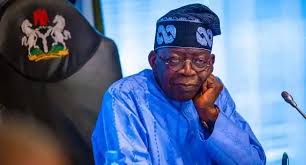
ABUJA — PRESIDENT Bola Tinubu, yesterday, told opposition elements and party faithful that “elections are not conducted on social media platforms. Nigerians conduct elections.”

The President also urged Secretary to the Government of the Federation, SGF, Senator George Akume, to reconcile with Governor Hyacinth Alia for the unity of Benue State.

This is as Tinubu has rallied governors, federal lawmakers and party leaders of the All Progressives Congress, APC, to consolidate economic reforms and intensify grassroots engagement, declaring that the administration is moving from economic stabilisation to full-scale growth acceleration in 2026.

Speaking through Vice President Kashim Shettima at the Progressive Governors’ Forum and Renewed Hope Ambassadors Strategic Summit at the Presidential Villa’s Old Banquet Hall, Tinubu stressed APC unity as the party shifts from economic stabilisation to growth.

He hailed Akume’s long service—from Benue’s director of protocol and permanent secretary, to two-term governor (1999-2007), senator, minister, and now SGF—before issuing a direct plea: “Let’s build the area together.”

The call drew applause amid tensions over Benue’s APC control.

The rift pits Akume’s established machinery against Alia’s reformist base, which propelled his 2023 win amid insecurity and hardship.

Flashpoints include ward-level executives, nominations, parallel meetings, suspensions, appointments, and House of Assembly loyalties—threatening federal-state ties on security and development in the agrarian North-Central state.

Framing the administration’s first phase as one of “difficult but necessary corrections,” the President said structural reforms introduced since 2023 had begun to restore fiscal credibility and stabilise key macroeconomic indicators.

According to him, inflationary pressures are easing, fuel supply disruptions have been addressed and the naira is showing stronger fundamentals, aided by interventions of the Central Bank of Nigeria.

He said: “Our economy is picking up. Major investment decisions across Africa increasingly favour Nigeria. That reflects renewed confidence in our direction.”

Tinubu disclosed that the proposed N58.18 trillion 2026 budget would mark a pivot “from stabilisation to acceleration,” with record capital expenditure, the largest security allocation in the country’s history and tax reforms aimed at protecting vulnerable citizens while broadening the revenue base.

He stressed that policy success would ultimately depend on public understanding, charging members of the Renewed Hope Ambassadors platform to take reform messages beyond conference halls into wards, markets and campuses.

“This mission is about presence, truth and trust. Elections are conducted by Nigerians, not on social media platforms,” he said, urging party faithful to counter misinformation with verifiable facts.

In his remarks, the SGF urged governors to institutionalise Central Results Delivery and Coordination Units at the state level.

“Governance must move from policy pronouncements to measurable outcomes,” Akume said, emphasising stronger federal-state alignment as critical to sustaining reform momentum.”

On the legislative front, Senate President, Godswill Akpabio, represented by Speaker of the House of Representatives, Tajudeen Abbas, reaffirmed the National Assembly’s backing for the administration’s reform architecture.

He described the fiscal consolidation measures, subsidy restructuring and tax reforms as foundational steps toward long-term prosperity, warning that policy gaps between government intent and public perception must be managed through transparency and sustained engagement.

Abbas proposed a quarterly reform interface between federal and APC-controlled state legislatures to harmonise laws and oversight priorities, alongside a “Renewed Hope Public Dashboard” to publish simplified data on revenues, capital projects and social interventions.

He also advocated structured youth and women participation in monitoring reform implementation, arguing that political ownership deepens when participation is genuine.

Vanguard

INEC Reviews FCT Elections, Warns Officials Over Lapses, Swears-in Enugu REC

0


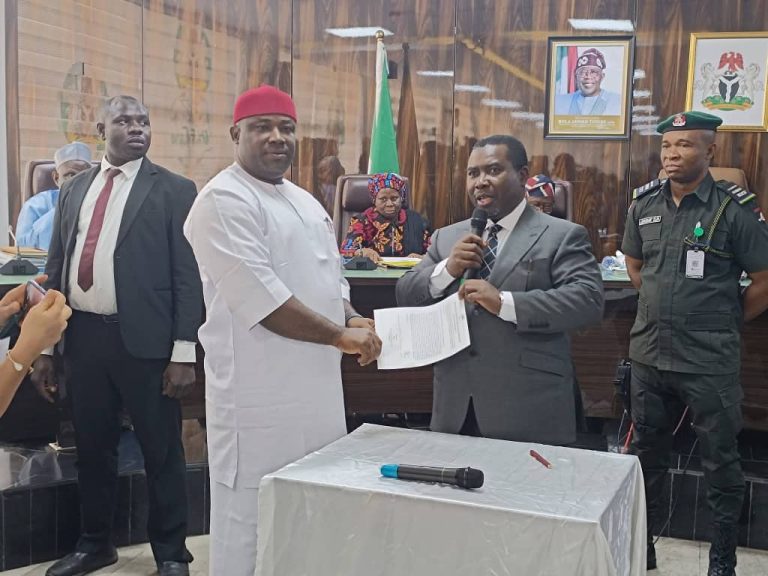
The Chairman of the Independent National Electoral Commission (INEC), Prof. Joash Amupitan, SAN, on Wednesday presided over a high-level meeting with Resident Electoral Commissioners (RECs) from the 36 states and the FCT, received a delegation from the Forum of State Independent Electoral Commissions of Nigeria (FOSIECON), and swore in the re-appointed REC for Enugu State, Dr. Chukwu Chukwuemeka Joseph.

The meeting, held at the Commission’s headquarters in Abuja, reviewed the just-concluded FCT Area Council and State constituency elections and outlined preparations for the forthcoming governorship polls in Ekiti State and Osun State, as well as the 2027 general election.

Earlier, the FOSIECON delegation led by its National Chairman, Mamman Nda Eri, congratulated the INEC Chairman on his appointment and praised the Commission’s record in electoral reforms and technological innovation.

The group proposed structured collaboration including joint capacity building, technology sharing—especially the Bimodal Voter Accreditation System (BVAS)—policy dialogue and joint voter education.

Responding, Amupitan collaboration among electoral bodies would strengthen democracy and electoral integrity nationwide.

Addressing the RECs, the INEC Chairman conducted a frank appraisal of the February 21, 2026 elections in the FCT, Kano and Rivers States. He noted modest improvement in turnout in the FCT Area Council election, where about 239,000 voters participated—roughly 15 percent—compared to 9.4 percent in 2022, though he described voter apathy as a persistent concern. He added that more than 93 percent of polling unit results were uploaded to the INEC Result Viewing Portal (IReV) by Sunday afternoon, later rising to about 97 percent.
Amupitan also dismissed claims of voter migration, explaining that the exercise stemmed from the 2022 polling unit expansion, which redistributed 6.7 million voters nationwide from 12,000 congested units to 17,000 new ones. In the FCT alone, 580,000 voters were moved to 1,156 new polling units. He directed RECs to intensify voter education and encourage citizens to verify their polling units online.

The chairman expressed displeasure over late opening of polling units, revealing that only 45 percent opened by the mandated 8:30 a.m. in the FCT, though all were operational by 10:00 a.m.

He described the delay as unacceptable and warned of sanctions, noting that officials in Kuje Area Council and Kabusa Ward had been queried, while a transporter in Kwali Area Council would be blacklisted.

He highlighted new safeguards in the results management system requiring presiding officers to manually enter scores into BVAS for automatic validation to prevent over-voting and errors. Addressing a viral allegation of result padding at a polling unit in Kwali, he explained investigations showed the discrepancy resulted from a corrected counting error carried out openly before accurate entry into the official collation system.

Amupitan reminded RECs that they bear ultimate responsibility for electoral conduct in their states and warned against absenteeism and dereliction of duty.

He disclosed that a revised timetable for the 2027 general election would soon be released under the Electoral Act 2026, while the second phase of the Continuous Voter Registration will run until April 17, 2026, with the exercise ending August 30, 2026.

In a brief ceremony, the INEC chairman swore in Dr. Joseph was REC for Enugu State, representing Abia State, urging him to uphold integrity and professionalism.

He concluded with a stern charge to officials: excellence in electoral administration, he said, “is mandatory.”

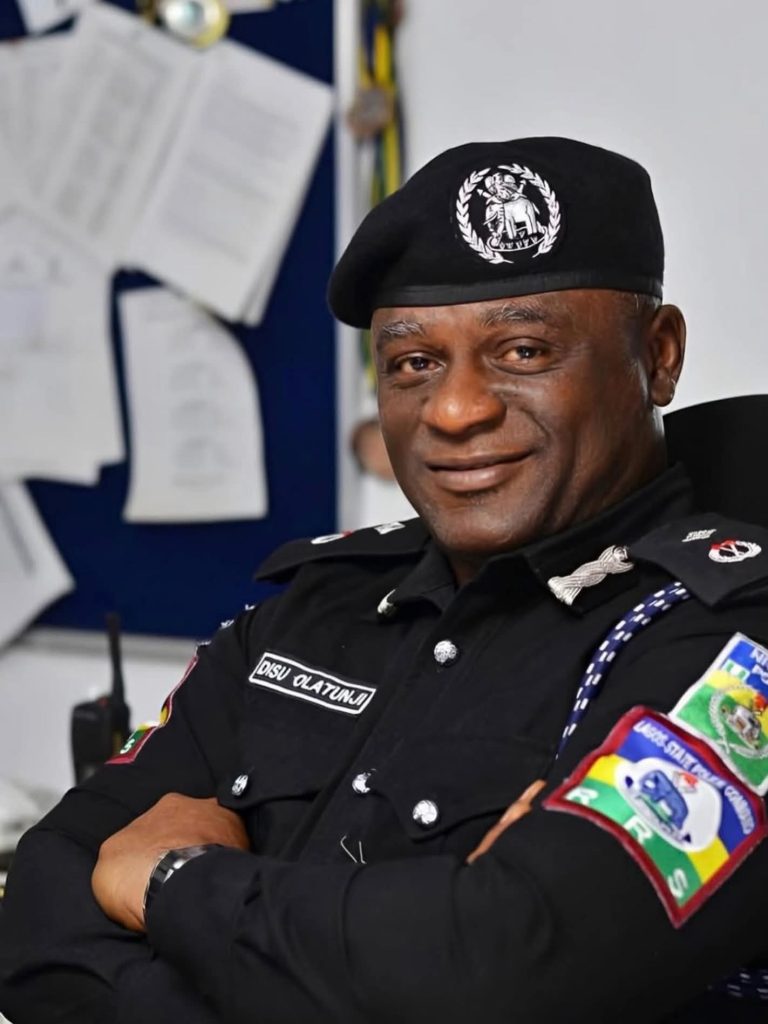
Sanwo-Olu Congratulates Disu on Appointment as Acting IGP

0


Governor Babajide Sanwo-Olu has congratulated Olatunji Disu on his appointment as Acting Inspector-General of Police by President Bola Tinubu.

In a statement, the governor described the appointment as well deserved, noting that Disu had spent more than three decades in dedicated service to the Nigeria Police Force. He said the new police chief earned the position through professionalism, discipline and proven performance over the years.

Sanwo-Olu recalled Disu’s tenure in Lagos, particularly his time as Commander of the Rapid Response Squad, where he said the officer demonstrated strong leadership and a deep understanding of the city and its people. According to him, Disu carried out his responsibilities with focus and courage while serving in the State.

The governor expressed confidence that the acting IGP would bring the same clarity of purpose to his new role, stressing that Nigeria needs an accountable and effective police force.

He added that Disu possesses the experience and character required to lead ongoing efforts at improving policing and public trust nationwide.
Sanwo-Olu concluded by congratulating the police chief once again, saying Lagos is proud of his achievement.

Zimbabwe imposes immediate export ban on raw minerals, lithium

0


Zimbabwe on Wednesday announced an immediate moratorium on the export of raw minerals and lithium concentrate, a move aimed at forcing domestic processing and increasing national revenue.

Mining Minister Polite Kambamura said in a statement that the ban applies even to materials currently in transit.

“Government expects cooperation of the mining industry on this measure which has been taken in the national interest,’’ he said.

The move follows sustained criticism of the government’s handling of its mineral wealth.

Critics accuse officials of allowing Chinese investors to ship raw lithium directly to China for processing, rather the reaping of the economic benefit of processing it domestically.

Lithium has become a critical global commodity due to its essential role in the production of electric vehicles and mobile phones.

Zimbabwe holds significant reserves of gold, lithium, platinum and diamonds.

In 2023, the country also announced the discovery of natural gas near its northern border with Mozambique and Zambia.

Lesotho confirms FMD outbreak in northern district

0


Lesotho’s Ministry of Agriculture, Food Security and Nutrition has confirmed an outbreak of foot-and-mouth disease (FMD) in the northern part of the country.

According to a statement issued, the outbreak was reported on Feb. 18 after veterinary authorities identified cattle showing clinical signs consistent with FMD at a cattle post in Mahlase, Botha-Bothe District, which borders South Africa’s Free State Province.

“Laboratory tests conducted on 17 cattle confirmed that six tested positive for FMD antibodies,” the statement said on Wednesday, adding that further samples have been sent to a reference laboratory of the World Organisation for Animal Health in Botswana for virus typing and vaccine matching.

The affected cattle have been placed under strict quarantine, while neighboring cattle posts are under precautionary quarantine and active surveillance, it said.

The ministry urged livestock farmers, traders and the public to remain vigilant and promptly report any suspected cases of excessive salivation, lameness, mouth lesions or hoof lesions to the nearest veterinary office.

FMD is a highly contagious viral disease that affects cattle, sheep, goats, pigs, and other cloven-hoofed animals.

Lesotho is a landlocked country in Southern Africa that is surrounded by South Africa.

Earlier this month, the South African government declared the FMD outbreak nationwide a “national disaster.”

According to a recent report released by South Africa’s Bureau for Food and Agricultural Policy, a total of 24,400 FMD cases were reported in domestic livestock in the country in 2025.

It remains unclear whether the outbreak reported in Lesotho was linked to cross-border transmission from South Africa.

WHO probes hydrocarbon exposure in Ogoniland

0


THE World Health Organisation has begun a comprehensive health study of Ogoniland, Rivers State, to investigate the prevalence of ailments associated with long-term exposure to hydrocarbons.

This initiative aligns with the recommendations of the United Nations Environment Programme report, which called for a follow-up health study to complement the environmental remediation of the oil-devastated area.

The health study is being conducted by the International Agency for Research on Cancer, an agency under WHO.

The Project Coordinator of the Hydrocarbon Pollution Remediation Project, Prof. Nenibarini Zabbey, had in July 2025 stated that the agency commissioned WHO to carry out the study as part of the ongoing implementation of the UNEP report.

Speaking during a visit to the traditional rulers of Gokana and Tai local government areas on Tuesday, Lead Scientist of IARC, Ann Olysson, said the study is part of the UNEP recommendations for Ogoni.

She stated, “We are about, with your permission, to begin a study that was originally recommended by the UNEP study. We are in collaboration with HYPREP to conduct the tests, and the choice of our agency to conduct the study is in international recognition for this type of research.”

Project Coordinator of UNEP and the lead researcher of the 2009–2011 study, Mr Michael Cowing, which led to the report, said one of the key recommendations was this health assessment of the Ogoni population.

Cowing further said the study, which is expected to last nearly three years, began in mid-2025 with desk work, mapping, and preliminary research. He noted that the study will cover 4,000 participants across both the most impacted and non-impacted communities to ascertain results.

“And now, with your approval, we are going to engage in the fieldwork. Simply put, across Ogoniland, we’re looking to have approximately 4,000 participants representing the most impacted communities.

“We know where the epicentres of contamination are. We’ve plotted the communities on those maps, and they will be the impacted communities where we will focus the study. But we are also conducting studies in unimpacted communities for comparison.

“We will be looking at people involved in specific activities, whether farming, fishing, sand mining, or artisanal refining, to assess different levels of exposure to hydrocarbons. So it’s going to be a very comprehensive study,” he said.

Professor Iyenemi Kakulu, of the Department of Land Management at Rivers State University, said participants will be scientifically selected for the study.

Kakulu stated, “We are here on a friendly note to ask for your support, to grant us access to your kingdom, so that we can interact with your people and intentionally select participants for the study.

“Basically, we will speak to people in their homes in some scientifically selected communities. We will seek your permission to speak with community chiefs and gain access to conduct our work.

“We are also interested in occupational hazards. People exposed by the nature of their work in and around Ogoniland will be subjects of interest. We will talk to them and seek their voluntary consent to participate in the study, which involves collecting some personal data and human samples, such as blood and urine.”

Earlier, HYPREP Project Coordinator Prof. Nenibarini Zabbey, represented by the Director of Technical Services, Prof. Damian Paul-Aguiyi, told the traditional councils that the delegation sought support for adequate security, sensitisation, and collaboration.

He emphasised that the study is not a contracted job and called on the traditional rulers to provide an enabling environment for the team to carry out their work.

Responding, the King of Tai Kingdom, HRM Samuel Nnee, assured the delegation of the support of his people. He noted that before the advent of oil exploration, the Ogonis—and indeed Africans—lived longer.

The monarch said, “Whatever support you need, I can assure you that you will have it because we are talking about the health of our people.”

Nnee added that initially, the people doubted that HYPREP would carry out the remediation. “But I can tell you the truth—we have seen results. HYPREP went beyond cleaning the soil and implemented livelihood programs that have reawakened the potential of our children.

“Today, our children are thriving in every sphere of life. If you see the programs packaged by HYPREP, you will marvel that Ogoni sons and daughters are now licensed to do many things we never imagined years ago.”
He continued, “So I want to welcome you. I pray God continues to bless this initiative. I’ve been part of this process and will continue to be, because it is my responsibility to speak for my people.”

On his part, the King and Natural Ruler of Gokana Kingdom, HRM Festus Paago Bagia (Gberesaakoo XIII), represented by the Traditional Ruler of Goi community, Mene Stephen Kobani, assured the visiting team of the support of his people, describing the study as a welcome development.

Vanguard