Home Blog Page 614

Nigerian Army Intercepts 296 Wraps of Suspected Cannabis in Ogun

0

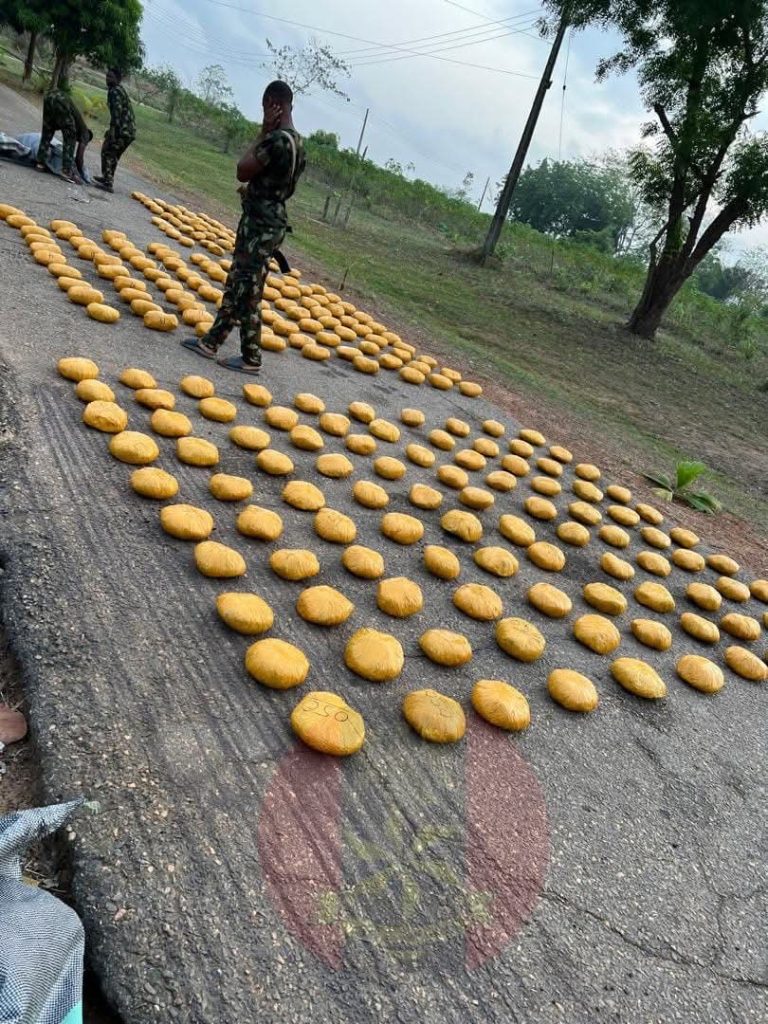
Troops of the 35 Artillery Brigade have intercepted 296 large wraps of substances suspected to be Cannabis Sativa along the Abeokuta–Igboora Road in Ogun State.

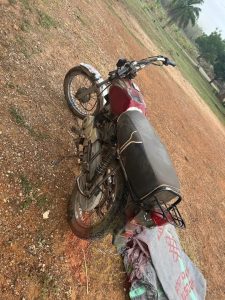
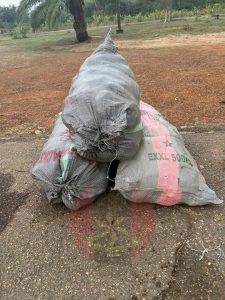
Acting on credible intelligence regarding the planned movement of illicit drugs, the troops moved to the area at about 4:30 a.m. on March 1, 2026. During the operation, they intercepted an unregistered motorcycle conveying three large sacks containing the suspected Indian hemp.
However, the suspect reportedly abandoned the motorcycle and fled into a nearby bush under the cover of darkness.

The recovered items have since been handed over to the National Drug Law Enforcement Agency (NDLEA), Ogun State Command, for further investigation and necessary action.

The Brigade reiterated its resolve to rid the state of drug trafficking and related criminal activities, warning perpetrators to desist from illegal dealings or face the full weight of the law.

The Army also reassured residents of its continued commitment to safeguarding lives and property, maintaining a strong security presence across the state to prevent criminal elements from operating with impunity.

Telcos must give 14-day notice before SIM shutdown – NCC

0


Telecommunications operators in Nigeria will now be required to give subscribers a minimum of 14 days’ notice before deactivating their SIM cards over inactivity or post-paid churn, following a fresh proposal by the Nigerian Communications Commission (NCC).

The proposal is contained in a consultation paper, signed by the Executive Vice Chairman and Chief Executive Officer of the NCC, Dr Aminu Maida, and which was titled Stakeholders Consultation Process for the Telecoms Identity Risks Management Platform, dated February 26, 2026, and published on the Commission’s website.


Under the proposed amendments to the Quality-of-Service (QoS) Business Rules, the Commission said operators must notify affected subscribers ahead of any planned churn.

“Prior to churning of a post-paid line, the Operator shall send a notification to the affected subscriber through an alternative line or an email on the pending churning of his line,” the document stated.


It added that “this notification shall be sent at least 14 days before the final date for the churn of the number.”


A similar provision was proposed for prepaid subscribers. According to the Commission, operators must equally notify prepaid customers via an alternative line or email at least 14 days before the final disconnection.

Currently, under Section 2.3.1 of the QoS Business Rules, a subscriber’s line may be deactivated if it has not been used for six months for a revenue-generating event. If the inactivity persists for another six months, the subscriber risks losing the number entirely, except in cases of proven network-related faults.

The new proposal is part of a broader regulatory review tied to the rollout of the Telecoms Identity Risk Management System (TIRMS), a cross-sector platform designed to curb fraud linked to recycled, swapped and barred mobile numbers.


The NCC explained in the background section of the paper that TIRMS is a secure, regulatory-backed platform that helps prevent fraud stemming from churned, swapped, barred Mobile Station International Subscriber Directory Numbers in Nigeria.

The platform, it said, “will provide a uniform approach for all sectors in relation to the integrity and utilisation of registered MSISDNs on the Nigerian Communications network.”

In addition to the 14-day notice requirement, the Commission also proposed that operators must submit details of all churned numbers to TIRMS within seven days of completing the churn process, strengthening oversight and accountability in the system.


The consultation process, which the Commission said is in line with Section 58 of the Nigerian Communications Act 2003, will remain open for 21 days from the date of publication. Stakeholders are expected to submit their comments on or before March 20, 2026.

Sun

Crude nears $80/barrel as Middle East tensions shake markets

0


•Experts insist on fiscal discipline, warn against premature celebration
•Say households, businesses may face price pressures in 1coming months
•Dollar trades at N1,375/$1

Escalating tensions involving Israel, the United States and Iran has triggered a sharp rally in global oil prices over the weekend, pushing Brent crude close to the $80 per barrel mark before a mild correction in early Monday trading.

Brent climbed from $73 per barrel on Friday to $79.49 on Sunday, before easing slightly to $78.19 in the early hours of Monday, March 2, 2026.

Brent crude, the global benchmark, climbed to $79.21 per barrel by 2pm on Monday amid escalating hostilities between Iran and Israel, particularly after Saudi Aramco temporarily shut its Ras Tanura refinery following a limited fire caused by debris from intercepted drones.

Although Saudi officials reported no casualties and said operations were stabilizing, they alleged that the United States had redirected air defence systems to protect Israel, effectively leaving Gulf states hosting American military bases exposed to potential Iranian retaliation.

This incident has sparked fears over the vulnerability of energy infrastructure in the world’s most critical oil-exporting corridor and reflects heightened risk premiums in energy markets following attacks on critical infrastructure and fears of broader regional spillover.

For Nigeria, one of Africa’s largest crude producer, higher oil prices would typically signal fiscal relief. But experts noted that structural constraints may limit the benefits at a time when currency volatility is amplifying macroeconomic stress.

On the streets of Lagos and Abuja, the naira weakened to N1,375/$1 at the parallel market, despite recent monetary tightening measures. The currency’s fragility adds another layer of complexity to the oil price surge, as gains on the export side risk being offset by inflationary pressures and external financing gaps. Although, the Central Bank in its recent monetary policy meeting had stated that global economic activities would strengthen, it warned that there was a likelihood of significant headwinds such as escalation of trade disputes and geo-economic fragmentations.

In a new assessment,Africa’s geopolitical and economic advisory firm SBM Intelligence urged FG to move beyond its traditional “wait-and-see” posture and adopt a proactive strategy to shield the Nigerian economy from cascading global shocks.

The firm’s report tagged; Epic fury, Enduring consequences: The Iran strikes, global shockwaves and Africa’s strategic reckoning, stated that the immediate oil price rally masks deeper structural vulnerabilities while adding that Nigeria’s crude output remains around 1.5 million barrels per day, significantly below its estimated technical capacity of nearly 2 million barrels.

According to the firm, years of under-investment, pipeline vandalism and crude theft have constrained the country’s ability to ramp up production in response to price signals.

Compounding the issue, a substantial portion of Nigeria’s crude is committed under long-term supply contracts with international trading firms. These agreements, often priced below prevailing spot levels, mean the full upside of Brent’s rally may not translate into higher short-term revenues for the federation account. “The windfall many anticipate will largely accrue to trading partners rather than to the federation account,” the report states, warning that expectations of sudden fiscal relief may be misplaced.

Despite its status as a crude exporter, Nigeria remains heavily dependent on imported refined petroleum products. Since the removal of fuel subsidies, domestic pump prices have become directly exposed to international crude fluctuations. Each upward movement in brent feeds into transport costs, food inflation and broader consumer prices.

The conflict’s implications extend beyond economics, SBM Intelligence argues while adding that Nigeria’s foreign policy posture, traditionally calibrated to balance relations between Israel, Arab Gulf states and Tehran, may come under renewed scrutiny.

Successive administrations have maintained diplomatic ties with Israel while affirming Palestinian self-determination and preserving working relations with Iran. That balancing act has shielded Nigeria from overt entanglement in Middle Eastern rivalries.

Yet, the advisory firm suggests that the country’s reactive diplomacy leaves it vulnerable to secondary shocks and recommended that the FG prioritize modernization of consular services, expand real-time economic intelligence capacity and deepen regional African coordination to anticipate spillover effects.

“The appropriate response lies in strengthening the tools we do possess rather than attempting to project power we lack. Consular services for Nigerians abroad must be modernised and expanded. Economic intelligence on global energy markets needs to inform fiscal planning. Engaging with both Middle Eastern and African partners to anticipate and manage conflict spillovers would serve our long-term stability. The day after this conflict may prove more dangerous than the day before.

The alternative is to remain passive recipients of shocks generated elsewhere, perpetually hoping that the next crisis will spare us. That hope has never been a strategy, and it will not become one now”, the firm concluded.

On the other hand, Afrinvest, in its economic flash-note, said that the development could support FG’s oil revenue outlook, particularly if domestic production remains stable and operational disruptions are contained.

However, the research and investment firm said, “Businesses and Households may need to prepare for potential price pressures across multiple segments of the economy as higher energy and logistics costs transmit through broader consumer and production prices.”

Sun

US Congress to debate Trump’s war powers

0

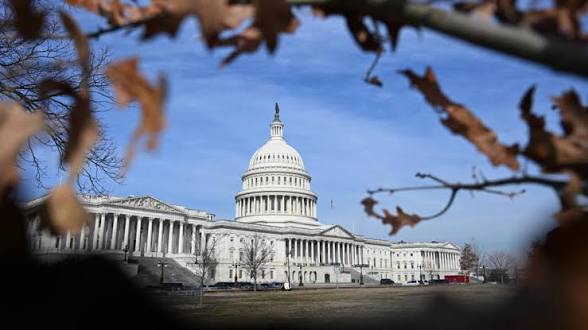
The US Congress is scheduled to vote this week on motions seeking to curb President Donald Trump as he wages war against Iran, but the Republican majority will probably shield him.

Trump has sought to expand executive power drastically since returning to the White House in 2025, overshadowing the legislature.

So some lawmakers now want to reassert the role of Congress, which under the US constitution is the only body that can declare war.

“Trump has launched an unnecessary, idiotic, and illegal war against Iran,” Senator Tim Kaine wrote on X shortly after the United States and Israel began it overnight Friday into Saturday.

In late January, as a huge US military buildup in the Middle East rumbled on, Kaine introduced a bill designed to force Trump to obtain authorization from Congress to engage in any military conflict with Iran.

On Saturday he urged Congress to return immediately from recess to take up his resolution, and a vote is expected this week.

US Secretary of State Marco Rubio and Pentagon chief Pete Hegseth visited the Capitol on Monday to discuss the new Middle East war with administration officials.

“There was no imminent threat to the United States of America by the Iranians. There was a threat to Israel,” Senator Mark Warner, the lead Democrat on the Senate Intelligence Committee, told reporters after the meeting.

“If we equate a threat to Israel as the equivalent of an imminent threat to the United States, then we are in uncharted territory,” he said.

– Is the war legal? –
This issue of whether there was an imminent threat from Iran is at the heart of the debate over the war that Trump has now begun with Israel.

Although only Congress can declare war, a law dating from 1973 allows the president to launch a limited military intervention in response to an emergency situation created by an attack on the United States.

At a news conference Monday, Hegseth used the word “war” to describe the conflict with Iran, not just a limited military intervention.

In a video broadcast in the middle of the night from Friday into Saturday to announce the start of major combat operations, Trump asserted that Iran posed an “imminent” threat to the United States.

Daniel Shapiro, an analyst with the Atlantic Council, a think tank in Washington, said Trump failed to explain “the urgency or the imminent threat that required a war now.”

It is typical for presidents and their senior advisors to make their case to the American people and define what they are trying to achieve, in addition to briefing Congress broadly, Shapiro added.

But Trump did not do any of this, he said.

– Sixty days –
The White House said Sunday that just before the attack started it gave eight top Congressional leaders formal notice of hostilities.

The 1973 War Powers Act states that Trump must now obtain permission from Congress if he wants to keep fighting beyond a 60-day limit.

Republican congressman Thomas Massie, one of few in Trump’s party who speaks out regularly to challenge him, condemned the Iran war on Saturday.

Massie said he would present a bill in the House of Representatives along with his Democratic colleague Ro Khanna to force a vote by Congress on the war with Iran, which could as soon as this week.

“The Constitution requires a vote, and your Representative needs to be on record as opposing or supporting this war,” Massie wrote on X.

Most Republicans, who are against tying Trump’s hands, are expected to vote against both of the bills.

And even if they pass, they would probably not survive a veto by Trump because overriding him requires a two-thirds majority in both chambers.

Vanguard

Governors back Tinubu’s oil revenue reform, urge direct remittance to Federation Account

0


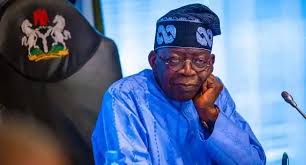
ABUJA — The 36 state governors, under the aegis of the Nigeria Governors’ Forum (NGF), have thrown their weight behind President Bola Tinubu’s reforms requiring oil and gas revenue entitlements to be remitted directly into the Federation Account.

In a statement on Monday by NGF’s Director of Media & Strategic Communications, Yunusa Tanko Abdullahi, the Forum described the move as crucial for strengthening fiscal transparency, predictability, and constitutional alignment across all tiers of government.

The governors specifically endorsed Executive Order 9, signed by President Tinubu on February 13, 2026, which realigns oil and gas revenue flows with constitutional provisions and clarifies regulatory responsibilities within the petroleum sector.

The statement noted that government entitlements under production-sharing and related contracts — including royalty oil, tax oil, profit oil, and profit gas — are now required to flow directly into the Federation Account. This measure, the Forum said, enhances clarity in revenue allocation and reinforces the predictability of funds for federal, state, and local governments.

Commenting on the development, NGF Chairman and Kwara State Governor, AbdulRahman AbdulRazaq, said: “The Federation Account is the backbone of Nigeria’s intergovernmental fiscal system. Structural clarity in the remittance of nationally owned resources strengthens fiscal stability across all tiers of government. Predictability improves planning. Planning improves delivery.”

The Forum emphasized that transparent and predictable revenue flows are essential for states to deliver critical services such as education, healthcare, infrastructure, security, and economic opportunities for Nigeria’s rapidly growing population, now exceeding 220 million.

The NGF reaffirmed its commitment to collaborating with the Federal Government and other stakeholders to ensure that fiscal reforms translate into sustainable development outcomes for Nigerians.

The governors’ endorsement signals strong subnational support for the administration’s efforts to modernize Nigeria’s petroleum revenue management and strengthen fiscal federalism.

Vanguard

After Cote d’Ivoire, Algeria signals interest in hosting AFRIMA

0

Algeria has formally expressed interest in hosting a future edition of the All Africa Music Awards (AFRIMA), marking a significant potential expansion of the African Union Commission-backed Pan-African music platform into North Africa.

The development followed a meeting in Abidjan between Algeria’s Ambassador to Côte d’Ivoire, His Excellency Mohamed Abdelaziz Bouguetaia and the 9th AFRIMA Best African DJ winner, DJ Moh Green. The award-winning DJ, accompanied by the Associate Producer, AFRIMA, Victoria Nkong, presented his AFRIMA trophy to the ambassador during the visit.

Algeria’s expression of interest came shortly after Côte d’Ivoire had earlier indicated its own readiness to host a future edition of the awards.

Commending the artiste’s continental achievement, Ambassador Bouguetaia said:

“DJ Moh Green has made Algeria proud. He has carried our flag high and demonstrated that Algerian music has a strong voice in Africa and beyond. AFRIMA’s reach across the continent and its influence on youth and cultural policy are impressive. Algeria is open to hosting AFRIMA in the future and ready to explore that possibility.”

In her response, Victoria Nkong described Algeria’s expression of interest as a reflection of AFRIMA’s growing continental relevance.

“AFRIMA was created to unite Africa through music and to project our creative industry as a global economic force. We have witnessed the transformative impact of hosting in countries like Nigeria, Ghana and Senegal. The growing interest from countries across the continent affirms that AFRIMA is not just an awards ceremony, but a Pan-African institution.”

DJ Moh Green described the meeting as emotional and historic for him as an Algerian artiste.

“For me, this is bigger than an award. Presenting my AFRIMA trophy to my country’s ambassador is a proud moment,” he said. “It shows that African music connects governments, creatives and young people. Seeing Algeria show interest in hosting AFRIMA proves that we believe in African music and in our place in the continental conversation.”

With Algeria exploring the possibility of hosting, the move signals continued momentum for Africa’s premier music awards platform as it expands its footprint and strengthens cultural integration across the continent.

In partnership with the African Union since 2014, AFRIMA, the biggest and longest-running awards on the continent, is a cultural property built to unite Africa across geographical, linguistic and cultural lines while showcasing the continent’s creative ingenuity to the world from a position of strength and economic power.

Beyond celebrating musical excellence, AFRIMA serves as a driver of youth empowerment, creative industry growth, tourism and cultural diplomacy.

Previous host countries, including Nigeria, Ghana and Senegal, have demonstrated the awards’ capacity to generate measurable economic and cultural impact, and the platform’s value proposition as a tourism, media and economic catalyst is increasingly evident.

Each AFRIMA Awards Week attracts over 5,000 visitors to the host city, including nominees and past winners, international delegates, government officials, media professionals, global production crews, self-sponsored tourists, and fans. The week-long programme, featuring the Africa Music Business Summit (AMBS), the AFRIMA Music Village, industry networking sessions and parties and the flagship Main Awards ceremony, delivers significant visibility and economic activity to host destinations. The annual awards ceremony is broadcast live to audiences in over 84 countries across the world.

Lagos Assembly Orders Allocation of 50 Hectares to Segun Eyingbala Descendants, Confirms Parking Authority GM

0


BY TAIWO OGUNMOLA -OMILANI

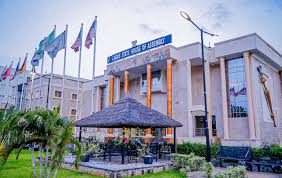
Members of the Lagos State House of Assembly on Monday unanimously adopted the recommendations of its Committee on Rules and Business on a petition seeking regularisation of land carved out from the Lagos State University of Science and Technology property in Ikorodu.

The petition, titled “Notification of Decision to Carve Out Land for Regularizations from Lagos State University of Science and Technology Property Situated in Ikorodu,” was considered following the presentation of the committee’s report by the Majority Leader and Chairman of the Committee on Rules and Business, Hon. Noheem Adams.

A major recommendation approved by the House mandates the State Government to allocate 50 hectares of land in a suitable and accessible location within Ikorodu to the descendants of Segun Eyingbala as compensation.

The decision followed the establishment of their status as the original customary owners of the land within the premises of the institution, formerly known as Lagos State Polytechnic, which had been acquired by the government in overriding public interest.

Lawmakers commended the committee for its diligence and thorough work before adopting the recommendations as the official resolution of the House.

In a separate development, Speaker Mudashiru Ajayi Obasa announced the confirmation of Mrs. Adebisi Adelabu as the General Manager of the Lagos State Parking Authority.

Citing Section 92 of the Lagos State Transport Sector Reform Law, the Speaker declared that the House had formally confirmed her appointment. Mrs. Adelabu’s nomination, which was stepped down in January 2026 for further legislative scrutiny, received overwhelming support after a rigorous screening exercise and was approved through a voice vote.

Members expressed confidence in her professional competence and strategic vision to reposition the Authority for improved efficiency and service delivery across the State.

The Speaker subsequently directed the Clerk of the House, Barr. Olalekan Onafeko, to communicate the resolution to the appropriate authorities for necessary action.

Popular Photographer, Biker Kola Onifoto is dead

0


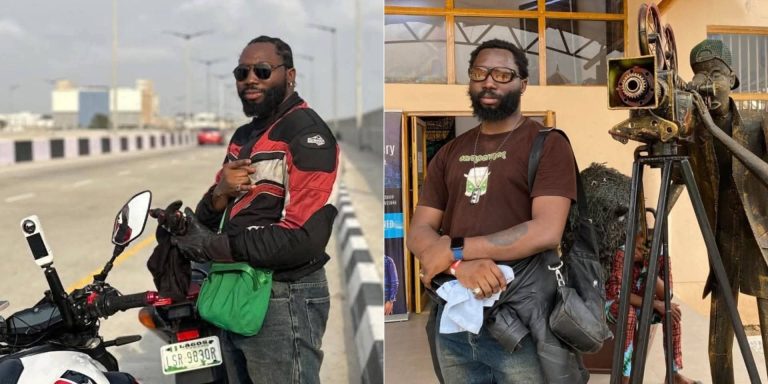
Popular Nigerian photographer and biker, Orowole Kolapoz, widely known as Kola Onifoto, has died following a lone motorcycle accident in Lagos.

The 32-year-old travel enthusiast and brand influencer was reportedly involved in the crash on Sunday during what he described as his first solo motorcycle trip outside Lagos.

Just hours before the accident, Kola had shared on his official Facebook page that he was heading to Akure on his bike. “Big shout out to those who have ridden their bikes to every state in this country, to Africa, and across the world, especially women. My eyes see wheeen,” he wrote on Sunday, March 1, 2026.

Friends later disclosed online that he had been involved in the accident and was initially rushed to the emergency unit of the Federal Road Safety Corps at 7UP, Ojota. He was subsequently transferred to the Lagos University Teaching Hospital, Idi-Araba, where well-wishers continued to pray for his recovery on social media.

credit: punch

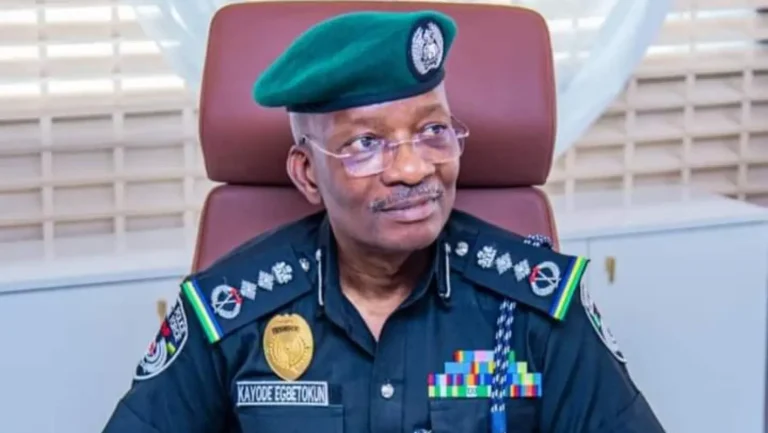
Shocking revelations behind Egbetokun’s removal as IGP

0

•Some state police commands denied allocations for 6 months

•Special promotions abused


Shocking revelations have emerged regarding President Bola Tinubu’s directive for former Inspector-General of Police, Kayode Egbetokun, to proceed on retirement.

It was discovered that the former IGP failed to remit monthly allocations meant for administrative, operational, and logistical running of some state police commands for months.

Ads by
Vanguard gathered that, amid rising kidnappings, attacks on communities, and killings, a concerned President Tinubu sought to understand the root of the problem. According to sources, the President had provided funds to strengthen police capacity, ensure rapid response to mass kidnappings and attacks, and safeguard officers’ welfare.

“On several occasions, former IGP Egbetokun had reassured the President that perpetrators of dastardly criminal acts would be arrested provided certain operational requirements were in place. The President would make funds available for those purposes, yet a few days later, more deadly attacks or incidents of kidnapping by terrorists would occur to the embarrassment of the President. The incidents in Kaduna, Niger, Kwara, Zamfara, Kebbi, and Adamawa were not taken lightly by the President,” a source said.

Not willing to overlook the continued attacks, sources said discreet moves were made to ascertain from the state Commissioners of Police why they appeared impotent in the face of criminal activity. It was discovered that many had not been given monthly allocations.

One source disclosed that during Egbetokun’s tenure, some states did not receive allocations for seven months, while another said six months passed without remittance. “There is no way non-remittance of monthly allocations will not affect running of the police commands, even though the money would not be enough,” the source added.

The discovery of this anomaly, particularly as funds meant for allocations were available to the IGP, reportedly irked President Tinubu, prompting his directive for Egbetokun to resign.

Another incident that displeased the President, according to a source, was the unwarranted removal of then AIG Tunji Disu from his post as Assistant Inspector-General of Police in charge of the Special Protection Force/Unit (SPFU). Disu, who was directly responsible for the unit when the President ordered withdrawal of police officers from VIP protection, had produced a memo to ensure the directive was carried out. However, a DIG above him obstructed the process.

When the matter reached IGP Egbetokun, he directed the removal of AIG Disu from SPFU and replaced him with one of his coursemates. Somehow, the President learned of the development and instructed that Disu be returned to SPFU, while the coursemate who replaced him was given administrative leave with three months left in service based on age.

However, in what was seen as a show of authority, Egbetokun redeployed Disu to the FCID Annex in Lagos, pushing the senior officer out of the President’s direct oversight — an act interpreted as dissent.

Another source revealed that abuse of the special promotions privilege under Egbetokun led many officers to consider leaving the Force. “Within a few years, some officers got promoted three times without requisite qualifications, exams, or even experience, while those who had attended several courses and were highly qualified were neglected, with age on rank catching up on them for retirement.

“A vivid example is the deployment of two Inspectors of Police to the office of a serving governor to serve as Aide-de-Camp (ADC) and Chief Security Officer (CSO). The rule is that officers of the ranks of Deputy Superintendent of Police and Superintendent of Police should occupy those positions. But these Inspectors were deployed, and under three years, they received rapid special promotions without attending the required exams or acquiring the necessary work experience. Today, they hold the ranks of DSP and SP, while some of their peers remain Sergeants and Inspectors.

“This abuse of special promotions has dampened morale in the Force, and it will take a superman to restore normalcy. Our prayer is for God to give IGP Tunji Disu the grace and right frame of mind, despite pressures from outside — political, traditional, and within the police establishment — to do the right thing.”

Meanwhile, sources said that some of the 39 officers senior to Acting IGP Disu, including some DIGs and AIGs, are lobbying the Presidency, National Assembly, and Police Service Commission to remain and work with him. While some have already cleared their offices, others continue to report for duty, uncertain of developments as the IGP has yet to issue formal directives.

“As for DIGs, who were part of the former management team and took far-reaching decisions affecting the Force, one wonders how they will feel sitting under Disu and taking orders,” a source added.

Recall that IGP Olatunji Disu was appointed Acting IGP last Tuesday following Egbetokun’s resignation, which the Presidency officially attributed to family reasons. However, sources revealed that President Tinubu summoned Egbetokun to the Villa and instructed him to step down.

Egbetokun was appointed the 22nd IGP on June 19, 2023, shortly after President Tinubu’s inauguration, succeeding Alkali Baba, whose tenure had expired in September 2023 following an extension by former President Buhari.

Acting IGP Disu, 59, a Lagos Island native, joined the police on May 18, 1992. He holds a bachelor’s degree in English Education from Lagos State University and master’s degrees in Public Administration and in Criminology, Security, and Legal Psychology.

The Police Council meeting, scheduled for Monday, March 2, 2026, is expected to confirm Disu as the 23rd Indigenous Inspector-General of Police in line with the Police Act 2020, after which the President will submit his name for ratification.

Vanguard

M-East war: No distress calls yet from Nigerians in Iran — FG

0

––Shi’ites protest attacks on Iran in Lagos

—Conflict spreads to Lebanon as Iran strikes S\Arabia, Qatar energy sites

—Kuwait erroneously downs US jets

—War fears deepen as France, allies back Gulf states

LAGOS — The Nigerians in Diaspora Commission, NiDCOM, said, yesterday, it is yet to receive any distress call from Nigerians residing in Iran, following ongoing hostilities between Iran and the United States and its ally, Israel.

This came on a day the Federal Ministry of Foreign Affairs said it is still monitoring the situation in the Middle East.

This is even as dozens of protesters marching around the Maryland area of Lagos, yesterday, chanted anti-US and anti-Israel slogans and called for global condemnation of foreign intervention in sovereign nations. The presence of the demonstrators heightened tensions as passers-by avoided the area.

Recall that Shi’ites had on Sunday protested the attack and killing of Iran’s Supreme leader, Ayatollah Ali Khamenei, in Kano, Sokoto, Gombe, Niger, Kaduna, Bauchi and Yobe states.

Meanwhile, the war spread across the Middle East and beyond, yesterday, with Lebanon-based Hezbollah entering the fray, targeting a British air base in Cyprus, as price of Nigeria’s Bonny Light surged to $80 per barrel, yesterday, up from $70 per barrel on Sunday, the highest since July 2025.

Director of Media and Public Relations of NiDCOM, Abdur-Rahman Balogun, who disclosed news of no distress call in a telephone interview with Vanguard, said though there might be Nigerians in Iran, none had officially reached out to the commission for assistance.

“I’m not saying there are no Nigerians there, I’m only saying nobody has sent any distress call,” he clarified.

He explained that flight cancellations to the region are due to ongoing hostilities, stressing that no airline will operate in an active war zone.

“You cannot fly where bombs are going up and down. No airline will fly,” he said, adding that the situation affects all nationals, not just Nigerians.

“There may be ceasefire for two or three days to allow people who are stranded at the airport to be evacuated. That has not been done,” he noted.

Asked to provide an estimate of Nigerians currently affected, Balogun said NiDCOM doesn’t have such data and advised that inquiries be directed to the Ministry of Foreign Affairs.

“We don’t have embassies there. The only person controlling embassies is the Minister of Foreign Affairs. They will be able to tell you,” he said.

On whether NiDCOM is collaborating with airlines or foreign authorities to ensure Nigerians are not left stranded, the spokesperson maintained that such collaboration is not feasible under the current circumstances.

“There is suspension of (flights) by all airlines. We cannot collaborate with anybody,” he said, noting that Nigeria currently has no national carrier operating international routes.

“Which Nigerian airline? We don’t have one now,” he added.

Balogun explained that Nigerians travelling to Iran typically do so as private individuals, often connecting through countries such as United Arab Emirates or Greece.

Speaking on the possibility of activating a full evacuation plan, Balogun said certain conditions must be met before the Federal Government could intervene.

Balogun, who stressed that affected Nigerians must formally request assistance and be willing to return home, said: “You cannot force them; people went there voluntarily. In Sudan and Ukraine, some initially said they were not leaving. So people must seek for help and say, ‘our lives are in danger, can you evacuate us?”

He explained that once such a request was made and conditions permit, the Federal Government could arrange emergency measures, including chartering aircraft and setting up a rescue committee.

“They must be Nigerians and be ready to come back home,” he stated.

He affirmed that the protection of Nigerians abroad remains a core responsibility of the Federal Government, in line with its citizen diplomacy policy.

“If the life of any Nigerian is in danger and it reaches out to us, the Federal Government will look for a way out. Even if we don’t have an aircraft, we can lease or hire for that operation,” he added.

“As far as I know, I’m not aware that anybody has sent a distress call,” he maintained, adding that international protocols must also be observed in situations of global airspace restrictions.

Foreign Ministry looking at rescuing stranded Nigerians

On its part, the Ministry of Foreign Affairs said, yesterday, it is considering the option of evacuating Nigerians from the war-torn region as soon as normalcy returned.

Spokesman of the ministry, Kimiebi Imomotimi Ebienfa, who disclosed this, told Vanguard: ‘’We are considering that option while monitoring the situation.’’

Shi’ites protest attacks in Lagos

Also, yesterday, members of the Islamic Movement of Nigeria, IMN, commonly known as Shi’ites, yesterday, staged a protest against the attack on Iran and killing of its spiritual leader, Ayatollah Khamenei.

The protesters marched around the Maryland area, chanting anti-US and anti-Israel slogans and seeking global condemnation of foreign interventions in sovereign nations.

Consequently, policemen were deployed to strategic points to maintain order and ensure it was not hijacked by miscreants.

South-West Coordinator of the IMN, Muftau Zakariya, told reporters that the protest was being done to highlight what they described as persistent foreign incursions into sovereign states.

“Nothing good is coming from the US intervention. It is only interested in its economic gains, not minding the consequences thereafter,’’ he said.

Also recall that the acting Inspector-General of Police, IGP, Tunji Disu, had on Sunday ordered heightened security measures nationwide to prevent any fallout from international developments.

Conflict spreads to Lebanon as Iran strikes S\Arabia, Qatar energy sites

As the war progressed, yesterday, it spread across the Middle East and beyond, with Lebanon-based Hezbollah entering the fray, targeting a British air base in Cyprus.

Lebanese officials said at least 31 people were killed in Israeli strikes.

In retaliation, Iran struck major gas plants in Qatar and Saudi Arabia, leading to a pause in operations in both energy sites, thus sending oil and gas prices further up.

Several US war planes were reportedly erroneously shot down yesterday by Kuwaiti air defences but all crew members survived.

Similarly, Ayotallah Ali Khamenei’s wife, 79-year-old Mansoureh Khojasteh Bagherzadeh, died of the injury she sustained three days after the strike killed her husband and several senior Iranian commanders.

Vowing to avenge the death of Khamenei, Iran’s security chief said Tehran is not willing to negotiate with the US, contradicting President Donald Trump’s claims that Tehran had reached out and was ready to resume talks.

Speaking, yesterday, Trump said US strikes will continue in full force until all objectives were achieved, adding that the war will probably last four weeks.

He admitted that there will likely be more casualties after US Central Command confirmed four US soldiers killed in an Iranian attack.

UK Prime Minister, Sir Keir Starmer, said the UK has accepted a US request to use some of its military bases.

Strikes to continue with full force — Trump

Speaking on the ongoing war, yesterday, President Trump said US and Israeli military operations against Iran will continue until all objectives were achieved.

Trump spoke as US Central Command announced that a fourth service member had been confirmed dead.

In the six-minute speech posted on social media, Trump said: “Combat operations continue at this time in full force, and they will continue until all of our objectives are achieved. We have very strong objectives.”

He urged Iran’s Islamic Revolutionary Guard Corps and military police to lay down their arms, while also addressing the Iranian people about the country’s leadership.

“I call upon all Iranian patriots who yearn for freedom, to seize this moment, to be brave, be bold, be heroic and take back your country. America is with you,’’ Trump said.

Saudi Arabia halts some operations at Ras Tanura refinery

Trump’s declaration came on a day Saudi Arabia’s Energy Ministry said some operations at its Ras Tanura refinery had been halted after an attack that caused a fire at the complex.

The ministry was quoted as having said the refinery sustained “minor damage from falling debris” due to interception of two drones in the refinery’s vicinity.

“Some operational units at the refinery were shut down as a precautionary measure without any impact on the supply of petroleum products to local markets,” an official source at the ministry said in a statement published by the Saudi Press Agency. The Ras Tanura complex houses one of Middle East’s largest refineries, with a capacity of 550,000 barrels per day.

QatarEnergy halts LNG production

QatarEnergy, the state-owned energy company, also said it had halted Liquefied Natural Gas, LNG, production after attacks on its facilities in Ras Laffan and Mesaieed.

In a statement shared on social media, it added: “QatarEnergy values its relationships with all of its stakeholders and will continue to communicate the latest available information.

‘’LNG is gas that has been chilled, loaded on to ships and sent overseas to be burned. Qatar is among the world’s top LNG exporters.’’

The QatarEnergy statement came after the Qatari government said an energy facility belonging to the company was attacked by two Iranian drones, yesterday, with authorities still assessing the damage.

Iran’s ‘reckless’ attacks threaten regional stability, US, allied Gulf states say

Assessing the situation, yesterday, the US and allied Gulf states, including Kuwait, Saudi Arabia, Bahrain, Qatar and the United Arab Emirates, condemned Iran’s indiscriminate and reckless attacks across the region which, they said, “targeted sovereign territories, endangered civilians, and inflicted damage on civilian infrastructure”.

They reiterated their position that they reserved the right to self-defence.

In a joint statement, they said: “Iran’s actions represent a dangerous escalation that violates the sovereignty of multiple states and threatens regional stability. Targeting civilians and non-combatant states is reckless behaviour that undermines stability.

“We stand united in defence of our citizens, our sovereignty, and our territories, and we reaffirm our right to self-defence in the face of these attacks, while underscoring our commitment to regional security and commending the effective cooperation in air and missile defence that prevented greater loss of life and destruction.”

War fears deepen as France, allies back Gulf states

As tensions in the Middle East rose, yesterday, France and other Western countries voiced support for Gulf nations, even as France said it is ready to assist its regional partners if further attacks occurred.

French Foreign Minister, Jean-Noël Barrot, said Paris stands in solidarity with countries affected by Iran’s missile and drone strikes.

He said: “To allied countries that have been deliberately targeted by the missiles and drones of the Iranian Revolutionary Guards and dragged into a war they did not choose, Saudi Arabia, the United Arab Emirates, Qatar, Iraq, Bahrain, Kuwait, Oman, and Jordan, France expresses its full support and complete solidarity.’’

Barrot, who added that France could act under defence agreements and international law if needed, said: “It stands ready, in accordance with the agreements that bind it to its partners and with the principle of collective self-defence provided under international law, to take part in their defence.’’

France, Germany and the United Kingdom warned Iran against further escalation, saying they are prepared to defend their interests and allies. “Iran’s reckless attacks have targeted our close allies and are threatening our service personnel and our civilians across the region.

“We will take steps to defend our interests and those of our allies in the region, potentially through enabling necessary and proportionate defensive action to destroy Iran’s capability to fire missiles and drones at their source,” the statement read.

Missile exchanges have now spread beyond Iran and Israel, as strike apparently hit near the United States Embassy compound in Kuwait City, though no casualties were immediately reported.

In Iraq, a pro-Iran militia claimed a drone attack on United States troops at Baghdad airport, while Cyprus also reported limited damage after a drone struck a British air base.

Israel, US continue air strikes inside Iran targeting military facilities

President Trump said nine Iranian warships were sunk and key naval assets destroyed, quoting United States officials confirming the use of B2 stealth bombers on strategic targets.

Hezbollah also fired missiles from Lebanon into Israel, as Israeli retaliatory strikes killed at least 31 people and wounded 149 in Lebanon, according to local officials.

Inside Iran, authorities said more than 200 people had died since the fighting began, while residents in Tehran remained indoors amid tightened security.

In Israel, missile strikes hit several areas, including Jerusalem and a synagogue in Beit Shemesh, where nine people were killed and 28 injured.

Rescue services said the national death toll had reached 11, even as Trump warned that more casualties might occur.

“Sadly, there will likely be more before it ends,” he said.

The World Health Organisation called for the protection of civilians and health facilities as humanitarian concerns grow.

Bonny Light hits $80 per barrel

The war impacted further on the price of Nigeria’s Bonny Light as it surged to $80 per barrel, up from $70 per barrel, the highest since July 2025 yesterday.

Other crudes also recorded significant gains – Brent rose to $79.08 per barrel from $72.87 per barrel; Murban Crude climbed to $81.05 per barrel from $74.24 per barrel; while West Texas Intermediate, WTI, increased to $72.24 per barrel from $62 per barrel recorded previously.

Oil prices began climbing on Sunday amid reports that Iranian crude production, estimated at about three million barrels per day and largely exported to China and other countries, had been disrupted. Prices continued to rise as the conflict intensified, triggering concerns over a broader supply shock to the global market.

According to OPEC, Iran possesses vast hydrocarbon and mineral resources.

Beyond petroleum, the country’s natural resources include natural gas, coal, chromium, copper, iron ore, lead, manganese, zinc and sulphur.

At the current price of $80 per barrel, Nigeria earns $15.15 above its 2026 budget benchmark of $64.85 per barrel. The 2026 budget is predicated on crude oil production of 1.84 million barrels per day and an exchange rate of N1,400 to the dollar.

However, energy analysts warn that sustained tensions in the Middle East could push up global petroleum product prices in the coming weeks, potentially affecting domestic pump prices.

Also, OPEC+ has agreed to increase oil output, following a virtual meeting held on Sunday.

The eight countries, including Saudi Arabia, Russia, Iraq, UAE, Kuwait, Kazakhstan, Algeria and Oman, which had previously announced additional voluntary adjustments in April and November 2023, met virtually on March 1, 2026, to review global market conditions and outlook.

In a statement, OPEC+ said: “In view of a steady global economic outlook and current healthy market fundamentals, as reflected in the low oil inventories, the eight participating countries decided to resume the unwinding of the 1.65 million barrels per day of additional voluntary adjustments announced in April 2023 and agreed on a production adjustment of 206,000 barrels per day.

“This adjustment will be implemented in April 2026. The 1.65 million barrels per day may be returned in part or in full subject to evolving market conditions and in a gradual manner.

“The countries will continue to closely monitor and assess market conditions and reaffirmed the importance of adopting a cautious approach and retaining full flexibility to increase, pause or reverse the phase-out of the voluntary production adjustments, including reversing the previously implemented voluntary adjustments of the 2.2 million barrels per day announced in November 2023.”

The alliance noted that the measure would also provide participating countries the opportunity to accelerate compensation for overproduction since January 2024.

The eight OPEC+ countries are scheduled to meet again on April 5, 2026.

Middle East tensions hit shipping as traffic slumps

As part of the consequences of the war, shipping traffic through the Straits of Hormuz has sharply declined, with major carriers suspending transits, despite no formal closure of the waterway.

Industry data indicates more than 200 vessels, including roughly 150 oil and gas tankers, are anchored outside the strait, while about 170 container ships remain inside facing movement restrictions.

Global shipping lines, including Maersk, MSC, CMA CGM and Hapag-Lloyd, have announced temporary suspensions of passage through the corridor.

Security incidents have compounded the disruption. At least three commercial tankers, including the Skylight and MKD Vyom, were reportedly damaged on March 1.

The Islamic Revolutionary Guard Corps had issued public warnings cautioning vessels against transit, contributing to insurers raising premiums and shipowners delaying departures.

The strait handles between 20 and 30 per cent of globally traded crude oil and a comparable share of liquefied natural gas, making it one of the world’s most critical energy chokepoints.

Several vessels have begun rerouting around the Cape of Good Hope, adding significant time and cost to supply chains already under strain.

Polish envoy backs Nigeria’s restraint, urges ceasefire in US-Israel-Iran war

As a push back to the conflict, Ambassador of the Republic of Poland to Nigeria, Mr. Michal Cygan, yesterday, joined the Federal Government in urging caution over the ongoing US-Israel war on Iran, saying war wasn’t a sustainable fix.

The Federal Government had in a statement through the Ministry of Foreign Affairs, called on all parties in the war to exercise maximum restraint, and prioritise dialogue over confrontation.

Speaking, yesterday, at the Ambassadorial Forum at the Nigerian Institute of International Affairs, NIIA, in Lagos, Cygan said he could “sign himself” under Nigeria’s Foreign Ministry and African Union statements, arguing that big power confrontations demanded restraint from Europe, Africa and NATO alike.

“I believe that when I read today’s statements from the Nigerian Foreign Ministry or the chairman of the African Union Commission, I could sign myself under these statements because I do believe that in times like this, we come out as Poland, as European Union, and as Africa, as aligned countries.

Vanguard