Home Blog Page 610

Victoria Ajibola: I attempted suicide after my husband got me, my friend pregnant

0


Victoria Ajibola, the Nollywood actress popularly known as Omo Local, has revealed the circumstances that led to the collapse of her first marriage.

Speaking in a recent episode of Oyinmomo TV, the actress recalled how she discovered that her husband impregnated her close friend while she was five months pregnant.

Ajibola said the betrayal was difficult to bear, particularly because the woman involved was someone she shared a close bond with.

credit: thecable

NDLEA arrests British authorities, Nigeria wanted Fugitive drug lord in Lagos

0


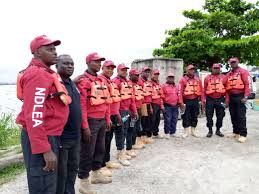
The National Drug Law Enforcement Agency (NDLEA), has arrested a 58-year-old fugitive drug lord who has been on the wanted list of NDLEA and British authorities for over 15 years.

The Director, Media and Advocacy, NDLEA, Femi Babafemi said in a statement on Wednesday in Abuja that the arrest was a significant blow to international drug trafficking networks

Babafemi said that the suspect was apprehended at a location in Lagos on Monday, February 23, following a high-stakes well-coordinated operation by officers of a Special Operations Unit of the Agency.

He said that the wanted drug lord arrest ended a long-standing ”cat-and-mouse” game with the law following his long history of drug related crimes across Nigeria and the United Kingdom, which highlighted a persistent involvement in global narcotics trade.

He also said that the suspect was first arrested in February 2003 and convicted in the United Kingdom for drug trafficking; sentenced to nine years but was later released after two years in jail upon appeal.

”Not done with crime, he was again arrested in the UK in July 2011 for drug-related offences. He was granted administrative bail but jumped jurisdiction and fled to Nigeria.

”Typical of a recidivist, he was in November 2018 arrested in Nigeria by NDLEA operatives following the discovery of two clandestine methamphetamine laboratories in his Obinugwu, Orlu LGA country home in Imo.

”Also, at his No. 3 Barrister Declan Uzoma Close Lagos house, officers recovered 77.960 kilograms of substance suspected to be methamphetamine and extensive production equipment.

”He was subsequently charged before a Federal High Court, Lagos, and he jumped court bail and has since been on the run since then,” he said.

Reacting to the successful operation leading to the arrest of the wanted drug lord, the NDLEA Chairman, retired, Brig.-Gen. Buba Marwa described the development as a significant breakthrough in the agency’s relentless war against drug cartels.

According to him, this arrest serves as a stern warning to those who think they can hide behind borders to escape justice.

”Whether you jump bail in London or set up clandestine labs in your village, the long arm of the NDLEA will eventually catch up with those who choose to undermine the health, security, and future of our nation.

”We remain committed to our international collaborations to ensure that Nigeria is not used as a sanctuary by global drug lords.

”The NDLEA under our watch will continue to strengthen intelligence-led operations, deepen international cooperation, and ensure that those involved in illicit drug trade are brought to justice.”

Marwa commended the officers of the Special Operations Unit for their professionalism, resilience, and diligence in tracking down the fugitive, stressing that the Agency remained unwavering in its commitment to dismantling drug trafficking networks operating within Nigeria.

Protest risk: Stay indoors – US Embassy to Americans in Abuja

0


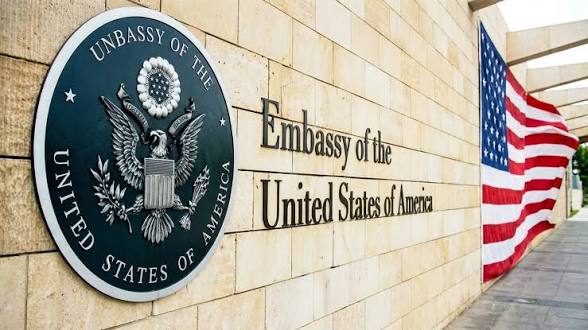
American citizens in Abuja have been advised to stay indoors by the United States Embassy over the possibility of protests arising from the Iran conflict.

Speaking via a security post shared on X, the Embassy said the potential for a protest in Abuja on Wednesday, March 4, 2026, was high.

Americans were instructed to avoid protest areas and crowds, monitor local media, stay alert in public places, carry proper identification, keep phones charged, and vary travel routes where necessary.

However, the post added that the Embassy’s Consular Section in Abuja and the U.S. Consulate General in Lagos remain open.

“The U.S. Embassy in Abuja informs U.S. citizens that there is a high potential for protests in Abuja today, March 4, 2026, due to the current conflict with Iran. Previous protests by some groups have resulted in violent clashes between the group and Nigerian security forces.

“The Embassy strongly recommends that all U.S. citizens in Abuja remain in their residences on Wednesday, March 4,” part of the statement on Wednesday reads.

Members of the Islamic Movement of Nigeria launched a nationwide demonstration following the killing of Iran’s Supreme Leader, Ali Khamenei, amid the Israeli-US bombardment.

States where protests have been staged include Lagos, Kano, Sokoto and Kaduna, where demonstrators waved Iranian flags.

Sun

M-East war: Homes, factories, others hard hit as fuel prices rise

0


—Crude oil prices leap further to $84 per barrel

—Dangote refinery, oil marketers adjust prices

—Expect more increases and hard times

LAGOS — Nigerian homes, businesses and others are in for harder times following sharp increases in the retail prices of Liquefied Petroleum Gas, LPG, also known as cooking gas; Automotive Gas Oil, AGO, known as diesel, and petrol, as a consequence of the Middle East crisis.

Gas price increased to N1,200 per kilogram from N1,000 per kg and diesel, N1,300 per litre from N1,200 per litre, respectively.

Also, the price of fuel or Premium Motor Spirit, PMS rose to N939 per litre from N837 per litre, yesterday, and there are fears of it rising above N1,000, if the Middle East crisis lingers.

Meanwhile, crude oil price rose to $84 from $75 per barrel last week in the global oil market, after the Iranian Revolutionary Guard Corps, IRGC, said that the Straits of Hormuz would be blocked, following on-going attacks on the country by Israel and the United States of America, USA.

It will be recalled that Israel and the US, Saturday morning commenced attacks on Iran, despite on-going talks between Iran and US, which was to have continued on Monday.

And in keeping with its threat, Iran started retaliating by attacking US military bases and other targets in the Gulf region.

A market survey conducted by Vanguard, yesterday, in Abuja, Lagos and some other parts of the country, showed that several filling stations adjusted their pump prices upward, from N875 per litre on Monday to N975, yesterday, while retailers of cooking gas hiked price.

The increase in fuel prices and hardship are direct consequences of the US, Israel and Iran war, culminating in crude oil prices rising by more than 12 per cent to over $84 per barrel, yesterday, from $75 per barrel last week in the global oil market.

Checks by Vanguard indicate that the hardship is very severe on low-income homes and small-scale businesses with little resources that neither expected nor planned for the development.

The checks showed that tensions disrupted navigation and a shortage of available tankers have pushed storage tanks in southern export terminals toward critical levels, forcing production reductions.

Dangote refinery, marketers hike prices

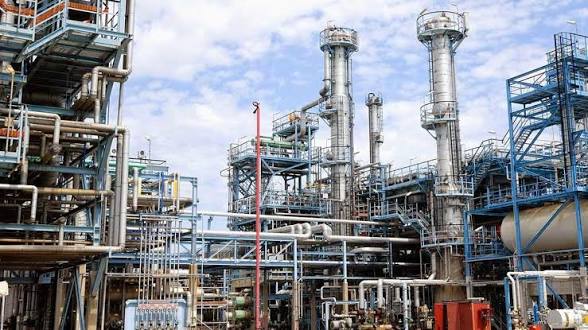
The price spike started when the 650,000 barrels per day, bpd Dangote Petroleum Refinery, announced increases in depot prices of cooking gas, diesel and petrol, in response to rising crude oil price in the international market.

On their parts, depot owners and oil marketers across Nigeria also increased the price of cooking gas, diesel and petrol by an average of N100 per litre or kilogram.

Crude oil prices leap further to $84 per barrel

For instance, the price of Nigeria’s Bonny Light crude has surged to $84 per barrel, its highest level since July 2025, following strikes on Iran by the US and Israel, which have disrupted crude oil shipping traffic from the Middle East to the global market.

Brent crude rose to $84.53 per barrel from $80 per barrel, Murban crude climbed to $83.72 per barrel from $81.05 per barrel, while West Texas Intermediate (WTI) increased to $77.16 per barrel from $72.24 per barrel.

The fresh rally comes amid escalating attacks on Iran by the US, Israel, as Iran fires back at Israel, with fears of prolonged hostilities tightening global supply expectations.

After an initial 10 per cent jump on Monday, oil prices continued their upward trajectory after US President Donald Trump said the war in Iran could last much longer than earlier anticipated.

“Whatever it takes, right from the beginning, we projected four to five weeks, but we have the capability to go far longer than that,” US President, Donald Trump, told newsmen on Tuesday, speaking for the first time after the attack on Iran.

In a dramatic escalation, Iran announced the closure of the Straits of Hormuz, warning that any vessel attempting to pass through the strategic waterway, which handles about one-fifth of global oil and gas trade is at risk.

Expect more increases, harder times — CPPE

Reacting in an interview with Vanguard, yesterday, to the development, Dr. Muda Yusuf, CEO, Centre for the Promotion of Private Enterprise, CPPE, lamented huge impact on the Nigerian economy as crisis persisted.

He said: “Energy markets are the first transmission channel. Of particular strategic importance is the Straits of Hormuz, through which roughly 20 per cent of global crude oil supply is transported daily. Any disruption to this corridor has immediate implications for global oil prices, shipping costs, insurance premiums, and supply chains. There is also the output disruption effect, as Middle East countries are major oil producers.

“For Nigeria, an oil-dependent economy where crude accounts for over 85 per cent of export earnings and about half of government revenue, the implications are significant. The effects will be both positive and adverse, depending on the duration of the conflict and the quality of domestic policy responses.

“Geopolitical tensions in the Middle East historically trigger sharp increases in crude oil prices due to fears of supply disruptions. Even speculative risks around the Straits of Hormuz typically generate price volatility of $5–$15 per barrel within short periods.

“For Nigeria, every increase in crude oil price translates into additional export earnings and fiscal revenues. The immediate benefits include: Higher crude export receipts, improved foreign exchange inflows, strengthening of external reserves and increased FAAC allocations to all tiers of government.

“However, revenue gains are critically dependent on production levels. Nigeria’s current crude output has fluctuated around 1.4–1.6 million barrels per day, below installed capacity and vulnerable to oil theft, pipeline vandalism, and under-investment in upstream infrastructure. Without a sustained improvement in production efficiency and security, Nigeria may not fully optimise any price windfall.

“There is also a medium-term risk. If the conflict escalates and dampens global growth, oil demand could weaken, leading to price corrections. The fiscal upside is therefore inherently fragile.”

FG should plan to ease sufferings of the masses — OGSPAN

On his part, the National President of the Oil and Gas Services Providers Association of Nigeria, OGSPAN, Mazi Colman Obasi, said: “There is no doubt that many people and small-scale businesses have started to suffer. There is a great need for government to introduce interventions that can alleviate the pains. This is more so as government stands to generate additional foreign exchange from the sale of its crude oil in the global market.”

Others express mixed reactions

Other stakeholders are divided over the potential impact of the increase in crude oil price at the international market on the Nigerian economy and petrol pump price in the domestic market.

The stakeholders noted that while the rise in crude oil price will be good news for government revenue, it has the potential to increase the general price level in the country due to rise in the price of petrol and transportation cost.

Speaking to Vanguard, Partner at Kreston Pedabo, Mr. Olufemi Idowu, said while higher crude oil prices will impose additional costs on consumers, they will also boost government revenue.

Idowu said: “I look at this from two perspectives. First is the implication for the country. We cannot deny the fact that crude oil exports remain our major source of revenue. An increase in international crude oil prices is therefore positive for government earnings and budgeting.”

He warned that the impact on consumers will be significant, especially in a deregulated market.

He said:”On the other hand, from the consumer perspective, the implication is clear. With deregulation and the removal of subsidy, a rise in crude oil prices makes an increase in petrol pump prices very likely.”

He stressed that the knock-on effects would extend to daily commuting and general cost of living, further worsening inflation.

“When prices of goods and services rise, purchasing power declines. This situation will inevitably lead to higher inflation, as more money chase fewer goods,” he said.

He explained that higher fuel prices would have multiplier effects across the economy.

“Transportation costs are likely to rise. Construction materials will become more expensive due to higher logistics costs, and production costs will increase. Ultimately, this will affect consumer goods prices across the board,” Idowu added.

Also speaking, Public Relations Officer, Independent Marketers Association of Nigeria, IPMAN, Chief Chinedu Ukadike said with depots and Dangote Refinery price rising, marketers had no option but to increase their pump price.

“Our prices are determined by the cost at which we load and then other costs like transportation and operations have to be factored into the overall cost,” he said.

Ukadike stated that consumers will have to bear the cost ultimately as independent marketers were already struggling to operate profitably.

More industries should embrace gas — Coleman

Similarly, Mr. George Onafowokan, Managing Director/CEO of Coleman Wires and Cables, said: “Many industries have shifted to gas with long term agreements and plans, meaning that such organisations will experience minimal negative impact.

“But industries that still depend on petroleum products like petrol and diesel will experience severe pressure.

I would advise them to shift to gas. But Nigerians should commend the Dangote Petroleum Refinery because our current huge domestic capacity means that our problems would have been more if we did not have that refinery operating.”

Vanguard

Medical Council suspends three doctors over Chimamanda Adichie’s son’s death

0

The Medical and Dental Council of Nigeria (MDCN) has established a prima facie case of medical negligence and professional misconduct in the death of Master Nkanu Adichie-Esege, the 21-month-old son of acclaimed author Chimamanda Adichie.

The findings follow an investigation initiated after a formal complaint was lodged with the Council on January 16, 2026. Medical practitioners from Euracare Multi-Specialist Hospital and Atlantis Paediatric Hospital responded to the complaint, submitting affidavits and presenting oral testimony before the MDCN Investigative Panel.

At the conclusion of its 25th session held in Abuja on February 17–18, 2026, the Panel determined that a prima facie case of medical negligence had been established against three doctors: Dr. Tosin Majekodunmi, Medical Director of Euracare; Dr. Titus Ogundare, Anaesthesiologist at Euracare; and Dr. Atinuke Uwajeh, Chief Medical Director of Atlantis Paediatric Hospital.


The Council issued interim suspension orders against the three pending the outcome of formal disciplinary proceedings. The Panel also found professional misconduct on the part of 10 other practitioners from Atlantis Paediatric Hospital.

“These cases have been referred to the Medical and Dental Practitioners’ Disciplinary Tribunal for formal hearing and determination in accordance with the Council’s statutory mandate,” the MDCN said.
The Council emphasised that the findings are preliminary and do not constitute a final determination of liability. “The affected practitioners are entitled to a full hearing before the Disciplinary Tribunal, where evidence will be examined and a final decision rendered,” it added.

Further proceedings before the Tribunal are expected to commence in due course, with the MDCN pledging to ensure transparency and adherence to its regulatory framework throughout the process.

Vanguard

Dollar to Naira exchange rate today

0


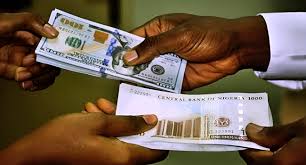
The Nigerian Naira experienced a period of controlled volatility against the US Dollar on Wednesday, March 4, 2026, as the Nigerian Foreign Exchange Market (NFEM) reflected ongoing price discovery. Real-time data shows the local currency navigating the mid-week session with a slight easing, following a month of sustained stability and high liquidity.

Official Market Performance (NFEM)

In the official window, the Naira opened at 1,379.05 per dollar. Early morning trading sessions saw the rate fluctuate within a narrow range, reaching a low of 1,376.02 before rebounding slightly. By 7:30 AM WAT, the exchange rate was quoted at approximately 1,377.04 per dollar.

The Central Bank of Nigeria (CBN) has maintained its closing rate near 1,384.29, signaling a subtle depreciation from the February average of 1,364.74. Authorized dealers report that while demand for foreign exchange remains high—particularly for corporate remittances and manufacturing imports—the market continues to benefit from the CBN’s “willing-buyer-willing-seller” model, which has prevented the sharp, chaotic devaluations seen in previous years.

Parallel Market Trends

The parallel market continues to follow the official window closely, with the US dollar being exchanged at rates between 1,385 and 1,395 per dollar. The spread between the official and informal sectors remains impressively tight, hovering around 1.2% to 1.5%.

Traders in major financial hubs like Lagos and Kano note that the “black market” has largely transformed into a retail-focused segment for personal travel and small-scale business needs. The absence of a massive premium suggests that the central bank’s transparency initiatives and regular supply to Bureau De Change (BDC) operators are effectively anchoring market expectations and discouraging speculative hoarding.

Economic Drivers and Market Outlook

Several fundamental factors are shaping the exchange rate as of March 4:

Monetary Policy and Inflation: The CBN has maintained the Monetary Policy Rate (MPR) at 26.50% following its recent 50-basis-point cut. This high-yield environment, coupled with a drop in headline inflation to 15.10%, continues to provide a “real” return for investors, supporting the Naira’s floor.

External Reserve Strength: Nigeria’s foreign reserves remain robust, providing the apex bank with substantial firepower to intervene during periods of thin liquidity.

Related News
Trump promises protection for ships in Strait of Hormuz
US military says it has struck nearly 2,000 targets in Iran
Iran missile attack triggers sirens, sends Israelis to shelters
Oil Sector Performance: Steady crude oil production at 1.46 million barrels per day ensures a reliable stream of foreign currency inflows, offsetting the increased demand for imports as the first quarter progresses.

Market analysts anticipate that the Naira will likely trade between 1,375 and 1,385 in the official window for the remainder of the week. Investors are closely watching for any further policy signals from the fiscal authorities regarding structural reforms in the energy sector, which could further influence long-term currency stability.

Vanguard

VAT revenue rises 34% to N6.4trn in 9 months

0


•As Company Income Tax grows 48% to N7.72trn

Nigeria’s revenue from Value Added Tax (VAT) and Company Income Tax (CIT) recorded strong growth in the first nine months of 2025, reflecting improved non-oil revenue performance and enhanced fiscal capacity.

Data from the National Bureau of Statistics (NBS) showed that VAT collections rose year-on-year (YoY) by 34 percent to N6.4 trillion in 9M’25 from N4.77 trillion in the corresponding period of 2024.

Quarterly analysis indicated mixed but improving momentum. VAT declined marginally by 1.4 percent to N2.03 trillion in Q2’25 from N2.06 trillion in Q1’25. However, collections rebounded in Q3’25, rising by 10.66 percent quarter-on-quarter (QoQ) to N2.28 trillion. On a YoY basis, VAT in Q3’25 grew by 28.1 percent.

In Q3’25, local VAT payments accounted for N1.12 trillion, foreign VAT payments contributed N680.23 billion, while import VAT stood at N479.79 billion.

Sectoral data showed that Administrative and Support Services recorded the highest QoQ growth at 89.28 percent, followed by Arts, Entertainment and Recreation (82.49 percent), and Human Health and Social Work (32.4 percent). Real Estate posted the sharpest decline at –51.33 percent. Manufacturing led sectoral contributions with 25.89 percent, followed by Information and Communication (18.77 percent) and Mining and Quarrying (14.85 percent).

Similarly, Company Income Tax collections surged by 48 percent to N7.72 trillion in 9M’25 from N5.22 trillion in 9M’24.

On a quarterly basis, CIT stood at N1.98 trillion in Q1’25, rose 40 percent to N2.78 trillion in Q2’25, and increased by 5.7 percent to N2.96 trillion in Q3’25. The Q3 figure represented a 67.19 percent YoY rise.

Further breakdown showed that domestic CIT payments in Q3’25 stood at N1.21 trillion, while foreign CIT payments accounted for N1.75 trillion, highlighting a significant contribution from foreign-sourced earnings.

The strong VAT and CIT performance underscores growing non-oil revenue resilience and improved government revenue mobilisation.

Vanguard

Ramadan Talk Day 15: Conditions and Pillars of Fasting

0

Fasting in Islam is a divinely regulated act of worship that combines spiritual intention with disciplined physical restraint. Its validity rests on clearly defined conditions and pillars (arkān), which ensure that fasting remains both spiritually meaningful and legally sound. Reflecting on these elements during Ramadan deepens a believer’s appreciation of fasting as a conscious act of obedience rather than a mere cultural routine.
The conditions for the obligation of fasting include Islam, sanity, maturity, physical ability, and residency. A person must also be free from legal impediments such as menstruation or postnatal bleeding. These conditions reflect Allah’s mercy and justice: fasting is required only from those who possess the capacity and accountability to fulfill it. Ramadan thus reminds believers that Islamic law is not burdensome but considerate of human circumstances.
Beyond obligation, the conditions for the validity of fasting include intention (niyyah) and abstention from all nullifiers during the prescribed time. The Prophet (s.a.w) emphasized intention, saying that actions are judged by intentions. This transforms fasting into a deeply internal act of worship. Each dawn in Ramadan, the believer silently renews a covenant with Allah, affirming that the day’s abstinence is solely for His pleasure.
The pillars of fasting are two in essence. The first is niyyah, which distinguishes fasting as worship rather than accidental hunger. The second is abstinence from food, drink, and sexual relations from dawn to sunset. These pillars train the believer in self-regulation, reminding the soul that discipline is central to faith. Hunger becomes meaningful only when anchored in obedience.
Ramadan reflection on these pillars teaches that fasting is not passive suffering but active worship. Every conscious decision to refrain, despite ability, becomes an act of devotion. The believer learns patience, consistency, and awareness of Allah throughout the day.
Ultimately, understanding the conditions and pillars of fasting nurtures intentional worship. It prevents ritual emptiness and revives the spiritual consciousness that fasting seeks to cultivate. Ramadan becomes not a month of deprivation, but a season of structured devotion, where every fast is a deliberate step toward taqwā.

Vanguard

Stakeholders Petitions Tinubu Over Alleged Diversion Of 50 FG-Donated CNG Buses

0

, Accuses Minister, Aide, Ex-NANS Leaders Of Criminal Infiltration

A group of concerned stakeholders within Nigeria’s student movement has written an open letter to President Bola Ahmed Tinubu, alleging large-scale corruption, diversion of public assets and criminal infiltration within the leadership structures of the National Association of Nigerian Students (NANS).

In a letter obtained by SaharaReporters on Wednesday the group accused the Minister for Youth Development, Ayodele Olawande Wisdom, the Senior Special Assistant to the President on Student Engagement, Asefon Sunday Dayo, and two former NANS leaders — Akinteye Babatunde (popularly known as Babtee) and Lucky Emonefe — of misappropriating federal government interventions meant for Nigerian students.

The petitioners alleged that about 50 Compressed Natural Gas (CNG) buses donated by the Federal Government to ease transportation challenges on tertiary campuses were diverted, shared among individuals, and in some cases sold.

According to the letter, the buses were allegedly retained for private commercial arrangements or disposed of outright, rather than deployed to campuses as intended. The group claimed that only a handful of the vehicles are traceable within student communities, while others are unaccounted for.

They called on the President to order an immediate audit to determine the total number and current location of the buses and to retrieve any found to have been wrongfully diverted.

Beyond the buses, the petition accused the same officials and former student leaders of diverting funds raised for NANS conventions and allegedly selling government-facilitated employment opportunities meant for former student leaders.

The group alleged that monies sourced in the name of organising student conventions were mismanaged, leaving delegates stranded without accommodation and logistics support despite substantial funds reportedly being mobilised.

It further claimed that employment slots facilitated through government channels were either sold for millions of naira or allocated to associates with no background in student activism, thereby creating resentment within the student body.

The letter also raised concerns over the alleged sale of food palliatives meant for indigent students during festive and fasting periods.

In a more explosive claim, the petitioners accused one of the aspirants for the 2026 NANS presidency, Akinteye Babatunde, of alleged involvement in an international cyber fraud network, commonly referred to in Nigeria as “yahoo yahoo.”

They alleged that individuals linked to the aspirant use NANS-branded number plates on luxury vehicles to evade scrutiny from security agencies.

The group warned that invoking the name of the President and his son, Seyi Tinubu, in internal NANS politics could damage the Presidency’s image if not addressed.

They alleged that some actors within the student movement frequently claim endorsement from the Presidency to influence convention outcomes and suppress opposition candidates.

The petitioners urged President Tinubu to direct anti-corruption and security agencies to: Conduct a full audit of all CNG buses donated to NANS; Investigate the allocation of government employment opportunities linked to student leaders; Probe allegations of diversion of convention funds; Examine claims of cybercrime involvement among aspirants to NANS leadership; and Ensure that individuals with alleged criminal antecedents are not endorsed or shielded by state actors.

They argued that the student movement, once known for its radical activism during the military era, is now facing what they described as “a crisis of credibility,” warning that failure to act could deepen distrust among Nigeria’s over 40 million students.

The letter framed the controversy as a broader struggle over the future of student unionism in Nigeria, urging the President to distance his administration from any individual accused of exploiting government goodwill for personal gain.

Iran’s New Supreme Leader: Mojtaba Khamenei Takes the Throne Under IRGC Pressure

0


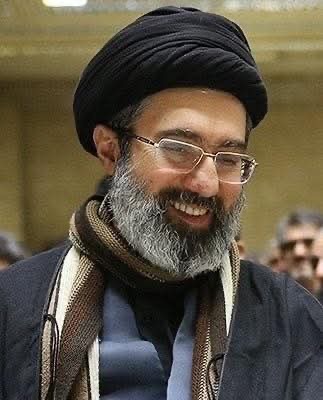
In a move that reeks of dynastic power-grab, Iran’s Assembly of Experts has named **Mojtaba Khamenei**—son of the late Ayatollah Ali Khamenei—as the Islamic Republic’s next Supreme Leader. The decision, rushed amid ongoing war with Israel and the U.S., came heavy pressure from the powerful Revolutionary Guards (IRGC), according to informed sources.

Mojtaba, a mid-ranking cleric long rumored to pull strings from the shadows, now inherits absolute authority over Iran’s theocracy, military, and nuclear ambitions. His ascent marks a sharp departure from the regime’s anti-monarchical founding principles—ironic for a system born from revolution against hereditary rule.

While some hardliners celebrate continuity and IRGC dominance, critics inside and outside Iran see nepotism fueling instability. The late Khamenei reportedly opposed turning leadership into a family business, favoring non-hereditary figures like judiciary chief Gholam-Hossein Mohseni-Eje’i or Hassan Khomeini (grandson of the revolution’s founder). Yet with key rivals eliminated in recent strikes and the Guards calling the shots, Mojtaba prevailed.

This isn’t stability—it’s a regime doubling down on hardline control at its most vulnerable moment. Expect tighter repression at home and escalated defiance abroad. The mullahs’ grip tightens, but cracks are showing.

HT SPECTATOR INDEX